

Adsorption capability of brewed tea waste in waters containing toxic lead(II), cadmium (II), nickel (II), and zinc(II) heavy metal ions
Open accessThe DOI matches its Crossref record; 56 of the 58 references it cites were found in a registry or an index; none of the 4 sources its claims cite is checked for support yet.
Abstract
Recently, the search for low-cost eco-friendly adsorbents has become one of the main objectives of researchers. The aim of this study was to test the removal of four heavy metals, namely lead (Pb), zinc (Zn), nickel (Ni) and cadmium (Cd), from a simulated watery solution using brewed tea waste as a potentially suitable adsorbent. The effects of pH levels (2.0–6.0), adsorbent amount (0.1–5.0 g), contact times (1–150 min.) were examined throughout the adsorption process. The results of the experiments showed that the heavy metals elimination yields had an inverse relationship with pH and a linear relationship between the other parameters. The optimum pH for the removal of the heavy metals was between 4.0 and 5.0 in the case of the brewed tea waste. Equilibrium times of 2, 10, 30 and 5 min were required for the adsorption of Pb, Zn, Ni, Cd onto Camellia sinensis , respectively. Based on the results of this study it can be said that brewed tea waste has a high potential to remove heavy metals from aqueous solutions. The maximum adsorption capacities were calculated as 1.197, 1.457, 1.163 and 2.468 mg/g, for Pb, Zn, Ni and Cd, respectively, by fitting the equilibrium data to the Langmuir isotherm model.
Overview
CoChat Summary
TL;DR
Brewed tea waste (BTW) was tested as a low-cost adsorbent for Pb, Cd, Ni, and Zn in synthetic aqueous solutions, with removal strongly dependent on pH, adsorbent dose, and contact time. The data fit the Langmuir isotherm and pseudo-second-order kinetics, with maximum Langmuir capacities of 1.197 mg/g Pb, 1.457 mg/g Ni, 1.163 mg/g Cd, and 2.468 mg/g Zn.
Key findings
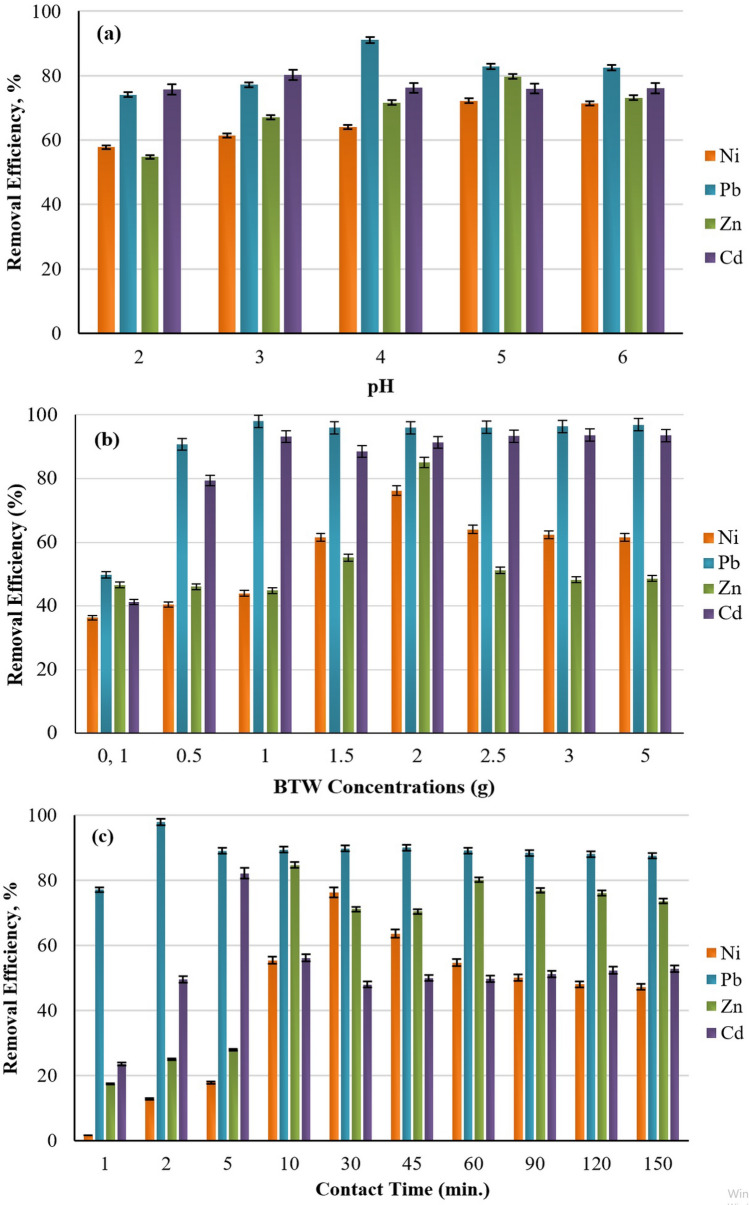
- Optimum pH was 4 for Pb and Cd and 5 for Ni and Zn; equilibrium times were 2 min for Pb, 10 min for Zn, 30 min for Ni, and 5 min for Cd.
- At the tested conditions, removal percentages were Pb 97.97%, Cd 84.74%, Ni 82%, and Zn 76% (Table 5).
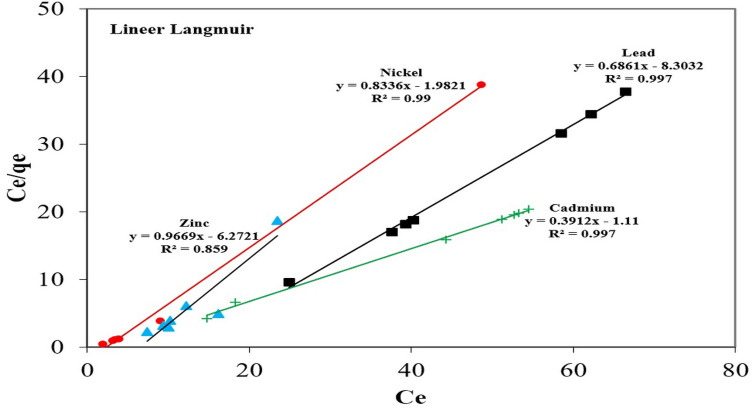
- Langmuir maximum adsorption capacities were Pb 1.197 mg/g, Ni 1.457 mg/g, Cd 1.163 mg/g, and Zn 2.468 mg/g; the Langmuir model fit best, with HYBRID error function giving the best result.
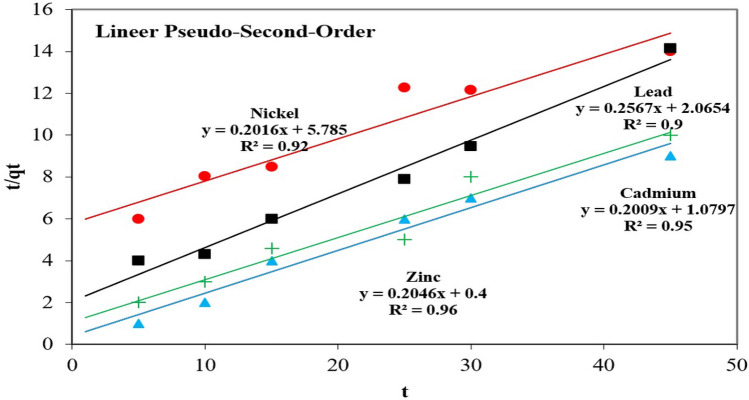
- Pseudo-second-order kinetics best described adsorption (R² = 0.99), suggesting chemisorption; BTW had a negative zeta potential (−20.58 mV) and pHZPC of 2.45.
Methods
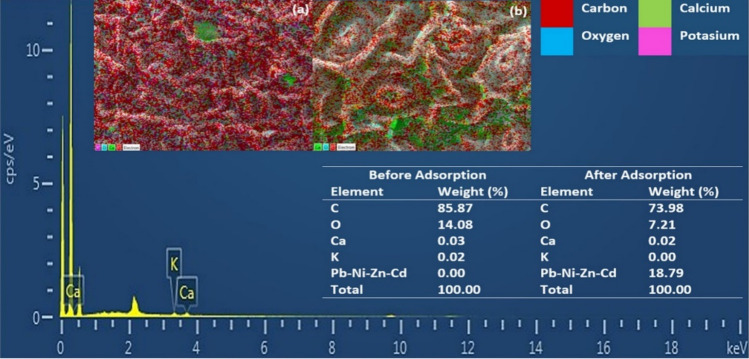
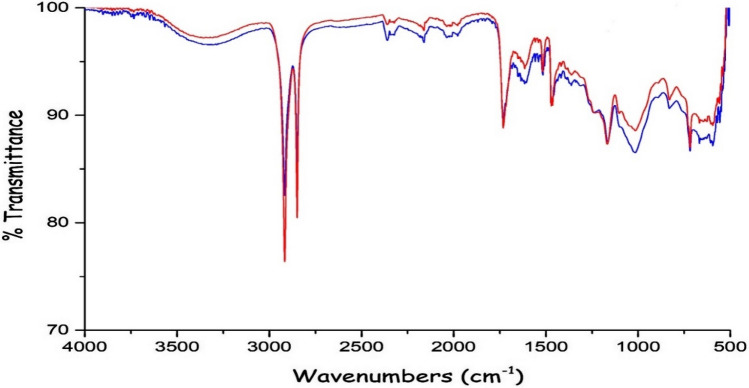
- BTW was collected from food units at Aksaray University, washed, boiled, dried, pulverized, and sieved; it was characterized by FTIR, SEM/EDS, BET surface area, elemental analysis, proximate analysis, and zeta potential.
- Batch experiments used 100 mg BTW in 250 mL flasks with 100 mL individual metal solutions, initial concentrations around 100 mg/L, pH 2.0–6.0, shaken at 150 rpm for 24 h at 20 °C, and analyzed by ICP-OES.
- Langmuir, Freundlich, Temkin, and Dubinin-Radushkevich isotherms and PFO, PSO, Elovich, and intraparticle diffusion kinetics were fitted; one-way ANOVA with Duncan test was applied at p < 0.01.
Limitations
- The paper states BTW’s surface structure was not sufficiently developed and adsorption may be limited to the outer surface; it also notes temperature-change data were not shown.
- Evident from the text: experiments used synthetic single-metal solutions at ~100 mg/L, not real multi-metal industrial or natural waters, and the pH range was restricted to 2–6.
- Evident from the text: reported removal/capacity orderings are inconsistent in places (e.g., abstract vs. Table 4/Table 5), and no regeneration, reuse, or cost analysis is reported.
Model-written summary. Check it against the paper before relying on it.
Integrity signals
Registry
Cites
Statistics
Figures
Verification
Claims the paper makes
0 Valid · 2 Not valid · 4 Not checked · 42 Own results and interpretations
A result the paper reports from its own data — it cites no other source for it, so there is none to check. The quote shows it is in the paper.
In the paper
“As a result of the calculations, it was determined that the HYBRID error function gave the best result.”
§ Adsorption capability of brewed tea waste in waters containing toxic lead(II), cadmium (II), nickel (II), and zinc(II) heavy metal ions > Results > Adsorption isotherm and kinetic models
plain- Asserted: passes — The authors put it forward as true.
- Checkable: passes — It can be checked against evidence.
- Load-bearing: unclear — It is unclear whether the paper’s conclusions depend on it.
- Based: passes — The paper gives a reason why it holds.
A result the paper reports from its own data — it cites no other source for it, so there is none to check. The quote shows it is in the paper.
In the paper
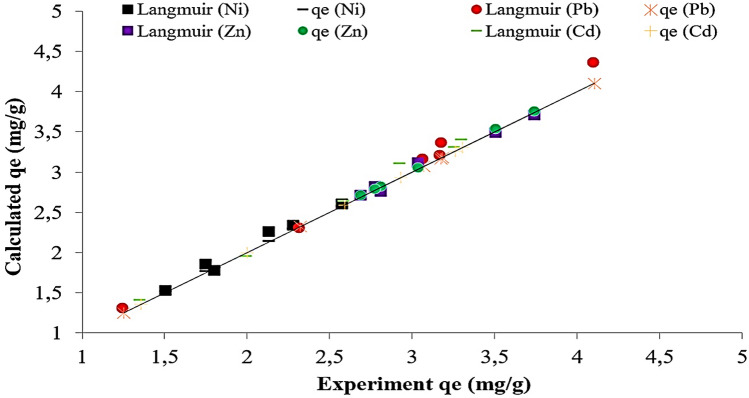
“As can be observed from Table 3, the equilibrium adsorption data were better defined when the Langmuir isotherm model was used.”
§ Adsorption capability of brewed tea waste in waters containing toxic lead(II), cadmium (II), nickel (II), and zinc(II) heavy metal ions > Results > Adsorption isotherm and kinetic models
plainstates an association- Asserted: passes — The authors put it forward as true.
- Checkable: passes — It can be checked against evidence.
- Load-bearing: passes — The paper’s conclusions depend on it.
- Based: passes — The paper gives a reason why it holds.
A result the paper reports from its own data — it cites no other source for it, so there is none to check. The quote shows it is in the paper.
In the paper
“The order of appropriateness of the isotherm models was as follows: Langmuir > Temkin > Freundlich > Dubinin-Radukevich (Fig. 4).”
§ Adsorption capability of brewed tea waste in waters containing toxic lead(II), cadmium (II), nickel (II), and zinc(II) heavy metal ions > Results > Adsorption isotherm and kinetic models
plainstates an association- Asserted: passes — The authors put it forward as true.
- Checkable: passes — It can be checked against evidence.
- Load-bearing: passes — The paper’s conclusions depend on it.
- Based: passes — The paper gives a reason why it holds.
A result the paper states — it cites no source for it, so there is none to check. The quote shows it is in the paper.
In the paper
“As can be seen from Fig. 3c the percentage of metal removal was initially higher (2 min—97.97%, 5 min—82%, 30 min—76%, 10 min—84.74%).”
§ Adsorption capability of brewed tea waste in waters containing toxic lead(II), cadmium (II), nickel (II), and zinc(II) heavy metal ions > Results > Effect of contact time and temperature
plainstates an association- Asserted: passes — The authors put it forward as true.
- Checkable: passes — It can be checked against evidence.
- Load-bearing: unclear — It is unclear whether the paper’s conclusions depend on it.
- Based: passes — The paper gives a reason why it holds.
A result the paper reports from its own data — it cites no other source for it, so there is none to check. The quote shows it is in the paper.
In the paper
“As a result of adsorption studies, the Langmuir isotherm was found to be the most suitable for the heavy metals according to the R2 value.”
§ Adsorption capability of brewed tea waste in waters containing toxic lead(II), cadmium (II), nickel (II), and zinc(II) heavy metal ions > Results > Adsorption isotherm and kinetic models
plainstates an association- Asserted: passes — The authors put it forward as true.
- Checkable: passes — It can be checked against evidence.
- Load-bearing: passes — The paper’s conclusions depend on it.
- Based: passes — The paper gives a reason why it holds.
24 more claims
Create a free account to see all 48 claims and to verify the 1 reference still open.
- It may state two separate claims as one. 16
- The quote only partly states this claim. 1
- Probably not a substantial claim. 5
Self-check
Percentages, sums and reported differences re-computed from the paper’s own numbers.
Each contradiction between two passages listed here was confirmed by an independent check.
Rated major: it would touch a result — a value a result rests on, reported and recomputed p-values on opposite sides of the significance level, two passages that conflict with no sign which is right, or a cited work retracted before this paper was published.
In the paper
§ Adsorption capability of brewed tea waste in waters containing toxic lead(II), cadmium (II), nickel (II), and zinc(II) heavy metal ions > Abstract
“The results of the experiments showed that the heavy metals elimination yields had an inverse relationship with pH and a linear relationship between the other parameters.”
§ Adsorption capability of brewed tea waste in waters containing toxic lead(II), cadmium (II), nickel (II), and zinc(II) heavy metal ions > Results > Effect of pH
“It was noted that when pH was 4, the removal percentage of the Pb and Cd ions increased significantly from 74.09 to 91.06% for Pb, 54.73% to 79.71% for Zn and 74% to 82% for Cd, respectively.”
Rated major: it would touch a result — a value a result rests on, reported and recomputed p-values on opposite sides of the significance level, two passages that conflict with no sign which is right, or a cited work retracted before this paper was published.
In the paper
§ Adsorption capability of brewed tea waste in waters containing toxic lead(II), cadmium (II), nickel (II), and zinc(II) heavy metal ions > Results > Effect of contact time and temperature
“The adsorption of the Pb, Ni, Zn, Cd ions was gauged at certain contact times for the initial Pb, Ni, Zn, Cd concentrations of 96.71, 104.30, 98.70 and 108 mg/L, respectively. The removal efficiencies of the Pb, Ni, Zn, Cd ions increased up to 60 min and then remained almost constant (Fig. 3c). As can be seen from Fig. 3c the percentage of metal removal was initially higher (2 min—97.97%, 5 min—82%, 30 min—76%, 10 min—84.74%).”
§ Adsorption capability of brewed tea waste in waters containing toxic lead(II), cadmium (II), nickel (II), and zinc(II) heavy metal ions > Results > Adsorption isotherm and kinetic models
“| BTW | Cd+2 | 1.0 | 4.0 | 100 | 5 | 20 | 84.74 | Langm/PSO | 1.163 | In This Study | | BTW | Ni+2 | 2.0 | 5.0 | 100 | 30 | 20 | 82 | Langm/PSO | 1.457 | In This Study | | BTW | Zn+2 | 2.0 | 5.0 | 100 | 10 | 20 | 76 | Langm/PSO | 2.468 | In This Study |”
Rated minor: it would not touch a result — a value no result rests on, a p-value that stays on the same side of the significance level, or a conflict that is clerical, resolved elsewhere in the paper, or outside its own findings.
In the paper
“| 2916.62 | 2916.42 | + 20 | Aliphatic C–H group | | 2849.35 | 2849.23 | + 12 | Aliphatic C–H group |”
§ Adsorption capability of brewed tea waste in waters containing toxic lead(II), cadmium (II), nickel (II), and zinc(II) heavy metal ions > Results > BTW characterization
Reported 20 · recomputed 0.2
Rated minor: it would not touch a result — a value no result rests on, a p-value that stays on the same side of the significance level, or a conflict that is clerical, resolved elsewhere in the paper, or outside its own findings.
In the paper
§ Adsorption capability of brewed tea waste in waters containing toxic lead(II), cadmium (II), nickel (II), and zinc(II) heavy metal ions > Results > BTW characterization
“The zeta potential of the BTW was always negative in the tested pH range of 2–10, indicating that the BTW was effective in attracting cations.”
§ Adsorption capability of brewed tea waste in waters containing toxic lead(II), cadmium (II), nickel (II), and zinc(II) heavy metal ions > Results > BTW characterization
“The zeta potential and the pHZPC (pH at point of zero charge) of the tea waste was − 20.58 mV and pH 2.45, respectively.”
Rated minor: it would not touch a result — a value no result rests on, a p-value that stays on the same side of the significance level, or a conflict that is clerical, resolved elsewhere in the paper, or outside its own findings.
In the paper
§ Adsorption capability of brewed tea waste in waters containing toxic lead(II), cadmium (II), nickel (II), and zinc(II) heavy metal ions > Results > Effect of pH
“it was found that the highest removal percentage for Ni and Zn was achieved at pH 5, and for Cd at pH 3 (p < 0.01).”
§ Adsorption capability of brewed tea waste in waters containing toxic lead(II), cadmium (II), nickel (II), and zinc(II) heavy metal ions > Conclusion
“The maximum adsorption of Pb and Cd was achieved at pH 4, while for Ni and Zn it was achieved at pH 5.”
4 more findings
Create a free account to see every finding of this check.
Citations
Cites
Pseudo-second order model for sorption processes
Ho, Y. S., & McKay, G. (1999) · Process Biochemistry · doi:10.1016/s0032-9592(98)00112-5 · Cited by 17,497
THE CONSTITUTION AND FUNDAMENTAL PROPERTIES OF SOLIDS AND LIQUIDS. PART I. SOLIDS.
Langmuir, I. (1916) · Journal of the American Chemical Society · doi:10.1021/ja02268a002 · Cited by 9,997
Über die adsorption in lösungen
Freundlich, H. (1907) · Zeitschrift für Physikalische Chemie · doi:10.1515/zpch-1907-5723 · Cited by 9,001
The constitution and fundamental properties of solids and liquids
Langmuir, I. (1917) · Journal of the Franklin Institute · doi:10.1016/s0016-0032(17)90938-x · Cited by 3,778
Pore- and Solid-Diffusion Kinetics in Fixed-Bed Adsorption under Constant-Pattern Conditions
Hall, K. R., Eagleton, L. C., Acrivos, A., & Vermeulen, T. (1966) · Industrial & Engineering Chemistry Fundamentals · doi:10.1021/i160018a011 · Cited by 2,819
The Equation of the Characteristic Curve of Activated Charcoal
Dubinin, M. M. (1947) · Доклады Академии наук · Cited by 2,108
Burakov, A. E., Galunin, E. V., Burakova, I. V., Kucherova, A. E., Agarwal, S., Tkachev, A. G., & Gupta, V. K. (2018) · Ecotoxicology and Environmental Safety · doi:10.1016/j.ecoenv.2017.11.034 · Cited by 1,612
Recent modifications to Langmuir isotherms
Temkin, M. J., & Pyzhev, V. (1940) · Cited by 1,057
Vareda, J. P., Valente, A. J. M., & Durães, L. (2019) · Journal of Environmental Management · doi:10.1016/j.jenvman.2019.05.126 · Cited by 1,010
Water Purification by Using Adsorbents: A Review
Singh, N. B., Nagpal, G., Agrawal, S., & Rachna (2018) · Environmental Technology & Innovation · doi:10.1016/j.eti.2018.05.006 · Cited by 962
Joseph, L., Jun, B.-M., Flora, J. R. V., Park, C. M., & Yoon, Y. (2019) · Chemosphere · doi:10.1016/j.chemosphere.2019.04.198 · Cited by 887
Zhou, Q., Yang, N., Li, Y., Ren, B., Ding, X., Bian, H., & Yao, X. (2020) · Global Ecology and Conservation · doi:10.1016/j.gecco.2020.e00925 · Cited by 694
Heavy metal removal from wastewater using various adsorbents: a review
Renu, Agarwal, M., & Singh, K. (2017) · Journal of Water Reuse and Desalination · doi:10.2166/wrd.2016.104 · Cited by 675
Boron nitride-based materials for the removal of pollutants from aqueous solutions: A review
Yu, S., Wang, X., Pang, H., Zhang, R., Song, W., Fu, D., Hayat, T., & Wang, X. (2018) · Chemical Engineering Journal · doi:10.1016/j.cej.2017.09.163 · Cited by 503
Heavy metal adsorption with zeolites: The role of hierarchical pore architecture
Hong, M., Yu, L., Wang, Y., Zhang, J., Chen, Z., Dong, L., Zan, Q., & Li, R. (2019) · Chemical Engineering Journal · doi:10.1016/j.cej.2018.11.087 · Cited by 452
Batool, F., Akbar, J., Iqbal, S., Noreen, S., & Bukhari, S. N. A. (2018) · Bioinorganic Chemistry and Applications · doi:10.1155/2018/3463724 · Cited by 381
Panneerselvam, P., Morad, N., & Tan, K. A. (2011) · Journal of Hazardous Materials · doi:10.1016/j.jhazmat.2010.10.102 · Cited by 346
Prospects of banana waste utilization in wastewater treatment: A review
Ahmad, T., & Danish, M. (2018) · Journal of Environmental Management · doi:10.1016/j.jenvman.2017.10.061 · Cited by 302
Adsorption of Lead on Cucumber Peel
Basu, M., Guha, A. K., & Ray, L. (2017) · Journal of Cleaner Production · doi:10.1016/j.jclepro.2017.03.028 · Cited by 238
Nejadshafiee, V., & Islami, M. R. (2019) · Materials Science and Engineering: C · doi:10.1016/j.msec.2019.03.081 · Cited by 194
Global profile of heavy metals and semimetals adsorption using drinking water treatment residual
Shen, C., Zhao, Y., Li, W., Yang, Y., Liu, R., & Morgen, D. (2019) · Chemical Engineering Journal · doi:10.1016/j.cej.2019.04.219 · Cited by 185
Ghorbani, F., Kamari, S., Zamani, S., Akbari, S., & Salehi, M. (2020) · Surfaces and Interfaces · doi:10.1016/j.surfin.2020.100444 · Cited by 176
Waste tea as a novel adsorbent: a review
Hussain, S., Anjali, K. P., Hassan, S. T., & Dwivedi, P. B. (2018) · Applied Water Science · doi:10.1007/s13201-018-0824-5 · Cited by 166
Persimmon leaf bio-waste for adsorptive removal of heavy metals from aqueous solution
Lee, S.-Y., & Choi, H.-J. (2018) · Journal of Environmental Management · doi:10.1016/j.jenvman.2017.12.080 · Cited by 162
Sorption of Lead(II), Cadmium(II), and Copper(II) Ions from Aqueous Solutions Using Tea Waste
Wan, S., Ma, Z., Xue, Y., Ma, M., Xu, S., Qian, L., & Zhang, Q. (2014) · Industrial & Engineering Chemistry Research · doi:10.1021/ie402510s · Cited by 156
Removal of Heavy Metals from Wastewater using Date Palm as a Biosorbent: A Comparative Review
Shafiq, M. R., Alazba, A. A., & Amin, M. T. (2018) · Sains Malaysiana · doi:10.17576/jsm-2018-4701-05 · Cited by 156
Subramanyam, B., & Das, A. (2014) · Journal of Environmental Health Science and Engineering · doi:10.1186/2052-336x-12-92 · Cited by 148
Feizi, M., & Jalali, M. (2015) · Journal of the Taiwan Institute of Chemical Engineers · doi:10.1016/j.jtice.2015.03.027 · Cited by 147
Palm Kernel Shell as an effective adsorbent for the treatment of heavy metal contaminated water
Baby, R., Bullo, S., & Hussein, M. Z. (2019) · Scientific Reports · doi:10.1038/s41598-019-55099-6 · Cited by 140
Review on Adsorption of Heavy Metal in Wastewater by Using Geopolymer
Ariffin, N., Abdullah, M. M. A. B., Mohd Arif Zainol, M. R. R., Murshed, M. F., Hariz-Zain, Faris, M. A., & Bayuaji, R. (2017) · MATEC Web of Conferences · doi:10.1051/matecconf/20179701023 · Cited by 136
Liu, L., Fan, S., & Li, Y. (2018) · International Journal of Environmental Research and Public Health · doi:10.3390/ijerph15071321 · Cited by 119
Effective removal of copper ions from aqueous solution using base treated black tea waste
Weng, C., Lin, Y., Hong, D.-Y., Sharma, Y. C., Chen, S., & Tripathi, K. M. (2014) · Ecological Engineering · doi:10.1016/j.ecoleng.2014.03.053 · Cited by 118
Thakur, V., Sharma, E., Guleria, A., Sangar, S., & Singh, K. (2020) · Materials Today Proceedings · doi:10.1016/j.matpr.2020.02.756 · Cited by 118
Benavente, V., Fullana, A., & Berge, N. D. (2017) · Journal of Cleaner Production · doi:10.1016/j.jclepro.2016.11.013 · Cited by 117
Batch adsorption of zinc on tea factory waste
Wasewar, K. L., Atif, M., Prasad, B., & Mishra, I. M. (2009) · Desalination · doi:10.1016/j.desal.2008.04.036 · Cited by 116
Removal of heavy metals from wastewater using modified agricultural adsorbents
Renu, M. A., Singh, K., Upadhyaya, S., & Dohare, R. K. (2017) · Materials Today Proceedings · doi:10.1016/j.matpr.2017.06.415 · Cited by 113
Akhtar, M., Iqbal, S., Kausar, A., Bhanger, M. I., & Shaheen, M. A. (2009) · Colloids and Surfaces B Biointerfaces · doi:10.1016/j.colsurfb.2009.08.025 · Cited by 106
Adsorption Behavior of Cadmium on Husk of Lentil
Basu, M., Guha, A. K., & Ray, L. (2017) · Process Safety and Environmental Protection · doi:10.1016/j.psep.2016.11.025 · Cited by 96
Abuhatab, S., El‐Qanni, A., Al-Qalaq, H., Hmoudah, M., & Al-Zerei, W. (2020) · Journal of Environmental Management · doi:10.1016/j.jenvman.2020.110713 · Cited by 90
Mono/competitive adsorption of Arsenic(III) and Nickel(II) using modified green tea waste
Yang, S., Wu, Y., Aierken, A., Zhang, M., Fang, P., Fan, Y., & Ming, Z. (2016) · Journal of the Taiwan Institute of Chemical Engineers · doi:10.1016/j.jtice.2015.07.007 · Cited by 84
Wang, Z., Tan, K., Cai, J., Hou, S., Wang, Y., Jiang, P., & Liang, M. (2018) · Colloids and Surfaces A Physicochemical and Engineering Aspects · doi:10.1016/j.colsurfa.2018.10.065 · Cited by 82
Gaya, U. I., Otene, E., & Abdullah, A. H. (2015) · SpringerPlus · doi:10.1186/s40064-015-1256-4 · Cited by 79
Green Tea Leaves as a Natural Adsorbent for the Removal of Cr(VI) from Aqueous Solutions
Jeyaseelan, C., & Gupta, A. (2016) · Air Soil and Water Research · doi:10.4137/aswr.s35227 · Cited by 61
Arsenic adsorption mechanism on palm oil fuel ash (POFA) powder suspension
Yusof, M. S. M., Othman, M. H. D., Wahab, R. A., Jumbri, K., Razak, F. I. A., Kurniawan, T. A., Samah, R. A., Mustafa, A., Rahman, M. A., Jaafar, J., et al. (2019) · Journal of Hazardous Materials · doi:10.1016/j.jhazmat.2019.121214 · Cited by 61
Malakahmad, A., Tan, S., & Yavari, S. (2016) · Journal of Chemistry · doi:10.1155/2016/5680983 · Cited by 58
Siddiqui, S., & Ahmad, R. (2017) · Groundwater for Sustainable Development · doi:10.1016/j.gsd.2016.12.001 · Cited by 48
Ong, D. C., Kan, C.-C., Pingul-Ong, S. M. B., & de Luna, M. D. G. (2017) · Journal of Environmental Chemical Engineering · doi:10.1016/j.jece.2017.10.046 · Cited by 48
Çelebi, H., & Gök, O. (2017) · International Journal of Environmental Research · doi:10.1007/s41742-017-0009-3 · Cited by 43
Self-citationFutalan, C. M., Kim, J., & Yee, J. (2019) · Water Science & Technology · doi:10.2166/wst.2019.087 · Cited by 41
Kaçmaz, H. (2020) · Environmental Monitoring and Assessment · doi:10.1007/s10661-019-8057-0 · Cited by 30
Adsorption of cadmium ions by cucumber peel in continuous mode
Basu, M., Guha, A. K., & Ray, L. N. (2017) · International Journal of Environmental Science and Technology · doi:10.1007/s13762-017-1609-3 · Cited by 30
Khal, H. E., & Batis, N. (2015) · New Journal of Chemistry · doi:10.1039/c4nj01836b · Cited by 28
Preparation magnetic cassava residue microspheres and its application for Cu(II) adsorption
Xie, X., Xiong, H., Zhang, Y., et al. (2017) · Journal of environmental chemical engineering · doi:10.1016/j.jece.2017.05.024 · Cited by 26
Rojas, C. M. M., Rivera-Velásquez, M. F., Tavolaro, A., Molinari, A., & Fallico, C. (2017) · International Journal of Environmental Research and Public Health · doi:10.3390/ijerph14070684 · Cited by 24
Ghasemi, S., Gholami, R. M., & Yazdanian, M. (2016) · Jundishapur Journal of Health Sciences · doi:10.17795/jjhs-37301 · Cited by 14
Tabatabaeefar, A., Yuan, Q., Salehpour, A., & Rajabi-Hamane, M. (2020) · Separation Science and Technology · doi:10.1080/01496395.2019.1581218 · Cited by 11
Research works printed but not linked: 2
- Takeno N Atlas of Eh-pH diagrams (Intercomparison of thermodynamic databases) Geol. Surv. Jpn. 2005 419 1 287
- Draman SFS Mohd N Hafiza N Wahab I Zulkfli NS Fatin N Adsorption of lead (II) ions in aqueous solution using selected agro-waste ARPN J. Eng. Appl. Sci. 2015 10 297 300
Cited by
Ezeonuegbu, B. A., Machido, D. A., Whong, C. M. Z., Japhet, W. S., Alexiou, A., Elazab, S. T., Qusty, N., Yaro, C. A., & Batiha, G. E.-S. (2021) · Biotechnology Reports · doi:10.1016/j.btre.2021.e00614 · Cited by 241
Potential and sustainable utilization of tea waste: A review on present status and future trends
Debnath, B., Haldar, D., & Purkait, M. K. (2021) · Journal of Environmental Chemical Engineering · doi:10.1016/j.jece.2021.106179 · Cited by 211
Kaur, J., Sengupta, P., & Mukhopadhyay, S. (2022) · Industrial & Engineering Chemistry Research · doi:10.1021/acs.iecr.1c04583 · Cited by 167
Hossain, M. T., Khandaker, S., Bashar, M. M., Islam, A., Ahmed, M., Akter, R., Alsukaibi, A. K. D., Hasan, M. M., Alshammari, H. M., Kuba, T., et al. (2022) · Journal of Molecular Liquids · doi:10.1016/j.molliq.2022.120810 · Cited by 120
Advances in bioconversion of spent tea leaves to value-added products
Negi, T., Kumar, Y., Sirohi, R., Singh, S., Tarafdar, A., Pareek, S., Kumar Awasthi, M., & Alok Sagar, N. (2022) · Bioresource Technology · doi:10.1016/j.biortech.2021.126409 · Cited by 95
Metadata
- Authors
- Çelebi, H., Gök, G., & Gök, O.
- Affiliations
- Aksaray University (TR)
- Corresponding author
- Çelebi, Hakan
- Venue
- Scientific Reports
- Published
- 2020-10-16
- Volume
- 10
- Issue
- 1
- Pages
- 17570-17570
- ISSN
- 2045-2322 (ISSN-L)
- PMC
- PMC7567786
- OpenAlex
- W3093235599
- Semantic Scholar
- 347ed367e13a3ff1a6bca8e922b04f7a07b58051
- Cited by
- 245
- References
- 58
- Citations by year
- 2026: 28 · 2025: 35 · 2024: 47 · 2023: 45 · 2022: 56 · 2021: 34
- FWCI
- 10.35
- Type
- journal article
- Language
- en
- Open access
- gold
- doi.org
- Licence
- cc-by
- creativecommons.org/licenses/by/4.0 (tdm)
- creativecommons.org/licenses/by/4.0 (vor)
- Locations
- Scientific Reports (publishedVersion, cc-by)
- PubMed Central (publishedVersion, cc-by)
- PubMed (publishedVersion)
- Funders
- Aksaray Üniversitesi
- Topics
- Physical Sciences › Environmental Science › Water Science and Technology › Adsorption and biosorption for pollutant removal
- Physical Sciences › Environmental Science › Water Science and Technology › Heavy Metal Pollution Remediation
- Physical Sciences › Environmental Science › Environmental Engineering › Environmental remediation with nanomaterials
- Keywords
- heavy metal adsorption, lead removal, cadmium removal, nickel removal, zinc removal, Camellia sinensis, low-cost biosorbent, pH effect on adsorption, Langmuir isotherm, adsorption capacity, water treatment
About these checks
Registry, retraction, Cites and statistics results are computed, not judged, with one exception: a printed reference that no index lists is read once by a model before it counts as a citation error. Claims are extracted by a model and kept only when their quote appears verbatim in the text; each cited source is then checked, with a model’s help, for whether it says what the claim relies on. Those verdicts can be wrong — read the claim’s quote and the cited source before relying on one.
A language model drew the claims from the paper on 2026-10-10, under version 3 of the claim definition (model deepseek-v4.1-flash, prompt extract-v3).
A second model labelled each claim on 2026-10-10 (model jev-1.13-20260917, definition revision gold-guideline-v0.2).
Statistics and arithmetic are recomputed, not judged.
Confidence bands are shown only for fields calibrated on our annotated test set. None is calibrated yet, so no band is shown.
What counts as a claim ›How we measure confidence ›How we check this ›
Are you an author, or do you see a problem with this page? Request a review
Data sources
Bibliographic data: Semantic Scholar, OpenAlex, Crossref.
Contains information from the Semantic Scholar Academic Graph Datasets, made available under the ODC Attribution License (ODC-BY 1.0).
Semantic Scholar’s data is described in: Kinney, R., et al. (2023). The Semantic Scholar Open Data Platform. arXiv:2301.10140.
