

Impact of age at onset on symptom profiles, treatment characteristics and health-related quality of life in Parkinson’s disease
Open accessThe DOI matches its Crossref record; 28 of the 28 references it cites were found in a registry or an index.
Abstract
Parkinson’s disease (PD) is typically considered an age-related disease, but the age at disease onset can vary by decades between patients. Aging and aging-associated diseases can affect the movement system independently of PD, and advanced age has previously been proposed to be associated with a more severe PD phenotype with accelerated progression. In this work, we investigated how interactions between PD progression and aging affect a wide range of outcomes related to PD motor and nonmotor symptoms as well as Health Related Quality of Life (HRQoL) and treatment characteristics. This population-based cohort study is based on 1436 PD patients from southern Sweden followed longitudinally for up to approximately 7.5 years from enrollment (3470 visits covering 2285 patient years, average follow-up time 1.7 years). Higher age at onset was generally associated with faster progression of motor symptoms, with a notable exception of dyskinesia and other levodopa-associated motor fluctuations that had less severe trajectories for patients with higher age at onset. Mixed results were observed for emergence of non-motor symptoms, while higher age at onset was generally associated with worse HRQoL trajectories. Accounting for these identified age-associated differences in disease progression could positively impact patient management and drug development efforts.
Overview
The claims and statistics of this paper haven’t been checked yet.
Free: it reads the open-access text and checks the first 5 claims that cite a source we can check. Create a free account to check every claim.
Integrity signals
Registry
Cites
Statistics
Figures
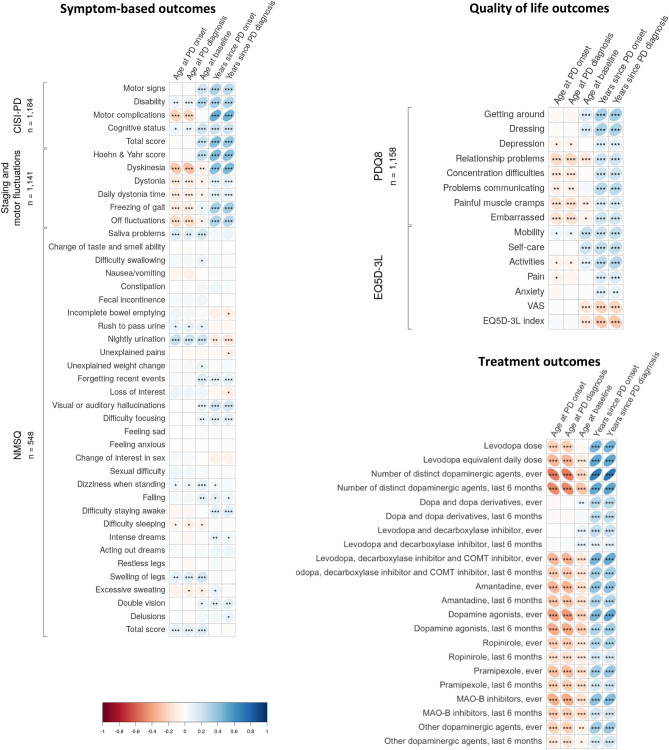
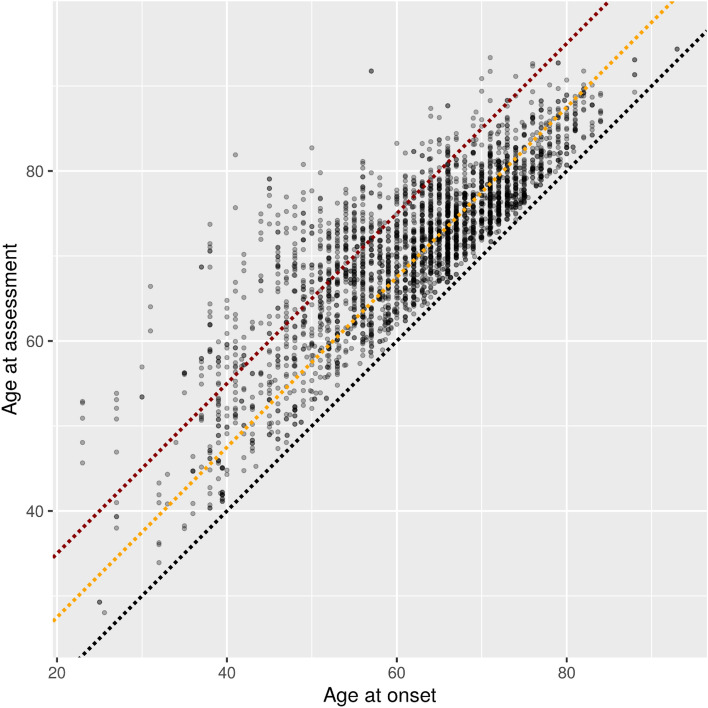
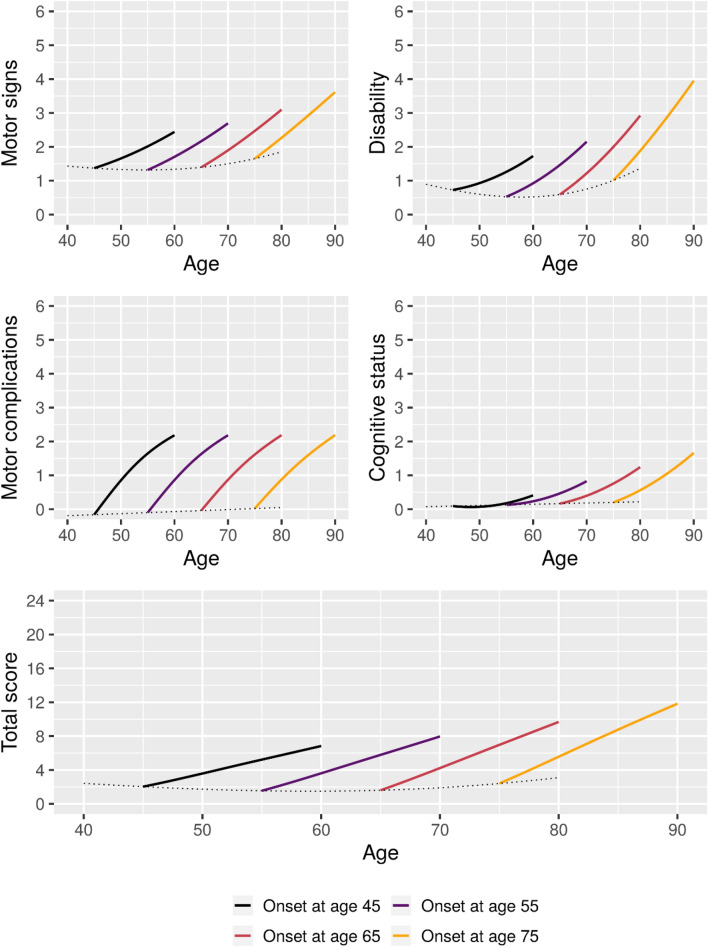
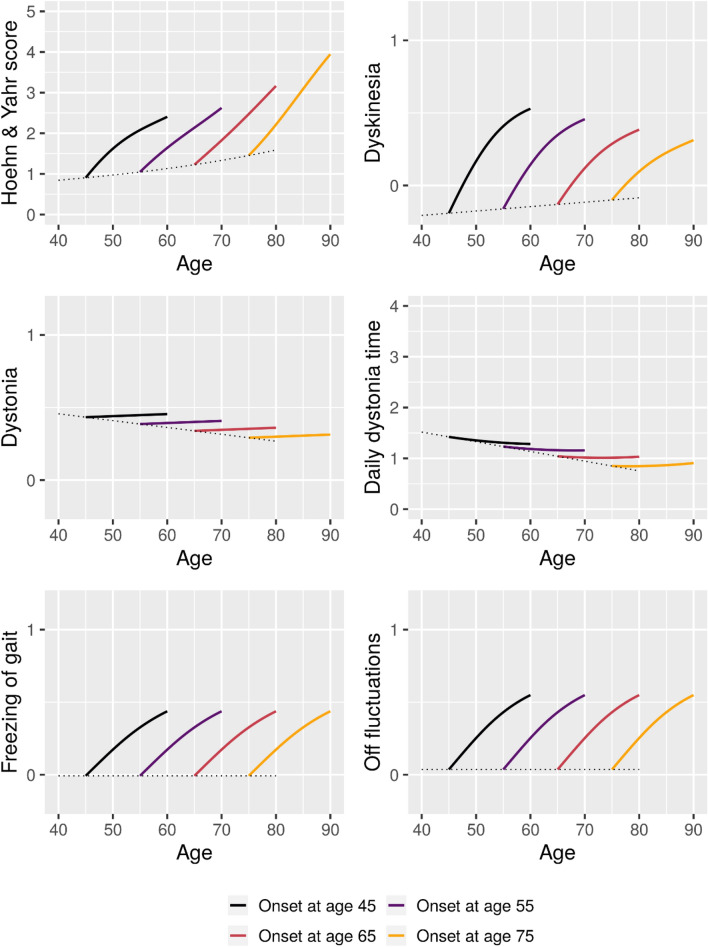
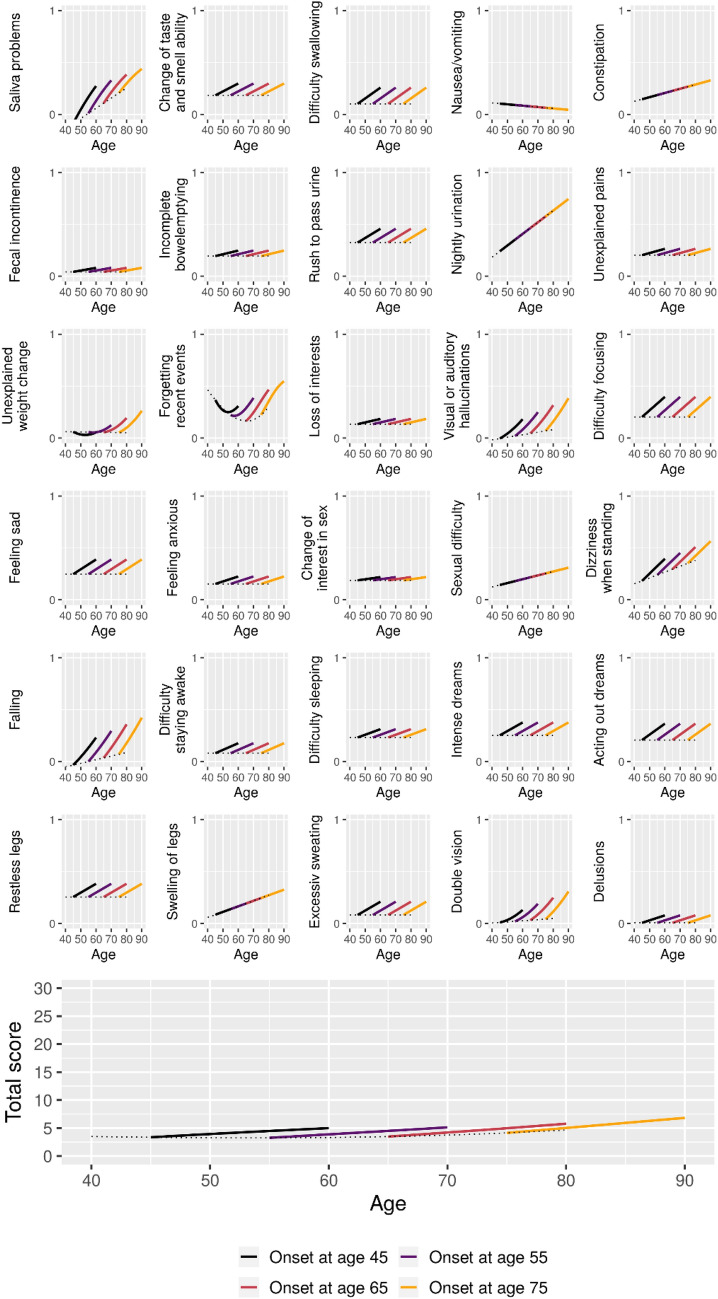
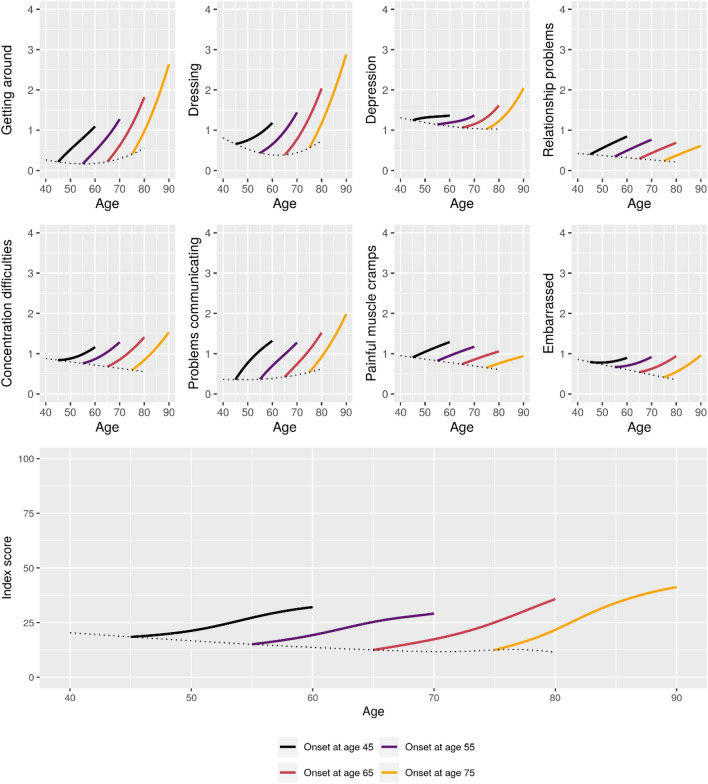
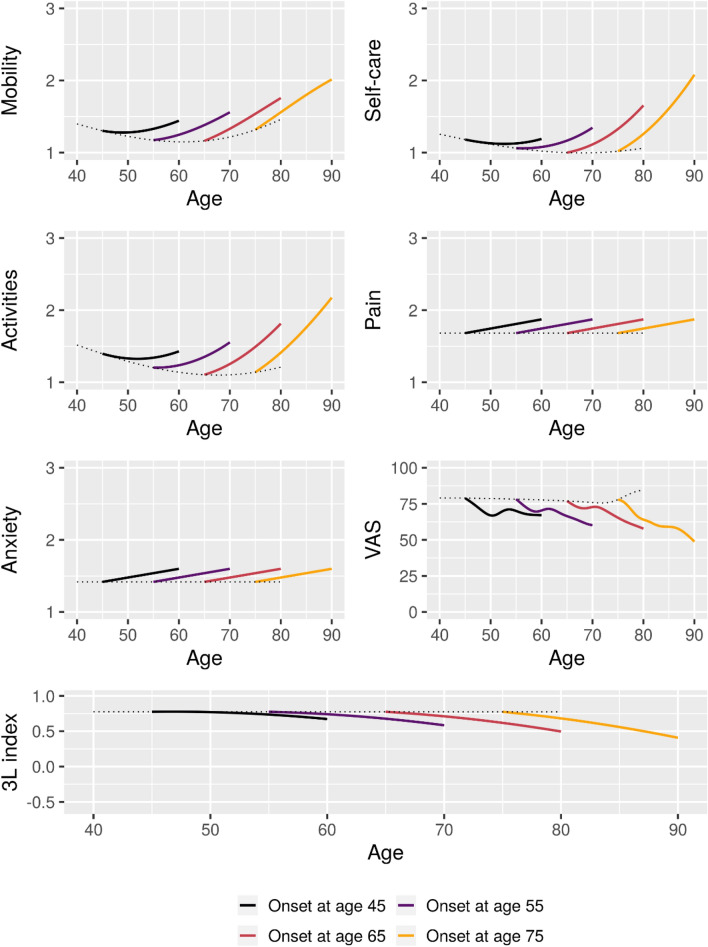
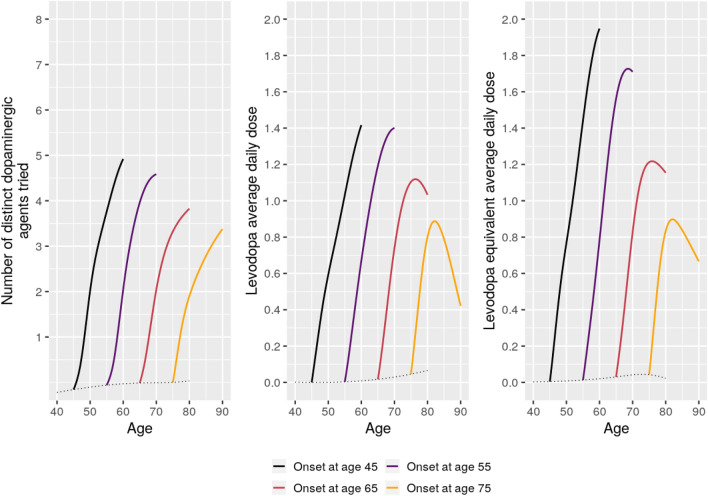
Verification
Claims the paper makes
The claims and statistics of this paper haven’t been checked yet.
Free: it reads the open-access text and checks the first 5 claims that cite a source we can check. Create a free account to check every claim.
Claims other papers make about this one
Each is checked against this paper’s own text: does it say what the citing paper says it does?
The check wasn’t confident either way, so it gives no verdict — never disputed.
In the citing paper
“Despite their shared pathological stages, these diseases display striking differences in the average age of onset [64,65,66,67].”
From The Impact of Neurotoxin Proteins Trafficked by Primary Cilia and Extracellular Vesicles in Neurodegenerative Diseases (2025) · cites this paper as [67]
Experimental — accuracy not yet measured
Self-check
Percentages, sums and reported differences re-computed from the paper’s own numbers.
The self-check needs the paper’s full text.
Citations
Cites
Fitting Linear Mixed-Effects Models Using lme4
Bates, D., Mächler, M., Bolker, B., & Walker, S. (2015) · Journal of Statistical Software · doi:10.18637/jss.v067.i01 · Cited by 86,835
EuroQol: a new facility for the measurement of health-related quality of life
(1990) · Health Policy · doi:10.1016/0168-8510(90)90421-9 · Cited by 15,736
Parkinsonism: onset, progression, and mortality
Hoehn, M. M., & Yahr, M. D. (1967) · Neurology · doi:10.1212/wnl.17.5.427 · Cited by 12,107
Overdependence on degraded gist memory in Alzheimer's disease.
Gallo, D. A., Shahid, K. R., Olson, M. A., Solomon, T. M., Schacter, D. L., & Budson, A. E. (2006) · Neuropsychology · doi:10.1037/0894-4105.20.6.625 · Cited by 4,732
Epidemiology of Parkinson's disease
de Lau, L. M., & Breteler, M. M. (2006) · The Lancet Neurology · doi:10.1016/s1474-4422(06)70471-9 · Cited by 4,110
Goetz, C. G., Fahn, S., Martinez‐Martin, P., Poewe, W., Sampaio, C., Stebbins, G. T., Stern, M. B., Tilley, B. C., Dodel, R., Dubois, B., et al. (2007) · Movement Disorders · doi:10.1002/mds.21198 · Cited by 1,404
Variable expression of Parkinson's disease: A base‐line analysis of the DAT ATOP cohort
Jankovic, J., McDermott, M., Carter, J., Gauthier, S., Goetz, C., Golbe, L., Huber, S., Koller, W., Olanow, C., Shoulson, I., et al. (1990) · Neurology · doi:10.1212/wnl.40.10.1529 · Cited by 1,285
Chaudhuri, K. R., Martinez‐Martin, P., Schapira, A. H. V., Stocchi, F., Sethi, K., Odin, P., Brown, R. G., Koller, W., Barone, P., MacPhee, G., et al. (2006) · Movement Disorders · doi:10.1002/mds.20844 · Cited by 1,100
Self-citationChaudhuri, K. R., Martinez‐Martin, P., Brown, R. G., Sethi, K., Stocchi, F., Odin, P., Ondo, W., Abe, K., MacPhee, G., MacMahon, D., et al. (2007) · Movement Disorders · doi:10.1002/mds.21596 · Cited by 1,087
Self-citationRobinson, J. L., Lee, E. B., Xie, S. X., Rennert, L., Suh, E., Bredenberg, C., Caswell, C., Van Deerlin, V. M., Yan, N., Yousef, A., et al. (2018) · Brain · doi:10.1093/brain/awy146 · Cited by 729
Cited by
Cai, X., Chen, Z., He, C., Zhang, P., Nie, K., Qiu, Y., Wang, L., Wang, L., Jing, P., & Zhang, Y. (2022) · CNS Neuroscience & Therapeutics · doi:10.1111/cns.13984 · Cited by 92
Sun, Q., Zhang, Y., Wang, S., Yang, F., Cai, H., Xing, Y., Zhou, L., Chen, S., & Wang, Y. (2022) · Experimental Cell Research · doi:10.1016/j.yexcr.2022.113132 · Cited by 31
High risk of developing dementia in Parkinson’s disease: a Swedish registry-based study
Åström, D. O., Simonsen, J., Rakêt, L. L., Sgarbi, S., Hellsten, J., Hagell, P., Norlin, J. M., Kellerborg, K., Martínez‐Martín, P., & Odin, P. (2022) · Scientific Reports · doi:10.1038/s41598-022-21093-8 · Cited by 33
Self-citationNassar, A., Satarker, S., Gurram, P. C., Upadhya, D., Fayaz, S., & Nampoothiri, M. (2023) · Molecular Neurobiology · doi:10.1007/s12035-023-03437-1 · Cited by 30
Mammen, J. R., Adams, J., Mangrum, R., Xiao, Y., Barbosa, W. A., Tyo, M. B., Redmond, C., Carter, C., Cifelli, K., Cifelli, R., et al. (2025) · npj Parkinson's Disease · doi:10.1038/s41531-025-00907-2 · Cited by 31
Bosco, F., Ruga, S., Citraro, R., Leo, A., Guarnieri, L., Maiuolo, J., Oppedisano, F., Macrì, R., Scarano, F., Nucera, S., et al. (2023) · Nutrients · doi:10.3390/nu15153428 · Cited by 23
Advantages and Challenges of Platform Trials for Disease Modifying Therapies in Parkinson's Disease
Fabbri, M., Rascol, O., Foltynie, T., Carroll, C., Postuma, R. B., Porcher, R., & Corvol, J. (2024) · Movement Disorders · doi:10.1002/mds.29899 · Cited by 24
“…is essential and additional strati fi cation may be considered for factors known to impact disease progression, such as age at disease onset, 25 staging, genetic background, 26-28 comorbidities, 29 and phenotypic markers (ie, malignant/ intermediate/benign phenotypes) 30-32 to ensure…”
Changes in Action Tremor in Parkinson's Disease over Time: Clinical and Neuroimaging Correlates
van den Berg, K. R. E., Johansson, M. E., Dirkx, M. F., Bloem, B. R., & Helmich, R. C. G. (2024) · Movement Disorders · doi:10.1002/mds.30081 · Cited by 16
The status and natural impact of floriculture production in Ethiopia: a systematic review
Gelaye, Y. (2022) · Environmental Science and Pollution Research · doi:10.1007/s11356-022-24279-9 · Cited by 17
Longitudinal changes in hippocampal texture from healthy aging to Alzheimer’s disease
Wearn, A. R., Rakêt, L. L., Collins, D. L., Spreng, R. N., & Initiative, A. D. N. (2023) · Brain Communications · doi:10.1093/braincomms/fcad195 · Cited by 18
Temporal Trends in Parkinson’s Disease Related Mortality from 1999-2020: A National Analysis
Sokhal, B. S., Menon, S. P. K., Shepherd, T. A., Müller, S., Arora, A., & Mallen, C. D. (2024) · NIHR Open Research · doi:10.3310/nihropenres.13623.1 · Cited by 16
Clinical subtypes in patients with isolated REM sleep behaviour disorder
Seger, A., Ophey, A., Doppler, C. E. J., Kickartz, J., Lindner, M., Hommelsen, M., Fink, G. R., & Sommerauer, M. (2023) · npj Parkinson's Disease · doi:10.1038/s41531-023-00598-7 · Cited by 16
“Secondly, our fi nding on age-related subtypes aligns with previous reports in patients with PD, proposing a higher age at disease onset to predict a more aggressive PD phenotype 26,27 .”
ResultBrazdis, R.-M., von Zimmermann, C., Lenz, B., Kornhuber, J., & Mühle, C. (2024) · International Journal of Molecular Sciences · doi:10.3390/ijms25063219 · Cited by 13
Fekonja, Z., Irgolič, N., & Vrbnjak, D. (2024) · BMC Nursing · doi:10.1186/s12912-024-01767-6 · Cited by 11
Chen, Q., Scherbaum, R., Gold, R., Pitarokoili, K., Mosig, A., Zella, S. M. A., & Tönges, L. (2023) · Journal of Neural Transmission · doi:10.1007/s00702-023-02627-4 · Cited by 12
Fox Insight: Most Bothersome Symptoms in Early‐Stage Parkinson's Disease
Lerner, A., Mammen, J. R., Tyo, M. B., Auinger, P., Al‐Rubayie, R., Xiao, Y., Marras, C., & Adams, J. (2025) · Movement Disorders Clinical Practice · doi:10.1002/mdc3.14321 · Cited by 10
“19 Observed sex-speci fi c differences in bother-some symptoms also underscore the need for personalized treatment approaches to best address the experiences of each patient.”
Li, W., Pan, X., Li, M., Li, L., Zhang, M., liu, Z., Zhang, K., Guo, J., & Wang, H. (2023) · Neuroscience Letters · doi:10.1016/j.neulet.2023.137187 · Cited by 9
Molecular hydrogen therapy: A “democratic” emerging strategy against aging and age-related diseases
Brandi, G., Delbaldo, C., Deserti, M., Relli, V., Rimedio, S., Palloni, A., Deiana, C., Saccoccio, G., Ingenito, R., & Tavolari, S. (2025) · Ageing Research Reviews · doi:10.1016/j.arr.2025.102802 · Cited by 11
Impulse control in Parkinson’s disease: Distinct effects between action and choice
Warden, A. C. M., McAllister, C. J., Ruitenberg, M. F. L., & MacDonald, H. J. (2025) · Neuroscience & Biobehavioral Reviews · doi:10.1016/j.neubiorev.2025.106026 · Cited by 8
CSF GPNMB in Parkinson's disease: A potential association with age and microglial activation
Zhu, X., Mizutani, Y., Ohdake, R., Tatebe, H., Maeda, T., Shima, S., Ueda, A., Ito, M., Ito, S., Tokuda, T., et al. (2024) · Journal of Parkinson s Disease · doi:10.1177/1877718x241288712 · Cited by 8
Clinical, Genetic, and Imaging Characteristics of SCA27B : Insights from a Large Dutch Cohort
van Prooije, T. H., Pennings, M., Maas, R. P. P. W. M., de Vries, J., Verschuuren‐Bemelmans, C. C., Odekerken, V. J. J., Darweesh, S. K. L., Huisman, M., Oosterloo, M., Buijink, A. W. G., et al. (2026) · Movement Disorders · doi:10.1002/mds.70190 · Cited by 9
“Similar patterns have been observed in other neurodegenerative diseases, such as Parkinson ’ s disease (PD), where late onset has been associated with faster progression 23,24 mainly within the gait domain, compared with slower motor progression observed in early-onset PD.”
Impact of Y chromosome loss on the risk of Parkinson's disease and progression
Wang, J., Chen, X., Du, W., Lin, C., Yu, L., Corvol, J., Maple‐Grødem, J., Campbell, M. C., Elbaz, A., Lesage, S., et al. (2025) · EBioMedicine · doi:10.1016/j.ebiom.2025.105769 · Cited by 7
“68,69 Furthermore, higher educational attainment correlates with less severe motor impairment in PD. 70 Approximately 10 ⋅ 3% of individuals with PD have mutations in the GBA gene (one of the most important genetic risk factor for PD), 33 in which GBA carriers are linked to more rapid motor…”
Developing personalized treatment strategies for Parkinson’s disease based on disease subtypes
Hey, G. E., Eisinger, R. S., Guarín, D. L., Safarpour, D., Rodríguez‐Violante, M., & Ramirez‐Zamora, A. (2025) · Expert Review of Neurotherapeutics · doi:10.1080/14737175.2025.2552784 · Cited by 8
‘Pathology is disease’ Parkinson's mythology: The ‘brain-first-body-first’ case study
Espay, A. J., & Lees, A. J. (2025) · Journal of Parkinson s Disease · doi:10.1177/1877718x251377867 · Cited by 6
“…and longer survival than late-onset PD. 2 And contrary to a ‘ late-age-body-fi rst ’ subtype, disease progression is actually faster among those with older age at onset, 3 which is problematic for a model in which pathology, the presumed villain, begins far from its ultimate victim, the brain.”
Nishikawa, N., Tejima, S., Kamiyama, D., Kurita, M., Yamamoto, K., Imai, S., Sako, W., Oyama, G., Hatano, T., & Hattori, N. (2025) · npj Parkinson s Disease · doi:10.1038/s41531-025-01094-w · Cited by 7
“Patient age was also included, as it is known to relate to both blink dynamics and PD symptoms 23,27 .”
Child, B., Beu, N., Saywell, I., da Silva, R., Collins‐Praino, L. E., & Baetu, I. (2025) · Cognitive Affective & Behavioral Neuroscience · doi:10.3758/s13415-025-01343-8 · Cited by 5
Righi, S., Gronchi, G., Ramat, S., Gavazzi, G., Cecchi, F., & Viggiano, M. P. (2023) · Cognitive Affective & Behavioral Neuroscience · doi:10.3758/s13415-023-01069-5 · Cited by 5
Kim, H., Shulman, L. M., Shakya, S., & Gruber‐Baldini, A. L. (2023) · Parkinsonism & Related Disorders · doi:10.1016/j.parkreldis.2023.105892 · Cited by 5
Bayram, E., & Banks, S. J. (2024) · The Clinical Neuropsychologist · doi:10.1080/13854046.2024.2350096 · Cited by 5
Ca2+/calmodulin signaling in organismal aging and cellular senescence: Impact on human diseases
Berchtold, M. W., & Villalobo, A. (2024) · Biochimica et Biophysica Acta (BBA) - Molecular Basis of Disease · doi:10.1016/j.bbadis.2024.167583 · Cited by 8
Nanozymes in Parkinson's disease: strategic approaches, clinical considerations, and challenges
Huang, W., Ye, X., Huang, Z. J., Li, M., Yu, B., Ye, L., He, S., & Chen, C. (2025) · Journal of Materials Chemistry B · doi:10.1039/d5tb00295h · Cited by 4
Total physical activity matters for brain health
Anstey, K. J. (2024) · Nature Aging · doi:10.1038/s43587-024-00712-1 · Cited by 3
Cullen, E., Eccles, F. J. R., Byrne, G., Dow, M., Dwyer, B., O’Riordan, S., & O’Keeffe, F. M. (2024) · Disability and Rehabilitation · doi:10.1080/09638288.2024.2444481 · Cited by 3
Defining the unknowns for cell therapies in Parkinson's disease
Lane, E. L., & Lelos, M. J. (2022) · Disease Models & Mechanisms · doi:10.1242/dmm.049543 · Cited by 4
“This has been explored extensively elsewhere (Greenland et al., 2019; Raket et al., 2022), but, pertinent to this Review, many of the clinical transplantation studies (Table 1) occurred prior to any clear differentiation of specific PD phenotypes.”
BackgroundNeurocognitive Impairment and Social Cognition in Parkinson’s Disease Patients
Doskas, T. K., Vadikolias, Κ., Ntoskas, K. T., Vavougios, G. D., Tsiptsios, D., Stamati, P., Liampas, I., Siokas, V., Messinis, L., Nasios, G., et al. (2024) · Neurology International · doi:10.3390/neurolint16020032 · Cited by 7
Danna, R., Kondle, S., Amar, O., Mabourakh, M., Chen, G., Fadol, W. B., & Mohieldin, A. M. (2025) · Biology · doi:10.3390/biology14121787 · Cited by 2
“Despite their shared pathological stages, these diseases display striking differences in the average age of onset [64–67].”
Bopp, V., LeeBae, J., Oeckl, P., Kühlwein, J. K., Grozdanov, V., Kiechle, M., Mayer, B., Moehrle, B., Geiger, H., & Danzer, K. M. (2025) · iScience · doi:10.1016/j.isci.2025.114217 · Cited by 4
Belickienė, V., Pranckevičienė, A., Radžiūnas, A., Strigauskaitė, A., Laucius, O., & Vaitkienė, P. (2026) · Journal of Neurochemistry · doi:10.1111/jnc.70355 · Cited by 2
Costanzo, M., Canevelli, M., Bartolo, M. I. D., Valletta, M., Marchet, F., Blasi, M. T., Leodori, G., Conte, A., Bruno, G., Fabbrini, G., et al. (2026) · GeroScience · doi:10.1007/s11357-026-02148-4 · Cited by 2
Zhou, Y., Li, Y., Li, J., Wei, Q., Fan, L., Zhang, X., & Yang, L. (2025) · BMC Geriatrics · doi:10.1186/s12877-025-05790-3 · Cited by 3
Clinical progression of Parkinson’s disease in the early 21st century: Insights from AMP-PD datasetPreprint
Lewis, M. M., Cheng, X. V., Du, G., Zhang, L., Li, C., Jesus, S. D., Tabbal, S. D., Mailman, R. B., Li, R., & Huang, X. (2024) · medRxiv · doi:10.1101/2024.01.29.24301950 · Cited by 2
Progression in Parkinson's Disease
Irmady, K., & Przedborski, S. (2025) · Cold Spring Harbor Perspectives in Medicine · doi:10.1101/cshperspect.a041641 · Cited by 5
Marano, N., & Lindell, A. (2024) · Applied neuropsychology. Adult · doi:10.1080/23279095.2024.2338803 · Cited by 1
Moura, M., Ferreira, M. L. V., Speri, F. D., Alves, L. C. M., Rostirola, J. V. C., de Campos, E. D., & Conceição, M. S. (2025) · Frontiers in Physiology · doi:10.3389/fphys.2025.1700510 · Cited by 2
Ledda, C., Gallo, S., Avenali, M., Artusi, C. A., Imbalzano, G., Donetto, F., Montanaro, E., Romagnolo, A., Mitrotti, P., Gallo, L., et al. (2026) · Journal of Neurology · doi:10.1007/s00415-026-13639-x · Cited by 1
Vicentin, S., Chiriatti, L., & Cona, G. (2026) · PeerJ · doi:10.7717/peerj.20725 · Cited by 1
“Based on previous work, we expected age to reflect general socio-emotional processed associated with healthy aging ( Gobbo, Trapattoni & Romano, 2025 ), and years since diagnosis to capture PD-specific progression effects ( Raket et al., 2022 ).”
InfluentialLipid Acyl Chain-Driven α-Synuclein Fibril Polymorphisms and Neuronal Pathologies
Baek, Y., Alim, A., Dong, Y., Olabi, T., Paek, J., & Lee, M. (2026) · ACS Chemical Neuroscience · doi:10.1021/acschemneuro.5c00730 · Cited by 5
Ye, Z., Zhang, S., Liu, Z., Wang, J., Li, J., Yu, X., Yuan, X., Chen, Z., Yuan, Z., Yang, Z., et al. (2026) · npj Parkinson's Disease · doi:10.1038/s41531-026-01308-9 · Cited by 1
“These disparities are particularly evident in non-motor manifestations such as cognitive decline and autonomic dysfunction (AutD), suggesting that AAO may modulate underlying pathological mechanisms 5 .”
Ho, K. C., Li, S., Serrano-Amenos, C., Kowahl, N., Rainaldi, E., Chen, C., Bloem, B. R., Sanders, L. H., Shih, L. C., Siderowf, A. D., et al. (2026) · npj Parkinson s Disease · doi:10.1038/s41531-026-01358-z · Cited by 1
Park, C. W., Park, S., Chung, S. J., Lee, P. H., & Kim, D. (2026) · Cell stem cell · doi:10.1016/j.stem.2026.07.002 · Cited by 1
Ribeiro, J. V., Mojica, E. P., Soto-Rodríguez, A., Gianlorenço, A. C., Pacheco‐Barrios, K., & Fregni, F. (2026) · Brain Sciences · doi:10.3390/brainsci16090925 · Cited by 1
Gómez-Pascual, A., Martirosyan, A., Hebestreit, K., Mameffe, C., Poovathingal, S. K., Belgard, T. G., Altar, C. A., Kottick, A., Holt, M., Hanson-Smith, V. J., et al. (2022) · bioRxiv (Cold Spring Harbor Laboratory) · doi:10.1101/2022.12.13.514863 · Cited by 1
A Novel Approach to Parkinson's Disease Progression Evaluation Using Convolutional Neural Networks
Zineddine, M. (2022) · International Journal of Software Innovation · doi:10.4018/ijsi.315655 · Cited by 1
Kambey, P. A., Wu, J., Liu, W., Su, M., Buberwa, W., & Tang, C. (2024) · Gene Therapy · doi:10.1038/s41434-024-00492-8 · Cited by 1
Classification of Parkinson’s and Control Subjects with Machine Learning
Ritu, R., Pandit, M., & Bhoi, A. K. (2024) · Lecture notes in electrical engineering · doi:10.1007/978-981-97-6465-5_8
Altschuck, N., van Munster, M., Stümpel, J., Pedrosa, D. J., Wellach, I., Böbinger, H., & Geraedts, M. (2024) · BMJ Neurology Open · doi:10.1136/bmjno-2024-000966 · Cited by 1
Thiel, M. F., & Jost, W. H. (2025) · DNP – Die Neurologie & Psychiatrie · doi:10.1007/s15202-025-6495-9
Wearable tracking of walking and non-walking as progression markers in early Parkinson’s diseasePreprint
Ho, K. C., Li, S., Serrano-Amenos, C., Kowahl, N., Rainaldi, E., Chen, C., Bloem, B. R., Sanders, L. H., Shih, L. C., Siderowf, A. D., et al. (2025) · medRxiv · doi:10.1101/2025.08.19.25333986
Molecular aging is the main driver of Parkinson’s DiseasePreprint
Bopp, V., LeeBae, J., Oeckl, P., Kühlwein, J. K., Grozdanov, V., Kiechle, M., Mayer, B., Möhrle, B., Geiger, H., & Danzer, K. M. (2025) · bioRxiv (Cold Spring Harbor Laboratory) · doi:10.1101/2025.08.27.672359
Ibrahim, M. K., Mohammed, S. I., & AlGawwam, G. (2025) · Al-Rafidain Journal of Medical Sciences · doi:10.54133/ajms.v9i2.2361
Understanding levodopa-based therapies for Parkinson’s disease and their constraints
Nand, S., Singh, P., & Goel, F. (2025) · Elsevier eBooks · doi:10.1016/b978-0-443-34201-1.00009-0
Fekonja, Z., Irgolič, N., & Vrbnjak, D. (2024) · Figshare · doi:10.6084/m9.figshare.26677604
Shah, R., Salek, S., Ali, F. M., Otwombe, K. N., Nixon, S. J., Nixon, M.-E., Ingram, J. R., & Finlay, A. Y. (2026) · Journal of Parkinson s Disease · doi:10.1177/1877718x261428288
“1,2 A progressive decline in functional abilities may render the individual incapable of self-care, resulting in partial or complete dependence on others.”
Micalos, P. S., Bramble, M., Fealy, S. M., Logan, P., & Wong, A. (2026) · Public Health · doi:10.1016/j.puhe.2026.106298
Ramzi, A., Amin, M., Samir, M., Rouby, R. A., Elnady, D. G., Srour, M. F., Amer, H., Elnawagy, E. E., El-Adawy, A. F. I., Meshref, M. M., et al. (2026) · The Egyptian Journal of Neurology Psychiatry and Neurosurgery · doi:10.1186/s41983-026-01175-4
Au, K. L. K., Pahwa, V., Lyons, K. E., & Pahwa, R. (2026) · Clinical Parkinsonism & Related Disorders · doi:10.1016/j.prdoa.2026.100481
Madny, M. A., & Yadav, K. S. (2026) · European Journal of Pharmaceutics and Biopharmaceutics · doi:10.1016/j.ejpb.2026.115179
Thijs, Z., Bain, K. E., & Dumican, M. (2026) · Frontiers in Aging Neuroscience · doi:10.3389/fnagi.2026.1932141
“Biological sex and age of the participant, as well as disease duration were added as independent variables, given that these factors can impact Parkinson’s disease progression and symptom manifestation (Picillo et al., 2021; Virameteekul et al., 2021; Raket et al., 2022; Hanff et al., 2025).”
Zhang, C., Jia, Z., Wang, Y., & Zang, W. (2026) · PLoS ONE · doi:10.1371/journal.pone.0359274
Metadata
- Authors
- Raket, L. L., Oudin Åström, D., Norlin, J. M., Kellerborg, K., Martinez-Martin, P., & Odin, P.
- Affiliations
- Swedish Institute for Health Economics (SE)
- Lund University (SE)
- Corresponding author
- Odin, Per
- Venue
- Scientific Reports
- Published
- 2022-01-11
- Volume
- 12
- Issue
- 1
- Pages
- 526-526
- ISSN
- 2045-2322 (ISSN-L)
- PMC
- PMC8752787
- OpenAlex
- W4205777611
- Cited by
- 72
- References
- 28
- Citations by year
- 2026: 17 · 2025: 22 · 2024: 18 · 2023: 8 · 2022: 7
- FWCI
- 7.24
- Type
- journal article
- Language
- en
- Open access
- gold
- doi.org
- Licence
- cc-by
- creativecommons.org/licenses/by/4.0 (tdm)
- creativecommons.org/licenses/by/4.0 (vor)
- Locations
- Scientific Reports (publishedVersion, cc-by)
- PubMed Central (publishedVersion, cc-by)
- PubMed (publishedVersion)
- DOAJ (DOAJ: Directory of Open Access Journals) (submittedVersion, cc-by-sa)
- Lund University Publications (Lund University) (submittedVersion)
- Funders
- Lundbeck A/S
- The Swedish National Government and County Councils
- Skåne University Hospital Foundations and Donations
- Lund University Medical Faculty
- Swedish Parkinson Academy
- Multipark
- Lund University
- Topics
- Health Sciences › Medicine › Clinical Neurology › Parkinson's Disease Mechanisms and Treatments
- Health Sciences › Medicine › Clinical Neurology › Deep Brain Stimulation and Movement Disorders
- Health Sciences › Medicine › Psychiatry and Mental health › Dementia and Cognitive Impairment Research
- Keywords
- Parkinson's disease, age of onset, disease progression, aging, motor symptoms, non-motor symptoms, health-related quality of life, dyskinesia, antiparkinsonian therapy, symptom trajectories
- MeSH terms
- Aged, Aged, 80 and over, Antiparkinson Agents, Female, Humans, Levodopa, Longitudinal Studies, Male, Middle Aged, Parkinson Disease, Quality of Life, Sweden, Cohort Studies, Age of Onset, Disease Progression
About these checks
Registry, retraction, Cites and statistics results are computed, not judged, with one exception: a printed reference that no index lists is read once by a model before it counts as a citation error. Claims are extracted by a model and kept only when their quote appears verbatim in the text; each cited source is then checked, with a model’s help, for whether it says what the claim relies on. Those verdicts can be wrong — read the claim’s quote and the cited source before relying on one.
Statistics and arithmetic are recomputed, not judged.
Confidence bands are shown only for fields calibrated on our annotated test set. None is calibrated yet, so no band is shown.
What counts as a claim ›How we measure confidence ›How we check this ›
Are you an author, or do you see a problem with this page? Request a review
Data sources
Bibliographic data: Semantic Scholar, OpenAlex, Crossref.
Contains information from the Semantic Scholar Academic Graph Datasets, made available under the ODC Attribution License (ODC-BY 1.0).
Semantic Scholar’s data is described in: Kinney, R., et al. (2023). The Semantic Scholar Open Data Platform. arXiv:2301.10140.
