

Association of maternal pre-pregnancy low or increased body mass index with adverse pregnancy outcomes
Open accessThe DOI matches its Crossref record; 34 of the 34 references it cites were found in a registry or an index.
Abstract
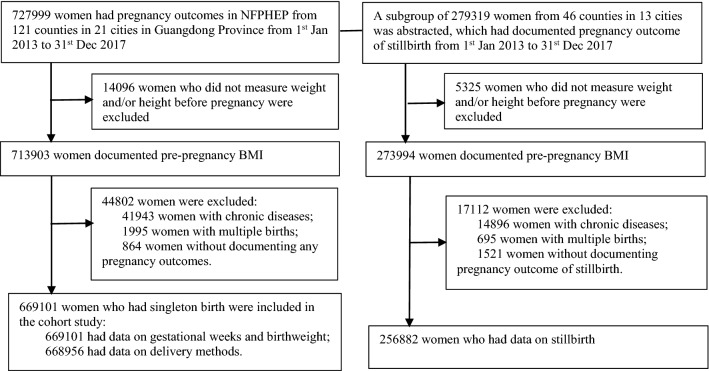
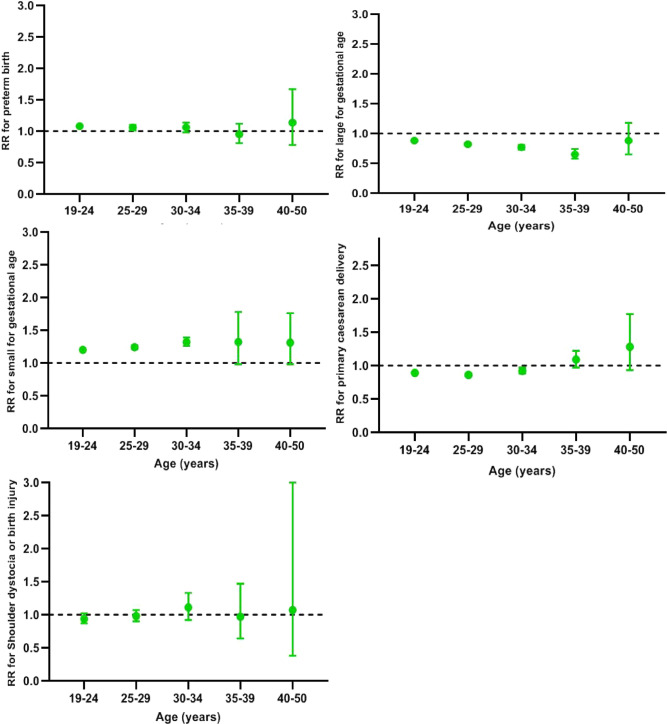
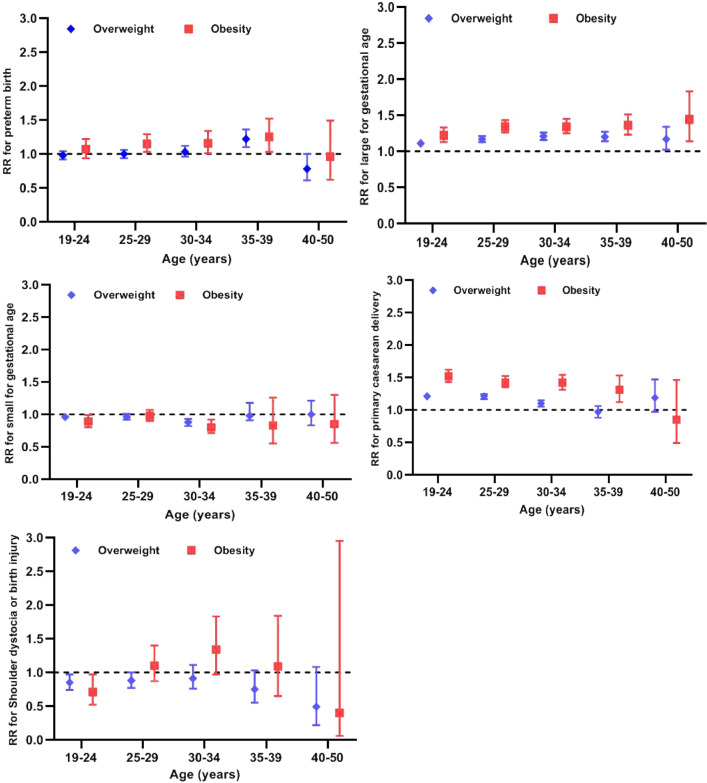
This study investigated the association between pre-pregnancy body mass index (BMI) and adverse pregnancy outcomes among women participated in the National Free Preconception Health Examination Project in Guangdong Province, China, and explored these associations according to maternal age. Pre-pregnancy BMI was classified into underweight (BMI < 18.5 kg/m 2), healthy weight (18.5–23.9 kg/m 2), overweight (24.0–27.9 kg/m 2), and obesity (≥ 28.0 kg/m 2) according to Chinese criteria. Outcomes were preterm birth (PTB, delivery before 37 weeks of gestation), large for gestational age (LGA, birthweight above the 90th percentile for gestational age by infants’ sex), small for gestational age (SGA, birthweight below the 10th percentile for gestational age by infants’ sex), primary caesarean delivery, shoulder dystocia or birth injury, and stillbirth. Adjusted incidence risk ratios (aIRR) were calculated for underweight, overweight and obesity, respectively. Compared with healthy weight, underweight was associated with increased risk of PTB (aIRR 1.06, 95%CI 1.04–1.09) and SGA (1.23, 1.22–1.26) but inversely associated with LGA (0.83, 0.82–0.85), primary caesarean delivery (0.88, 0.87–0.90) and stillbirth (0.73, 0.53–0.99). Overweight was associated with increased risk of LGA (1.17, 1.14–1.19), primary caesarean delivery (1.18, 1.16–1.20) and stillbirth (1.44, 1.03–2.06), but inversely associated with SGA (0.92, 0.90–0.95) and shoulder dystocia or birth injury (0.86, 0.79–0.93). Obesity was associated with increased risk of PTB (1.12, 1.05–1.20), LGA (1.32, 1.27–1.37), primary caesarean delivery (1.45, 1.40–1.50), but inversely associated with SGA (0.92, 0.87–0.97). The aIRRs for underweight, overweight and obesity in relation to these adverse pregnancy outcomes ranged from 0.65 to 1.52 according to maternal age. In Chinese population, maternal pre-pregnancy BMI was significantly associated with the risk of adverse pregnancy outcomes and the risk differs according to maternal age. Further investigation is warranted to determine whether and how counselling and interventions for women with low or increased BMI before pregnancy can reduce the risk of adverse pregnancy outcomes.
Overview
The claims and statistics of this paper haven’t been checked yet.
Free: it reads the open-access text and checks the first 5 claims that cite a source we can check. Create a free account to check every claim.
Integrity signals
Registry
Cites
Statistics
Figures
Verification
Claims the paper makes
The claims and statistics of this paper haven’t been checked yet.
Free: it reads the open-access text and checks the first 5 claims that cite a source we can check. Create a free account to check every claim.
Claims other papers make about this one
Each is checked against this paper’s own text: does it say what the citing paper says it does?
The source backs part of the claim, not all of it — or backs it for a different population, condition or comparison.
In the citing paper
“Accumulating evidences showed that maternal pre-pregnancy overweight/obesity increased the risks of adverse perinatal outcomes such as preterm birth, large-for-gestational age (LGA) and macrosomia, while maternal underweight was related to low birth weight and small-for-gestational age (SGA) in non-diabetic population [4–6].”
From Associations of maternal pre-pregnancy BMI and gestational weight gain with the risks of adverse pregnancy outcomes in Chinese women with gestational diabetes mellitus (2023) · cites this paper as [5]
Experimental — accuracy not yet measuredThe source backs part of the claim, not all of it — or backs it for a different population, condition or comparison.
In the citing paper
“Accumulating evidences showed that maternal pre-pregnancy overweight/obesity increased the risks of adverse perinatal outcomes such as preterm birth, large-for-gestational age (LGA) and macrosomia, while maternal underweight was related to low birth weight and small-for-gestational age (SGA) in non-diabetic population [4–6].”
From Associations of maternal pre-pregnancy BMI and gestational weight gain with the risks of adverse pregnancy outcomes in Chinese women with gestational diabetes mellitus (2023) · cites this paper as [5]
Experimental — accuracy not yet measured
Self-check
Percentages, sums and reported differences re-computed from the paper’s own numbers.
The self-check needs the paper’s full text.
Citations
Cites
Hyperglycemia and adverse pregnancy outcomes
(2008) · New England Journal of Medicine · doi:10.1056/nejmoa0707943 · Cited by 5,563
Maternal age and fetal loss: population based register linkage study
Andersen, A.-M. N. (2000) · BMJ · doi:10.1136/bmj.320.7251.1708 · Cited by 1,690
Catalano, P. M., & Shankar, K. (2017) · BMJ · doi:10.1136/bmj.j1 · Cited by 1,306
Preconceptional and maternal obesity: epidemiology and health consequences
Poston, L., Caleyachetty, R., Cnattingius, S., Corvalán, C., Uauy, R., Herring, S., & Gillman, M. W. (2016) · The Lancet Diabetes & Endocrinology · doi:10.1016/s2213-8587(16)30217-0 · Cited by 1,111
Role of maternal age and pregnancy history in risk of miscarriage: prospective register based study
Magnus, M. C., Wilcox, A. J., Morken, N.-H., Weinberg, C. R., & Håberg, S. E. (2019) · BMJ · doi:10.1136/bmj.l869 · Cited by 698
Effect of body mass index on pregnancy outcomes in nulliparous women delivering singleton babies
Bhattacharya, S., Campbell, D. M., Liston, W. A., & Bhattacharya, S. (2007) · BMC Public Health · doi:10.1186/1471-2458-7-168 · Cited by 688
Association of Gestational Weight Gain With Adverse Maternal and Infant Outcomes
LifeCycle Project-Maternal Obesity and Childhood Outcomes Study Group, Voerman, E., Santos, S., Inskip, H., Amiano, P., Barros, H., Charles, M.-A., Chatzi, L., Chrousos, G. P., Corpeleijn, E., et al. (2019) · JAMA · doi:10.1001/jama.2019.3820 · Cited by 630
Santos, S., Voerman, E., Amiano, P., Barros, H., Beilin, L., Bergström, A., Charles, M., Chatzi, L., Chevrier, C., Chrousos, G., et al. (2019) · BJOG: An International Journal of Obstetrics & Gynaecology · doi:10.1111/1471-0528.15661 · Cited by 591
Hyperglycemia and Adverse Pregnancy Outcomes: The HAPO Study Cooperative Research Group
(2008) · Obstetrical & Gynecological Survey · doi:10.1097/ogx.0b013e318187b7a2 · Cited by 488
de La Rochebrochard, E., & Thonneau, P. (2002) · Human Reproduction · doi:10.1093/humrep/17.6.1649 · Cited by 471
Research works printed but not linked: 1
- Department of Science and Technology National Health and Family Planning Commission of the People’s Republic of China, National Family Planning and Reproductive Health Research Community Guides of preconception risk assessment 2014 2014 Beijing People’s Medical Publishing House
Cited by
Nakanishi, K., Saijo, Y., Yoshioka, E., Sato, Y., Kato, Y., Nagaya, K., Takahashi, S., Ito, Y., Kobayashi, S., Miyashita, C., et al. (2022) · BMC Pregnancy and Childbirth · doi:10.1186/s12884-022-04418-3 · Cited by 57
Ke, J.-F., Liu, S., Ge, R.-L., Ma, L., & Li, M.-F. (2023) · BMC Pregnancy and Childbirth · doi:10.1186/s12884-023-05657-8 · Cited by 50
Sominsky, L., O’Hely, M., Drummond, K. D., Cao, S., Collier, F., Dhar, P., Loughman, A., Dawson, S. L., Tang, M. L. K., Mansell, T., et al. (2023) · Brain Behavior and Immunity · doi:10.1016/j.bbi.2023.07.005 · Cited by 43
Monnet, A. M., Savoy, D., Préaubert, L., Hoffmann, P., & Betry, C. (2022) · Nutrients · doi:10.3390/nu15010057 · Cited by 41
Yin, Y.-H., Zhou, S.-Y., Lu, D., Chen, X., Liu, B., Lü, S., Han, X., & Wu, A. (2023) · Frontiers in Endocrinology · doi:10.3389/fendo.2023.1216413 · Cited by 34
Chen, W., Li, B., Wang, H., Wei, G., Chen, K., Wang, W., Wang, S., & Liu, Y. (2024) · BMC Cardiovascular Disorders · doi:10.1186/s12872-024-03831-0 · Cited by 26
“BMI was divided into three subgroups based on the Chinese criteria [30, 31]: 18.5 kg/m 2 , 18.5– 23.9 kg/m 2 , and ≥ 24.0 kg/m 2 .”
MethodInfluentialZhong, J., Zhang, H., Wu, J., Zhang, B., & Lan, L. (2024) · International Journal of General Medicine · doi:10.2147/ijgm.s473972 · Cited by 20
Thornton, H. V., Cornish, R., & Lawlor, D. A. (2023) · EClinicalMedicine · doi:10.1016/j.eclinm.2023.102351 · Cited by 15
Maternal Lipid Metabolism Is Associated With Neonatal Adiposity: A Longitudinal Study
Rojas-Rodriguez, R., Price, L. L., Somogie, J., Mouzon, S. H., Kalhan, S. C., & Catalano, P. M. (2022) · The Journal of Clinical Endocrinology & Metabolism · doi:10.1210/clinem/dgac360 · Cited by 13
Jiang, H., Jia, Y., Wang, X., Zhang, C., Li, Y., & Wang, H. (2023) · Global Health Action · doi:10.1080/16549716.2023.2213494 · Cited by 17
“Low levels of pre-pregnancy fat reserves, inadequate nutrition, and the loss of micronutrients during pregnancy contribute to adverse outcomes [22,26,27].”
BackgroundQiu, J., Liang, Z., Yi, J., Xie, L., Xiang, Q., Luo, X., & Zhao, Q. (2023) · Frontiers in Public Health · doi:10.3389/fpubh.2023.1156880 · Cited by 13
Self-citationGu, X., Luo, Y., Lai, C., & Liu, Y. (2025) · International Journal of General Medicine · doi:10.2147/ijgm.s537679 · Cited by 4
Risk Factors of Pregnancy Failure in Infertile Patients Undergoing Assisted Reproductive Technology
Yi, H., Yang, M., Tang, H., & Lin, M. (2022) · International Journal of General Medicine · doi:10.2147/ijgm.s394236 · Cited by 9
Katsonouri, A., Gabriel, C., Esteban, M., Namorado, S., Halldorsson, T. I., Tratnik, J. S., Martín, L. R., Karakoltzidis, A., Chatzimpaloglou, A., Giannadaki, D., et al. (2023) · International Journal of Hygiene and Environmental Health · doi:10.1016/j.ijheh.2023.114213 · Cited by 9
Wei, G., Li, B., Wang, H., Chen, L., Chen, W., Chen, K., Wang, W., Wang, S., Zeng, H., Liu, Y., et al. (2024) · BMC Cardiovascular Disorders · doi:10.1186/s12872-024-04169-3 · Cited by 10
“According to the height and weight standards of the Chinese population, BMI was divided into three grades: 18.5 kg/m 2 , 18.5–23.9 kg/m 2 , and ≥ 24.0 kg/m 2 [36, 37].”
MethodInfluentialHan, W., Xiong, N., Zhong, R., & Pan, Z. (2024) · International Journal of General Medicine · doi:10.2147/ijgm.s489235 · Cited by 9
Li, Y., Zhong, W., Huang, C., Peng, J., & Li, H. (2024) · BMC Cardiovascular Disorders · doi:10.1186/s12872-024-04021-8 · Cited by 6
“BMI was divided into three subgroups based on the Chinese criteria [28, 29]: 18.5 kg/m 2 , 18.5–23.9 kg/m 2 , and ≥ 24.0 kg/m 2 .”
MethodInfluentialXiong, N., Han, W., & Yu, Z. (2024) · International Journal of General Medicine · doi:10.2147/ijgm.s486873 · Cited by 7
Zheng, Z., Peng, G., & Xiao, Y. (2025) · Journal of Clinical Laboratory Analysis · doi:10.1002/jcla.70109 · Cited by 5
Before Is Better: Innovative Multidisciplinary Preconception Care in Different Clinical Contexts
Cristodoro, M., Dell’avanzo, M., Ghio, M., Lalatta, F., Vena, W., Lania, A. G., Sacchi, L., Bravo, M., Bulfoni, A., Simone, N. D., et al. (2023) · Journal of Clinical Medicine · doi:10.3390/jcm12196352 · Cited by 8
“In obese women (BMI > 28 kg/m2), there was an increased risk of preterm birth, high gestational age, and primary caesarean delivery [3].”
BackgroundTrajectory of gestational weight gain is related to birthweight: The TAWS cohort study in China
Wang, J., Li, J., Yang, Z., Duan, Y., Li, F., Zhou, P., & Lai, J. (2024) · Maternal and Child Nutrition · doi:10.1111/mcn.13578 · Cited by 4
Li, Y., Zhong, W., Liu, Z., Huang, C., Peng, J., & Li, H. (2024) · International Journal of General Medicine · doi:10.2147/ijgm.s475756 · Cited by 5
Chen, W., Liu, Y., Deng, X., Li, B., Wang, H., Wei, G., Chen, K., & Wang, S. (2024) · International Journal of General Medicine · doi:10.2147/ijgm.s486187 · Cited by 4
Factors influencing the birth weight of ART-conceived offspring
Li, B., He, D., Zhu, H., Li, Y., Ye, W., Guo, D., Yu, M., Wu, Y., Cai, J., Ji, L., et al. (2025) · Journal of Assisted Reproduction and Genetics · doi:10.1007/s10815-025-03617-z · Cited by 5
“…increases PTB, FGR, and LBW risks (with ART populations being generally older); high maternal BMI correlates positively with LGA, while low BMI elevates PTB/SGA susceptibility [124]; males typically exhibit higher birth weights than females [126]; and ethnic disparities are well established [123].”
Tighe, J., Theodorou, E., Anson, N., Kasaven, L. S., Jones, B. P., Odia, R. A., Cordero, J., & Nagi, J. B. (2025) · Human Reproduction · doi:10.1093/humrep/deaf165 · Cited by 3
Kim, Y. J., Shin, J., Kim, T., Park, S. H., Lee, R., Park, Y. M., & Park, H. W. (2025) · Scientific Reports · doi:10.1038/s41598-025-22497-y · Cited by 3
Su, Y.-Y., Chen, C.-J., Chen, M., Lin, C.-C., Chiou, H., Hsieh, W.-S., Chang, H. C., Chen, C., & Chen, P.-C. (2026) · Journal of the Formosan Medical Association · doi:10.1016/j.jfma.2025.12.012 · Cited by 3
Zeng, S., Ou, B., Liu, Z., & Shi, F. (2026) · Frontiers in Endocrinology · doi:10.3389/fendo.2025.1739090 · Cited by 3
Liu, C. Y., Chen, Y., Pan, M., Lu, X., Xu, J., & Chen, X. (2025) · Pediatric Obesity · doi:10.1111/ijpo.13203 · Cited by 3
“…shown that a too low pre-pregnancy BMI can increase the risks of preterm birth, low birth weight (LBW) and being small for gestational age (SGA) 6,9,10 ; a too high pre-pregnancy BMI can increase the risks of stillbirth, first-time caesarean delivery, large for gestational age infants,…”
Self-citationRao, H., Wang, X., Luo, Y., Liang, L., Ye, W., & Guo, X. (2024) · International Journal of General Medicine · doi:10.2147/ijgm.s461004 · Cited by 3
Shen, W., Niu, A., Zhang, Q., Deng, J., Xu, X., Ma, X., Zhao, H., & Lou, Y. (2026) · PLoS ONE · doi:10.1371/journal.pone.0333081 · Cited by 3
Gan, Y., Zhu, R., Li, J., Wang, Q., & Meng, X. (2026) · Frontiers in Oncology · doi:10.3389/fonc.2026.1746164 · Cited by 2
Wu, J., Qiu, W., Lin, X., Wu, J., & Li, R. (2026) · Frontiers in Endocrinology · doi:10.3389/fendo.2026.1760773 · Cited by 4
Hoffman, D., Kalma, Y., Samara, N., Herzberger, E. H., Levi, S., Groutz, A., Azem, F., & Amir, H. (2022) · Gynecological Endocrinology · doi:10.1080/09513590.2022.2068522 · Cited by 3
Wasan, Y., Baxter, J. B., Spiegel-Feld, C., Begum, K., Rizvi, A., Iqbal, J., Hulst, J. M., Bandsma, R., Suleman, S., Soofi, S. B., et al. (2024) · BMJ Open · doi:10.1136/bmjopen-2023-081629 · Cited by 6
Hou, H., Huang, S., Huang, W., Huang, L., Zhang, Z., & Liang, L. (2025) · International Journal of General Medicine · doi:10.2147/ijgm.s501396 · Cited by 1
Lehloa, A. J., Kalk, E., Davies, M., Nyemba, D. C., Mehta, U., Malaba, T. R., Petro, G. A., Boulle, A., Myer, L., & Madlala, H. P. (2025) · BMC Pregnancy and Childbirth · doi:10.1186/s12884-025-08086-x · Cited by 3
“This is consistent with established evidence that higher pre-conception BMI reduces the risk of fetal growth restrictions, likely by supporting greater nutrient availability for fetal development [25, 63].”
Gilboa, I., Gabbai, D., Attali, E., Gold, R. S., Groutz, A., Yogev, Y., & Baruch, Y. (2025) · International Journal of Gynecology & Obstetrics · doi:10.1002/ijgo.70788 · Cited by 1
“18,19 Moreover, general health issues related to low BMI include TABLE 3 Labor characteristics—stratified by gestational weight gain according to the Institute of Medicine guidelines.”
Wen, W., Jin, L., Yang, Y., & Li, J. (2026) · Frontiers in Oncology · doi:10.3389/fonc.2026.1771942 · Cited by 1
“BMI was divided into three grades: underweight ( 18.5 kg/m 2 ), normal weight (18.5-23.9 kg/m 2 ), and overweight ( ≥ 24.0 kg/m 2 ) (27, 28).”
InfluentialEffect of Early Gestational Body Mass Index and Gestational Weight Gain on Pregnancy Outcome
Agarwal, A., Acharya, R., Agarwal, S., & Gupta, V. (2023) · Journal of Obstetrics Gynecology and Cancer Research · doi:10.30699/jogcr.8.6.563 · Cited by 1
“Inversely, they observed an association with primary cesarean delivery due to large infants (24) .”
BackgroundFeng, Z., Wu, X., Tong, X., He, Z., Yang, C., Shen, W., Ding, Y., Liu, J., Meng, Q., Zhang, A., et al. (2025) · Frontiers in Pediatrics · doi:10.3389/fped.2024.1412975 · Cited by 4
Cai, N., Li, Y., LIU, J., Huang, C., Hong, H., Li, H., & Peng, J. (2026) · Frontiers in Medicine · doi:10.3389/fmed.2026.1738919 · Cited by 1
Determinants Associated With Stunting Among Children Under Two Years Old In Asia: A Scoping Review
Mohamad, M., Salihim, N. F. M., & Shahril, M. R. (2025) · Malaysian Journal of Medicine and Health Sciences · doi:10.47836/mjmhs.21.4.39 · Cited by 1
Haridas, D. N., Tartour, A. I., van Schayck, O. C. P., Hahnraths, M. T. H., Nair, N. S., & Babu, G. R. (2026) · European Journal of Pediatrics · doi:10.1007/s00431-026-07368-6 · Cited by 1
Zhang, J., Wang, X., Zhu, P., Huang, X., Cao, X., & Li, J. (2024) · PeerJ · doi:10.7717/peerj.17099 · Cited by 1
Obesity as a potential risk factor for stillbirth: The Japan Environment and Children’s Study
Shinohara, S., Shinohara, R., Kojima, R., Horiuchi, S., Otawa, S., Kushima, M., Miyake, K., Yui, H., Ooka, T., Akiyama, Y., et al. (2023) · Preventive Medicine Reports · doi:10.1016/j.pmedr.2023.102391 · Cited by 2
A Study on Maternal and Perinatal Outcome in Gestational Diabetes Mellitus
Qasim, M., Bahadur, A., Samin, K. A., Bashir, B., Zafar, M., & Rahman, A. (2021) · Pakistan Journal of Medical and Health Sciences · doi:10.53350/pjmhs2115123951
Song, A.-Y., Jee, J., Noh, E., Kim, H., Ahn, K. H., Hong, S.-C., Kim, H., Oh, M., & Cho, G. J. (2022) · Perinatology · doi:10.14734/pn.2022.33.4.181
Shi, Y., Yang, Y., Feng, M., & Wu, H. (2024) · BMC Cardiovascular Disorders · doi:10.1186/s12872-024-04269-0 · Cited by 1
“According to Chinese standards, BMI was divided into three grades: 18.5 kg/m 2 , 18.5–23.9 kg/m 2 , and ≥ 24.0 kg/m 2 [36, 37].”
InfluentialZhang, Z., Wu, Z., Zeng, Y., Li, Y., Feng, Y., Gao, Z., & Chen, Y. (2024) · International Journal of General Medicine · doi:10.2147/ijgm.s495139
Self-citationBariatric Surgery as a Bridge Therapy
Khadem, M. G. A., Ibrahim, M. A., & Abbas, M. (2024) · Springer eBooks · doi:10.1007/978-3-031-72309-4_51
Shinohara, S., Kojima, R., Otawa, S., Kushima, M., Miyake, K., Yui, H., Ooka, T., Horiuchi, S., Yokomichi, H., Yamagata, Z., et al. (2025) · Journal of Diabetes & Metabolic Disorders · doi:10.1007/s40200-025-01568-x
“However, low maternal pre-pregnancy BMI is significantly associated with adverse perinatal outcomes such as preterm birth, low birth weight, and SGA [18, 19].”
Zhou, Y., Li, J., Zhang, J., Li, H., Song, F., Gu, W., & Wu, W. (2025) · Annals of Medicine · doi:10.1080/07853890.2025.2472855
“Furthermore, both pre-pregnancy underweight and OWO have been recognized as risk factors for adverse pregnancy outcomes [18].”
Jiang, X., Mao, X., Li, X., Tang, Y., Qu, X., Su, P., Li, L., & Liu, X. (2025) · Research Square · doi:10.21203/rs.3.rs-6372507/v1
Jia, Y., Jiang, H., Yu, Y., Fu, Y., Li, Y., & Wang, H. (2025) · Food Science & Nutrition · doi:10.1002/fsn3.70289
“…leading to an elevated risk of adverse pregnancy-related outcomes, including premature birth, low birth weight (LBW) of newborns, and even central obesity, hypertension, and hyper-lipidemia later in life (Oken and Gillman 2003; Liew et al. 2008; Jaquet and Czernichow 2003; Tang et al. 2021).”
Outcome of the Pregnancy in Women with Increased Body Mass Index (BMI)
Khan, S. (2025) · Indus journal of bioscience research. · doi:10.70749/ijbr.v3i5.1416
Predicting Adverse Pregnancy Outcomes in First Time Mothers: The Role of Maternal Body Mass Index
Aziz, A., Tabassum, S., Raza, K., Rana, A. A., Shahbano, & Karim, S. (2025) · Pakistan Journal of Health Sciences · doi:10.54393/pjhs.v6i7.3170
Xie, S., Zhuang, X., Liu, L., Fang, Y., & Zhang, B. (2025) · Journal of Developmental Origins of Health and Disease · doi:10.1017/s2040174425100184
“22 However, classical epidemiological studies face challenges in elucidating the causal sequence of exposure factors and disease outcomes due to confounding factors.”
Deng, X., Li, Z., Lv, Y., & Yang, C. (2025) · Frontiers in Oncology · doi:10.3389/fonc.2025.1723703
Nakanishi, K., Saijo, Y., Yoshioka, E., Sato, Y., Kato, Y., Nagaya, K., Takahashi, S., Ito, Y., Kobayashi, S., Miyashita, C., et al. (2022) · Figshare · doi:10.6084/m9.figshare.19164554
de Almeida, L. G., Silva, L. G. R., de Sousa, R. M. L., da Silva, A. M., Barros, R. A. D. J. P. A., Barroso, F. A., de Almeida-Pititto, B., ARAUJO, E., & Mattar, R. (2026) · Revista Brasileira Ginecologia e Obstetrícia · doi:10.61622/rbgo/2026rbgo102
Xu, W., Wang, S., Yao, H., Luo, R., Li, P., & Lan, X. (2026) · Frontiers in Medicine · doi:10.3389/fmed.2026.1772461
“BMI is classified into three categories based on Chinese standards: underweight ( 18.5 kg/m 2 ), normal weight (18.5–23.9 kg/m 2 ), and overweight ( ≥ 24.0 kg/m 2 ) (38, 39).”
InfluentialZhai, Y., Zhao, Y., Li, X., Gu, W., Li, W., Qiu, Y., Li, S., Sun, M., Li, X. C., Qiu, W., et al. (2026) · Maternal-Fetal Medicine · doi:10.1097/fm9.0000000000000350
Influence of Body Mass Index (BMI) on Mother’s Health during Pregnancy and Fetal Outcomes
Abid, M., Yazdani, T., Sheikh, N., Chaudhry, H., Mehmood, I., & Tahir, Z. (2026) · Pakistan Armed Forces Medical Journal · doi:10.51253/pafmj.v76isuppl-5.12374
Impact of High-risk Pregnancy on Maternal and Child Health Outcomes – Evidence from Rural Ballabgarh
Singh, T., Daniel, R. A., Salve, H. R., Kumar, R., Misra, P., & Yadav, K. (2026) · Indian Journal of Public Health · doi:10.4103/ijph.ijph_489_25
Tong, Q., Li, Y., Tu, Y., & Ying, J. (2026) · British Journal of Hospital Medicine · doi:10.31083/bjhm54925
Peng, G., Zeng, Z., Zheng, Z., & Liao, J. (2026) · International Journal of General Medicine · doi:10.2147/ijgm.s619422
Zhong, J., Wu, H., Huang, Q., Zheng, Z., & Lan, L. (2026) · International Journal of General Medicine · doi:10.2147/ijgm.s617244
Cai, N., Li, Y., Liu, J., Hong, H., Huang, C., Li, H., Li, M., & Peng, J. (2026) · International Journal of General Medicine · doi:10.2147/ijgm.s626454
Khan, D. R. T., Bangash, A. G., Rahim, S., Mehmood, D. S., Salahuddin, S., & Khan, S. (2026) · Northwest journal of medical sciences. · doi:10.69723/njms.05.03.0735
Derdaki, M., Bakkali, M. E., Zghaïd, M., Arfaoui, A., Quyou, A., & Ouahidi, M. L. (2026) · doi:10.5005/aijms-11038-0031
Divya, N. H. (2026) · Research Publications (Maastricht University) · doi:10.26481/dis.20261029dn
Metadata
- Authors
- Tang, J., Zhu, X., Chen, Y., Huang, D., Tiemeier, H., Chen, R., Bao, W., & Zhao, Q.
- Affiliations
- University of Wolverhampton (GB)
- Guangdong Province Women and Children Hospital (CN)
- Guangdong Provincial Family Planning Hospital (CN)
- Harvard University (US)
- University of Iowa (US)
- Corresponding author
- Tang, Jie
- Zhao, Qingguo
- ORCID
- Venue
- Scientific Reports
- Published
- 2021-02-15
- Volume
- 11
- Issue
- 1
- Pages
- 3831-3831
- ISSN
- 2045-2322 (ISSN-L)
- PMC
- PMC7884680
- OpenAlex
- W3131314990
- Semantic Scholar
- e51acb8d04446c4b7dbb0cc2998e02bb5f286fe8
- Cited by
- 65
- References
- 34
- Citations by year
- 2026: 14 · 2025: 18 · 2024: 15 · 2023: 11 · 2022: 7
- FWCI
- 7.47
- Type
- journal article
- Language
- en
- Open access
- gold
- doi.org
- Licence
- cc-by
- creativecommons.org/licenses/by/4.0 (tdm)
- creativecommons.org/licenses/by/4.0 (vor)
- Locations
- Scientific Reports (publishedVersion, cc-by)
- PubMed Central (publishedVersion, cc-by)
- PubMed (publishedVersion)
- EUR Research Repository (Erasmus University Rotterdam) (acceptedVersion, cc-by)
- EUR Research Repository (Erasmus University Rotterdam) (submittedVersion, cc-by)
- DOAJ (DOAJ: Directory of Open Access Journals) (submittedVersion, cc-by-sa)
- Wolverhampton Intellectual Repository and E-Theses (University of Wolverhampton) (submittedVersion, cc-by)
- Funders
- National Natural Science Foundation of China (81302445, 81773457)
- Topics
- Health Sciences › Medicine › Obstetrics and Gynecology › Gestational Diabetes Research and Management
- Health Sciences › Medicine › Pediatrics, Perinatology and Child Health › Maternal and Neonatal Healthcare
- Health Sciences › Medicine › Pediatrics, Perinatology and Child Health › Birth, Development, and Health
- Keywords
- pre-pregnancy body mass index, maternal obesity, maternal underweight, maternal overweight, adverse pregnancy outcomes, preterm birth, large for gestational age, small for gestational age, cesarean section, stillbirth, shoulder dystocia, birth trauma, maternal age, maternal health policy
- MeSH terms
- Adult, China, Female, Humans, Obesity, Pregnancy, Pregnancy Complications, Pregnancy Outcome, Retrospective Studies, Risk Factors, Body Mass Index, Risk Assessment, Overweight, Young Adult, Public Health Surveillance
About these checks
Registry, retraction, Cites and statistics results are computed, not judged, with one exception: a printed reference that no index lists is read once by a model before it counts as a citation error. Claims are extracted by a model and kept only when their quote appears verbatim in the text; each cited source is then checked, with a model’s help, for whether it says what the claim relies on. Those verdicts can be wrong — read the claim’s quote and the cited source before relying on one.
Statistics and arithmetic are recomputed, not judged.
Confidence bands are shown only for fields calibrated on our annotated test set. None is calibrated yet, so no band is shown.
What counts as a claim ›How we measure confidence ›How we check this ›
Are you an author, or do you see a problem with this page? Request a review
Data sources
Bibliographic data: Semantic Scholar, OpenAlex, Crossref.
Contains information from the Semantic Scholar Academic Graph Datasets, made available under the ODC Attribution License (ODC-BY 1.0).
Semantic Scholar’s data is described in: Kinney, R., et al. (2023). The Semantic Scholar Open Data Platform. arXiv:2301.10140.
