

Homeostatic plasticity and burst activity are mediated by hyperpolarization-activated cation currents and T-type calcium channels in neuronal cultures
Open accessThe DOI matches its Crossref record; 58 of the 58 references it cites were found in a registry or an index.
Abstract
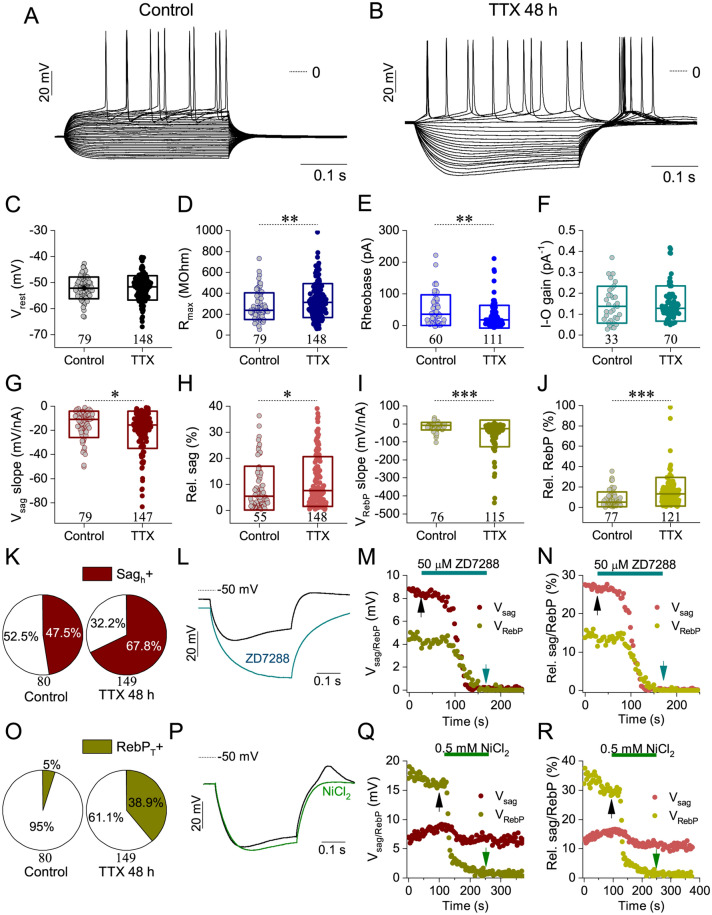
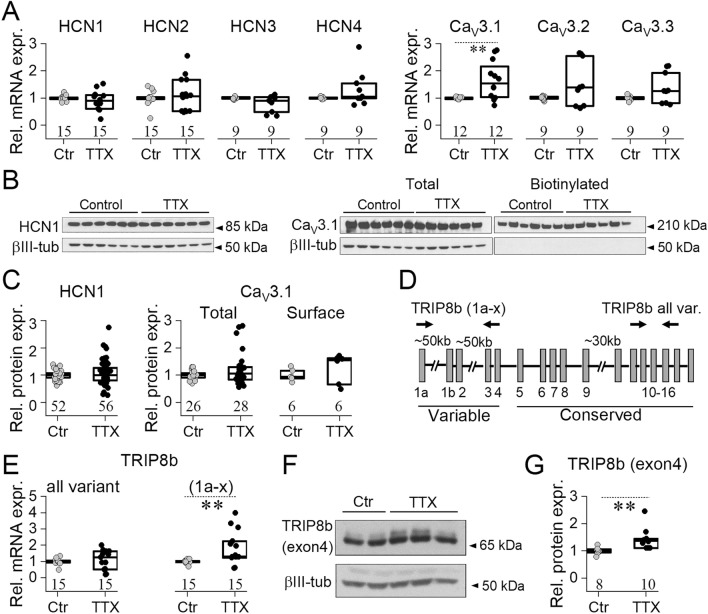
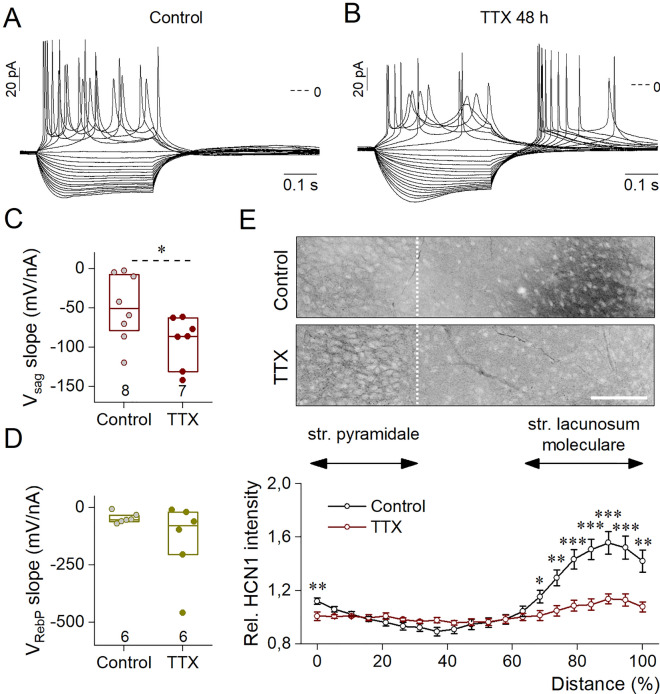
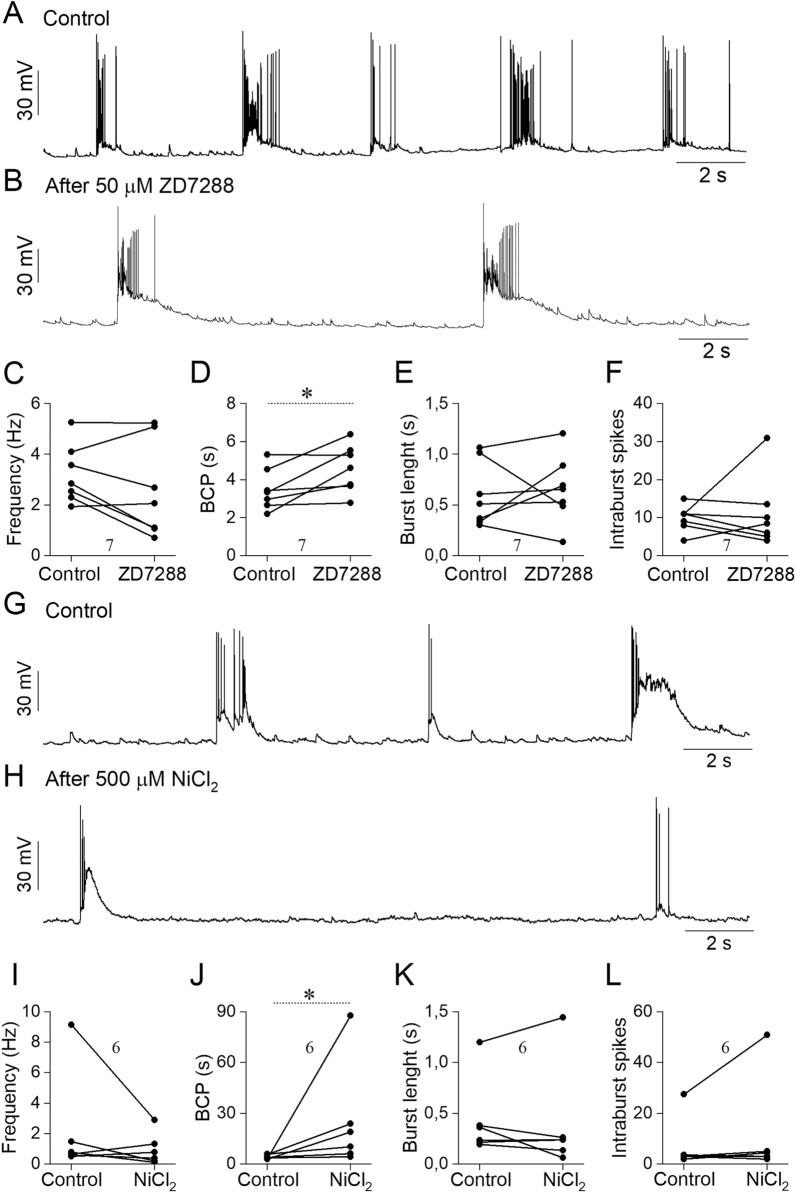
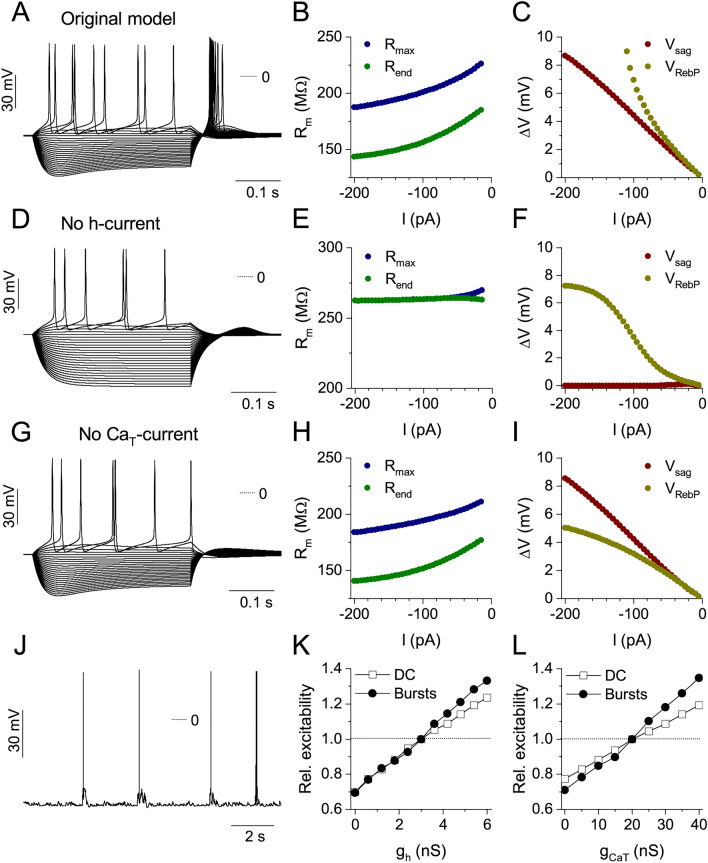
Homeostatic plasticity stabilizes neuronal networks by adjusting the responsiveness of neurons according to their global activity and the intensity of the synaptic inputs. We investigated the homeostatic regulation of hyperpolarization-activated cyclic nucleotide-gated (HCN) and T-type calcium (Ca V 3) channels in dissociated and organotypic slice cultures. After 48 h blocking of neuronal activity by tetrodotoxin (TTX), our patch-clamp experiments revealed an increase in the depolarizing voltage sag and post-inhibitory rebound mediated by HCN and Ca V 3 channels, respectively. All HCN subunits (HCN1 to 4) and T-type Ca-channel subunits (Ca V 3.1, 3.2 and 3.3) were expressed in both control and activity-deprived hippocampal cultures. Elevated expression levels of Ca V 3.1 mRNA and a selective increase in the expression of TRIP8b exon 4 isoforms, known to regulate HCN channel localization, were also detected in TTX-treated cultured hippocampal neurons. Immunohistochemical staining in TTX-treated organotypic slices verified a more proximal translocation of HCN1 channels in CA1 pyramidal neurons. Computational modeling also implied that HCN and T-type calcium channels have important role in the regulation of synchronized bursting evoked by previous activity-deprivation. Thus, our findings indicate that HCN and T-type Ca-channels contribute to the homeostatic regulation of excitability and integrative properties of hippocampal neurons.
Overview
The claims and statistics of this paper haven’t been checked yet.
Free: it reads the open-access text and checks the first 5 claims that cite a source we can check. Create a free account to check every claim.
Integrity signals
Registry
Cites
Statistics
Figures
Verification
Claims the paper makes
The claims and statistics of this paper haven’t been checked yet.
Free: it reads the open-access text and checks the first 5 claims that cite a source we can check. Create a free account to check every claim.
Claims other papers make about this one
Each is checked against this paper’s own text: does it say what the citing paper says it does?
The source backs part of the claim, not all of it — or backs it for a different population, condition or comparison.
In the citing paper
“Developmental increases of Ih in pyramidal neurons, along with cell-type specific regulation by synaptic plasticity and fragile X mental retardation protein (FMRP), refine this gain control and may delineate windows of vulnerability to cognitive dysfunction [277,278,281].”
From Synaptic Plasticity—Intrinsic Excitability and Antidepressant Discovery (2026) · cites this paper as [278]
Experimental — accuracy not yet measuredThe source backs part of the claim, not all of it — or backs it for a different population, condition or comparison.
In the citing paper
“Ih is tuned by cAMP and the auxiliary subunit tetratricopeptide repeat–containing Rab8b-interacting protein (TRIP8b), and it cooperates with inwardly rectifying potassium channel subfamily 2 (Kir2) and M-type K+ conductances to set effective gain [276,277,278].”
From Synaptic Plasticity—Intrinsic Excitability and Antidepressant Discovery (2026) · cites this paper as [278]
Experimental — accuracy not yet measured
Self-check
Percentages, sums and reported differences re-computed from the paper’s own numbers.
The self-check needs the paper’s full text.
Citations
Cites
1 retracted
Stereochemical Insignificance Discovered in Acinetobacter baumannii Quorum Sensing
Garner, A. L., Kim, S. K., Zhu, J., et al. (2012) · PLoS ONE · doi:10.1371/journal.pone.0037102 · Cited by 12
RetractedOn the Dependency of Cellular Protein Levels on mRNA Abundance
Liu, Y., Beyer, A., & Aebersold, R. (2016) · Cell · doi:10.1016/j.cell.2016.03.014 · Cited by 3,221
Activity-dependent scaling of quantal amplitude in neocortical neurons
Turrigiano, G. G., Leslie, K. R., Desai, N. S., Rutherford, L. C., & Nelson, S. B. (1998) · Nature · doi:10.1038/36103 · Cited by 2,480
Homeostatic plasticity in neuronal networks: the more things change, the more they stay the same
Turrigiano, G. G. (1999) · Trends in Neurosciences · doi:10.1016/s0166-2236(98)01341-1 · Cited by 821
Du, Z., Huang, K., Zhao, J., Song, X., Xing, X., Wu, Q., Zhang, L., & Xu, C. (2017) · Scientific Reports · doi:10.1038/srep44344 · Cited by 656
Long-Term Plasticity of Intrinsic Excitability: Learning Rules and Mechanisms
Daoudal, G., & Debanne, D. (2003) · Learning & Memory · doi:10.1101/lm.64103 · Cited by 543
Neurophysiology of HCN channels: From cellular functions to multiple regulations
He, C., Chen, F., Li, B., & Hu, Z. (2014) · Progress in Neurobiology · doi:10.1016/j.pneurobio.2013.10.001 · Cited by 353
Lonati, E., Brambilla, A., Milani, C., Masserini, M., Palestini, P., & Bulbarelli, A. (2014) · Frontiers in Cellular Neuroscience · doi:10.3389/fncel.2014.00001 · Cited by 347
Gomez, F. A., Lee, S.-K., Hernandez, F. J., Chiaverano, L. M., Muller-Karger, F. E., Liu, Y., & Lamkin, J. T. (2019) · Scientific Reports · doi:10.1038/s41598-018-36655-y · Cited by 337
Plasticity of intrinsic neuronal excitability
Debanne, D., Inglebert, Y., & Russier, M. (2019) · Current Opinion in Neurobiology · doi:10.1016/j.conb.2018.09.001 · Cited by 272
Cited by
Integrated multimodal cell atlas of Alzheimer’s disease
Gabitto, M. I., Travaglini, K. J., Rachleff, V. M., Kaplan, E. S., Long, B., Ariza, J., Ding, Y., Mahoney, J. T., Dee, N., Goldy, J., et al. (2023) · doi:10.1101/2023.05.08.539485 · Cited by 425
Integrated multimodal cell atlas of Alzheimer’s disease
Gabitto, M. I., Travaglini, K. J., Rachleff, V. M., Kaplan, E. S., Long, B., Ariza, J., Ding, Y., Mahoney, J. T., Dee, N., Goldy, J., et al. (2024) · Nature Neuroscience · doi:10.1038/s41593-024-01774-5 · Cited by 536
Xu, P., He, H., Gao, Q., Zhou, Y., Wu, Z., Zhang, X., Sun, L.-Y., Hu, G., Guan, Q., You, Z., et al. (2022) · Journal of Clinical Investigation · doi:10.1172/jci156768 · Cited by 66
Thalamic feedback shapes brain responses evoked by cortical stimulation in mice and humans
Russo, S., Claar, L. D., Furregoni, G., Marks, L. C., Krishnan, G. P., Zauli, F. M., Hassan, G., Solbiati, M., d’Orio, P., Mikulan, E., et al. (2025) · Nature Communications · doi:10.1038/s41467-025-58717-2 · Cited by 59
Szegedi, V., Bakos, E., Furdan, S., Kovács, B. B. H., Varga, D., Erdélyi, M., Barzó, P., Szűcs, A. L., Tamás, G., & Lamsa, K. P. (2023) · PLoS Biology · doi:10.1371/journal.pbio.3002001 · Cited by 27
Self-citationAlterations of the Hippocampal Networks in Valproic Acid-Induced Rat Autism Model
Bódi, V., Májer, T., Kelemen, V., Világi, I., Szűcs, A. L., & Varró, P. (2022) · Frontiers in Neural Circuits · doi:10.3389/fncir.2022.772792 · Cited by 27
Self-citationCiganok-Hückels, N., Jehasse, K., Kricsfalussy-Hrabár, L., Ritter, M., Rüland, T., & Kampa, B. M. (2022) · Cerebral Cortex · doi:10.1093/cercor/bhac467 · Cited by 25
Xu, F., Wang, Y., Han, L., Deng, D., Ding, Y., Ma, L., Zhang, Q., & Chen, X. (2022) · Cell & Bioscience · doi:10.1186/s13578-022-00892-6 · Cited by 23
Ma, K., Gu, H., & Jia, Y. (2023) · Cognitive Neurodynamics · doi:10.1007/s11571-023-09960-0 · Cited by 22
Mäki‐Marttunen, T., Blackwell, K. T., Akkouh, I. A., Shadrin, A. A., Valstad, M., Elvsåshagen, T., Linne, M., Djurovic, S., Einevoll, G. T., & Andreassen, O. A. (2024) · Proceedings of the National Academy of Sciences · doi:10.1073/pnas.2312511121 · Cited by 19
Walters, J. M., Kim, E. C., Zhang, J., Jeong, H. G., Bajaj, A., Baculis, B. C., Tracy, G., Ibrahim, B. A., Christian, C. A., Llano, D. A., et al. (2022) · Epilepsia · doi:10.1111/epi.17192 · Cited by 14
Protein kinase D promotes activity‐dependent AMPA receptor endocytosis in hippocampal neurons
Morales, C. O. O., Ignácz, A., Bencsik, N., Szíber, Z., Rátkai, A. E., Lieb, W. S., Eisler, S. A., Szűcs, A. L., Schlett, K., & Haußer, A. (2021) · Traffic · doi:10.1111/tra.12819 · Cited by 13
Self-citationEtiopathogenic Models of Psychosis Spectrum Illnesses Must Resolve Four Key Features
Vinogradov, S., Hamid, A., & Redish, A. D. (2022) · Biological Psychiatry · doi:10.1016/j.biopsych.2022.06.024 · Cited by 12
Transcriptomic Profiling of Tetrodotoxin-Induced Neurotoxicity in Human Cerebral Organoids
Liu, Z., Wang, Z., Wei, Y., Shi, J., Shi, T., Chen, X., & Li, L. (2023) · Marine Drugs · doi:10.3390/md21110588 · Cited by 12
Suppressing Retinal Remodeling to Mitigate Vision Loss in Photoreceptor Degenerative Disorders
Krämer, R. (2023) · Annual Review of Vision Science · doi:10.1146/annurev-vision-112122-020957 · Cited by 11
Szabó, A., Schlett, K., & Szűcs, A. L. (2021) · PLoS Computational Biology · doi:10.1371/journal.pcbi.1009378 · Cited by 11
Self-citationBak, A., Schmied, K., Jakob, M., Bedogni, F., Squire, O. A., Gittel, B., Jesinghausen, M., Schünemann, K. D., Weber, Y. G., Kampa, B. M., et al. (2024) · Journal of Neurophysiology · doi:10.1152/jn.00178.2024 · Cited by 11
P2X7 receptors and pannexin1 hemichannels shape presynaptic transmission
Vitureira, N., Rafael, A., & Abudara, V. (2023) · Purinergic Signalling · doi:10.1007/s11302-023-09965-8 · Cited by 10
Sokolov, R. A., & Mukhina, I. V. (2022) · Archives of Biochemistry and Biophysics · doi:10.1016/j.abb.2022.109330 · Cited by 9
Rafael, A., Tizzoni, M., Justet, C., Cairus, A., Abudara, V., & Vitureira, N. (2024) · Cellular Signalling · doi:10.1016/j.cellsig.2024.111113 · Cited by 8
An evolutionarily conserved pacemaker role for HCN ion channels in smooth muscle
Yang, L., Arbona, R. J. R., Smith, C. S., Banks, K. M., Thomas, V. K., Palmer, L. G., Evans, T., & Hurtado, R. (2023) · The Journal of Physiology · doi:10.1113/jp283701 · Cited by 5
Nicholls, J., Gu, J., Chen, Z. Z., Liu, Z., Antonic‐Baker, A., Javaid, M. S., Moore, E., Zhu, H., Altalhi, A. S., Wright, D. K., et al. (2025) · Epilepsia · doi:10.1111/epi.18560 · Cited by 3
Elsaafien, K., Kirchner, M. K., Scott, K. A., Spector, E. A., Mowry, F. E., Sumners, C., Stern, J. E., de Kloet, A. D., & Krause, E. G. (2025) · Journal of Neuroscience · doi:10.1523/jneurosci.1482-24.2025 · Cited by 3
Lenz, M., Turko, P., Kruse, P., Eichler, A., Chen, Z. A., Rappsilber, J., Vida, I., & Vlachos, A. (2024) · Molecular Brain · doi:10.1186/s13041-024-01153-y · Cited by 3
Lenz, M., Kruse, P., Eichler, A., Straehle, J., Hemeling, H., Stöhr, P., Beck, J., & Vlachos, A. (2023) · bioRxiv (Cold Spring Harbor Laboratory) · doi:10.1101/2023.09.30.560289 · Cited by 3
Jia, Y., Gu, H., & Wang, X. (2025) · Chaos An Interdisciplinary Journal of Nonlinear Science · doi:10.1063/5.0232718 · Cited by 3
Protein Kinase D promotes activity-dependent AMPA receptor endocytosis in hippocampal neuronsPreprint
Morales, C. O. O., Ignácz, A., Bencsik, N., Rátkai, A. E., Lieb, W. S., Eisler, S. A., Szűcs, A. L., Schlett, K., & Hausser, A. (2020) · bioRxiv (Cold Spring Harbor Laboratory) · doi:10.1101/2020.04.09.033514 · Cited by 2
Self-citationNoribogaine altered intrinsic properties of thalamocortical neurons in a sex-dependent manner
Villalba, S., Bosch, S., Constanzo, L. D., González, B., Torterolo, P., Carrera, I., Urbano, F. J., & Bisagno, V. (2025) · Progress in Neuro-Psychopharmacology and Biological Psychiatry · doi:10.1016/j.pnpbp.2025.111467 · Cited by 2
Structural and Synaptic Dysregulation Drives Network Vulnerability in APOE4 Human Neuronal NetworksPreprint
Grønlie, M. B., Fiskum, V., Sandvig, A., & Sandvig, I. (2026) · bioRxiv (Cold Spring Harbor Laboratory) · doi:10.64898/2026.05.04.722197 · Cited by 1
Homeostatic Neuronal Plasticity Alters Axon Initial Segment Actin Membrane Skeleton PeriodicityPreprint
Gu, S., Tzingounis, A. V., & Lykotrafitis, G. (2025) · bioRxiv (Cold Spring Harbor Laboratory) · doi:10.1101/2025.10.28.685151 · Cited by 1
Májer, T., Bódi, V., Kelemen, V., Szűcs, A. L., Varró, P., & Világi, I. (2023) · Developmental Neurobiology · doi:10.1002/dneu.22933 · Cited by 1
Self-citationDwyer, M. K. R., Polsfuss, I., Herbert, K., Varghese, N., & Morrison, B. (2025) · Biomedical Physics & Engineering Express · doi:10.1088/2057-1976/adea7e · Cited by 1
Synaptic Plasticity—Intrinsic Excitability and Antidepressant Discovery
Tanaka, M. (2026) · Biomedicines · doi:10.3390/biomedicines14061265
Gazdik, M. E., Fejes, I., Tiszlavicz, Á., Abbas, A. A., Danics, L., Kis, B., Ország, A., Kummer, K. K., Kress, M., Schlett, K., et al. (2026) · bioRxiv (Cold Spring Harbor Laboratory) · doi:10.64898/2026.05.22.727184
Self-citationDistinct Ventral Hippocampus Network Properties in Dissociated Cultures
Segal, M. (2024) · Hippocampus · doi:10.1002/hipo.23648
Changes in the Properties of Ethanol-Sensitive Molecular Targets During Maturation and Aging
Aguayo, L. G., Armijo‐Weingart, L., Martín, L. S., Guzmán-Castillo, A., Konar-Nié, M., & Gallegos, S. (2025) · Advances in experimental medicine and biology · doi:10.1007/978-3-031-81908-7_13
Neuronal Network Inactivity Potentiates Neuropeptide Release from Mouse Cortical Neurons
Priebe, T., Subkhangulova, A., Toonen, R. F. G., & Verhage, M. (2025) · eNeuro · doi:10.1523/eneuro.0555-24.2024
Xu, F., Wang, Y., Han, L., Deng, D., Ding, Y., Ma, L., Zhang, Q., & Chen, X. (2022) · Figshare · doi:10.6084/m9.figshare.21113980
Aktivitás-függő plaszticitás hatásának vizsgálata az idegsejtek hálózati működésére
Rátkai, E. A. C. (2021) · Eötvös Loránd Tudományegyetem · doi:10.15476/elte.2021.100
Rol de los canales de panexina-1 en la plasticidad sináptica homeostática
Tizzoni Duarte, M. (2023) · LA Referencia (Red Federada de Repositorios Institucionales de Publicaciones Científicas)
Bakos, E. (2026) · SZTE Repository of Dissertations (University of Szeged) · doi:10.14232/phd.13005
El rol del atp y los receptores purinérgicos en la plasticidad sináptica homeostática
Rafael Ponce, A. E. (2024) · LA Referencia (Red Federada de Repositorios Institucionales de Publicaciones Científicas)
NeuMoSync: End-to-End Neuromodulatory Control for Plasticity and Adaptability in Continual Learning
Rohani, S. R. R., Khajavi, K., Chung, W., Samiei, M., & Chen, M. (2026) · Transactions on machine learning research · doi:10.48550/arxiv.2608.04358
Cell-type specific sensing and control of firing rate statistics via channel dynamicsPreprint
Ramirez-Hincapie, A., & O’Leary, T. (2026) · bioRxiv (Cold Spring Harbor Laboratory) · doi:10.64898/2026.05.01.722180
Walters, J. M. (2022) · Illinois Digital Environment for Access to Learning and Scholarship (University of Illinois at Urbana-Champaign)
Fusarium mikotoxinok idegrendszeri hatásainak tanulmányozása
Bódi, V. (2023) · Eötvös Loránd Tudományegyetem · doi:10.15476/elte.2023.031
Metadata
- Authors
- Rátkai, A., Tárnok, K., Aouad, H. E., Micska, B., Schlett, K., & Szücs, A.
- Affiliations
- Eötvös Loránd University (HU)
- Corresponding author
- Schlett, Katalin
- Venue
- Scientific Reports
- Published
- 2021-02-05
- Volume
- 11
- Issue
- 1
- Pages
- 3236-3236
- ISSN
- 2045-2322 (ISSN-L)
- PMC
- PMC7864958
- OpenAlex
- W3127573614
- Cited by
- 38
- References
- 58
- Citations by year
- 2026: 2 · 2025: 9 · 2024: 7 · 2023: 9 · 2022: 8 · 2021: 2
- FWCI
- 2.04
- Type
- journal article
- Language
- en
- Open access
- gold
- doi.org
- Licence
- cc-by
- creativecommons.org/licenses/by/4.0 (tdm)
- creativecommons.org/licenses/by/4.0 (vor)
- Locations
- Scientific Reports (publishedVersion, cc-by)
- Europe PMC (PubMed Central) (publishedVersion, other-oa)
- PubMed Central (publishedVersion, cc-by)
- PubMed (publishedVersion)
- DOAJ (DOAJ: Directory of Open Access Journals) (submittedVersion, cc-by-sa)
- ELTE Digital Institutional Repository (EDIT) (Eötvös Loránd University) (submittedVersion, other-oa)
- Funders
- National Brain Research Program (2017-1.2.1-NKP-2017-00002)
- Nemzeti Kutatási Fejlesztési és Innovációs Hivatal (VEKOP-2.3.3-15-2016-00007)
- ELTE Thematic Excellence Programme 2020 (TKP2020-IKA-05)
- Topics
- Life Sciences › Biochemistry, Genetics and Molecular Biology › Molecular Biology › Ion channel regulation and function
- Life Sciences › Neuroscience › Cellular and Molecular Neuroscience › Neuroscience and Neuropharmacology Research
- Life Sciences › Neuroscience › Cognitive Neuroscience › Neural dynamics and brain function
- Keywords
- homeostatic plasticity, hyperpolarization-activated cation channels, HCN channels, T-type calcium channels, Cav3.1, TRIP8b, activity deprivation, tetrodotoxin, post-inhibitory rebound, voltage sag, neuronal excitability, hippocampal neurons, CA1 pyramidal neurons, burst firing, organotypic slice cultures, dissociated neuronal cultures
- MeSH terms
- Action Potentials, Animals, Cells, Cultured, Hippocampus, Neurons, Cell Culture Techniques, Calcium Channels, T-Type, Mice
About these checks
Registry, retraction, Cites and statistics results are computed, not judged, with one exception: a printed reference that no index lists is read once by a model before it counts as a citation error. Claims are extracted by a model and kept only when their quote appears verbatim in the text; each cited source is then checked, with a model’s help, for whether it says what the claim relies on. Those verdicts can be wrong — read the claim’s quote and the cited source before relying on one.
Statistics and arithmetic are recomputed, not judged.
Confidence bands are shown only for fields calibrated on our annotated test set. None is calibrated yet, so no band is shown.
What counts as a claim ›How we measure confidence ›How we check this ›
Are you an author, or do you see a problem with this page? Request a review
Data sources
Bibliographic data: Semantic Scholar, OpenAlex, Crossref.
Contains information from the Semantic Scholar Academic Graph Datasets, made available under the ODC Attribution License (ODC-BY 1.0).
Semantic Scholar’s data is described in: Kinney, R., et al. (2023). The Semantic Scholar Open Data Platform. arXiv:2301.10140.
