

Decrease of α-defensin impairs intestinal metabolite homeostasis via dysbiosis in mouse chronic social defeat stress model
Open accessThe DOI matches its Crossref record; 54 of the 54 references it cites were found in a registry or an index.
Abstract
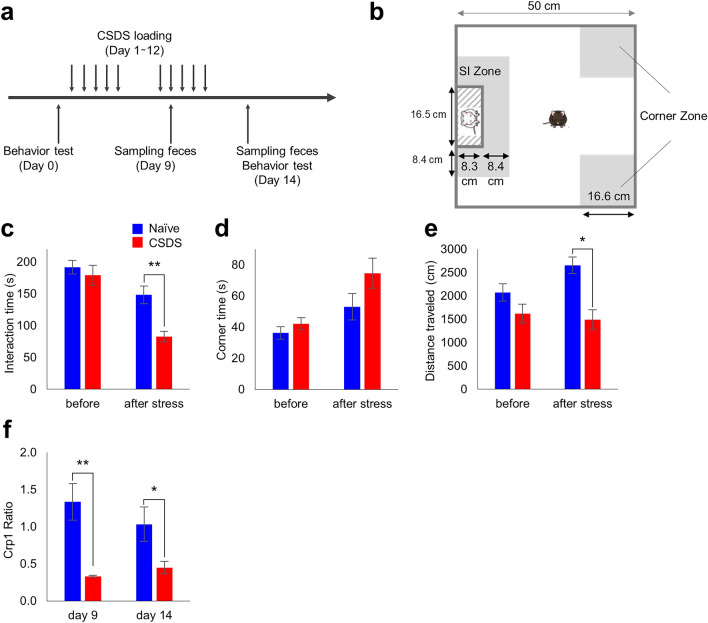
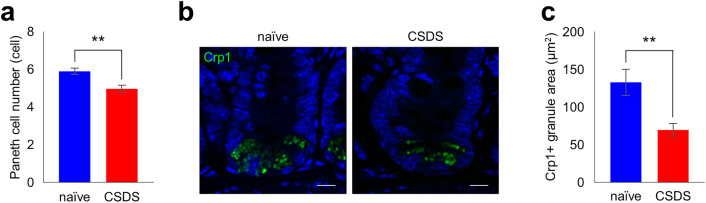
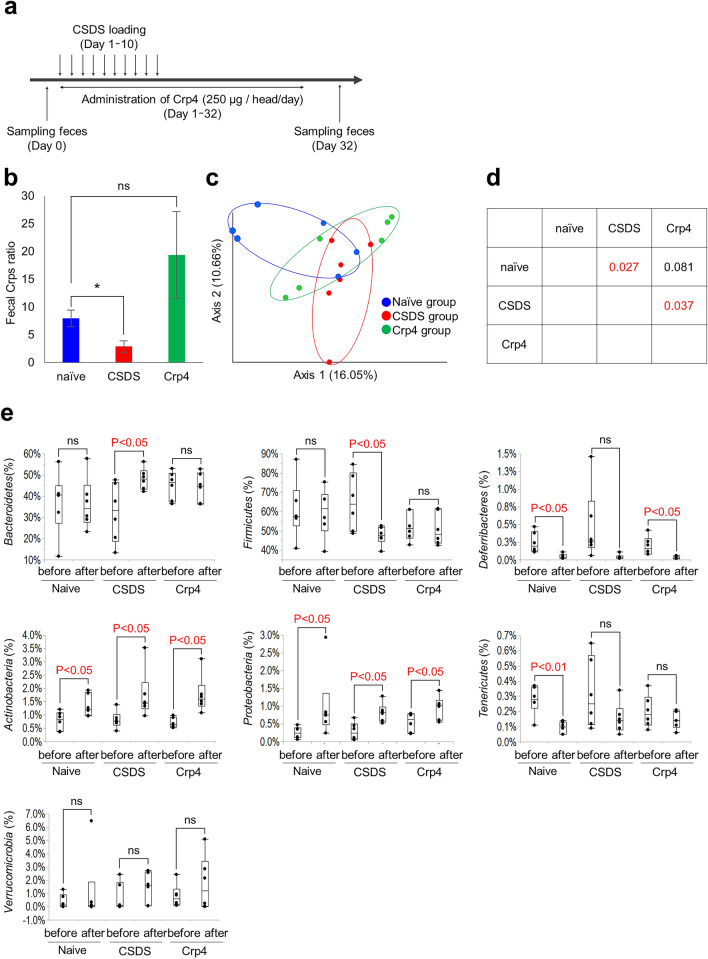
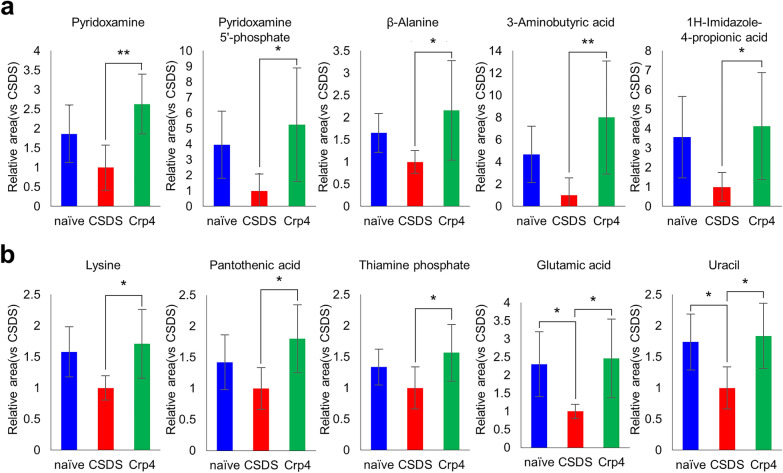
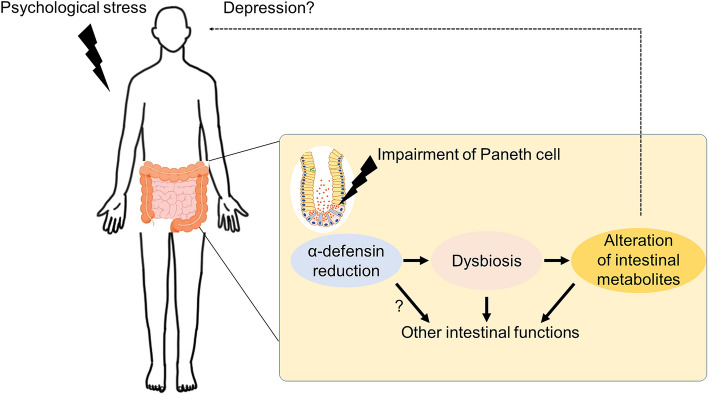
Psychological stress has been reported to relate to dysbiosis, imbalance of the intestinal microbiota composition, and contribute to the onset and exacerbation of depression, though, underlying mechanisms of psychological stress-related dysbiosis have been unknown. It has been previously established that α-defensins, which are effector peptides of innate enteric immunity produced by Paneth cells in the small intestine, play an important role in regulation of the intestinal microbiota. However, the relationship between disruption of intestinal ecosystem and α-defensin under psychological stress is yet to be determined. Here we show using chronic social defeat stress (CSDS), a mouse depression model that (1) the exposure to CSDS significantly reduces α-defensin secretion by Paneth cells and (2) induces dysbiosis and significant composition changes in the intestinal metabolites. Furthermore, (3) they are recovered by administration of α-defensin. These results indicate that α-defensin plays an important role in maintaining homeostasis of the intestinal ecosystem under psychological stress, providing novel insights into the onset mechanism of stress-induced depression, and may further contribute to discovery of treatment targets for depression.
Overview
The claims and statistics of this paper haven’t been checked yet.
Free: it reads the open-access text and checks the first 5 claims that cite a source we can check. Create a free account to check every claim.
Integrity signals
Registry
Cites
Statistics
Figures
Verification
Claims the paper makes
The claims and statistics of this paper haven’t been checked yet.
Free: it reads the open-access text and checks the first 5 claims that cite a source we can check. Create a free account to check every claim.
Claims other papers make about this one
Each is checked against this paper’s own text: does it say what the citing paper says it does?
The source backs part of the claim, not all of it — or backs it for a different population, condition or comparison.
In the citing paper
“Paneth cell α-defensins shape intestinal microbiota composition, which influences multiple biomedical processes of the host, including behavior,39 autoimmune disease,40 and cancer.41”
From High-quality mouse reference genomes reveal the structural complexity of the murine protein-coding landscape (2026) · cites this paper as [39]
Experimental — accuracy not yet measured
Self-check
Percentages, sums and reported differences re-computed from the paper’s own numbers.
The self-check needs the paper’s full text.
Citations
Cites
Structure, function and diversity of the healthy human microbiome
The Human Microbiome Project Consortium (2012) · Nature · doi:10.1038/nature11234 · Cited by 11,726
Sudo, N., Chida, Y., Aiba, Y., Sonoda, J., Oyama, N., Yu, X., Kubo, C., & Koga, Y. (2004) · The Journal of Physiology · doi:10.1113/jphysiol.2004.063388 · Cited by 2,735
Causal Relationship Between Stressful Life Events and the Onset of Major Depression
Kendler, K. S., Karkowski, L. M., & Prescott, C. A. (1999) · American Journal of Psychiatry · doi:10.1176/ajp.156.6.837 · Cited by 2,566
Altered fecal microbiota composition in patients with major depressive disorder
Jiang, H., Ling, Z., Zhang, Y., Mao, H., Ma, Z., Yin, Y., Wang, W., Tang, W., Tan, Z., Shi, J., et al. (2015) · Brain, Behavior, and Immunity · doi:10.1016/j.bbi.2015.03.016 · Cited by 2,275
The neuroactive potential of the human gut microbiota in quality of life and depression
Valles-Colomer, M., Falony, G., Darzi, Y., Tigchelaar, E. F., Wang, J., Tito, R. Y., Schiweck, C., Kurilshikov, A., Joossens, M., Wijmenga, C., et al. (2019) · Nature Microbiology · doi:10.1038/s41564-018-0337-x · Cited by 1,963
Kelly, J. R., Borre, Y., O' Brien, C., Patterson, E., El Aidy, S., Deane, J., Kennedy, P. J., Beers, S., Scott, K., Moloney, G., et al. (2016) · Journal of Psychiatric Research · doi:10.1016/j.jpsychires.2016.07.019 · Cited by 1,683
Enteric defensins are essential regulators of intestinal microbial ecology
Salzman, N. H., Hung, K., Haribhai, D., Chu, H., Karlsson-Sjöberg, J., Amir, E., Teggatz, P., Barman, M., Hayward, M., Eastwood, D., et al. (2010) · Nature Immunology · doi:10.1038/ni.1825 · Cited by 1,156
Mental health: a world of depression
Smith, K. (2014) · Nature · doi:10.1038/515180a · Cited by 1,148
Secretion of microbicidal α-defensins by intestinal Paneth cells in response to bacteria
Ayabe, T., Satchell, D. P., Wilson, C. L., Parks, W. C., Selsted, M. E., & Ouellette, A. J. (2000) · Nature Immunology · doi:10.1038/77783 · Cited by 1,060
Self-citationEnck, P., Aziz, Q., Barbara, G., Farmer, A. D., Fukudo, S., Mayer, E. A., Niesler, B., Quigley, E. M. M., Rajilić-Stojanović, M., Schemann, M., et al. (2016) · Nature Reviews Disease Primers · doi:10.1038/nrdp.2016.14 · Cited by 997
Research works printed but not linked: 1
- Malhi GS Mann JJ Depression Lancet 2018 392 2299 2312 30396512
Cited by
Mechanisms and regulation of defensins in host defense
Fu, J., Zong, X., Jin, M., Min, J., Wang, F., & Wang, Y. (2023) · Signal Transduction and Targeted Therapy · doi:10.1038/s41392-023-01553-x · Cited by 212
“262 In addition, a recent study reported that hBD2 ameliorates acute graft – versus – host disease (aGvHD) through regulating the gut microbiome to limit ileal neutrophil in fi ltration and restrain T-cell receptor signaling.”
BackgroundSelf-citationLeigh, S., Uhlig, F., Wilmes, L., Sanchez‐Diaz, P., Gheorghe, C. E., Goodson, M. S., Kelley‐Loughnane, N., Hyland, N. P., Cryan, J. F., & Clarke, G. (2023) · The Journal of Physiology · doi:10.1113/jp281951 · Cited by 167
Suda, K., & Matsuda, K. (2022) · International Journal of Molecular Sciences · doi:10.3390/ijms23031172 · Cited by 140
“A very recent study showed that exposure to chronic stress reduced the secretion of α-defensins, effector peptides of innate enteric immunity produced by Paneth cells in the small intestine, which resulted in gut dysbiosis and an impairment of intestinal metabolite homeostasis [159].”
BackgroundShimizu, Y., Yamamura, R., Yokoi, Y., Ayabe, T., Ukawa, S., Nakamura, K., Okada, E., Imae, A., Nakagawa, T., Tamakoshi, A., et al. (2023) · Gut Microbes · doi:10.1080/19490976.2023.2190306 · Cited by 53
“It has been reported that qualitative or quantitative abnormalities of Paneth cell αdefensins are associated with pathological progression of dysbiosis-related diseases such as Crohn’s disease, obesity,(37) GVHD,(38,39) alcoholic steatohepatitis,(40) and depression.(41) Furthermore, oral administration of α-defensins…”
BackgroundSelf-citationHerselman, M. F., Bailey, S., & Bobrovskaya, L. (2022) · International Journal of Molecular Sciences · doi:10.3390/ijms23042013 · Cited by 55
“Effects of stress • Activation of HPA axis and ANS • Inhibition of afferent vagal nerve fibres • Increased intestinal, systemic inflammation and neuro-inflammation • Dysregulation of tryptophan metabolism by upregulation of the kynurenine pathway in the brain, liver and gut • Impairment of intestinal barrier integrity…”
BackgroundInfluential
Metadata
- Authors
- Suzuki, K., Nakamura, K., Shimizu, Y., Yokoi, Y., Ohira, S., Hagiwara, M., Wang, Y., Song, Y., Aizawa, T., & Ayabe, T.
- Affiliations
- Hokkaido University (JP)
- Corresponding author
- Ayabe, Tokiyoshi
- ORCID
- Venue
- Scientific Reports
- Published
- 2021-05-10
- Volume
- 11
- Issue
- 1
- Pages
- 9915-9915
- ISSN
- 2045-2322 (ISSN-L)
- PMC
- PMC8110768
- OpenAlex
- W3161771783
- Semantic Scholar
- f0800c6f080cfda0e8428c136069d14fbd9c0ef8
- Cited by
- 50
- References
- 54
- Citations by year
- 2026: 5 · 2025: 7 · 2024: 13 · 2023: 15 · 2022: 9 · 2021: 1
- FWCI
- 2.98
- Type
- journal article
- Language
- en
- Open access
- gold
- doi.org
- Licence
- cc-by
- creativecommons.org/licenses/by/4.0 (tdm)
- creativecommons.org/licenses/by/4.0 (vor)
- Locations
- Scientific Reports (publishedVersion, cc-by)
- PubMed Central (publishedVersion, cc-by)
- PubMed (publishedVersion)
- DOAJ (DOAJ: Directory of Open Access Journals) (submittedVersion, cc-by-sa)
- Hokkaido University Collection of Scholarly and Academic Papers (Hokkaido University) (submittedVersion)
- Institutional Repositories DataBase (IRDB) (submittedVersion)
- Funders
- Japan Society for the Promotion of Science (17K11661, 20H04098, 18H02788)
- Japan Science and Technology Agency (JPMJCE1301)
- Topics
- Life Sciences › Biochemistry, Genetics and Molecular Biology › Molecular Biology › Gut microbiota and health
- Health Sciences › Medicine › Gastroenterology › Gastrointestinal motility and disorders
- Life Sciences › Neuroscience › Biological Psychiatry › Tryptophan and brain disorders
- Keywords
- alpha-defensins, Paneth cells, gut dysbiosis, chronic social defeat stress, psychological stress, depression, intestinal metabolites, intestinal homeostasis, innate immunity, stress-induced depression
- MeSH terms
- Gastrointestinal Microbiome, Social Defeat, Administration, Oral, Animals, Depression, Disease Models, Animal, Feces, Humans, Intestinal Mucosa, Intestine, Small, Male, Recombinant Proteins, Stress, Psychological, Paneth Cells, alpha-Defensins, Mice, Dysbiosis
About these checks
Registry, retraction, Cites and statistics results are computed, not judged, with one exception: a printed reference that no index lists is read once by a model before it counts as a citation error. Claims are extracted by a model and kept only when their quote appears verbatim in the text; each cited source is then checked, with a model’s help, for whether it says what the claim relies on. Those verdicts can be wrong — read the claim’s quote and the cited source before relying on one.
Statistics and arithmetic are recomputed, not judged.
Confidence bands are shown only for fields calibrated on our annotated test set. None is calibrated yet, so no band is shown.
What counts as a claim ›How we measure confidence ›How we check this ›
Are you an author, or do you see a problem with this page? Request a review
Data sources
Bibliographic data: Semantic Scholar, OpenAlex, Crossref.
Contains information from the Semantic Scholar Academic Graph Datasets, made available under the ODC Attribution License (ODC-BY 1.0).
Semantic Scholar’s data is described in: Kinney, R., et al. (2023). The Semantic Scholar Open Data Platform. arXiv:2301.10140.
