

Maternal speech decreases pain scores and increases oxytocin levels in preterm infants during painful procedures
Open accessThe DOI matches its Crossref record; 90 of the 91 references it cites were found in a registry or an index.
Abstract
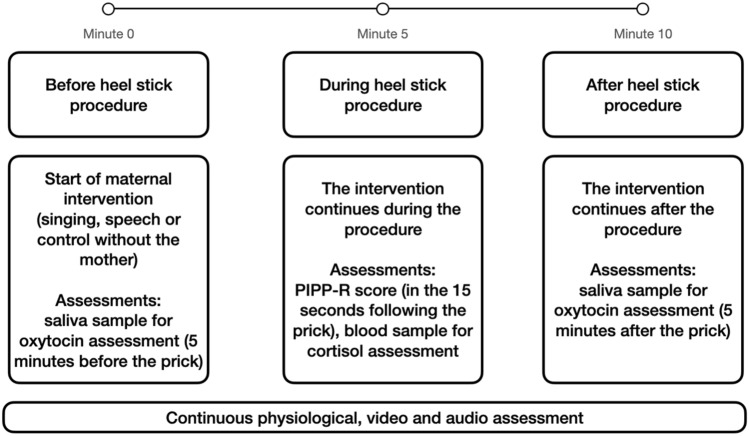
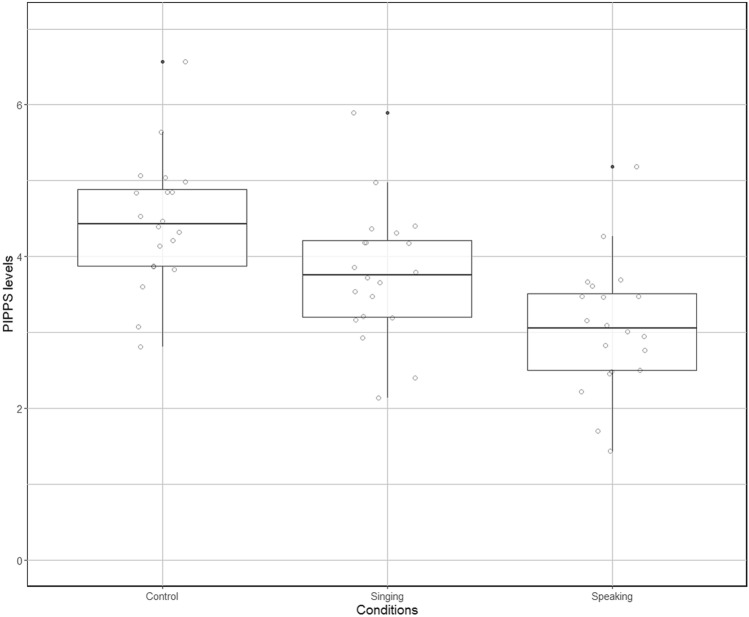
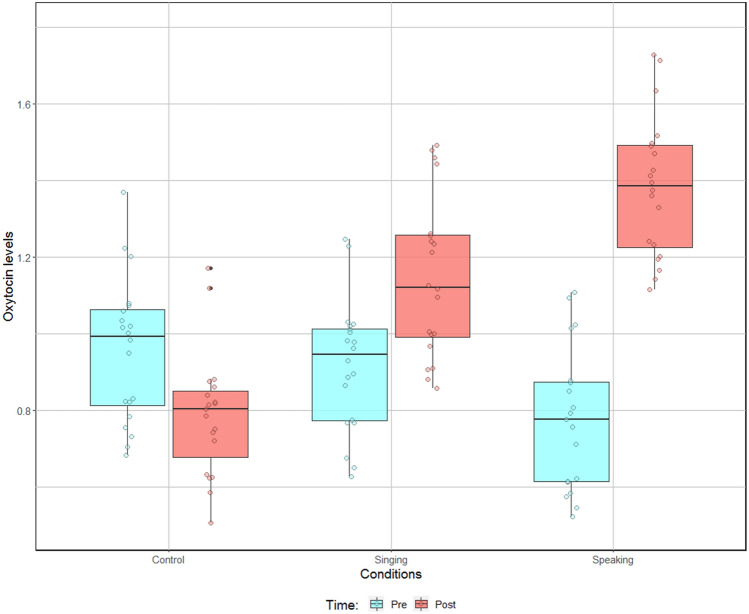
Preterm infants undergo early separation from parents and are exposed to frequent painful clinical procedures, with resultant short- and long-term effects on their neurodevelopment. We aimed to establish whether the mother’s voice could provide an effective and safe analgesia for preterm infants and whether endogenous oxytocin (OXT) could be linked to pain modulation. Twenty preterm infants were exposed to three conditions—mother’s live voice (speaking or singing) and standard care—in random order during a painful procedure. OXT levels (pg/mL) in saliva and plasma cortisol levels were quantified, and the Premature Infant Pain Profile (PIPP) was blindly coded by trained psychologists. During the mother’s live voice, PIPP scores significantly decreased, with a concomitant increase in OXT levels over baseline. The effect on pain perception was marginally significant for singing. No effects on cortisol levels were found. The mother’s live voice modulated preterm infants’ pain indicators. Endogenous OXT released during vocal contact is a promising protective mechanism during early painful interventions in at-risk populations.
Overview
The claims and statistics of this paper haven’t been checked yet.
Free: it reads the open-access text and checks the first 5 claims that cite a source we can check. Create a free account to check every claim.
Integrity signals
Registry
Cites
Statistics
Figures
Verification
Claims the paper makes
The claims and statistics of this paper haven’t been checked yet.
Free: it reads the open-access text and checks the first 5 claims that cite a source we can check. Create a free account to check every claim.
Claims other papers make about this one
Each is checked against this paper’s own text: does it say what the citing paper says it does?
The source backs part of the claim, not all of it — or backs it for a different population, condition or comparison.
In the citing paper
“The patterns of OXT response to music were not influenced by sex (Bowling et al., 2022; Filippa et al., 2021).”
From Music's context-dependent influence on oxytocin, social bonding, and emotion regulation: a systematic review (2026) · cites this paper as Filippa et al., 2021
Experimental — accuracy not yet measuredThe cited source says what the claim attributes to it.
In the citing paper
“For preterm infants Filippa et al., (2021) and their mothers Filippa et al., (2023), as well as pregnant women Wulff et al., (2021), maternal singing to infants or fetuses increased their OXT levels.”
From Music's context-dependent influence on oxytocin, social bonding, and emotion regulation: a systematic review (2026) · cites this paper as Filippa et al., (2021)
The cited source says what the claim attributes to it.
In the citing paper
“Other studies examined clinical populations, including cancer patients and their carers Fancourt et al., (2016), pregnant women Wulff et al., (2021), preterm infants Filippa et al., (2021) and their mothers Filippa et al., (2023), individuals with Williams syndrome Dai et al., (2012), post-surgical patients (Nilsson, 2009), post-stroke patients (Palumbo et al., 2022), children with autism spectrum”
From Music's context-dependent influence on oxytocin, social bonding, and emotion regulation: a systematic review (2026) · cites this paper as Filippa et al., (2021)
The cited source says what the claim attributes to it.
In the citing paper
“Filippa et al. (2021) reported a significant time × condition interaction (χ2(2) = 6.99, p = 0.03)”
From Music's context-dependent influence on oxytocin, social bonding, and emotion regulation: a systematic review (2026) · cites this paper as Filippa et al. (2021)
Self-check
Percentages, sums and reported differences re-computed from the paper’s own numbers.
The self-check needs the paper’s full text.
Citations
Cites
R: A Language and Environment for Statistical Computing
R Core Team (2025) · doi:10.32614/r.manuals · Cited by 352,181
Blencowe, H., Cousens, S., Oestergaard, M. Z., Chou, D., Moller, A.-B., Narwal, R., Adler, A., Vera Garcia, C., Rohde, S., Say, L., et al. (2012) · The Lancet · doi:10.1016/s0140-6736(12)60820-4 · Cited by 4,568
Meaney, M. J. (2001) · Annual Review of Neuroscience · doi:10.1146/annurev.neuro.24.1.1161 · Cited by 2,708
Born too soon : the Global action report on preterm birth
Howson, C. P., Kinney, M., & Lawn, J. E. (2012) · Cited by 1,928
Premature Infant Pain Profile: Development and Initial Validation
Stevens, B., Johnston, C., Petryshen, P., & Taddio, A. (1996) · The Clinical Journal of Pain · doi:10.1097/00002508-199603000-00004 · Cited by 1,172
Epidemiology and Treatment of Painful Procedures in Neonates in Intensive Care Units
Carbajal, R. (2008) · JAMA · doi:10.1001/jama.300.1.60 · Cited by 1,063
SÁNCHEZ, M. M., LADD, C. O., & PLOTSKY, P. M. (2001) · Development and Psychopathology · doi:10.1017/s0954579401003029 · Cited by 1,003
Oxytocin and the Neural Mechanisms Regulating Social Cognition and Affiliative Behavior
Ross, H. E., & Young, L. J. (2009) · Frontiers in Neuroendocrinology · doi:10.1016/j.yfrne.2009.05.004 · Cited by 856
Champagne, F., Diorio, J., Sharma, S., & Meaney, M. J. (2001) · Proceedings of the National Academy of Sciences · doi:10.1073/pnas.221224598 · Cited by 707
Oxytocin-dependent consolation behavior in rodents
Burkett, J. P., Andari, E., Johnson, Z. V., Curry, D. C., de Waal, F. B. M., & Young, L. J. (2016) · Science · doi:10.1126/science.aac4785 · Cited by 692
Research works printed but not linked: 1
- Moberg KU Prime DK Oxytocin effects in mothers and infants during breastfeeding Infant 2013 9 6 201 206
Cited by
Neural functions of hypothalamic oxytocin and its regulation
Wang, P., Wang, S. C., Liu, X., Jia, S., Wang, X., Li, T., Yu, J., Parpura, V., & Wang, Y.-F. (2022) · ASN Neuro · doi:10.1177/17590914221100706 · Cited by 59
“Mother’s live voice can significantly decrease premature infant pain profile scores, with a concomitant increase in OT levels over baseline (Filippa et al., 2021).”
BackgroundFilippa, M., Nardelli, M., Casa, E. D., Berardi, A., Picciolini, O., Meloni, S., Lunardi, C., Cecchi, A., Sansavini, A., Corvaglia, L., et al. (2022) · Children · doi:10.3390/children9020140 · Cited by 65
“The same tendency is evidenced during singing, but the results are only marginally significant [22].”
BackgroundSelf-citationMusical and vocal interventions to improve neurodevelopmental outcomes for preterm infants
Haslbeck, F. B., Mueller, K. F., Karen, T., Loewy, J. V., Meerpohl, J. J., & Bassler, D. (2023) · Cochrane Database of Systematic Reviews · doi:10.1002/14651858.cd013472.pub2 · Cited by 67
Parent-led neonatal pain management—a narrative review and update of research and practices
Ullsten, A., Campbell-Yeo, M. L., & Eriksson, M. H. (2024) · Frontiers in Pain Research · doi:10.3389/fpain.2024.1375868 · Cited by 48
The Role of Oxytocin in Abnormal Brain Development: Effect on Glial Cells and Neuroinflammation
Knoop, M. S., Possovre, M.-L., Jacquens, A., Charlet, A., Baud, O., & Darbon, P. (2022) · Cells · doi:10.3390/cells11233899 · Cited by 37
“‘Bedside’ data such as these, therefore, propose a neuro-stimulating effect of the neuropeptide oxytocin (OT), as all these interventions show to increase OT levels in the infant (and mother/father alike) [24,26].”
BackgroundCırık, V. A., Gül, U., Kıhtır, Z., Arayıcı, S., Efe, E., Çakmak, H., & Çalişkan, F. (2023) · Journal of Pediatric Nursing · doi:10.1016/j.pedn.2023.01.005 · Cited by 30
The Role of Oxytocin in Early-Life-Stress-Related Neuropsychiatric Disorders
Jin, Y., Song, D. F., Yan, Y., Quan, Z., & Qing, H. (2023) · International Journal of Molecular Sciences · doi:10.3390/ijms241310430 · Cited by 32
Filippa, M., Monaci, M. G., Spagnuolo, C., Di Benedetto, M., Serravalle, P., & Grandjean, D. (2023) · Children · doi:10.3390/children10020334 · Cited by 16
“Although evidence for the analgesic benefits of OXT in humans is not as consistent as in animal models, there is rising evidence that OXT could lessen the perception or expression of pain [19], for instance, by modifying the emotional and cognitive components of the experience.”
BackgroundMethodResultInfluentialSelf-citationZhao, Y., Dong, Y., & Cao, J. (2022) · Computational Intelligence and Neuroscience · doi:10.1155/2022/2577158 · Cited by 23
“Different from adults, studies have reported that 80% to 90% of analgesic drugs have different degrees of adverse reactions in newborns [5], so it is difficult to widely use drugs to intervene in neonatal pain in clinical practice.”
BackgroundMaternal singing sustains preterm hospitalized newborns’ autonomic nervous system maturation: an RCT
Filippa, M., Nardelli, M., Sansavini, A., Meloni, S., Picciolini, O., Lunardi, C., Cecchi, A., Corvaglia, L., Grandjean, D., Scilingo, E. P., et al. (2023) · Pediatric Research · doi:10.1038/s41390-023-02932-4 · Cited by 18
“Maternal speech and singing during a painful procedure decrease pain and increase preterm infant ’ s oxytocin level, marginally signi fi cant for singing, 32 and, concomitantly, increase oxytocin in mothers with a decrease in their anxiety levels.”
Self-citationExploring Non-Invasive Salivary Biomarkers for Acute Pain Diagnostics: A Comprehensive Review
Štendelytė, L., Malinauskas, M., Grinkeviciūte, D. E., & Jankauskaitė, L. (2023) · Diagnostics · doi:10.3390/diagnostics13111929 · Cited by 14
“investigated whether the mother’s voice could provide effective and safe analgesia for preterm infants and whether endogenous OXT levels were related to pain response [29].”
BackgroundUllsten, A., Beken, S., Campbell-Yeo, M. L., Cavallaro, G., Decembrino, N., Durrmeyer, X., Garrido, F., Kristjánsdóttir, G., Amponsah, A. K., Lago, P., et al. (2024) · Children · doi:10.3390/children11091105 · Cited by 13
“The survey having only been distributed in the English language may have also limited responses from health care professionals with no or little knowledge in a second language.”
BackgroundNagasawa, T., Kimura, Y., Masuda, K., & Uchiyama, H. (2022) · Animals · doi:10.3390/ani12233330 · Cited by 15
“Furthermore, vocal communication by human mothers to their human preterm infants decreases pain and increases oxytocin levels, thereby proving its importance [61].”
BackgroundMisic, M. C., Olsson, E., Blomqvist, Y. T., & Ullsten, A. (2024) · Children · doi:10.3390/children11070781 · Cited by 11
“A small randomized controlled study found that mothers’ live infant-directed speech and singing during a heel stick procedure modulated the preterm infants’ pain indicators and increased the oxytocin levels in both mothers and infants [17].”
BackgroundEarly parental vocal contact in neonatal units: rationale and clinical guidelines for implementation
Filippa, M., & Kuhn, P. (2024) · Frontiers in Neurology · doi:10.3389/fneur.2024.1441576 · Cited by 16
“More specifically, there have been few studies on fathers’ interventions in NICUs, with the majority focusing on basic skin-to-skin contact or tactile procedures (64).”
BackgroundInfluentialSelf-citationMonaci, M. G., Caruzzo, C. M., Raso, R., Spagnuolo, C., Benedetti, M. C., Grandjean, D., & Filippa, M. (2024) · Acta Paediatrica · doi:10.1111/apa.17121 · Cited by 11
“15 Endogenous oxytocin released during mother–infant vocal contact, together with its impact on the maturation of the autonomous nervous system, has been flagged as a potential protective mechanism against pain.”
BackgroundSelf-citationManjila, S. B., Betty, R., & Kim, Y. (2022) · Frontiers in Neuroscience · doi:10.3389/fnins.2022.1044736 · Cited by 13
“In humans, listening to their mother’s voice decreased infant pain scores while increasing Oxt levels above baseline (Filippa et al., 2021).”
BackgroundChen, Y., Zhou, L., & Tan, Y. (2024) · BMC Pediatrics · doi:10.1186/s12887-024-04738-7 · Cited by 8
“It was assumed that the mother’s voice could modulate newborns’ pain indicators by releasing endogenous oxytocin during vocal contact, which is a promising protective mechanism during early painful interventions in at-risk populations [36].”
BackgroundHuda, M. H., Hasan, F., Banda, K. J., Rustina, Y., Putra, H. E., Selviany, M., Islamia, I., Santi, N. F., & Ramdhanie, G. G. (2024) · Journal of Neonatal Nursing · doi:10.1016/j.jnn.2024.07.022 · Cited by 10
Ding, S., Wang, Q., Fu, X., Huang, X., Liao, L., & Zhang, Y. (2025) · International Journal of Nursing Studies · doi:10.1016/j.ijnurstu.2025.105031 · Cited by 8
Chu, T.-H., & Tsai, C.-G. (2026) · Frontiers in cognition · doi:10.3389/fcogn.2025.1678665 · Cited by 8
Research progress on the mechanisms of pain empathy
Liu, S., Wang, S., Yan, Y., Qin, B., Mao, Q., & Yuan, J. (2024) · Ibrain · doi:10.1002/ibra.12169 · Cited by 9
“74 The large paraventricular nucleus (PVN) cell neurons, the supraoptic nucleus of the hypothalamus, and the paranucleus are the sites where oxytocin is generated in the vertebrate brain.”
Barzegari, A.-A., Rad, Z. A., Nikbakht, H., Qalehsari, M. Q., Amiri, S. R. J., Zabihi, A., & Kazemi, M. V. (2024) · Journal of Education and Health Promotion · doi:10.4103/jehp.jehp_1042_24 · Cited by 7
“[9] Considering the importance of pain in infants and the importance of untreated pain in the NICU, various studies have been conducted to investigate this issue.”
Salivary oxytocin in autistic patients and in patients with intellectual disability
Pichugina, Y. A., Maksimova, I. V., Березовская, М. А., Afanaseva, N. A., Pichugin, A. B., Дмитренко, Д. В., Евгеньевна, Т. Е., Salmina, A. B., & Lopatina, O. L. (2022) · Frontiers in Psychiatry · doi:10.3389/fpsyt.2022.969674 · Cited by 9
“mechanisms in painful procedures (57), on attention to social”
BackgroundStress during the COVID-19 Pandemic Moderates Pain Perception and Momentary Oxytocin Levels
Schneider, E., Hopf, D., Eckstein, M., Scheele, D., Aguilar‐Raab, C., Herpertz, S. C., Grinevich, V., & Ditzen, B. (2023) · Journal of Clinical Medicine · doi:10.3390/jcm12062333 · Cited by 8
“Storytelling [31] or the mother’s voice [32] can reduce pain and increase oxytocin concentrations in children, possibly due to the neuropeptide’s stress-reducing effects.”
Kılınç, D., & Çağlar, S. (2025) · Research in Nursing & Health · doi:10.1002/nur.22472 · Cited by 5
“There are studies about the importance of the presence of parents during interventional procedures on preventing pain and anxiety (Azak et al. 2022; Sa ğ l ı k and Ça ğ lar 2019; Filippa et al. 2021; Rad et al. 2021).”
Filippa, M., Filippa, G., Casa, E. D., Berardi, A., Picciolini, O., Meloni, S., Lunardi, C., Cecchi, A., Sansavini, A., Corvaglia, L., et al. (2025) · Frontiers in Psychology · doi:10.3389/fpsyg.2025.1536646 · Cited by 6
Self-citationHome Musical Activities Boost Premature Infants’ Language Development
Franco, F., Chifa, M., & Politimou, N. (2024) · Children · doi:10.3390/children11050542 · Cited by 8
“Voices can also positively affect cardiorespiratory stability [29] and feeding and growth factors [30], and they have been found to reduce infant pain thresholds [31].”
BackgroundSchneider-Schmid, U., Morgado, A., Heim, C. C., Klawitter, H., Hellmeyer, L., & Entringer, S. (2025) · Psychoneuroendocrinology · doi:10.1016/j.psyneuen.2025.107564 · Cited by 5
Multisensory stimuli and pain perception in the newborn
Hüppi, P. S., & Filippa, M. (2023) · Pediatric Research · doi:10.1038/s41390-023-02833-6 · Cited by 4
“We also recently demonstrated that live maternal voice administration decreases pain perception in preterm newborns, by increasing oxytocin levels both in infants 17 and in mothers, who, in turn, decrease their anxiety levels.”
BackgroundSelf-citationKocaaslan, E. N., & Dinçkol, R. Z. (2025) · Advances in Neonatal Care · doi:10.1097/anc.0000000000001295 · Cited by 3
Rethinking the study of newborn sociality: Challenges and opportunities
Simpson, E. A. (2025) · Infant Behavior and Development · doi:10.1016/j.infbeh.2025.102149 · Cited by 3
Kaur, G., Bailey, S. M., Schneider, S., Savvides, E., Howell, H. B., Kiernan, B. D., Sharma, R., Mally, P., & Verma, S. (2025) · Journal of Perinatology · doi:10.1038/s41372-025-02453-4 · Cited by 2
Oxytocin Reactivity during a Wilderness Program without Parents in Adolescents
Morita, A., Shikano, A., Nakamura, K., Noi, S., & Fujiwara, T. (2022) · International Journal of Environmental Research and Public Health · doi:10.3390/ijerph192315437 · Cited by 3
The effect of the swaddling method on stress levels in newborns administered nasal CPAP
Akkoca, Z., Yavuz, B., Koçak, A., & BİLDİRİCİ, Y. (2023) · BMC Pediatrics · doi:10.1186/s12887-023-04457-5 · Cited by 3
“All samples were stored at -80 °C until the number of samples ( n = 40) was completed [35, 36].”
MethodAksoy, S. D., Yel, S. Y., & Akyıldız, D. (2024) · Biological Research For Nursing · doi:10.1177/10998004241289896 · Cited by 2
Ullsten, A. (2024) · Acta Paediatrica · doi:10.1111/apa.17197 · Cited by 2
“6,7 Maternal live singing reduced the infants' pain behaviour indexes significantly for movement, but not for crying or facial expressions.”
BackgroundSiva, N., Praharaj, M., Tanay, K., Das, S., Nayak, B. S., Lewis, L., & Noronha, J. A. (2025) · Advances in Neonatal Care · doi:10.1097/anc.0000000000001247 · Cited by 7
“1 Additionally, a few studies reported that there is no significant difference between the maternal involvement and control group in minimizing pain and pain-related stress among high-risk neonates.”
Effect of auditory interventions on pain in premature infants: a systematic review and meta-analysis
Doğan, E., Bozkurt, G., & Duman, R. (2025) · Revista da Associação Médica Brasileira · doi:10.1590/1806-9282.20241000 · Cited by 1
“In another study, it was determined that the pain scores of new-borns exposed to mother’s voice while taking heel lance blood decreased 20 .”
Kaushik, L., Nehra, K., Kharbanda, N., Saha, S., Wadhwa, N., Anand, P., Arya, S., Chellani, H. K., & Maiti, T. K. (2025) · Journal of Proteins and Proteomics · doi:10.1007/s42485-025-00183-x · Cited by 1
“Inappropriate management and sub-optimal use of technology are the major limitations in secondary hospital care setups to manage preterm infants (Filippa et al. 2021).”
Oxytocin Modulates Microglial IL-17-Linked Inflammatory Pathways Through the IL-6/COX-2
Hwang, W., Jang, Y. H., Hong, J., Kang, S., Hur, J. K., & Lee, H. J. (2026) · Life · doi:10.3390/life16010105 · Cited by 1
“In preterm infants, exposure to maternal voice and touch immediately before an inflammatory or painful trigger has been associated with activation of the infant OT system, as evidenced by lower pain scores and increased salivary OT concentration [38].”
El-Hadary, S. M. M., Abozed, H. W., & Alaswad, N. K. (2022) · Egyptian Journal of Health Care · doi:10.21608/ejhc.2022.309066 · Cited by 1
Fantastic voyage: Chasing oxytocin from the bedside to the bench and back again
Welch, M. G. (2023) · Comprehensive Psychoneuroendocrinology · doi:10.1016/j.cpnec.2023.100213 · Cited by 1
“Since then of course many studies have supported the correlation be-tween comforting interactions and OT increases in humans: Mother ’ s voice [8,9] and skin-to-skin between mother/father and baby [10,11].”
BackgroundVers un environnement idéal en néonatalogie
Zores, C., Rabatel, É., Mellado, S., Poirot, S., & Kuhn, P. (2024) · Soins Pédiatrie/Puériculture · doi:10.1016/j.spp.2023.12.003 · Cited by 1
Singing interventions in depression: A scoping review
Wei, Y., Zheng, W., Fan, Q., & Zhang, X. (2024) · Psychology of Music · doi:10.1177/03057356241305921 · Cited by 3
“Neurobiologically speaking, singing releases endorphins, a natural pain and stress reliever, and oxytocin, known as the “bonding hormone” (Filippa et al., 2021).”
Fetuses can Listen, Learn, and Remember: We Need to be Cautious about What and How We Say It!
Maheshwari, A., Huisman, T. A. G. M., Singh, S., Athalye‐Jape, G., Frydrysiak-Brzozowska, A., Jape, K., & Piórkowska, K. (2024) · Newborn · doi:10.5005/jp-journals-11002-0102 · Cited by 1
Duman, R., Doğan, E., Kaya, H. D., & Tepe, M. (2025) · Breastfeeding Medicine · doi:10.1089/bfm.2024.0197 · Cited by 2
“21 Olfactory stimulation interventions consist of exposing the infant to a scent during a painful procedure.”
Suprihatin, K., Arna, Y. D., Maemonah, S., Luthfiyah, S., & Maziyah, A. (2023) · International Journal of Advanced Health Science and Technology · doi:10.35882/ijahst.v3i1.144 · Cited by 3
Efficacy and safety of Maternal voice for Preterm Neonatal Pain: a Systematic Literature Review
Mastuti, N. L. P. H. (2024) · Journal of Midwifery · doi:10.25077/jom.8.2.1-14.2023
“…more than routine care, using the Premature Infant Pain Scale (PIPP) (Küçük Alemdar and Güdücü Tüfekcİ, 2018; Chen, Tan and Zhou, 2019; Filippa et al. , 2021), Neonatal Infant Acute Assessment Scale (NIAPAS) (Chen et al. , 2021), and Neonatal Infants Pain Scale (NIPS) (Yu et al. ,…”
MethodInfants' salivary oxytocin and positive affective reactions to people
Zeng, G., Leung, T. S., Maylott, S. E., Malik, A., Adornato, A. A., Lebowitz, M., Messinger, D. S., Szeto, A., Feldman, R., & Simpson, E. A. (2023) · Hormones and Behavior · doi:10.1016/j.yhbeh.2024.105579 · Cited by 14
Gholami, S., Hemati, Z., Yazdi, M., Bahrami, M., Abdollahpour, I., & Kelishadi, R. (2024) · Pediatric Research · doi:10.1038/s41390-024-03378-y
Terapi Musik terhadap Nyeri Anak di Pediatric Intensive Care Unit
Kurniawati, L., Allenidekania, A., & Nurhaeni, N. (2024) · Journal of Telenursing (JOTING) · doi:10.31539/joting.v6i1.9566
Flours, A., Mons, F., Bédu, A., Lauvray, T., Blanquart, A. L., Woillard, J., Mowendabeka, A., Guigonis, V., & Ponthier, L. (2024) · Frontiers in Pain Research · doi:10.3389/fpain.2024.1483317 · Cited by 1
Lazard, D., Temple, D., Palma, E., Diaz, A. C., Rosado, M. B., Medrano, M., Ruiz, R., & Amat, M. (2024) · Animal Welfare · doi:10.1017/awf.2024.49 · Cited by 1
“The reduction in POPPS observed in our study may echo findings in humans, where the presence and interaction of parents with their children during invasive procedures effectively reduced their pain scores (Filippa et al. 2021; Azar et al. 2022).”
Repetitive daily oxytocin treatment reduces weight gain but not acute neonatal procedural pain
Baudat, M., Joosten, E. A. J., & Simons, S. H. P. (2024) · Pediatric Research · doi:10.1038/s41390-024-03680-9
“27 Recently, Onaka and Tokayanagi hypothesized that activation of the OT pathway by endogenous or exogenous stimulation may prevent the neurodevelopmental alteration observed after early life experience, such as neonatal pain.”
évaluation de la douleur et accompagnement des parents en néonatalogie
Fattoumi, R. E., Mauro, D., Dervyn, C., & Boukhris, M. R. (2025) · Soins Pédiatrie/Puériculture · doi:10.1016/j.spp.2025.01.009
Le contact vocal précoce. Quand la voix des parents devient un soin pour les bébés prématurés
Filippa, M., & Kuhn, P. (2025) · Contraste · doi:10.3917/cont.061.0079
Self-citationLes soins de développement centrés sur l’enfant et sa famille : approches actuelles
Zores, C., Cambourian, I., & Kuhn, P. (2025) · Contraste · doi:10.3917/cont.061.0049
Maternal singing synchronizes the preterm infants’ brainPreprint
Benis, D., Margaria, J., Munoz, F. B., Miehlbradt, J., Lavezzo, L., Grandjean, D., Vollenweider, A., Henriot, S., Hüppi, P. S., & Filippa, M. (2025) · bioRxiv (Cold Spring Harbor Laboratory) · doi:10.1101/2025.06.24.660986
Self-citationLes parents, partenaires dans l’antalgie du nouveau-né
Rabatel, É. (2025) · Soins Pédiatrie/Puériculture · doi:10.1016/j.spp.2025.05.010
Omidvar, R., Razaghi, N., Salari, M., & Boskabadi, H. (2025) · The Journal of Perinatal & Neonatal Nursing · doi:10.1097/jpn.0000000000000958
Impact de l’hypnoanalgésie sur la douleur et l’inconfort chez le nouveau-né
Freydier, K. (2026) · Soins Pédiatrie/Puériculture · doi:10.1016/j.spp.2025.11.009
The role of oxytocin in music interventions: A systematic review
Busse, P., Anheyer, D., Stronski, J., & Ostermann, T. (2026) · Musicae Scientiae · doi:10.1177/10298649261419786 · Cited by 2
“…this, there were control groups in which participants were in silence groups (Eerola et al., 2021; Maramis et al., 2021), underwent standard medical care (Filippa et al., 2021; Nilsson, 2009), watched a film (Halbert et al., 2018) or carried out an exercise programme at home (Palumbo et al., 2022).”
InfluentialRole of maternal sound stimulation in the NICU: improving outcomes for newborns and their families
Mukerji, M. R., Vimalesvaran, S., Sanchez, C., & Khashu, M. (2026) · Frontiers in Pediatrics · doi:10.3389/fped.2026.1764698
“…exhibit stronger neural responses in the auditory cortex, suggesting improved language acquisition potential (37, 40) Moreover, neonates receiving maternal voice stimulation showed higher oxytocin levels, indicative of reduced stress and protective mechanism against early pain perception (41).”
Kostilainen, K. (2026) · Frontiers in Psychology · doi:10.3389/fpsyg.2026.1730120
Kuhn, P., Rabatel, É., Simon-Locatelli, S., Martenot, A., Langlet, C., & Zores, C. (2025) · Dunod eBooks · doi:10.3917/dunod.poisb.2025.01.2660
Melchior, M., & Kuhn, P. (2025) · Dunod eBooks · doi:10.3917/dunod.poisb.2025.01.0430
NICU Nurses' Knowledge and Practices on Maternal Voice Exposure for Preterm Infants
Küçük, S., & Gözen, D. (2026) · Advances in Neonatal Care · doi:10.1097/anc.0000000000001415
Ancestral Mother–Infant Interaction and Its Relevance for the Evolution of Arts
Allegretti, P. (2026) · Biological Theory · doi:10.1007/s13752-026-00552-9
Barbosa, M. A., Sousa, L. P., Silva, B. J. M., da Silva, G. S., Cruz, D. S. P., Magalhães, A. C. R., Fortaleza, L. M. D. M., & Falcão, L. M. A. (2026) · Revista Contemporânea · doi:10.56083/rcv6n8-023
Shui, X., Gong, J., Shang, Y., Fu, Y., Wang, S., Zhou, T., Huang, Q., Zhang, Q., Chang, N., Deng, Z., et al. (2026) · Intensive and Critical Care Nursing · doi:10.1016/j.iccn.2026.104610
Metadata
- Authors
- Filippa, M., Monaci, M. G., Spagnuolo, C., Serravalle, P., Daniele, R., & Grandjean, D.
- Affiliations
- University of Geneva (CH)
- University of Aosta Valley (IT)
- Corresponding author
- Filippa, Manuela
- Venue
- Scientific Reports
- Published
- 2021-08-27
- Volume
- 11
- Issue
- 1
- Pages
- 17301-17301
- ISSN
- 2045-2322 (ISSN-L)
- PMC
- PMC8397753
- OpenAlex
- W3194762541
- Cited by
- 71
- References
- 91
- Citations by year
- 2026: 10 · 2025: 19 · 2024: 22 · 2023: 11 · 2022: 9
- FWCI
- 10.39
- Type
- journal article
- Language
- en
- Open access
- gold
- doi.org
- Licence
- cc-by
- creativecommons.org/licenses/by/4.0 (tdm)
- creativecommons.org/licenses/by/4.0 (vor)
- Locations
- Scientific Reports (publishedVersion, cc-by)
- PubMed Central (publishedVersion, cc-by)
- PubMed (publishedVersion)
- Archive ouverte UNIGE (University of Geneva) (publishedVersion, other-oa)
- DOAJ (DOAJ: Directory of Open Access Journals) (submittedVersion, cc-by-sa)
- Archive ouverte UNIGE (University of Geneva) (submittedVersion, cc-by)
- Funders
- National Science Foundation
- Schweizerischer Nationalfonds zur Förderung der Wissenschaftlichen Forschung (180888)
- Topics
- Health Sciences › Medicine › Pediatrics, Perinatology and Child Health › Pediatric Pain Management Techniques
- Health Sciences › Medicine › Pediatrics, Perinatology and Child Health › Infant Health and Development
- Health Sciences › Medicine › Pediatrics, Perinatology and Child Health › Infant Development and Preterm Care
- Keywords
- preterm infants, maternal voice, pain modulation, oxytocin, singing, Premature Infant Pain Profile, cortisol, analgesia, parent-infant interaction, neonatal pain
- MeSH terms
- Adult, Body Weight, Female, Heart Rate, Humans, Infant, Infant, Premature, Infant, Premature, Diseases, Mothers, Oxytocin, Pain, Pain Measurement, Saliva, Voice, Infant Behavior, Pain Management
About these checks
Registry, retraction, Cites and statistics results are computed, not judged, with one exception: a printed reference that no index lists is read once by a model before it counts as a citation error. Claims are extracted by a model and kept only when their quote appears verbatim in the text; each cited source is then checked, with a model’s help, for whether it says what the claim relies on. Those verdicts can be wrong — read the claim’s quote and the cited source before relying on one.
Statistics and arithmetic are recomputed, not judged.
Confidence bands are shown only for fields calibrated on our annotated test set. None is calibrated yet, so no band is shown.
What counts as a claim ›How we measure confidence ›How we check this ›
Are you an author, or do you see a problem with this page? Request a review
Data sources
Bibliographic data: Semantic Scholar, OpenAlex, Crossref.
Contains information from the Semantic Scholar Academic Graph Datasets, made available under the ODC Attribution License (ODC-BY 1.0).
Semantic Scholar’s data is described in: Kinney, R., et al. (2023). The Semantic Scholar Open Data Platform. arXiv:2301.10140.
