

Contamination of multi dose eyedrops in the intra and perioperative context
Open accessThe DOI matches its Crossref record; 22 of the 22 references it cites were found in a registry or an index.
Abstract
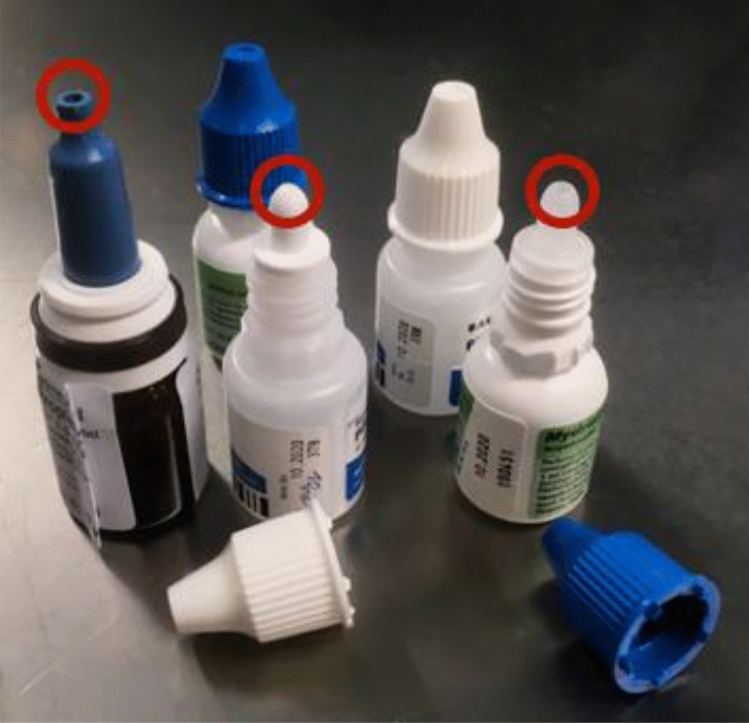
In this study, we examined the rate of contamination of multi-dose ophthalmic solutions in the operating theatre and the underlying risk for infection by examining the microbiological load on the tips of the dispenser bottles. A total of 245 samples of eye drop bottles were collected and analysed between June 2018 and January 2019. All were collected in the operating theatre of the University Eye Hospital Hamburg-Eppendorf. Contamination of the dropper tip occurred in 2% of the samples. Although the prevalence of contamination was low, the results of this study reveal the possibility of contamination of multi-dose eyedrops even when used by health care professionals in the controlled environment of an operating theatre. Following these results, we recommend the use of single-dose eyedrops in the pre- and intraoperative context.
Overview
The claims and statistics of this paper haven’t been checked yet.
Free: it reads the open-access text and checks the first 5 claims that cite a source we can check. Create a free account to check every claim.
Integrity signals
Registry
Cites
Statistics
Figures
Verification
Claims the paper makes
The claims and statistics of this paper haven’t been checked yet.
Free: it reads the open-access text and checks the first 5 claims that cite a source we can check. Create a free account to check every claim.
Claims other papers make about this one
Each is checked against this paper’s own text: does it say what the citing paper says it does?
The cited source doesn’t support the claim as written.
In the citing paper
“Wu et al 35 showed through video recordings and bacterial cultures the efficacy and safety of multi-dose preoperative eye drops administered by properly trained ophthalmic technicians.85”
From How Ophthalmologists Can Decarbonize Eye Care (2023) · cites this paper as [85]
Checked by a reasoning model — may be wrong.
Experimental — accuracy not yet measuredThe source backs part of the claim, not all of it — or backs it for a different population, condition or comparison.
In the citing paper
“Improper use appears to be the main cause of contamination, with increased risks when the application time period is increased, untrained staff handle the drops, and the eye drops are used on a larger number of patients.85”
From How Ophthalmologists Can Decarbonize Eye Care (2023) · cites this paper as [85]
Experimental — accuracy not yet measured
Self-check
Percentages, sums and reported differences re-computed from the paper’s own numbers.
The self-check needs the paper’s full text.
Citations
Cites
Coagulase-Negative Staphylococci
Becker, K., Heilmann, C., & Peters, G. (2014) · Clinical Microbiology Reviews · doi:10.1128/cmr.00109-13 · Cited by 1,628
MALDI-TOF mass spectrometry: an emerging technology for microbial identification and diagnosis
Singhal, N., Kumar, M., Kanaujia, P. K., & Virdi, J. S. (2015) · Frontiers in Microbiology · doi:10.3389/fmicb.2015.00791 · Cited by 1,605
Bacterial Endophthalmitis: Epidemiology, Therapeutics, and Bacterium-Host Interactions
Callegan, M. C., Engelbert, M., Parke, D. W., Jett, B. D., & Gilmore, M. S. (2002) · Clinical Microbiology Reviews · doi:10.1128/cmr.15.1.111-124.2002 · Cited by 385
Endophthalmitis: state of the art
Schwartz, S., Vaziri, K., Kishor, K., & Flynn, Jr. (2015) · Clinical Ophthalmology · doi:10.2147/opth.s76406 · Cited by 164 · cited 2×
“This may be due to (1) shorter duration of use, (2) more restrictive hygienic provisons and, (3) higher room cleanliness and therefore lower bacterial load of the environment.”
BackgroundMicrobial contamination of medications used to treat glaucoma.
Geyer, O., Bottone, E. J., Podos, S. M., Schumer, R. A., & Asbell, P. A. (1995) · British Journal of Ophthalmology · doi:10.1136/bjo.79.4.376 · Cited by 112
Microbial Contamination of In-Use Ocular Medications
Schein, O. D. (1992) · Archives of Ophthalmology · doi:10.1001/archopht.1992.01080130084030 · Cited by 91
Stenotrophomonas maltophilia Ocular Infections
Penland, R. L. (1996) · Archives of Ophthalmology · doi:10.1001/archopht.1996.01100130429013 · Cited by 88
Microbial Keratitis Associated with Contaminated Ocular Medications
Wasson, P. J., Boruchoff, S. A., Schein, O. D., & Kenyon, K. R. (1988) · American Journal of Ophthalmology · doi:10.1016/0002-9394(88)90298-x · Cited by 71
BACTERIAL CONTAMINATION OF DROPS AND DROPPER TIPS OF IN‐USE MULTIDOSE EYE DROP BOTTLES
HØVDING, G., & SJURSEN, H. (1982) · Acta Ophthalmologica · doi:10.1111/j.1755-3768.1982.tb08375.x · Cited by 51
Clinical features of infectious endophthalmitis in South Korea: a five-year multicenter study
Nam, K. Y., Lee, J. E., Lee, J. E., Jeung, W. J., Park, J. M., Park, J. M., Chung, I. Y., Han, Y. S., Yun, I. H., Kim, H. W., et al. (2015) · BMC Infectious Diseases · doi:10.1186/s12879-015-0900-5 · Cited by 50
Cited by
Non-aqueous formulations in topical ocular drug delivery – A paradigm shift?
Agarwal, P., & Rupenthal, I. D. (2023) · Advanced Drug Delivery Reviews · doi:10.1016/j.addr.2023.114867 · Cited by 58
How Ophthalmologists Can Decarbonize Eye Care
Sherry, B., Lee, S., Ramos Cadena, M. D. L. A., Laynor, G., Patel, S. R., Simon, M. D., Romanowski, E. G., Hochman, S. E., Schuman, J. S., Prescott, C., et al. (2023) · Ophthalmology · doi:10.1016/j.ophtha.2023.02.028 · Cited by 47
Iskandar, K., Marchin, L., Kodjikian, L., Rocher, M., & Roques, C. G. (2022) · Pharmaceutics · doi:10.3390/pharmaceutics14102176 · Cited by 40
“Isolated Microorganisms In numerous studies, Gram-positive bacteria (GPB) were the only type of bacteria isolated from the drops [42], threads [57], residual contents [23], caps [23], and dropper tips of in-use ophthalmic solutions [21].”
BackgroundInfluentialMicrobiological Contamination of Medicinal Products —Is It a Significant Problem?
Tyski, S. S., Burza, M., & Laudy, A. E. (2025) · Pharmaceuticals · doi:10.3390/ph18070946 · Cited by 29
“However, ophthalmic solutions, ointments, and gels used for diagnostic or therapeutic purposes have been found to be contaminated with microbial pathogens, leading to eye infections following their use [9,92,102].”
Bacterial contamination of multi-use antibiotic steroid eye ointments and drops
Yılmaz, Ö. F., Sarmış, A., Mutlu, M. A., Ersoy, E. E., Askarova, U., & Oğuz, H. (2023) · Graefe s Archive for Clinical and Experimental Ophthalmology · doi:10.1007/s00417-023-05977-7 · Cited by 16
“examined the contamination of 245 eye drop bottles used in the operating room and found a 2% contamination rate [8].”
BackgroundPotential cost savings associated with a multiuse preoperative and preinjection eyedrop protocol
Berkowitz, S. T., Finn, A., Sternberg, P., & Patel, S. (2022) · Ophthalmology · doi:10.1016/j.ophtha.2022.06.023 · Cited by 14
Chantra, S., Hathaisaard, P., Grzybowski, A. E., & Ruamviboonsuk, P. (2022) · Advances in Ophthalmology Practice and Research · doi:10.1016/j.aopr.2022.100046 · Cited by 16
“The incidence of microbial contamination of eyedrops with preservatives was varied ranging from 0.07% to 96.46%, 5,6,18,30 – 32 which was found in arti fi cial tear, anti-glaucoma, fl uorescein, anesthetic, atropine, cyclopentolate, tropicamide, and phenylephrine topical medications.”
BackgroundInfluentialAchieving net-zero in the dry eye disease care pathway
Latham, S., Williams, R. L., Grover, L. M., & Rauz, S. (2023) · Eye · doi:10.1038/s41433-023-02814-3 · Cited by 12
“Furthermore, the risk of contamination remains higher in multi-dose bottles despite their innovative designs [78–80].”
BackgroundEvaluating and Managing the Microbial Contamination of Eye Drops: A Two-Phase Hospital-Based Study
Roquefeuil, L., Iskandar, K., Roques, C. G., Marchin, L., Guittard, M., Poupet, H., Brandely-Piat, M.-L., & Jobard, M. (2024) · Pharmaceutics · doi:10.3390/pharmaceutics16070933 · Cited by 10
“…risk of infection, documented at a variable rate [14,18,45,46] and in different settings, including hospitals, clinics, and homes, [9,13,14,25,45,47–49] whether preserved or preservative-free [9–13, A thirty-year literature review examined the microbial contamination rate of in-use eye drops and…”
BackgroundAbdel‐Radi, M., Eldaly, Z. H., Alattar, S., & Goda, I. (2023) · Ophthalmology and Therapy · doi:10.1007/s40123-023-00791-0 · Cited by 8
“In addition, the frequent use when needed by patients for 7 days and the supply of this diluted anesthetic in bottles in the form of extended-use ophthalmic drops may increase the risk of contamination [38, 39].”
BackgroundOphthalmic Drop Waste Due to Self-imposed Use Cessation Dates
Tan, J. M., Chen, B., Vail, D. G., Barash, A., Jeon, M. J., Williams, A., Williams, T., Sidoti, P. A., Tsai, J. C., Pasquale, L. R., et al. (2024) · Ophthalmology · doi:10.1016/j.ophtha.2024.06.020 · Cited by 6
Agarwal, P., Epitropoulos, A., Gaddie, I. B., Galor, A., Karpecki, P. M., & Schmidt, E. (2025) · Expert Opinion on Drug Delivery · doi:10.1080/17425247.2025.2522947 · Cited by 4
“Furthermore, considerable microbial cross-contamination has been observed in water-based preservative-free eyedrops [119], as well as preserved multidose containers [120], which significantly increases the risk of ocular infection and serious adverse events [121].”
Pupil Dilation Evaluation of Two Mydriatic Dosing Profiles Delivered By the Optejet ®
Chayet, A. S., Ramirez, A. M., Scott, B., Whitcomb, J. E., Lam, P., & Ianchulev, T. (2023) · Therapeutic Delivery · doi:10.4155/tde-2022-0061 · Cited by 3
Triple trouble: A case report of mixed keratitis
Balasubramaniam, A., Nandan, B. R., & Gowda, N. V. (2023) · Indian Journal of Ophthalmology - Case Reports · doi:10.4103/ijo.ijo_2136_22 · Cited by 2
Toward a greener vision: A review on advancing sustainability in ophthalmology
Nanegrungsunk, O., & Kunavisarut, P. (2025) · Asia-Pacific Journal of Ophthalmology · doi:10.1016/j.apjo.2025.100182 · Cited by 2
Videographic and microbiologic evaluation of eye drop bottle contamination in clinics: pilot study
Majmudar, I. P., Kaul, H. R., Aneja, A., McCoy, J. E., Aggarwal, S., Gill, N. P., Mussman, J., Winter, H., Baker, R. O., Palmer, D. J., et al. (2025) · Journal of Cataract & Refractive Surgery · doi:10.1097/j.jcrs.0000000000001670 · Cited by 2
Microbial Contamination of Eye Drops: A Systematic Review and Meta-analysis
Kyei, S., Asiamah, R., Owusu, S., & Masango, N. E. (2025) · Journal of Patient Safety · doi:10.1097/pts.0000000000001334 · Cited by 1
In Vitro Study of Microbial Growth in Artificial Tears Using a Novel Kinetic and Culture-Based Model
Tribin, F. E., Durkee, H. A., Alfonso, A., Leiva, A. R., Aguilar, M. C., Merikansky-Gerson, S., Hernandez, M., Munoz, B., Maestre-Mesa, J., Flynn, H. W., et al. (2026) · American Journal of Ophthalmology · doi:10.1016/j.ajo.2026.04.002 · Cited by 1
Reducing dog bites and promoting safety: Merseyside Dog Safety Partnership
Schofield, R., Oxley, J. A., & Westgarth, C. (2021) · The Veterinary Nurse · doi:10.12968/vetn.2021.12.6.296
Boventer, J., Krämer, I., & Reichhold, J. (2023) · Springer eBooks · doi:10.1007/978-3-031-20298-8_18
Poowaruttanawiwit, P., Tilanuttanun, N., Chimsud, T., Sawatdiwithayayong, J., Panmanee, K., Chaisomboon, N., & Srihirun, J. (2024) · The Thai Journal of Pharmaceutical Sciences · doi:10.56808/3027-7922.2859
Maheswari, P., Priyadharshini, J. M. H., & Babu, M. (2024) · International Journal of Science and Research (IJSR) · doi:10.21275/sr241124195807
Bagley, K., Armstrong, C., Risk, B. B., Connor‐Stroud, F., Levesque, D., & Galvan, A. (2025) · Journal of the American Association for Laboratory Animal Science · doi:10.30802/aalas-jaalas-24-164
Sustainability and Cataract Surgery
Rao, N. T., & Armenti, S. T. (2025) · Advances in Ophthalmology and Optometry · doi:10.1016/j.yaoo.2025.03.007
Karaca, S., Sarmış, A., Yılmaz, Ö. F., Mutlu, M. A., Sahin, Z. B., Kaya, S. P., & Oğuz, H. (2025) · Japanese Journal of Ophthalmology · doi:10.1007/s10384-025-01308-x
“The contact of eye drops with the eye can result in contamination, which may subsequently lead to severe ocular infections [9, 10].”
Bakheet, M., Chaudhary, A., Thubaiti, G. A. A., & Assiri, A. A. A. (2026) · Cureus · doi:10.7759/cureus.109333
“…in restricting multidose eye drops to single-patient use was observed, which is concerning, as repeated use of multidose eye drops has been associated with microbial contamination of dropper tips and solutions, with documented risks of cross-contamination and subsequent ocular infections [19].”
Rahasasti, I. D., Nadhirotunnafis, F., Farahdila, H., Nuraulia, N., Ekawati, R., Adawiyah, R., Fatkhiyah, S., & Rizki, Z. (2026) · Jurnal Ilmu Kesehatan (JIKSAN) · doi:10.65099/fbkvke14
Kökten, N., Habip, Z., Slipcevic, B., Hatipoglu, M., AYDIN, Z. A., Öznacar, B. B., Çelik, S., & Kalcioglu, M. T. (2026) · Medeniyet Medical Journal · doi:10.4274/mmj.galenos.2026.87339
“Similar mechanisms have been proposed as potential contributors to nozzle contamination in multidose ophthalmic preparations 8,9 .”
Iemoto, S., Uno, M., Nakamaru, Y., Isowaki, A., & Yamashita, F. (2026) · AAPS PharmSciTech · doi:10.1208/s12249-026-03570-9
Metadata
- Authors
- Daehn, T., Schneider, A., Knobloch, J., Hellwinkel, O. J. C., Spitzer, M. S., & Kromer, R.
- Affiliations
- University Medical Center Hamburg-Eppendorf (DE)
- Corresponding author
- Daehn, Tristan
- Venue
- Scientific Reports
- Published
- 2021-10-13
- Volume
- 11
- Issue
- 1
- Pages
- 20364-20364
- ISSN
- 2045-2322 (ISSN-L)
- PMC
- PMC8514486
- OpenAlex
- W3207858297
- Cited by
- 26
- References
- 22
- Citations by year
- 2026: 3 · 2025: 8 · 2024: 3 · 2023: 8 · 2022: 3 · 2021: 1
- FWCI
- 3.37
- Type
- journal article
- Language
- en
- Open access
- gold
- doi.org
- Licence
- cc-by
- creativecommons.org/licenses/by/4.0 (tdm)
- creativecommons.org/licenses/by/4.0 (vor)
- Locations
- Scientific Reports (publishedVersion, cc-by)
- PubMed Central (publishedVersion, cc-by)
- PubMed (publishedVersion)
- DOAJ (DOAJ: Directory of Open Access Journals) (submittedVersion, cc-by-sa)
- Funders
- Universitätsklinikum Hamburg-Eppendorf (UKE)
- Topics
- Health Sciences › Medicine › Ophthalmology › Ocular Infections and Treatments
- Health Sciences › Medicine › Infectious Diseases › Infection Control in Healthcare
- Life Sciences › Immunology and Microbiology › Microbiology › Medical Device Sterilization and Disinfection
- Keywords
- eye drops, contamination, operating room, perioperative care, infection risk, nosocomial infections
About these checks
Registry, retraction, Cites and statistics results are computed, not judged, with one exception: a printed reference that no index lists is read once by a model before it counts as a citation error. Claims are extracted by a model and kept only when their quote appears verbatim in the text; each cited source is then checked, with a model’s help, for whether it says what the claim relies on. Those verdicts can be wrong — read the claim’s quote and the cited source before relying on one.
Statistics and arithmetic are recomputed, not judged.
Confidence bands are shown only for fields calibrated on our annotated test set. None is calibrated yet, so no band is shown.
What counts as a claim ›How we measure confidence ›How we check this ›
Are you an author, or do you see a problem with this page? Request a review
Data sources
Bibliographic data: Semantic Scholar, OpenAlex, Crossref.
Contains information from the Semantic Scholar Academic Graph Datasets, made available under the ODC Attribution License (ODC-BY 1.0).
Semantic Scholar’s data is described in: Kinney, R., et al. (2023). The Semantic Scholar Open Data Platform. arXiv:2301.10140.
