

Liraglutide, a glucagon-like peptide 1 receptor agonist, exerts analgesic, anti-inflammatory and anti-degradative actions in osteoarthritis
Open accessThe DOI matches its Crossref record; 67 of the 67 references it cites were found in a registry or an index.
Abstract
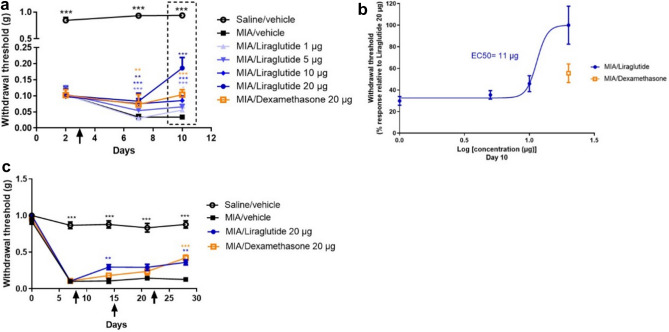
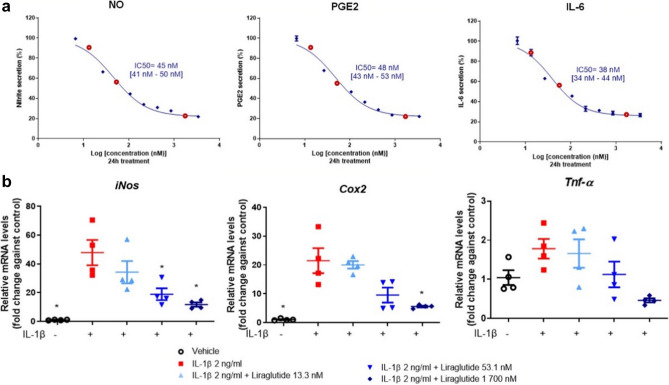
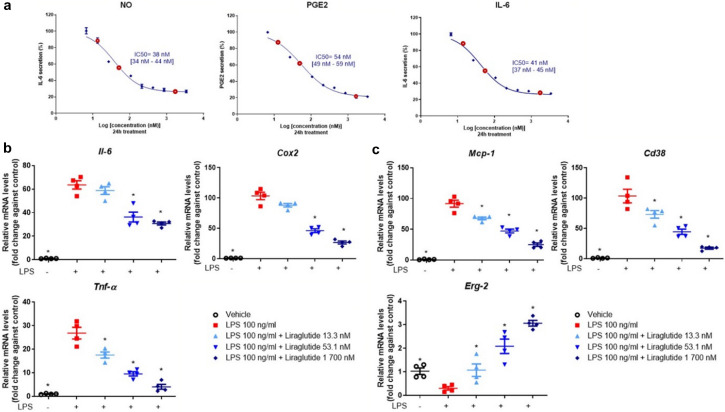
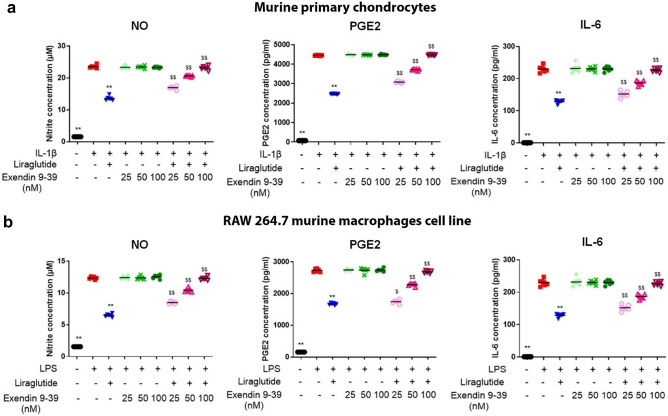
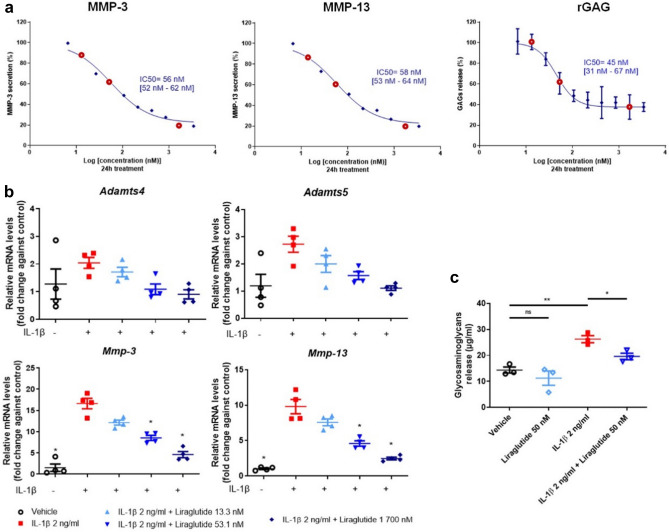
Osteoarthritis (OA) is a common disabling disease worldwide, with no effective and safe disease-modifying drugs (DMOAD) in the market. However, studies suggest that drugs, such as liraglutide, which possess strong potential in decreasing low-grade systemic inflammation may be effective in treating OA. Therefore, the aim of this study was to examine the anti-inflammatory, analgesic, and anti-degradative effects in OA using in vitro and in vivo experiments. The results showed that intra-articular injection of liraglutide alleviated pain-related behavior in in vivo sodium monoiodoacetate OA mouse model, which was probably driven by the GLP-1R-mediated anti-inflammatory activity of liraglutide. Moreover, liraglutide treatment significantly decreased IL-6, PGE 2 and nitric oxide secretion, and the expression of inflammatory genes in vitro in chondrocytes and macrophages in a dose-dependent manner. Additionally, liraglutide shifted polarized macrophage phenotype in vitro from the pro-inflammatory M1 phenotype to the M2 anti-inflammatory phenotype. Furthermore, liraglutide exerted anti-catabolic activity by significantly decreasing the activities of metalloproteinases and aggrecanases, a family of catabolic enzymes involved in cartilage breakdown in vitro. Overall, the findings of this study showed that liraglutide ameliorated OA-associated pain, possess anti-inflammatory and analgesic properties, and could constitute a novel therapeutic candidate for OA treatment.
Overview
The claims and statistics of this paper haven’t been checked yet.
Free: it reads the open-access text and checks the first 5 claims that cite a source we can check. Create a free account to check every claim.
Integrity signals
Registry
Cites
Statistics
Figures
Verification
Claims the paper makes
The claims and statistics of this paper haven’t been checked yet.
Free: it reads the open-access text and checks the first 5 claims that cite a source we can check. Create a free account to check every claim.
Claims other papers make about this one
Each is checked against this paper’s own text: does it say what the citing paper says it does?
The source backs part of the claim, not all of it — or backs it for a different population, condition or comparison.
In the citing paper
“In another study, treatment of primary mouse chondrocytes with liraglutide reduced the mRNA expression levels of iNOS, MMP-13, and ADAMTS5, leading to a decrease in the secretion of inflammatory markers, including NO, prostaglandin E, and IL-6.348”
From Glucagon-like peptide-1 receptor: mechanisms and advances in therapy (2024) · cites this paper as [348]
Experimental — accuracy not yet measuredThe cited source says what the claim attributes to it.
In the citing paper
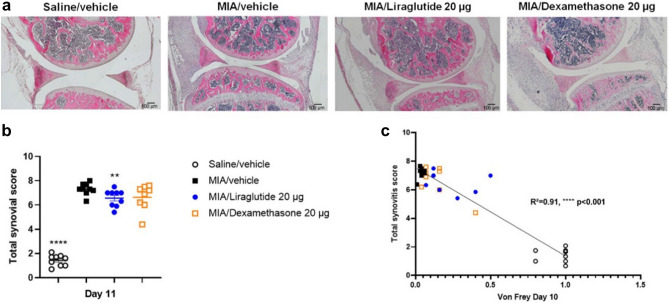
“In a sodium monoiodoacetate–induced model of osteoarthritis, a single intra-articular injection of 20 μg liraglutide reduced pain sensitivity and synovitis, in the absence of any changes in body weight (86).”
From Antiinflammatory actions of glucagon-like peptide-1–based therapies beyond metabolic benefits (2025) · cites this paper as [86]
In the citing paper
“In animal models, intra-articular administration of liraglutide reduced the secretion of inflammatory cytokines such as IL-6, the expression of inflammatory genes in chondrocytes, the amount of proinflammatory M1 macrophages, and improved pain-related behaviors104.”
From Incretin-based therapies for the treatment of obesity-related diseases (2024) · cites this paper as [104]
Self-check
Percentages, sums and reported differences re-computed from the paper’s own numbers.
The self-check needs the paper’s full text.
Citations
Cites
James, S. L., Abate, D., Abate, K. H., Abay, S. M., Abbafati, C., Abbasi, N., Abbastabar, H., Abd-Allah, F., Abdela, J., Abdelalim, A., et al. (2018) · The Lancet · doi:10.1016/s0140-6736(18)32279-7 · Cited by 13,867
Drug repurposing: progress, challenges and recommendations
Pushpakom, S., Iorio, F., Eyers, P. A., Escott, K. J., Hopper, S., Wells, A., Doig, A., Guilliams, T., Latimer, J., McNamee, C., et al. (2019) · Nature Reviews Drug Discovery · doi:10.1038/nrd.2018.168 · Cited by 4,718
Osteoarthritis: A disease of the joint as an organ
Loeser, R. F., Goldring, S. R., Scanzello, C. R., & Goldring, M. B. (2012) · Arthritis & Rheumatism · doi:10.1002/art.34453 · Cited by 3,076
Osteoarthritis as an inflammatory disease (osteoarthritis is not osteoarthrosis!)
Berenbaum, F. (2013) · Osteoarthritis and Cartilage · doi:10.1016/j.joca.2012.11.012 · Cited by 1,718
Self-citationGlasson, S. S., Blanchet, T. J., & Morris, E. A. (2007) · Osteoarthritis and Cartilage · doi:10.1016/j.joca.2007.03.006 · Cited by 1,514
The role of synovitis in pathophysiology and clinical symptoms of osteoarthritis
Sellam, J., & Berenbaum, F. (2010) · Nature Reviews Rheumatology · doi:10.1038/nrrheum.2010.159 · Cited by 1,500
Self-citationLow-grade inflammation as a key mediator of the pathogenesis of osteoarthritis
Robinson, W. H., Lepus, C. M., Wang, Q., Raghu, H., Mao, R., Lindstrom, T. M., & Sokolove, J. (2016) · Nature Reviews Rheumatology · doi:10.1038/nrrheum.2016.136 · Cited by 1,438
Ban, K., Noyan-Ashraf, M. H., Hoefer, J., Bolz, S.-S., Drucker, D. J., & Husain, M. (2008) · Circulation · doi:10.1161/circulationaha.107.739938 · Cited by 1,057
Bedson, J., & Croft, P. R. (2008) · BMC Musculoskeletal Disorders · doi:10.1186/1471-2474-9-116 · Cited by 951
Synovitis score: discrimination between chronic low‐grade and high‐grade synovitis
Krenn, V, Morawietz, L., Burmester, G., Kinne, R. W., Mueller‐Ladner, U., Muller, B., & Haupl, T. (2006) · Histopathology · doi:10.1111/j.1365-2559.2006.02508.x · Cited by 834
Cited by
Items 101–172 of 172
Yang, W., Hao, C., Wang, N., Xie, J., Zhou, B., Yang, Z., Zheng, A., Wei, J., Li, C., Xie, C., et al. (2026) · Gut Microbes · doi:10.1080/19490976.2026.2661854 · Cited by 3
“41,124,125 This mechanism has been consistently validated across multiple disease models, including synovial macrophages in OA, 41 bone marrow precursor cells in OP, 124 and muscle cells in SP. 126 In parallel, GLP-1 activates adenylate cyclase (AC), leading to increased intracellular cAMP levels,…”
InfluentialÇiftçi, E., Eberlein, S. C., Grad, S., Alini, M., Berenbaum, F., & Li, Z. (2026) · Osteoarthritis and Cartilage · doi:10.1016/j.joca.2026.04.018 · Cited by 4
Self-citationMeza, A. D. V., Nocek, M. J., Mitchell, B. C., Lizarraga, M. A., DeFoor, M. T., Ruzbarsky, J. J., Huard, J., & Philippon, M. J. (2026) · JBJS Reviews · doi:10.2106/jbjs.rvw.26.00027 · Cited by 3
Li, J., Cao, B., Yu, S., Li, C., Xue, M., xie, Q., Luo, C., Duan, C., Li, Z., & Jin, C. (2026) · International Journal of Nanomedicine · doi:10.2147/ijn.s610406 · Cited by 4
Effects of Weight-lowering Medications in People With Obesity and Rheumatic Diseases
Karacabeyli, D., & Lacaille, D. V. (2025) · Current Treatment Options in Rheumatology · doi:10.1007/s40674-025-00232-y · Cited by 3
“…cytokines (e.g., IL-6, TNF-α, and IL-1β) with GLP-1 RA treatment, as well as lower expression of important cartilage-degradative enzymes (e.g., matrix metalloproteinase (MMP) 3, MMP13, A Disin-tegrin and Metalloproteinase with Thrombospondin motifs (ADAMTS) 4, and ADAMTS5) [42 –44 ].”
The 18th international workshop on osteoarthritis imaging. Structure and pain: Where are we today?
Harandi, H., Mohammadi, S., & Guermazi, A. (2025) · Osteoarthritis Imaging · doi:10.1016/j.ostima.2025.100356 · Cited by 2
Recent developments in pharmacologic therapy of synovitis in osteoarthritis
Berenbaum, F. (2025) · Skeletal Radiology · doi:10.1007/s00256-025-04976-5 · Cited by 2
Self-citationNematalla, H. A., Elharoun, M., Sheta, E., Saleh, S. R., Basta, M., Eid, A. H., & EL‐Yazbi, A. F. (2025) · Biochemical Pharmacology · doi:10.1016/j.bcp.2025.117431 · Cited by 3
Pennycuff, J. E., Mejía, N. A. C., Hernandez, M., Owolabi, A., Soliz, J., & Cata, J. P. (2026) · Anesthesia & Analgesia · doi:10.1213/ane.0000000000007967 · Cited by 4
Sha, H., Shi, Y., Li, Y., Yang, H., & Huo, R. (2026) · Immunologic Research · doi:10.1007/s12026-026-09764-4 · Cited by 2
Broksø, A. D., Brüner, M., Hartmann, B., Josefsen, K. E., Holst, J. J., & Kragstrup, T. W. (2026) · The Lancet Rheumatology · doi:10.1016/s2665-9913(26)00074-3 · Cited by 2
Hu, H., Yin, H., Liu, Y.-W., Wang, Z., & Xie, H. (2026) · Journal of Orthopaedic Translation · doi:10.1016/j.jot.2026.101139 · Cited by 2
“Research indicates that GLP-1 RAs can activate the AMPK signaling pathway, inducing the polarization of M2 macrophages in the synovium and inhibiting the NF-κ B axis, thereby significantly reducing the release of pro-inflammatory cytokines such as TNF-α and IL-6 [267 – 269].”
Yang, R., Zeng, H., Xiao, Q., Xie, Y., Long, Y., & Chen, X. (2026) · International Journal of Molecular Medicine · doi:10.3892/ijmm.2026.5923 · Cited by 2
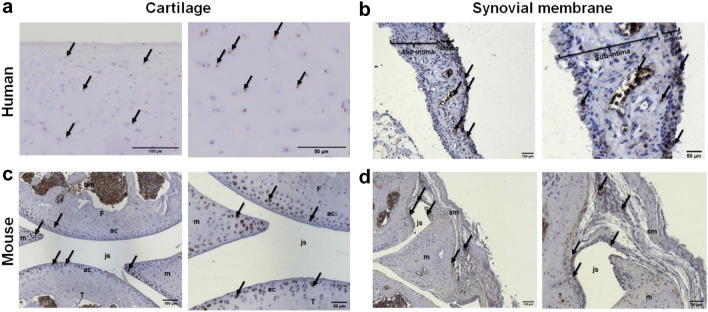
“It has been demonstrated that GLP‑1R is expressed in both human knee chondrocytes and synovial tissue (210), providing a molecular basis for local actions.”
Grigson, P. S., Bunce, S. C., Brick, T. R., Freet, C. S., Nyland, J. E., Kawasaki, S. S., Brandl, C. G., Shealy, E., & Huddleston, K. (2026) · Biological Psychiatry · doi:10.1016/j.biopsych.2026.06.033 · Cited by 2
Wang, T., Jiang, W., Chen, X., Fu, S., Hu, K., & Zeng, L. (2026) · Frontiers in Immunology · doi:10.3389/fimmu.2026.1892251 · Cited by 2
Metabolic resilience: liraglutide’s potential in alleviating depressive symptoms
Gammoh, O., Qnais, E. Y., Aljabali, A. A. A., Hatahet, T., & Alqudah, A. M. (2025) · Molecular Biology Reports · doi:10.1007/s11033-025-10641-w · Cited by 2
Abdelnabi, M. H., Chaisrimaneepan, N., Castillo‐Rodriguez, C., Eshak, N., Sullivan, M. M., Ibrahim, R., Pham, H. N., Farina, J., Ayoub, C., Nagaraja, V., et al. (2025) · Current Treatment Options in Cardiovascular Medicine · doi:10.1007/s11936-025-01124-z · Cited by 1
The GLP-1 Analog Liraglutide Reduces Fever Through Sex-Dependent Neuroinflammatory Modulation
de Sousa, G. L. S., da Cruz, E. K. M., de Aguiar, S. C. R., Gomes, A. P. L. D. N., Gomes, B. R. B., Londe, A. B. R., Gonçalves, L. J. F., Royer, C., Costa, R. A., Zampronio, A. R., et al. (2025) · Pharmaceuticals · doi:10.3390/ph18111738 · Cited by 1
“Indeed, a recent study published in 2022 demonstrated that, in an osteoarthritis model, LIRA treat-ment significantly reduced PGE 2 secretion in vitro in chondrocytes and macrophages [12].”
Jiang, L., He, L., Li, D., Luo, X., Yang, M., Wu, H., & Long, H. (2026) · Journal of Translational Autoimmunity · doi:10.1016/j.jtauto.2026.100349 · Cited by 1
“Specifically, it has been shown to inhibit the activation of the NLRP3 inflammasome [18,19], reduce the production of pro-inflammatory cytokines (e.g., TNF-α , IL-1 β , IL-6) [20, 21], and modulate neutrophil activity [22].”
Tabor, H., Ediripolage, F., Akram, N., Afzal, I., & Radha, S. S. (2026) · Cureus · doi:10.7759/cureus.105269 · Cited by 1
“Weight loss and improved glycaemic control directly address two major PJI risk factors - obesity drives chronic inflammation and impairs immune function, while hyperglycaemia promotes bacterial growth and biofilm formation [38,39].”
Glucagon-like peptide-1 receptor agonists across anti-inflammation
Chen, D. (2026) · Molecular Aspects of Medicine · doi:10.1016/j.mam.2026.101474 · Cited by 1
Zhou, L., Wu, P., Xu, Y., & Xie, B. (2026) · Acta Diabetologica · doi:10.1007/s00592-026-02697-2 · Cited by 2
“…may exert potential chondroprotective effects on cartilage tissue: liraglutide mitigates AGE-medi-ated inflammation and apoptosis in chondrocytes [ 93–94 ]; liraglutide, dulaglutide, exenatide and lixisenatide suppress AGE-induced degradation of the chondrocyte extracellular matrix [ 95–98 ].”
Marzook, F. A., Kesaria, A. A., Glover, J. M., & Alijanipour, P. (2026) · Clinical Spine Surgery A Spine Publication · doi:10.1097/bsd.0000000000002113 · Cited by 2
Angelopoulos, A., Fragoulis, G., Papagoras, C., & Daoussis, D. (2026) · Rheumatology International · doi:10.1007/s00296-026-06258-2 · Cited by 2
“Additionally, OA patients have lower circulating GLP-1 levels than healthy individuals, indicating a potential role of impaired GLP-1 signaling in the development of the disease [ 1, 42].”
InfluentialHang, W., Triantafilou, K., & Zhou, Y. (2026) · Current Rheumatology Reports · doi:10.1007/s11926-026-01229-9 · Cited by 3
Lavu, M. S., Porto, J. R., Hecht, C. J., Kaelber, D. C., Sculco, P. K., Heckmann, N. D., & Kamath, A. F. (2024) · The Journal of Arthroplasty · doi:10.1016/j.arth.2024.08.036 · Cited by 1
Y a-t-il vraiment un lien entre arthrose et diabète ?
Courties, A. (2024) · Revue du Rhumatisme · doi:10.1016/j.rhum.2024.12.004
Potential benefits of GLP-1 analogues and metformin in patients with osteoarthritis
Skowronek, A., Piekarska, M., Dąbek, K., Ochwat, M., Sudoł, M., Mierzwa, G., Kajtel, A., & Skowronek, T. (2025) · Journal of Education Health and Sport · doi:10.12775/jehs.2025.77.56953
“[ 16,19] GLP-1 analogues could also act locally at the joint level [5] as a result of the expression of the glucagon-like peptide-1 receptor (GLP-1R) in joint tissues [2], as well as in the central nervous system, where the activation of neuronal GLP-1 receptors suppresses toll-like receptor…”
InfluentialBabeau, A. (2025) · Revue du Rhumatisme · doi:10.1016/j.rhum.2025.01.019
Halimi, S. (2025) · Médecine des Maladies Métaboliques · doi:10.1016/j.mmm.2025.01.012
The current and changing role of glucagon-like peptide-1 receptor agonists in knee osteoarthritis
Holleman, A. D., & Katz, J. N. (2025) · Osteoarthritis and Cartilage Open · doi:10.1016/j.ocarto.2025.100611
“Additionally, the in vitro studies found GLP-1 agonists down-regulated reactive oxygen species [10,11,14] and pro-in fl ammatory cytokines [10 – 12,14, 15] and The human studies showed that subjects who took GLP-1 agonists had signi fi cant reductions in body weight (~5 – 13.7”
Influentialchen, X., Guan, J., Dai, H., Gao, Y., you, X., wang, T., & Wang, G. A. (2025) · Research Square · doi:10.21203/rs.3.rs-5036735/v1
chen, X., Guan, J., Dai, H., Gao, Y., you, X., wang, T., & Wang, G. A. (2025) · Research Square · doi:10.21203/rs.3.rs-5036735/v2
Les analogues de GLP-1 dans l’arthrose : avancées et perspectives
Berenbaum, F. (2025) · Médecine des Maladies Métaboliques · doi:10.1016/j.mmm.2025.06.003
Self-citationThe Role of GLP-1 Receptor Agonists In Rheumatic Diseases and Osteoarthritis: A Literature Review
Pshysical and Rehabilitation medicine 2, I. I. O. R., Ruggiero, M., Santantonio, G., La Cava, G., Lucchetti, L., Conforti, A., & Health Care & Rheumatology, A. R. 4. –. S. M. (. (2025) · The journal of clinical medicine. · doi:10.52338/tjocm.2025.5014
Playter, K. P., Chen, Y.-H., Grant, A. R., Chen, Y., Travers, H. I., Hollenbeck, B. L., Nin, D. Z., Niu, R., Talmo, C. T., Chang, D., et al. (2025) · Research Square · doi:10.21203/rs.3.rs-7490872/v1
Guan, S., & Mei, Y. (2026) · International Journal of Rheumatic Diseases · doi:10.1111/1756-185x.70535
Innovations in the Management of Load-Related Pain Across the Knee
Frederickson, M., Ogunleye, T. D., & Lee, C. A. (2025) · Operative Techniques in Sports Medicine · doi:10.1016/j.otsm.2026.151208
Intra-articular GLP-1 analogues: A new disease-modifying strategy for osteoarthritis?
Berenbaum, F. (2026) · Joint Bone Spine · doi:10.1016/j.jbspin.2026.106045
Self-citationNematalla, H. A., Sheta, E., Ghareeb, A. Z., Saree, M. M. A., Ghoneim, A. I., & Elharoun, M. (2026) · Journal of Pharmacology and Experimental Therapeutics · doi:10.1016/j.jpet.2026.104310
Adapting Glucagon-Like Peptide-1 Receptor Agonists for Innovative Psoriasis Therapy
Tanquilut, E., Dumke, M., Parga, A., Suhling, M., Hunt, J., Bae, K., Kong, Y., & Frasier, K. M. (2026) · Journal of Cutaneous Medicine and Surgery · doi:10.1177/12034754261428062
The effect of semaglutide on the progression of murine breast cancer
Stanisavljević, I. (2025) · National Repository of Dissertations in Serbia
Meurot, C. (2022) · theses.fr (ABES) · doi:10.70675/a3a95a66z221ez48f8za375za47ba9766b15
Self-citationKamar, S. A., Magdy, Y., Abu-Amara, T. M. M., Sedky, A. A., Al-Hazani, T. M. I., Alhelf, M., Zayed, E. S., Yousef, T. A., Al-Dakhil, A., Abou–Krisha, M. M., et al. (2026) · Pharmaceutics · doi:10.3390/pharmaceutics18040490
Hu, M., Jiang, C.-J., & Yi, C. (2026) · Experimental and Therapeutic Medicine · doi:10.3892/etm.2026.13178
“Multiple studies have demonstrated that GLP‑1RAs promote the polarization of uncommitted macro‑ phages toward an anti‑inflammatory phenotype (127,128) and facilitate the transition from M1 to M2 polarization (129,130).”
Alpha-cell glucagon is essential for maintaining β-cell function and identity in adult mice
Prasadan, K. L., Saleh, M. W., Thomas, M., Abyad, O. A., Shiota, C., Molitoris, J., Zhang, T., Sehrawat, A., Tariq, M., Rajasundaram, D., et al. (2026) · Journal of Biological Chemistry · doi:10.1016/j.jbc.2026.113145
Trampert, D. C. (2026) · Journal of Hepatology · doi:10.1016/j.jhep.2026.05.008
Arthrose – Epidemiologie, Pathophysiologie und konservative Therapieoptionen
Krasselt, M., & Baerwald, C. (2026) · Die Innere Medizin · doi:10.1007/s00108-026-02135-z
Frier, K. C., Dietl, M., Aronson, S., Dhani, J. S., James, K., Betensky, D. J., Selzer, F., Losina, E., Katz, J. N., Kim, J. S., et al. (2026) · ACR Open Rheumatology · doi:10.1002/acr2.90070
Wu, Q., Wei, H., Zhou, H., Du, Y., & Zhao, Q. (2026) · Biomedicine & Pharmacotherapy · doi:10.1016/j.biopha.2026.119726
Chai, R., Liu, J., Hu, L., & Zheng, P. (2026) · Translational research · doi:10.1016/j.trsl.2026.07.003 · Cited by 1
Trudeau, M., Schaffer, O., & Schwarzkopf, R. M. (2026) · Orthopedic Clinics of North America · doi:10.1016/j.ocl.2026.05.004
Optimizing GLP-1 Receptor Agonist Use: Mechanisms, Clinical Applications, and Safety Profiles
Rasineni, K., & Grigson, P. S. (2026) · Frontiers research topics · doi:10.3389/978-2-8325-8391-3
Hyung, S., Park, U. J., Ryu, J. H., & Chung, S. (2026) · Journal of Clinical Medicine · doi:10.3390/jcm15155932
“Preclinical and translational osteoarthritis data suggest possible anti-inflammatory and anti-catabolic effects of GLP-1 receptor activation within joint tissues [17].”
Zhang, S., Liu, S., Zhou, M., Wang, J., Zhang, Y., Zhong, H., & Ning, G. (2026) · Molecular Neurobiology · doi:10.1007/s12035-026-06090-6
“Treatment with GLP-1RAs (e.g., liraglutide) decreases the production of NO, prostaglandin E, and IL-6 while enhancing the synthesis and accumulation of proteoglycans and type II collagen, demonstrating its potential in promoting cartilage repair [135, 136 ].”
Potential underutilisation of weight loss medications in obese patients with knee osteoarthritis
Badhe, N., Busby, C., Kurien, T., & Marson, B. A. (2026) · Annals of The Royal College of Surgeons of England · doi:10.1308/rcsann.2026.0063 · Cited by 1
Новые возможности использования гипогликемических препаратов в лечении остеоартрита
Мерлушкина, А. С., Жигулина, А. И., Федорец, В. Н., & Василенко, В. С. (2026) · Медицина: теория и практика · doi:10.56871/mtp.2026.18.17.008
Chacón, M., Jiménez, M., & Reginato, A. M. (2026) · Revista Reumatología al Día. · doi:10.62484/rad.v20i2.13247
A rheumatological reading of GLP-1 receptor agonists: from muscle loss to musculoskeletal gain
Ciaffi, J., D’Amuri, A., Caporali, R., & Ursini, F. (2026) · International Journal of Obesity · doi:10.1038/s41366-026-02204-1
Papastathopoulou, N. S., Neri, S., Assirelli, E., D’Amuri, A., Greco, S., Ciaffi, J., & Ursini, F. (2026) · Rheumatology Advances in Practice · doi:10.1093/rap/rkag105
Vaknin, N., Seidenberg, C., Sitton, E., Singer, P., Mishali, R., Vidal, H., & Kish, M. S. (2026) · Frontiers in Endocrinology · doi:10.3389/fendo.2026.1918370
“First, the magnitude of surgical trauma, in fl ammatory activation, and nociceptive input following major joint arthroplasty may overwhelm any baseline anti-in fl ammatory or antinociceptive effects of chronic GLP-1 RA therapy (6, 9).”
Odonkor, C. A., Dodurgali, M. R., Cox, F. R., Klimov, I. J., & Abd-Elsayed, A. A. (2026) · Nutrients · doi:10.3390/nu18193120
“…modulation [54,63], nitric oxide-dependent visceral analgesia and improved gut permeability [38], neurotrophic support of sensory neurons [19–21], blood–brain barrier stabilization [64], and a shift in joint macrophages from a pro-inflammatory M1 to a reparative M2 phenotype in osteoarthritis [65].”
Fuller, Z., Singh, M., Dawar, A., Thomas, J., Daniels, A. H., & Abdo, Z. E. (2026) · Journal of Orthopaedic Experience & Innovation · doi:10.60118/001c.162883
Kim, H. G., Yeong, J., Kim, B. T., Suh, D. H., Jeong, S. H., Park, Y. H., Park, H., Yoo, J. C., & Park, J. H. (2026) · Scientific Reports · doi:10.1038/s41598-026-73949-y
Paccou, J., Rolvien, T., Hauser, B., Sølling, A. S., Anastasilakis, A. D., & Lems, W. F. (2026) · Therapeutic Advances in Musculoskeletal Disease · doi:10.1177/1759720x261460301
Valentino, L. A., & Dargaud, Y. (2026) · Haemophilia · doi:10.1111/hae.70424
Les analogues du GLP-1 dans l’arthrose : de l’effet pondéral à l’effet structural
Berenbaum, F. (2026) · Revue du Rhumatisme · doi:10.1016/j.rhum.2026.10.003
Self-citationEmerging therapies for knee osteoarthritis
Courties, A., Winkler, T., Conaghan, P. G., & Berenbaum, F. (2026) · Nature Reviews Rheumatology · doi:10.1038/s41584-026-01441-y
Self-citationSićović, K., Nastić, K., Dinić, M., Brdarić, E., Pecikoza, U. B., Tomic´, M. A., & Micov, A. M. (2026) · British Journal of Pharmacology · doi:10.1111/bph.70720
Zachary, C., Orogo, J.-P. C., Lee, B. S., Insco, A. K., & Sharma, A. (2026) · Osteology · doi:10.3390/osteology6040024
Metadata
- Authors
- Meurot, C., Martin, C., Sudre, L., Breton, J., Bougault, C., Rattenbach, R., Bismuth, K., Jacques, C., & Berenbaum, F.
- Affiliations
- Inserm (FR)
- Corresponding author
- Berenbaum, F.
- Venue
- Scientific Reports
- Published
- 2022-01-28
- Volume
- 12
- Issue
- 1
- Pages
- 1567-1567
- ISSN
- 2045-2322 (ISSN-L)
- PMC
- PMC8799666
- OpenAlex
- W4210711301
- Semantic Scholar
- 3f3db384fcf7e4dc8e04f70430f07675a778bf43
- Cited by
- 160
- References
- 67
- Citations by year
- 2026: 50 · 2025: 70 · 2024: 25 · 2023: 9 · 2022: 6
- FWCI
- 20.02
- Type
- journal article
- Language
- en
- Open access
- gold
- doi.org
- Licence
- cc-by
- creativecommons.org/licenses/by/4.0 (tdm)
- creativecommons.org/licenses/by/4.0 (vor)
- Locations
- Scientific Reports (publishedVersion, cc-by)
- PubMed Central (publishedVersion, cc-by)
- PubMed (publishedVersion)
- HAL (submittedVersion, other-oa)
- DOAJ (DOAJ: Directory of Open Access Journals) (submittedVersion, cc-by-sa)
- Topics
- Health Sciences › Medicine › Rheumatology › Osteoarthritis Treatment and Mechanisms
- Life Sciences › Biochemistry, Genetics and Molecular Biology › Cell Biology › Proteoglycans and glycosaminoglycans research
- Health Sciences › Medicine › Physiology (medical) › Pain Mechanisms and Treatments
- Keywords
- liraglutide, osteoarthritis, GLP-1 receptor agonists, analgesia, anti-inflammatory activity, cartilage degeneration, chondrocytes, macrophage polarization, M1/M2 macrophages, interleukin-6, prostaglandin E2, nitric oxide, metalloproteinases, aggrecanase, intra-articular injection, disease-modifying osteoarthritis drugs
- MeSH terms
- Glucagon-Like Peptide-1 Receptor, RAW 264.7 Cells, Liraglutide, Glucagon-Like Peptide-1 Receptor Agonists, Analgesics, Animals, Anti-Inflammatory Agents, Disease Models, Animal, Macrophages, Male, Mice, Inbred C57BL, Nitric Oxide, Osteoarthritis, Chondrocytes, Mice
About these checks
Registry, retraction, Cites and statistics results are computed, not judged, with one exception: a printed reference that no index lists is read once by a model before it counts as a citation error. Claims are extracted by a model and kept only when their quote appears verbatim in the text; each cited source is then checked, with a model’s help, for whether it says what the claim relies on. Those verdicts can be wrong — read the claim’s quote and the cited source before relying on one.
Statistics and arithmetic are recomputed, not judged.
Confidence bands are shown only for fields calibrated on our annotated test set. None is calibrated yet, so no band is shown.
What counts as a claim ›How we measure confidence ›How we check this ›
Are you an author, or do you see a problem with this page? Request a review
Data sources
Bibliographic data: Semantic Scholar, OpenAlex, Crossref.
Contains information from the Semantic Scholar Academic Graph Datasets, made available under the ODC Attribution License (ODC-BY 1.0).
Semantic Scholar’s data is described in: Kinney, R., et al. (2023). The Semantic Scholar Open Data Platform. arXiv:2301.10140.
