

A functional definition to distinguish ponds from lakes and wetlands
Open accessThe DOI matches its Crossref record; 44 of the 44 references it cites were found in a registry or an index; 5 of the 41 sources its claims cite were checked for support.
Abstract
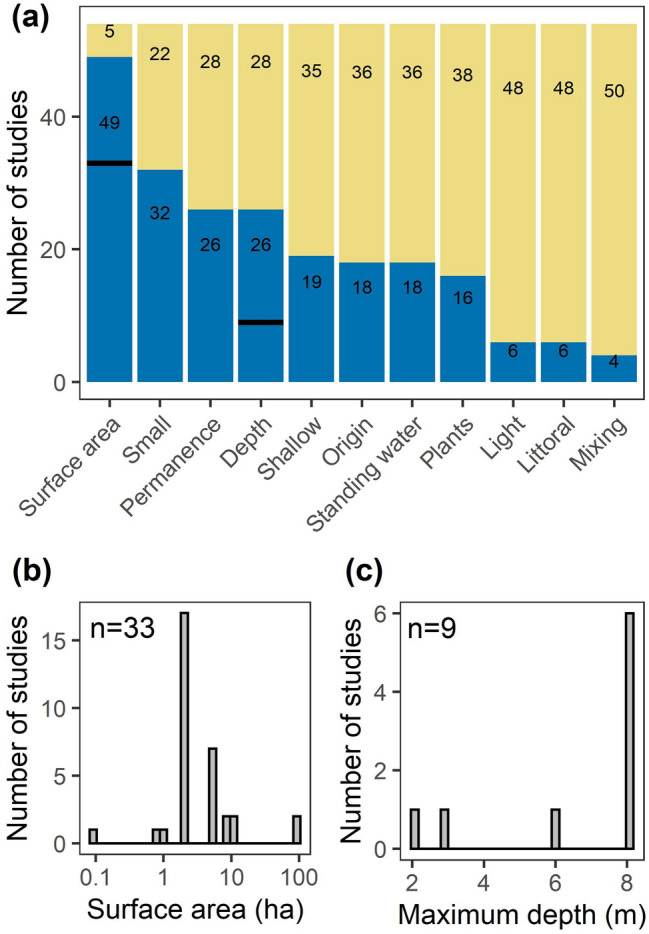
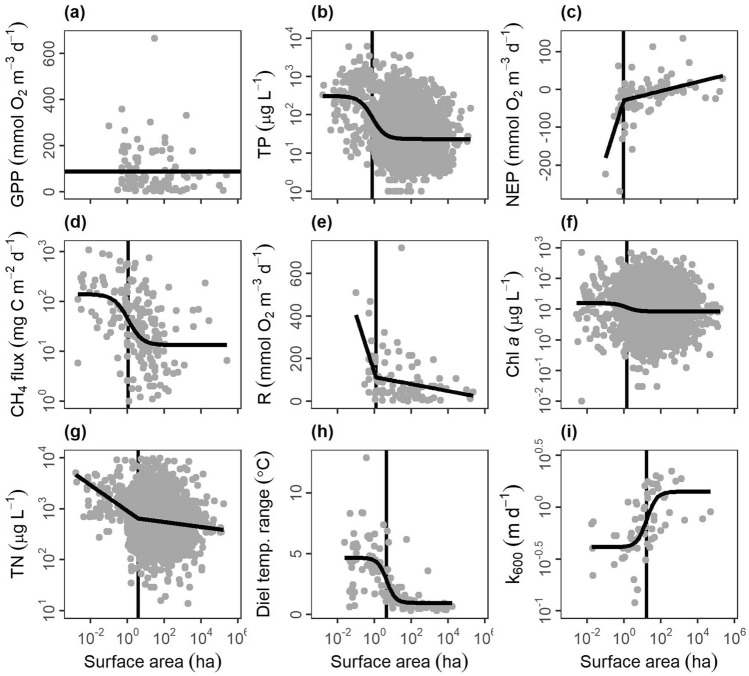
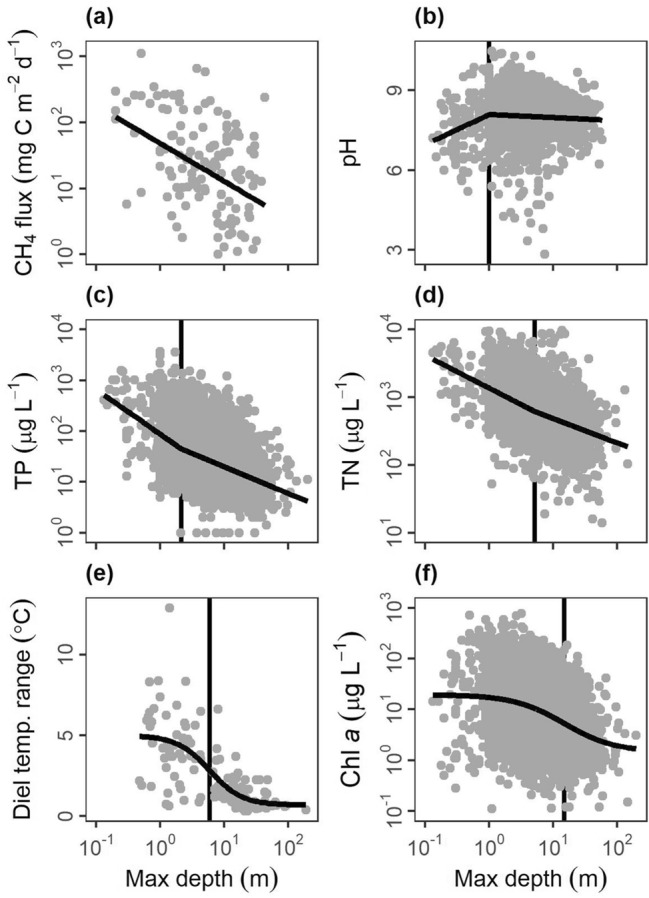
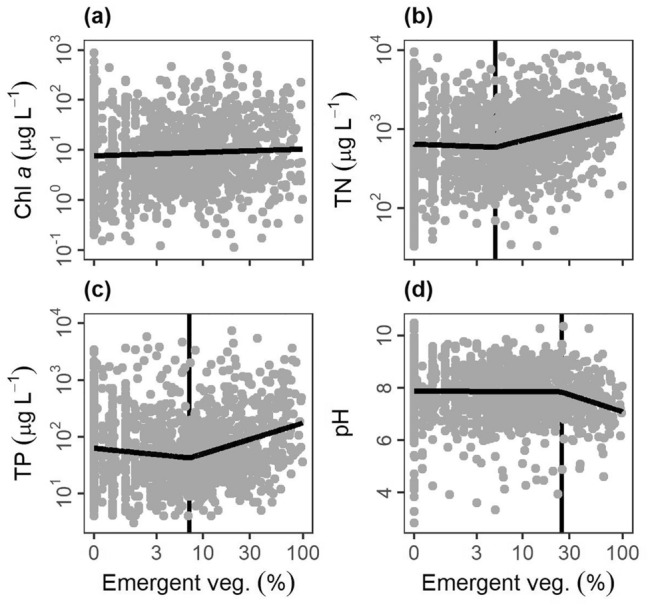
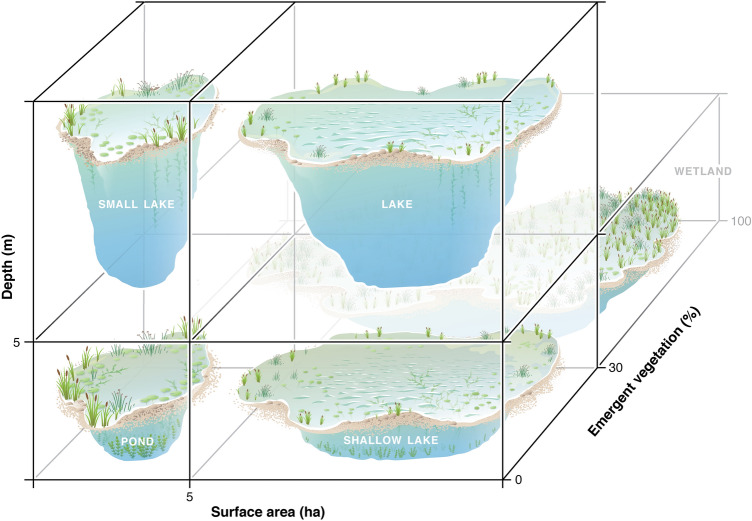
Ponds are often identified by their small size and shallow depths, but the lack of a universal evidence-based definition hampers science and weakens legal protection. Here, we compile existing pond definitions, compare ecosystem metrics (e.g., metabolism, nutrient concentrations, and gas fluxes) among ponds, wetlands, and lakes, and propose an evidence-based pond definition. Compiled definitions often mentioned surface area and depth, but were largely qualitative and variable. Government legislation rarely defined ponds, despite commonly using the term. Ponds, as defined in published studies, varied in origin and hydroperiod and were often distinct from lakes and wetlands in water chemistry. We also compared how ecosystem metrics related to three variables often seen in waterbody definitions: waterbody size, maximum depth, and emergent vegetation cover. Most ecosystem metrics (e.g., water chemistry, gas fluxes, and metabolism) exhibited nonlinear relationships with these variables, with average threshold changes at 3.7 ± 1.8 ha (median: 1.5 ha) in surface area, 5.8 ± 2.5 m (median: 5.2 m) in depth, and 13.4 ± 6.3% (median: 8.2%) emergent vegetation cover. We use this evidence and prior definitions to define ponds as waterbodies that are small (< 5 ha), shallow (< 5 m), with < 30% emergent vegetation and we highlight areas for further study near these boundaries. This definition will inform the science, policy, and management of globally abundant and ecologically significant pond ecosystems.
Overview
CoChat Summary
TL;DR
The paper compiles existing pond definitions and compares ecosystem metrics among ponds, lakes, and wetlands to propose an evidence-based functional pond definition. It defines ponds as waterbodies < 5 ha, < 5 m maximum depth, and < 30% emergent vegetation cover, based on nonlinear threshold shifts in ecosystem structure and function.
Key findings
- Across 54 scientific pond definitions, surface area was mentioned in 91%, depth in 48%, permanence in 48%, origin in 33%, and standing water in 33%. Where maximum surface area was given, values ranged from 0.1 to 100 ha, with a median of 2 ha and all but two definitions ≤ 10 ha; only 17% gave a maximum depth cutoff, ranging from 2 to 8 m.
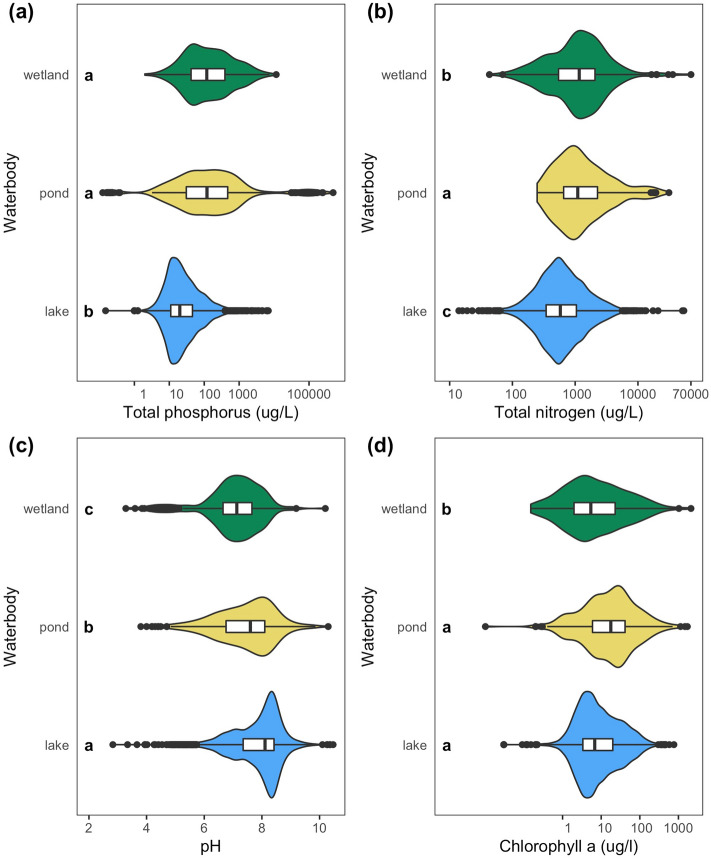
- Ponds as defined by scientists were variable: of 608 ponds with hydroperiod data, 74% were permanent and 26% temporary; of 648 with known origin, 65% were constructed or manipulated and 35% natural. Ponds were distinct from lakes and wetlands in TN and pH, similar to wetlands in TP, and similar to lakes in chlorophyll a.
- Ecosystem metrics were mostly nonlinearly related to surface area (9/10 variables), depth (5/6), and emergent vegetation cover (3/4). Mean boundary values were 3.7 ± 1.8 ha (median 1.5 ha) for surface area, 5.8 ± 2.5 m (median 5.2 m) for depth, and 13.4 ± 6.3% (median 8.2%) for emergent vegetation cover.
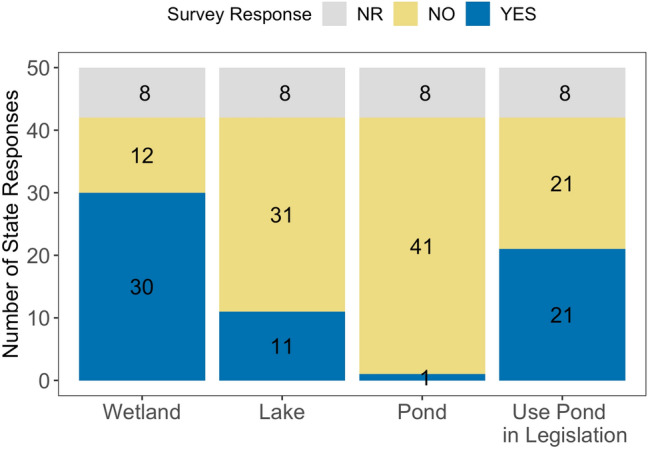
- In a US state survey with responses from 42/50 states, only one state (Michigan) explicitly defined ponds, 11 defined lakes, and 30 defined wetlands; half of surveyed states used the term “pond” in legislation.
Methods
- Compiled pond definitions and pond characteristics via backward and forward searches from three seminal pond papers, yielding 519 papers, 54 pond definitions, and 1,327 pond waterbodies filtered to ≤ 20 ha surface area and ≤ 9 m depth.
- Compared ponds to existing lake databases (US and Europe; n = 55,173) and a US wetland database (n = 400) using TP, TN, pH, and chlorophyll a, with ANOVA and post-hoc LSD tests.
- Evaluated relationships between ecosystem metrics and surface area, maximum depth, or emergent vegetation cover using null, linear, segmented, and logistic models, selecting optimal fits by AICc and using breakpoints or inflection points as boundaries. Also surveyed US state environmental agencies.
Limitations
- Stated: depth analysis was less robust than surface area because less depth data were available; emergent vegetation had the fewest ecosystem metric comparisons; the 30% emergent vegetation threshold from Cowardin et al. is not data-driven; and confounding waterbody definitions create overlapping size distributions, making statistical differences conservative.
- Stated: the authors recommend further study near the proposed boundaries, especially for depth and emergent vegetation, and note that additional variables such as basin geometry, wind sheltering, water residence time, water clarity, and geographic location may create overlap among classifications.
- Evident from the text: pond data came from papers that self-identified waterbodies as ponds, while lake and wetland classifications came from publishing scientists or managers, so the comparisons rely on existing labels rather than a single independent classification scheme; five cited papers could not be assessed because they were inaccessible or untranslatable.
Model-written summary. Check it against the paper before relying on it.
Integrity signals
Registry
Cites
Statistics
Figures
Verification
Claims the paper makes
4 Valid · 1 Not valid · 27 Not checked · 53 Own results and interpretations
The cited sources support only part of this claim — read each source’s verdict below.
In the paper
“We found higher diel temperature ranges were more common in waterbodies < 5 ha (Fig. 5h) and < 6 m (Fig. 6e; see also39).”
§ A functional definition to distinguish ponds from lakes and wetlands > Results and discussion > Does ecosystem structure and function distinguish ponds from lakes and wetlands?
What the sources say
- Partly supportedcites [39] Woolway RI Diel surface temperature range scales with lake size PLoS ONE 2016 11 e0152466 10.1371/journal.pone.0152466 27023200 PMC4811584 sourceExperimental — accuracy not yet measured
Woolway et al. (2016) support the directional part of the claim: the Results and Discussion and Abstract state that the near-surface diel temperature range (DTR) increases sharply and predictably with decreasing lake area, but the threshold they identify is 3.2 x 10^6 m2 (3.2 km2, ~320 ha), not 5 ha (Results and Discussion, Figs 3 and 4; Abstract). The '< 6 m' depth element is not supported: the paper explicitly tested maximum depth and volume as alternative predictors and found them 'statistically less significant' than surface area (a model using maximum depth explained only 73% of variation vs 83% for area; Results and Discussion), and depth appears in the study only as a morphometric descriptor (lakes ranged 2-256 m maximum depth; Methods) and in the theoretical mixed-layer calculation. So the source backs 'higher DTR in small waterbodies' but neither of the specific cut-offs the citing sentence attributes to it. (LLM, conf=0.75)
plainstates an association- Asserted: passes — The authors put it forward as true.
- Checkable: passes — It can be checked against evidence.
- Load-bearing: passes — The paper’s conclusions depend on it.
- Based: passes — The paper gives a reason why it holds.
- Partly supported
A result the paper reports from its own data — it cites no other source for it, so there is none to check. The quote shows it is in the paper.
In the paper
“For instance, many states monitor lakes based on minimum size thresholds, which vary widely from < 1 ha in Arizona and Alaska, 2–4 ha in many northeastern states, and up to 8 ha in Washington and Nebraska.”
§ A functional definition to distinguish ponds from lakes and wetlands > Results and discussion > Current U.S. Federal and State definitions
plain- Asserted: passes — The authors put it forward as true.
- Checkable: passes — It can be checked against evidence.
- Load-bearing: passes — The paper’s conclusions depend on it.
- Based: passes — The paper gives a reason why it holds.
A result the paper reports from its own data — it cites no other source for it, so there is none to check. The quote shows it is in the paper.
In the paper
“When surface area or depth were included in definitions, they were often mentioned qualitatively (e.g., “small” and “shallow”).”
§ A functional definition to distinguish ponds from lakes and wetlands > Results and discussion > Current scientific definitions of ponds
plain- Asserted: passes — The authors put it forward as true.
- Checkable: passes — It can be checked against evidence.
- Load-bearing: unclear — It is unclear whether the paper’s conclusions depend on it.
- Based: passes — The paper gives a reason why it holds.
A result the paper reports from its own data — it cites no other source for it, so there is none to check. The quote shows it is in the paper.
In the paper
“From the waterbodies that scientists called “ponds,” hydroperiod and origin varied over a large range of characteristics.”
§ A functional definition to distinguish ponds from lakes and wetlands > Results and discussion > Comparing lake, pond, and wetlands characteristics from literature
plain- Asserted: passes — The authors put it forward as true.
- Checkable: passes — It can be checked against evidence.
- Load-bearing: passes — The paper’s conclusions depend on it.
- Based: passes — The paper gives a reason why it holds.
A result the paper reports from its own data — it cites no other source for it, so there is none to check. The quote shows it is in the paper.
In the paper
“For example, ponds had distinctly high TN concentrations, which were greater than either lakes or wetlands (Fig. 4b; Table S2).”
§ A functional definition to distinguish ponds from lakes and wetlands > Results and discussion > Comparing lake, pond, and wetlands characteristics from literature
plainstates an association- Asserted: passes — The authors put it forward as true.
- Checkable: passes — It can be checked against evidence.
- Load-bearing: passes — The paper’s conclusions depend on it.
- Based: passes — The paper gives a reason why it holds.
- Rests on an assumption not shown here.
20 more claims
Create a free account to see all 85 claims and to verify the 36 references still open.
- It may state two separate claims as one. 49
- Probably not a substantial claim. 20
- The quote only partly states this claim. 1
Claims other papers make about this one
Each is checked against this paper’s own text: does it say what the citing paper says it does?
The source backs part of the claim, not all of it — or backs it for a different population, condition or comparison.
In the citing paper
“A depth of 5 m was used in overdeepenings to separate shallow from deep zones, a threshold recognized as a functional shift in aquatic ecosystems, especially in relation with energy exchange with the atmosphere and with photosynthetic activity (Richardson et al., 2022).”
From Future emergence of new ecosystems caused by glacial retreat (2023) · cites this paper as Richardson et al., 2022
Experimental — accuracy not yet measured
Self-check
Percentages, sums and reported differences re-computed from the paper’s own numbers.
Each contradiction between two passages listed here was confirmed by an independent check.
Rated minor: it would not touch a result — a value no result rests on, a p-value that stays on the same side of the significance level, or a conflict that is clerical, resolved elsewhere in the paper, or outside its own findings.
In the paper
§ A functional definition to distinguish ponds from lakes and wetlands > Results and discussion > Current scientific definitions of ponds
“The next two most cited papers were Oertli et al.17 and Sondergaard et al.18, which were seminal papers included in our backwards-forwards search”
§ A functional definition to distinguish ponds from lakes and wetlands > Methods > Literature survey
“To compile biological, physical, and chemical characteristics of ponds, we conducted a literature search based on three seminal papers establishing the ecological importance of ponds: Oertli et al.35, Søndergaard et al.18, and Downing8”
Citations
Cites
Burnham, K. P., Anderson, D. R., & Huyvaert, K. P. (2011) · Behavioral Ecology and Sociobiology · doi:10.1007/s00265-010-1029-6 · Cited by 4,104
Classification of wetlands and deepwater habitats of the United States
Cowardin, L. M., Service, U. S. F. A. W., & (U.S.), B. S. P. (1979) · doi:10.5962/bhl.title.4108 · Cited by 2,153
A global inventory of lakes based on high-resolution satellite imagery
Verpoorter, C., Kutser, T., Seekell, D. A., & Tranvik, L. J. (2014) · Geophysical Research Letters · doi:10.1002/2014gl060641 · Cited by 1,504 · cited 1×
“Therefore, our study had four objectives: (1) compile current pond definitions from scientists and policy makers, (2) determine if ponds, lakes, and wetlands, as defined by researchers, differ in ecosystem structure, (3) use ecosystem structure and function metrics to identify if there are boundaries between ponds and…”
BackgroundIUCN (International Union for Conservation of Nature)
(2014) · International Year Book and Statesmen's Who's Who · doi:10.1163/1570-6664_iyb_sim_org_2285 · Cited by 1,015
Large contribution to inland water CO2 and CH4 emissions from very small ponds
Holgerson, M. A., & Raymond, P. A. (2016) · Nature Geoscience · doi:10.1038/ngeo2654 · Cited by 995 · cited 1×
“Therefore, our study had four objectives: (1) compile current pond definitions from scientists and policy makers, (2) determine if ponds, lakes, and wetlands, as defined by researchers, differ in ecosystem structure, (3) use ecosystem structure and function metrics to identify if there are boundaries between ponds and…”
BackgroundSelf-citationEmerging global role of small lakes and ponds: little things mean a lot
Downing, J. A. (2010) · Limnetica · doi:10.23818/limn.29.02 · Cited by 662
Biggs, J., von Fumetti, S., & Kelly-Quinn, M. (2017) · Hydrobiologia · doi:10.1007/s10750-016-3007-0 · Cited by 594
Biggs, J., Williams, P., Whitfield, M., Nicolet, P., & Weatherby, A. (2005) · Aquatic Conservation: Marine and Freshwater Ecosystems · doi:10.1002/aqc.745 · Cited by 436
Floating plant dominance as a stable state
Scheffer, M., Szabó, S., Gragnani, A., van Nes, E. H., Rinaldi, S., Kautsky, N., Norberg, J., Roijackers, R. M. M., & Franken, R. J. M. (2003) · Proceedings of the National Academy of Sciences · doi:10.1073/pnas.0737918100 · Cited by 434
A Revised Classification of Lakes Based on Mixing
Lewis Jr., W. M. (1983) · Canadian Journal of Fisheries and Aquatic Sciences · doi:10.1139/f83-207 · Cited by 419
Research works printed but not linked: 6
- Thienemann A Die binnengewässer mitteleuropas: eine limnologische einfurung 1925 E. Schweizerbart
- Welch PS Limnology 1952 McGraw-Hill
- Wetzel R Limnology 2001 Academic Press
- Choffel Q Touchart L Bartout P Al Domany M Temporal and spatial variations in heat content of a French pond Geogr. Tech. 2017 12 9 22
- Kalff J Limnology 2002 Prentice-Hall Inc.
- Muggeo VMR segmented: An R package to fit regression models with broken-line relationships R News 2008 8 7
Cited by
Zhang, X., Liu, L., Zhao, T., Chen, X., Lin, S., Wang, J., Mi, J., & Liu, W. (2023) · Earth System Science Data · doi:10.5194/essd-15-265-2023 · Cited by 196
Future emergence of new ecosystems caused by glacial retreat
Bosson, J. B., Huss, M., Cauvy-Fraunié, S., Clément, J. C., Costes, G., Fischer, M., Poulenard, J., & Arthaud, F. (2023) · Nature · doi:10.1038/s41586-023-06302-2 · Cited by 197
Classifying Mixing Regimes in Ponds and Shallow Lakes
Holgerson, M. A., Richardson, D. C., Roith, J., Bortolotti, L. E., Finlay, K. P., Hornbach, D. J., Gurung, K., Ness, A., Andersen, M. R., Bansal, S., et al. (2022) · Water Resources Research · doi:10.1029/2022wr032522 · Cited by 138
Self-citationChallenges and opportunities in the use of ponds and pondscapes as Nature-based Solutions
Cambronero, M. C., Blicharska, M., Perrin, J.-A., Davidson, T. A., Oertli, B., Lago, M. J. D., Beklioğlu, M., Meerhoff, M., Arim, M., Teixeira, J., et al. (2023) · Hydrobiologia · doi:10.1007/s10750-023-05149-y · Cited by 111
“At a landscape Vol.: (0123456789) scale, ponds, defined as small water bodies (1 m 2 to 2–5 ha.) that can be permanent or seasonal, man-made or natural (see glossary) (Richardson et al., 2022), are habitats of many endemic, threatened or rare species (Davies et al., 2008).”
BackgroundPractical Guide to Measuring Wetland Carbon Pools and Fluxes
Bansal, S., Creed, I. F., Tangen, B. A., Bridgham, S. D., Desai, A. R., Krauss, K. W., Neubauer, S. C., Noe, G. B., Rosenberry, D. O., Trettin, C., et al. (2023) · Wetlands · doi:10.1007/s13157-023-01722-2 · Cited by 109
Climate change will reduce North American inland wetland areas and disrupt their seasonal regimes
Xu, D., Bisht, G., Tan, Z., Sinha, E., Vittorio, A. D., Zhou, T., Ivanov, V. Y., & Leung, L.-Y. R. (2024) · Nature Communications · doi:10.1038/s41467-024-45286-z · Cited by 98
“In this study, we de fi ne ‘ wetland area ’ as a region within a computational cell inundated due to either pluvial or fl uvial processes, excluding rivers, lakes, and reservoirs, while lakes can be classi fi ed as wetland in other study 76 .”
BackgroundTaurozzi, D., Cesarini, G., & Scalici, M. (2024) · Ecological Indicators · doi:10.1016/j.ecolind.2024.112309 · Cited by 55
Ray, N. E., Holgerson, M. A., Andersen, M. R., Bikše, J., Bortolotti, L. E., Futter, M. N., Kokorīte, I., Law, A., McDonald, C. P., Mesman, J. P., et al. (2023) · Limnology and Oceanography · doi:10.1002/lno.12362 · Cited by 55
Self-citationGlobal importance of nitrogen fixation across inland and coastal waters
Fulweiler, R. W., Rinehart, S. A., Taylor, J. M., Kelly, M. C., Berberich, M. E., Ray, N. E., Oczkowski, A., Balint, S., Benavides, M., Church, M. J., et al. (2025) · Science · doi:10.1126/science.adt1511 · Cited by 55
Fehlinger, L., Misteli, B., Morant, D., Juvigny‐Khenafou, N. P. D., Cunillera‐Montcusí, D., Chaguaceda, F., Stamenković, O., Fahy, J. C., Kolář, V., Halabowski, D., et al. (2023) · Inland Waters · doi:10.1080/20442041.2022.2111180 · Cited by 49
“Debate around the definition of ponds has a long history that continues to the present (Richardson et al. 2022).”
BackgroundInfluentialPond greenhouse gas emissions controlled by duckweed coverage
Rabaey, J. S., & Cotner, J. B. (2022) · Frontiers in Environmental Science · doi:10.3389/fenvs.2022.889289 · Cited by 50
“Ponds, which tend to be < 5 ha in size (Richardson et al., 2022), comprise over 90% of freshwater lakes by number (Downing et al.”
BackgroundSelf-citationBiodiversity patterns diverge along geographic temperature gradients
Loewen, C. J. G., Jackson, D. A., & Gilbert, B. (2022) · Global Change Biology · doi:10.1111/gcb.16457 · Cited by 36
“…strong morphological basis for zooplankton taxonomy supports our use of taxonomic surrogates, which have been successfully applied in similar contexts (e.g. Cai et al., 2018; Crozier et al., 2005) and shown to correlate strongly with complete, time- calibrated phylogenies (Ricotta et al., 2012).”
BackgroundClimate change and the biodiversity of alpine ponds: Challenges and perspectives
Lamouille‐Hébert, M., Arthaud, F., & Datry, T. (2024) · Ecology and Evolution · doi:10.1002/ece3.10883 · Cited by 36
“…biodiversity change (e.g., community composition) (Pereira et al., 2013; Schmeller et al., 2017 ), (4) pond typology (e.g., pond, shallow lake, cf. Richardson et al. (2022)), (5) pond geometry (e.g., depth, surface), and (6) environmental drivers of diversity (e.g., water quality, connectivity).”
BackgroundLake ecosystem tipping points and climate feedbacks
Hessen, D. O., Andersen, T., McKay, D. I. A., Kosten, S., Meerhoff, M., Pickard, A., & Spears, B. M. (2024) · Earth System Dynamics · doi:10.5194/esd-15-653-2024 · Cited by 49
“While most tundra ponds and other small wa-terbodies hardly qualify as lakes (Richardson et al., 2022), we mostly use the word lake through the text for simplicity, yet it will be evident from the context of wording where we specifically refer to ponds”
BackgroundRabaey, J. S., Holgerson, M. A., Richardson, D. C., Andersen, M. R., Bansal, S., Bortolotti, L. E., Cotner, J. B., Hornbach, D. J., Martinsen, K. T., Moody, E. K., et al. (2024) · Geophysical Research Letters · doi:10.1029/2023gl106689 · Cited by 39
“For example, volumetric GPP typically decreases with increasing lake size and depth (Duarte & Kalff, 1989), yet there can also be high variability among both small and shallow waterbodies (Hornbach et al., 2017, 2020; Martinsen et al., 2017; Richardson et al., 2022; Staehr et al., 2012).”
InfluentialSelf-citationHourly methane and carbon dioxide fluxes from temperate ponds
Sø, J. S., Martinsen, K. T., Kragh, T., & Sand‐Jensen, K. (2024) · Biogeochemistry · doi:10.1007/s10533-024-01124-4 · Cited by 30
Meerhoff, M., & Beklioğlu, M. (2023) · Elsevier eBooks · doi:10.1016/b978-0-12-822701-5.00026-4 · Cited by 33
Inventorying ponds through novel size-adaptive object mapping using Sentinel-1/2 time series
Liu, D., Zhu, X., Holgerson, M. A., Bansal, S., & Xu, X. (2024) · Remote Sensing of Environment · doi:10.1016/j.rse.2024.114484 · Cited by 30
Self-citationMÁRTON, Z., BARTA, B., VAD, C. F., SZABÓ, B., HAMER, A. J., KARDOS, V., LASKAI, C., FIERPASZ, Á., & HORVÁTH, Z. (2025) · Landscape and Urban Planning · doi:10.1016/j.landurbplan.2025.105299 · Cited by 22
Stormwater ponds serve as variable quality habitat for diverse taxa
McKercher, L. J., Kimball, M. E., Scaroni, A. E., White, S. A., & Strosnider, W. H. J. (2023) · Wetlands Ecology and Management · doi:10.1007/s11273-023-09964-x · Cited by 29
Arim, M., Pinelli, V., Rodríguez‐Tricot, L., Ortiz, E., Illarze, M., Fagúndez‐Pachón, C., & Borthagaray, A. I. (2023) · Journal of Ecology · doi:10.1111/1365-2745.14119 · Cited by 28
Benavente, C. A., & Bohacs, K. M. (2024) · The Depositional Record · doi:10.1002/dep2.280 · Cited by 24
Márton, Z., Barta, B., Vad, C. F., Szabó, B., Hamer, A. J., Kardos, V., Laskai, C., Fierpasz, Á., & Horváth, Z. (2023) · doi:10.1101/2023.12.08.570789 · Cited by 22
“Lentic aquatic habitats less than 5 m deep and ranging 1 m2 and 2-5 ha in size are generally considered ponds (Biggs et al., 2005; Céréghino et al., 2007; Richardson et al., 2022).”
Accelerated organic matter decomposition in thermokarst lakes upon carbon and phosphorus inputs
Li, Z., Xu, W., Kang, L., Kuzyakov, Y. V., Chen, L., He, M., Liu, F., Zhang, D., Zhou, W. Q., Liu, X., et al. (2023) · Global Change Biology · doi:10.1111/gcb.16938 · Cited by 20
“Small thermokarst lakes, in particular, often have a great C processing intensity, which enables them make a disproportionately large contribution to CO 2 and CH 4 emissions relative to their size (Downing, 2010 ; Holgerson & Raymond, 2016 ; Richardson et al., 2022 ).”
BackgroundHeterogenous controls on lake color and trends across the high-elevation U.S. Rocky Mountain region
Oleksy, I. A., Collins, S. M., Sillen, S. J., Topp, S., Austin, M., Hall, E. K., O’Reilly, C. M., Yang, X., & Ross, M. R. V. (2022) · Environmental Research Letters · doi:10.1088/1748-9326/ac939c · Cited by 24
A Carbon Source in a Carbon Sink: Carbon Dioxide and Methane Dynamics in Open‐Water Peatland Pools
Taillardat, P., Linkhorst, A., Deblois, C. P., Prijac, A., Gandois, L., Tremblay, A., & Garneau, M. (2024) · Global Biogeochemical Cycles · doi:10.1029/2023gb007909 · Cited by 20
“Because of their small water surfaces and depths and their specific catchment properties, it is worth considering peatland pools as a distinct lentic freshwater system category (Richardson et al., 2022).”
BackgroundFahy, J. C., Demierre, E., & Oertli, B. (2024) · Biological Conservation · doi:10.1016/j.biocon.2024.110461 · Cited by 24
“In contrast to larger water-bodies, water temperature in ponds follows air temperature closely, leading to higher diel temperature ranges (Richardson et al., 2022).”
Food web collapse and regime shift following goldfish introduction in permanent ponds
Lejeune, B., Lepoint, G., & Denoël, M. (2024) · Global Change Biology · doi:10.1111/gcb.17435 · Cited by 22
“Despite their small individual size, permanent ponds (Richardson et al., 2022) represent the most abundant freshwater systems on Earth (Downing et al., 2006) and provide key ecosystem services such as water supply and quality improvement, food provisioning or global biodiversity support (Biggs et…”
Drivers of amphibian species richness in European ponds
Sancha, A. L., Benejam, L., Boix, D., Briggs, L., Cambronero, M. C., Davidson, T. A., Meester, L. D., Fahy, J. C., Lemmens, P., Martín, B., et al. (2025) · Ecography · doi:10.1111/ecog.07347 · Cited by 21
Vo, H.-T., Vrachioli, M., Frick, F., Sauer, J., Brucet, S., Vidal, L. B., Mehner, T., Lemmens, P., Oertli, B., Boissezon, A., et al. (2023) · Journal of Environmental Management · doi:10.1016/j.jenvman.2023.118298 · Cited by 16
Lv, M., Huang, P., Gao, X., Chen, J., & Wu, S. (2025) · Water Research · doi:10.1016/j.watres.2025.123576 · Cited by 17
Duan, Y., Liu, L., Tang, R., Xie, S., Yang, M., Zhang, Z., & Li, D. (2024) · Reviews in Aquaculture · doi:10.1111/raq.12997 · Cited by 17
Understanding the hydrological and landscape connectivity of lakes
Taylor, P., Carvalho, L., Chapman, D. S., Law, A., Miller, C. A., Scott, M., SIRIWARDENA, G. M., Thackeray, S. J., Ward, C., Wilkie, C., et al. (2025) · Landscape Ecology · doi:10.1007/s10980-025-02153-6 · Cited by 15
Zhang, W., Li, H., Cao, H., & Zhao, X. (2023) · The Science of The Total Environment · doi:10.1016/j.scitotenv.2023.165765 · Cited by 12
The influence of mixing on seasonal carbon dioxide and methane fluxes in ponds
Rabaey, J. S., & Cotner, J. B. (2024) · Biogeochemistry · doi:10.1007/s10533-024-01167-7 · Cited by 18
Self-citationReviews and syntheses: Variable inundation across Earth's terrestrial ecosystems
Stegen, J., Burgin, A. J., Busch, M. H., Fisher, J. B., Ladau, J., Abrahamson, J. N., Kinsman‐Costello, L., Li, L., Chen, X., Datry, T., et al. (2025) · Biogeosciences · doi:10.5194/bg-22-995-2025 · Cited by 19
Self-citationWhy ponds concentrate nutrients: the roles of internal features, land use, and climate
Bartrons, M., Yang, J., Cambronero, M. C., Lemmens, P., Antón-Pardo, M., Beklioğlu, M., Biggs, J., Boissezon, A., Boix, D., Calvo, C., et al. (2025) · Hydrobiologia · doi:10.1007/s10750-025-05907-0 · Cited by 18
“These processes may contribute to the high total nitrogen (TN) and total phosphorus (TP) concentrations frequently observed in ponds (Richardson et al., 2022).”
Li, Y., Wang, G., Sun, S., Shan, L., Huang, P. M., Xiao, J., Guo, L., Li, J., & Song, C. (2024) · Global Biogeochemical Cycles · doi:10.1029/2024gb008106 · Cited by 12
“Given the effects of waterbody area on CH 4 fluxes and comparing with CH 4 fluxes from high‐latitude waterbodies (Kuhn et al., 2021; Richardson et al., 2022), we classified waterbodies into three categories: ponds ( < 0.1 km 2 ), midsize lakes (0.1–10 km 2 ), and large lakes ( > 10 km 2 ).”
BackgroundInfluentialLv, M., Chen, J., Ma, M., Huang, P., & Wu, S. (2024) · Water Research · doi:10.1016/j.watres.2024.121987 · Cited by 10
Spatial and Temporal Changes of Wetlands on the Tibetan Plateau Between 1990 and 2020
Zhao, M., Zhang, G., Han, X., Zhou, T., Xu, F., & Tang, C. (2024) · IEEE Journal of Selected Topics in Applied Earth Observations and Remote Sensing · doi:10.1109/jstars.2024.3495709 · Cited by 14
When does a stream become a river?
Czuba, J. A., & Allen, G. H. (2023) · River Research and Applications · doi:10.1002/rra.4185 · Cited by 13
“” Analysis of physical and functional flowing water-body characteristics could be used in the future to further refine a more substantive classification of flowing waterbody terms, akin to lakes and ponds (Richardson et al., 2022).”
MethodWienhues, G., Temoltzin-Loranca, Y., Vogel, H., Morlock, M. A., Cohen, A. S., Anselmetti, F. S., Bernasconi, S. M., Jaggi, M., Tylmann, W., Kishe, M. A., et al. (2023) · Journal of Great Lakes Research · doi:10.1016/j.jglr.2023.102246 · Cited by 14
Upadhyay, K., & Bajpai, S. (2023) · Environmental Monitoring and Assessment · doi:10.1007/s10661-023-12188-4 · Cited by 13
“Ponds are ‘natural or manmade small and shallow waterbodies having a surface area less than 5 hectares, with maximum water depth of 5 m, and less than 30% coverage of emerging vegetation where light penetration depends upon turbidity’ (Richardson et al., 2022).”
Subtropical stormwater ponds are more frequently net nitrogen fixing compared to natural ponds
Goeckner, A. H., Smyth, A. R., Holgerson, M. A., & Reisinger, A. J. (2024) · Biogeochemistry · doi:10.1007/s10533-024-01153-z · Cited by 12
“We define ponds following Richardson et al. (2022) as those < 0.05 km 2 in area (although some SWPs in this study are deeper than the cutoff for depth, < 5m), and small lakes as those above this cutoff (see Table 1).”
InfluentialSelf-citationChen, W., Thorslund, J., Nover, D. M., Rains, M. C., Li, X., Xu, B., He, B., Su, H., Yen, H., Liu, L., et al. (2022) · Environmental Research Letters · doi:10.1088/1748-9326/ac9850 · Cited by 11
Shifts of the pond area ratio for lowland polders: Implication for nutrient control
Zhang, J., Huang, J., Pei, P., Feng, S., Ji, Y., Zhang, S., & Gao, J. (2024) · The Science of The Total Environment · doi:10.1016/j.scitotenv.2024.174133 · Cited by 9
Lessons from pond creation and restoration projects in Europe
de Necker, L., Brendonck, L., Vanschoenwinkel, B., Florencio, M., Rhazi, L., & Gołdyn, B. (2024) · Restoration Ecology · doi:10.1111/rec.14342 · Cited by 9
“…aspects of these ecosystems and suggested that “ ponds ” should be restricted to small (<5 ha), shallow (<5 m), systems with <30% emergent vegetation because they have different ecosystem metrics for water chemistry, gas fl uxes, and metabolism compared to larger systems (Richardson et al. 2022).”
Foucault, P., Halary, S., Duval, C., Goto, M., Marie, B., Hamlaoui, S., Jardillier, L. E., Lamy, D., Emilie Lance, A., Raimbault, E., et al. (2025) · Environmental Microbiome · doi:10.1186/s40793-025-00681-x · Cited by 8
Smufer, F., Casas‐Ruiz, J. P., St‐Pierre, A., & del Giorgio, P. A. (2023) · Ecosystems · doi:10.1007/s10021-023-00835-3 · Cited by 9
Linares, M. S., dos Santos, L. B., Callisto, M., & Santos, J. C. (2023) · Water Biology and Security · doi:10.1016/j.watbs.2023.100189 · Cited by 9
Diversity and distribution of chironomids in Central European ponds
Přidalová, M. S., Hamerlík, L., Novikmec, M., Slobodníková, V., Veselská, M., Bitušík, P., & Svitok, M. (2024) · Ecology and Evolution · doi:10.1002/ece3.11354 · Cited by 8
Henderson, S. M., Nielson, J. R., Mayne, S. R., Goldberg, C. S., & Manning, J. A. (2024) · Limnology and Oceanography · doi:10.1002/lno.12658 · Cited by 10
Mapping Italian high-altitude ponds
Taurozzi, D., & Scalici, M. (2024) · Environmental Management · doi:10.1007/s00267-024-02061-6 · Cited by 14
“Ponds are generally described as small (<5 ha) water bodies which are shallow (<5 m depth), with less than 30% of emergent vegetation (Olmo et al., 2022; Richardson et al., 2022).”
Small area and low connectivity constrain the diversity of plant life strategies in temporary ponds
Herceg‐Szórádi, Z., Demeter, L., & Csergő, A. M. (2023) · Diversity and Distributions · doi:10.1111/ddi.13685 · Cited by 7
The need for unique international legal protection of pond habitats
Stanković, V., Marković, A., Pantović, J., Mesaroš, G., & Batričević, A. (2023) · Aquatic Conservation Marine and Freshwater Ecosystems · doi:10.1002/aqc.4008 · Cited by 9
Combination of Measures to Restore Eutrophic Urban Ponds in The Netherlands
Lürling, M., van Oosterhout, F., Mucci, M., & Waajen, G. (2023) · Water · doi:10.3390/w15203599 · Cited by 9
Ma, S., Mistry, P., Badiou, P. H. J., Bansal, S., & Creed, I. F. (2025) · Wetlands · doi:10.1007/s13157-024-01893-6 · Cited by 19
“Richardson et al. (2022) proposed evidence-based definitions that distinguish different inland waterbodies (i.e., ponds, wetlands, and lakes) using surface area, depth, and emergent vegetation cover.”
Non‐Floodplain Wetlands Are Carbon‐Storage Powerhouses Across the United States
Lane, C. R., Nahlik, A. M., Christensen, J. R., Golden, H. E., Dumelle, M., D’Amico, E., & Olsen, A. R. (2025) · Earth s Future · doi:10.1029/2024ef005594 · Cited by 11
“…different wetland types including open water, aquatic bed, emergent marsh, forested, and shrub bogs, as well as wetlands known more regionally as prairie potholes, kettle holes, playas, pocosins, and vernal pools (LaBaugh et al., 2018; Lane & D'Amico, 2016; Richardson et al., 2022; Tiner, 2003).”
Labat, F., & Usseglio‐Polatera, P. (2023) · Ecological Indicators · doi:10.1016/j.ecolind.2023.110831 · Cited by 7
Balzani, P., Avramović, M., Delgado‐Huertas, A., Haubrock, P. J., Kouba, A., Fernandez, M., & Monteoliva, A. (2024) · Hydrobiologia · doi:10.1007/s10750-024-05578-3 · Cited by 6
“Of endorheic origin, this lake is brackish and can be classified as a shallow lake (Richardson et al., 2022).”
Ryfisch, S., Acet, D. B., Benejam, L., Biggs, J., Boissezon, A., Boix, D., Brucet, S., Decrey, M., Dolcerocca, A., Hansen, K., et al. (2024) · Journal of Environmental Planning and Management · doi:10.1080/09640568.2024.2418966 · Cited by 8
“This captures a broad variety of scientific and political conceptualizations, as well as reflecting that water bodies with these parameters have distinct ecosystem structures and functions (Richardson et al. 2022).”
InfluentialThe underappreciated importance of small wetlands in global methane emissions
Li, F., Zhu, Q., Yuan, K., Fluet‐Chouinard, E., Zhang, X., Wang, J., Knox, S., You, H., Chen, M., Li, M., et al. (2026) · Nature Climate Change · doi:10.1038/s41558-026-02609-w · Cited by 12
“Note that we did not apply explicit definitions or criteria (for example, thresholds based on surface area, depth or vegetation cover 60 ) to distinguish ponds from lakes or wetlands.”
Rulík, M., Weber, L., Min, S., & Šmíd, R. (2023) · Frontiers in Environmental Science · doi:10.3389/fenvs.2023.1006988 · Cited by 12
Reviewing controls of wetland water temperature change across scales and typologies
Krochta, M., & Chang, H. (2024) · Progress in Physical Geography Earth and Environment · doi:10.1177/03091333241306653 · Cited by 6
“Adjacent ponds and stream channels are often included in descriptions of wetlands but are ecologically distinct due to their unique characteristics (Richardson et al., 2022).”
Addressing the trophic status in urban ponds: An evaluation of current trophic state indexes
Allende, L., & Fontanarrosa, M. S. (2023) · Austral Ecology · doi:10.1111/aec.13425 · Cited by 8
López-Lloreda, C., Maze, J., Wardinski, K., Corline, N. J., McLaughlin, D. L., Jones, C. N., Scott, D., Palmer, M. A., & Hotchkiss, E. R. (2024) · Ecosystems · doi:10.1007/s10021-024-00936-7 · Cited by 8
Climbing the elevational gradient: Diatom diversity patterns across temporary ponds
Taurozzi, D., & Scalici, M. (2025) · Environmental Research · doi:10.1016/j.envres.2025.122630 · Cited by 5
Taurozzi, D., & Scalici, M. (2024) · Continental Shelf Research · doi:10.1016/j.csr.2024.105359 · Cited by 6
Lake morphology as an important constraint for benthic diatoms in temperate, humic forest ponds
Al‐Imari, T. J. K., Lengyel, E., Korponai, J. L., Padisák, J., & Stenger‐Kovács, C. (2023) · Ecological Indicators · doi:10.1016/j.ecolind.2023.110939 · Cited by 6
Wetland productivity determines trade‐off between biodiversity support and greenhouse gas production
Åhlén, D., Peacock, M., Brodin, Y., & Hambäck, P. A. (2023) · Ecology and Evolution · doi:10.1002/ece3.10619 · Cited by 4
“All sites harboured hydrophytic plants characteristic of wetlands (Richardson et al., 2022 ), with a varying abundance of emerging aquatic veg - etation such as reeds (mainly Phragmites australis ), cattails ( Typha ), and surrounding rushes (Juncaceae) and sedges (mainly Carex ).”
BackgroundCello, P. A., Kröhling, D. M., Brunetto, E., Marizza, M., Zalazar, M. C., García, R., Nalesso, M., Artigas, J., & Córdoba, J. R. (2025) · Global and Planetary Change · doi:10.1016/j.gloplacha.2025.104768 · Cited by 5
Pond water microbiome antibiotic resistance genes vary seasonally with environmental pH and tannins
Vaccaro, M., Pilát, A., Gusmano, L., Pham, M. T. N., Barich, D., Gibson, A., Epalle, M., Frost, D. J., Volin, E., Slimak, Z. C., et al. (2025) · Microbiology Spectrum · doi:10.1128/spectrum.03034-24 · Cited by 6
Bai, Y., Ouyang, W., Liu, L., Zhu, J., Gong, J., Geng, F., Liu, X., & Zeng, Y. (2025) · Journal of Hydrology · doi:10.1016/j.jhydrol.2025.133250 · Cited by 4
da Costa, M. R. A., Lengyel, E., Selmeczy, G. B., & Padisák, J. (2025) · Journal of Plankton Research · doi:10.1093/plankt/fbaf009 · Cited by 4
Changes in biodiversity and ecosystem services over time in post-mining and quarry ponds
Fois, M., Cuena‐Lombraña, A., Boi, M. E., McInnes, R. J., & Bacchetta, G. (2025) · Hydrobiologia · doi:10.1007/s10750-025-05892-4 · Cited by 7
“In the absence of information on water depth, we assume that at least most of them are ponds as defined by Richardson et al. (2022).”
Altering water flow pathway to enhance nutrient retention in lowland areas
Zhang, J., Huang, J., Ji, Y., Liu, L., Huang, Z., Luo, S., & Gao, J. (2025) · Water Research · doi:10.1016/j.watres.2025.124429 · Cited by 6
Mohanty, T. R., Das, B. K., Tiwari, N. K., Kumari, S., Mondal, K., Kundu, S., Gupta, S. D., Roy, S., Baitha, R., Ramteke, M. H., et al. (2024) · Environmental Monitoring and Assessment · doi:10.1007/s10661-023-12274-7 · Cited by 4
“…all versions of aquatic ecosystems viz. coastal water (Padhan et al., 2019; Soulié et al., 2023), diurnal variations in water quality parameters in wetlands (Richardson et al., 2022), and vertical distribution of phytoplankton in Lake Onego, the second largest lake of Europe (Suarez et al., 2019).”
Temporary lentic waterbodies of Latin America and the Caribbean: a scientometric study
Olmo, C., Ramos‐Jiliberto, R., Boix, D., López, C., & Barbosa, L. G. (2024) · Inland Waters · doi:10.1080/20442041.2024.2364966 · Cited by 6
“In addition, a plethora of waterbody typologies can have a dry period, but wetlands, lakes, lagoons, pools, and ponds are some of the most commonly used terms in ecological and limnological literature (e.g., Jeffries et al. 2016, Richardson et al. 2022).”
Gallaher, A., Kalies, E. L., & Grodsky, S. M. (2025) · Cell Reports Sustainability · doi:10.1016/j.crsus.2025.100423 · Cited by 7
Hao, Z., Lin, L., Post, C. J., Mikhailova, E. A., & Allen, J. S. (2025) · ISPRS Journal of Photogrammetry and Remote Sensing · doi:10.1016/j.isprsjprs.2025.06.018 · Cited by 4
Divergence of zooplankton assemblages in unstable fishless and stable fish ponds
Sługocki, Ł., & Brysiewicz, A. (2024) · Hydrobiologia · doi:10.1007/s10750-024-05544-z · Cited by 6
“All the water bodies studied in this work could be categorized as ponds according to Richardson et al. (2022).”
Prchal, M., Lipka, J., Benedikt, A., Gela, D., & Kocour, M. (2024) · Aquaculture Reports · doi:10.1016/j.aqrep.2024.102071 · Cited by 4
Environmental and spatial processes structuring macrophyte metacommunities in restored pondscapes
der Zon, K. A. E. V., Grac, C., Theißinger, K., Paidere, J., Brakovska, A., Pupiņš, M., Artūrs, Š., Razafindralay, L., Georges, J., & Combroux, I. (2025) · Ecological Engineering · doi:10.1016/j.ecoleng.2025.107789 · Cited by 4
Cagle, A. E., Narwold, B. P., Armstrong, A., Sadro, S., Pasquale, G., Blasi, M. L. V. D., & Hernandez, R. R. (2025) · Frontiers in Water · doi:10.3389/frwa.2025.1614008 · Cited by 5
Self-citationLi, Y., Wang, G., Sun, S., Chang, R., Wang, T., Hu, Z., Xu, F., Yang, Y., & Song, C. (2025) · Communications Earth & Environment · doi:10.1038/s43247-025-02884-z · Cited by 3
Invasion of common carp (Cyprinus carpio) reduces the quality of bottom sediments in shallow lakes
Rabaey, J. S., Huser, B., & Downing, J. (2026) · Water Research · doi:10.1016/j.watres.2025.125316 · Cited by 3
Self-citationThe role of pondscapes in supporting identities
Benejam, L., Perrin, J.-A., Blicharska, M., Brucet, S., Acet, D. B., Beklioğlu, M., Boissezon, A., Boix, D., Colina, M., Davidson, T. A., et al. (2026) · Hydrobiologia · doi:10.1007/s10750-025-06105-8 · Cited by 4
“They are characterized by dynamic ecological conditions and strong interactions with surrounding terrestrial environments (Richardson et al., 2022).”
The German Small Lake and Pond Inventory
Wachholz, A., Schmidt, S. I., Arle, J., & Völker, J. (2026) · Earth system science data · doi:10.5194/essd-18-117-2026 · Cited by 4
“Studies on lake size distributions have revealed that the vast majority of lakes are smaller than that (Seekell et al., 2013 Small lakes and ponds may play an especially important role in Germany’s landscape.”
InfluentialKhanam, F., Rafa, N., & Uddin, S. M. N. (2025) · Regional Environmental Change · doi:10.1007/s10113-025-02430-9 · Cited by 5
Decoupled Drivers of Autumn Mixing and Ice‐On Phenology in Small, Dimictic Lakes
Gavin, A. L., Saros, J. E., Hovel, R. A., Birkel, S. D., Nelson, S. J., McDowell, W. H., & Daly, J. F. (2025) · Geophysical Research Letters · doi:10.1029/2025gl116943 · Cited by 3
“All lakes are oligotrophic and fit the functional definition of lakes (Table S1 in Supporting Information S1) (Kahl & Scott, 1994; Richardson et al., 2022).”
Small Islands, Small Ponds, Small Communities—Water Beetles and Water Boatmen in the Faroe Islands
Hansen, L. J., & Kreiling, A.-K. (2022) · Insects · doi:10.3390/insects13100923 · Cited by 3
“[38]; however, for the sake of brevity, all studied waterbodies will be referred to as ponds in this paper.”
BackgroundThe response of a freshwater copepod to small‐scale, dissipative eddies in turbulence
Ruszczyk, M., Webster, D. R., & Yen, J. (2023) · Limnology and Oceanography · doi:10.1002/lno.12402 · Cited by 3
“While no measures of turbulence are currently available for Rock Pond, it is possible to estimate the hydrodynamic environment of H. shoshone using morphometric measurements such as surface area and maximum depth (Holgerson et al. 2022; Richardson et al. 2022).”
Influence of macrophytes on stratification and dissolved oxygen dynamics in pondsPreprint
Albright, E. A., Ladwig, R., & Wilkinson, G. M. (2023) · EarthArXiv (California Digital Library) · doi:10.31223/x51m19 · Cited by 4
Invertebrate community composition differs between restored and natural vernal pools
O’Brien, S. M., Helm, B. P., Davidson, T. M., & Kneitel, J. M. (2023) · Restoration Ecology · doi:10.1111/rec.14080 · Cited by 4
“Unlike perennial wetland systems, seasonal wetlands cycle between wet and dry habitat resulting in different community assemblages and dynamics (Wellborn et al. 1996; Keddy 2010; Richardson et al. 2022).”
BackgroundMarshall, G., & Duggan, I. C. (2024) · Estuarine Coastal and Shelf Science · doi:10.1016/j.ecss.2024.108804 · Cited by 3
Albright, A., Coffin, A. W., Pisani, O., Bosch, D. D., & Strickland, T. C. (2025) · JAWRA Journal of the American Water Resources Association · doi:10.1111/1752-1688.70026 · Cited by 3
“Scientific studies of lakes and inland waters have largely ignored small ponds (< 0.2 ha) (Downing 2010; Richardson et al. 2022; Verpoorter et al. 2014).”
InfluentialA correction model for quenching effects on chlorophyll a fluorescence measurements in lakes
Sharp, S. L., Forrest, A. L., Roberts, D. C., Cortés, A., & Schladow, S. G. (2025) · Limnology and Oceanography Methods · doi:10.1002/lom3.10697 · Cited by 2
“Lakes are fi ltered from the dataset as only those lentic water bodies with a surface area > 5 ha and a maximum depth > 5 m (Richardson et al. 2022) ( n = 4679).”
Human–climate–environment interactions in Espiritu Santo, Vanuatu during the past millennium
Camperio, G., Ladd, S. N., Prebble, M., Jonge, C. D., Schneider, T., Argiriadis, E., Lloren, R., Nelson, D. B., Delahaie, A., Krentscher, C., et al. (2025) · Frontiers in Earth Science · doi:10.3389/feart.2025.1613262 · Cited by 2
Rahman, M. T. U., Vermaire, J. C., & Sivarajah, B. (2025) · Journal of Paleolimnology · doi:10.1007/s10933-025-00376-w · Cited by 2
“Water-bodies having surface area ranging from 0.001 to 1 km 2 are often classified as ponds rather than lakes (Richardson et al. 2022).”
InfluentialFloating photovoltaic solar energy decreases water temperature and near-surface dissolved oxygen
Cagle, A. E., Narwold, B. P., Sadro, S., Armstrong, A., Pasquale, G., Blasi, M. L. V. D., & Hernandez, R. R. (2025) · Environmental Research Infrastructure and Sustainability · doi:10.1088/2634-4505/ae14a7 · Cited by 5
“All water bodies in this study are small ponds ( 5 ha surface area, 5 m depth), distinguishing this FPV study from those conducted on large, deep lakes and reservoirs [46].”
Self-citation
Metadata
- Authors
- Richardson, D. C., Holgerson, M. A., Farragher, M. J., Hoffman, K. K., King, K. B. S., Alfonso, M. B., Andersen, M. R., Cheruveil, K. S., Coleman, K. A., Farruggia, M. J., Fernandez, R. L., Hondula, K. L., López Moreira Mazacotte, G. A., Paul, K., Peierls, B. L., Rabaey, J. S., Sadro, S., Sánchez, M. L., Smyth, R. L., & Sweetman, J. N.
- Affiliations
- SUNY New Paltz (US)
- Cornell University (US)
- University of Maine (US)
- St. Olaf College (US)
- Michigan State University (US)
- Consejo Nacional de Investigaciones Científicas y Técnicas (AR)
- Dundalk Institute of Technology (IE)
- York University (CA)
- University of California, Davis (US)
- Battelle (US)
- University of Minnesota (US)
- Bard College (US)
- Pennsylvania State University (US)
- Corresponding author
- Richardson, David C.
- ORCID
- Richardson, David C.
- Holgerson, Meredith A.
- Farragher, Matthew J.
- Hoffman, Kathryn K.
- King, Katelyn B. S.
- Alfonso, María B.
- Andersen, Mikkel R.
- Cheruveil, Kendra Spence
- Coleman, Kristen A.
- Farruggia, Mary Jade
- Fernandez, Rocio Luz
- Hondula, Kelly L.
- López Moreira Mazacotte, Gregorio A.
- Peierls, Benjamin L.
- Rabaey, Joseph S.
- Sadro, Steven
- Sánchez, María Laura
- Smyth, Robyn L.
- Sweetman, Jon N.
- Venue
- Scientific Reports
- Published
- 2022-06-21
- Volume
- 12
- Issue
- 1
- Pages
- 10472-10472
- ISSN
- 2045-2322 (ISSN-L)
- PMC
- PMC9213426
- OpenAlex
- W4283325006
- Semantic Scholar
- ce2361b0a26664093527ff4dcff969cdb4862cd9
- Cited by
- 188
- References
- 44
- Citations by year
- 2026: 44 · 2025: 58 · 2024: 45 · 2023: 31 · 2022: 10
- FWCI
- 12.75
- Type
- journal article
- Language
- en
- Open access
- gold
- doi.org
- Licence
- cc-by
- creativecommons.org/licenses/by/4.0 (tdm)
- creativecommons.org/licenses/by/4.0 (vor)
- Locations
- Scientific Reports (publishedVersion, cc-by)
- PubMed Central (publishedVersion, cc-by)
- PubMed (publishedVersion)
- DOAJ (DOAJ: Directory of Open Access Journals) (submittedVersion, cc-by-sa)
- eScholarship (California Digital Library) (submittedVersion, cc-by)
- Funders
- Adam S. Thomas Endowment
- St. Olaf Collaborative Undergraduate Research and Inquiry Program
- National Science Foundation (EF-1638679, GRFP-2036201)
- BEYOND 2020 (PBA/FS/16/02)
- Topics
- Physical Sciences › Environmental Science › Environmental Chemistry › Aquatic Ecosystems and Phytoplankton Dynamics
- Physical Sciences › Environmental Science › Ecology › Peatlands and Wetlands Ecology
- Physical Sciences › Environmental Science › Ecology › Aquatic Ecosystems and Biodiversity
- Keywords
- ponds, lakes, wetlands, functional definition, water chemistry, gas flux, ecosystem metabolism, surface area, maximum depth, hydroperiod
- MeSH terms
- Water, Ecosystem, Wetlands, Lakes, Ponds
About these checks
Registry, retraction, Cites and statistics results are computed, not judged, with one exception: a printed reference that no index lists is read once by a model before it counts as a citation error. Claims are extracted by a model and kept only when their quote appears verbatim in the text; each cited source is then checked, with a model’s help, for whether it says what the claim relies on. Those verdicts can be wrong — read the claim’s quote and the cited source before relying on one.
The claim verdicts this report counts are experimental: their accuracy is not yet measured.
A language model drew the claims from the paper on 2026-10-07, under version 3 of the claim definition (model deepseek-v4.1-flash, prompt extract-v3).
A second model labelled each claim on 2026-10-07 (model jev-1.13-20260917, definition revision gold-guideline-v0.2).
Cited sources are checked with a language model’s help (qwen3.8-omni-flash).
Statistics and arithmetic are recomputed, not judged.
Confidence bands are shown only for fields calibrated on our annotated test set. None is calibrated yet, so no band is shown.
What counts as a claim ›How we measure confidence ›How we check this ›
Are you an author, or do you see a problem with this page? Request a review
Data sources
Bibliographic data: Semantic Scholar, OpenAlex, Crossref.
Contains information from the Semantic Scholar Academic Graph Datasets, made available under the ODC Attribution License (ODC-BY 1.0).
Semantic Scholar’s data is described in: Kinney, R., et al. (2023). The Semantic Scholar Open Data Platform. arXiv:2301.10140.
