

A functional definition to distinguish ponds from lakes and wetlands
Open accessThe DOI matches its Crossref record; 44 of the 44 references it cites were found in a registry or an index; 5 of the 41 sources its claims cite were checked for support.
Abstract
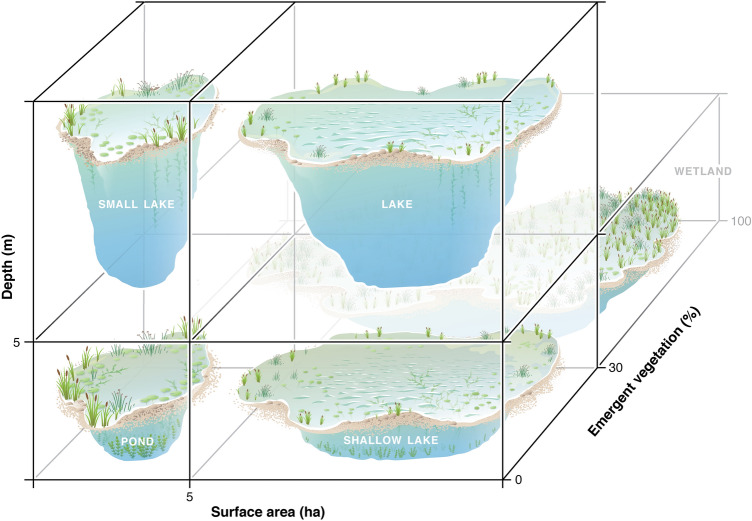
Ponds are often identified by their small size and shallow depths, but the lack of a universal evidence-based definition hampers science and weakens legal protection. Here, we compile existing pond definitions, compare ecosystem metrics (e.g., metabolism, nutrient concentrations, and gas fluxes) among ponds, wetlands, and lakes, and propose an evidence-based pond definition. Compiled definitions often mentioned surface area and depth, but were largely qualitative and variable. Government legislation rarely defined ponds, despite commonly using the term. Ponds, as defined in published studies, varied in origin and hydroperiod and were often distinct from lakes and wetlands in water chemistry. We also compared how ecosystem metrics related to three variables often seen in waterbody definitions: waterbody size, maximum depth, and emergent vegetation cover. Most ecosystem metrics (e.g., water chemistry, gas fluxes, and metabolism) exhibited nonlinear relationships with these variables, with average threshold changes at 3.7 ± 1.8 ha (median: 1.5 ha) in surface area, 5.8 ± 2.5 m (median: 5.2 m) in depth, and 13.4 ± 6.3% (median: 8.2%) emergent vegetation cover. We use this evidence and prior definitions to define ponds as waterbodies that are small (< 5 ha), shallow (< 5 m), with < 30% emergent vegetation and we highlight areas for further study near these boundaries. This definition will inform the science, policy, and management of globally abundant and ecologically significant pond ecosystems.
Overview
CoChat Summary
TL;DR
The paper compiles existing pond definitions and compares ecosystem metrics among ponds, lakes, and wetlands to propose an evidence-based functional pond definition. It defines ponds as waterbodies < 5 ha, < 5 m maximum depth, and < 30% emergent vegetation cover, based on nonlinear threshold shifts in ecosystem structure and function.
Key findings
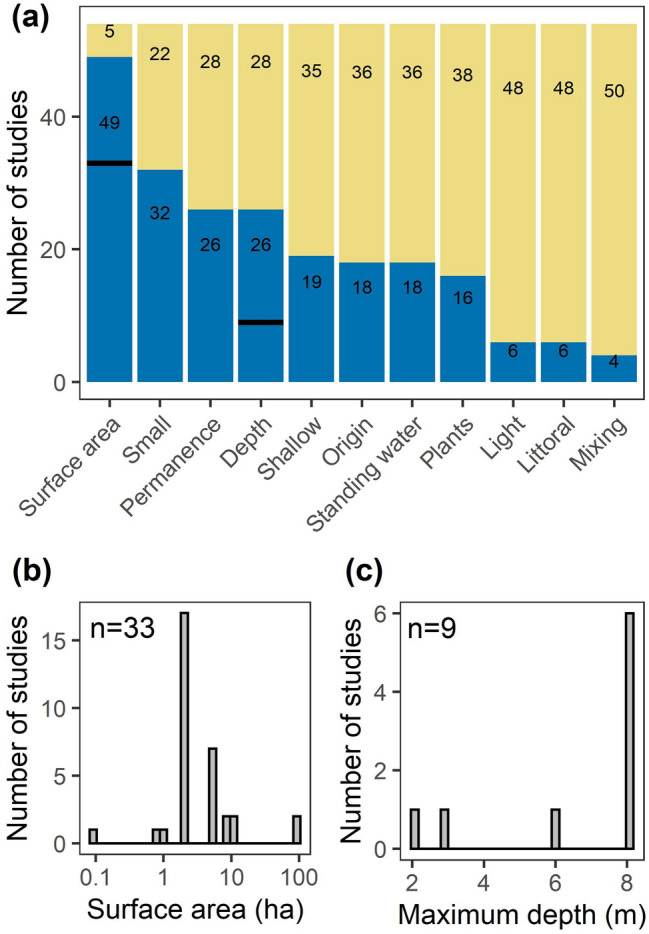
- Across 54 scientific pond definitions, surface area was mentioned in 91%, depth in 48%, permanence in 48%, origin in 33%, and standing water in 33%. Where maximum surface area was given, values ranged from 0.1 to 100 ha, with a median of 2 ha and all but two definitions ≤ 10 ha; only 17% gave a maximum depth cutoff, ranging from 2 to 8 m.
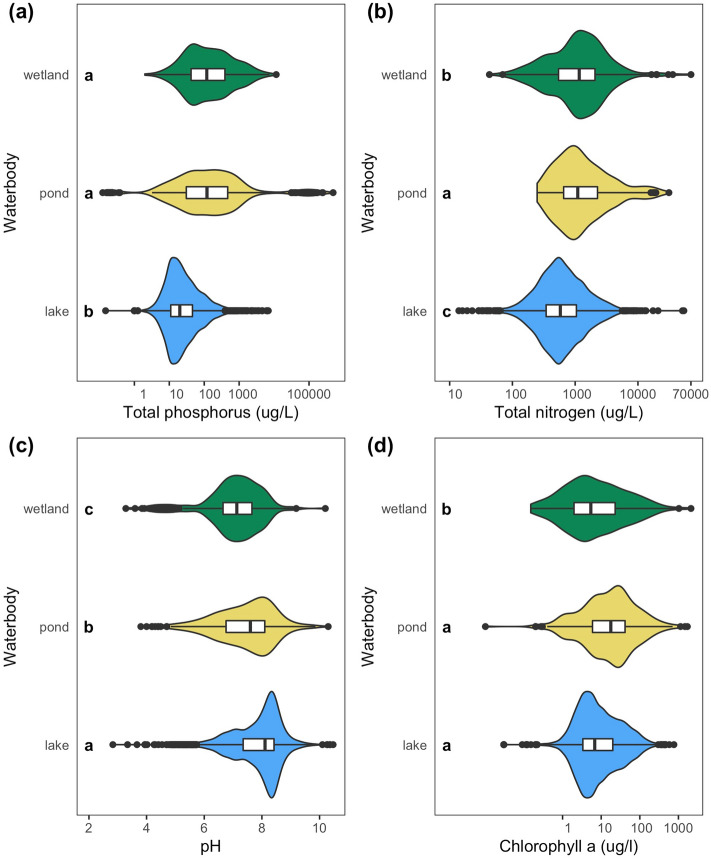
- Ponds as defined by scientists were variable: of 608 ponds with hydroperiod data, 74% were permanent and 26% temporary; of 648 with known origin, 65% were constructed or manipulated and 35% natural. Ponds were distinct from lakes and wetlands in TN and pH, similar to wetlands in TP, and similar to lakes in chlorophyll a.
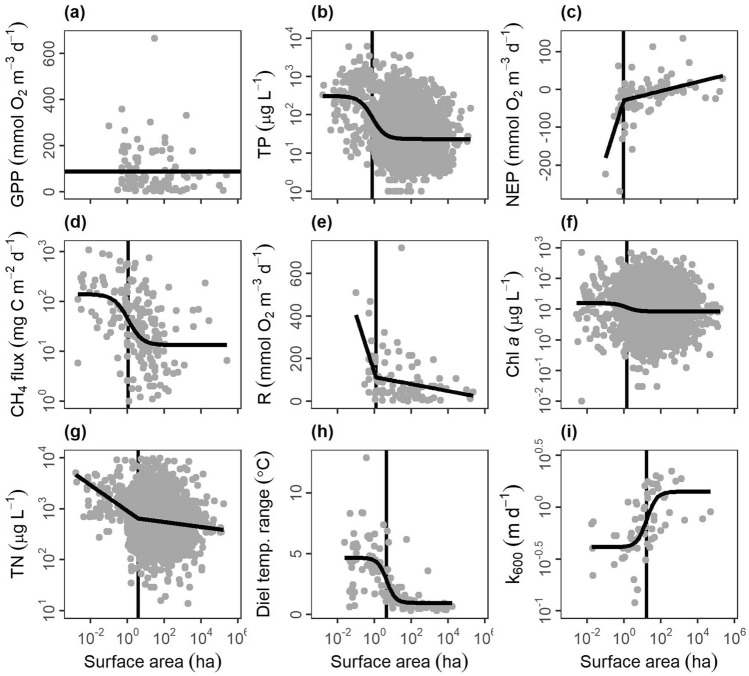
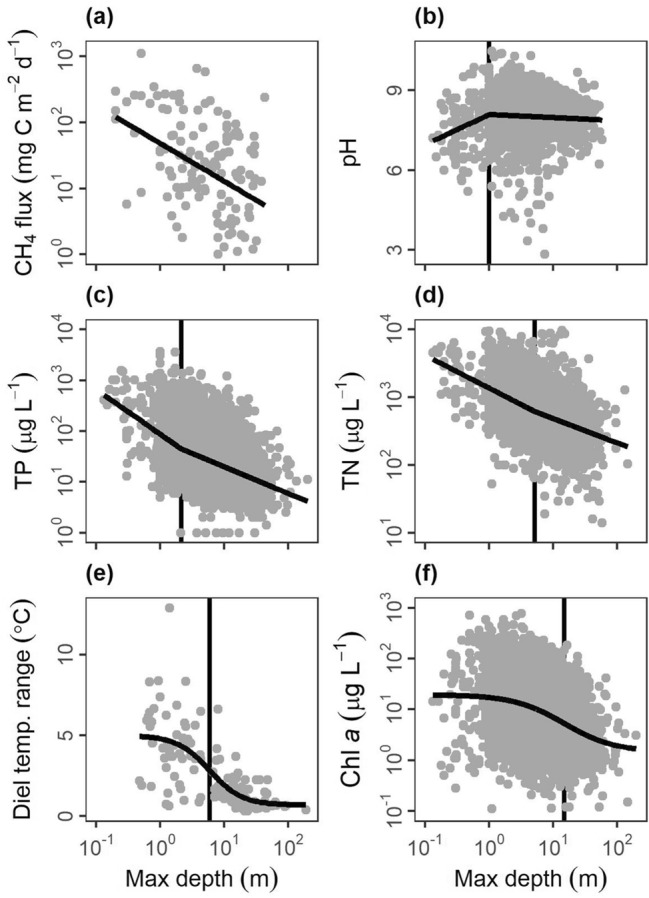
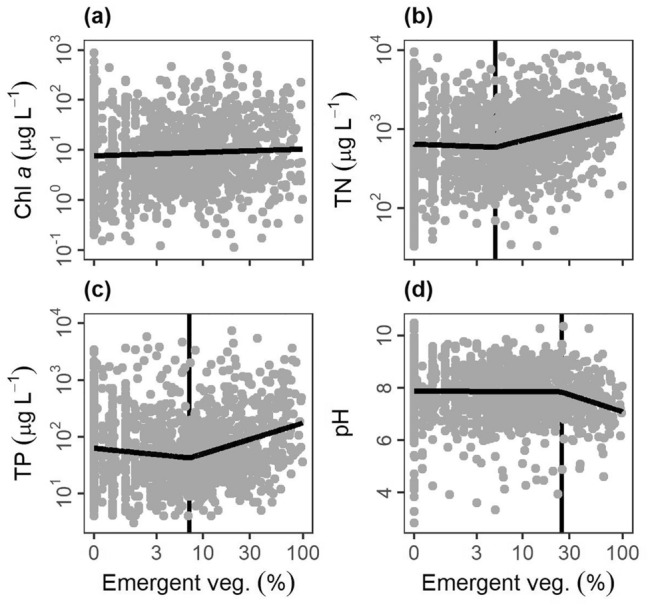
- Ecosystem metrics were mostly nonlinearly related to surface area (9/10 variables), depth (5/6), and emergent vegetation cover (3/4). Mean boundary values were 3.7 ± 1.8 ha (median 1.5 ha) for surface area, 5.8 ± 2.5 m (median 5.2 m) for depth, and 13.4 ± 6.3% (median 8.2%) for emergent vegetation cover.
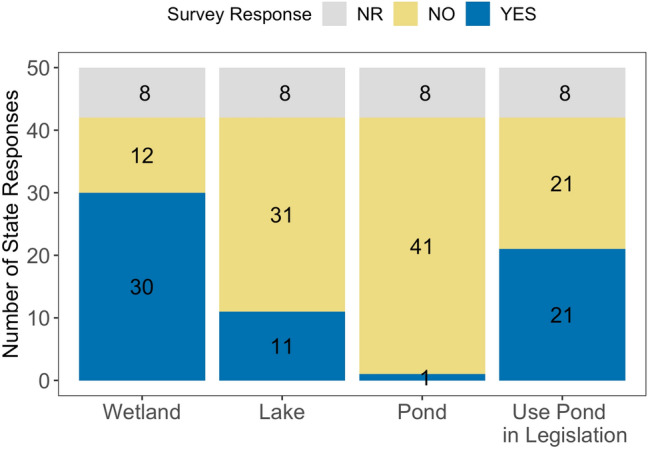
- In a US state survey with responses from 42/50 states, only one state (Michigan) explicitly defined ponds, 11 defined lakes, and 30 defined wetlands; half of surveyed states used the term “pond” in legislation.
Methods
- Compiled pond definitions and pond characteristics via backward and forward searches from three seminal pond papers, yielding 519 papers, 54 pond definitions, and 1,327 pond waterbodies filtered to ≤ 20 ha surface area and ≤ 9 m depth.
- Compared ponds to existing lake databases (US and Europe; n = 55,173) and a US wetland database (n = 400) using TP, TN, pH, and chlorophyll a, with ANOVA and post-hoc LSD tests.
- Evaluated relationships between ecosystem metrics and surface area, maximum depth, or emergent vegetation cover using null, linear, segmented, and logistic models, selecting optimal fits by AICc and using breakpoints or inflection points as boundaries. Also surveyed US state environmental agencies.
Limitations
- Stated: depth analysis was less robust than surface area because less depth data were available; emergent vegetation had the fewest ecosystem metric comparisons; the 30% emergent vegetation threshold from Cowardin et al. is not data-driven; and confounding waterbody definitions create overlapping size distributions, making statistical differences conservative.
- Stated: the authors recommend further study near the proposed boundaries, especially for depth and emergent vegetation, and note that additional variables such as basin geometry, wind sheltering, water residence time, water clarity, and geographic location may create overlap among classifications.
- Evident from the text: pond data came from papers that self-identified waterbodies as ponds, while lake and wetland classifications came from publishing scientists or managers, so the comparisons rely on existing labels rather than a single independent classification scheme; five cited papers could not be assessed because they were inaccessible or untranslatable.
Model-written summary. Check it against the paper before relying on it.
Integrity signals
Registry
Cites
Statistics
Figures
Verification
Claims the paper makes
4 Valid · 1 Not valid · 27 Not checked · 53 Own results and interpretations
The cited sources support only part of this claim — read each source’s verdict below.
In the paper
“We found higher diel temperature ranges were more common in waterbodies < 5 ha (Fig. 5h) and < 6 m (Fig. 6e; see also39).”
§ A functional definition to distinguish ponds from lakes and wetlands > Results and discussion > Does ecosystem structure and function distinguish ponds from lakes and wetlands?
What the sources say
- Partly supportedcites [39] Woolway RI Diel surface temperature range scales with lake size PLoS ONE 2016 11 e0152466 10.1371/journal.pone.0152466 27023200 PMC4811584 sourceExperimental — accuracy not yet measured
Woolway et al. (2016) support the directional part of the claim: the Results and Discussion and Abstract state that the near-surface diel temperature range (DTR) increases sharply and predictably with decreasing lake area, but the threshold they identify is 3.2 x 10^6 m2 (3.2 km2, ~320 ha), not 5 ha (Results and Discussion, Figs 3 and 4; Abstract). The '< 6 m' depth element is not supported: the paper explicitly tested maximum depth and volume as alternative predictors and found them 'statistically less significant' than surface area (a model using maximum depth explained only 73% of variation vs 83% for area; Results and Discussion), and depth appears in the study only as a morphometric descriptor (lakes ranged 2-256 m maximum depth; Methods) and in the theoretical mixed-layer calculation. So the source backs 'higher DTR in small waterbodies' but neither of the specific cut-offs the citing sentence attributes to it. (LLM, conf=0.75)
plainstates an association- Asserted: passes — The authors put it forward as true.
- Checkable: passes — It can be checked against evidence.
- Load-bearing: passes — The paper’s conclusions depend on it.
- Based: passes — The paper gives a reason why it holds.
- Partly supported
A result the paper reports from its own data — it cites no other source for it, so there is none to check. The quote shows it is in the paper.
In the paper
“For instance, many states monitor lakes based on minimum size thresholds, which vary widely from < 1 ha in Arizona and Alaska, 2–4 ha in many northeastern states, and up to 8 ha in Washington and Nebraska.”
§ A functional definition to distinguish ponds from lakes and wetlands > Results and discussion > Current U.S. Federal and State definitions
plain- Asserted: passes — The authors put it forward as true.
- Checkable: passes — It can be checked against evidence.
- Load-bearing: passes — The paper’s conclusions depend on it.
- Based: passes — The paper gives a reason why it holds.
A result the paper reports from its own data — it cites no other source for it, so there is none to check. The quote shows it is in the paper.
In the paper
“When surface area or depth were included in definitions, they were often mentioned qualitatively (e.g., “small” and “shallow”).”
§ A functional definition to distinguish ponds from lakes and wetlands > Results and discussion > Current scientific definitions of ponds
plain- Asserted: passes — The authors put it forward as true.
- Checkable: passes — It can be checked against evidence.
- Load-bearing: unclear — It is unclear whether the paper’s conclusions depend on it.
- Based: passes — The paper gives a reason why it holds.
A result the paper reports from its own data — it cites no other source for it, so there is none to check. The quote shows it is in the paper.
In the paper
“From the waterbodies that scientists called “ponds,” hydroperiod and origin varied over a large range of characteristics.”
§ A functional definition to distinguish ponds from lakes and wetlands > Results and discussion > Comparing lake, pond, and wetlands characteristics from literature
plain- Asserted: passes — The authors put it forward as true.
- Checkable: passes — It can be checked against evidence.
- Load-bearing: passes — The paper’s conclusions depend on it.
- Based: passes — The paper gives a reason why it holds.
A result the paper reports from its own data — it cites no other source for it, so there is none to check. The quote shows it is in the paper.
In the paper
“For example, ponds had distinctly high TN concentrations, which were greater than either lakes or wetlands (Fig. 4b; Table S2).”
§ A functional definition to distinguish ponds from lakes and wetlands > Results and discussion > Comparing lake, pond, and wetlands characteristics from literature
plainstates an association- Asserted: passes — The authors put it forward as true.
- Checkable: passes — It can be checked against evidence.
- Load-bearing: passes — The paper’s conclusions depend on it.
- Based: passes — The paper gives a reason why it holds.
- Rests on an assumption not shown here.
20 more claims
Create a free account to see all 85 claims and to verify the 36 references still open.
- It may state two separate claims as one. 49
- Probably not a substantial claim. 20
- The quote only partly states this claim. 1
Claims other papers make about this one
Each is checked against this paper’s own text: does it say what the citing paper says it does?
The source backs part of the claim, not all of it — or backs it for a different population, condition or comparison.
In the citing paper
“A depth of 5 m was used in overdeepenings to separate shallow from deep zones, a threshold recognized as a functional shift in aquatic ecosystems, especially in relation with energy exchange with the atmosphere and with photosynthetic activity (Richardson et al., 2022).”
From Future emergence of new ecosystems caused by glacial retreat (2023) · cites this paper as Richardson et al., 2022
Experimental — accuracy not yet measured
Self-check
Percentages, sums and reported differences re-computed from the paper’s own numbers.
Each contradiction between two passages listed here was confirmed by an independent check.
Rated minor: it would not touch a result — a value no result rests on, a p-value that stays on the same side of the significance level, or a conflict that is clerical, resolved elsewhere in the paper, or outside its own findings.
In the paper
§ A functional definition to distinguish ponds from lakes and wetlands > Results and discussion > Current scientific definitions of ponds
“The next two most cited papers were Oertli et al.17 and Sondergaard et al.18, which were seminal papers included in our backwards-forwards search”
§ A functional definition to distinguish ponds from lakes and wetlands > Methods > Literature survey
“To compile biological, physical, and chemical characteristics of ponds, we conducted a literature search based on three seminal papers establishing the ecological importance of ponds: Oertli et al.35, Søndergaard et al.18, and Downing8”
Citations
Cites
Burnham, K. P., Anderson, D. R., & Huyvaert, K. P. (2011) · Behavioral Ecology and Sociobiology · doi:10.1007/s00265-010-1029-6 · Cited by 4,104
Classification of wetlands and deepwater habitats of the United States
Cowardin, L. M., Service, U. S. F. A. W., & (U.S.), B. S. P. (1979) · doi:10.5962/bhl.title.4108 · Cited by 2,153
A global inventory of lakes based on high-resolution satellite imagery
Verpoorter, C., Kutser, T., Seekell, D. A., & Tranvik, L. J. (2014) · Geophysical Research Letters · doi:10.1002/2014gl060641 · Cited by 1,504 · cited 1×
“Therefore, our study had four objectives: (1) compile current pond definitions from scientists and policy makers, (2) determine if ponds, lakes, and wetlands, as defined by researchers, differ in ecosystem structure, (3) use ecosystem structure and function metrics to identify if there are boundaries between ponds and…”
BackgroundIUCN (International Union for Conservation of Nature)
(2014) · International Year Book and Statesmen's Who's Who · doi:10.1163/1570-6664_iyb_sim_org_2285 · Cited by 1,015
Large contribution to inland water CO2 and CH4 emissions from very small ponds
Holgerson, M. A., & Raymond, P. A. (2016) · Nature Geoscience · doi:10.1038/ngeo2654 · Cited by 995 · cited 1×
“Therefore, our study had four objectives: (1) compile current pond definitions from scientists and policy makers, (2) determine if ponds, lakes, and wetlands, as defined by researchers, differ in ecosystem structure, (3) use ecosystem structure and function metrics to identify if there are boundaries between ponds and…”
BackgroundSelf-citationEmerging global role of small lakes and ponds: little things mean a lot
Downing, J. A. (2010) · Limnetica · doi:10.23818/limn.29.02 · Cited by 662
Biggs, J., von Fumetti, S., & Kelly-Quinn, M. (2017) · Hydrobiologia · doi:10.1007/s10750-016-3007-0 · Cited by 594
Biggs, J., Williams, P., Whitfield, M., Nicolet, P., & Weatherby, A. (2005) · Aquatic Conservation: Marine and Freshwater Ecosystems · doi:10.1002/aqc.745 · Cited by 436
Floating plant dominance as a stable state
Scheffer, M., Szabó, S., Gragnani, A., van Nes, E. H., Rinaldi, S., Kautsky, N., Norberg, J., Roijackers, R. M. M., & Franken, R. J. M. (2003) · Proceedings of the National Academy of Sciences · doi:10.1073/pnas.0737918100 · Cited by 434
A Revised Classification of Lakes Based on Mixing
Lewis Jr., W. M. (1983) · Canadian Journal of Fisheries and Aquatic Sciences · doi:10.1139/f83-207 · Cited by 419
Research works printed but not linked: 6
- Thienemann A Die binnengewässer mitteleuropas: eine limnologische einfurung 1925 E. Schweizerbart
- Welch PS Limnology 1952 McGraw-Hill
- Wetzel R Limnology 2001 Academic Press
- Choffel Q Touchart L Bartout P Al Domany M Temporal and spatial variations in heat content of a French pond Geogr. Tech. 2017 12 9 22
- Kalff J Limnology 2002 Prentice-Hall Inc.
- Muggeo VMR segmented: An R package to fit regression models with broken-line relationships R News 2008 8 7
Cited by
Items 101–189 of 189
Carbon fluxes in two temperate ponds are mediated by stratification and primary producers
Holgerson, M. A., Ray, N. E., Gannon, K. A., & Heathcote, A. J. (2025) · Limnology and Oceanography · doi:10.1002/lno.70273 · Cited by 4
“As a result, ponds (< 0.05 km 2 and < 5 m deep; Richardson et al. 2022) emit more GHGs and store more OC than larger lakes on an areal basis (Downing et al. 2008; Downing 2010; Rosentreter et al. 2021).”
InfluentialSelf-citationPinelli, V., Illarze, M., Rodríguez‐Tricot, L., ROSSADO, A. J., Pañella, P. G., Fagúndez‐Pachón, C., Piñeiro‐Guerra, J. M., Berazategui, M., Ortiz, E., Borthagaray, A. I., et al. (2025) · Wetlands · doi:10.1007/s13157-025-02014-7 · Cited by 2
“Particularly, temporary ponds are endangered due to their small size (< 5 ha) and shallowness (< 5 m of maximum depth) (Richardson et al. 2022).”
Influence of disturbance on the connectivity of riparian forest habitat for terrestrial vertebrates
Li, H., Johnson, C. J., Todd, M. A., & Rex, J. F. (2025) · Landscape Ecology · doi:10.1007/s10980-025-02219-5 · Cited by 5
“Similarly, small, open-water ponds in forests often remain undistinguished from small lakes or wetlands though they are structurally, functionally, and ecologically different and frequently unmapped (Richardson et al. 2022).”
Double drought phases characterize the high-elevation temporary pond hydroperiod
Taurozzi, D., & Scalici, M. (2026) · Ecohydrology & Hydrobiology · doi:10.1016/j.ecohyd.2026.100736 · Cited by 2
Wang, W., Xiang, L., Li, Y., Suo, Q., Muhammad, F., Yan, C., Deng, J., Xia, R., Ouyang, Y., Huang, C., et al. (2026) · Ecological Indicators · doi:10.1016/j.ecolind.2026.114708 · Cited by 2
Boudjaj, A., Rhazi, L., Moukrim, S., Ourraisse, S., Zouahri, A., Madihi, M. E., Rhazi, M., Lahssini, S., Bammou, M. B., Wahby, I., et al. (2026) · Hydrobiologia · doi:10.1007/s10750-026-06194-z · Cited by 4
“Temporary ponds are small ( 5 ha) and shallow ( 5 m depth) water bodies with a maximum of 30% emergent vegetation coverage (Richardson et al., 2022).”
Kocour, M., Prchal, M., Lipka, J., Valentová, O., & Kroupová, H. K. (2025) · Aquaculture · doi:10.1016/j.aquaculture.2025.742168 · Cited by 2
Sentenac, H., Schmeller, D. S., Chardon, E., Fisher, M. C., & Loyau, A. (2025) · Regional Environmental Change · doi:10.1007/s10113-024-02344-y · Cited by 2
Resolving the environmental factors that determine pond thermal refuge quality
Fey, S. B., Campbell, E. E., Kuder, H. E., Gibson, D., Smith, A. K., Meier, H. S., Layden, T. J., & Strecker, A. L. (2025) · Limnology and Oceanography Letters · doi:10.1002/lol2.70032 · Cited by 2
“Despite the prominence of research addressing the determinants of thermal refuges in marine and lotic freshwater systems, pond ecosystems (as de fi ned by Richardson et al. 2022) are largely neglected from this literature.”
Velocity of Climate Change and the Vulnerability of Mountain Lake Landscapes
Parisek, C. A., Walter, J. A., Sadro, S., & Rypel, A. L. (2025) · Environmental Science & Technology · doi:10.1021/acs.est.5c03154 · Cited by 1
Self-citationAdu, B., Atanga, R. A., & Kuuwill, A. (2025) · Environmental Challenges · doi:10.1016/j.envc.2025.101277 · Cited by 5
Assessment of Temperate Floodplain Pondscapes Using Small Littoral Fish as Indicators
Bashinskiy, I. V., & Osipov, V. V. (2025) · Wetlands · doi:10.1007/s13157-025-01912-0 · Cited by 1
“%) were represented by small water bodies or ponds with areas less than 5 ha (according to the latest definition, Richardson et al. 2022).”
Presence-Behaviour of Emerging Contaminants in Natural Wetlands and Strategies for their Remediation
Anchundia-Vélez, G., Rodríguez-Díaz, J. M., & Morales-Paredes, C. A. (2025) · Wetlands: ecology, conservation and management · doi:10.1007/978-3-031-91982-4_7 · Cited by 1
Arsenault, M., Grosbois, G., Labrecque-Foy, J.-P., & Girona, M. M. (2025) · Global Ecology and Conservation · doi:10.1016/j.gecco.2025.e03723 · Cited by 5
Sarkar, S., Rathi, A., Verma, S., Sudheer, A. K., & Kumar, S. (2025) · Environmental Research · doi:10.1016/j.envres.2025.122724 · Cited by 1
Garcia, P. E., Castro, M. V., Testoni, M. C. M., & Rodríguez, P. (2025) · Limnologica · doi:10.1016/j.limno.2025.126282 · Cited by 1
Whitmore, K. M., DelVecchia, A. G., Zarate, D., Bautista, M., Emerson, K., Madrigal, A., Suárez, E., & Riveros‐Iregui, D. (2025) · Limnology and Oceanography · doi:10.1002/lno.70261 · Cited by 2
Mountain ponds under pressure: ecology and management in times of global change
Fehlinger, L., Cambronero, M. C., Sancha, A. L., Boix, D., & Brucet, S. (2025) · Inland Waters · doi:10.1080/20442041.2025.2585832 · Cited by 1
Wang, Y., Duan, H., Lv, M., Wang, Z., & Tang, Y. (2025) · CATENA · doi:10.1016/j.catena.2025.109696 · Cited by 1
Regional γ Diversity of Diatoms in Mediterranean and Alpine Temporary Ponds
Taurozzi, D., & Scalici, M. (2025) · Microbial Ecology · doi:10.1007/s00248-025-02670-6 · Cited by 1
Episodic Ponds as Overlooked Temporary Habitats: The Case of Lago Montagna in Sicily
Salemi, D., Luca, R. D., Ilardi, V., Napolitano, T., & Troìa, A. (2025) · Diversity · doi:10.3390/d17120843 · Cited by 1
“…distinctions, proposing specific geometric thresholds that help to differentiate ponds from lakes/wetlands (e.g., ponds 5 ha, 5 m depth, 30% emergent vegetation), highlighting how size/depth cut-offs can dictate whether a waterbody falls inside or outside routine assessment frameworks [9].”
Epele, L. B., Manzo, L. M., Macchi, P. A., & Grech, M. G. (2025) · Hydrobiologia · doi:10.1007/s10750-025-06080-0 · Cited by 1
Wu, T., Zuo, J., Tang, H., Zhang, L., & Wang, X. (2025) · IEEE Transactions on Geoscience and Remote Sensing · doi:10.1109/tgrs.2025.3625987 · Cited by 1
“In relevant studies, SWBs are classified as either permanent or seasonal, typically ranging in size from less than 1 hectare to less than 50 hectares [7], [8], [9].”
Host–parasite interactions in Quebec fishes: state of knowledge and emerging threats
Côté, A., Vigneault, J., Pimentel, M. A. L., & Binning, S. A. (2025) · Canadian Journal of Fisheries and Aquatic Sciences · doi:10.1139/cjfas-2025-0175 · Cited by 1
Sediment yield assessment of a small ungauged montane catchment in the North Caucasus
Tsyplenkov, A., Uspenskii, M. I., Kharchenko, S., Scheper, S., & Golosov, V. (2026) · Geomorphology · doi:10.1016/j.geomorph.2025.110156 · Cited by 1
Fehlinger, L., Boix, D., & Brucet, S. (2026) · Hydrobiologia · doi:10.1007/s10750-025-06079-7 · Cited by 1
“Although otherwise similar in size and depth (Richardson et al., 2022), most mountain ponds, unlike many low-land ponds, depend on precipitation (snow and ice melt, glacial melt-off or rain) for inundation, with groundwater inflow playing a minor role (Lee et al., 2015; Wissinger et al., 2016).”
Jankowska, K., Łukomska‐Kowalczyk, M., Milanowski, R., & Zakryś, B. (2026) · Microbial Ecology · doi:10.1007/s00248-026-02721-6 · Cited by 1
Altered greenhouse gas emissions in shallow lakes invaded by common carp ( Cyprinus carpio )
Rabaey, J. S., Huser, B., Bajer, P. G., & Downing, J. (2026) · Limnology and Oceanography Letters · doi:10.1002/lol2.70126 · Cited by 1
“…of the carp infestation (i.e., morphology, land use in the watershed; Table 1), and all lakes were polymictic, in agricultural watersheds, and followed the de fi nition of shallow lakes (maximum depth approximately ≤ 5 m, < 30% of surface area covered by emergent vegetation; Richardson et al. 2022).”
Self-citationOrganic Carbon Burial Rates in Artificial Ponds Driven by Age and Catchment Land Cover
Cooper, P. O., Bodmer, P., Gannon, K. A., & Holgerson, M. A. (2026) · Ecosystems · doi:10.1007/s10021-026-01057-z · Cited by 1
Self-citationGirard, L., Robin, J., Rouifed, S., Tolon, V., Wijns, R., Meester, L. D., Wezel, A., & Lemmens, P. (2026) · Hydrobiologia · doi:10.1007/s10750-026-06203-1 · Cited by 1
“These areas covering more than 5 hectares could be considered as small shallow lakes (Richardson et al., 2022), but we have chosen to retain the term “fish ponds” in this article in order to illustrate the primary function of these ecosystems (fish production).”
Human amplification of climate-induced greenhouse gas emissions from global small water bodies
Zhuang, X., Liu, X. H., Xu, S., Wang, X., Shah, A. A., Wang, L., Wu, S. S., Jiang, C., Ouyang, Z., & Piao, S. L. (2026) · Proceedings of the National Academy of Sciences · doi:10.1073/pnas.2537678123 · Cited by 3
Alpine temporary ponds as overlooked sinks of anthropogenic macrolitter
Taurozzi, D., Gallitelli, L., Castelli, A., Capelli, C., & Scalici, M. (2026) · Frontiers in Environmental Science · doi:10.3389/fenvs.2026.1839654 · Cited by 1
HPLC validation as a management tool in artificial water storage ponds
Llorente, A., Fraile, H., de Bikuña, B. G., & Seoane, S. (2024) · Limnologica · doi:10.1016/j.limno.2024.126160 · Cited by 1
Tassi, F., Randazzo, A., Venturi, S., Repetto, A., Fazi, S., Amalfitano, S., Vimercati, L., Butturini, A., Caliro, S., Cuoco, E., et al. (2024) · Journal of Volcanology and Geothermal Research · doi:10.1016/j.jvolgeores.2024.108132 · Cited by 1
Hydrological setting of Kerala
Thomas, J., Nizar, S., Rohith, A. N., Jainet, P. J., Sebastian, D. E., Vema, V. K., & Sudheer, K. P. (2024) · Elsevier eBooks · doi:10.1016/b978-0-323-95606-2.00011-5 · Cited by 1
Estimating nutrient load targets for lakes at a regional scale
Abell, J. M., Özkundakci, D., McBride, C. G., & Allan, M. G. (2024) · Lake and Reservoir Management · doi:10.1080/10402381.2024.2412034 · Cited by 1
“Based on z max (1.0–16.0 m) (Kirillin and Shatwell 2016, Richardson et al. 2022), most of the lakes are expected to be functionally shallow (i.e., poly-mictic), with 19 of the lakes having z max < 10 m.”
InfluentialGreenhouse gas fluxes from two drained pond sediments: a mesocosm study
Lang, T., Schindler, L., Nakajima, C., Hülsmann, L., Knorr, K., & Borken, W. (2025) · Biogeochemistry · doi:10.1007/s10533-025-01229-4 · Cited by 2
“This also applies to shallow inland waters < 5 m (Richardson et al. 2022) which play an important role in the global carbon (C) cycle due to their high abundance (Downing et al. 2006; Tranvik et al. 2009) and which emit substantial amounts of GHGs to the atmosphere (Kosten et al. 2010; Yang et al.…”
Silent survivors: diatom resilience in Mediterranean Temporary Ponds
Taurozzi, D., & Scalici, M. (2025) · Continental Shelf Research · doi:10.1016/j.csr.2025.105547 · Cited by 1
(2022) · Earth system science data · doi:10.5194/essd-2022-180-rc1
Precise sediment flux assessment of a small ungauged low-mountain catchment in the North CaucasusPreprint
Tsyplenkov, A., Kharchenko, S., Uspenskii, M. I., Scheper, S., & Golosov, V. N. (2022) · Research Square · doi:10.21203/rs.3.rs-2179933/v1
Strecker, A. L., McGrew, A., & Chiapella, A. M. (2023) · Elsevier eBooks · doi:10.1016/b978-0-12-822562-2.00070-0
Indicator bacteria in subtropical natural wetlands watersPreprint
Vergara-Franco, A., Benegas, G. S., Correa-Pérez, C., Imas-Garay, L., Netto, F., Lombardo, L., Bamberg-Ames, J., Alonso-Ortiz, E., & Mereles-Aranda, E. (2023) · Research Square · doi:10.21203/rs.3.rs-2631770/v1 · Cited by 1
Small Ponds as Hotspots of Carbon Burial in Agricultural LandscapePreprint
ji, Y., Huang, J., Zhu, Q., Zhang, S., Lei, S., Xiao, Q., Shi, W., & Gao, J. (2023) · SSRN Electronic Journal · doi:10.2139/ssrn.4623722
An Inventory of wetland plants with medicinal properties in Kenya
Kinyili, B. M. (2023) · Journal of Medicinal Plants Studies · doi:10.22271/plants.2023.v11.i6b.1614
Small Ponds as Hotspots of Carbon Burial in Agricultural LandscapePreprint
ji, Y., Huang, J., Zhu, Q., Zhang, S., Lei, S., Xiao, Q., Shi, W., & Gao, J. (2024) · SSRN Electronic Journal · doi:10.2139/ssrn.4685849
Alonso, B. H., Corlay-Chee, L., Morales-Hernández, E., Cervantes, S. V., Tapia, A. H., & Checa, A. C. (2023) · Current Topics in Agronomic Science · doi:10.5154/r.ctasci.2023.03.06
“Un humedal es un cuerpo de agua permanente o estacional de baja profundidad (Richardson et al., 2022).”
BackgroundLv, M., Lv, M., Yang, H., Yang, H., Thompson, J. R., Thompson, J. R., Huang, P., Huang, P., Gao, X., Gao, X., et al. (2024) · Research Square · doi:10.21203/rs.3.rs-4355002/v1
Sustainability trade-offs across modeled floating-solar waterscapesPreprint
Gallaher, A., Kalies, E. L., & Grodsky, S. M. (2024) · Research Square · doi:10.21203/rs.3.rs-4566416/v1
Ahmed, P., & Usmani, N. (2024) · Research Square · doi:10.21203/rs.3.rs-5383674/v1 · Cited by 1
Nachchach, B., Jounaid, H., Amraoui, F., & Taoufik, M. (2024) · International Journal of experimental research and review · doi:10.52756/ijerr.2024.v46.015
“, can be permanent or seasonal, man-made or natural (Richardson et al., 2022) and often the underappreciation of the benefits they provide, ponds are particularly vulnerable to anthropogenic stressors, including climate change, pollution, or habitat degradation (Hill et al., 2021; Epele et al.,…”
Севостьянова, Е. А., Ляхов, А. В., Tsupikova, N. A., & Menshenin, A. S. (2025) · doi:10.5922/vestniknat-2025-2-7
Amani, M., Dufitimana, E., Ndagijwenimana, E., & Kalisa, E. (2025) · Environmental and Sustainability Indicators · doi:10.1016/j.indic.2025.100867 · Cited by 1
Assmann, J. J., Akandil, C., Plekhanova, E., Moigne, A. L., Karsanaev, S. V., Maximov, T., & Schaepman‐Strub, G. (2025) · Environmental Research Letters · doi:10.1088/1748-9326/ae0fb1 · Cited by 1
Rashidi, P., Patil, S. D., Kuiper, J. J., Tenbrink, T., Perrin, J.-A., Robin, J., Brucet, S., Lemmens, P., Meerhoff, M., Mehner, T., et al. (2025) · Ecosystems and People · doi:10.1080/26395916.2025.2570728
“Ponds are typically defined as small water bodies ranging from 1 m 2 up to approximately 2–5 hectares and can either be permanent or seasonal, naturally occurring or artificially constructed (Richardson et al. 2022; Vo et al. 2023).”
Rader, R. B., & Rackliffe, D. R. (2025) · Ecosphere · doi:10.1002/ecs2.70464 · Cited by 1
Environmental and elevational drivers of diatom diversity in alpine temporary ponds
Taurozzi, D., & Scalici, M. (2026) · Ecohydrology & Hydrobiology · doi:10.1016/j.ecohyd.2025.100726
Benedini, L., Cesarini, G., Taurozzi, D., Iorio-Merlo, V., Mensa, F. S., & Scalici, M. (2026) · Ecological Indicators · doi:10.1016/j.ecolind.2026.114655
Bryan, D., Subke, J., Oliver, D. M., & Law, A. (2026) · Inland Waters · doi:10.1080/20442041.2026.2634010
Verma, A., Kumar, A., Singh, R., & Prashant (2026) · Environmental Monitoring and Assessment · doi:10.1007/s10661-026-15063-0
Royaux, C. (2024) · theses.fr (ABES) · doi:10.70675/47ccc132zb8acz493az8b90z9ac335fc5d04
A rank order of 26 North American fish species by propensity for PFAS bioaccumulation
Levanduski, E., Quail, R., Becker, J. C., Pochini, K. M., Richter, W., Bryk, D., Williams, K., & Razavi, N. R. (2026) · Integrated Environmental Assessment and Management · doi:10.1093/inteam/vjag070
Ecological interplay between diatoms and plants in Mediterranean temporary ponds habitat
Taurozzi, D., Scalici, M., Pietro, R. D., Bolpagni, R., & Azzella, M. M. (2026) · Hydrobiologia · doi:10.1007/s10750-026-06157-4
“Ponds are small (< 5 ha) and shallow (< 5 m) water bodies, with < 30% emergent vegetation (Bolpagni et al., 2019; Olmo et al., 2022; Richardson et al., 2022).”
Balestrini, R., Colombo, N., Freppaz, M., Lehmann, M. F., Delconte, C., Pintaldi, E., Salerno, F., & Matiatos, I. (2026) · CATENA · doi:10.1016/j.catena.2026.110160
Vukotić, D. D., Stojanović, J., Kuzmanović, N. V., Andrejić, G., Ilić, D., & Gocić, D. J. (2026) · Plant Biosystems - An International Journal Dealing with all Aspects of Plant Biology · doi:10.1007/s44473-026-00153-1
“Ponds are globally distributed, highly dynamic, and ecologically significant ecosystems that serve as hotspots for biogeochemical processes and biodiversity (Richardson et al. 2022).”
Diversity of Life in School Ponds
Caño, L., Sanz, J., & Sistiaga-Poveda, M. (2026) · International explorations in outdoor and environmental education · doi:10.1007/978-3-032-10273-7_16 · Cited by 2
Richardson, D. C., Holgerson, M. A., Bortolotti, L. E., Bodmer, P., Daly, J. F., Edwards, D. X., Gallagher, K. A., Gannon, K. A., Gavin, A. L., Hovel, R. A., et al. (2026) · Limnology and Oceanography Letters · doi:10.1002/lol2.70134
Self-citationSingh, J., Malthus, T., O’Keefe, S. G., Chuang, A. W., Hamilton, D. P., Burford, M. A., & Ranjbar, M. H. (2026) · Water Quality Research Journal · doi:10.2166/wqrj.2026.013
Exploring Uncharted Waters: The Role of Artificial Aquatic Ecosystems in Freshwater Science
Webb, J., Moon, E., Fahy, J. C., Fernando, S., Malerba, M. E., Naslund, L. C., Peacock, M., Wells, N. S., Woolcock, B. J., & Reisinger, A. J. (2026) · Ecology and Evolution · doi:10.1002/ece3.73777
“…whether these artificial aquatic ecosystems function differently from natu-ral ponds is complicated by their poor representation in the scientific literature relative to larger waterbodies and the lack of distinction among pond origins in published works (Downing 2010; Richardson et al. 2022).”
Hur, N. J., Jennings, K. S., & McKnight, D. M. (2026) · Environmental Science and Pollution Research · doi:10.1007/s11356-026-37902-w
“In a recent analysis, a functional definition of ponds was developed to distinguish ponds from small lakes and wetlands based on their area (< 5 ha), depth (< 5 m), and less than 30% coverage by emergent vegetation (Richardson et al. 2022).”
Aquatic Vegetation Assemblages in Ozark Ponds, Arkansas and Missouri, USA
Bowles, D. E. (2026) · Limnological Review · doi:10.3390/limnolrev26020029
An integrative analysis of global patterns of CH 4 ebullition in inland waters
Bezerra, M. P., Barbosa, P., & del Giorgio, P. A. (2026) · Environmental Reviews · doi:10.1139/er-2026-0041
Temporary-Pond Wetlands: Science, Management, and Conservation
Boix, D., Calhoun, A. J. K., Mushet, D., Bell, K. P., FITZSIMONS, J. A., & Isselin‐Nondedeu, F. (2026) · Elsevier eBooks · doi:10.1016/b978-0-443-41773-3.00032-9
Chuma, G. B., Wójcik, M., & Schmitz, S. (2026) · Land · doi:10.3390/land15071239 · Cited by 1
Snowfall and pond volume drive summer mountain pond dynamics in California's Sierra Nevada
Bonadonna, C. C., Farruggia, M. J., Sadro, S., & Symons, C. C. (2026) · Ecosphere · doi:10.1002/ecs2.70706
Self-citationAquatic Ecosystems and Their Aquatic Plants
Birks, H. H., Sayer, C. D., & Walton, R. E. (2026) · Developments in paleoenvironmental research · doi:10.1007/978-3-032-04170-8_2
Zhu, T., Zhang, W., Li, H., & Xie, S. (2026) · Journal of Cleaner Production · doi:10.1016/j.jclepro.2026.149076
Zooplankton size structure reflects the trophic status of ponds along a latitudinal gradient
Rincón-Palau, K., Badosa, A., Boix, D., Cambronero, M. C., Carballo, C., Davidson, T. A., Aragón, V. F., Wijns, R., Lemmens, P., Martín, L., et al. (2026) · Limnology and Oceanography · doi:10.1002/lno.70466
“These features reduce their buffering capacity against external inputs, causing nutrient fl uctuations to have a disproportionately strong effect on ecosystem functioning compared to larger waterbodies like lakes and wetlands (Fairchild et al. 2005; Richardson et al. 2022).”
Wang, L., You, X., Li, K., Yu, Y., Tang, S., Zheng, X., & Ren, J. (2026) · Ecological Indicators · doi:10.1016/j.ecolind.2026.115317
Malsch-Fröhlich, E., Tetzlaff, D., LeFevre, G. H., Kramer‐Schadt, S., Wenzler‐Meya, M., & Spahr, S. (2026) · Water Research · doi:10.1016/j.watres.2026.126747
The fate of methane in ponds: Drivers of production, storage, oxidation, and emissions
Rabaey, J. S., Bodmer, P., Bar, A., Pushlar, S., & Holgerson, M. A. (2026) · Limnology and Oceanography Letters · doi:10.1002/lol2.70182
Self-citationNational‐scale remotely sensed lake surface temperature in the contiguous United States
Meyer, M. F., Stagnitta, T. J., Salls, W. B., Wakefield, B. F., & King, T. V. (2026) · Limnology and Oceanography Letters · doi:10.1002/lol2.70183
“…processes, such as evapotranspiration (Zhao et al. 2022), carbon cycling (Holgerson and Raymond 2016), metabolism (Kraemer et al. 2017), and gas exchange (Cole et al. 2010), are largely temperature driven and can be highly dynamic, especially in smaller lentic waterbodies (Richardson et al. 2022).”
Caldarella, O., Scalia, L., Bianchi, S., Lastrucci, L., Vecchia, A. D., Bolpagni, R., & Gianguzzi, L. (2026) · Journal of Limnology · doi:10.4081/jlimnol.2026.2280
“Ponds are small ecosystems of standing water characterized by a depth and surface area not exceeding 5 m and 5 ha, respectively, and with emergent vegetation cover of less than 30 percent (Richardson et al. , 2022).”
The vital role of ponds for biodiversity, climate, and people
Fehlinger, L., Cuenca-Cambronero, M., Boix, D., Meerhoff, M., Ryfisch, S., Briers, R. A., Biggs, J., & Brucet, S. (2026) · Hydrobiologia · doi:10.1007/s10750-026-06407-5
“Ponds have been defined as small (from 1 m 2 to 5 ha), shallow water bodies (up to 5 m deep) that may be either permanent or temporary, natural or artificial and that share similar functionality which is distinctive from other freshwater systems (Richardson et al., 2022).”
Diatom indices reveal water quality patterns in Mediterranean and alpine temporary ponds
Taurozzi, D., & Scalici, M. (2026) · Environmental Monitoring and Assessment · doi:10.1007/s10661-026-16086-3
“%) and may be permanent or temporary, natural or human-made (Richardson et al., 2022).”
Omondi, L. A. (2026) · International Review of Hydrobiology · doi:10.1002/iroh.70048
Metadata
- Authors
- Richardson, D. C., Holgerson, M. A., Farragher, M. J., Hoffman, K. K., King, K. B. S., Alfonso, M. B., Andersen, M. R., Cheruveil, K. S., Coleman, K. A., Farruggia, M. J., Fernandez, R. L., Hondula, K. L., López Moreira Mazacotte, G. A., Paul, K., Peierls, B. L., Rabaey, J. S., Sadro, S., Sánchez, M. L., Smyth, R. L., & Sweetman, J. N.
- Affiliations
- SUNY New Paltz (US)
- Cornell University (US)
- University of Maine (US)
- St. Olaf College (US)
- Michigan State University (US)
- Consejo Nacional de Investigaciones Científicas y Técnicas (AR)
- Dundalk Institute of Technology (IE)
- York University (CA)
- University of California, Davis (US)
- Battelle (US)
- University of Minnesota (US)
- Bard College (US)
- Pennsylvania State University (US)
- Corresponding author
- Richardson, David C.
- ORCID
- Richardson, David C.
- Holgerson, Meredith A.
- Farragher, Matthew J.
- Hoffman, Kathryn K.
- King, Katelyn B. S.
- Alfonso, María B.
- Andersen, Mikkel R.
- Cheruveil, Kendra Spence
- Coleman, Kristen A.
- Farruggia, Mary Jade
- Fernandez, Rocio Luz
- Hondula, Kelly L.
- López Moreira Mazacotte, Gregorio A.
- Peierls, Benjamin L.
- Rabaey, Joseph S.
- Sadro, Steven
- Sánchez, María Laura
- Smyth, Robyn L.
- Sweetman, Jon N.
- Venue
- Scientific Reports
- Published
- 2022-06-21
- Volume
- 12
- Issue
- 1
- Pages
- 10472-10472
- ISSN
- 2045-2322 (ISSN-L)
- PMC
- PMC9213426
- OpenAlex
- W4283325006
- Semantic Scholar
- ce2361b0a26664093527ff4dcff969cdb4862cd9
- Cited by
- 188
- References
- 44
- Citations by year
- 2026: 44 · 2025: 58 · 2024: 45 · 2023: 31 · 2022: 10
- FWCI
- 12.75
- Type
- journal article
- Language
- en
- Open access
- gold
- doi.org
- Licence
- cc-by
- creativecommons.org/licenses/by/4.0 (tdm)
- creativecommons.org/licenses/by/4.0 (vor)
- Locations
- Scientific Reports (publishedVersion, cc-by)
- PubMed Central (publishedVersion, cc-by)
- PubMed (publishedVersion)
- DOAJ (DOAJ: Directory of Open Access Journals) (submittedVersion, cc-by-sa)
- eScholarship (California Digital Library) (submittedVersion, cc-by)
- Funders
- Adam S. Thomas Endowment
- St. Olaf Collaborative Undergraduate Research and Inquiry Program
- National Science Foundation (EF-1638679, GRFP-2036201)
- BEYOND 2020 (PBA/FS/16/02)
- Topics
- Physical Sciences › Environmental Science › Environmental Chemistry › Aquatic Ecosystems and Phytoplankton Dynamics
- Physical Sciences › Environmental Science › Ecology › Peatlands and Wetlands Ecology
- Physical Sciences › Environmental Science › Ecology › Aquatic Ecosystems and Biodiversity
- Keywords
- ponds, lakes, wetlands, functional definition, water chemistry, gas flux, ecosystem metabolism, surface area, maximum depth, hydroperiod
- MeSH terms
- Water, Ecosystem, Wetlands, Lakes, Ponds
About these checks
Registry, retraction, Cites and statistics results are computed, not judged, with one exception: a printed reference that no index lists is read once by a model before it counts as a citation error. Claims are extracted by a model and kept only when their quote appears verbatim in the text; each cited source is then checked, with a model’s help, for whether it says what the claim relies on. Those verdicts can be wrong — read the claim’s quote and the cited source before relying on one.
The claim verdicts this report counts are experimental: their accuracy is not yet measured.
A language model drew the claims from the paper on 2026-10-07, under version 3 of the claim definition (model deepseek-v4.1-flash, prompt extract-v3).
A second model labelled each claim on 2026-10-07 (model jev-1.13-20260917, definition revision gold-guideline-v0.2).
Cited sources are checked with a language model’s help (qwen3.8-omni-flash).
Statistics and arithmetic are recomputed, not judged.
Confidence bands are shown only for fields calibrated on our annotated test set. None is calibrated yet, so no band is shown.
What counts as a claim ›How we measure confidence ›How we check this ›
Are you an author, or do you see a problem with this page? Request a review
Data sources
Bibliographic data: Semantic Scholar, OpenAlex, Crossref.
Contains information from the Semantic Scholar Academic Graph Datasets, made available under the ODC Attribution License (ODC-BY 1.0).
Semantic Scholar’s data is described in: Kinney, R., et al. (2023). The Semantic Scholar Open Data Platform. arXiv:2301.10140.
