

Deep fake detection and classification using error-level analysis and deep learning
Open accessThe DOI matches its Crossref record; 40 of the 42 references it cites were found in a registry or an index; 4 of the 9 sources its claims cite were checked for support.
Abstract
Due to the wide availability of easy-to-access content on social media, along with the advanced tools and inexpensive computing infrastructure, has made it very easy for people to produce deep fakes that can cause to spread disinformation and hoaxes. This rapid advancement can cause panic and chaos as anyone can easily create propaganda using these technologies. Hence, a robust system to differentiate between real and fake content has become crucial in this age of social media. This paper proposes an automated method to classify deep fake images by employing Deep Learning and Machine Learning based methodologies. Traditional Machine Learning (ML) based systems employing handcrafted feature extraction fail to capture more complex patterns that are poorly understood or easily represented using simple features. These systems cannot generalize well to unseen data. Moreover, these systems are sensitive to noise or variations in the data, which can reduce their performance. Hence, these problems can limit their usefulness in real-world applications where the data constantly evolves. The proposed framework initially performs an Error Level Analysis of the image to determine if the image has been modified. This image is then supplied to Convolutional Neural Networks for deep feature extraction. The resultant feature vectors are then classified via Support Vector Machines and K-Nearest Neighbors by performing hyper-parameter optimization. The proposed method achieved the highest accuracy of 89.5% via Residual Network and K-Nearest Neighbor. The results prove the efficiency and robustness of the proposed technique; hence, it can be used to detect deep fake images and reduce the potential threat of slander and propaganda.
Overview
CoChat Summary
## TL;DR
The paper proposes a deepfake image detection pipeline that combines error level analysis (ELA), pretrained CNN feature extraction, and SVM/KNN classification. On the Yonsei University real/fake face dataset, it reports a best accuracy of 89.5%.
## Key findings
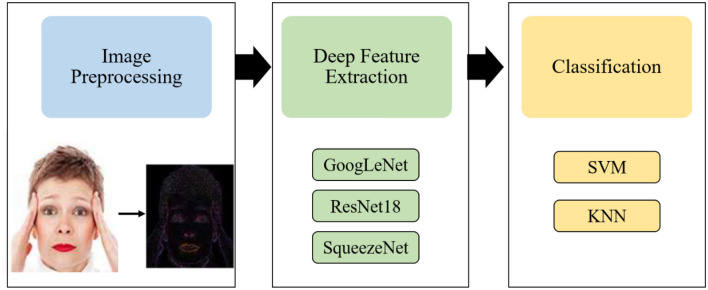
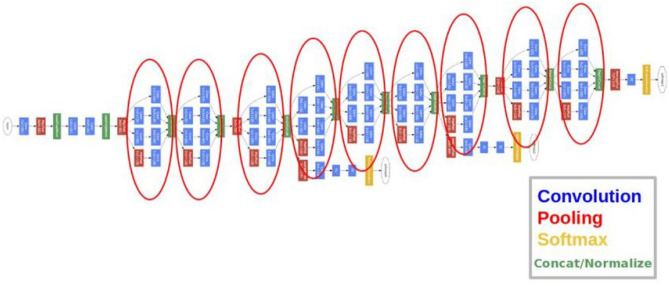
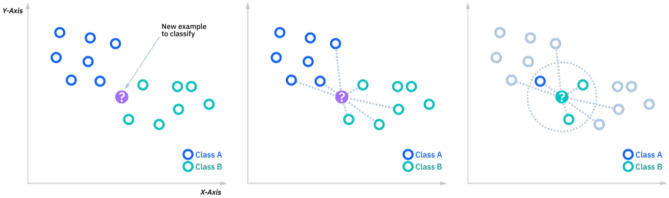
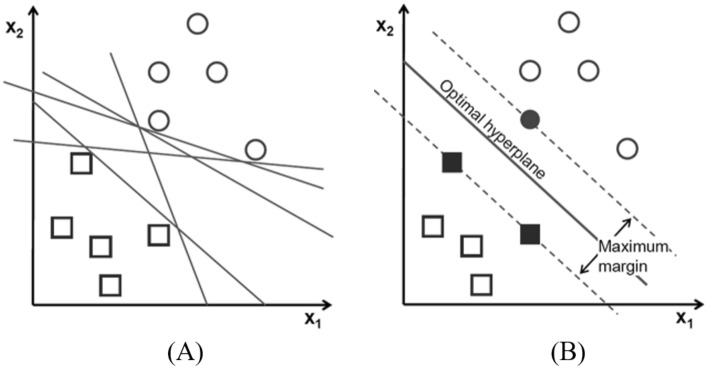
- The proposed framework preprocesses images with ELA, then extracts deep features using pretrained CNNs (GoogLeNet, ResNet18, SqueezeNet), and classifies them with SVM and KNN.
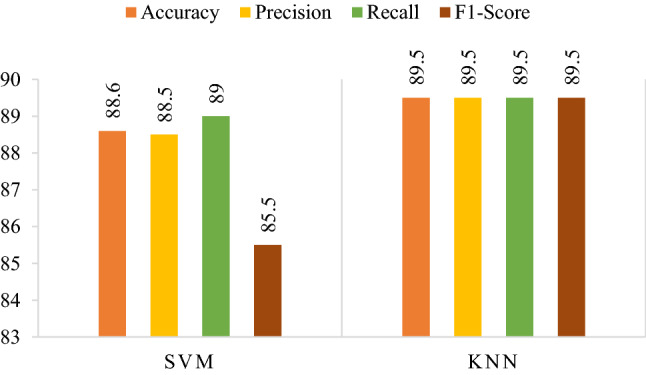
- The best reported performance was 89.5% accuracy using ResNet18 features with KNN in one place, and 89.5% accuracy using ResNet18’s feature vector with SVM in the conclusion; the paper is internally inconsistent about which classifier achieved the top score.
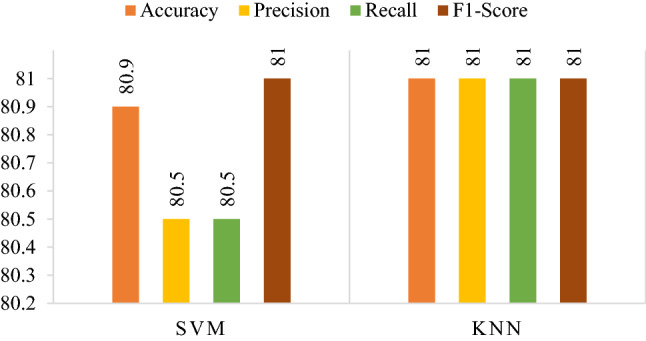
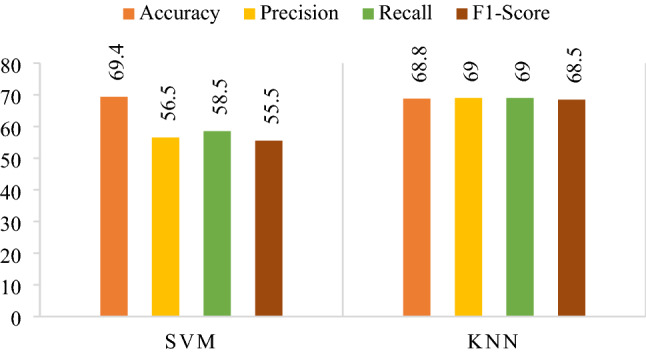
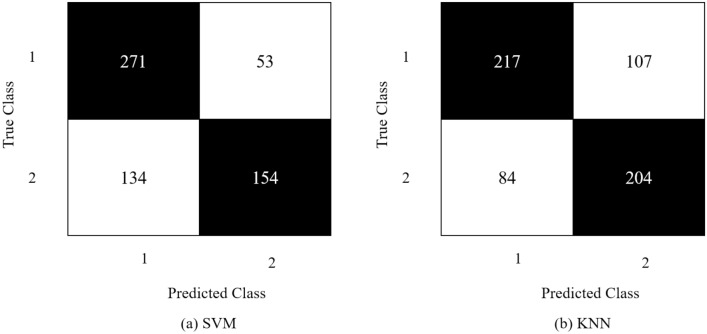
- For the other feature extractors, the paper reports 81% accuracy for GoogLeNet + KNN, 80.9% for GoogLeNet + SVM, 69.4% for SqueezeNet + SVM, and 68.8% for SqueezeNet + KNN.
- The authors say the method outperformed several prior deepfake detection approaches and claim it can detect deepfake images in real time.
## Methods
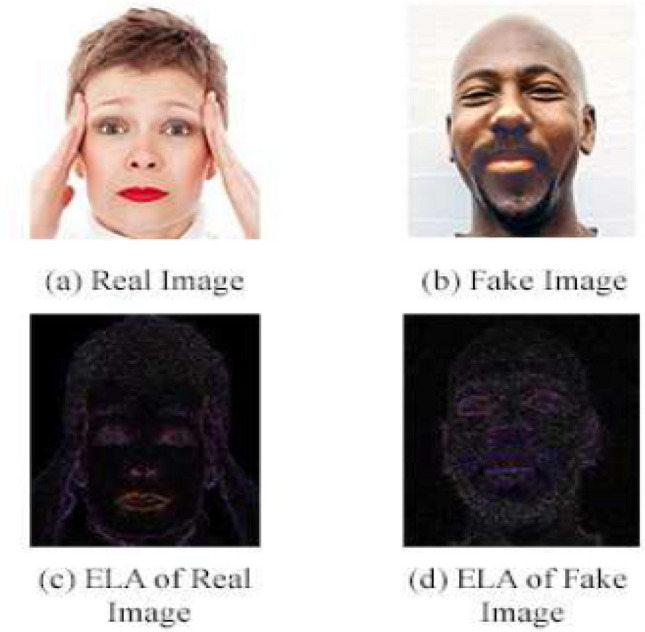
- The pipeline has three steps: (i) resize images and generate ELA to detect pixel-level alterations, (ii) extract deep features using pretrained CNNs, and (iii) classify features with SVM and KNN after hyperparameter optimization.
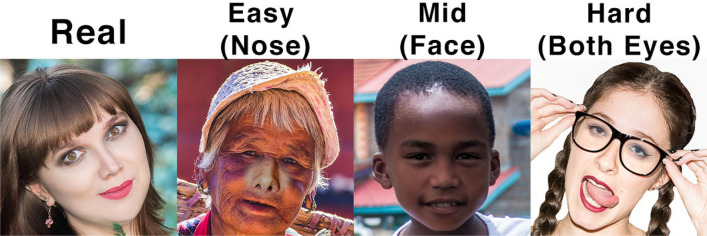
- The dataset is a publicly accessible Yonsei University Computational Intelligence and Photography Lab real/fake face database, containing labeled real and fake face images with metadata such as age, gender, ethnicity, and manipulation type; manipulated images are split into easy, mid, and hard categories.
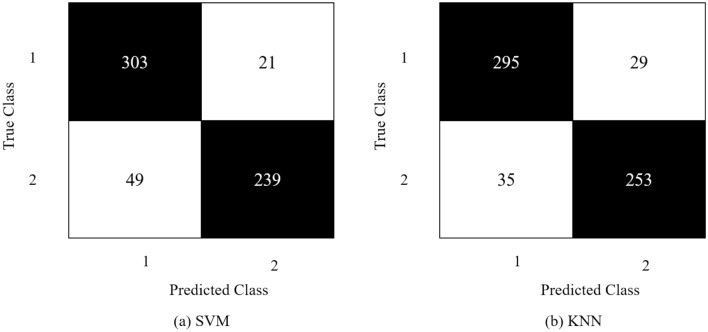
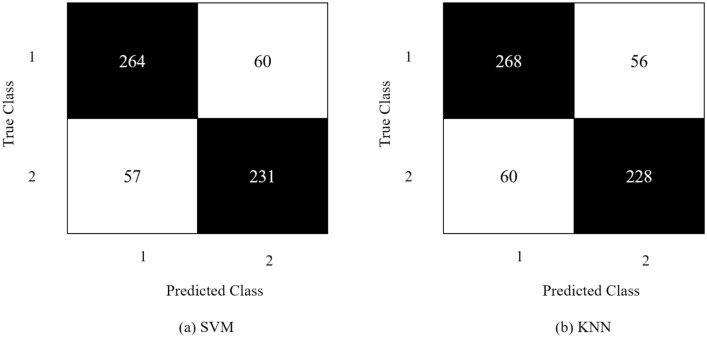
- Performance was evaluated with accuracy, precision, recall, and F1-score, using confusion matrices and parameter tuning for both classifiers.
## Limitations
- The paper explicitly says the proposed method is developed using image-based data and that future work should test video-based deepfake datasets.
- The text also notes that the authors aim to obtain a real-life deepfake dataset in future work, implying limited ecological coverage in the current study.
- Evident from the text: the reported results are somewhat hard to interpret because the paper gives inconsistent attributions of the top 89.5% result to different classifier pairings (ResNet18+KNN vs. ResNet18+SVM).
Model-written summary. Check it against the paper before relying on it.
Integrity signals
Registry
Cites
Statistics
Figures
Verification
Claims the paper makes
0 Valid · 4 Not valid · 2 Not checked · 13 Own results and interpretations
The cited sources that could be checked couldn’t confirm or dispute this claim.
In the paper
“The altered grid in a modified image should have a higher error potential than the rest31.”
§ Deep fake detection and classification using error-level analysis and deep learning > Proposed methodology > (i) Error level analysis
What the sources say
- Could not verifycites [31] He, K., Zhang, X., Ren, S. & Sun, J. Deep residual learning for image recognition. in Proceedings of the IEEE Conference on Computer Vision and Pattern Recognition. 770–778 (2016). sourceExperimental — accuracy not yet measured
Our copy of He et al. (2016) contains no passage about modified/tampered images, image grids/blocks, or region-wise 'error potential'. Its 'error' statements concern the degradation problem in deep networks (Introduction; Sec. 4.1, where the 34-layer plain net has higher training error than the 18-layer net) and residual reformulation F(x):=H(x)-x (Sec. 3.1), plus classification/localization error rates (Sec. C, Table 13) — none of which addresses the forensic claim attributed here. Searched: 'altered region in a modified image has higher error', 'image tampering manipulation detection localized altered region residual error map', 'grid cells patches of an image error level analysis splicing forgery', 'residual function definition F(x)=H(x)-x'; no relevant passage found, and nothing in our copy states a contrary point. (LLM, conf=0.70)
plainstates a cause- Asserted: passes — The authors put it forward as true.
- Checkable: passes — It can be checked against evidence.
- Load-bearing: passes — The paper’s conclusions depend on it.
- Based: passes — The paper gives a reason why it holds.
- Could not verify
The cited sources that could be checked couldn’t confirm or dispute this claim.
In the paper
“All 8 × 8 grids for unaltered images should have a same error level, allowing for the resave of the image.”
§ Deep fake detection and classification using error-level analysis and deep learning > Proposed methodology > (i) Error level analysis
What the sources say
- Could not verifycites [31] He, K., Zhang, X., Ren, S. & Sun, J. Deep residual learning for image recognition. in Proceedings of the IEEE Conference on Computer Vision and Pattern Recognition. 770–778 (2016). sourceExperimental — accuracy not yet measured
Our copy of He et al. (2016) is entirely about deep residual learning for ImageNet/CIFAR-10 classification, detection and segmentation; no passage addresses 8×8 block grids, per-block error levels, unaltered/original images, or JPEG resaving. Searched with '8×8 grid blocks unaltered image same error level compression' and 'error level analysis image forensics resave JPEG quality factor' — the only hits were the CIFAR-10 32×32 crop/feature-map descriptions (Sec. 4.2), the ImageNet implementation details (Sec. 3.4) and the ImageNet localization 8-anchor sampling (App. C), none of which concern error levels of image blocks. The claim's point is therefore absent from our copy rather than contradicted by it. (LLM, conf=0.70)
plain- Asserted: passes — The authors put it forward as true.
- Checkable: passes — It can be checked against evidence.
- Load-bearing: passes — The paper’s conclusions depend on it.
- Based: passes — The paper gives a reason why it holds.
- Could not verify
A result the paper reports from its own data — it cites no other source for it, so there is none to check. The quote shows it is in the paper.
In the paper
“Moreover, the feature vector obtained from GoogLeNet’s obtained the highest accuracy of 81% via KNN on Chebyshev as a distance metric with a total number of 154 neighbours.”
§ Deep fake detection and classification using error-level analysis and deep learning > Results and discussion > Proposed method results
plainstates an association- Asserted: passes — The authors put it forward as true.
- Checkable: passes — It can be checked against evidence.
- Load-bearing: passes — The paper’s conclusions depend on it.
- Based: passes — The paper gives a reason why it holds.
A result the paper states — it cites no source for it, so there is none to check. The quote shows it is in the paper.
In the paper
“The proposed technique achieved highest accuracy of 89.5% via ResNet18’s feature vector & SVM classifier.”
§ Deep fake detection and classification using error-level analysis and deep learning > Conclusion
plainstates a cause- Asserted: passes — The authors put it forward as true.
- Checkable: passes — It can be checked against evidence.
- Load-bearing: passes — The paper’s conclusions depend on it.
- Based: passes — The paper gives a reason why it holds.
A result the paper reports from its own data — it cites no other source for it, so there is none to check. The quote shows it is in the paper.
In the paper
“SVM and KNN classified the feature vector from SqueezeNet via 69.4% and 68.8%, respectively.”
§ Deep fake detection and classification using error-level analysis and deep learning > Results and discussion > Proposed method results
plain- Asserted: passes — The authors put it forward as true.
- Checkable: passes — It can be checked against evidence.
- Load-bearing: unclear — It is unclear whether the paper’s conclusions depend on it.
- Based: passes — The paper gives a reason why it holds.
6 more claims
Create a free account to see all 19 claims and to verify the 2 references still open.
- Probably not a substantial claim. 4
- It may state two separate claims as one. 4
- The quote only partly states this claim. 1
Self-check
Percentages, sums and reported differences re-computed from the paper’s own numbers.
Each contradiction between two passages listed here was confirmed by an independent check.
Rated major: it would touch a result — a value a result rests on, reported and recomputed p-values on opposite sides of the significance level, two passages that conflict with no sign which is right, or a cited work retracted before this paper was published.
In the paper
§ Deep fake detection and classification using error-level analysis and deep learning > Results and discussion > Comparison with state-of-the-art methods
“The proposed method achieved highest accuracy of 89.5% via ResNet18 and KNN.”
§ Deep fake detection and classification using error-level analysis and deep learning > Conclusion
“The proposed technique achieved highest accuracy of 89.5% via ResNet18’s feature vector & SVM classifier.”
Rated major: it would touch a result — a value a result rests on, reported and recomputed p-values on opposite sides of the significance level, two passages that conflict with no sign which is right, or a cited work retracted before this paper was published.
In the paper
§ Deep fake detection and classification using error-level analysis and deep learning > Abstract
“The proposed method achieved the highest accuracy of 89.5% via Residual Network and K-Nearest Neighbor.”
§ Deep fake detection and classification using error-level analysis and deep learning > Conclusion
“The proposed technique achieved highest accuracy of 89.5% via ResNet18’s feature vector & SVM classifier.”
Cited works that were retracted
Works this paper cites that were later retracted, from the retraction notices publishers deposit. Major when the notice came out before this paper was published.
A note, not an issue: for example, a cited work that was retracted only after this paper was published, which its authors could not have known.
In the paper
“Shad, H.S. et al. Comparative Analysis of Deepfake Image Detection Method Using Convolutional Neural Network. Vol. 2021 (2021).”
Cited work 10.1155/2021/3111676 · retracted 2023-11-29 · notice 10.1155/2023/9767530 · this paper published 2023-05-08
Citations
Cites
1 retracted
Shad, H. S., Rizvee, M. M., Roza, N. T., Hoq, S. M. A., Monirujjaman Khan, M., Singh, A., Zaguia, A., & Bourouis, S. (2021) · Computational Intelligence and Neuroscience · doi:10.1155/2021/3111676 · Cited by 93
RetractedDeep Residual Learning for Image Recognition
He, K., Zhang, X., Ren, S., & Sun, J. (2016) · 2016 IEEE Conference on Computer Vision and Pattern Recognition (CVPR) · doi:10.1109/cvpr.2016.90 · Cited by 235,474
LeCun, Y., Bengio, Y., & Hinton, G. (2015) · Nature · doi:10.1038/nature14539 · Cited by 84,126
Densely Connected Convolutional Networks
Huang, G., Liu, Z., Van Der Maaten, L., & Weinberger, K. Q. (2017) · 2017 IEEE Conference on Computer Vision and Pattern Recognition (CVPR) · doi:10.1109/cvpr.2017.243 · Cited by 48,566
Going deeper with convolutions
Szegedy, C., Liu, W., Jia, Y., Sermanet, P., Reed, S., Anguelov, D., Erhan, D., Vanhoucke, V., & Rabinovich, A. (2015) · 2015 IEEE Conference on Computer Vision and Pattern Recognition (CVPR) · doi:10.1109/cvpr.2015.7298594 · Cited by 48,562
Understanding of a convolutional neural network
Albawi, S., Mohammed, T. A., & Al-Zawi, S. (2017) · 2017 International Conference on Engineering and Technology (ICET) · doi:10.1109/icengtechnol.2017.8308186 · Cited by 3,986
FaceForensics++: Learning to Detect Manipulated Facial Images
Rossler, A., Cozzolino, D., Verdoliva, L., Riess, C., Thies, J., & Niessner, M. (2019) · 2019 IEEE/CVF International Conference on Computer Vision (ICCV) · doi:10.1109/iccv.2019.00009 · Cited by 3,314 · cited 1×
“Rossle et al. 19 employed SVM + CNN for feature classification and a Co-Occurrence matrix for feature extraction.”
MethodMesoNet: a Compact Facial Video Forgery Detection Network
Afchar, D., Nozick, V., Yamagishi, J., & Echizen, I. (2018) · 2018 IEEE International Workshop on Information Forensics and Security (WIFS) · doi:10.1109/wifs.2018.8630761 · Cited by 1,872
Face2Face: Real-Time Face Capture and Reenactment of RGB Videos
Thies, J., Zollhofer, M., Stamminger, M., Theobalt, C., & Niessner, M. (2016) · 2016 IEEE Conference on Computer Vision and Pattern Recognition (CVPR) · doi:10.1109/cvpr.2016.262 · Cited by 1,747
Deepfake Video Detection Using Recurrent Neural Networks
Guera, D., & Delp, E. J. (2018) · 2018 15th IEEE International Conference on Advanced Video and Signal Based Surveillance (AVSS) · doi:10.1109/avss.2018.8639163 · Cited by 1,285
Research works printed but not linked: 6
- Boylan JF Will Deep-Fake Technology Destroy Democracy 2018 The New York Times
- Harwell D Scarlett Johansson on fake AI-generated sex videos:‘Nothing can stop someone from cutting and pasting my image’ J. Washigton Post 2018 31 12
- Schroepfer MJF Creating a data set and a challenge for deepfakes Artif. Intell. 2019 5 263
- Agarwal, S., Farid, H., Gu, Y., He, M., Nagano, K. & Li, H. Protecting world leaders against deep fakes. in CVPR Workshops. Vol. 1. 38 (2019).
- Salman FM Abu-Naser SS Classification of real and fake human faces using deep learning IJAER 2022 6 3 1 14
- He, K., Zhang, X., Ren, S. & Sun, J. Deep residual learning for image recognition. in Proceedings of the IEEE Conference on Computer Vision and Pattern Recognition, Las Vegas, USA. 770–778 (2016). · DOI · Paper page
Cited by
Deepfake detection using convolutional vision transformers and convolutional neural networks
Soudy, A. H., Sayed, O., Tag-Elser, H., Ragab, R., Mohsen, S., Mostafa, T., Abohany, A. A., & Slim, S. O. (2024) · Neural Computing and Applications · doi:10.1007/s00521-024-10181-7 · Cited by 129
Time series forecasting and anomaly detection using deep learning
Iqbal, A., & Amin, R. (2023) · Computers & Chemical Engineering · doi:10.1016/j.compchemeng.2023.108560 · Cited by 100
Self-citationMulticlass AI-Generated Deepfake Face Detection Using Patch-Wise Deep Learning Model
Arshed, M. A., Mumtaz, S., Ibrahim, M., Dewi, C., Tanveer, M., & Ahmad, S. (2024) · Computers · doi:10.3390/computers13010031 · Cited by 100
Enhanced deepfake detection with densenet and cross-vit
Siddiqui, F., Yang, J., Xiao, S., & Fahad, M. (2025) · Expert Systems with Applications · doi:10.1016/j.eswa.2024.126150 · Cited by 62
A Review of Deepfake Techniques: Architecture, Detection and Datasets
Edwards, P., Nebel, J.-C., Greenhill, D., & Liang, X. (2024) · IEEE Access · doi:10.1109/access.2024.3477257 · Cited by 50
“Restrictions apply. predictions but also to observe if under-or over-fitting is occurring based on the training data used [51].”
BackgroundMethodAnalysis and prevention of AI-based phishing email attacks
Eze, C. S., & Shamir, L. (2024) · Electronics · doi:10.3390/electronics13101839 · Cited by 47
“For instance, the ability to create realistic “deep fake” images, videos and audio can be used to disseminate false information (Sug-anthi et al., 2022; Rafique et al., 2023).”
BackgroundImage forgery detection: comprehensive review of digital forensics approaches
Singh, S. P., & Kumar, R. (2024) · Journal of Computational Social Science · doi:10.1007/s42001-024-00265-8 · Cited by 65
Visual Deepfake Detection: Review of Techniques, Tools, Limitations, and Future Prospects
Ur Rehman Ahmed, N., Badshah, A., Adeel, H., Tajammul, A., Daud, A., & Alsahfi, T. (2025) · IEEE Access · doi:10.1109/access.2024.3523288 · Cited by 45
Advanced deepfake detection with enhanced Resnet-18 and multilayer CNN max pooling
Fahad, M., Zhang, T., Iqbal, Y., Azaz, I., Siddiqui, F., Abdullah, B., Nauman, M. M., Zhao, W. X., & Geng, Y. (2024) · The Visual Computer · doi:10.1007/s00371-024-03613-x · Cited by 51
Diffusion model in modern detection: Advancing Deepfake techniques
Siddiqui, F., Yang, J., Xiao, S., & Fahad, M. (2025) · Knowledge-Based Systems · doi:10.1016/j.knosys.2025.113922 · Cited by 34
The New Paradigm of Deepfake Detection at the Text Level
Roșca, C.-M., Stancu, A., & Iovanovici, E. M. (2025) · Applied Sciences · doi:10.3390/app15052560 · Cited by 36
An efficient convolution neural network method for copy-move video forgery detection
Eltoukhy, M. M., Alsubaei, F. S., Mortda, A. M., & Hosny, K. M. (2024) · Alexandria Engineering Journal · doi:10.1016/j.aej.2024.10.030 · Cited by 24
A robust ensemble model for Deepfake detection of GAN-generated images on social media
Sharma, P., Kumar, M., & Sharma, H. K. (2025) · Discover Computing · doi:10.1007/s10791-025-09538-w · Cited by 21
Sandu, A., Cotfas, L., Delcea, C., Ioanăş, C., Florescu, M., & Orzan, M. (2024) · Electronics · doi:10.3390/electronics13224352 · Cited by 20
Techniques to Detect Fake Profiles on Social Media Using the New Age Algorithms - A Survey
Habib, A. K. M. R. R., Akpan, E. E., Ghosh, B., & Dutta, I. K. (2024) · IEEE Annual Computing and Communication Workshop and Conference (CCWC) · doi:10.1109/ccwc60891.2024.10427620 · Cited by 22
Alazwari, S., Alsamri, M. O. J., Alamgeer, M., Alabdan, R., Alzahrani, I. R., Rizwanullah, M., & Osman, A. E. (2024) · Ain Shams Engineering Journal · doi:10.1016/j.asej.2024.103057 · Cited by 13
Fake News Detection Using ML and DL Approaches
(2023) · doi:10.1109/iccpct58313.2023.10245398 · Cited by 12
XAI – Empowered Ensemble Deep Learning for Deepfake Detection
Kumar, A. A., Priyangha, S. J. D., Meghana, P. S., Dheeraj, M., & Aarthi, R. (2024) · International Conference on Computing, Communication and Networking Technologies (ICCCNT) · doi:10.1109/icccnt61001.2024.10726125 · Cited by 11
Kumar, B. A., & Misra, N. K. (2025) · International Journal of Machine Learning and Cybernetics · doi:10.1007/s13042-025-02558-4 · Cited by 20
Abbas, F., Chesterman, S. A., & Taeihagh, A. (2025) · AI & Society · doi:10.1007/s00146-025-02698-9 · Cited by 22
DeepGuardNet: A Novel CNN Architecture for DeepFake Image Detection
Amritha Devi, N., & Simon, P. (2025) · Procedia Computer Science · doi:10.1016/j.procs.2025.04.313 · Cited by 16
Aloke, E. J., & Abah, J. (2023) · International Journal of Applied Information Systems · doi:10.5120/ijais2023451952 · Cited by 15
National Institute of Standards and Technology (US) (2024) · doi:10.6028/nist.ai.100-4 · Cited by 9
Deepfake video detection using CNN and RNN with OPTICAL FLOW features
Reddy, E. M. S., Kumar, A. P., & Swetha, P. (2024) · IEEE International Students' Conference on Electrical, Electronics and Computer Science (SCEECS) · doi:10.1109/sceecs61402.2024.10482344 · Cited by 15
Exploring machine learning approaches for efficient image forgery detection
Radhakrishnan, A., Sawant, T. N., Raghuram, C., Railis, D. J., & Singh, H. (2025) · Journal of Forensic Sciences · doi:10.1111/1556-4029.70069 · Cited by 11
Deep Fake Face Detection using Efficient Convolutional Neural Networks
Umadevi, M., Krishna, S. B., & Kumar, N. S. (2024) · International Conference on Image Processing and Capsule Networks (ICIPCN) · doi:10.1109/icipcn63822.2024.00063 · Cited by 8
Distinguishing Between AI Images and Real Images with Hybrid Image Classification Methods
Taşpınar, Y. S., & Çınar, İ. (2024) · Mediterranean Conference on Embedded Computing (MECO) · doi:10.1109/meco62516.2024.10577770 · Cited by 10
A Lightweight Algorithm for Detecting Fake Multimedia Contents on Social Media
Abukari, A. M., Madavarapu, J. B., & Bankas, E. K. (2023) · Earthline Journal of Mathematical Sciences · doi:10.34198/ejms.14124.119132 · Cited by 13
Bale, D., Ochei, L. C., & Ugwu, C. (2024) · International Journal of Intelligent Information Systems · doi:10.11648/j.ijiis.20241302.11 · Cited by 15
Shan, W., Yue, J., Ding, S. X., & Qiu, J. (2025) · Scientific Reports · doi:10.1038/s41598-025-97555-6 · Cited by 8
Design and development of an efficient RLNet prediction model for deepfake video detection
Bhandarkawthekar, V., Navamani, T. M., Sharma, R., & Shyamala, K. (2025) · Frontiers in Big Data · doi:10.3389/fdata.2025.1569147 · Cited by 11
Agrawal, D. R., & Haneef, F. (2025) · Transactions on Emerging Telecommunications Technologies · doi:10.1002/ett.70083 · Cited by 9
Enhancing Deepfake Video Detection: A Hybrid CNN-LSTM Approach
Singh, D., Singh, P., & Bhandari, R. (2024) · International Conference on Technological Innovations and Advance Computing (TIACOMP) · doi:10.1109/tiacomp64125.2024.00031 · Cited by 8
AI-Powered Deepfake Detection Using CNN and Vision Transformer Architectures
Sheikh, M. S., Kirtonia, U., Arthi, N. T., & Al-Imran, M. (2025) · International Conference on Big Data Analytics and Practices (IBDAP) · doi:10.1109/ibdap65587.2025.11145852 · Cited by 6
Efficient Deep Fake Detection Technique on Video and Audio Dataset Using Deep Learning
Vadisetty, R. (2025) · Lecture notes in networks and systems · doi:10.1007/978-981-97-8457-8_11 · Cited by 13
Introduction to Deepfake Technology and Its Early Foundations
Chataut, R., & Upadhyay, A. (2024) · Advances in business information systems and analytics book series · doi:10.4018/979-8-3693-6890-9.ch001 · Cited by 5
Inteligencia artificial en la verificación de la información política. Herramientas y tipología
Gonzales, H. M. S., & González, M. A. (2024) · Más poder local · doi:10.56151/maspoderlocal.215 · Cited by 14
Muthukumar, A., Raj, M. T., Ramalakshmi, R., Meena, A., & Kaleeswari, P. (2024) · Journal of Ambient Intelligence and Humanized Computing · doi:10.1007/s12652-024-04829-4 · Cited by 9
Deep Learning Based Deepfake Video Detection System
Jha, A., Yadav, A. K., Dubey, A. K., et al. (2025) · International Conference on Disruptive Technologies (ICDT) · doi:10.1109/icdt63985.2025.10986738 · Cited by 5
An Automated Deep Learning Model for Detecting Image Forgeries
Raj, S. A. A., Mohanty, B. S., Rout, J., Soni, A., & Nanda, S. K. (2024) · International Conference on Electrical Electronics and Computing Technologies (ICEECT) · doi:10.1109/iceect61758.2024.10738982 · Cited by 5
Khan, S. B., Gupta, M., Gopinathan, B., Mahesh, T. R., Saraee, M., Mashat, A., & Almusharraf, A. I. (2025) · IET Image Processing · doi:10.1049/ipr2.70152 · Cited by 5
DeFaX: A Cross-Attention Fusion Framework for Robust and Explainable Deepfake Detection
Al-Imran, M., Sheikh, M. S., Kirtonia, U., Arthi, N. T., & Ripon, S. (2025) · IEEE Access · doi:10.1109/access.2025.3645769 · Cited by 7
Tinago, N., Verkijika, S. F., & Mamabolo, K. E. (2025) · IEEE Access · doi:10.1109/access.2025.3596882 · Cited by 7
Deepfake Image Detection Using Light-Weight Attention Integrated MobileNetV3 Model
Harshitha, T., Tanya, S., Jaswanthi, T., Rayvanth, N., & Singh, R. P. (2025) · Lecture notes in computer science · doi:10.1007/978-3-031-84543-7_11 · Cited by 5
Briones, H. P. J., Loyaga, M. E. Z., Grados, A. Y. S., & Vilchez, E. M. C. (2024) · Vniversitas · doi:10.11144/javeriana.vj73.uiti · Cited by 3
Refining digital security with EfficientNetV2-B2 deepfake detection techniques
Vivekananda, G. N., Mahesh, T. R., Gupta, M., Thakur, A., & Sayal, A. (2025) · Egyptian Informatics Journal · doi:10.1016/j.eij.2025.100699 · Cited by 7
Deepfake Detection using Deep Learning: A Two-Pronged Approach with CNNs and Autoencoders
Anusha, N., Khushi, K., Madhumitha, Shet, M., & Alekhya, P. (2024) · International Conference on Recent Advances in Information Technology for Sustainable Development (ICRAIS) · doi:10.1109/icrais62903.2024.10811712 · Cited by 5
A comprehensive review of deep learning techniques for image tampering detection
Singh, P. K., Kumar, D., & Ranjan, P. (2025) · Life Cycle Reliability and Safety Engineering · doi:10.1007/s41872-025-00385-8 · Cited by 6
Singh, D., Singh, P., & Bhandari, R. (2024) · Global AI Summit - International Conference on Artificial Intelligence and Emerging Technology (AI Summit) · doi:10.1109/globalaisummit62156.2024.10947978 · Cited by 4
Compression-Aware Hybrid Framework for Deep Fake Detection in Low-Quality Video
Lagsoun, A. M., Mustapha, O., & Hedabou, M. (2025) · IEEE Access · doi:10.1109/access.2025.3592358 · Cited by 8
Sulak, S. A. (2025) · Scientific Reports · doi:10.1038/s41598-025-25748-0 · Cited by 5
A Comprehensive Study on Mitigating Synthetic Identity Threats Using Deepfake Detection Mechanisms
Uppal, S., Banga, V., Neeraj, S., & Singhal, A. (2024) · International Conference on Cloud Computing, Data Science & Engineering (Confluence) · doi:10.1109/confluence60223.2024.10463324 · Cited by 7
Combining Computer Vision Techniques and Intraframe Noise Methods to Detect a Deepfake
Shelke, M. P., Ranjan, N. M., Kharade, A., Gaikwad, P., Arakh, S., & Kalore, A. (2023) · Soft Computing Research Society eBooks · doi:10.56155/978-81-955020-2-8-43 · Cited by 5
DEEPFAKE DYSTOPIA: NAVIGATING THE LANDSCAPE OF THREATS AND SAFEGUARDS IN MULTIMEDIA CONTENT
(2024) · International Journal Of Trendy Research In Engineering And Technology · doi:10.54473/ijtret.2024.8101 · Cited by 7
Evaluating Models for Deepfake Detection: A Comparative Study
Krishna, V., Neha, P. S., Vyshnavi, P., & Vidyasekaran, H. (2024) · International Conference on IoT Based Control Networks and Intelligent Systems (ICICNIS) · doi:10.1109/icicnis64247.2024.10823264 · Cited by 3
A Comprehensive Review of Machine Learning Techniques for DeepFake Detection
Kabir, M. H., Noman, A. A., Afiq, A. A., Jaki, H., Hasan, M. N., Ahmad, Islam, M. S., Hasan, H., & Mojumder, I. A. (2025) · Applied Computational Intelligence and Soft Computing · doi:10.1155/acis/8883527 · Cited by 4
Advancing Biometric Identity Recognition with Optimized Deep Convolutional Neural Networks
Alshazly, H. A., Elmannai, H., Alkanhel, R. I., & Abdelnazeer, A. (2024) · Traitement du signal · doi:10.18280/ts.410329 · Cited by 3
Robust AI-Generated Face Detection with Imbalanced Data
Krubha, Y. S., Hou, A., Vester, B., Walker, W., Wang, X., Li, L., & Hu, S. (2025) · IEEE International Conference on Multimedia Information Processing and Retrieval (MIPR) · doi:10.1109/mipr67560.2025.00080 · Cited by 8
Integrating GLCM Texture Analysis for Improved Deepfake Detection on CelebDF(v2) Dataset
Joshi, K., & Sinha, A. (2024) · Asian Conference on Intelligent Technologies (ACOIT) · doi:10.1109/acoit62457.2024.10939531 · Cited by 5
Joy, D., & Selvi, R. T. (2026) · Journal of Ambient Intelligence and Humanized Computing · doi:10.1007/s12652-025-05030-x · Cited by 3
An Effective Approach for Deepfake Video Detection using Binarized Neural Network
Praveen, K., Pandey, A., & Rudra, B. (2025) · IEEE International Conference on Interdisciplinary Approaches in Technology and Management for Social Innovation (IATMSI) · doi:10.1109/iatmsi64286.2025.10984516 · Cited by 2
Deepfake Classification For Human Faces using Custom CNN
Kalemullah, A. M., Prakash, P., & Sakthivel, V. (2024) · International Conference on Circuit, Power and Computing Technologies · doi:10.1109/iccpct61902.2024.10672973 · Cited by 2
Rashid, S., Joshi, R. C., Samridhi, K., Gupta, S., Pathak, V. K., & Dutta, M. K. (2024) · IEEE Conference on Information and Communication Technology (CICT) · doi:10.1109/cict64037.2024.10899606 · Cited by 1
Comparative Analysis Of Deep Learning for Robust Deepfake Detection
Kapoor, R., Mehndiratta, V., & Singh, J. (2024) · International Conference on Advancement in Electronics & Communication Engineering (AECE) · doi:10.1109/aece62803.2024.10911049 · Cited by 1
Comprehensive Analysis of Deepfake Detection Models
Khatoon, M., Jaiswal, C., Sokhi, S., Tripathi, T., Jogalekar, U. A., & Agrawal, R. (2025) · International Conference on Emerging Trends in Industry 4.0 Technologies (ICETI4T) · doi:10.1109/iceti4t63625.2025.11132138 · Cited by 2
An Unmasking-Based Method of Anomaly Detection for Rotating Devices
Zhu, L., Li, Y., Xu, M., Cheng, Y., & Wang, R. (2024) · IEEE Sensors Journal · doi:10.1109/jsen.2024.3392804 · Cited by 1
Deepfake jako dowód w procesie cywilnym – rozważania na tle polskiego postępowania cywilnego
Michalik, P., & Zaremba, P. (2025) · PRAWO i WIĘŹ · doi:10.36128/priw.vi57.1206 · Cited by 1
Mohammed, K. B., Agrawal, I., Kandimalla, M. D., Govathoti, P. F., Prakash, C. S., & Singh, P. (2024) · Lecture notes in networks and systems · doi:10.1007/978-981-97-3292-0_23 · Cited by 3
Explainable Deep Fake Framework for Images Creation and Classification
Alwateer, M. M. (2024) · Journal of Computer and Communications · doi:10.4236/jcc.2024.125006 · Cited by 5
Human-AI Collaboration in Moderating AI-Generated Harmful Content
Saharan, S., Sharma, M., Khiria, M., & Gupta, A. (2025) · Advances in computational intelligence and robotics book series · doi:10.4018/979-8-3373-0335-2.ch006 · Cited by 3
Subashree, S., Remya Rose, S., Valarmathy, A. S., Joseph, P., Dennis, P. J., & Ravi, S. (2024) · International Conference on Pioneering Developments in Computer Science & Digital Technologies (IC2SDT) · doi:10.1109/ic2sdt62152.2024.10696877 · Cited by 1
Deep Fake Detection using Deep Learning
Gopi, K. (2024) · INTERANTIONAL JOURNAL OF SCIENTIFIC RESEARCH IN ENGINEERING AND MANAGEMENT · doi:10.55041/ijsrem33196 · Cited by 1
Alkhatib, M. (2026) · Cryptography · doi:10.3390/cryptography10020015 · Cited by 4
ResNet-Defake: Detecting Deepfake Images with Customized ResNet
Patel, P., Beladiya, O., & Shah, Z. H. (2025) · Information systems engineering and management · doi:10.1007/978-3-031-90478-3_10 · Cited by 1
Convolutional Neural Network (CNN) for Image Forgery Detection
GNANASEGARAN, M. A. P., Ngadiran, R., & Ismail, I. (2025) · Studies in computational intelligence · doi:10.1007/978-3-031-78918-2_12 · Cited by 1
Bsoul, A. A. R., & Alshboul, Y. (2025) · AI · doi:10.3390/ai6120321 · Cited by 4
Padalko, H., Chumachenko, D., Kaur, N., Hussain, I. Z., Kaur, J., Lotto, M., Butt, Z. A., & Morita, P. P. (2025) · Social Network Analysis and Mining · doi:10.1007/s13278-025-01501-3 · Cited by 4
Francis, M. A., Kurup, A. R., Premjith, B., & Chakravarthi, B. R. (2025) · IEEE Access · doi:10.1109/access.2025.3606585 · Cited by 4
Naresh, B., Ch, R., Reddy, K. S., Srinivas, S., Sheikh, A. N. Q., & Raghavendar, K. (2025) · International Conference on Applications of Machine Intelligence and Data Analytics (ICAMIDA) · doi:10.1109/icamida64673.2025.11209741 · Cited by 3
Colón-Santiago, A., Uyemura, G., & Ortiz-Ubarri, J. (2025) · Cyber Awareness and Research Symposium (CARS) · doi:10.1109/cars67163.2025.11337447 · Cited by 1
Mahdi, M. A., Arshed, M. A., & Muneer, A. (2025) · Mathematics · doi:10.3390/math13193093 · Cited by 2
Deepfake Image Detection using Deep Learning
Arun Kumar, S., Kumar, M. A., Vincent, R., Hegde, U. U., Anusha, M. S., & Pasha, N. N. (2025) · International Conference on Artificial Intelligence and Data Engineering (AIDE) · doi:10.1109/aide64228.2025.10987437 · Cited by 3
Chan, W. X., Tay, J., Chaw, J. K., Leong, P. Y., Neo, C. C., & Tan, C. W. (2025) · Lecture notes in computer science · doi:10.1007/978-981-95-3808-9_12
Beyond the Facade: AI and ML Innovations for Digital Content Authentication
Sowmya, B. J., Alex, S. A., Navneet, H. M., Srinivas, S., & Shetty, T. S. (2025) · Lecture notes in networks and systems · doi:10.1007/978-981-96-2694-6_35
A Hybrid CNN Spectral Attention Model for Robust Multiclass AI-Generated Deepfake Face Detection
Martinaa, M., & Revathy, G. (2026) · Advances in computational intelligence and robotics book series · doi:10.4018/979-8-2600-0136-3.ch002
Evaluating Deepfake Images: An Empirical Evaluation of Select Methods with Data Engineering
Echefu, L., Zhao, Q., & Chakrabarty, S. (2024) · Journal of Multimedia Information System · doi:10.33851/jmis.2024.11.4.229
Digital Mirage: The Paradox of Virtuality and Reality
Barde, S., Karan, A., & Aman (2025) · International Conference on Computing for Sustainable Global Development · doi:10.23919/indiacom66777.2025.11115608
Generation of Photorealistic Face Images Using Deep Convolutional Generative Adversarial Networks
Anvitha, S. S., Reddy, S. P., Sunaini, Y., & Nidhin Prabhakar, T., V (2024) · IEEE Conference on Information and Communication Technology (CICT) · doi:10.1109/cict64037.2024.10899610
Using Machine Learning to Detect Deepfake Videos on Social Sites
Kavitha, T., Hemalatha, S., Ajaykanna, K., Dinesh, S., & A.Jabastin (2025) · International Conference on Electronics, Communication and Aerospace Technology (ICECA) · doi:10.1109/iceca66444.2025.11382766
Chattaraj, D., Singh, V., Nayak, V. R., Hegde, V. V., Kousthub, K. A., & Tadkal, S. (2025) · International Conference on Communications and Signal Processing (ICCSP) · doi:10.1109/iccsp64183.2025.11088748 · Cited by 1
Biddappa, M. M., Hamsaveni, M., Himalatha, M., Manoj, M. K., & Ashok, M. (2025) · Annual International Conference on Data Science, Machine Learning and Blockchain Technology (AICDMB) · doi:10.1109/aicdmb64359.2025.11277531
Prakash, P., & Jaffino, G. (2026) · Engineering Research Express · doi:10.1088/2631-8695/ae6c97
The Implications of Deep Fakes Impact on Politics and Elections: The Nigerian Narrative
Emovwodo, S. O., & Ayo-Obiremi, I. (2024) · Advances in information security, privacy, and ethics book series · doi:10.4018/979-8-3693-5298-4.ch019 · Cited by 1
Comparative Analysis of DeepFake Detection Methods
Chawla, V., & Baraskar, T. N. (2024) · Asian Conference on Innovation in Technology (ASIANCON) · doi:10.1109/asiancon62057.2024.10838081 · Cited by 1
Classification of Real and AI-Generated Faces for Deception Detection
Anil Kumar, D., Raj Ganesh, B., Sathwik, K., Kowshik, J. K. S., & Lavanya, R. (2025) · IEEE International Conference on Computer Vision and Machine Intelligence (CVMI) · doi:10.1109/cvmi66673.2025.11337676
A Systematic Literature Review of Deepfake Face Image Detection with Transfer Learning Techniques
Wimalasena, W., Herath, H., & Hewapathirana, I. U. (2025) · International Research Conference on Smart Computing and Systems Engineering (SCSE) · doi:10.1109/scse65633.2025.11031009 · Cited by 1
Deep learning for CGI and visual forgery detection: a comprehensive survey
Korkmaz, A., & Özden, M. (2026) · International Journal of Data Science and Analytics · doi:10.1007/s41060-026-01192-9
Metadata
- Authors
- Rafique, R., Gantassi, R., Amin, R., Frnda, J., Mustapha, A., & Alshehri, A. H.
- Affiliations
- University of Engineering and Technology Taxila (PK)
- Chonnam National University (KR)
- VSB - Technical University of Ostrava (CZ)
- Tun Hussein Onn University of Malaysia (MY)
- Shaqra University (SA)
- Corresponding author
- Amin, Rashid
- Venue
- Scientific Reports
- Published
- 2023-05-08
- Volume
- 13
- Issue
- 1
- Pages
- 7422-7422
- ISSN
- 2045-2322 (ISSN-L)
- PMC
- PMC10167215
- OpenAlex
- W4375955734
- Semantic Scholar
- c8dc6fac13d8642384c96489b7728cf118259422
- Cited by
- 155
- References
- 42
- Citations by year
- 2026: 31 · 2025: 68 · 2024: 49 · 2023: 7
- FWCI
- 14.04
- Type
- journal article
- Language
- en
- Open access
- gold
- doi.org
- Licence
- cc-by
- creativecommons.org/licenses/by/4.0 (tdm)
- creativecommons.org/licenses/by/4.0 (vor)
- Locations
- Scientific Reports (publishedVersion, cc-by)
- PubMed Central (publishedVersion, cc-by)
- PubMed (publishedVersion)
- DOAJ (DOAJ: Directory of Open Access Journals) (submittedVersion, cc-by-sa)
- DSpace VŠB-TUO (VŠB-TUO) (submittedVersion, cc-by)
- Greater South Information System
- Funders
- Ministerstvo Školství, Mládeže a Tělovýchovy
- Ostravská Univerzita v Ostravě
- Topics
- Physical Sciences › Computer Science › Computer Vision and Pattern Recognition › Digital Media Forensic Detection
- Social Sciences › Sociology and Political Science › Misinformation and Its Impacts
- Physical Sciences › Computer Science › Computer Vision and Pattern Recognition › Advanced Steganography and Watermarking Techniques
- Keywords
- deepfake detection, error level analysis, image modification detection, convolutional neural networks, ResNet, support vector machine, k-nearest neighbors, disinformation, social media hoaxes, hyperparameter optimization
About these checks
Registry, retraction, Cites and statistics results are computed, not judged, with one exception: a printed reference that no index lists is read once by a model before it counts as a citation error. Claims are extracted by a model and kept only when their quote appears verbatim in the text; each cited source is then checked, with a model’s help, for whether it says what the claim relies on. Those verdicts can be wrong — read the claim’s quote and the cited source before relying on one.
The claim verdicts this report counts are experimental: their accuracy is not yet measured.
A language model drew the claims from the paper on 2026-10-10, under version 3 of the claim definition (model deepseek-v4.1-flash, prompt extract-v3).
A second model labelled each claim on 2026-10-10 (model jev-1.13-20260917, definition revision gold-guideline-v0.2).
Cited sources are checked with a language model’s help (qwen3.8-omni-flash).
Statistics and arithmetic are recomputed, not judged.
Confidence bands are shown only for fields calibrated on our annotated test set. None is calibrated yet, so no band is shown.
What counts as a claim ›How we measure confidence ›How we check this ›
Are you an author, or do you see a problem with this page? Request a review
Data sources
Bibliographic data: Semantic Scholar, OpenAlex, Crossref.
Contains information from the Semantic Scholar Academic Graph Datasets, made available under the ODC Attribution License (ODC-BY 1.0).
Semantic Scholar’s data is described in: Kinney, R., et al. (2023). The Semantic Scholar Open Data Platform. arXiv:2301.10140.
