

Deep fake detection and classification using error-level analysis and deep learning
Open accessThe DOI matches its Crossref record; 40 of the 42 references it cites were found in a registry or an index; 4 of the 9 sources its claims cite were checked for support.
Abstract
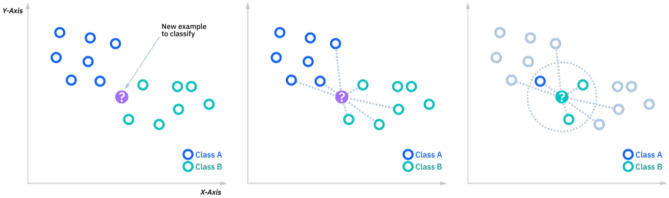
Due to the wide availability of easy-to-access content on social media, along with the advanced tools and inexpensive computing infrastructure, has made it very easy for people to produce deep fakes that can cause to spread disinformation and hoaxes. This rapid advancement can cause panic and chaos as anyone can easily create propaganda using these technologies. Hence, a robust system to differentiate between real and fake content has become crucial in this age of social media. This paper proposes an automated method to classify deep fake images by employing Deep Learning and Machine Learning based methodologies. Traditional Machine Learning (ML) based systems employing handcrafted feature extraction fail to capture more complex patterns that are poorly understood or easily represented using simple features. These systems cannot generalize well to unseen data. Moreover, these systems are sensitive to noise or variations in the data, which can reduce their performance. Hence, these problems can limit their usefulness in real-world applications where the data constantly evolves. The proposed framework initially performs an Error Level Analysis of the image to determine if the image has been modified. This image is then supplied to Convolutional Neural Networks for deep feature extraction. The resultant feature vectors are then classified via Support Vector Machines and K-Nearest Neighbors by performing hyper-parameter optimization. The proposed method achieved the highest accuracy of 89.5% via Residual Network and K-Nearest Neighbor. The results prove the efficiency and robustness of the proposed technique; hence, it can be used to detect deep fake images and reduce the potential threat of slander and propaganda.
Overview
CoChat Summary
## TL;DR
The paper proposes a deepfake image detection pipeline that combines error level analysis (ELA), pretrained CNN feature extraction, and SVM/KNN classification. On the Yonsei University real/fake face dataset, it reports a best accuracy of 89.5%.
## Key findings
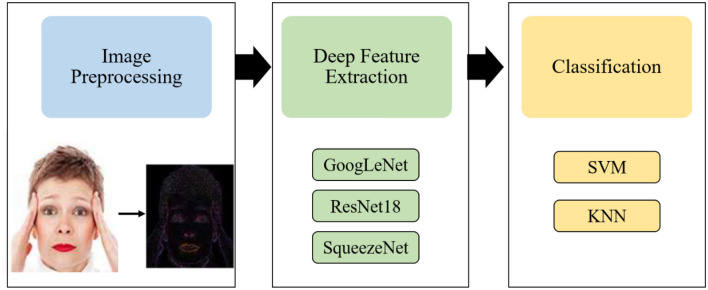
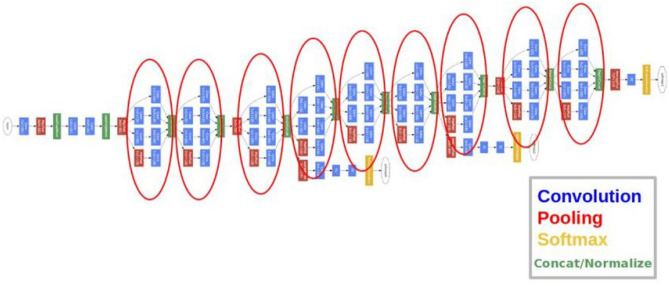
- The proposed framework preprocesses images with ELA, then extracts deep features using pretrained CNNs (GoogLeNet, ResNet18, SqueezeNet), and classifies them with SVM and KNN.
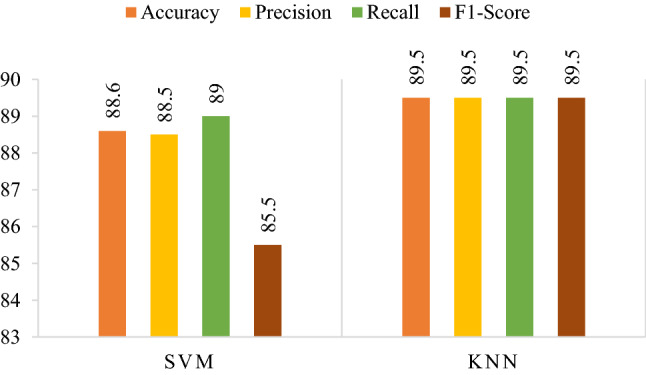
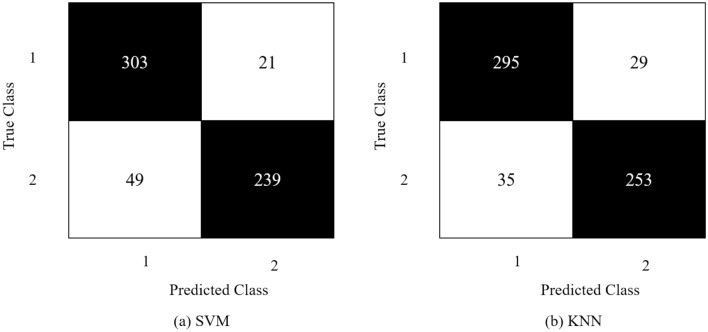
- The best reported performance was 89.5% accuracy using ResNet18 features with KNN in one place, and 89.5% accuracy using ResNet18’s feature vector with SVM in the conclusion; the paper is internally inconsistent about which classifier achieved the top score.
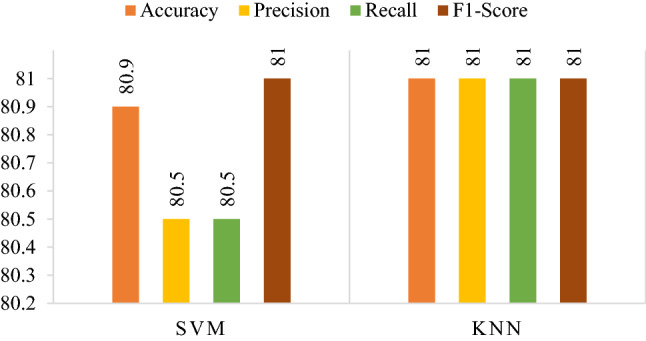
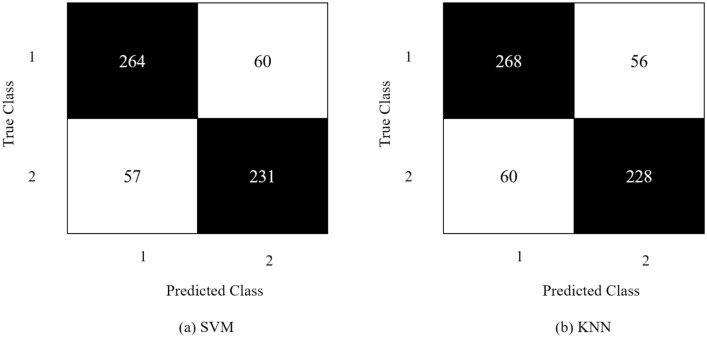
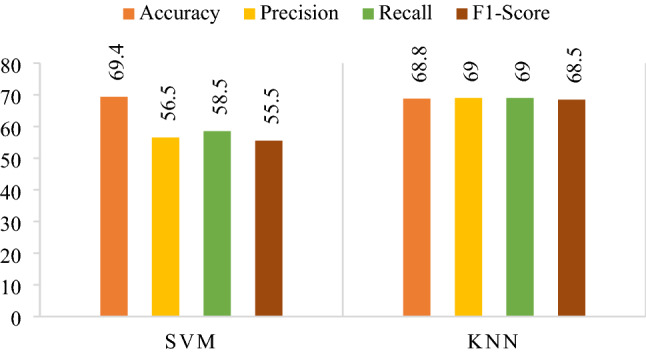
- For the other feature extractors, the paper reports 81% accuracy for GoogLeNet + KNN, 80.9% for GoogLeNet + SVM, 69.4% for SqueezeNet + SVM, and 68.8% for SqueezeNet + KNN.
- The authors say the method outperformed several prior deepfake detection approaches and claim it can detect deepfake images in real time.
## Methods
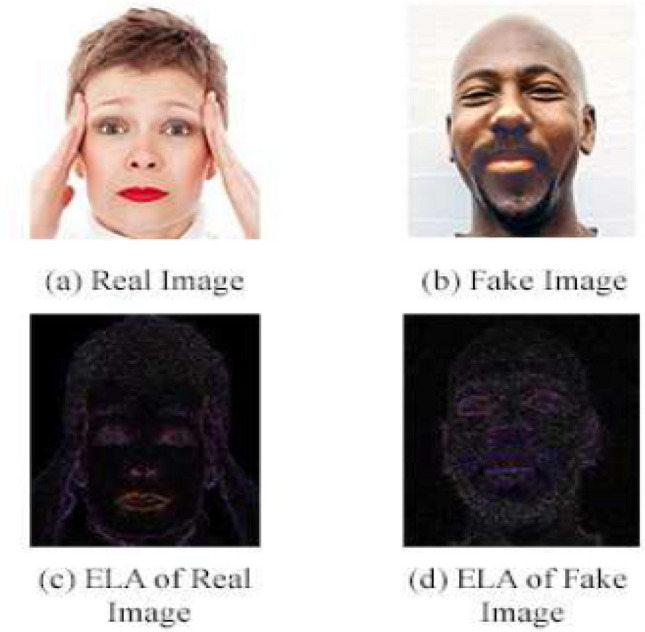
- The pipeline has three steps: (i) resize images and generate ELA to detect pixel-level alterations, (ii) extract deep features using pretrained CNNs, and (iii) classify features with SVM and KNN after hyperparameter optimization.
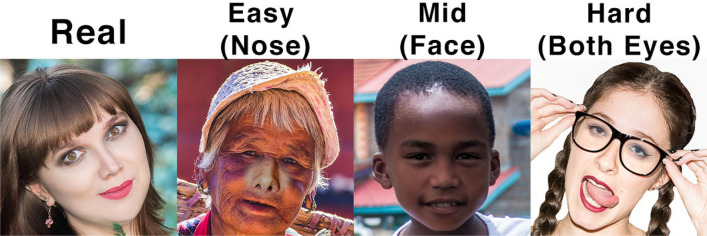
- The dataset is a publicly accessible Yonsei University Computational Intelligence and Photography Lab real/fake face database, containing labeled real and fake face images with metadata such as age, gender, ethnicity, and manipulation type; manipulated images are split into easy, mid, and hard categories.
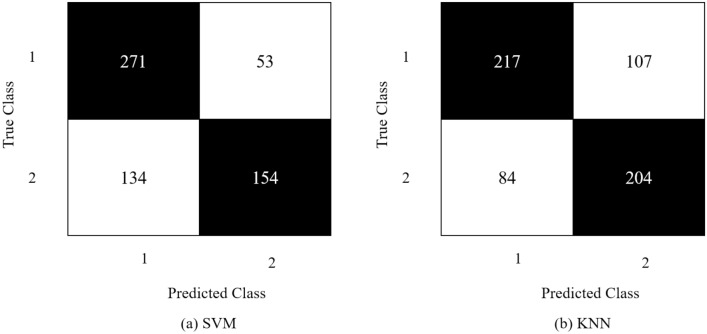
- Performance was evaluated with accuracy, precision, recall, and F1-score, using confusion matrices and parameter tuning for both classifiers.
## Limitations
- The paper explicitly says the proposed method is developed using image-based data and that future work should test video-based deepfake datasets.
- The text also notes that the authors aim to obtain a real-life deepfake dataset in future work, implying limited ecological coverage in the current study.
- Evident from the text: the reported results are somewhat hard to interpret because the paper gives inconsistent attributions of the top 89.5% result to different classifier pairings (ResNet18+KNN vs. ResNet18+SVM).
Model-written summary. Check it against the paper before relying on it.
Integrity signals
Registry
Cites
Statistics
Figures
Verification
Claims the paper makes
0 Valid · 4 Not valid · 2 Not checked · 13 Own results and interpretations
The cited sources that could be checked couldn’t confirm or dispute this claim.
In the paper
“The altered grid in a modified image should have a higher error potential than the rest31.”
§ Deep fake detection and classification using error-level analysis and deep learning > Proposed methodology > (i) Error level analysis
What the sources say
- Could not verifycites [31] He, K., Zhang, X., Ren, S. & Sun, J. Deep residual learning for image recognition. in Proceedings of the IEEE Conference on Computer Vision and Pattern Recognition. 770–778 (2016). sourceExperimental — accuracy not yet measured
Our copy of He et al. (2016) contains no passage about modified/tampered images, image grids/blocks, or region-wise 'error potential'. Its 'error' statements concern the degradation problem in deep networks (Introduction; Sec. 4.1, where the 34-layer plain net has higher training error than the 18-layer net) and residual reformulation F(x):=H(x)-x (Sec. 3.1), plus classification/localization error rates (Sec. C, Table 13) — none of which addresses the forensic claim attributed here. Searched: 'altered region in a modified image has higher error', 'image tampering manipulation detection localized altered region residual error map', 'grid cells patches of an image error level analysis splicing forgery', 'residual function definition F(x)=H(x)-x'; no relevant passage found, and nothing in our copy states a contrary point. (LLM, conf=0.70)
plainstates a cause- Asserted: passes — The authors put it forward as true.
- Checkable: passes — It can be checked against evidence.
- Load-bearing: passes — The paper’s conclusions depend on it.
- Based: passes — The paper gives a reason why it holds.
- Could not verify
The cited sources that could be checked couldn’t confirm or dispute this claim.
In the paper
“All 8 × 8 grids for unaltered images should have a same error level, allowing for the resave of the image.”
§ Deep fake detection and classification using error-level analysis and deep learning > Proposed methodology > (i) Error level analysis
What the sources say
- Could not verifycites [31] He, K., Zhang, X., Ren, S. & Sun, J. Deep residual learning for image recognition. in Proceedings of the IEEE Conference on Computer Vision and Pattern Recognition. 770–778 (2016). sourceExperimental — accuracy not yet measured
Our copy of He et al. (2016) is entirely about deep residual learning for ImageNet/CIFAR-10 classification, detection and segmentation; no passage addresses 8×8 block grids, per-block error levels, unaltered/original images, or JPEG resaving. Searched with '8×8 grid blocks unaltered image same error level compression' and 'error level analysis image forensics resave JPEG quality factor' — the only hits were the CIFAR-10 32×32 crop/feature-map descriptions (Sec. 4.2), the ImageNet implementation details (Sec. 3.4) and the ImageNet localization 8-anchor sampling (App. C), none of which concern error levels of image blocks. The claim's point is therefore absent from our copy rather than contradicted by it. (LLM, conf=0.70)
plain- Asserted: passes — The authors put it forward as true.
- Checkable: passes — It can be checked against evidence.
- Load-bearing: passes — The paper’s conclusions depend on it.
- Based: passes — The paper gives a reason why it holds.
- Could not verify
A result the paper reports from its own data — it cites no other source for it, so there is none to check. The quote shows it is in the paper.
In the paper
“Moreover, the feature vector obtained from GoogLeNet’s obtained the highest accuracy of 81% via KNN on Chebyshev as a distance metric with a total number of 154 neighbours.”
§ Deep fake detection and classification using error-level analysis and deep learning > Results and discussion > Proposed method results
plainstates an association- Asserted: passes — The authors put it forward as true.
- Checkable: passes — It can be checked against evidence.
- Load-bearing: passes — The paper’s conclusions depend on it.
- Based: passes — The paper gives a reason why it holds.
A result the paper states — it cites no source for it, so there is none to check. The quote shows it is in the paper.
In the paper
“The proposed technique achieved highest accuracy of 89.5% via ResNet18’s feature vector & SVM classifier.”
§ Deep fake detection and classification using error-level analysis and deep learning > Conclusion
plainstates a cause- Asserted: passes — The authors put it forward as true.
- Checkable: passes — It can be checked against evidence.
- Load-bearing: passes — The paper’s conclusions depend on it.
- Based: passes — The paper gives a reason why it holds.
A result the paper reports from its own data — it cites no other source for it, so there is none to check. The quote shows it is in the paper.
In the paper
“SVM and KNN classified the feature vector from SqueezeNet via 69.4% and 68.8%, respectively.”
§ Deep fake detection and classification using error-level analysis and deep learning > Results and discussion > Proposed method results
plain- Asserted: passes — The authors put it forward as true.
- Checkable: passes — It can be checked against evidence.
- Load-bearing: unclear — It is unclear whether the paper’s conclusions depend on it.
- Based: passes — The paper gives a reason why it holds.
6 more claims
Create a free account to see all 19 claims and to verify the 2 references still open.
- Probably not a substantial claim. 4
- It may state two separate claims as one. 4
- The quote only partly states this claim. 1
Self-check
Percentages, sums and reported differences re-computed from the paper’s own numbers.
Each contradiction between two passages listed here was confirmed by an independent check.
Rated major: it would touch a result — a value a result rests on, reported and recomputed p-values on opposite sides of the significance level, two passages that conflict with no sign which is right, or a cited work retracted before this paper was published.
In the paper
§ Deep fake detection and classification using error-level analysis and deep learning > Results and discussion > Comparison with state-of-the-art methods
“The proposed method achieved highest accuracy of 89.5% via ResNet18 and KNN.”
§ Deep fake detection and classification using error-level analysis and deep learning > Conclusion
“The proposed technique achieved highest accuracy of 89.5% via ResNet18’s feature vector & SVM classifier.”
Rated major: it would touch a result — a value a result rests on, reported and recomputed p-values on opposite sides of the significance level, two passages that conflict with no sign which is right, or a cited work retracted before this paper was published.
In the paper
§ Deep fake detection and classification using error-level analysis and deep learning > Abstract
“The proposed method achieved the highest accuracy of 89.5% via Residual Network and K-Nearest Neighbor.”
§ Deep fake detection and classification using error-level analysis and deep learning > Conclusion
“The proposed technique achieved highest accuracy of 89.5% via ResNet18’s feature vector & SVM classifier.”
Cited works that were retracted
Works this paper cites that were later retracted, from the retraction notices publishers deposit. Major when the notice came out before this paper was published.
A note, not an issue: for example, a cited work that was retracted only after this paper was published, which its authors could not have known.
In the paper
“Shad, H.S. et al. Comparative Analysis of Deepfake Image Detection Method Using Convolutional Neural Network. Vol. 2021 (2021).”
Cited work 10.1155/2021/3111676 · retracted 2023-11-29 · notice 10.1155/2023/9767530 · this paper published 2023-05-08
Citations
Cites
1 retracted
Shad, H. S., Rizvee, M. M., Roza, N. T., Hoq, S. M. A., Monirujjaman Khan, M., Singh, A., Zaguia, A., & Bourouis, S. (2021) · Computational Intelligence and Neuroscience · doi:10.1155/2021/3111676 · Cited by 93
RetractedDeep Residual Learning for Image Recognition
He, K., Zhang, X., Ren, S., & Sun, J. (2016) · 2016 IEEE Conference on Computer Vision and Pattern Recognition (CVPR) · doi:10.1109/cvpr.2016.90 · Cited by 235,474
LeCun, Y., Bengio, Y., & Hinton, G. (2015) · Nature · doi:10.1038/nature14539 · Cited by 84,126
Densely Connected Convolutional Networks
Huang, G., Liu, Z., Van Der Maaten, L., & Weinberger, K. Q. (2017) · 2017 IEEE Conference on Computer Vision and Pattern Recognition (CVPR) · doi:10.1109/cvpr.2017.243 · Cited by 48,566
Going deeper with convolutions
Szegedy, C., Liu, W., Jia, Y., Sermanet, P., Reed, S., Anguelov, D., Erhan, D., Vanhoucke, V., & Rabinovich, A. (2015) · 2015 IEEE Conference on Computer Vision and Pattern Recognition (CVPR) · doi:10.1109/cvpr.2015.7298594 · Cited by 48,562
Understanding of a convolutional neural network
Albawi, S., Mohammed, T. A., & Al-Zawi, S. (2017) · 2017 International Conference on Engineering and Technology (ICET) · doi:10.1109/icengtechnol.2017.8308186 · Cited by 3,986
FaceForensics++: Learning to Detect Manipulated Facial Images
Rossler, A., Cozzolino, D., Verdoliva, L., Riess, C., Thies, J., & Niessner, M. (2019) · 2019 IEEE/CVF International Conference on Computer Vision (ICCV) · doi:10.1109/iccv.2019.00009 · Cited by 3,314 · cited 1×
“Rossle et al. 19 employed SVM + CNN for feature classification and a Co-Occurrence matrix for feature extraction.”
MethodMesoNet: a Compact Facial Video Forgery Detection Network
Afchar, D., Nozick, V., Yamagishi, J., & Echizen, I. (2018) · 2018 IEEE International Workshop on Information Forensics and Security (WIFS) · doi:10.1109/wifs.2018.8630761 · Cited by 1,872
Face2Face: Real-Time Face Capture and Reenactment of RGB Videos
Thies, J., Zollhofer, M., Stamminger, M., Theobalt, C., & Niessner, M. (2016) · 2016 IEEE Conference on Computer Vision and Pattern Recognition (CVPR) · doi:10.1109/cvpr.2016.262 · Cited by 1,747
Deepfake Video Detection Using Recurrent Neural Networks
Guera, D., & Delp, E. J. (2018) · 2018 15th IEEE International Conference on Advanced Video and Signal Based Surveillance (AVSS) · doi:10.1109/avss.2018.8639163 · Cited by 1,285
Exposing Deep Fakes Using Inconsistent Head Poses
Yang, X., Li, Y., & Lyu, S. (2019) · ICASSP 2019 - 2019 IEEE International Conference on Acoustics, Speech and Signal Processing (ICASSP) · doi:10.1109/icassp.2019.8683164 · Cited by 1,196
Exploiting Visual Artifacts to Expose Deepfakes and Face Manipulations
Matern, F., Riess, C., & Stamminger, M. (2019) · 2019 IEEE Winter Applications of Computer Vision Workshops (WACVW) · doi:10.1109/wacvw.2019.00020 · Cited by 824
Kabir Anaraki, A., Ayati, M., & Kazemi, F. (2019) · Biocybernetics and Biomedical Engineering · doi:10.1016/j.bbe.2018.10.004 · Cited by 611
Multi-task Learning For Detecting and Segmenting Manipulated Facial Images and Videos
Nguyen, H. H., Fang, F., Yamagishi, J., & Echizen, I. (2019) · arXiv · doi:10.48550/arxiv.1906.06876 · Cited by 551
Multi-task Learning for Detecting and Segmenting Manipulated Facial Images and Videos
Nguyen, H. H., Fang, F., Yamagishi, J., & Echizen, I. (2019) · 2019 IEEE 10th International Conference on Biometrics Theory, Applications and Systems (BTAS) · doi:10.1109/btas46853.2019.9185974 · Cited by 549
Masood, M., Nawaz, M., Malik, K. M., Javed, A., Irtaza, A., & Malik, H. (2023) · Applied Intelligence · doi:10.1007/s10489-022-03766-z · Cited by 543
FakeCatcher: Detection of Synthetic Portrait Videos using Biological Signals
Ciftci, U. A., Demir, I., & Yin, L. (2024) · IEEE Transactions on Pattern Analysis and Machine Intelligence · doi:10.1109/tpami.2020.3009287 · Cited by 499
Ramzan, F., Khan, M. U. G., Rehmat, A., Iqbal, S., Saba, T., Rehman, A., & Mehmood, Z. (2020) · Journal of Medical Systems · doi:10.1007/s10916-019-1475-2 · Cited by 432
DeepFake Detection by Analyzing Convolutional Traces
Guarnera, L., Giudice, O., & Battiato, S. (2020) · 2020 IEEE/CVF Conference on Computer Vision and Pattern Recognition Workshops (CVPRW) · doi:10.1109/cvprw50498.2020.00341 · Cited by 374 · cited 1×
“Guarnera et al. 23 identified deep fake images using Expectation Maximization for extracting features and SVM, KNN, LDA as classification methods.”
MethodAli, L., Alnajjar, F., Jassmi, H. A., Gocho, M., Khan, W., & Serhani, M. A. (2021) · Sensors · doi:10.3390/s21051688 · Cited by 343
ForensicTransfer: Weakly-supervised Domain Adaptation for Forgery Detection
Cozzolino, D., Thies, J., Rössler, A., Riess, C., Nießner, M., & Verdoliva, L. (2018) · arXiv · doi:10.48550/arxiv.1812.02510 · Cited by 221
Detecting GAN-Generated Imagery Using Saturation Cues
McCloskey, S., & Albright, M. (2019) · 2019 IEEE International Conference on Image Processing (ICIP) · doi:10.1109/icip.2019.8803661 · Cited by 220
Machine Learning Algorithms for Depression: Diagnosis, Insights, and Research Directions
Aleem, S., Huda, N. U., Amin, R., Khalid, S., Alshamrani, S. S., & Alshehri, A. (2022) · Electronics · doi:10.3390/electronics11071111 · Cited by 160
Self-citationKibriya, H., Amin, R., Alshehri, A. H., Masood, M., Alshamrani, S. S., & Alshehri, A. (2022) · Computational Intelligence and Neuroscience · doi:10.1155/2022/7897669 · Cited by 140
Self-citationHealthcare Techniques Through Deep Learning: Issues, Challenges and Opportunities
Nisar, D.-E.-M., Amin, R., Shah, N.-U.-H., Ghamdi, M. A. A., Almotiri, S. H., & Alruily, M. (2021) · IEEE Access · doi:10.1109/access.2021.3095312 · Cited by 138
Self-citation(2020) · doi:10.1007/978-3-030-68821-9_38 · Cited by 113
Fast robust monocular depth estimation for Obstacle Detection with fully convolutional networks
Mancini, M., Costante, G., Valigi, P., & Ciarfuglia, T. A. (2016) · 2016 IEEE/RSJ International Conference on Intelligent Robots and Systems (IROS) · doi:10.1109/iros.2016.7759632 · Cited by 110
Generative adversarial networks: a survey on applications and challenges
Kumar, M. R. P., & Jayagopal, P. (2020) · International Journal of Multimedia Information Retrieval · doi:10.1007/s13735-020-00196-w · Cited by 99
Lee, S., Tariq, S., Shin, Y., & Woo, S. S. (2021) · Applied Soft Computing · doi:10.1016/j.asoc.2021.107256 · Cited by 93
Multiclass classification of brain tumors using a novel CNN architecture
Kibriya, H., Masood, M., Nawaz, M., & Nazir, T. (2022) · Multimedia Tools and Applications · doi:10.1007/s11042-022-12977-y · Cited by 72 · cited 1×
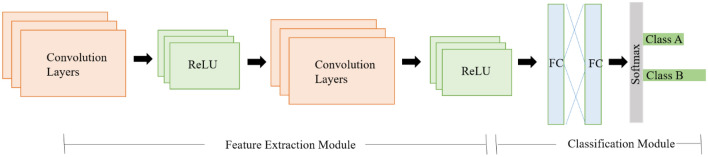
“Secondly, it consists of a module comprising a fully connected (FC) layer to classify an image 33,34 .”
BackgroundiCaps-Dfake: An Integrated Capsule-Based Model for Deepfake Image and Video Detection
Khalil, S. S., Youssef, S. M., & Saleh, S. N. (2021) · Future Internet · doi:10.3390/fi13040093 · Cited by 67
DeepFake Detection Using Error Level Analysis and Deep Learning
Rafique, R., Nawaz, M., Kibriya, H., & Masood, M. (2021) · 2021 4th International Conference on Computing & Information Sciences (ICCIS) · doi:10.1109/iccis54243.2021.9676375 · Cited by 62
Self-citationA video is worth more than 1000 lies. Comparing 3DCNN approaches for detecting deepfakes
Wang, Y., & Dantcheva, A. (2020) · 2020 15th IEEE International Conference on Automatic Face and Gesture Recognition (FG 2020) · doi:10.1109/fg47880.2020.00089 · Cited by 59
A Hybrid Multitask Learning Framework with a Fire Hawk Optimizer for Arabic Fake News Detection
Elaziz, M. A., Dahou, A., Orabi, D. A., AlShathri, S. I., Soliman, E. M., & Ewees, A. A. (2023) · Mathematics · doi:10.3390/math11020258 · Cited by 52
Multiclass Brain Tumor Classification Using Convolutional Neural Network and Support Vector Machine
Kibriya, H., Masood, M., Nawaz, M., Rafique, R., & Rehman, S. (2021) · 2021 Mohammad Ali Jinnah University International Conference on Computing (MAJICC) · doi:10.1109/majicc53071.2021.9526262 · Cited by 50
Self-citationForged Face Detection using ELA and Deep Learning Techniques
Ain, Q., Nida, N., Irtaza, A., & Ilyas, N. (2021) · International Bhurban Conference on Applied Sciences and Technology (IBCAST) · doi:10.1109/ibcast51254.2021.9393234 · Cited by 45
ECG biometric recognition using SVM‐based approach
Rezgui, D., & Lachiri, Z. (2016) · IEEJ Transactions on Electrical and Electronic Engineering · doi:10.1002/tee.22241 · Cited by 40 · cited 1×
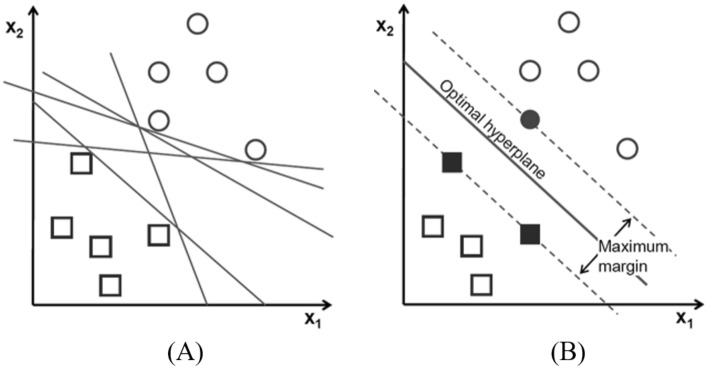
“The wider the margin better is the classification performance of the classifier 30,47 .”
BackgroundMittal, H., Saraswat, M., Bansal, J. C., & Nagar, A. K. (2020) · IEEE Symposium Series on Computational Intelligence (SSCI) · doi:10.1109/ssci47803.2020.9308337 · Cited by 37
Celebrity Face Recognition using Deep Learning
(2018) · doi:10.11591/ijeecs.v12.i2.pp476-481 · Cited by 29
A machine learning approach for non-invasive fall detection using Kinect
Mansoor, M., Amin, R., Mustafa, Z., Sengan, S., Aldabbas, H., & Alharbi, M. (2022) · Multimedia Tools and Applications · doi:10.1007/s11042-022-12113-w · Cited by 27
Self-citationDeepfake Detection using Capsule Networks and Long Short-Term Memory Networks
Mehra, A., Spreeuwers, L., & Strisciuglio, N. (2021) · International Joint Conference on Computer Vision, Imaging and Computer Graphics Theory and Applications (VISIGRAPP) · doi:10.5220/0010289004070414 · Cited by 26
Automatic Facial Forgery Detection Using Deep Neural Networks
Chandani, K., & Arora, M. (2021) · Lecture notes in mechanical engineering · doi:10.1007/978-981-15-9956-9_21 · Cited by 12
Research works printed but not linked: 6
- Boylan JF Will Deep-Fake Technology Destroy Democracy 2018 The New York Times
- Harwell D Scarlett Johansson on fake AI-generated sex videos:‘Nothing can stop someone from cutting and pasting my image’ J. Washigton Post 2018 31 12
- Schroepfer MJF Creating a data set and a challenge for deepfakes Artif. Intell. 2019 5 263
- Agarwal, S., Farid, H., Gu, Y., He, M., Nagano, K. & Li, H. Protecting world leaders against deep fakes. in CVPR Workshops. Vol. 1. 38 (2019).
- Salman FM Abu-Naser SS Classification of real and fake human faces using deep learning IJAER 2022 6 3 1 14
- He, K., Zhang, X., Ren, S. & Sun, J. Deep residual learning for image recognition. in Proceedings of the IEEE Conference on Computer Vision and Pattern Recognition, Las Vegas, USA. 770–778 (2016). · DOI · Paper page
Cited by
Deepfake detection using convolutional vision transformers and convolutional neural networks
Soudy, A. H., Sayed, O., Tag-Elser, H., Ragab, R., Mohsen, S., Mostafa, T., Abohany, A. A., & Slim, S. O. (2024) · Neural Computing and Applications · doi:10.1007/s00521-024-10181-7 · Cited by 129
Time series forecasting and anomaly detection using deep learning
Iqbal, A., & Amin, R. (2023) · Computers & Chemical Engineering · doi:10.1016/j.compchemeng.2023.108560 · Cited by 100
Self-citationMulticlass AI-Generated Deepfake Face Detection Using Patch-Wise Deep Learning Model
Arshed, M. A., Mumtaz, S., Ibrahim, M., Dewi, C., Tanveer, M., & Ahmad, S. (2024) · Computers · doi:10.3390/computers13010031 · Cited by 100
Enhanced deepfake detection with densenet and cross-vit
Siddiqui, F., Yang, J., Xiao, S., & Fahad, M. (2025) · Expert Systems with Applications · doi:10.1016/j.eswa.2024.126150 · Cited by 62
A Review of Deepfake Techniques: Architecture, Detection and Datasets
Edwards, P., Nebel, J.-C., Greenhill, D., & Liang, X. (2024) · IEEE Access · doi:10.1109/access.2024.3477257 · Cited by 50
“Restrictions apply. predictions but also to observe if under-or over-fitting is occurring based on the training data used [51].”
BackgroundMethod
Metadata
- Authors
- Rafique, R., Gantassi, R., Amin, R., Frnda, J., Mustapha, A., & Alshehri, A. H.
- Affiliations
- University of Engineering and Technology Taxila (PK)
- Chonnam National University (KR)
- VSB - Technical University of Ostrava (CZ)
- Tun Hussein Onn University of Malaysia (MY)
- Shaqra University (SA)
- Corresponding author
- Amin, Rashid
- Venue
- Scientific Reports
- Published
- 2023-05-08
- Volume
- 13
- Issue
- 1
- Pages
- 7422-7422
- ISSN
- 2045-2322 (ISSN-L)
- PMC
- PMC10167215
- OpenAlex
- W4375955734
- Cited by
- 155
- References
- 42
- Citations by year
- 2026: 31 · 2025: 68 · 2024: 49 · 2023: 7
- FWCI
- 14.04
- Type
- journal article
- Language
- en
- Open access
- gold
- doi.org
- Licence
- cc-by
- creativecommons.org/licenses/by/4.0 (tdm)
- creativecommons.org/licenses/by/4.0 (vor)
- Locations
- Scientific Reports (publishedVersion, cc-by)
- PubMed Central (publishedVersion, cc-by)
- PubMed (publishedVersion)
- DOAJ (DOAJ: Directory of Open Access Journals) (submittedVersion, cc-by-sa)
- DSpace VŠB-TUO (VŠB-TUO) (submittedVersion, cc-by)
- Greater South Information System
- Funders
- Ministerstvo Školství, Mládeže a Tělovýchovy
- Ostravská Univerzita v Ostravě
- Topics
- Physical Sciences › Computer Science › Computer Vision and Pattern Recognition › Digital Media Forensic Detection
- Social Sciences › Sociology and Political Science › Misinformation and Its Impacts
- Physical Sciences › Computer Science › Computer Vision and Pattern Recognition › Advanced Steganography and Watermarking Techniques
- Keywords
- deepfake detection, error level analysis, image modification detection, convolutional neural networks, ResNet, support vector machine, k-nearest neighbors, disinformation, social media hoaxes, hyperparameter optimization
About these checks
Registry, retraction, Cites and statistics results are computed, not judged, with one exception: a printed reference that no index lists is read once by a model before it counts as a citation error. Claims are extracted by a model and kept only when their quote appears verbatim in the text; each cited source is then checked, with a model’s help, for whether it says what the claim relies on. Those verdicts can be wrong — read the claim’s quote and the cited source before relying on one.
The claim verdicts this report counts are experimental: their accuracy is not yet measured.
A language model drew the claims from the paper on 2026-10-10, under version 3 of the claim definition (model deepseek-v4.1-flash, prompt extract-v3).
A second model labelled each claim on 2026-10-10 (model jev-1.13-20260917, definition revision gold-guideline-v0.2).
Cited sources are checked with a language model’s help (qwen3.8-omni-flash).
Statistics and arithmetic are recomputed, not judged.
Confidence bands are shown only for fields calibrated on our annotated test set. None is calibrated yet, so no band is shown.
What counts as a claim ›How we measure confidence ›How we check this ›
Are you an author, or do you see a problem with this page? Request a review
Data sources
Bibliographic data: Semantic Scholar, OpenAlex, Crossref.
Contains information from the Semantic Scholar Academic Graph Datasets, made available under the ODC Attribution License (ODC-BY 1.0).
Semantic Scholar’s data is described in: Kinney, R., et al. (2023). The Semantic Scholar Open Data Platform. arXiv:2301.10140.
