

A pilot study on the efficacy of GPT-4 in providing orthopedic treatment recommendations from MRI reports
Open accessThe DOI matches its Crossref record; 29 of the 30 references it cites were found in a registry or an index.
Abstract
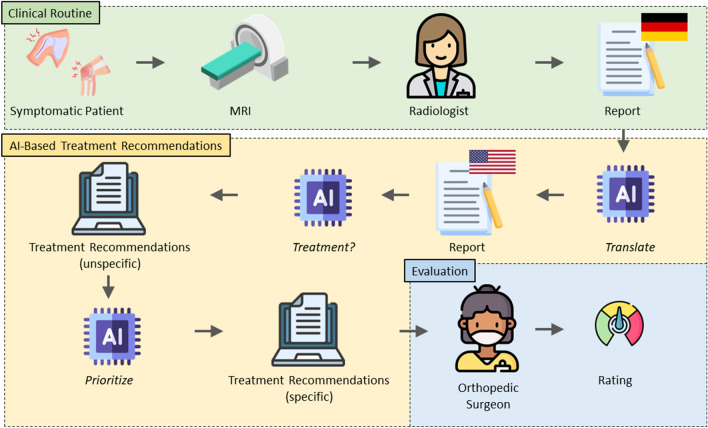
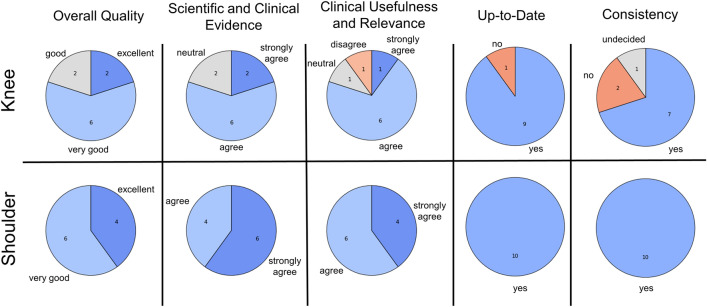
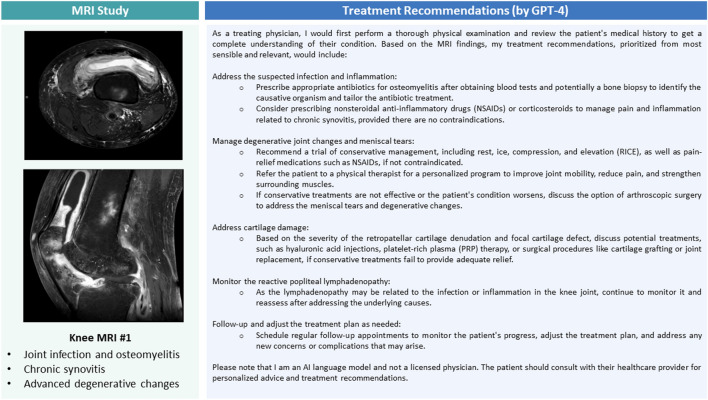
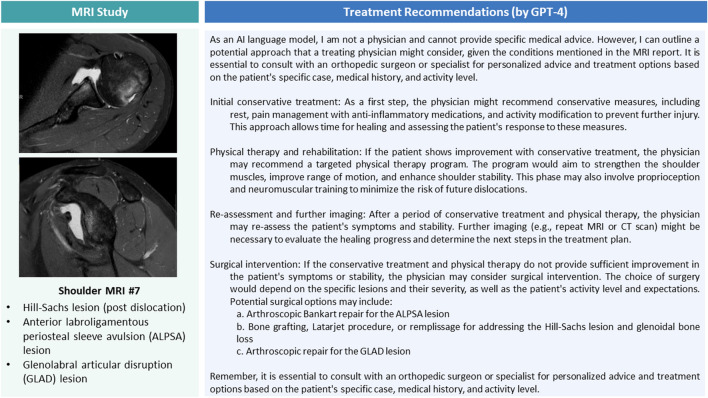
Large language models (LLMs) have shown potential in various applications, including clinical practice. However, their accuracy and utility in providing treatment recommendations for orthopedic conditions remain to be investigated. Thus, this pilot study aims to evaluate the validity of treatment recommendations generated by GPT-4 for common knee and shoulder orthopedic conditions using anonymized clinical MRI reports. A retrospective analysis was conducted using 20 anonymized clinical MRI reports, with varying severity and complexity. Treatment recommendations were elicited from GPT-4 and evaluated by two board-certified specialty-trained senior orthopedic surgeons. Their evaluation focused on semiquantitative gradings of accuracy and clinical utility and potential limitations of the LLM-generated recommendations. GPT-4 provided treatment recommendations for 20 patients (mean age, 50 years ± 19 [standard deviation]; 12 men) with acute and chronic knee and shoulder conditions. The LLM produced largely accurate and clinically useful recommendations. However, limited awareness of a patient’s overall situation, a tendency to incorrectly appreciate treatment urgency, and largely schematic and unspecific treatment recommendations were observed and may reduce its clinical usefulness. In conclusion, LLM-based treatment recommendations are largely adequate and not prone to ‘hallucinations’, yet inadequate in particular situations. Critical guidance by healthcare professionals is obligatory, and independent use by patients is discouraged, given the dependency on precise data input.
Overview
The claims and statistics of this paper haven’t been checked yet.
Free: it reads the open-access text and checks the first 5 claims that cite a source we can check. Create a free account to check every claim.
Integrity signals
Registry
Cites
Statistics
Figures
Verification
Claims the paper makes
The claims and statistics of this paper haven’t been checked yet.
Free: it reads the open-access text and checks the first 5 claims that cite a source we can check. Create a free account to check every claim.
Claims other papers make about this one
Each is checked against this paper’s own text: does it say what the citing paper says it does?
The source backs part of the claim, not all of it — or backs it for a different population, condition or comparison.
In the citing paper
“LLMs have not yet shown to perform similarly in management reasoning, which encompasses decision making around treatment, testing, patient preferences, social determinants of health, and cost-conscious care, all while managing risk.6–8”
From Large Language Model Influence on Management Reasoning: A Randomized Controlled Trial (2024) · cites this paper as [7]
Experimental — accuracy not yet measured
Self-check
Percentages, sums and reported differences re-computed from the paper’s own numbers.
The self-check needs the paper’s full text.
Citations
Cites
Kung, T. H., Cheatham, M., Medenilla, A., Sillos, C., De Leon, L., Elepaño, C., Madriaga, M., Aggabao, R., Diaz-Candido, G., Maningo, J., et al. (2023) · PLOS Digital Health · doi:10.1371/journal.pdig.0000198 · Cited by 4,115
Kung, T. H., Cheatham, M., ChatGPT, Medenilla, A., Sillos, C., De Leon, L., Elepaño, C., Madriaga, M., Aggabao, R., Diaz-Candido, G., et al. (2022) · doi:10.1101/2022.12.19.22283643 · Cited by 4,115
Ayers, J. W., Poliak, A., Dredze, M., Leas, E. C., Zhu, Z., Kelley, J. B., Faix, D. J., Goodman, A. M., Longhurst, C. A., Hogarth, M., et al. (2023) · JAMA Internal Medicine · doi:10.1001/jamainternmed.2023.1838 · Cited by 2,613 · cited 1×
“In particular, patients may rely on information provided by artificial intelligence without consulting healthcare professionals 17,18 .”
Benefits, Limits, and Risks of GPT-4 as an AI Chatbot for Medicine
Lee, P., Bubeck, S., & Petro, J. (2023) · New England Journal of Medicine · doi:10.1056/nejmsr2214184 · Cited by 1,738 · cited 3×
“Whether this recommendation can be regarded as "planning" is questionable, though, as true planning abilities in the non-medical domain are still limited 4,16 .”
BackgroundResultSparks of Artificial General Intelligence: Early experiments with GPT-4
Bubeck, S., Chandrasekaran, V., Eldan, R., Gehrke, J., Horvitz, E., Kamar, E., Lee, P., Lee, Y. T., Li, Y., Lundberg, S., et al. (2023) · arXiv · doi:10.48550/arxiv.2303.12712 · Cited by 1,526 · cited 1×
“Whether this recommendation can be regarded as "planning" is questionable, though, as true planning abilities in the non-medical domain are still limited 4,16 .”
BackgroundCapabilities of GPT-4 on Medical Challenge Problems
Nori, H., King, N., McKinney, S. M., Carignan, D., & Horvitz, E. (2023) · arXiv · doi:10.48550/arxiv.2303.13375 · Cited by 509
Diagnosis, treatment and prevention of ankle sprains: update of an evidence-based clinical guideline
Vuurberg, G., Hoorntje, A., Wink, L. M., van der Doelen, B. F. W., van den Bekerom, M. P., Dekker, R., van Dijk, C. N., Krips, R., Loogman, M. C. M., Ridderikhof, M. L., et al. (2018) · British Journal of Sports Medicine · doi:10.1136/bjsports-2017-098106 · Cited by 506 · cited 1×
“Consequently, the present study aims to investigate the validity of treatment recommendations provided by GPT-4, explicitly focusing on common orthopedic conditions, where accurate diagnosis and appropriate treatment are crucial for patients’ recovery and long-term well-being 19–21 .”
Sarraju, A., Bruemmer, D., Van Iterson, E., Cho, L., Rodriguez, F., & Laffin, L. (2023) · JAMA · doi:10.1001/jama.2023.1044 · Cited by 452
Patient apprehensions about the use of artificial intelligence in healthcare
Richardson, J. P., Smith, C., Curtis, S., Watson, S., Zhu, X., Barry, B., & Sharp, R. R. (2021) · npj Digital Medicine · doi:10.1038/s41746-021-00509-1 · Cited by 424 · cited 1×
“In particular, patients may rely on information provided by artificial intelligence without consulting healthcare professionals 17,18 .”
Rao, A., Pang, M., Kim, J., Kamineni, M., Lie, W., Prasad, A. K., Landman, A., Dreyer, K., & Succi, M. D. (2023) · Journal of Medical Internet Research · doi:10.2196/48659 · Cited by 412
Cited by
Tam, T. Y. C., Sivarajkumar, S., Kapoor, S., Stolyar, A. V., Polanska, K., McCarthy, K. R., Osterhoudt, H., Wu, X., Visweswaran, S., Fu, S., et al. (2024) · npj Digital Medicine · doi:10.1038/s41746-024-01258-7 · Cited by 424
Current applications and challenges in large language models for patient care: a systematic review
Busch, F., Hoffmann, L., Rueger, C., van Dijk, E. H., Kader, R., Ortiz-Prado, E., Makowski, M. R., Saba, L., Hadamitzky, M., Kather, J. N., et al. (2025) · Communications Medicine · doi:10.1038/s43856-024-00717-2 · Cited by 358
“28,34,44,46,70,74,76,79,94,102 , speci fi city ( n = 13/89, 14.6”
InfluentialSelf-citationSystematic Review of Large Language Models for Patient Care: Current Applications and Challenges
(2024) · doi:10.1101/2024.03.04.24303733 · Cited by 356
Moulaei, K., Yadegari, A., Baharestani, M., Farzanbakhsh, S., Sabet, B., & Reza Afrash, M. (2024) · International Journal of Medical Informatics · doi:10.1016/j.ijmedinf.2024.105474 · Cited by 244
A guide to artificial intelligence for cancer researchers
Perez-Lopez, R., Ghaffari Laleh, N., Mahmood, F., & Kather, J. N. (2024) · Nature Reviews Cancer · doi:10.1038/s41568-024-00694-7 · Cited by 211
“LLMs also have medical knowledge 109 , and can use this, for example, to give medical recommendations based on imaging reports 110 .”
Self-citationGoh, E., Gallo, R. J., Strong, E., Weng, Y., Kerman, H., Freed, J. A., Cool, J. A., Kanjee, Z., Lane, K. P., Parsons, A. S., et al. (2025) · Nature Medicine · doi:10.1038/s41591-024-03456-y · Cited by 167
ChatGPT in radiology: A systematic review of performance, pitfalls, and future perspectives
Keshavarz, P., Bagherieh, S., Nabipoorashrafi, S. A., Chalian, H., Rahsepar, A. A., Kim, G. H. J., Hassani, C., Raman, S. S., & Bedayat, A. (2024) · Diagnostic and Interventional Imaging · doi:10.1016/j.diii.2024.04.003 · Cited by 132
Comparative Evaluation of LLMs in Clinical Oncology
Rydzewski, N. R., Dinakaran, D., Zhao, S. G., Ruppin, E., Turkbey, B., Citrin, D. E., & Patel, K. R. (2024) · NEJM AI · doi:10.1056/aioa2300151 · Cited by 106
Augmented non-hallucinating large language models as medical information curators
Gilbert, S., Kather, J. N., & Hogan, A. (2024) · npj Digital Medicine · doi:10.1038/s41746-024-01081-0 · Cited by 111
“Theyalsodemonstratearemarkableabilitytostructure and categorize information 13 , including in medicine 18 – 20 .”
BackgroundSelf-citationApplication of large language models in disease diagnosis and treatment
Yang, X., Li, T., Su, Q., Liu, Y., Kang, C., Lyu, Y., Zhao, L., Nie, Y., & Pan, Y. (2024) · Chinese Medical Journal · doi:10.1097/cm9.0000000000003456 · Cited by 100
Woo, J. J., Yang, A. J., Olsen, R. J., Hasan, S. S., Nawabi, D. H., Nwachukwu, B. U., Williams, R. J., & Ramkumar, P. N. (2025) · Arthroscopy: The Journal of Arthroscopic & Related Surgery · doi:10.1016/j.arthro.2024.10.042 · Cited by 57
Examining the Role of Large Language Models in Orthopedics: Systematic Review
Zhang, C., Liu, S., Zhou, X., Zhou, S., Tian, Y., Wang, S., Xu, N., & Li, W. (2024) · Journal of Medical Internet Research · doi:10.2196/59607 · Cited by 74
“…researchers have tested the performance of LLMs using specific clinical questions or guidelines [21,26,28,50], while others have directly inputted clinical case data into the model, allowing it to summarize and provide corresponding diagnostic or treatment decisions autonomously [18,24,45,57,64].”
Liu, X., Wu, J., Shao, A., Shen, W., Ye, P., Wang, Y., Ye, J., Jin, K., & Yang, J. (2024) · Journal of Medical Internet Research · doi:10.2196/51926 · Cited by 52
“While numerous studies have demonstrated promising outcomes in complex medical tasks, including the United States Medical Licensing Exam (USMLE) [17,43], simplifying imaging reports for patients [27] and aiding decision-making [44,45], it is crucial to note that ChatGPT exhibits certain limitations.”
Pagano, S., Strumolo, L., Michalk, K., Schiegl, J. S., Quintana, L. P., Reinhard, J., Maderbacher, G., Renkawitz, T. F., & Schuster, M. (2025) · Computational and Structural Biotechnology Journal · doi:10.1016/j.csbj.2024.12.013 · Cited by 47
“This raises critical concerns regarding their trustworthiness and reliability, especially in sensitive domains like healthcare [9].”
Bioinformatics and biomedical informatics with ChatGPT: Year one review
Wang, J., Cheng, Z., Yao, Q., Liu, L., Xu, D. H., & Hu, G. (2024) · Quantitative Biology · doi:10.1002/qub2.67 · Cited by 42
“Released in late September 2023, GPT ‐ 4V (ision) has been the subject of numerous studies that explored its application in image ‐ related tasks across various biomedical topics [74–80].”
Automating expert-level medical reasoning evaluation of large language models
Zhou, S., Xie, W., Li, J., Zhan, Z., Song, M., Yang, H., Espinoza, C., Welton, L., Mai, X., Jin, Y., et al. (2025) · npj Digital Medicine · doi:10.1038/s41746-025-02208-7 · Cited by 30
“Large language models (LLMs) have made remarkable progress in clinical decision-making, demonstrating the ability to perform complex reasoning tasks such as disease diagnosis 1,2 , treatment planning 3 , and patient management 4,5 .”
Noda, M., Yoshimura, H., Okubo, T., Koshu, R., Uchiyama, Y., Nomura, A., Itō, M., & Takumi, Y. (2024) · JMIR AI · doi:10.2196/58342 · Cited by 35
“In the field of orthopedics, trials are underway to determine treatment methods based on MRI reports [27], showcasing the effectiveness of GPT-4V as an aid in image interpretation.”
Leypold, T., Schäfer, B., Boos, A. M., & Beier, J. P. (2024) · The Journal Of Hand Surgery · doi:10.1016/j.jhsa.2024.06.002 · Cited by 30
Ammo, T., Guillaume, V. G. J., Hofmann, U. K., Ulmer, N. M., Buenting, N., Laenger, F., Beier, J. P., & Leypold, T. (2025) · Frontiers in Oncology · doi:10.3389/fonc.2024.1526288 · Cited by 27
Labinsky, H., Nagler, L.-K., Krusche, M., Griewing, S., Aries, P. M., Kroiß, A., Strunz, P., Kühn, S., Schmalzing, M., Gernert, M., et al. (2024) · Rheumatology International · doi:10.1007/s00296-024-05675-5 · Cited by 28
Sağlam, S., Uludağ, V., Karaduman, Z. O., Arıcan, M., Yücel, M. O., & Dalaslan, R. E. (2025) · BMC Medical Informatics and Decision Making · doi:10.1186/s12911-025-02996-8 · Cited by 31
“Furthermore, Truhn et al. (2023) assessed GPT-4’s capability to generate orthopedic treatment recommendations based on MRI reports, demonstrating its potential role in radiol-ogy-based decision support systems [15].”
The Accuracy of ChatGPT-4o in Interpreting Chest and Abdominal X-Ray Images
Lacaita, P. G., Galijašević, M., Swoboda, M., Gruber, L. N., Scharll, Y., Barbieri, F., Widmann, G., & Feuchtner, G. M. (2025) · Journal of Personalized Medicine · doi:10.3390/jpm15050194 · Cited by 28
Rust, P., Frings, J., Meister, S., & Fehring, L. (2025) · Communications Medicine · doi:10.1038/s43856-025-00927-2 · Cited by 30
“A prior study demonstrated that, although LLMs can generate relevant and accurate treatment advice and lifestyle recommendations based on MRI reports, they still lack personalization 43 .”
Prucker, P., Bressem, K. K., Peeken, J. C., Jukic, M., Marka, A. W., Strenzke, M., Kim, S. H., Mertens, C. J., Weller, D., Lemke, T., et al. (2025) · Radiology · doi:10.1148/radiol.251844 · Cited by 25
Self-citationIntegrating AI in Lipedema Management: Assessing the Efficacy of GPT-4 as a Consultation Assistant
Leypold, T., Lingens, L. F., Beier, J. P., & Boos, A. M. (2024) · Life · doi:10.3390/life14050646 · Cited by 23
“Despite the impressive performances showcased in these studies, there is a consensus among many researchers that AI is not yet fully equipped for clinical deployment [32–34].”
BackgroundNovel Blended Learning on Artificial Intelligence for Medical Students: Qualitative Interview Study
Oftring, Z. S., Deutsch, K., Tolks, D., Jungmann, F., & Kühn, S. (2025) · JMIR Medical Education · doi:10.2196/65220 · Cited by 22
“Beyond radiology, there are numerous publications on the clinical application of AI [8-16] and large language models such as ChatGPT [17-19].”
Assessment of Artificial Intelligence Chatbot Responses to Common Patient Questions on Bone Sarcoma
Khabaz, K., Newman‐Hung, N. J., Kallini, J. R., Kendal, J. K., Christ, A. B., Bernthal, N. M., & Wessel, L. E. (2024) · Journal of Surgical Oncology · doi:10.1002/jso.27966 · Cited by 23
Zhang, D., Ma, Z., Gong, R., Lian, L., Li, Y., He, Z., Han, Y., Hui, J., Huang, J., Jiang, J., et al. (2024) · Journal of Medical Internet Research · doi:10.2196/58741 · Cited by 21
“…from radiology reports, such as identifying metastatic diseases and generating correct labels for tumor progression [23,24]; it can integrate radiology reports and medical history to make diagnoses [27]; and it can even provide some treatment suggestions based on the radiology reports [26].”
Lanzafame, L. R. M., Gulli, C., Mazziotti, S., Ascenti, G., Gaeta, M., Vogl, T. J., Yel, İ., Koch, V., Gruenewald, L. D., Muscogiuri, G., et al. (2025) · Diagnostics · doi:10.3390/diagnostics15131635 · Cited by 16
“Similarly, Truhn et al. [45] explored GPT-4’s performance in recommending orthopedic treatments based on MRI findings.”
Kottlors, J., Iuga, A.-I., Blüthgen, C., Bressem, K. K., Kather, J. N., Moy, L. P., Wald, C., Wang, W., Liu, T., Ranschaert, E. R., et al. (2026) · Radiology · doi:10.1148/radiol.250913 · Cited by 16
Self-citationPark, H., Huh, J.-Y., Chae, G., & Choi, M. G. (2024) · PLoS ONE · doi:10.1371/journal.pone.0314136 · Cited by 17
Large Language Model Influence on Management Reasoning: A Randomized Controlled Trial
Goh, E., Gallo, R., Strong, E., Weng, Y., Kerman, H., Freed, J., Cool, J. A., Kanjee, Z., Lane, K. P., Parsons, A. S., et al. (2024) · medRxiv · doi:10.1101/2024.08.05.24311485 · Cited by 13
Kalidindi, S., & Baradwaj, J. (2024) · European Journal of Radiology Open · doi:10.1016/j.ejro.2024.100589 · Cited by 14
“In a pilot study [22] GPT-4 generated largely accurate and clinically useful treatment recommendations for common orthopaedic conditions involving the shoulder and the knee. training modules and educational materials tailored to specific learning objectives, thereby enhancing the educational…”
BackgroundHaupt, F., Rödig, T., & Liersch, P. K. (2025) · JMIR Medical Education · doi:10.2196/80576 · Cited by 16
“Numerous studies have investigated LLMs as an assistive tool in medicine and dentistry regarding various domains, including treatment recommendations [34], emergency treatments [40], radiological and clinical diagnostics [41-43], education [24,44-46], and decision-making [47,48].”
InfluentialBenchmarking Vision Capabilities of Large Language Models in Surgical Examination Questions
Bereuter, J., Geissler, M. E., Klimová, A., Steiner, R.-P., Pfeiffer, K., Kolbinger, F. R., Wiest, I. C., Muti, H. S., & Kather, J. N. (2025) · Journal of surgical education · doi:10.1016/j.jsurg.2025.103442 · Cited by 12
Self-citationSchiller, C. A. (2024) · arXiv (Cornell University) · doi:10.48550/arxiv.2403.09743 · Cited by 17
Gernandt, S., Aymon, R., & Scolozzi, P. (2024) · JPRAS Open · doi:10.1016/j.jpra.2024.09.014 · Cited by 11
Busch, F., Kaibel, L., Nguyen, H., Lemke, T., Ziegelmayer, S., Graf, M., Marka, A. W., Endrös, L., Prucker, P., Spitzl, D., et al. (2025) · Journal of Imaging Informatics in Medicine · doi:10.1007/s10278-025-01483-w · Cited by 10
“…disagree, neutral, agree, strongly agree), clinically usefulness and relevance (strongly disa-gree, disagree, neutral, agree, strongly agree), consistency (yes, undecided, or no), and up-to-dateness (yes, undecided, or no) of responses, as established in a previous study by Truhn et al. [13].”
Self-citationSiepmann, R. M., Schneider, C. V., von der Stück, M. S., Amygdalos, I., Große, K., Schneider, K. M., Pollmanns, M. R., Murad, M., Joy, J., Kabak, E., et al. (2025) · Liver International · doi:10.1111/liv.70324 · Cited by 10
“Few studies have already evaluated the particular use case of providing LLM-based treatment recommendations in accordance with specific guidelines, for example, in orthopedics [25], urology [26] and psychiatry [27].”
Self-citationMondal, A., Naskar, A., Choudhury, B. R., Chakraborty, S., Biswas, T., Sinha, S., & Roy, S. (2025) · Cureus · doi:10.7759/cureus.80737 · Cited by 10
“Findings showed generally accurate advice but noted limitations in context awareness and specificity, emphasizing the need for professional oversight [5].”
Togunwa, T. O., Ajibade, A., Uche-Orji, C. I., & Olatunji, R. (2024) · The Arab Journal of Interventional Radiology · doi:10.1055/s-0044-1782663 · Cited by 8
Hadjiathanasiou, A., Goelz, L., Muhn, F., Heinz, R., Kreißl, L., Sparenberg, P., Lemcke, J., Schmehl, I., Mutze, S., & Schuss, P. (2025) · Neurosurgical Review · doi:10.1007/s10143-025-03341-3 · Cited by 7
Explainable Surgical Procedures Recommender System Leveraging Large Language Models
Solomon, A., Glebov, M., & Lazebnik, T. (2026) · ACM Transactions on Recommender Systems · doi:10.1145/3767326 · Cited by 8
“We used 100 random samples that aligned with the 11:12 A. Solomon et al. distribution of cases from different surgical procedure categories.”
Kunze, K. N., Gerhold, C., Dave, U., Abunnur, N., Mamonov, A., Nwachukwu, B. U., Verma, N. N., & Chahla, J. A. (2025) · Arthroscopy The Journal of Arthroscopic and Related Surgery · doi:10.1016/j.arthro.2025.03.066 · Cited by 6
Sing, D. C., Shah, K. S., Pompliano, M. J., Yi, P. H., Velluto, C., Bagheri, A., Eastlack, R. K., Stephan, S. R., & Mundis, G. M. (2025) · JMIR AI · doi:10.2196/69654 · Cited by 5
“Other assessments of ChatGPT in deciphering MRI reports of knee and shoulder injuries demonstrated similar usefulness and relevant explanations [16].”
Development and Evaluation of a Retrieval-Augmented Generation System for Radiology Guidelines
Komenda, A., Makowski, M., Can, E., Prucker, P., Busch, F., Wachter, A., Weller, D., Kim, S. H., Ziegelmayer, S., Bressem, K. K., et al. (2026) · Journal of Imaging Informatics in Medicine · doi:10.1007/s10278-025-01835-6 · Cited by 7
Self-citationLeypold, T., Bahm, J., Beier, J. P., Guillaume, V. G. J., Ammo, T., Lauer, H., Kolbenschlag, J., & Schäfer, B. (2025) · World Neurosurgery · doi:10.1016/j.wneu.2025.123753 · Cited by 4
Khazanchi, R., Chen, A. R., Desai, P., Herrera, D. E., Staub, J. R., Follett, M. A., Krushelnytskyy, M. D., Kemeny, H. R., Hsu, W. K., Patel, A. A., et al. (2025) · Skeletal Radiology · doi:10.1007/s00256-025-05027-9 · Cited by 5
“The burden of translating these complex medical findings into patient-friendly language can add significantly to a surgeon’s workload [3, 4].”
Kovalev, R., Gribova, V. V., & Okun, D. B. (2025) · Systems · doi:10.3390/systems13100920 · Cited by 4
“When considering the relationship with emerging large language models (LLMs) in clinical decision support [40,41], our approach offers several distinct advantages crucial for real-world clinical implementation.”
Erdoğan, E. K., & Babaoğlu, H. (2024) · Journal of Clinical Medicine · doi:10.3390/jcm13237405 · Cited by 4
Sales, A. H. A., Gizaw, C. J., Beck, J., & Grauvogel, J. (2025) · Diagnostics · doi:10.3390/diagnostics15222841 · Cited by 3
“This specificity in treatment recommendations was statistically different from Gemini and Bing, and aligns with findings from previous research [6].”
Technology Update in Management of Multi-Ligament Knee Injuries
Sidharthan, S., & Bhattacharya, R. (2024) · Indian Journal of Orthopaedics · doi:10.1007/s43465-024-01281-6 · Cited by 2
“This was explored further in a pilot study, whereby, the validity of GPT-4 generated recommendations for treatment of common knee and shoulder orthopaedic conditions was evaluated using anonymised MRI scan reports [106].”
Can Artificial Intelligence Diagnose Knee Osteoarthritis?
Tandon, M., Chetla, N., Mallepally, A., Zebari, B., Samayamanthula, S., Silva, J., Vaja, S., Chen, J., Cullen, M., & Sukhija, K. (2025) · JMIR Biomedical Engineering · doi:10.2196/67481 · Cited by 2
Generative Language Models for Disease Treatment Recommendations: A Systematic Literature Review
Neto, L. M., da Silva, M. H. L. F., Monteiro, K. H. D. C., Simão, E. P., Neto, S. R. D. S., de Vasconcelos, L. F. S., Pimenta, J. P., Rodrigues, I. R., & Endo, P. T. (2026) · Journal of Healthcare Informatics Research · doi:10.1007/s41666-026-00242-y · Cited by 1
“Representative Studies and Summary LLMs Used Surgical GERD [30 , 32 ], bariatric [ 25 ], orthopedic [ 47 ], and breast cancer [ 12 ], head and neck cancer [ 39 –41].”
InfluentialUsing Large Language Models for Microbiome Findings Reports in Laboratory Diagnostics
Krause, T., Glau, L., Newels, P., Reis, T., Bornschlegl, M. X., Kramer, M., & Hemmje, M. (2024) · BioMedInformatics · doi:10.3390/biomedinformatics4030108 · Cited by 2
“There are however examples of LLM usage for differential diagnostics [21] or treatment recommendations [22,23], which are focused on other domains, providing promising results.”
Knee, C. J., Campbell, R. J., Sivakumar, B. S., & Symes, M. J. (2025) · Cureus · doi:10.7759/cureus.81906 · Cited by 1
“Truhn et al. [20] found that ChatGPT can provide largely accurate and clinically relevant treatment recommendations for common knee and shoulder conditions and is not prone to hallucinations.”
Mahmeed, G., Brin, D., Konen, E., Nadkarni, G. N., & Klang, E. (2024) · medRxiv · doi:10.1101/2024.07.21.24310760 · Cited by 1
Investigating the Accuracy and Consistency of ChatGPT in the Management of Achilles Tendon Ruptures
Knee, C. J., Campbell, R. J., Sivakumar, B. S., Wines, A. P., & Symes, M. J. (2025) · Cureus · doi:10.7759/cureus.78433
“It exhibits medical reasoning consistent with experts, provides clinically relevant information for common knee and shoulder orthopaedic conditions, and has demonstrated utility in medical education, clinical workflow, and patient education [13-16].”
Oudintsov, E. N., Bahlawane, S., Hayta, A., Seker, C., Akgün, D., Back, D. A., & Hazra, R.-O. D. (2025) · Arthroscopy Sports Medicine and Rehabilitation · doi:10.1016/j.asmr.2025.101216
“15,16 The question arises if LLM can help the established shared decision making between a shoulder specialist and the patient.”
Intelligent technology-driven orthopedic rehabilitation: Progress and applications
Tao, X. U. E., Bai, Y., & Zhang, T. (2025) · Scientia Sinica Technologica · doi:10.1360/sst-2025-0075
Emmerson, M. K., Hillier-Smith, R., & Malhas, A. (2025) · Cureus · doi:10.7759/cureus.94699
“In orthopaedics, applications to date have been limited to answering patients’ questions about operations [7,8] or making management decisions from imaging alone [9]; no studies have assessed whether AI can support orthopaedic management decisions that incorporate broader patient context.”
Saliba, T., Omoumi, P., & Boitsios, G. (2025) · iRadiology · doi:10.1002/ird3.70049 · Cited by 1
Navigating the utility of generative artificial intelligence in healthcare delivery
Kulkarni, M., Sheth, M., & Chaudhary, P. (2026) · Elsevier eBooks · doi:10.1016/b978-0-443-45252-9.00015-3
Rathod, V. N., Goudar, R. H., & Hukkeri, G. S. (2026) · Discover Artificial Intelligence · doi:10.1007/s44163-026-01187-2
Gökmen, M. Y., Maden, M., & Zengin, O. (2026) · Diagnostics · doi:10.3390/diagnostics16101439
Schroeder, A. M., Goldenberg, C. B., Khaleel, M. I., Nuelle, J. A. V., Kirby, B. J., & London, D. A. (2026) · Journal of the American Academy of Orthopaedic Surgeons · doi:10.5435/jaaos-d-25-01463
Woo, J. J., Yang, A. J., Saboo, Y. S., Wassef, A. J., Stavrakis, A. I., Bini, S. A., Christ, A. B., & Ramkumar, P. N. (2026) · JBJS Open Access · doi:10.2106/jbjs.oa.26.00076
Fan, H., Ma, Z., Ma, Y., Wang, L., Pang, Z., Cao, Z., & Liu, L. (2026) · Frontiers in Sports and Active Living · doi:10.3389/fspor.2026.1775462
Hunt, D., & Miceli, M. D. (2026) · American Journal of STEM Education · doi:10.32674/tfptev94 · Cited by 1
Li, T., Ma, Z., Wang, B., Fan, N., Wang, A., & Zang, L. (2026) · Journal of Medical Internet Research · doi:10.2196/92931
Super, I., Rezaeian, O., & Asan, O. (2026) · International Journal of Medical Informatics · doi:10.1016/j.ijmedinf.2026.106648
Solim, L. A., Atasoy, D., Yüzkan, S., Koch, V., Bachir, A. A., Yel, İ., & Vogl, T. J. (2026) · iRadiology · doi:10.1002/ird3.70085
“This integrative approach may mirror the reasoning process of radiologists in the future, promising to make it especially useful when the diagnosis is not straightforward [2, 6–8].”
Large Language Model–Driven Automation of Microbiome Diagnostic Reporting in Clinical Laboratories
Alvarez, M., Herrera, S., Cruz, D., & Castro, A. (2026) · Journal of Medical Sciences and Interdisciplinary Research · doi:10.51847/ttj3atzob6
Ammo, T., Englich, M., Adrego, F. D. S., Jacobi, M., Wilckens, A., Kruppa, P., Bonaventura, B., Niemuth, S., Weiler, S. M., Wachenfeld-Teschner, V., et al. (2026) · Scientific Reports · doi:10.1038/s41598-026-74868-8
“In musculoskeletal oncology, Truhn and colleagues showed that GPT-4 could derive plausible orthopaedic treatment recommendations from MRI reports but without any structured-output guarantee or formal hallucination accounting 23 .”
Don’t Blame the Code! AI Paternalism Reconsidered
Svensson, E. (2026) · Philosophy & Technology · doi:10.1007/s13347-026-01213-2
“I focus my discussion on two kinds of AI systems, namely ML-powered LLMs used for treatment recommendations (Jie et al., 2021; Truhn et al., 2023; Wilhelm et al., 2023) and AI/ML-powered clinical decision support systems (CDSS) used for diagnostics (Ardila et al., 2019; Esteva et al., 2017;…”
Routing Patient Messages in Primary Care Using Explainable Ontology-Guided Large Language Models
Younis, M., Levy, M., Cohen, D. A., Moshe, E., & Solomon, A. (2026) · ACM International Conference on Information and Knowledge Management (CIKM) · doi:10.1145/3799682.3840107
Metadata
- Authors
- Truhn, D., Weber, C. D., Braun, B. J., Bressem, K., Kather, J. N., Kuhl, C., & Nebelung, S.
- Affiliations
- Universitätsklinikum Aachen (DE)
- University of Tübingen (DE)
- Humboldt-Universität zu Berlin (DE)
- University Hospital Heidelberg (DE)
- Corresponding author
- Nebelung, Sven
- ORCID
- Venue
- Scientific Reports
- Published
- 2023-11-17
- Volume
- 13
- Issue
- 1
- Pages
- 20159-20159
- ISSN
- 2045-2322 (ISSN-L)
- PMC
- PMC10656559
- OpenAlex
- W4388775426
- Semantic Scholar
- 1612917329fe50f958b3903d477eba5596ac17bb
- Cited by
- 71
- References
- 27
- Citations by year
- 2026: 14 · 2025: 29 · 2024: 27 · 2023: 1
- FWCI
- 2.84
- Type
- journal article
- Language
- en
- Update notices
- correction (2024-03-05)
- Open access
- gold
- doi.org
- Licence
- cc-by
- creativecommons.org/licenses/by/4.0 (tdm)
- creativecommons.org/licenses/by/4.0 (vor)
- Locations
- Scientific Reports (publishedVersion, cc-by)
- PubMed Central (publishedVersion, cc-by)
- PubMed (publishedVersion)
- RWTH Publications (RWTH Aachen) (publishedVersion, other-oa)
- DOAJ (DOAJ: Directory of Open Access Journals) (submittedVersion, cc-by-sa)
- RWTH Publications (RWTH Aachen)
- Funders
- European Union’s Horizon Europe programme (ODELIA, 101057091, COMFORT, 101079894)
- Deutsche Forschungsgemeinschaft (TR 1700/7-1, NE 2136/3-1)
- Bundesministerium für Gesundheit (DEEP LIVER, ZMVI1-2520DAT111)
- Max-Eder-Programme of the German Cancer Aid (#70113864)
- German Federal Ministry of Education and Research (PEARL, 01KD2104C, CAMINO, 01EO2101, SWAG, 01KD2215A, TRANSFORM LIVER, 031L0312A, TANGERINE, 01KT2302 through ERA-NET Transcan)
- Deutscher Akademischer Austauschdienst (SECAI, 57616814)
- German Federal Joint Committee (Transplant.KI, 01VSF21048)
- European Union’s Horizon Europe and innovation programme (ODELIA, 101057091, GENIAL, 101096312)
- National Institute for Health and Care Research (NIHR, NIHR213331)
- RWTH Aachen University
- Topics
- Health Sciences › Medicine › Health Informatics › Artificial Intelligence in Healthcare and Education
- Health Sciences › Health Professions › Health Information Management › Artificial Intelligence in Healthcare
- Physical Sciences › Computer Science › Artificial Intelligence › Machine Learning in Healthcare
- Keywords
- GPT-4, large language models, shoulder disorders, MRI reports, clinical decision support, hallucinations, treatment urgency, clinical implementation of AI
- MeSH terms
- Humans, Language, Magnetic Resonance Imaging, Male, Medicine, Middle Aged, Musculoskeletal Diseases, Pilot Projects, Retrospective Studies
About these checks
Registry, retraction, Cites and statistics results are computed, not judged, with one exception: a printed reference that no index lists is read once by a model before it counts as a citation error. Claims are extracted by a model and kept only when their quote appears verbatim in the text; each cited source is then checked, with a model’s help, for whether it says what the claim relies on. Those verdicts can be wrong — read the claim’s quote and the cited source before relying on one.
Statistics and arithmetic are recomputed, not judged.
Confidence bands are shown only for fields calibrated on our annotated test set. None is calibrated yet, so no band is shown.
What counts as a claim ›How we measure confidence ›How we check this ›
Are you an author, or do you see a problem with this page? Request a review
Data sources
Bibliographic data: Semantic Scholar, OpenAlex, Crossref.
Contains information from the Semantic Scholar Academic Graph Datasets, made available under the ODC Attribution License (ODC-BY 1.0).
Semantic Scholar’s data is described in: Kinney, R., et al. (2023). The Semantic Scholar Open Data Platform. arXiv:2301.10140.
