

Diagnosis of disease affecting gait with a body acceleration-based model using reflected marker data for training and a wearable accelerometer for implementation
Open accessPublished version of a preprint
The DOI matches its Crossref record; 55 of the 55 references it cites were found in a registry or an index.
Abstract
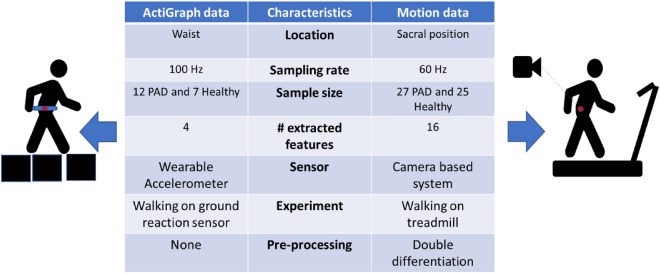
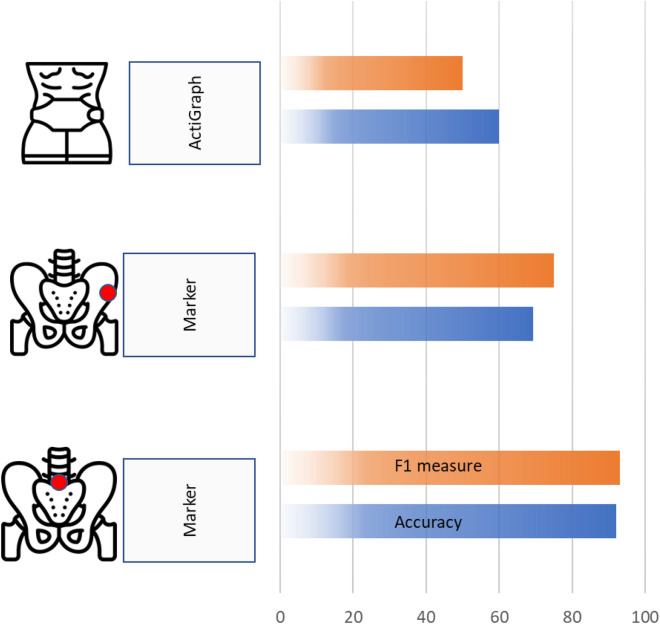
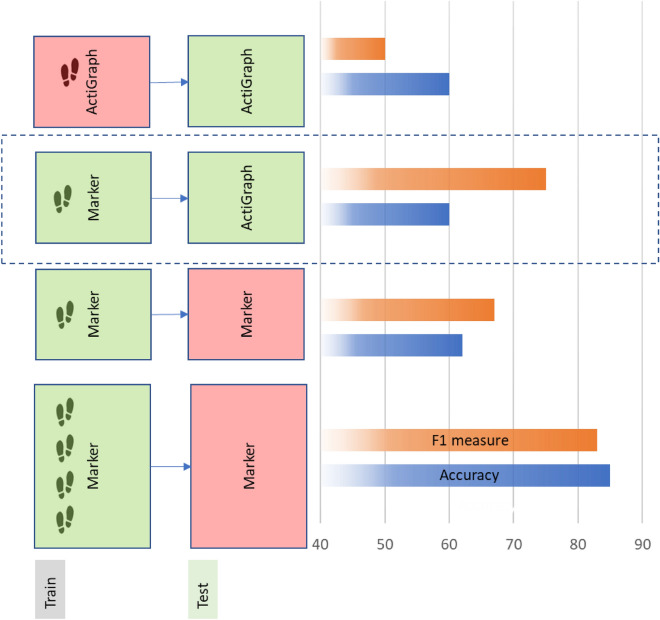
This paper demonstrates the value of a framework for processing data on body acceleration as a uniquely valuable tool for diagnosing diseases that affect gait early. As a case study, we used this model to identify individuals with peripheral artery disease (PAD) and distinguish them from those without PAD. The framework uses acceleration data extracted from anatomical reflective markers placed in different body locations to train the diagnostic models and a wearable accelerometer carried at the waist for validation. Reflective marker data have been used for decades in studies evaluating and monitoring human gait. They are widely available for many body parts but are obtained in specialized laboratories. On the other hand, wearable accelerometers enable diagnostics outside lab conditions. Models trained by raw marker data at the sacrum achieve an accuracy of 92% in distinguishing PAD patients from non-PAD controls. This accuracy drops to 28% when data from a wearable accelerometer at the waist validate the model. This model was enhanced by using features extracted from the acceleration rather than the raw acceleration, with the marker model accuracy only dropping from 86 to 60% when validated by the wearable accelerometer data.
Overview
The claims and statistics of this paper haven’t been checked yet.
Free: it reads the open-access text and checks the first 5 claims that cite a source we can check. Create a free account to check every claim.
Integrity signals
Registry
Cites
Statistics
Figures
Verification
Claims the paper makes
The claims and statistics of this paper haven’t been checked yet.
Free: it reads the open-access text and checks the first 5 claims that cite a source we can check. Create a free account to check every claim.
Claims other papers make about this one
Each is checked against this paper’s own text: does it say what the citing paper says it does?
In the citing paper
“To monitor the body's center of mass stability, most studies place triaxial accelerometers on the waist to measure body acceleration 100,101 .”
From Recent advances in intelligent wearable systems: from multiscale biomechanical features towards human motion intent prediction (2026) · cites this paper as [100]
Self-check
Percentages, sums and reported differences re-computed from the paper’s own numbers.
The self-check needs the paper’s full text.
Citations
Cites
The Elements of Statistical Learning
Hastie, T., Tibshirani, R., & Friedman, J. (2009) · Springer Series in Statistics · doi:10.1007/978-0-387-84858-7 · Cited by 25,970
Fundamentals of Recurrent Neural Network (RNN) and Long Short-Term Memory (LSTM) Network
Sherstinsky, A. (2020) · Physica D: Nonlinear Phenomena · doi:10.1016/j.physd.2019.132306 · Cited by 5,680
Applied Logistic Regression Analysis
Menard, S. (2002) · Sage eBooks · doi:10.4135/9781412983433 · Cited by 2,989
Brochu, E., Cora, V. M., & de Freitas, N. (2010) · arXiv (Cornell University) · doi:10.48550/arxiv.1012.2599 · Cited by 2,011
From Feedforward to Recurrent LSTM Neural Networks for Language Modeling
Sundermeyer, M., Ney, H., & Schluter, R. (2015) · IEEE/ACM Transactions on Audio, Speech, and Language Processing · doi:10.1109/taslp.2015.2400218 · Cited by 507 · cited 1×
“Instead, they can analyze current data by referring to preliminary data in the series 37–39 .”
BackgroundApplied Numerical Methods with MATLAB for Engineers and Scientists
Chapra, S. C. (2004) · Cited by 440
Lu, D., Popuri, K., Ding, G. W., Balachandar, R., Beg, M. F., Initiative, A. D. N., Weiner, M., Aisen, P., Petersen, R., Jack, C., et al. (2018) · Scientific Reports · doi:10.1038/s41598-018-22871-z · Cited by 376 · cited 1×
“This allowed us to use traditional (non-recurrent) machine learning algorithms such as logistic regression (Logit) 43,44 , random forest (RF) 45 , support vector machines (SVM) 46 , and deep neural networks (DNN) 47,48 to classify individuals with PAD from healthy subjects.”
MethodDel Din, S., Godfrey, A., Galna, B., Lord, S., & Rochester, L. (2016) · Journal of NeuroEngineering and Rehabilitation · doi:10.1186/s12984-016-0154-5 · Cited by 349 · cited 2×
“The marker position data required the following steps to derive acceleration from the sacral marker trajectories 27,29–33 : 1.”
BackgroundMethodKullo, I. J., & Rooke, T. W. (2016) · New England Journal of Medicine · doi:10.1056/nejmcp1507631 · Cited by 333
A review of machine learning techniques using decision tree and support vector machine
Somvanshi, M., Chavan, P., Tambade, S., & Shinde, S. V. (2016) · 2016 International Conference on Computing Communication Control and automation (ICCUBEA) · doi:10.1109/iccubea.2016.7860040 · Cited by 310 · cited 6×
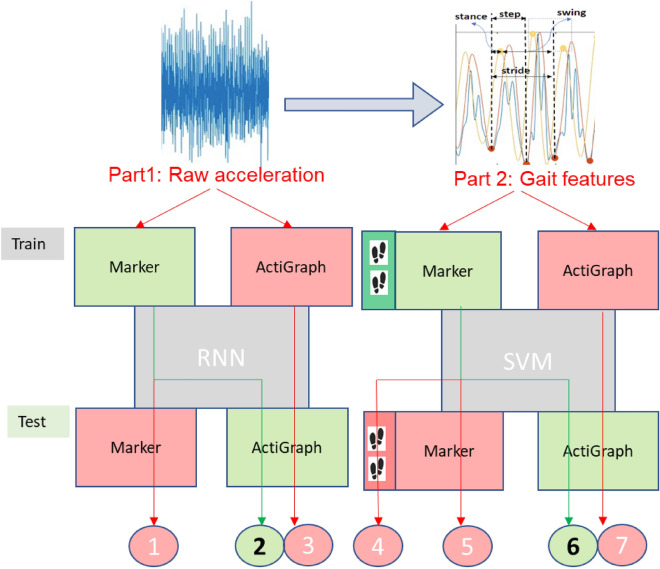
“2, we also explored training recurrent neural network models (RNN) using the raw acceleration data versus standard machine learning models such as support vector machine (SVM) trained by their extracted features.”
MethodInfluentialRFRSF: Employee Turnover Prediction Based on Random Forests and Survival Analysis
Jin, Z., Shang, J., Zhu, Q., Ling, C., Xie, W., & Qiang, B. (2020) · Lecture Notes in Computer Science · doi:10.1007/978-3-030-62008-0_35 · Cited by 274 · cited 1×
“This allowed us to use traditional (non-recurrent) machine learning algorithms such as logistic regression (Logit) 43,44 , random forest (RF) 45 , support vector machines (SVM) 46 , and deep neural networks (DNN) 47,48 to classify individuals with PAD from healthy subjects.”
MethodMcCamley, J., Donati, M., Grimpampi, E., & Mazzà, C. (2012) · Gait & Posture · doi:10.1016/j.gaitpost.2012.02.019 · Cited by 241 · cited 1×
“The marker position data required the following steps to derive acceleration from the sacral marker trajectories 27,29–33 : 1.”
MethodAn improved hyperparameter optimization framework for AutoML systems using evolutionary algorithms
Vincent, A. M., & Jidesh, P. (2023) · Scientific Reports · doi:10.1038/s41598-023-32027-3 · Cited by 218 · cited 1×
“The machine learning models were tuned using a Bayesian algorithm and fivefold Cross-validation 51–53 .”
MethodPrevalence and Risk Factors of PAD among Patients with Elevated ABI
Suominen, V., Rantanen, T., Venermo, M. A., Saarinen, J., & Salenius, J. (2008) · European Journal of Vascular and Endovascular Surgery · doi:10.1016/j.ejvs.2008.01.013 · Cited by 174 · cited 1×
“The current standard of care for older individuals makes distinguishing between PAD symptoms and typical aging difficult, leading to many individuals not being diagnosed until PAD has progressed to advanced, limb-threatening stages 3 .”
BackgroundDiagnosis of Parkinson's disease based on SHAP value feature selection
Liu, Y., Liu, Z., Luo, X., & Zhao, H. (2022) · Biocybernetics and Biomedical Engineering · doi:10.1016/j.bbe.2022.06.007 · Cited by 172
Quantification of acceleration as activity counts in ActiGraph wearable
Neishabouri, A., Nguyen, J., Samuelsson, J., Guthrie, T., Biggs, M., Wyatt, J., Cross, D., Karas, M., Migueles, J. H., Khan, S., et al. (2022) · Scientific Reports · doi:10.1038/s41598-022-16003-x · Cited by 166
Machine learning explainability in nasopharyngeal cancer survival using LIME and SHAP
Alabi, R. O., Elmusrati, M., Leivo, I., Almangush, A., & Mäkitie, A. A. (2023) · Scientific Reports · doi:10.1038/s41598-023-35795-0 · Cited by 160 · cited 1×
“The SHAP value has been presented as a way to quantify feature importance since the value it assigns to each feature reflects its role in model prediction 55,56 .”
MethodFlores, A. M., Demsas, F., Leeper, N. J., & Ross, E. (2021) · Circulation Research · doi:10.1161/circresaha.121.318224 · Cited by 151 · cited 1×
“These algorithms are easier to train and implement than LSTM and have previously been employed in various classification tasks for other medical conditions 49,50 .”
MethodRoss, E. G., Shah, N. H., Dalman, R. L., Nead, K. T., Cooke, J. P., & Leeper, N. J. (2016) · Journal of Vascular Surgery · doi:10.1016/j.jvs.2016.04.026 · Cited by 149
Clairotte, C., Retout, S., Potier, L., Roussel, R., & Escoubet, B. (2009) · Diabetes Care · doi:10.2337/dc08-2230 · Cited by 137
Numerical Methods in Engineering with MATLAB®
Kiusalaas, J. (2005) · Cambridge University Press eBooks · doi:10.1017/cbo9780511614682 · Cited by 126
Feinglass, J. M., McCarthy, W. J., Slavensky, R., Manheim, L. M., & Martin, G. J. (1996) · Journal of Vascular Surgery · doi:10.1016/s0741-5214(96)70066-6 · Cited by 122
Kaur, R., Motl, R. W., Sowers, R. B., & Hernandez, M. E. (2022) · IEEE Journal of Biomedical and Health Informatics · doi:10.1109/jbhi.2022.3208077 · Cited by 101 · cited 1×
“The literature has demonstrated the potential of machine learning models in utilizing vision-based and instrumented treadmill gait analysis to classify gait dysfunctions in patients with Multiple Sclerosis and Parkinson’s disease 14,15 .”
BackgroundPeripheral arterial disease affects kinematics during walking.
Celis, R. I., Pipinos, I., Scott-Pandorf, M., Myers, S., Stergiou, N., & Johanning, J. M. (2009) · Journal of Vascular Surgery · doi:10.1016/j.jvs.2008.08.013 · Cited by 93
Self-citationBilateral claudication results in alterations in the gait biomechanics at the hip and ankle joints
Chen, S.-J., Pipinos, I. I., Johanning, J. M., Radovic, M., Huisinga, J. M., Myers, S. A., & Stergiou, N. (2008) · Journal of Biomechanics · doi:10.1016/j.jbiomech.2008.05.011 · Cited by 90
Self-citationHyperparameter Optimization of LSTM Network Models through Genetic Algorithm
Gorgolis, N., Hatzilygeroudis, I., Istenes, Z., & Gyenne, L. N. G. (2019) · International Conference on Information, Intelligence, Systems & Applications (IISA) · doi:10.1109/iisa.2019.8900675 · Cited by 88 · cited 1×
“Finally, to harness the complete LSTM network’s capability, we tuned the hyperparameters (Table 2) 42 : number of steps (lookback size), maximum epochs, batch size, number of layers, number of neurons in each layer, activation functions, and optimizers.”
MethodAbnormal joint powers before and after the onset of claudication symptoms
Koutakis, P., Johanning, J. M., Haynatzki, G. R., Myers, S. A., Stergiou, N., Longo, G. M., & Pipinos, I. I. (2010) · Journal of Vascular Surgery · doi:10.1016/j.jvs.2010.03.005 · Cited by 82 · cited 1×
“In light of such consistent findings 16,18,19,21–24 , we theorized that gait data could be analyzed to identify patterns and train machine learning models to indicate whether an individual has PAD.”
BackgroundSelf-citationKoutakis, P., Pipinos, I. I., Myers, S. A., Stergiou, N., Lynch, T. G., & Johanning, J. M. (2009) · Journal of Vascular Surgery · doi:10.1016/j.jvs.2009.07.117 · Cited by 70
Self-citationIssa, S. M., Hoeks, S. E., Reimer, W. J. M. S. O., van Gestel, Y. R. B. M., Lenzen, M. J., Verhagen, H. J. M., Pedersen, S. S., & Poldermans, D. (2010) · Vascular Medicine · doi:10.1177/1358863x10364208 · Cited by 64
Analysis on Improving the Performance of Machine Learning Models Using Feature Selection Technique
Khan, N. M., Nalina Madhav, C., Negi, A., & Thaseen, I. S. (2019) · Advances in intelligent systems and computing · doi:10.1007/978-3-030-16660-1_7 · Cited by 58 · cited 1×
“The goal was to select the most informative dimensions of acceleration that enabled the LSTM model to classify faster and more accurately 40,41 .”
BackgroundSchieber, M. N., Pipinos, I. I., Johanning, J. M., Casale, G. P., Williams, M. A., DeSpiegelaere, H. K., Senderling, B., & Myers, S. A. (2019) · Journal of Vascular Surgery · doi:10.1016/j.jvs.2019.05.044 · Cited by 54 · cited 1×
“Gait analysis is an accurate method of evaluating the mechanisms underlying functional impairments, quantifying the efficacy of treatment, and tracking PAD progression 12,16,17 .”
MethodSelf-citationKaur, R., Chen, Z., Motl, R. W., Hernandez, M. E., & Sowers, R. B. (2020) · IEEE Transactions on Biomedical Engineering · doi:10.1109/tbme.2020.3048142 · Cited by 52 · cited 1×
“The literature has demonstrated the potential of machine learning models in utilizing vision-based and instrumented treadmill gait analysis to classify gait dysfunctions in patients with Multiple Sclerosis and Parkinson’s disease 14,15 .”
BackgroundWurdeman, S. R., Koutakis, P., Myers, S. A., Johanning, J. M., Pipinos, I. I., & Stergiou, N. (2012) · Gait & Posture · doi:10.1016/j.gaitpost.2012.05.004 · Cited by 43 · cited 1×
“In light of such consistent findings 16,18,19,21–24 , we theorized that gait data could be analyzed to identify patterns and train machine learning models to indicate whether an individual has PAD.”
BackgroundSelf-citationNoh, Y., Bales, J. R., Reyes, B. A., Molignano, J. E., Clement, A. L., Pins, G. D., Florian, J. P., & Chon, K. H. (2016) · Annals of Biomedical Engineering · doi:10.1007/s10439-015-1528-8 · Cited by 41
Gait pattern in patients with peripheral artery disease
Szymczak, M., ., K. P., Oszkinis, G., & Majchrzycki, M. (2018) · BMC Geriatrics · doi:10.1186/s12877-018-0727-1 · Cited by 36 · cited 1×
“Specifically, compared with healthy controls, patients with PAD walk slower, take shorter steps before and after the onset of leg pain, and overall spend more time in the double support phase of walking, thus extending the stance time 12,18–20 .”
BackgroundLittle, R. J. A., & Rubin, D. B. (2002) · Wiley series in probability and statistics · doi:10.1002/9781119013563.ch2 · Cited by 33
Automated COVID-19 detection with convolutional neural networks
Dumakude, A., & Ezugwu, A. E.-S. (2023) · Scientific Reports · doi:10.1038/s41598-023-37743-4 · Cited by 33
Instrumented gait assessment with a single wearable: an introductory tutorial
Din, S. D., Hickey, A., Ladha, C., Stuart, S., Bourke, A. K., Esser, P., Rochester, L., & Godfrey, A. (2016) · F1000Research · doi:10.12688/f1000research.9591.1 · Cited by 32
Myers, S. A., Pipinos, I. I., Johanning, J. M., & Stergiou, N. (2011) · Clinical Biomechanics · doi:10.1016/j.clinbiomech.2011.03.005 · Cited by 31 · cited 2×
“In light of such consistent findings 16,18,19,21–24 , we theorized that gait data could be analyzed to identify patterns and train machine learning models to indicate whether an individual has PAD.”
BackgroundMethodSelf-citationBaloch, Z. Q., Raza, S. A., Pathak, R., Marone, L., & Ali, A. S. (2020) · Diagnostics · doi:10.3390/diagnostics10080515 · Cited by 31
Machine Learning-Based Peripheral Artery Disease Identification Using Laboratory-Based Gait Data
Al-Ramini, A., Hassan, M., Fallahtafti, F., Takallou, M. A., Rahman, H., Qolomany, B., Pipinos, I. I., Alsaleem, F., & Myers, S. A. (2022) · Sensors · doi:10.3390/s22197432 · Cited by 31
Self-citationTime-dependent changes in postural control in early Parkinson’s disease: what are we missing?
Din, S. D., Godfrey, A., Coleman, S. Y., Galna, B., Lord, S., & Rochester, L. (2015) · Medical & Biological Engineering & Computing · doi:10.1007/s11517-015-1324-5 · Cited by 30
Xie, C., Li, J., Pan, F., Fu, J., Zhou, W., Lu, S., Li, P., & Zhou, C. (2018) · Scientific Reports · doi:10.1038/s41598-018-36448-3 · Cited by 29
Kim, S.-H., Hahn, J., & Youn, B. D. (2020) · Frontiers in Bioengineering and Biotechnology · doi:10.3389/fbioe.2020.00720 · Cited by 29
Kim, K.-M., Kim, J.-H., Rhee, H.-S., & Youn, B.-Y. (2023) · Scientific Reports · doi:10.1038/s41598-023-38742-1 · Cited by 25 · cited 1×
“This allowed us to use traditional (non-recurrent) machine learning algorithms such as logistic regression (Logit) 43,44 , random forest (RF) 45 , support vector machines (SVM) 46 , and deep neural networks (DNN) 47,48 to classify individuals with PAD from healthy subjects.”
MethodHalilaj, E., Shin, S., Rapp, E., & Xiang, D. (2021) · Journal of Biomechanics · doi:10.1016/j.jbiomech.2021.110650 · Cited by 23 · cited 2×
“For example, using marker data for training is advantageous, while its implementation in real-field settings has limitations 28 .”
MethodGait kinematics and kinetics are affected more by peripheral arterial disease than age
Myers, S., Applequist, B., Huisinga, J., Pipinos, I., & Johanning, J. M. (2016) · Journal of rehabilitation research and development · doi:10.1682/jrrd.2015.02.0027 · Cited by 21
Self-citationMeasurement of temporal and spatial parameters of ice hockey skating using a wearable system
Khandan, A., Fathian, R., Carey, J. P., & Rouhani, H. (2022) · Scientific Reports · doi:10.1038/s41598-022-26777-9 · Cited by 15 · cited 1×
“In concert with advanced algorithms, the advancement of wearable devices, such as accelerometers worn at the waist or the wrist, has opened the potential of such devices to gather detailed gait parameters outside laboratory settings 25–27 .”
BackgroundAra, L., Luo, X., Sawchuk, A. P., & Rollins, D. M. (2019) · ACM International Conference on Bioinformatics, Computational Biology, and Health Informatics (ACM-BCB) · doi:10.1145/3307339.3342180 · Cited by 12 · cited 1×
“These algorithms are easier to train and implement than LSTM and have previously been employed in various classification tasks for other medical conditions 49,50 .”
MethodVeredas, F. J., Urda, D., Subirats, J. L., Cantón, F. R., & Aledo, J. C. (2018) · Neural Computing and Applications · doi:10.1007/s00521-018-3655-2 · Cited by 11 · cited 1×
“The goal was to select the most informative dimensions of acceleration that enabled the LSTM model to classify faster and more accurately 40,41 .”
BackgroundRNN-LSTM Based Deep Learning Model for Tor Traffic Classification
Vishnupriya, A., Singh, H. K., SivaChaitanyaPrasad., M., & JaiSivaSai., G. (2021) · Cyber-Physical Systems · doi:10.1080/23335777.2021.1924284 · Cited by 9
Vascular Occlusion Affects Gait Variability Patterns of Healthy Younger and Older Individuals
Myers, S. A., Johanning, J. M., Pipinos, I. I., Schmid, K. K., & Stergiou, N. (2012) · Annals of Biomedical Engineering · doi:10.1007/s10439-012-0667-4 · Cited by 7 · cited 2×
“In light of such consistent findings 16,18,19,21–24 , we theorized that gait data could be analyzed to identify patterns and train machine learning models to indicate whether an individual has PAD.”
BackgroundSelf-citationSabeti, S., Nayak, R., McBane, R. D., Fatemi, M., & Alizad, A. (2023) · Scientific Reports · doi:10.1038/s41598-023-38576-x · Cited by 6
Ramirez, J. L., Magaret, C. A., Khetani, S. A., Rhyne, R. F., Peters, C., Barnes, G., & Grenon, S. M. (2019) · Journal of Vascular Surgery · doi:10.1016/j.jvs.2019.04.344 · Cited by 2
Research works printed but not linked: 1
- Brownlee J Long Short-Term Memory Networks With Python: Develop Sequence Prediction Models with Deep Learning 2017 Machine Learning Mastery
Cited by
Gonabadi, A. M., Fallahtafti, F., Antonellis, P., Pipinos, I. I., & Myers, S. A. (2024) · Applied Sciences · doi:10.3390/app14125210 · Cited by 13
Self-citationChen, S., Peng, C., Yang, B., Lin, J., Zhou, L., Jiang, Z., Liu, Z., Liu, Y., & Tang, L. (2026) · npj Artificial Intelligence · doi:10.1038/s44387-026-00083-5 · Cited by 9
Okour, M., Nikfarjam, H., Fayad, M. A., Tafti, F. F., Takallou, M. A., Pipinos, I. I., Pourkamali, S., Myers, S. A., & Alsaleem, F. (2025) · Sensors and Actuators A Physical · doi:10.1016/j.sna.2025.116318 · Cited by 7
Self-citationMurtaza, G., Hammoud, M., & Somov, A. (2025) · IEEE Access · doi:10.1109/access.2025.3585099 · Cited by 10
“Hence, this configuration was considered with SVM, which performed better than RF and XGBoost based on the f1 score, which aligns with the model selection procedure from [11].”
Influential3D ergonomics parameter measurement using video-based deep learning
Zhou, X., Wang, W., & Hu, Y. (2025) · Measurement · doi:10.1016/j.measurement.2025.118034 · Cited by 2
Metadata
- Authors
- Takallou, M. A., Fallahtafti, F., Hassan, M., Al-Ramini, A., Qolomany, B., Pipinos, I., Myers, S., & Alsaleem, F.
- Affiliations
- University of Nebraska–Lincoln (US)
- University of Nebraska at Omaha (US)
- University of Nebraska at Kearney (US)
- Omaha VA Medical Center (US)
- Corresponding author
- Alsaleem, Fadi
- ORCID
- Venue
- Scientific Reports
- Published
- 2024-01-11
- Volume
- 14
- Issue
- 1
- Pages
- 1075-1075
- ISSN
- 2045-2322 (ISSN-L)
- PMC
- PMC10784467
- OpenAlex
- W4390751334
- Cited by
- 11
- References
- 55
- Citations by year
- 2026: 4 · 2025: 5 · 2024: 2
- FWCI
- 1.20
- Type
- journal article
- Language
- en
- Open access
- gold
- doi.org
- Licence
- cc-by
- creativecommons.org/licenses/by/4.0 (tdm)
- creativecommons.org/licenses/by/4.0 (vor)
- Locations
- Scientific Reports (publishedVersion, cc-by)
- Research Square (acceptedVersion, cc-by)
- PubMed Central (publishedVersion, cc-by)
- PubMed (publishedVersion)
- Lincoln (University of Nebraska) (submittedVersion)
- DOAJ (DOAJ: Directory of Open Access Journals) (submittedVersion, cc-by-sa)
- Funders
- NIH
- Topics
- Physical Sciences › Engineering › Biomedical Engineering › Gait Recognition and Analysis
- Physical Sciences › Computer Science › Computer Vision and Pattern Recognition › Context-Aware Activity Recognition Systems
- Health Sciences › Health Professions › Physical Therapy, Sports Therapy and Rehabilitation › Balance, Gait, and Falls Prevention
- Keywords
- peripheral arterial disease, gait analysis, body acceleration, wearable accelerometers, early diagnosis, feature extraction
- MeSH terms
- Acceleration, Wearable Electronic Devices, Gait, Humans, Peripheral Arterial Disease, Accelerometry
About these checks
Registry, retraction, Cites and statistics results are computed, not judged, with one exception: a printed reference that no index lists is read once by a model before it counts as a citation error. Claims are extracted by a model and kept only when their quote appears verbatim in the text; each cited source is then checked, with a model’s help, for whether it says what the claim relies on. Those verdicts can be wrong — read the claim’s quote and the cited source before relying on one.
Statistics and arithmetic are recomputed, not judged.
Confidence bands are shown only for fields calibrated on our annotated test set. None is calibrated yet, so no band is shown.
What counts as a claim ›How we measure confidence ›How we check this ›
Are you an author, or do you see a problem with this page? Request a review
Data sources
Bibliographic data: Semantic Scholar, OpenAlex, Crossref.
Contains information from the Semantic Scholar Academic Graph Datasets, made available under the ODC Attribution License (ODC-BY 1.0).
Semantic Scholar’s data is described in: Kinney, R., et al. (2023). The Semantic Scholar Open Data Platform. arXiv:2301.10140.
