

The chronic wound milieu changes essential oils' antibiofilm activity—an in vitro and larval model study
The DOI matches its Crossref record; 46 of the 46 references it cites were found in a registry or an index.
Abstract
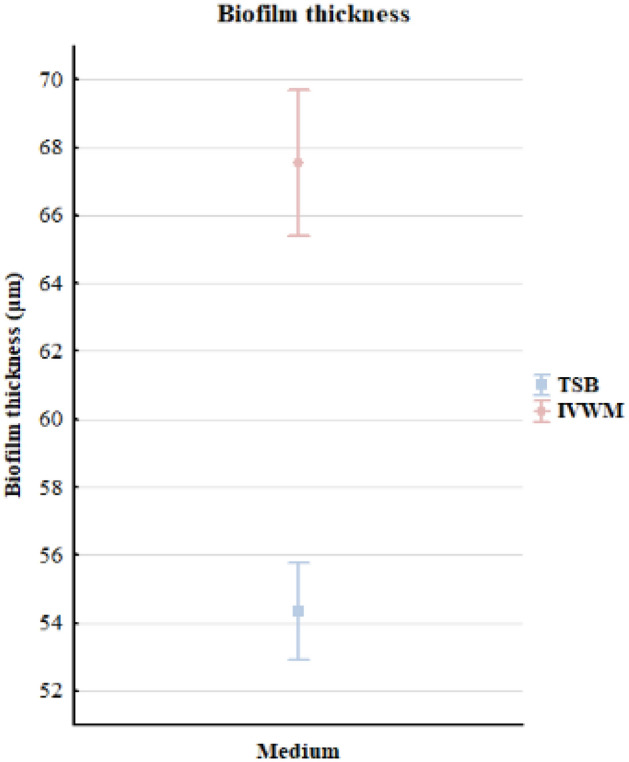
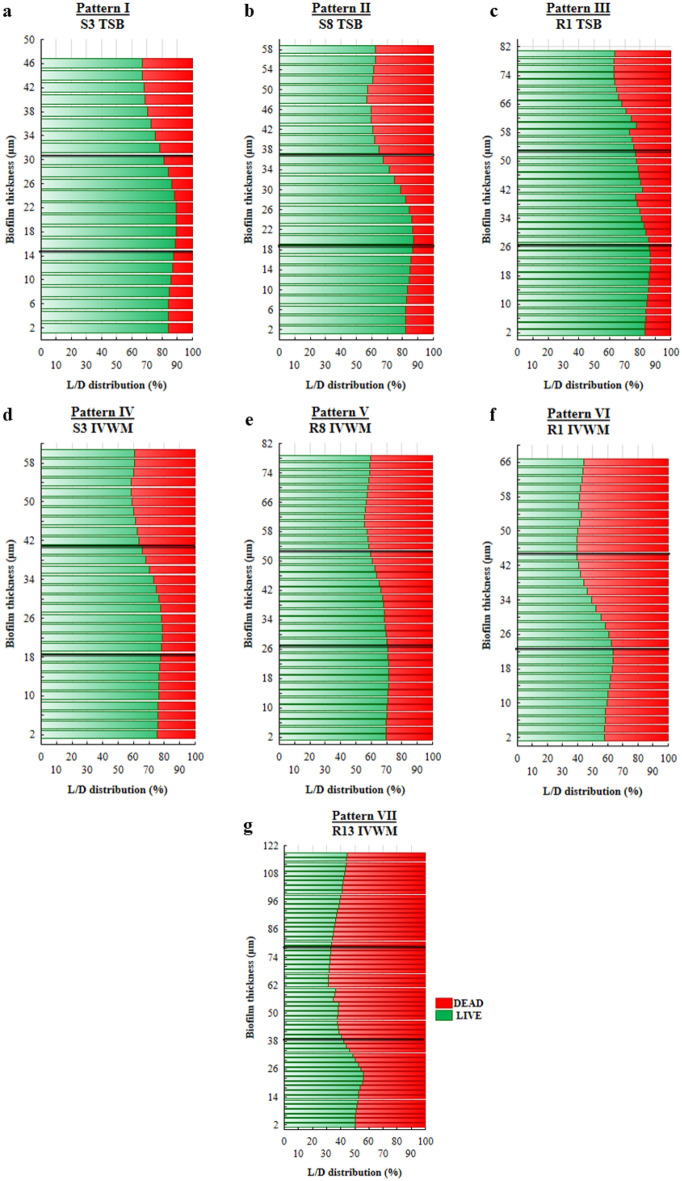
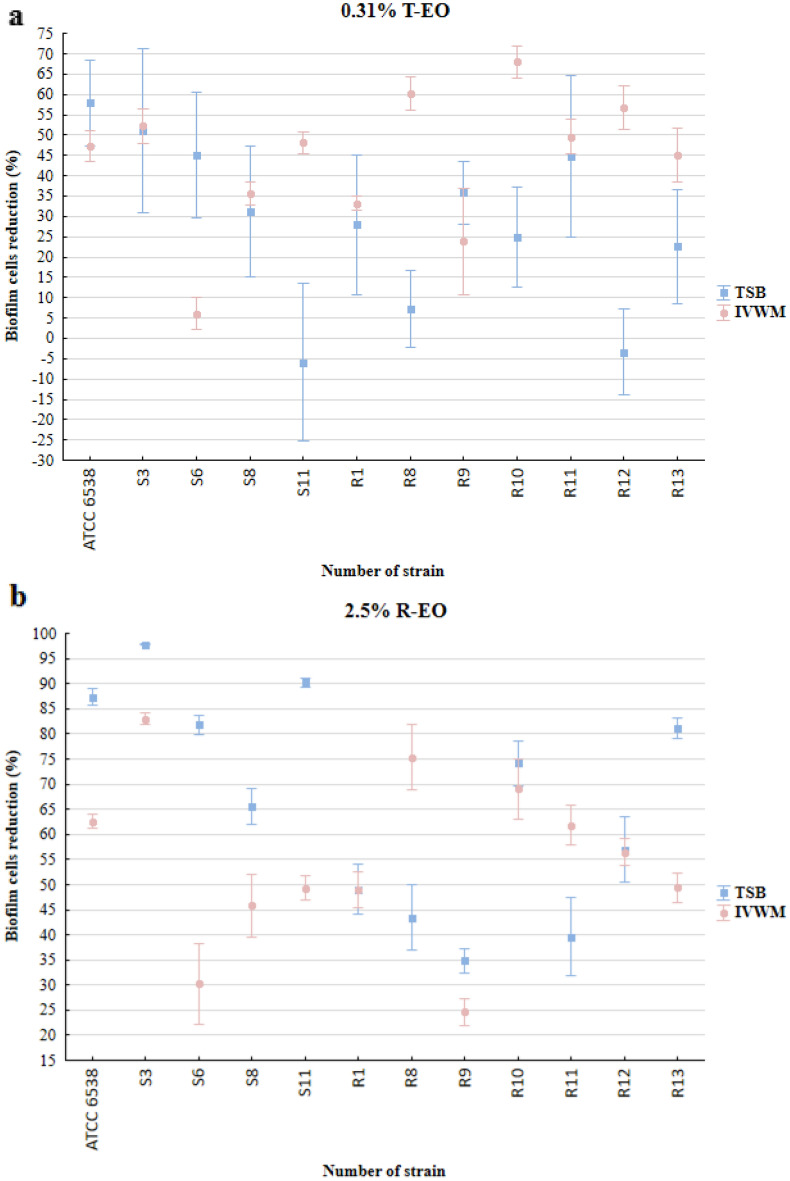
Essential Oils (EOs) are currently being researched as potential antibiofilm agents to combat infections related to chronic wound biofilms. As documented in the literature, EOs’ in vitro antibacterial properties are often assessed using standard microbiological media and conditions that do not accurately reflect the actual environment of a chronic wound. To address this issue, In vitro Wound Milieu (IVWM) medium, which closely resembles the environment of a chronic wound, was applied for culturing S. aureus biofilms (n = 12) in this research. Biofilms cultivated in the standard Tryptic Soy Broth (TSB) medium served as a control for the experiment. Key biofilm features were analyzed and compared. Subsequently, staphylococci were exposed to the activity of thyme or rosemary EOs (T-EO and R-EO, respectively). As proof of concept, the cytotoxicity of T-EO and its antimicrobial in vivo activity were assessed using a G. mellonella larvae model. Key features of biofilm-forming cells were lower in the IVWM than in the TSB medium: biomass (up to 8 times), metabolic activity (up to 9 times), cell number (up to 100 times), and the live/dead cells ratio. Conversely, biofilm thickness was higher (up to 25%) in IVWM. These differences translated into varied responses of the biofilms to EOs exposure. The application of T-EO led to a greater reduction (up to 2 times) in 67% of biofilm-forming strains in IVWM compared to the TSB medium. Conversely, exposure to R-EO resulted in a higher reduction (up to 2.6 times) of 83% of biofilm-forming strains in TSB than in IVWM. The application of T-EO was not only non-toxic to G. mellonella larvae but also increased the survival of larvae infected with staphylococci (from 48 to 85%). Our findings suggest that EOs not only show promise as agents for treating biofilm-related wound infections but also that providing conditions reflecting the specific niche of the human body is of paramount importance in influencing the results obtained. However, before clinical application, challenges related to the methods of assessing their activity, microbial intra-species variability, and different levels of activity of various EOs should be analyzed and standardized.
Overview
The claims and statistics of this paper haven’t been checked yet.
Free: it reads the open-access text and checks the first 5 claims that cite a source we can check. Create a free account to check every claim.
Integrity signals
Registry
Cites
Statistics
Figures
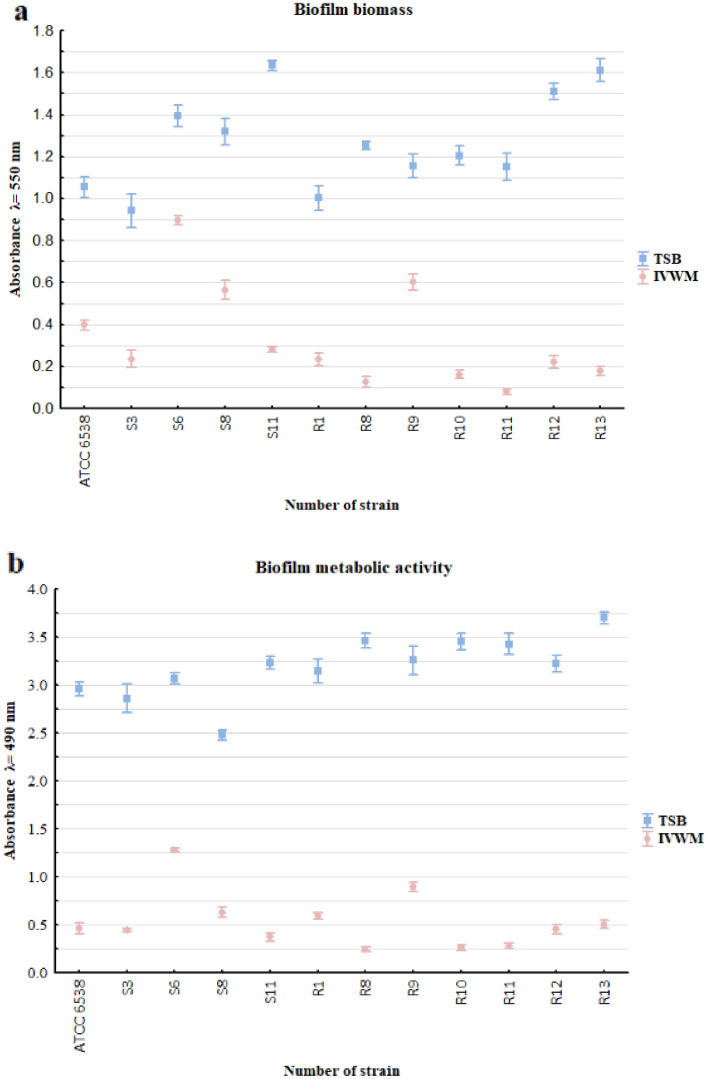
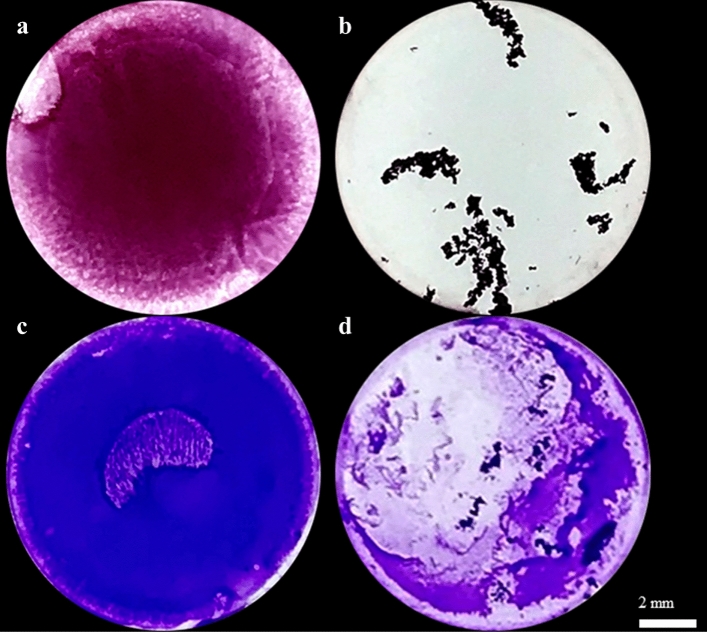
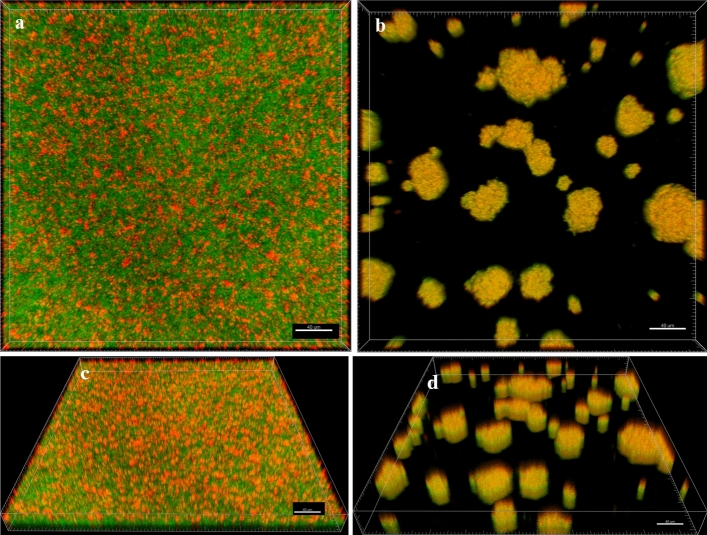
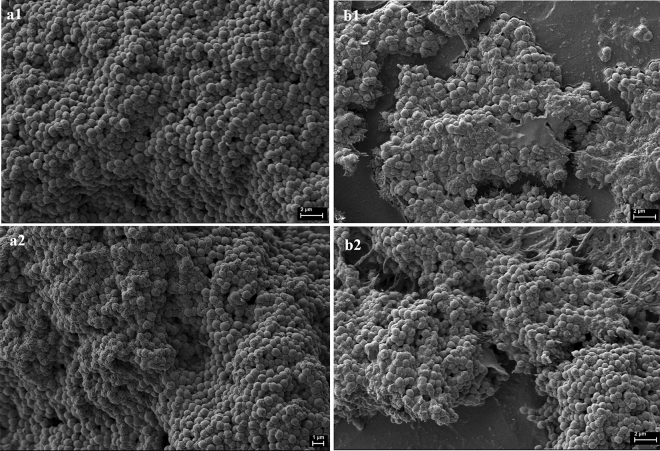
Verification
Claims the paper makes
The claims and statistics of this paper haven’t been checked yet.
Free: it reads the open-access text and checks the first 5 claims that cite a source we can check. Create a free account to check every claim.
Claims other papers make about this one
Each is checked against this paper’s own text: does it say what the citing paper says it does?
The cited source says what the claim attributes to it.
In the citing paper
“Consistent with previous reports, thyme oils were the most effective at low dilutions (Brożyna et al. 2024; Fournomiti et al. 2015; Sakkas and Papadopoulou 2017).”
From Linking chemical-composition to antimicrobial efficacy: development of an essential oil-based topical gel prototype (2025) · cites this paper as Brożyna et al. 2024
Self-check
Percentages, sums and reported differences re-computed from the paper’s own numbers.
The self-check needs the paper’s full text.
Citations
Cites
Armstrong, D. G., Swerdlow, M. A., Armstrong, A. A., Conte, M. S., Padula, W. V., & Bus, S. A. (2020) · Journal of Foot and Ankle Research · doi:10.1186/s13047-020-00383-2 · Cited by 975
Juven, B. J., Kanner, J., Schved, F., & Weisslowicz, H. (1994) · Journal of Applied Bacteriology · doi:10.1111/j.1365-2672.1994.tb01661.x · Cited by 833
Distribution, Organization, and Ecology of Bacteria in Chronic Wounds
Kirketerp-Møller, K., Jensen, P. Ø., Fazli, M., Madsen, K. G., Pedersen, J., Moser, C., Tolker-Nielsen, T., Høiby, N., Givskov, M., & Bjarnsholt, T. (2008) · Journal of Clinical Microbiology · doi:10.1128/jcm.00501-08 · Cited by 542
Chronic wound infection: Facts and controversies
Siddiqui, A. R., & Bernstein, J. M. (2010) · Clinics in Dermatology · doi:10.1016/j.clindermatol.2010.03.009 · Cited by 524
Nonrandom Distribution of Pseudomonas aeruginosa and Staphylococcus aureus in Chronic Wounds
Fazli, M., Bjarnsholt, T., Kirketerp-Møller, K., Jørgensen, B., Andersen, A. S., Krogfelt, K. A., Givskov, M., & Tolker-Nielsen, T. (2009) · Journal of Clinical Microbiology · doi:10.1128/jcm.01395-09 · Cited by 490
Thymol and Thyme Essential Oil—New Insights into Selected Therapeutic Applications
Kowalczyk, A., Przychodna, M., Sopata, S., Bodalska, A., & Fecka, I. (2020) · Molecules · doi:10.3390/molecules25184125 · Cited by 480
Essential Oils, A New Horizon in Combating Bacterial Antibiotic Resistance
Yap, P. S. X., Yiap, B. C., Ping, H. C., & Lim, S. H. E. (2014) · The Open Microbiology Journal · doi:10.2174/1874285801408010006 · Cited by 426
Crystal Violet and XTT Assays on Staphylococcus aureus Biofilm Quantification
Xu, Z., Liang, Y., Lin, S., Chen, D., Li, B., Li, L., & Deng, Y. (2016) · Current Microbiology · doi:10.1007/s00284-016-1081-1 · Cited by 316
Approach to chronic wound infections
Leaper, D., Assadian, O., & Edmiston, C. E. (2015) · British Journal of Dermatology · doi:10.1111/bjd.13677 · Cited by 292
Microbiology of the skin and the role of biofilms in infection
Percival, S. L., Emanuel, C., Cutting, K. F., & Williams, D. W. (2012) · International Wound Journal · doi:10.1111/j.1742-481x.2011.00836.x · Cited by 271
Research works printed but not linked: 2
- Mühlen S Dersch P Anti-virulence strategies to target bacterial infections Curr. Top. Microbiol. Immunol. 2016 398 147 183 26942418
- Roseanu A Damian M Evans RW Mechanisms of the antibacterial activity of lactoferrin and lactoferrin-derived peptides Rom. J. Biochem. 2010 47 203 209
Cited by
Roshni, P. T., & Rekha, P. D. (2024) · Inflammopharmacology · doi:10.1007/s10787-024-01571-3 · Cited by 14
Aftab, N., Varghese, P., Khalid, A., Umar, A. K., Wallis, C. J., Bates, M., & Hooper, S. E. (2025) · Applied Microbiology and Biotechnology · doi:10.1007/s00253-025-13650-8 · Cited by 2
“Consistent with previous reports, thyme oils were the most effective at low dilutions (Brożyna et al. 2024; Fournomiti et al. 2015; Sakkas and Papadopoulou 2017).”
Metadata
- Authors
- Brożyna, M., Dudek, B., Kozłowska, W., Malec, K., Paleczny, J., Detyna, J., Fabianowska-Majewska, K., & Junka, A.
- Venue
- Scientific Reports
- Published
- 2024-01-26
- Volume
- 14
- Issue
- 1
- ISSN
- 2045-2322
- PMC
- PMC10817982
- Cited by
- 24
- References
- 46
- Language
- en
- Licence
- creativecommons.org/licenses/by/4.0 (tdm)
- creativecommons.org/licenses/by/4.0 (vor)
- Funders
- Narodowe Centrum Nauki (2021/41/N/NZ6/03305)
About these checks
Registry, retraction, Cites and statistics results are computed, not judged, with one exception: a printed reference that no index lists is read once by a model before it counts as a citation error. Claims are extracted by a model and kept only when their quote appears verbatim in the text; each cited source is then checked, with a model’s help, for whether it says what the claim relies on. Those verdicts can be wrong — read the claim’s quote and the cited source before relying on one.
Statistics and arithmetic are recomputed, not judged.
Confidence bands are shown only for fields calibrated on our annotated test set. None is calibrated yet, so no band is shown.
What counts as a claim ›How we measure confidence ›How we check this ›
Are you an author, or do you see a problem with this page? Request a review
Data sources
Bibliographic data: Semantic Scholar, OpenAlex, Crossref.
Contains information from the Semantic Scholar Academic Graph Datasets, made available under the ODC Attribution License (ODC-BY 1.0).
Semantic Scholar’s data is described in: Kinney, R., et al. (2023). The Semantic Scholar Open Data Platform. arXiv:2301.10140.
