

A multiplex metabolomic approach for quality control of Spirulina supplement and its allied microalgae (Amphora & Chlorella) assisted by chemometrics and molecular networking
Open accessThe DOI matches its Crossref record; 44 of the 44 references it cites were found in a registry or an index.
Abstract
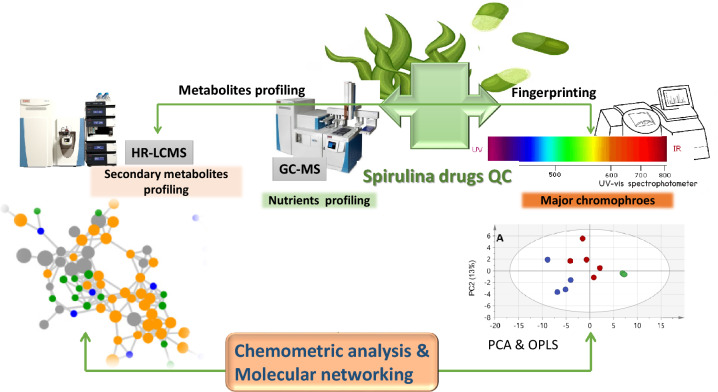
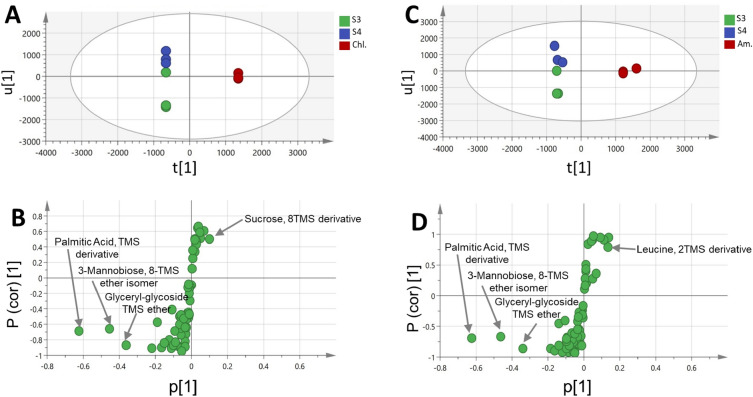
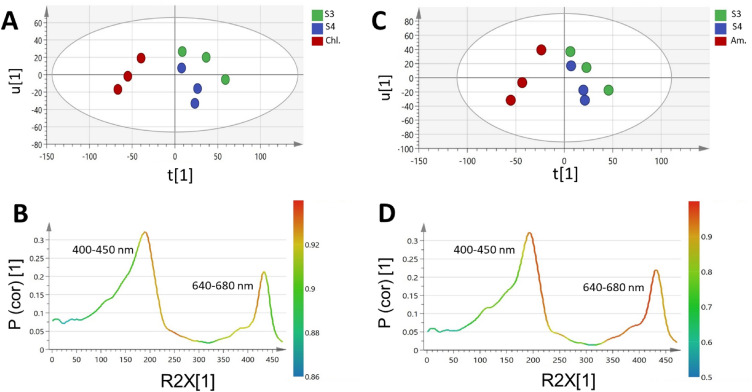
Microalgae species are of economic importance regarded as “green gold” being rich in bioactive compounds. Spirulina and Chlorella are the most popular microalgal species and are marketed as healthy food supplements. At the same time, Amphora holds potential as a source of healthy lipids and essential fatty acids. Yet, there are considerable variations in their reported chemical composition, and less is known about their compositional differences. A multiplexed metabolomic approach was adopted for the quality control (QC) of Spirulina supplements and to compare its constitutive metabolome to Chlorella and Amphora . The adopted protocol comprised gas chromatography-mass spectrometry (GC–MS), ultra-high performance liquid chromatography coupled with high-resolution tandem mass spectrometry (UPLC-HRMS/MS), and ultraviolet–visible spectrophotometry (UV/Vis) for mapping their primary and secondary metabolome. Interestingly, UPLC-HRMS/MS analysis delineated the abundance of fatty acids in Amphora versus glycolipids enrichment in Spirulina , and porphyrins were the main pigments identified in Spirulina , with scarce occurrence in Chlorella . Orthogonal projections to latent structures discriminant analysis (OPLS-DA) analysis of GC–MS data set revealed palmitic acid, 3-mannobiose, and glyceryl-glycoside as being most enriched in Spirulina , versus sucrose and leucine in Chlorella and Amphora , respectively. Despite being of low discriminatory potential, UV/Vis OPLS-DA modeling showed that Spirulina was distinguished with the UV absorbances of carotenoids and chlorophyll pigments, as indicated by its OPLS-DA derived S-plot. Our study provides a QC approach for the analysis of the microalgal species and poses alternative spectral and compositional markers for their discrimination.
Overview
The claims and statistics of this paper haven’t been checked yet.
Free: it reads the open-access text and checks the first 5 claims that cite a source we can check. Create a free account to check every claim.
Integrity signals
Registry
Cites
Statistics
Figures
Verification
Claims the paper makes
The claims and statistics of this paper haven’t been checked yet.
Free: it reads the open-access text and checks the first 5 claims that cite a source we can check. Create a free account to check every claim.
Claims other papers make about this one
Each is checked against this paper’s own text: does it say what the citing paper says it does?
The check wasn’t confident either way, so it gives no verdict — never disputed.
In the citing paper
“Totally, 316 metabolites have been identified in aqueous and ethanolic extracts. Using freeze drying (most expensive and most effective method) as a control, the most protective method appeared to be air drying at 40 °C. Vacuum drying at both 40 and 75 °C caused the most intense degradation of valuable spirulina metabolites [174].”
From Spirulina/Arthrospira/Limnospira—Three Names of the Single Organism (2024) · cites this paper as [174]
Experimental — accuracy not yet measured
Self-check
Percentages, sums and reported differences re-computed from the paper’s own numbers.
The self-check needs the paper’s full text.
Citations
Cites
IOP Conference Series: Earth and Environmental Science
(2020) · IOP Conference Series Earth and Environmental Science · doi:10.1088/issn.1755-1315 · Cited by 12,764
SIRIUS 4: a rapid tool for turning tandem mass spectra into metabolite structure information
Dührkop, K., Fleischauer, M., Ludwig, M., Aksenov, A. A., Melnik, A. V., Meusel, M., Dorrestein, P. C., Rousu, J., & Böcker, S. (2019) · Nature Methods · doi:10.1038/s41592-019-0344-8 · Cited by 2,060 · cited 3×
“Other organic acids included 3-hydroxybutyric acid ( 44 ), succinic acid ( 38 ), lactic acid ( 39 ), glycolic acid ( 40 ), and pyruvic acid ( 41 ).”
BackgroundMethodInfluentialFeature-based molecular networking in the GNPS analysis environment
Nothias, L.-F., Petras, D., Schmid, R., Dührkop, K., Rainer, J., Sarvepalli, A., Protsyuk, I., Ernst, M., Tsugawa, H., Fleischauer, M., et al. (2020) · Nature Methods · doi:10.1038/s41592-020-0933-6 · Cited by 1,634 · cited 4×
“Other organic acids included 3-hydroxybutyric acid ( 44 ), succinic acid ( 38 ), lactic acid ( 39 ), glycolic acid ( 40 ), and pyruvic acid ( 41 ).”
BackgroundMethodInfluentialSearching molecular structure databases with tandem mass spectra using CSI:FingerID
Dührkop, K., Shen, H., Meusel, M., Rousu, J., & Böcker, S. (2015) · Proceedings of the National Academy of Sciences · doi:10.1073/pnas.1509788112 · Cited by 1,190
Algal Proteins: Extraction, Application, and Challenges Concerning Production
Bleakley, S., & Hayes, M. (2017) · Foods · doi:10.3390/foods6050033 · Cited by 1,092 · cited 1×
“Some species are of economic and industrial importance and could be regarded as “green gold” being a source of bioactive compounds for the production of food, feed, cosmetics, and biofuel 5 .”
BackgroundMicroalgae: A potential alternative to health supplementation for humans
Koyande, A. K., Chew, K. W., Rambabu, K., Tao, Y., Chu, D.-T., & Show, P.-L. (2019) · Food Science and Human Wellness · doi:10.1016/j.fshw.2019.03.001 · Cited by 908 · cited 1×
“Presently, microalgae are promoted as healthy food and are available as dietary supplements in different forms i.e. powders, tablets, capsules, and liquids 8 .”
BackgroundMicroalgae Metabolites: A Rich Source for Food and Medicine
Sathasivam, R., Radhakrishnan, R., Hashem, A., & Abd_Allah, E. F. (2019) · Saudi Journal of Biological Sciences · doi:10.1016/j.sjbs.2017.11.003 · Cited by 872 · cited 1×
“Among the widely consumed microalgae species are Spirulina ( Arthrospira maxima and Arythrospira platensis ) and Chlorella sp., which are dominating the global market due to their nutrient-rich profile 9 .”
BackgroundSpirulina for the Food and Functional Food Industries
Lafarga, T., Fernández-Sevilla, J. M., González-López, C., & Acién-Fernández, F. G. (2020) · Food Research International · doi:10.1016/j.foodres.2020.109356 · Cited by 417 · cited 3×
“Other nitrogenous compounds included uracil ( 35 ), adenine ( 36 ), and adenosine ( 37 ).”
BackgroundAndrade, L. M. (2018) · MOJ Food Processing & Technology · doi:10.15406/mojfpt.2018.06.00144 · Cited by 272 · cited 1×
“These essential amino acids add to the high nutritional value of microalgae and promote their use as supplements or nutraceuticals 32 .”
BackgroundTowards sustainable sources for omega-3 fatty acids production
Adarme-Vega, T. C., Thomas-Hall, S. R., & Schenk, P. M. (2014) · Current Opinion in Biotechnology · doi:10.1016/j.copbio.2013.08.003 · Cited by 250 · cited 2×
“Recently, microalgae have attracted attention as an alternative and sustainable source of such nutritionally valuable molecules 18 .”
BackgroundBöcker, S., & Dührkop, K. (2016) · Journal of Cheminformatics · doi:10.1186/s13321-016-0116-8 · Cited by 208 · cited 2×
“In addition to sphingosines, acylated amino acids were detected exemplified by N-palmitoyl-L-arginine ( 42 ) (Supplementary Fig.”
BackgroundMethodInfluentialMicroalgae for Human and Animal Nutrition
Becker, E. W. (2013) · Handbook of Microalgal Culture · doi:10.1002/9781118567166.ch25 · Cited by 186
Hynstova, V., Sterbova, D., Klejdus, B., Hedbavny, J., Huska, D., & Adam, V. (2018) · Journal of Pharmaceutical and Biomedical Analysis · doi:10.1016/j.jpba.2017.09.018 · Cited by 174 · cited 3×
“Other nitrogenous compounds included uracil ( 35 ), adenine ( 36 ), and adenosine ( 37 ).”
BackgroundResultChemical composition and nutritive value of Pinus pinea L. seeds
Nergiz, C., & Dönmez, İ. (2003) · Food Chemistry · doi:10.1016/j.foodchem.2003.09.009 · Cited by 161 · cited 1×
“Further, The nutritional value of linoleic acid is metabolized metabolism at tissue levels to produce the hormone-like prostaglandins 29 .”
BackgroundLane, K., Derbyshire, E., Li, W., & Brennan, C. (2014) · Critical Reviews in Food Science and Nutrition · doi:10.1080/10408398.2011.596292 · Cited by 145
Microalgae in novel food products
de Sousa, I. M. N., Gouveia, L., Batista, A. P., Raymundo, A., & Bandarra, N. M. (2008) · Portuguese National Funding Agency for Science, Research and Technology (RCAAP Project by FCT) · Cited by 119
Melo, T., Alves, E., Azevedo, V., Martins, A. S., Neves, B. M., Domingues, P. M., Calado, R., Abreu, H., & Domingues, M. R. (2015) · Algal Research · doi:10.1016/j.algal.2015.02.016 · Cited by 112 · cited 1×
“According to WHO, Spirulina is recognized as a “superfood” and is marketed by NASA as the most concentrated human food 11 .”
BackgroundFatty Acids Derivatives From Eukaryotic Microalgae, Pathways and Potential Applications
Blasio, M., & Balzano, S. (2021) · Frontiers in Microbiology · doi:10.3389/fmicb.2021.718933 · Cited by 108 · cited 3×
“Microalgae are recognized as chief producers of a wide array of fatty acid derivatives such as hydroxyl fatty acids, oxylipins, alkenones, and polyols of potential nutraceutical and biotechnological applications 17 .”
BackgroundComprehensive GCMS and LC-MS/MS Metabolite Profiling of Chlorella vulgaris
Pantami, H. A., Ahamad Bustamam, M. S., Lee, S. Y., Ismail, I. S., Mohd Faudzi, S. M., Nakakuni, M., & Shaari, K. (2020) · Marine Drugs · doi:10.3390/md18070367 · Cited by 98 · cited 2×
“Their identification is mainly aided by their distinctive UV spectrum, as they often fail to yield MS/MS fragments under the range of collision energy frequently set for small molecules 16 .”
BackgroundMethodFu, W., Magnúsdóttir, M., Brynjólfsson, S., Palsson, B. Ø., & Paglia, G. (2012) · Analytical and Bioanalytical Chemistry · doi:10.1007/s00216-012-6434-4 · Cited by 93 · cited 2×
“Among the annotated fatty acids/ esters, palmitic acid ( 17 ) was the predominant form in Spirulina and Amphora versus glyceryl monostearate ( 25 ) in Chlorella .”
BackgroundMass spectral similarity for untargeted metabolomics data analysis of complex mixtures
Garg, N., Kapono, C. A., Lim, Y. W., Koyama, N., Vermeij, M. J. A., Conrad, D., Rohwer, F., & Dorrestein, P. C. (2015) · International Journal of Mass Spectrometry · doi:10.1016/j.ijms.2014.06.005 · Cited by 92 · cited 3×
“Other organic acids included 3-hydroxybutyric acid ( 44 ), succinic acid ( 38 ), lactic acid ( 39 ), glycolic acid ( 40 ), and pyruvic acid ( 41 ).”
BackgroundMethodSpirulina Microalgae and Brain Health: A Scoping Review of Experimental and Clinical Evidence
Sorrenti, V., Castagna, D. A., Fortinguerra, S., Buriani, A., Scapagnini, G., & Willcox, D. C. (2021) · Marine Drugs · doi:10.3390/md19060293 · Cited by 88
Votano, J. R., Parham, M., Hall, L. H., Kier, L. B., & Hall, L. M. (2004) · Chemistry & Biodiversity · doi:10.1002/cbdv.200490137 · Cited by 74
Sommella, E., Conte, G. M., Salviati, E., Pepe, G., Bertamino, A., Ostacolo, C., Sansone, F., Prete, F. D., Aquino, R. P., & Campiglia, P. (2018) · Molecules · doi:10.3390/molecules23051152 · Cited by 62 · cited 1×
“Annotation of the detected features relied on their elution order, chemical formulas, and their fragmentation pattern, synchronized with the FBMNs and the in silico fragmentation trees proposed by Sirius and searching literature 15,16 .”
MethodShakour, Z. T. A., El‐Akad, R. H., Elshamy, A. I., Gendy, A. E. G. E., Wessjohann, L. A., & Farag, M. A. (2022) · Food Chemistry · doi:10.1016/j.foodchem.2022.133948 · Cited by 54 · cited 2×
“Other saturated fatty acids/ esters included stearic acid ( 21 ), arachidic acid ( 22 ), 2-palmitoyl glycerol ( 23 ), and 1-monopalmitin ( 24 ).”
BackgroundSelf-citationBarbosa, M., Collado‐González, J., Andrade, P. B., Ferreres, F., Valentão, P., Galano, J., Durand, T., & Gil‐Izquierdo, Á. (2015) · Journal of Agricultural and Food Chemistry · doi:10.1021/acs.jafc.5b01904 · Cited by 48 · cited 1×
“They are widely detected in terrestrial plants and scarcely reported in macroalgae 20 .”
BackgroundVendruscolo, R. G., Facchi, M. M. X., Maroneze, M. M., Fagundes, M. B., Cichoski, A. J., Zepka, L. Q., Barin, J. S., Jacob-Lopes, E., & Wagner, R. (2018) · Food Research International · doi:10.1016/j.foodres.2018.04.017 · Cited by 44 · cited 2×
“Besides being enriched with amino acids, other nitrogenous compounds abundantly observed in Amphora and Chlorella (i.e., at 14 & 12%, correspondingly) including niacin ( 33 ) as the most prominent one.”
BackgroundOlmo‐García, L., Wendt, K., Kessler, N., Bajoub, A., Fernández‐Gutiérrez, A., Baessmann, C., & Carrasco‐Pancorbo, A. (2019) · European Journal of Lipid Science and Technology · doi:10.1002/ejlt.201800336 · Cited by 44 · cited 3×
“Metaboscape 3.0 (Bruker Daltonics®) was utilized for feature detection, grouping, and alignment, employing the T-ReX 3D (Time aligned Region Complete eXtraction) algorithm 39 .”
BackgroundMethodInfluentialFarag, M. A., Khattab, A. R., Ehrlich, A., Kropf, M., Heiss, A. G., & Wessjohann, L. A. (2018) · Journal of Agricultural and Food Chemistry · doi:10.1021/acs.jafc.8b00369 · Cited by 40 · cited 1×
“Whereas, melibiose exerts immunostimulatory and anti-allergic actions and enhances minerals absorption, promoting the growth of beneficial gut microbiota, especially Bifidobacterium and Lactobacillus strains 31 .”
BackgroundSelf-citationFood grade extraction of Chlorella vulgaris polar lipids: A comparative lipidomic study
Couto, D., Melo, T., Conde, T. A., Moreira, A. S. P., Ferreira, P., Costa, M., Silva, J., Domingues, R., & Domingues, P. (2022) · Food Chemistry · doi:10.1016/j.foodchem.2021.131685 · Cited by 38 · cited 3×
“Besides being nutritional rich, they are grown under sustainable conditions, thus helping us preserve our scarce ocean resources 3 .”
BackgroundInfluentialAlgicidal Activity of Glycerolipids from Brown AlgaIshige sinicolatoward Red Tide Microalgae
Hirao, S., Kenji, T. A. R. A., Kuwano, K., Tanaka, J., & Ishibashi, F. (2012) · Bioscience Biotechnology and Biochemistry · doi:10.1271/bbb.110645 · Cited by 36
Hegazi, N. M., Saad, H. H., Marzouk, M. M., Rahman, M. F. A., Bishbishy, M. H. E., Zayed, A., Ulber, R., & Ezzat, S. M. (2021) · Marine Drugs · doi:10.3390/md19050279 · Cited by 35 · cited 1×
“With regards to unsaturated fatty acids, linoleic acid ( 18 ) was the most abundant in all samples, followed by linolenic ( 18 ) and oleic acid ( 19).”
BackgroundSelf-citationEl‐Akad, R. H., El-Din, M. G. S., & Farag, M. A. (2023) · Foods · doi:10.3390/foods12040771 · Cited by 28 · cited 2×
“7 macrophages 30 .”
BackgroundSelf-citationSerag, A., Zayed, A., Mediani, A., & Farag, M. A. (2023) · Scientific Reports · doi:10.1038/s41598-023-28551-x · Cited by 27
Self-citationHogan, P., Otero, P., Murray, P., & Saha, S. K. (2021) · Heliyon · doi:10.1016/j.heliyon.2021.e05995 · Cited by 24 · cited 5×
“Yet, there are considerable variations in the reported chemical composition of the same algal species or even strains which could be attributed to differences in the cultivation conditions 12 .”
BackgroundResultInfluentialElfiky, A. M., Shawky, E. M., Khattab, A. R., & Ibrahim, R. S. (2022) · Microchemical Journal · doi:10.1016/j.microc.2022.108125 · Cited by 23 · cited 1×
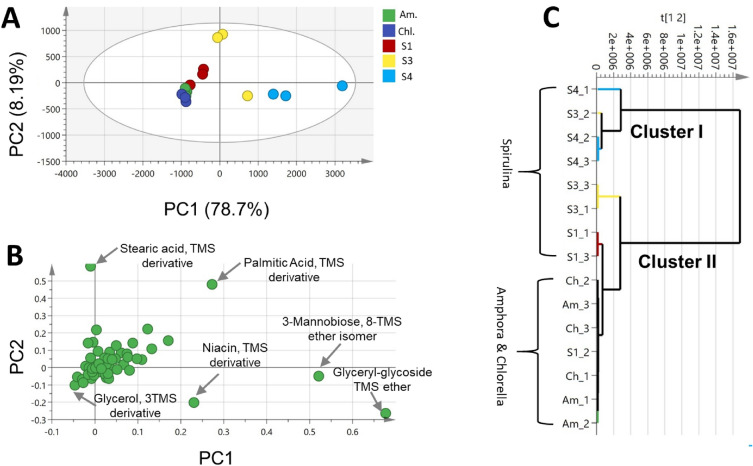
“…further conducted via unsupervised pattern recognition methods i.e., principal component analysis (PCA), hierarchical cluster analysis (HCA) using GC–MS data matrix to establish a metabolite-based clustering of the three algal species and assess their metabolome similarity and/or heterogeneity 34 .”
MethodSelf-citationAntonelli, M., Benedetti, B., Cavaliere, C., Cerrato, A., Barbera, G. L., Montone, C. M., Piovesana, S., & Laganà, A. (2019) · Talanta · doi:10.1016/j.talanta.2019.120162 · Cited by 18 · cited 3×
“Sulphoquinovosyl monoacylglycerols were previously detected in Spirulina 23 and were isolated from the brown alga, Ishige sinicola , and exhibited algicidal activities 24”
BackgroundBaky, M. H., Shamma, S. N., Khalifa, M. R., & Farag, M. A. (2022) · Metabolites · doi:10.3390/metabo13010018 · Cited by 18 · cited 3×
“Other organic acids included 3-hydroxybutyric acid ( 44 ), succinic acid ( 38 ), lactic acid ( 39 ), glycolic acid ( 40 ), and pyruvic acid ( 41 ).”
BackgroundMethodSelf-citationA Review of General Properties of Blue-Green Algae (Cyanobacteria)
Jassim, Y. A., Awadh, E. F. A., & Al-Amery, S. M. H. (2023) · Biomedicine and Chemical Sciences · doi:10.48112/bcs.v2i2.397 · Cited by 18 · cited 2×
“%) samples occurring as glycerol glycosides ( 26 , 27 & 28 ), and in accordance with UPLC-HRMS/MS findings (Fig.”
BackgroundResultAngotti, M., Maunit, B., Muller, J.-F., Bezdetnaya, L., & Guillemin, F. H. (1999) · Rapid Communications in Mass Spectrometry · doi:10.1002/(sici)1097-0231(19990415)13:7<568::aid-rcm525>3.0.co;2-j · Cited by 14 · cited 1×
“%) samples occurring as glycerol glycosides ( 26 , 27 & 28 ), and in accordance with UPLC-HRMS/MS findings (Fig.”
ResultCheng, T.-Y., Lin, Y., Saburi, W., Vieths, S., Scheurer, S., Schülke, S., & Toda, M. (2021) · Cells · doi:10.3390/cells10071774 · Cited by 13 · cited 1×
“7 macrophages 30 .”
Mishra, E., Worlinsky, J. L., Brückner, C., & Ryzhov, V. (2013) · Journal of the American Society for Mass Spectrometry · doi:10.1007/s13361-013-0750-6 · Cited by 11 · cited 2×
“The MS 2 molecules, followed by the loss of CO and CH 2 based on their substitutional pattern as previously reported 27,28 , (Supplementary Figs.”
BackgroundResultFarag, M. A., Abdelwareth, A., Zayed, A., Eissa, T. F., Dokalahy, E. U., Frolov, A., & Wessjohann, L. A. (2022) · Foods · doi:10.3390/foods11142127 · Cited by 11 · cited 1×
“Additionally, their discrimination based on their UV–vis spectroscopic profile was compared to their acquired metabolomics data considering its robustness, less expensive, and more applicable at the industrial scale 14 .”
BackgroundSelf-citationRediscovering Nigella Seeds Bioactives Chemical Composition Using Metabolomics Technologies
Farag, M. A., Saad, H. H., & Hegazi, N. M. (2020) · Food bioactive ingredients · doi:10.1007/978-3-030-48798-0_10 · Cited by 9 · cited 1×
“Recently, metabolomics has been an irreplaceable approach for fingerprinting and analyzing complex food matrices, offering valuable insights into their composition and their nutritive value 13 , and is scarcely applied in algae analysis.”
BackgroundSelf-citation
Research works printed but not linked: 1
- FAO Sustainable Healthy Diets-Guiding Principles 2019 FAO
Cited by
Spirulina/Arthrospira/Limnospira—Three Names of the Single Organism
Sinetova, M. A., Kupriyanova, E. V., & Los, D. A. (2024) · Foods · doi:10.3390/foods13172762 · Cited by 51
“Using freeze drying (most expensive and most effective method) as a control, the most protective method appeared to be air drying at 40 ◦ C. Vacuum drying at both 40 and 75 ◦ C caused the most intense degradation of valuable spirulina metabolites [174].”
MethodFreitas, G. R., Badenes, S. M., Oliveira, R., & Martins, F. G. (2025) · Processes · doi:10.3390/pr13092956 · Cited by 18
Microalgal Metabolomes and Recent Biotechnological Advances for Their Industrial Application
Saini, D. K., Manchanda, G., Chaudhary, R. G., & Singh, R. P. (2024) · Microbiology Research · doi:10.3390/microbiolres15040138 · Cited by 14
Metabolomic characterization of algal nutraceuticals to elucidate their biological activities
Mathanmohun, M., Sagadevan, S., Fatimah, I., Lett, J. A., Kaus, N. H. M., Garg, S., & Al-Anber, M. A. (2025) · Metabolomics · doi:10.1007/s11306-025-02361-w · Cited by 7
“Integrating metabolomic studies enhances the precision and comprehensiveness of algal bioprospecting, establishing metabolomics as a vital tool in contemporary algae research for pharmaceutical, nutraceutical, and industrial applications (Hegazi et al., 2024).”
Paul, T., Choudhury, S., & Rout, J. (2025) · Algal Research · doi:10.1016/j.algal.2025.104227 · Cited by 5
Metadata
- Authors
- Hegazi, N., Khattab, A. R., Saad, H. H., Abib, B., & Farag, M. A.
- Affiliations
- National Research Centre (EG)
- Arab Academy for Science, Technology, and Maritime Transport (EG)
- American University in Cairo (EG)
- Cairo University (EG)
- Corresponding author
- Hegazi, Nesrine
- Farag, Mohamed A.
- Venue
- Scientific Reports
- Published
- 2024-02-02
- Volume
- 14
- Issue
- 1
- Pages
- 2809-2809
- ISSN
- 2045-2322 (ISSN-L)
- PMC
- PMC10837195
- OpenAlex
- W4391467289
- Cited by
- 13
- References
- 44
- Citations by year
- 2026: 5 · 2025: 6 · 2024: 2
- FWCI
- 4.18
- Type
- journal article
- Language
- en
- Open access
- gold
- doi.org
- Licence
- cc-by
- creativecommons.org/licenses/by/4.0 (tdm)
- creativecommons.org/licenses/by/4.0 (vor)
- Locations
- Scientific Reports (publishedVersion, cc-by)
- PubMed Central (publishedVersion, cc-by)
- PubMed (publishedVersion)
- DOAJ (DOAJ: Directory of Open Access Journals) (submittedVersion)
- Greater South Information System
- Funders
- National Research Centre Egypt
- Topics
- Life Sciences › Agricultural and Biological Sciences › Aquatic Science › Seaweed-derived Bioactive Compounds
- Physical Sciences › Energy › Renewable Energy, Sustainability and the Environment › Algal biology and biofuel production
- Life Sciences › Biochemistry, Genetics and Molecular Biology › Molecular Biology › Metabolomics and Mass Spectrometry Studies
- Keywords
- Spirulina, Chlorella, amphorae, metabolomics, fatty acids, glycolipids, porphyrins, carotenoids, chlorophyll, spectral markers, OPLS-DA, molecular networking
- MeSH terms
- Chemometrics, Chlorella, Dietary Supplements, Spirulina, Microalgae
About these checks
Registry, retraction, Cites and statistics results are computed, not judged, with one exception: a printed reference that no index lists is read once by a model before it counts as a citation error. Claims are extracted by a model and kept only when their quote appears verbatim in the text; each cited source is then checked, with a model’s help, for whether it says what the claim relies on. Those verdicts can be wrong — read the claim’s quote and the cited source before relying on one.
Statistics and arithmetic are recomputed, not judged.
Confidence bands are shown only for fields calibrated on our annotated test set. None is calibrated yet, so no band is shown.
What counts as a claim ›How we measure confidence ›How we check this ›
Are you an author, or do you see a problem with this page? Request a review
Data sources
Bibliographic data: Semantic Scholar, OpenAlex, Crossref.
Contains information from the Semantic Scholar Academic Graph Datasets, made available under the ODC Attribution License (ODC-BY 1.0).
Semantic Scholar’s data is described in: Kinney, R., et al. (2023). The Semantic Scholar Open Data Platform. arXiv:2301.10140.
