

The DOI matches its Crossref record; 28 of the 29 references it cites were found in a registry or an index.
The effect of Immersive Virtual Reality on balance: an exploratory study on the feasibility of head-mounted displays for balance evaluation
Open accessPublished version of a preprint
Abstract
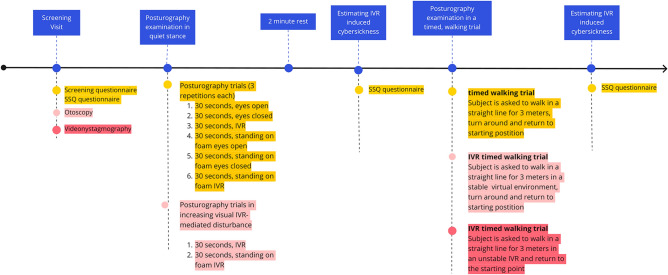
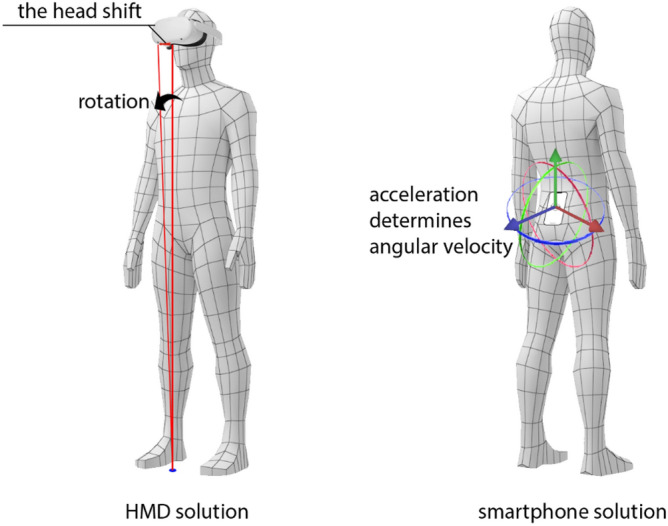
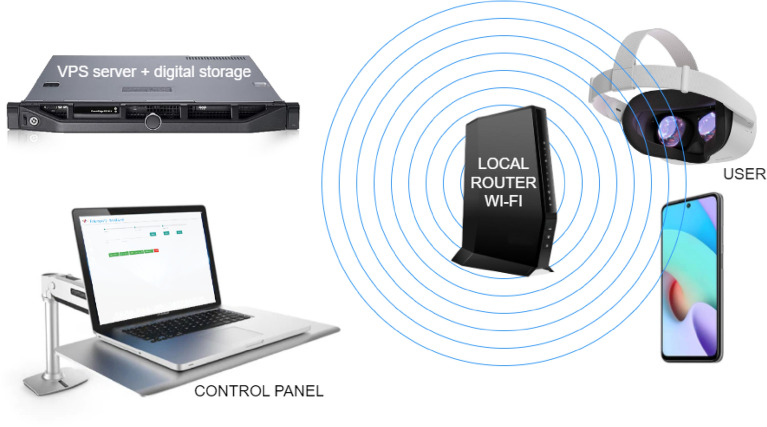
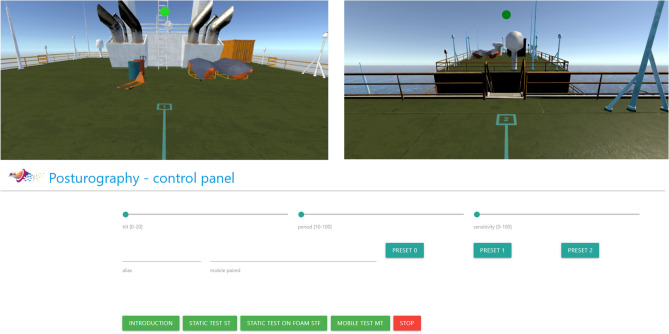
Global interest in applying virtual reality (VR) in research and medicine has grown significantly, with potential benefits for patients suffering from balance disorders, instability, and a high risk of falling. This exploratory study assesses the impact of immersive VR (IVR) delivered through a head-mounted display (HMD) on balance and explores the feasibility of using the HMD VR unit as a standalone posturography tool. Using the Meta Quest 2 HMD and a mid-range Android smartphone equipped with standard sensors, the research employed a VR environment that simulated a ship at sea, with thirty-eight healthy participants with no otoneurologic abnormalities. Measurements were conducted in repeated trials, including static assessments on both stable ground and foam, as well as a 3-m walk. This was conducted in two settings: one within a VR environment with three different intensity levels and the other in non-VR settings. Statistical analysis and clinical evaluation revealed that IVR with HMD influences head-level sway velocity, which correlates with increased visual disturbance, suggesting its potential as a low-risk standalone posturography tool.
Overview
The claims and statistics of this paper haven’t been checked yet.
Run the check — free, no account needed. It reads the open-access text and checks the sources it cites.
Integrity signals
Registry
Cites
Statistics
Figures
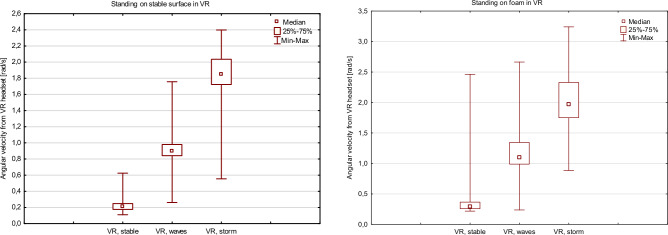
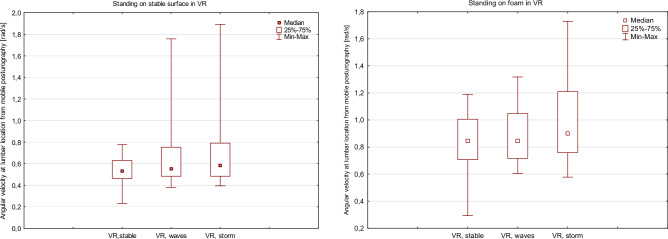
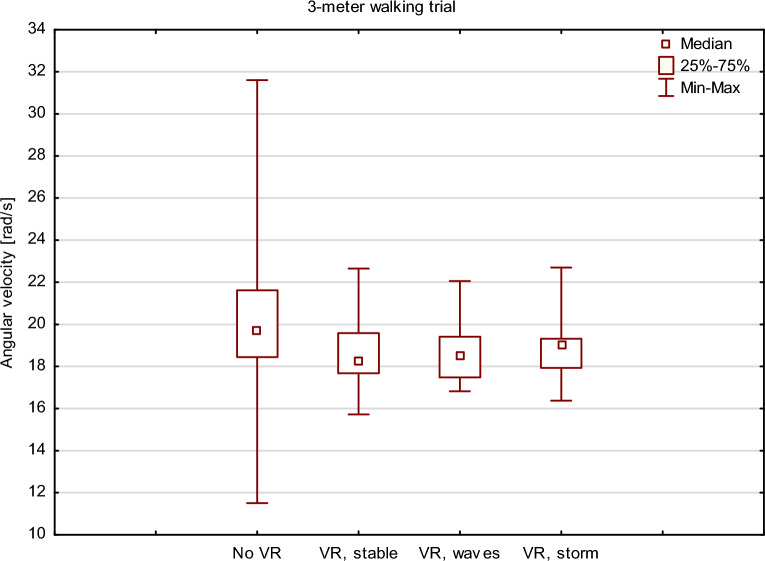
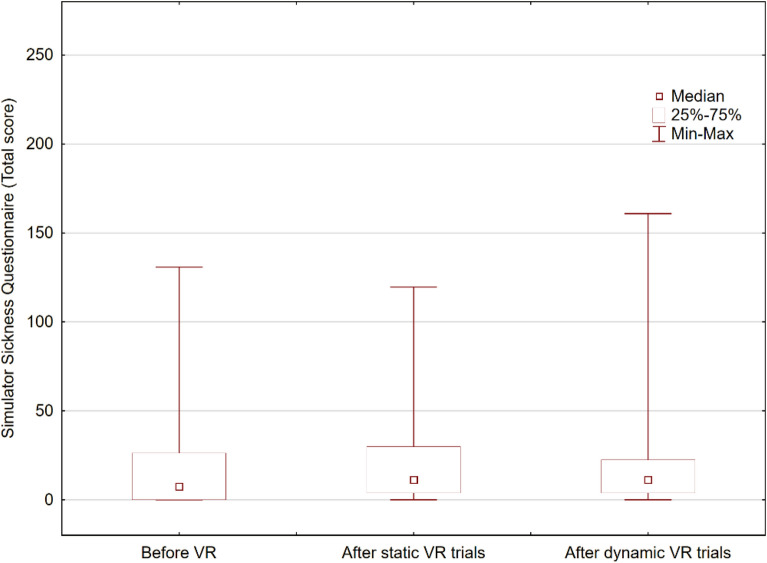
Verification
Claims the paper makes
The claims and statistics of this paper haven’t been checked yet.
Run the check — free, no account needed. It reads the open-access text and checks the sources it cites.
Claims other papers make about this one
Each is checked against this paper’s own text: does it say what the citing paper says it does?
The source backs part of the claim, not all of it — or backs it for a different population, condition or comparison.
In the citing paper
“These symptoms have been thought to be caused by sensory conflicts and the reweighting of sensory signals, impacting perceptual estimates and potentially amplifying the severity of immersive cybersickness, especially in vulnerable patient situations, such as after undergoing surgical interventions [115].”
From SAFEvR MentalVeRse.app: Development of a Free Immersive Virtual Reality Exposure Therapy for Acrophobia and Claustrophobia (2024) · cites this paper as [115]
Experimental — accuracy not yet measured
Self-check
Percentages, sums and reported differences re-computed from the paper’s own numbers.
The self-check needs the paper’s full text.
Citations
Cites
A guideline of selecting and reporting intraclass correlation coefficients for reliability research
Koo, T. K., & Li, M. Y. (2016) · Journal of Chiropractic Medicine · doi:10.1016/j.jcm.2016.02.012 · Cited by 31,709
Horak, F. B. (2006) · Age and Ageing · doi:10.1093/ageing/afl077 · Cited by 2,769
Virtual reality for stroke rehabilitation
Laver, K., George, S., Thomas, S., Deutsch, J. E., & Crotty, M. (2015) · Cochrane Database of Systematic Reviews · doi:10.1002/14651858.cd008349.pub3 · Cited by 1,162
Virtual reality for stroke rehabilitation
Laver, K. E., Lange, B., George, S., Deutsch, J. E., Saposnik, G., & Crotty, M. (2017) · Cochrane Database of Systematic Reviews · doi:10.1002/14651858.cd008349.pub4 · Cited by 800
Systematic Review and Meta-analysis of Virtual Reality in Pediatrics: Effects on Pain and Anxiety
Eijlers, R., Utens, E. M. W. J., Staals, L. M., de Nijs, P. F. A., Berghmans, J. M., Wijnen, R. M. H., Hillegers, M. H. J., Dierckx, B., & Legerstee, J. S. (2019) · Anesthesia & Analgesia · doi:10.1213/ane.0000000000004165 · Cited by 628
Neuroscience of virtual reality: from virtual exposure to embodied medicine
Riva, G., Wiederhold, B. K., & Mantovani, F. (2019) · Cyberpsychology, Behavior, and Social Networking · doi:10.1089/cyber.2017.29099.gri · Cited by 608
Eye Tracking in Virtual Reality: a Broad Review of Applications and Challenges
Adhanom, I. B., MacNeilage, P. R., & Folmer, E. (2023) · Virtual Reality · doi:10.1007/s10055-022-00738-z · Cited by 376
Virtual Reality and Simulation in Neurosurgical Training
Bernardo, A. (2017) · World Neurosurgery · doi:10.1016/j.wneu.2017.06.140 · Cited by 315
Kim, O., Pang, Y., & Kim, J. (2019) · BMC Psychiatry · doi:10.1186/s12888-019-2180-x · Cited by 243
Cyber sickness in low-immersive, semi-immersive, and fully immersive virtual reality
Martirosov, S., Bureš, M., & Zítka, T. (2021) · Virtual Reality · doi:10.1007/s10055-021-00507-4 · Cited by 236
Eshuis, L. V., van Gelderen, M. J., van Zuiden, M., Nijdam, M. J., Vermetten, E. H. G. J. M., Olff, M., & Bakker, A. (2020) · Journal of Psychiatric Research · doi:10.1016/j.jpsychires.2020.11.030 · Cited by 199
Kwon, S., Park, J. K., & Koh, Y. H. (2023) · Journal of NeuroEngineering and Rehabilitation · doi:10.1186/s12984-023-01219-3 · Cited by 105
Meldrum, D., Herdman, S. J., Moloney, R., Murray, D., Duffy, D., Malone, K., French, H., Hone, S., Conroy, R. M., & McConn‐Walsh, R. (2012) · BMC Ear Nose and Throat Disorders · doi:10.1186/1472-6815-12-3 · Cited by 93
Head-Mounted Display-Based Therapies for Adults Post-Stroke: A Systematic Review and Meta-Analysis
Palacios-Navarro, G., & Hogan, N. (2021) · Sensors · doi:10.3390/s21041111 · Cited by 71
Deshpande, N., Simonsick, E. M., Metter, E. J., Ko, S.-U., Ferrucci, L., & Studenski, S. A. (2016) · AGE · doi:10.1007/s11357-016-9918-x · Cited by 66
Dynamic Posturography Findings in Central Nervous System Disorders
Voorhees, R. L. (1990) · Otolaryngology · doi:10.1177/019459989010300114 · Cited by 59
Rosiak, O., Krajewski, K., Woszczak, M., & Józefowicz-Korczyńska, M. (2019) · Journal of Vestibular Research · doi:10.3233/ves-180647 · Cited by 59
Self-citationMiguel-Rubio, A. D., Rubio, M. D., Alba-Rueda, A., Salazar, A., Moral-Muñoz, J. A., & Lucena-Antón, D. (2020) · JMIR mhealth and uhealth · doi:10.2196/22537 · Cited by 58
Alahmari, K. A., Marchetti, G. F., Sparto, P. J., FURMAN, J. M. R., & Whitney, S. L. (2013) · Archives of Physical Medicine and Rehabilitation · doi:10.1016/j.apmr.2013.09.011 · Cited by 57
Soltani, P., & Andrade, R. (2021) · Frontiers in Sports and Active Living · doi:10.3389/fspor.2020.531535 · Cited by 54
Machine Learning and Eye Movements Give Insights into Neurodegenerative Disease Mechanisms
Przybyszewski, A. W., Śledzianowski, A., Chudzik, A., Szlufik, S., & Koziorowski, D. (2023) · Sensors · doi:10.3390/s23042145 · Cited by 51
Peterson, S. M., Rios, E., & Ferris, D. P. (2018) · Journal of Neurophysiology · doi:10.1152/jn.00292.2018 · Cited by 49
Simulator sickness and its measurement with Simulator Sickness Questionnaire (SSQ)
Biernacki, M. P., Kennedy, R. S., & Dziuda, Ł. (2016) · Medycyna Pracy · doi:10.13075/mp.5893.00512 · Cited by 45
Balance in Virtual Reality: Effect of Age and Bilateral Vestibular Loss
Chiarovano, E., Wang, W., Rogers, S. J., MacDougall, H. G., Curthoys, I. S., & de Waele, C. (2017) · Frontiers in Neurology · doi:10.3389/fneur.2017.00005 · Cited by 45
Antoniadou, E., Kalivioti, X., Stolakis, K., Koloniari, A., Megas, P., Tyllianakis, M. E., & Panagiotopoulos, E. C. (2020) · PubMed Central · Cited by 31
A virtual reality bus ride as an ecologically valid assessment of balance: a feasibility study
Gonçalves, A., Montoya, M. F., Lloréns, R., & Badia, S. B. I. (2021) · Virtual Reality · doi:10.1007/s10055-021-00521-6 · Cited by 12
Rosiak, O., Gawrońska, A., Janc, M., Marciniak, P., Kotas, R., Zamysłowska-Szmytke, E., & Józefowicz-Korczyńska, M. (2022) · Sensors · doi:10.3390/s22062208 · Cited by 11
Self-citationMaldonado-Díaz, M., Vargas, P., Vasquez, R., González-Seguel, F., Rivero, B., Cabalín, V. H., & Gutiérrez, T. (2021) · BMC Sports Science Medicine and Rehabilitation · doi:10.1186/s13102-021-00314-z · Cited by 9
Cited by
Sorted by citations
Human-robot collaboration for building deconstruction in the context of construction 5.0
Ohueri, C. C., Masrom, M. A. N., & Noguchi, M. (2024) · Automation in Construction · doi:10.1016/j.autcon.2024.105723 · Cited by 65
Nairn, B., Tsakanikas, V., Gordon, B., Karapintzou, E., Kaski, D. N., Fotiadis, D. I., & Bamiou, D. (2025) · JMIR Rehabilitation and Assistive Technologies · doi:10.2196/69589 · Cited by 19
García‐Robles, P., Obrero‐Gaitán, E., Cortés‐Pérez, I., Ibancos‐Losada, M. D. R., Díaz‐Fernández, Á., & Osuna‐Pérez, M. C. (2025) · Anatomical Sciences Education · doi:10.1002/ase.70068 · Cited by 10
Schedler, S., Gramann, K., Hill, M. W., & Muehlbauer, T. (2024) · Frontiers in Human Neuroscience · doi:10.3389/fnhum.2024.1422581 · Cited by 10
Gaina, M.-A., Sbarcea, S.-V., Popa, B.-S., Stefanescu, B.-V., Gaina, A.-M., Szalontay, A.-S., Bolos, A., & Stefanescu, C. (2024) · Brain Sciences · doi:10.3390/brainsci14070651 · Cited by 9
“…symptoms have been thought to be caused by sensory conflicts and the reweighting of sensory signals, impacting perceptual estimates and potentially amplifying the severity of immersive cybersickness, especially in vulnerable patient situations, such as after undergoing surgical interventions [115].”
Background
Metadata
- Authors
- Rosiak, O., Pietrzak, N., Szczęsna, A., Kulczak, I., Zwoliński, G., Kamińska, D., Konopka, W., & Jozefowicz-Korczynska, M.
- Affiliations
- Polish Mother’s Memorial Hospital Research Institute (PL)
- Lodz University of Technology (PL)
- Corresponding author
- Rosiak, Oskar
- Zwoliński, Grzegorz
- Venue
- Scientific Reports
- Published
- 2024-02-12
- Volume
- 14
- Issue
- 1
- Pages
- 3481-3481
- ISSN
- 2045-2322 (ISSN-L)
- PMC
- PMC10861529
- OpenAlex
- W4391751637
- Cited by
- 29
- References
- 29
- Citations by year
- 2026: 11 · 2025: 13 · 2024: 5
- FWCI
- 25.32
- Type
- journal article
- Language
- en
- Open access
- gold
- doi.org
- Locations
- Scientific Reports (publishedVersion, cc-by)
- Research Square (acceptedVersion, cc-by)
- PubMed Central (publishedVersion, cc-by)
- PubMed (publishedVersion)
- DOAJ (DOAJ: Directory of Open Access Journals) (submittedVersion)
- Topics
- Health Sciences › Health Professions › Physical Therapy, Sports Therapy and Rehabilitation › Balance, Gait, and Falls Prevention
- Physical Sciences › Computer Science › Human-Computer Interaction › Virtual Reality Applications and Impacts
- Life Sciences › Neuroscience › Neurology › Vestibular and auditory disorders
- Keywords
- immersive virtual reality, head-mounted displays, balance, posturography, postural sway, balance disorders, fall risk, virtual reality simulation, Meta Quest 2, smartphone sensors, visual disturbances
- MeSH terms
- Smartphone, Virtual Reality, Feasibility Studies, Humans, Walking
About these checks
Registry, retraction, Cites and statistics results are computed, not judged, with one exception: a printed reference that no index lists is read once by a model before it counts as a citation error. Claims are extracted by a model and kept only when their quote appears verbatim in the text; each cited source is then checked, with a model’s help, for whether it says what the claim relies on. Those verdicts can be wrong — read the claim’s quote and the cited source before relying on one.
Statistics and arithmetic are recomputed, not judged.
Confidence bands are shown only for fields calibrated on our annotated test set. None is calibrated yet, so no band is shown.
What counts as a claim ›How we measure confidence ›How we check this ›
Are you an author, or do you see a problem with this page? Request a review
