

Evaluation metrics and statistical tests for machine learning
Open accessThe DOI matches its Crossref record; 58 of the 60 references it cites were found in a registry or an index.
Abstract
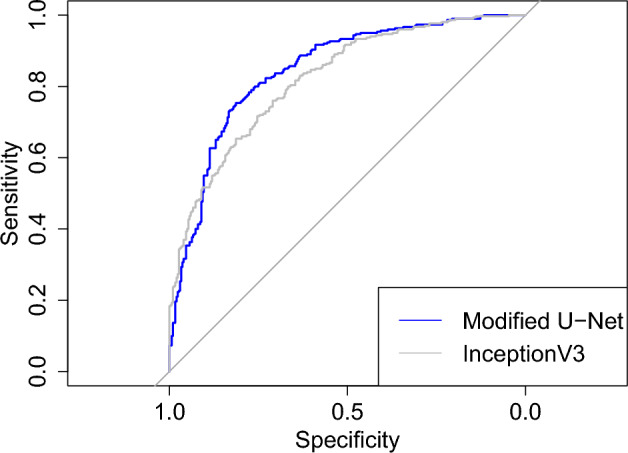
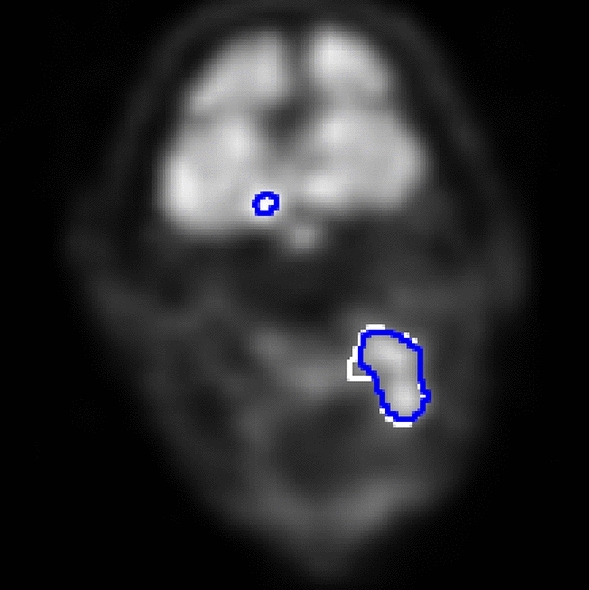
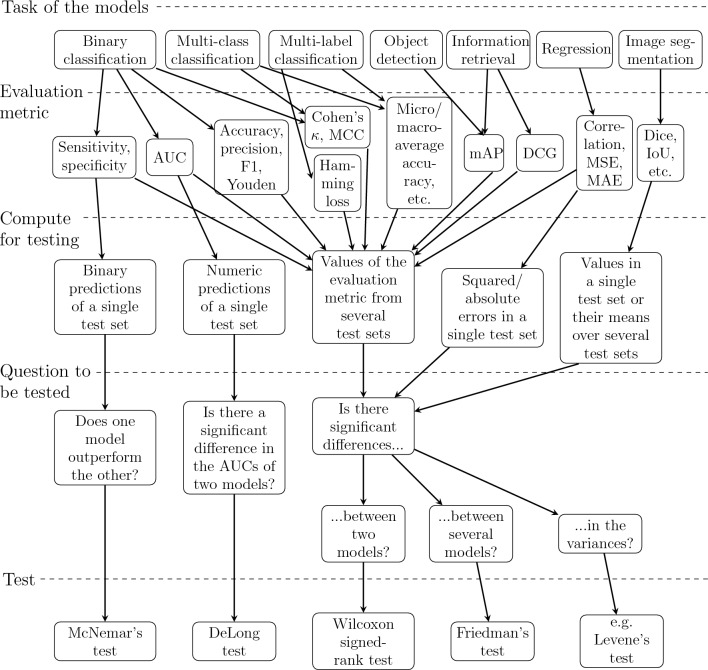
Research on different machine learning (ML) has become incredibly popular during the past few decades. However, for some researchers not familiar with statistics, it might be difficult to understand how to evaluate the performance of ML models and compare them with each other. Here, we introduce the most common evaluation metrics used for the typical supervised ML tasks including binary, multi-class, and multi-label classification, regression, image segmentation, object detection, and information retrieval. We explain how to choose a suitable statistical test for comparing models, how to obtain enough values of the metric for testing, and how to perform the test and interpret its results. We also present a few practical examples about comparing convolutional neural networks used to classify X-rays with different lung infections and detect cancer tumors in positron emission tomography images.
Overview
The claims and statistics of this paper haven’t been checked yet.
Free: it reads the open-access text and checks the first 5 claims that cite a source we can check. Create a free account to check every claim.
Integrity signals
Registry
Cites
Statistics
Figures
Verification
Claims the paper makes
The claims and statistics of this paper haven’t been checked yet.
Free: it reads the open-access text and checks the first 5 claims that cite a source we can check. Create a free account to check every claim.
Self-check
Percentages, sums and reported differences re-computed from the paper’s own numbers.
The self-check needs the paper’s full text.
Citations
Cites
R: A Language and Environment for Statistical Computing
R Core Team (2025) · doi:10.32614/r.manuals · Cited by 352,181
U-Net: Convolutional Networks for Biomedical Image Segmentation
Ronneberger, O., Fischer, P., & Brox, T. (2015) · Lecture notes in computer science · doi:10.1007/978-3-319-24574-4_28 · Cited by 99,404
A Coefficient of Agreement for Nominal Scales
Cohen, J. (1960) · Educational and Psychological Measurement · doi:10.1177/001316446002000104 · Cited by 42,398 · cited 1×
“It was originally introduced as a measurement for the degree of agreement between two observers in psychology 20 but it can be applied to measure the agreement between the predicted and the real classes.”
BackgroundSciPy 1.0: fundamental algorithms for scientific computing in Python
Virtanen, P., Gommers, R., Oliphant, T. E., Haberland, M., Reddy, T., Cournapeau, D., Burovski, E., Peterson, P., Weckesser, W., Bright, J., et al. (2020) · Nature Methods · doi:10.1038/s41592-019-0686-2 · Cited by 38,430 · cited 2×
“Most of the test were preformed in Python with scipy (version: 1.7.3) 41 or statsmodels (version: 0.14.0) 48 .”
MethodInfluentialAn analysis of variance test for normality (complete samples)
SHAPIRO, S. S., & WILK, M. B. (1965) · Biometrika · doi:10.1093/biomet/52.3-4.591 · Cited by 23,480 · cited 1×
“The normality can be tested here with the Shapiro–Wilk test 54 ( shapiro in the package scipy.stats and shapiro.test in the package stats in R).”
MethodDeLong, E. R., DeLong, D. M., & Clarke-Pearson, D. L. (1988) · Biometrics · doi:10.2307/2531595 · Cited by 22,649 · cited 1×
“Namely, DeLong et al. 49 noticed that the Mann-Whitney statistic can be used as an estimate of an AUC and the theory of generalized U-statistic can be applied to compare two AUCs.”
MethodpROC: an open-source package for R and S+ to analyze and compare ROC curves
Robin, X., Turck, N., Hainard, A., Tiberti, N., Lisacek, F., Sanchez, J.-C., & Müller, M. (2011) · BMC Bioinformatics · doi:10.1186/1471-2105-12-77 · Cited by 13,697
Measures of the Amount of Ecologic Association Between Species
Dice, L. R. (1945) · Ecology · doi:10.2307/1932409 · Cited by 11,874 · cited 1×
“For this purpose, we can use the Sørensen–Dice similarity coefficient 30,31 , also known as the Dice score, defined for two sets X and Y as where | S | denotes the number of pixels or voxels in the set S 32 .”
MethodSciPy 1.0: fundamental algorithms for scientific computing in Python
Virtanen, P., Gommers, R., Oliphant, T. E., Haberland, M., Reddy, T., Cournapeau, D., Burovski, E., Peterson, P., Weckesser, W., Bright, J., et al. (2019) · Apollo - University of Cambridge Repository · doi:10.17863/cam.64134 · Cited by 10,460
Machine learning: Trends, perspectives, and prospects
Jordan, M. I., & Mitchell, T. M. (2015) · Science · doi:10.1126/science.aaa8415 · Cited by 9,955
Research works printed but not linked: 9
- Demšar J Statistical comparisons of classifiers over multiple data sets J. Mach. Learn. Res. 2006 7 1 30
- Planche B Andres E Hands-On Computer Vision with TensorFlow 2: Leverage Deep Learning to Create Powerful Image Processing Apps with TensorFlow 2.0 and Keras 2019 Packt Publishing
- Zhu, W., Zeng, N. & Wang, N. Sensitivity, specificity, accuracy, associated confidence interval and ROC analysis with practical SAS implementations. In NESUG proceedings: health care and life sciences, Baltimore, Maryland 67, vol. 19 (2010).
- Small Casler K Gawlik K Laboratory Screening and Diagnostic Evaluation: An Evidence-Based Approach 2022 Springer
- Lantz B Machine Learning with R: Learn Techniques for Building and Improving Machine Learning Models, from Data Preparation to Model Tuning, Evaluation, and Working with Big Data 2023 Packt Publishing
- Sørensen T A method of establishing groups of equal amplitude in plant sociology based on similarity of species and its application to analyses of the vegetation on Danish commons K. Dan. Vidensk. Selsk. 1948 5 4 1 34
- van Rossum G Drake FL Python 3 Reference Manual 2009 CreateSpace
- Bartlett MS Properties of sufficiency and statistical tests Proc. R. Stat. Soc. Ser. A 1937 160 268 282
- Fox J Weisberg S An R Companion to Applied Regression 2019 3 Sage
Cited by
Items 501–600 of 1,000
Harmful data enhanced anomaly detection for quasi-periodic multivariate time series
Wang, L., Zhou, Y. Z., Ke, W., Zheng, D., Min, F., & Li, H. (2025) · Applied Intelligence · doi:10.1007/s10489-025-06461-x · Cited by 4
Concrete section segmentation with advanced deep learning models and refined labeling approaches
Mesfin, W. M., Kim, G., & Kim, H.-K. (2025) · Expert Systems with Applications · doi:10.1016/j.eswa.2025.127697 · Cited by 4
User Behavior Prediction with Deep Learning: An Evaluation of CNN, LSTM, RNN, and Hybrid Models
Sreedevi, S., Rajashekar, Ayesha, S., Basha, M. S. A., & Prathibha, L. (2025) · International Conference on Integrated Circuits and Communication Systems (ICICACS) · doi:10.1109/icicacs65178.2025.10967848 · Cited by 4
“[14].”
Chen, M., Wang, Y., Lei, H., Zhang, F., Huang, R., & Yang, Z. (2025) · PubMed · doi:10.12122/j.issn.1673-4254.2025.04.05 · Cited by 4
OPTIMASI MODEL RESNET50 UNTUK KLASIFIKASI SAMPAH
Sihabillah, A., Tholib, A., & Basit, I. I. (2025) · INDEXIA Infomatic and Computational Intelligent Journal · doi:10.30587/indexia.v6i2.9342 · Cited by 4
“Untuk menilai kinerja model dalam mendeteksi sampah organik dan anorganik, beberapa metrik evaluasi yang digunakan pada penelitian ini adalah : 1) Akurasi Akurasi adalah metrik dasar yang digunakan untuk mengukur seberapa sering model memprediksi kelas yang benar[13].”
Deep Learning to Enhance Diagnosis and Management of Intrahepatic Cholangiocarcinoma
Theocharopoulos, C., Theocharopoulos, A., Papadakos, S. P., Machairas, N., & Pawlik, T. M. (2025) · Cancers · doi:10.3390/cancers17101604 · Cited by 4
“[20,21] Intrahepatic cholangiocarcinoma (iCCA) is an aggressive malignancy with a grave demonstrated iCCA other hepatic particularly hepatocellular , (HCC high reproducibility differential response to systemic therapies and the different surgical for iCCA versus HCC, an accurate pretreatment…”
Su, Q., Liu, L., Hu, Z., Wang, T., Wang, H., Guo, Q., Liao, X., Sha, Y., Li, F., Dong, Z., et al. (2025) · Frontiers in Plant Science · doi:10.3389/fpls.2025.1513953 · Cited by 4
“Several parameters were used to evaluate the performance, including precision ( P ), recall ( R ), average precision ( AP ), mean average precision ( mAP ) as well as F1 score (Rainio et al, 2024).”
Identify and map lane-level updates in roads in restricted access areas based on driving record data
Hu, H., Huang, S., Wu, H., Li, J., Fu, T., Wang, J., Huang, W., Liu, C., Ying, S., & Li, B. (2025) · International Journal of Geographical Information Systems · doi:10.1080/13658816.2025.2512218 · Cited by 4
“For the restricted access area identification, the score represents the ratio of the model identification situation results to the actual situation (Rainio et al .”
Kusters, C. H. J., Boers, T. G. W., Jaspers, T. J. M., Jong, M. R., van Heslinga, R. A. H. V. E., Jukema, J. B., Fockens, K. N., de Groof, A. J., Bergman, J. J. G. H. M., van der Sommen, F., et al. (2025) · Computer Methods and Programs in Biomedicine · doi:10.1016/j.cmpb.2025.108891 · Cited by 4
Parent, C., Honari, H., Tocci, T., Simon, F., Zaïdi, S., Jan, A., Aubert, V., Delattre, O., Isambert, H., Wilhelm, C., et al. (2025) · Small Science · doi:10.1002/smsc.202500173 · Cited by 4
Semantic segmentation of deep-sea polymetallic nodules based on an improved DeepLabV3+ algorithm
Yang, J., Xu, T., Zhu, J., Zhang, W., Zhao, Q., Xu, G., & Zhai, G. (2025) · Marine Georesources and Geotechnology · doi:10.1080/1064119x.2025.2550000 · Cited by 4
“For the characteristics of semantic segmentation tasks, this study selected mIoU (mean Intersection over Union) (Behera, Rath, and Sethy 2021),mPA (mean Pixel Accuracy) (Ong, Haw, and Ng 2019), and mPrecision (mean Precision) as the primary evaluation metrics (Rainio, Teuho, and Kl � en 2024).”
Comparative Analysis of GPT and BERT for Automated Open-Ended Question Scoring
Hwang, S., Sivakumar, S., & Chiong, C. W. R. (2025) · 2025 5th International Conference on Artificial Intelligence and Education (ICAIE) · doi:10.1109/icaie64856.2025.11158300 · Cited by 4
“Pearson Correlation (Pearson) is a method that measures the linear relationship between the actual label and the predicted label [12]. where x i is the true label, the human score. y i is the predicted label, the model prediction score. n is the number of instances, x and y denote the mean value of…”
Sheet, S. S. M., Al-Hatab, M. M. M., & Qasim, M. A. (2025) · IAES International Journal of Artificial Intelligence · doi:10.11591/ijai.v14.i5.pp4006-4016 · Cited by 4
“In this study, different metrics have been used to evaluate classification of each ML model [27], [28]. i) Accuracy: this metric represents the ratio of correctly classified samples to the total number of samples [20].”
Embedding Models: A Comprehensive Review with Task-Oriented Assessment
Ajallouda, L., Saissi, M. H., & Zellou, A. (2025) · International Journal of Advanced Computer Science and Applications · doi:10.14569/ijacsa.2025.0161056 · Cited by 4
Menendez, H. M., Chang, Y. K., Palmer, E., Manna, F. L., Moreno, E. R. V., Parsons, I. L., Turner, B. L., Rekabdarkolaee, H. M., Husmann, A. L., & Tedeschi, L. O. (2025) · Journal of Animal Science · doi:10.1093/jas/skaf440 · Cited by 4
Mishra, L. N., Rangari, A. J., Nagrare, S. M., & Nayak, S. K. (2026) · PLoS ONE · doi:10.1371/journal.pone.0340167 · Cited by 4
“Matthews Correlation Coefficient (MCC) provides balanced treatment of all confusion matrix elements [39], precision-recall analysis avoids mis-leading conclusions from accuracy alone [40], and statistical testing (Wilcoxon, Bonferroni correction, effect sizes) ensures reliable model comparisons…”
A Cross-Resolution Surface Net Radiative Inversion Based on Transfer Learning Methods
Miao, S., He, Q., Zhu, L., Yu, M., Gu, Y., & Zhou, M. (2024) · Remote Sensing · doi:10.3390/rs16132450 · Cited by 4
Predictive Modeling of Software Behavior Using Machine Learning
Saksupawattanakul, C., & Vatanawood, W. (2024) · IEEE Access · doi:10.1109/access.2024.3451012 · Cited by 4
“In addition, [42], [43], [44], [45] proposed a methodology for selecting the decision threshold using Youden’s J-index, a metric commonly utilized in receiver operating characteristic (ROC) curve analysis.”
MethodKetthong, P., Samkunta, J., Mai, N. T., Kamal, M. A. S., Murakami, I., & Yamada, K. (2024) · Sci · doi:10.3390/sci6040084 · Cited by 4
Methodology for Creating Annotated Datasets of Biological Objects in Microscopic Images
Коваленко, С. В., Kovalenko, S., Kutsenko, A., Godlevskyi, M., Severin, V. P., & Kovalenko, A. (2024) · IEEE KhPI Week on Advanced Technology (KhPIWeek) · doi:10.1109/khpiweek61434.2024.10878016 · Cited by 4
“To assess the quality of the developed model, we calculate the following metrics accuracy, precision, recall, F1-score [15]: accuracy is the proportion of correctly classified samples from the total number of samples; precision is the proportion of correctly classified positive samples out of the…”
Enhanced Miss Forest and Multivariate Time Series Prediction of Wind Speed Using Deep Learning
Sidhaarth, T., Obla, P. A., Patil, N. P., Stamenković, Z., & Raja, S. P. (2025) · Journal of Circuits Systems and Computers · doi:10.1142/s0218126625300065 · Cited by 4
Porto, J. V. D. A., Szemes, P. T., Pistori, H., & Menyhárt, J. (2025) · IEEE Access · doi:10.1109/access.2025.3565901 · Cited by 4
“…it suggests the use of the aforementioned popular metrics in robust statistical comparisons, utilizing tools such as mean and standard deviation tables, analysis of variance, and boxplots, in order to provide sufficient data for concrete numerical conclusions, as discussed by [106] and [107].”
Chaoyuan, S., Zhang, W., Sun, P., Wang, H., & Yang, C. (2025) · Sensors · doi:10.3390/s25103208 · Cited by 4
“Accuracy measures the overall correctness of predictions [36], while Precision and Recall reflect the model’s ability to correctly identify positive instances and minimize false-negatives, respectively.”
A Bio-Inspired Grey Wolf Approach to Enhancing Fake Profile Detection in Online Social Media
Sekkal, N., Mahammed, N., & Guellil, Z. (2025) · Ingénierie des systèmes d information · doi:10.18280/isi.300403 · Cited by 4
“Additional evaluation metrics: While Table 10 focuses on common metrics like Accuracy, Precision, Recall, and F1-score, other evaluation metrics [26], such as Area Under the ROC Curve (AUC), Matthews Correlation Coefficient (MCC), or Specificity, could provide deeper insight into model performance,…”
Enhancing IIoT security: a hybrid AI framework for intrusion detection powered by Gen-X AI
Eddine, A. D., Ghazli, A., & Bouache, M. (2025) · International Journal of Computers and Applications · doi:10.1080/1206212x.2025.2531033 · Cited by 4
“Precision which is the measure that indicates how many of the predicted positive instances are actually correct [37], it calculated using the Equation (2).”
Patil, J., Patil, V., Prajapati, K., Patel, D., Trivedi, S., & Patel, R. (2025) · Lecture notes in networks and systems · doi:10.1007/978-981-96-1264-2_23 · Cited by 4
Lazarenko, I., & Sitnikova, E. (2025) · Journal of Neuroscience Methods · doi:10.1016/j.jneumeth.2025.110555 · Cited by 4
Christensen, C., Ferreira, A. C., Cherono, W., Maximiadi, M., Nyaguthii, B., Ogino, M., Daniel Herrera, C., & Farine, D. R. (2025) · Animal Behaviour · doi:10.1016/j.anbehav.2025.123386 · Cited by 4
Performance is not All You Need: Sustainability Considerations for Algorithms
Li, X., Zhang, C., Wang, H., Gowda, S. N., Li, Y., & Jin, X. (2026) · Lecture notes in computer science · doi:10.1007/978-981-95-5761-5_23 · Cited by 4
Tian, Y. (2024) · Applied and Computational Engineering · doi:10.54254/2755-2721/67/20240628 · Cited by 4
Samani, R., Dehghani, M., & Shahrokh, F. (2024) · arXiv (Cornell University) · doi:10.48550/arxiv.2403.09722 · Cited by 4
“This metric spans from 0 to 1, providing insight into the overall performance of the classification model [48].”
BackgroundEnergy Considerations for Large Pre-trained Neural Networks
Mei, L. (2025) · San José State University ScholarWorks (San Jose State University) · doi:10.31979/etd.99mx-wpkz · Cited by 4
Advancing Data Quality Assurance with Machine Learning: A Case Study on Wind Vane Stalling Detection
de Feiter, V. S., Strickland, J. M. I., & Garcia-Marti, I. (2025) · Atmosphere · doi:10.3390/atmos16020129 · Cited by 3
Effect of Interactive E-Book to Measure Mathematical Representations on Optics in High School
Panuqih, F. W. A., Istiyono, E., & Jumadi, J. (2024) · Jurnal Penelitian Pendidikan IPA · doi:10.29303/jppipa.v10i9.6507 · Cited by 3
“Since the data are not normally distributed, the Mann-Whitney U test, a non-parametric statistical test, is used to analyze differences between two independent groups (Dexter, 2013; Rainio et al., 2024), namely the experimental and control classes.”
MethodDeepEnhancerPPO: An Interpretable Deep Learning Approach for Enhancer Classification
Mu, X., Chen, Q., Shi, B., Xu, L., Huang, Z., Xu, Y., & Zhang, K. (2024) · International Journal of Molecular Sciences · doi:10.3390/ijms252312942 · Cited by 3
“Generally, higher values for these metrics indicate superior model performance [69].”
Guérendel, C., Petrychenko, L., Chupetlovska, K., Bodalal, Z., Beets‐Tan, R. G. H., & Benson, S. (2024) · European Radiology · doi:10.1007/s00330-024-11321-2 · Cited by 3
Meister, J. A., & Nguyen, K. A. (2025) · Machine Learning · doi:10.1007/s10994-024-06701-0 · Cited by 3
“The null hypothesis assumes that the median of differences of matched pairs is equal to 0 [66].”
Rainio, O., Jaakkola, M. K., & Klén, R. (2025) · Journal of Medical Engineering & Technology · doi:10.1080/03091902.2025.2466834 · Cited by 3
“For each cluster, we also computed within-cluster precision (percentage of the curves in the cluster that are correctly classified) and recall (percentage of the curves from the corresponding organ correctly classified to this cluster) [23].”
Self-citationLi, B. C., Ding, K., & Dera, D. (2025) · Journal of medical imaging · doi:10.1117/1.jmi.12.2.024007 · Cited by 3
“Following current trends in the machine learning community for validating medical image segmentation accuracy, 17,34 the non-parametric, two-sided Wilcoxon signed-rank test is used to evaluate whether there is a statistically significant difference in cross-validated Dice scores of MD-SA2 compared…”
FTIR-based machine learning for prediction of malignant transformation in oral epithelial dysplasia
Wang, R., Sabzian, R., Gibson, T. M., & Wang, Y. (2025) · The Analyst · doi:10.1039/d5an00117j · Cited by 3
Lamptey, E., Oparebea, J., Anyaele, G., Ofosu, B., Hanson, G., Sakyi, P. O., Agyapong, O., Amuzu, D. S. Y., Miller, W. A., Kwofie, S. K., et al. (2025) · Pharmaceuticals · doi:10.3390/ph18060776 · Cited by 3
Vanderhoof, M. K., Nieuwlandt, P., Golden, H. E., Lane, C. R., Christensen, J. R., Keenan, W. J., & Dolan, W. (2025) · Wetlands Ecology and Management · doi:10.1007/s11273-025-10066-z · Cited by 3
“In cases where variables can be isolated (e.g., comparing basins with tile drainage to basins without tile drainage), assessing the differences between two similarly structured models can help quantify the impact of a variable, like tile drainage (Rainio et al. 2024).”
Liapi, G. D., Loizou, C. P., GRIFFIN, M. B., Pattichis, C. S., Nicolaides, A. N., & Kyriacou, E. C. (2025) · Frontiers in Digital Health · doi:10.3389/fdgth.2025.1484231 · Cited by 3
“All metrics used are summarized in (46, 47).”
Eloutouate, L., Tani, H. G., Elaachak, L., Elouaai, F., & Bouhorma, M. (2025) · doi:10.3390/cmsf2025010013 · Cited by 3
Eser, A., & Erdoğan, S. B. (2025) · PLoS ONE · doi:10.1371/journal.pone.0325850 · Cited by 3
Nguyen, Q.-T., Le, L., Tran, X.-T., Bai, D. L., Duong‐Trung, N., Do, T., & Lin, C. (2025) · Proceedings of the conference - Association for Computational Linguistics. Meeting · doi:10.18653/v1/2025.acl-srw.12 · Cited by 3
“Under this configuration, it achieved an accuracy of 0.9431 0.0288 , ± and a Brier score of 0.0464 0.0192 , F1-score of 0.9023 0.0379 , ± marking the highest accurate classification and calibration among all tested setups.”
InfluentialConvolutional Autoencoder Frameworks for Projection Multi-Photon 3d Printing
Jamil, I. R., Johnson, J. E., & Xu, X. (2025) · Additive manufacturing · doi:10.1016/j.addma.2025.104929 · Cited by 3
Thirumoorthy, K., Britto, J. J. J., & Raj, R. R. V. (2025) · Applied Soft Computing · doi:10.1016/j.asoc.2025.113713 · Cited by 3
KAN-MemViT: A memory cached vision transformer with Kolmogorov–Arnold network for seizure prediction
Peng, H., Feng, W., Nie, C., Feng, H., Lv, H., Wang, S., & Zhao, Y. (2025) · Biomedical Signal Processing and Control · doi:10.1016/j.bspc.2025.108470 · Cited by 3
Nag, M. K., Sadhu, A. K., Das, S., Kumar, C., & Choudhary, S. (2025) · Physical and Engineering Sciences in Medicine · doi:10.1007/s13246-025-01626-x · Cited by 3
Rahman, R., Sharif, S. T., & Sikder, M. H. (2025) · IEEE International Conference on Quantum Photonics, Artificial Intelligence & Networking (QPAIN) · doi:10.1109/qpain66474.2025.11172189 · Cited by 3
“[15] Lastly, Yuchao Zheng et al.'s study discusses the application of ensemble methods to integrate several deep learning models for increased accuracy in the categorization of breast cancer histopathology images.”
Using Predictive Models and AI for AKI Research
Rajagopal, M., Chan, L., & Nadkarni, G. N. (2025) · Seminars in Nephrology · doi:10.1016/j.semnephrol.2025.151673 · Cited by 3
Vahab, N., & Tyagi, S. (2025) · BMC Artificial Intelligence · doi:10.1186/s44398-025-00012-7 · Cited by 3
Vozniak, V., Barmak, O., & Krak, I. V. (2025) · RADIOELECTRONIC AND COMPUTER SYSTEMS · doi:10.32620/reks.2025.3.11 · Cited by 3
Zhou, Z., Feng, S., Zhou, X., Yu, J., Zhu, J., Pang, L., Liu, C., & Liu, J. (2025) · Scientific Reports · doi:10.1038/s41598-025-21164-6 · Cited by 3
“Through comprehensive consideration of multiple evaluation metrics, such as the area under the curve (AUC), precision recall curve, decision curve analysis, and calibration curve, a detailed assessment of the model results was conducted 54,55 .”
Farhani, N., Hermassi, M., Hajjaji, M. A., & Zrigui, M. (2025) · Intelligenza Artificiale · doi:10.1177/17248035251390608 · Cited by 3
“It is de fi ned as (Rainio et al., 2024): − Recall (R) quanti fi es the proportion of true positive detections among all actual positives: − F1-Score is the harmonic mean of Precision and Recall, offering a balanced measure of detection performance (Rajendran and Vyas, 2024): − Average Precision (AP)…”
Devi, N. L., Britto, K. R. A., Savithri, C. N., & Jemila, G. R. A. (2025) · Expert Systems with Applications · doi:10.1016/j.eswa.2025.130301 · Cited by 3
Genome region aware CADD thresholds for noncoding variant prioritization
Tenywa, J.-F., Lamouche, J.-B., Baer, S., Nicaise, S., Béchec, A. L., Piton, A., & Muller, J. (2025) · NAR Genomics and Bioinformatics · doi:10.1093/nargab/lqaf157 · Cited by 3
“Here, we prioritized a balance be-tween precision (identifying true positives over false positives) and recall, with a weight of 0.4 given to Youden’s J statistic, emphasizing the importance of capturing true positives (pathogenic variants) [ 23 ].”
InfluentialDogan, A., Sowers, R. B., & Hernandez, M. E. (2025) · IEEE Transactions on Affective Computing · doi:10.1109/taffc.2025.3638274 · Cited by 3
“A sign test [71], [72], [73] was applied to compare BVP’s mean TPR with other modalities.”
Ballistocardiography Signal Quality Assessment Using Machine Learning
Ládrová, M., Vilímek, D., Barnova, K., Brablík, J., & Martinek, R. (2025) · Annual International Conference of the IEEE Engineering in Medicine and Biology Society (EMBC) · doi:10.1109/embc58623.2025.11253571 · Cited by 3
“…SE and PPV. Additionally, Receiver Operating Characteristic (ROC) curve and Area Under the ROC Curve (AUC) were calculated to illustrate the performance of the binary classifier at various decision thresholds, when ROC curve is obtained by plotting the TP rate (SE) against the FP rate (FPR) [22].”
Şevik, U., & Aydemir, F. S. (2025) · Scientific Reports · doi:10.1038/s41598-025-31918-x · Cited by 3
Automated Feature Segmentation of Ultra-Widefield OCT Images
Jackson, J., Woodward, M. K., Sutter, D. A., Coyner, A. S., Wang, C. X., Ostmo, S. R., Chiang, M. F., Jia, Y., Huang, D., Jian, Y., et al. (2025) · Ophthalmology Science · doi:10.1016/j.xops.2025.101029 · Cited by 3
“38,39 B-Scan Segmentation B-scans from the UWF-OCT volumes of 5 unique patients were used to train a u-net.”
Moj, M., & Marathe, S. (2025) · Measurement · doi:10.1016/j.measurement.2025.120090 · Cited by 3
Intuyod, K., Kongsintaweesuk, S., Eiamchai, P., Luvira, V., Chaidee, A., Techasen, A., Pinlaor, P., Pairojkul, C., Blair, D., Umezawa, T., et al. (2025) · ACS Applied Nano Materials · doi:10.1021/acsanm.5c04536 · Cited by 3
Deep learning-based fractured tooth detection in occlusal radiographs
Nusari, A. N., Oncu, E., Oral, E. A., Özbek, İ. Y., Miloğlu, Ö., & Güller, M. T. (2025) · BMC Oral Health · doi:10.1186/s12903-025-07445-6 · Cited by 3
Rahmaliyadi, V., & Maridjan, M. M. (2025) · Journal of Intelligent Systems Technology and Informatics · doi:10.64878/jistics.v1i2.12 · Cited by 3
Trust and Accountability in Knowledge Graph-Based AI for Self Determination
Domingue, J., Ibáñez, L.-D., Kirrane, S., Vidal, M.-E., & Rohde, P. D. (2025) · Dagstuhl reports · doi:10.34657/39457 · Cited by 3
Zeb, M. F., Iqbal, A., Husnain, G., Zafar, W., Junaid, A., Alzahrani, A. S., Bukhari, S. H. R., & Naidu, R. S. (2025) · Frontiers in Plant Science · doi:10.3389/fpls.2025.1664650 · Cited by 3
“It visually represents how the model performs by comparing its predicted outputs to the actual values (Rainio et al., 2024).”
Machine Learning-Based Water Quality Prediction
Al-Ataby, A., Getu, B., & Attia, H. (2025) · Journal of Sustainable Development of Energy Water and Environment Systems · doi:10.13044/j.sdewes.d13.0634 · Cited by 3
“…F1-score is the harmonic mean of precision (the proportion of true positive results among the total positive results) and recall (the proportion of total positives that were identified), which in turn indicates that the model is performing well in avoiding false positives and false negatives [32] .”
Alqithami, S., Stiawan, D., & Budiarto, R. (2025) · e-Prime – Nexus of Electrical Electronic and Intelligent Engineering · doi:10.1016/j.prime.2025.101146 · Cited by 3
Zablah, I., Agudelo-Santos, C., Molina, Y., Madrid, M., Zelaya, A., Argueta, E., Diaz, S., & Garcia-Loureiro, A. J. (2026) · Diagnostics · doi:10.3390/diagnostics16010132 · Cited by 3
SimNet-SFDR: PET motion artifact correction via Sim(3)-Equivariant and Frequency-Based registration
Zhou, H., Wu, Z., He, L., Hu, Y., Qin, Z., Wang, F., & He, J. (2026) · Biomedical Signal Processing and Control · doi:10.1016/j.bspc.2026.109569 · Cited by 3
Shynkaruk, O. A., Byshevets, N., Яковенко, О., Валеріївна, А. О., Dutchak, M., Yarmolenko, M., & Сергієнко, К. (2026) · Physical Education Theory and Methodology · doi:10.17309/tmfv.2026.1.10 · Cited by 3
“Machine learning approaches for predicting mental health disorders in military populations are currently undergoing rapid development (Pareek et al., 2024; Rainio et al., 2024).”
Parada, E. C., Vivar-Estudillo, G., Mayoral, L. P.-C., Hernández‐Huerta, M. T., Pérez-Santiago, A. D., Romero-Díaz, C., Mayoral, E. P., García-Montalvo, I. A., Martínez-Martínez, L., Ruiz, H. M., et al. (2026) · Healthcare · doi:10.3390/healthcare14020247 · Cited by 3
“Therefore, all these advances require rigorous assessment metrics and statistical frameworks, as emphasized by Rainio et al. [46], particularly given the critical importance of interpretability and accuracy in biomedical time-series analysis [47], as well as the need to move beyond traditional…”
Dave, A., Dave, A., & Moussa, I. D. (2026) · Bioengineering · doi:10.3390/bioengineering13020167 · Cited by 3
“To ensure the reliability of these models and better understand their performance, they must be evaluated using a range of standardized metrics [24].”
Kaur, A., Randhawa, G. S., Farooque, A. A., Ali, M., Singh, H., Al-Mughrabi, K. I., Bell, D., & Singh, R. (2026) · Journal of Agriculture and Food Research · doi:10.1016/j.jafr.2026.102733 · Cited by 3
Moe, S. J. S., Khan, A. N., Nguyen, A. T., & Kim, D. (2026) · Cluster Computing · doi:10.1007/s10586-025-05908-7 · Cited by 3
“Model performance is evaluated using Mean Square Error (MSE) and Mean Absolute Error (MAE) for regression [43], and Accuracy, Binary Crossentropy [11], and Sparse Categorical Crossentropy for classification tasks [ 7].”
Machine learning models enhance detection of arrhythmogenic right ventricular cardiomyopathy
Quansah, K. K., Murphy, S. A., Kwon, E., Anderson, E., Tichnell, C., Murray, B. A., Gaine, S. P., Gasperetti, A., James, C. A., Calkins, H. G., et al. (2026) · Machine Learning Health · doi:10.1088/3049-477x/ae451a · Cited by 3
“The Friedman χ 2 statistic reflects the degree to which the average performance ranks of the eight models deviate from what would be expected if they performed identically, making it an appropriate metric for multi-model comparison [32].”
Asnake, A. A., Gebrehana, A. K., Asmare, Z. A., Seifu, B. L., Asebe, H. A., Bezie, M. M., Tsega, S. S., Negussie, Y. M., Melkam, M., & Fente, B. M. (2026) · Scientific Reports · doi:10.1038/s41598-026-40401-0 · Cited by 3
“These metrics collectively ensured a comprehensive assessment of model performance 27–29 .”
Abdelghani, R. M., Morsi, I., Taha, T., El-Shafie, W., & Kashyout, A. E. B. (2025) · International Conference on Future Telecommunications and Artificial Intelligence (IC-FTAI) · doi:10.1109/ic-ftai67960.2025.11384623 · Cited by 3
Li, H., Pan, W., Chen, H., & Hou, Y. (2026) · International Journal of Human-Computer Interaction · doi:10.1080/10447318.2026.2628143 · Cited by 3
“…aspects of model performance: overall classification correctness, balance of predictive performance across categories, penalty for probabilistic misclassification, and the ability to discriminate between classes (Nguyen et al., 2024; Rainio et al., 2024; Terven et al., 2025; Yao et al., 2025).”
Huang, Y., & Agarwal, S. K. (2026) · Clinical Therapeutics · doi:10.1016/j.clinthera.2026.01.007 · Cited by 3
Menacher, L. M., Ward, L. J., Heintz, F., Gréen, H., & Sysoev, O. (2026) · Analytical Chemistry · doi:10.1021/acs.analchem.5c05404 · Cited by 3
“39,40 The nonparametric test ranks the performance difference d of two classifiers based on N datasets and compares the ranks of positive and negative differences.”
Agrawal, A. K., Zou, Y., Abdelmegid, M., González, V. A., & Jin, H. (2026) · Advanced Engineering Informatics · doi:10.1016/j.aei.2026.104510 · Cited by 3
Metrics for Artificial Intelligence in Medicine: A Reference Resource
Gonzales, R. A., Takahashi, M. S., Retson, T., Banerjee, I., Park, S. H., & Kahn, C. E. (2026) · Radiology Artificial Intelligence · doi:10.1148/ryai.260070 · Cited by 3
An enhanced gravitational search algorithm for feature selection in telecom churn prediction
Hendro, H., Shiddiqi, A. M., & Saikhu, A. (2026) · Results in Engineering · doi:10.1016/j.rineng.2026.109989 · Cited by 3
A review of evolving remote sensing and automated techniques in rock glacier mapping
Tamang, S., MacDonell, S. A., Robson, B. A., Shulmeister, J., & Brasington, J. (2026) · Earth-Science Reviews · doi:10.1016/j.earscirev.2026.105473 · Cited by 3
Optimizing Feature Extraction for Naïve Bayes Sentiment Analysis
Achmad, A., & Budiman, F. (2026) · Journal of Applied Informatics and Computing · doi:10.30871/jaic.v10i1.12041 · Cited by 3
Route Optimization Based on Quantum-Weighted Long- and Short-Term Memory Networks
An, J., Hu, J., Zhang, G., & Ma, D. (2026) · Chinese Journal of Electronics · doi:10.23919/cje.2025.00.159 · Cited by 3
Aryan, M., Struble, D. C., Campbell, F. A., Upreti, S., Abedin, A., Khambhawla, A., Mittal, J., Dimitriyev, M. S., Pentzer, E., Sukhishvili, S. A., et al. (2026) · RSC Applied Polymers · doi:10.1039/d5lp00380f · Cited by 3
Klasifikasi Komentar Toksik Berbahasa Indonesia di Media Sosial Berbasis Fine-Tuning IndoBERT
Hakim, L. N., Hana, F. M., & Wahyudin, W. C. (2026) · JURIKOM (Jurnal Riset Komputer) · doi:10.30865/jurikom.v13i1.9449 · Cited by 3
Alalawi, K. (2026) · Applied Sciences · doi:10.3390/app16115684 · Cited by 3
Karadeniz, A. (2026) · Computers & Electrical Engineering · doi:10.1016/j.compeleceng.2026.111251 · Cited by 3
Raza, A., Firdous, A., Raza, M. A., & Ajazuddin, M. (2026) · In Silico Research in Biomedicine · doi:10.1016/j.insi.2026.100468 · Cited by 3
Local–Global Spatio-Temporal Learning for Fishing Vessel Behavior Recognition Using AIS Trajectories
Wang, N., Song, S., Ji, D., Zhao, L., & Yu, H. (2026) · Journal of Marine Science and Engineering · doi:10.3390/jmse14131177 · Cited by 3
Qolbu, A. A., Fitriyati, N., & Inayah, N. (2025) · Jurnal Fourier · Cited by 3
An Innovative Hybrid Model for Effective DDOS Attack Detection in Software Defined Networks
Can, Q.-T., Nguyen, T. D., Pham, M. B., Nguyen, T. T., Tran, T. H. T., & Dinh, T. T. M. (2024) · International journal of Computer Networks & Communications · doi:10.5121/ijcnc.2024.16607 · Cited by 3
“All performance metrics are defined by [25].”
Mamba, S., Djomou, F. R. K., & Awe, O. O. (2024) · STEAM-H: Science, Technology, Engineering, Agriculture, Mathematics & Health · doi:10.1007/978-3-031-72215-8_27 · Cited by 3
Tran, A. T., Desser, D., Zeevi, T., Karam, G. A., Zietz, J., Dell’Orco, A., Chen, M. K., Malhotra, A., Qureshi, A. I., Murthy, S. B., et al. (2024) · Applied Sciences · doi:10.3390/app15010111 · Cited by 3
Pavurala, D., Liao, D., & Pasunuru, C. R. (2024) · IEEE International Conference on Big Data (BigData) · doi:10.1109/bigdata62323.2024.10825873 · Cited by 3
“The following metrics [14], [18] are employed for evaluation, specifically tailored to assess defect detection in this study:”
Metadata
- Authors
- Rainio, O., Teuho, J., & Klén, R.
- Affiliations
- University of Turku (FI)
- Corresponding author
- Rainio, Oona
- Venue
- Scientific Reports
- Published
- 2024-03-13
- Volume
- 14
- Issue
- 1
- Pages
- 6086-6086
- ISSN
- 2045-2322 (ISSN-L)
- PMC
- PMC10937649
- OpenAlex
- W4392741075
- Cited by
- 1,338
- References
- 60
- Citations by year
- 2026: 594 · 2025: 593 · 2024: 151
- FWCI
- 197.04
- Type
- journal article
- Language
- en
- Update notices
- correction (2024-07-08)
- Open access
- gold
- doi.org
- Licence
- cc-by
- creativecommons.org/licenses/by/4.0 (tdm)
- creativecommons.org/licenses/by/4.0 (vor)
- Locations
- Scientific Reports (publishedVersion, cc-by)
- PubMed Central (publishedVersion, cc-by)
- PubMed (publishedVersion)
- UTUPub (University of Turku) (submittedVersion)
- DOAJ (DOAJ: Directory of Open Access Journals) (submittedVersion, cc-by-sa)
- Funders
- Suomen Kulttuurirahasto
- Jenny ja Antti Wihurin Rahasto
- Topics
- Physical Sciences › Computer Science › Artificial Intelligence › Machine Learning and Data Classification
- Physical Sciences › Computer Science › Artificial Intelligence › Imbalanced Data Classification Techniques
- Physical Sciences › Computer Science › Computer Vision and Pattern Recognition › Advanced Neural Network Applications
- Keywords
- hypothesis testing, model comparison, supervised learning, binary classification, multi-class classification, multi-label classification, regression analysis, image segmentation, object detection, information retrieval, convolutional neural networks
- MeSH terms
- Machine Learning, Supervised Machine Learning, Image Processing, Computer-Assisted, Neural Networks, Computer, Positron-Emission Tomography
About these checks
Registry, retraction, Cites and statistics results are computed, not judged, with one exception: a printed reference that no index lists is read once by a model before it counts as a citation error. Claims are extracted by a model and kept only when their quote appears verbatim in the text; each cited source is then checked, with a model’s help, for whether it says what the claim relies on. Those verdicts can be wrong — read the claim’s quote and the cited source before relying on one.
Statistics and arithmetic are recomputed, not judged.
Confidence bands are shown only for fields calibrated on our annotated test set. None is calibrated yet, so no band is shown.
What counts as a claim ›How we measure confidence ›How we check this ›
Are you an author, or do you see a problem with this page? Request a review
Data sources
Bibliographic data: Semantic Scholar, OpenAlex, Crossref.
Contains information from the Semantic Scholar Academic Graph Datasets, made available under the ODC Attribution License (ODC-BY 1.0).
Semantic Scholar’s data is described in: Kinney, R., et al. (2023). The Semantic Scholar Open Data Platform. arXiv:2301.10140.
