

The DOI matches its Crossref record; 4 of the 4 references it cites were found in a registry or an index.
PCB defect detection algorithm based on CDI-YOLO
Open accessAbstract
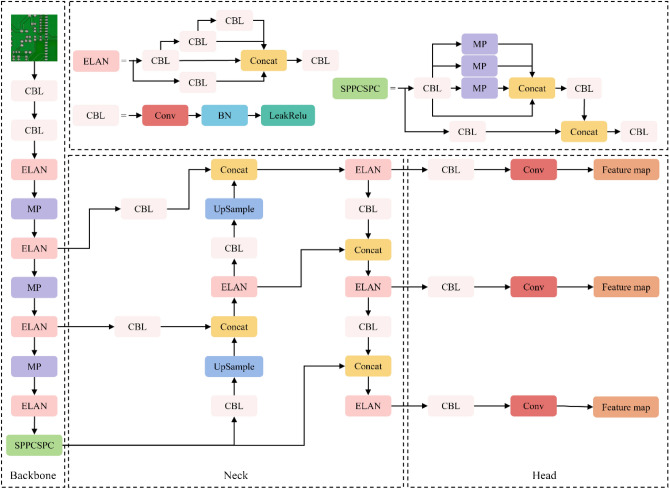
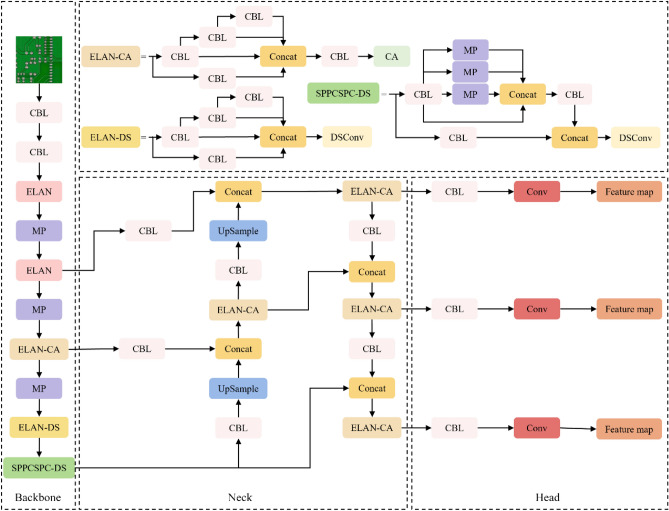
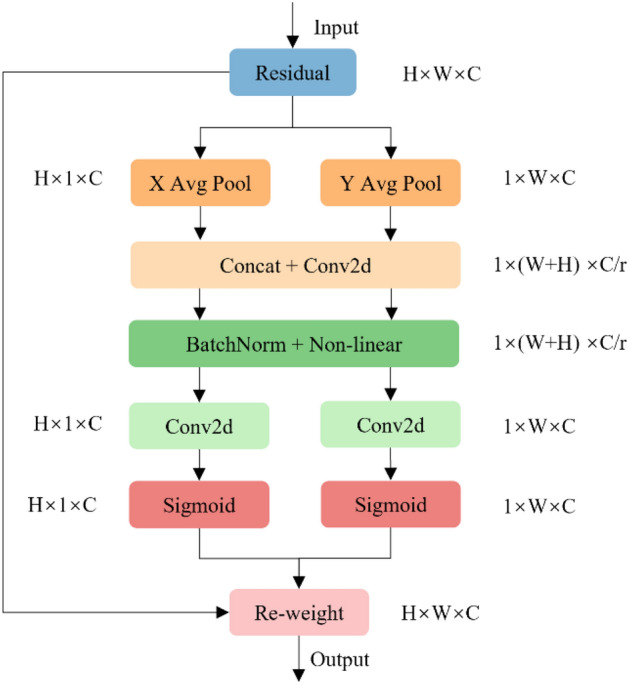
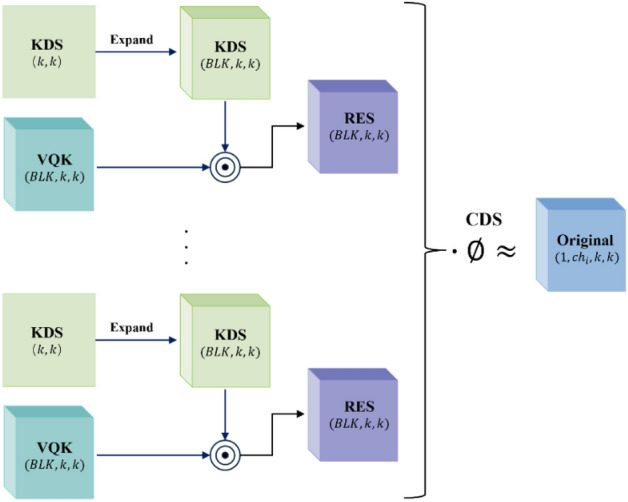
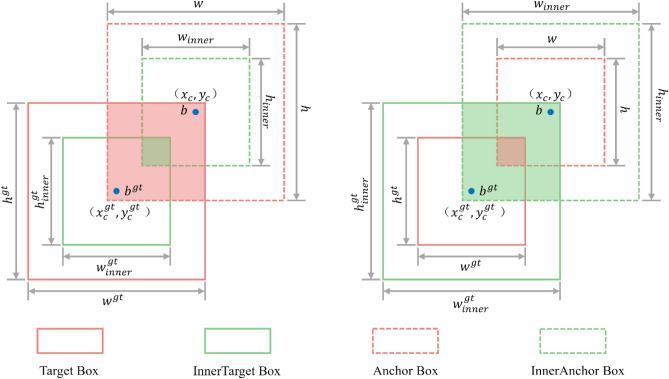
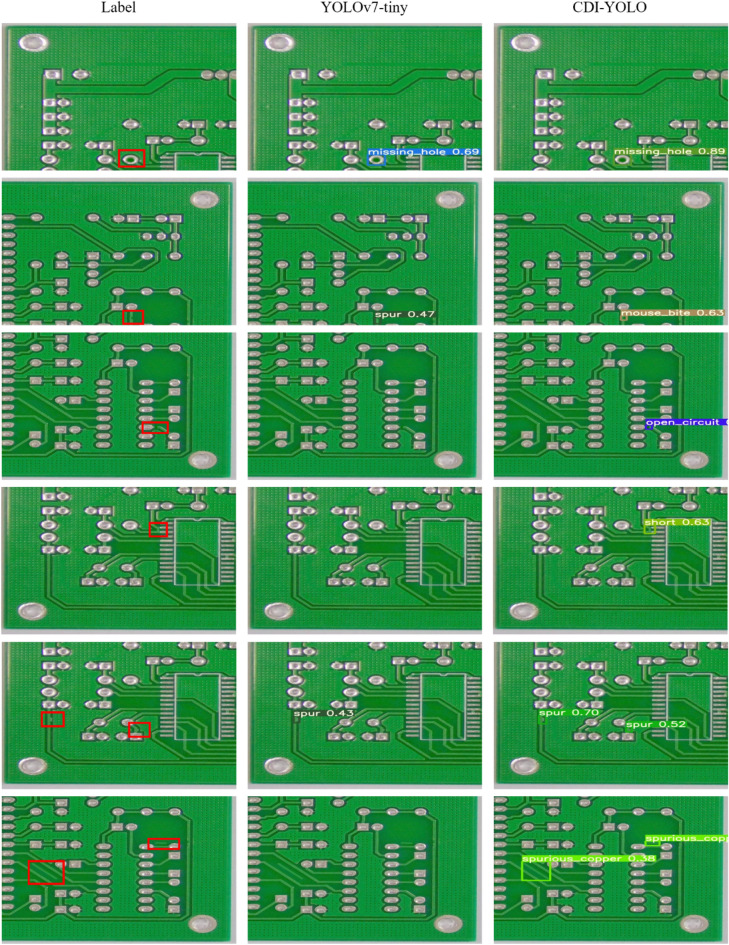
During the manufacturing process of printed circuit boards (PCBs), quality defects can occur, which can affect the performance and reliability of PCBs. Existing deep learning-based PCB defect detection methods are difficult to simultaneously achieve the goals of high detection accuracy, fast detection speed, and small number of parameters. Therefore, this paper proposes a PCB defect detection algorithm based on CDI-YOLO. Firstly, the coordinate attention mechanism (CA) is introduced to improve the backbone and neck network of YOLOv7-tiny, enhance the feature extraction capability of the model, and thus improve the accuracy of model detection. Secondly, DSConv is used to replace part of the common convolution in YOLOv7-tiny to achieve lower computing costs and faster detection speed. Finally, Inner-CIoU is used as the bounding box regression loss function of CDI-YOLO to speed up the bounding box regression process. The experimental results show that the method achieves 98.3% mAP on the PCB defect dataset, the detection speed is 128 frames per second (FPS), the parameters is 5.8 M, and the giga floating-point operations per second (GFLOPs) is 12.6 G. Compared with the existing methods, the comprehensive performance of this method has advantages.
Overview
The claims and statistics of this paper haven’t been checked yet.
Run the check — free, no account needed. It reads the open-access text and checks the sources it cites.
Integrity signals
Registry
Cites
Statistics
Figures
Verification
Claims the paper makes
The claims and statistics of this paper haven’t been checked yet.
Run the check — free, no account needed. It reads the open-access text and checks the sources it cites.
Claims other papers make about this one
Each is checked against this paper’s own text: does it say what the citing paper says it does?
The source backs part of the claim, not all of it — or backs it for a different population, condition or comparison.
In the citing paper
“In industrial automation, YOLO improves defect detection on production lines, ensuring quality control in manufacturing processes [48].”
From The YOLO Framework: A Comprehensive Review of Evolution, Applications, and Benchmarks in Object Detection (2024) · cites this paper as [48]
Experimental — accuracy not yet measured
Self-check
Percentages, sums and reported differences re-computed from the paper’s own numbers.
The self-check needs the paper’s full text.
Citations
Cites
You Only Look Once: Unified, Real-Time Object Detection
Redmon, J., Divvala, S., Girshick, R., & Farhadi, A. (2016) · 2016 IEEE Conference on Computer Vision and Pattern Recognition (CVPR) · doi:10.1109/cvpr.2016.91 · Cited by 53,803
YOLOv7: Trainable bag-of-freebies sets new state-of-the-art for real-time object detectors
Wang, C.-Y., Bochkovskiy, A., & Liao, H.-Y. M. (2022) · arXiv · doi:10.48550/arxiv.2207.02696 · Cited by 13,205
YOLOv7: Trainable Bag-of-Freebies Sets New State-of-the-Art for Real-Time Object Detectors
Wang, C.-Y., Bochkovskiy, A., & Liao, H.-Y. M. (2023) · 2023 IEEE/CVF Conference on Computer Vision and Pattern Recognition (CVPR) · doi:10.1109/cvpr52729.2023.00721 · Cited by 13,198
Coordinate Attention for Efficient Mobile Network Design
Hou, Q., Zhou, D., & Feng, J. (2021) · 2021 IEEE/CVF Conference on Computer Vision and Pattern Recognition (CVPR) · doi:10.1109/cvpr46437.2021.01350 · Cited by 6,961
Research works printed but not linked: 22
- Wu, W.-Y., Wang, M.-J.J. & Liu, C.-M. Automated inspection of printed circuit boards through machine vision. Comput. Ind. 28, 103–111 (1996). · DOI
- Ebayyeh, A. A. R. M. A. & Mousavi, A. A review and analysis of automatic optical inspection and quality monitoring methods in electronics industry. IEEE Access 8, 183192–183271 (2020). · DOI
- Moganti, M. & Ercal, F. Automatic PCB inspection systems. IEEE Potentials 14, 6–10 (1995). · DOI
- Redmon, J. & Farhadi, A. YOLO9000: Better, Faster, Stronger 7263–7271, (The IEEE Computer Society, 2017). · DOI · Paper page
- Redmon, J. & Farhadi, A. YOLOv3: an incremental improvement. Preprint at http://arxiv.org/abs/1804.02767 (2018). · arXiv
- Bochkovskiy, A., Wang, C.-Y. & Liao, H.-Y. M. YOLOv4: optimal speed and accuracy of object detection. Preprint at http://arxiv.org/abs/2004.10934 (2020). · arXiv
- Liu, W. et al. SSD: single shot multibox detector. In Computer Vision—ECCV 2016: 14th European Conference, Amsterdam, The Netherlands, October 11–14, 2016, Proceedings, Part I (eds Leibe, B. et al.) 21–37 (Springer International Publishing, 2016). · DOI · Paper page
- Girshick, R., Donahue, J., Darrell, T. & Malik, J. Rich Feature Hierarchies for Accurate Object Detection and Semantic Segmentation 580–587. (The IEEE Computer Society, 2014). · DOI · Paper page
- Girshick, R. Fast R-CNN 1440–1448 (The IEEE Computer Society, 2015). · DOI · Paper page
- Ren, S., He, K., Girshick, R. & Sun, J. Faster R-CNN: Towards Real-Time Object Detection with Region Proposal Networks. in Advances in Neural Information Processing Systems vol. 28 (Curran Associates, Inc., 2015).
- Yanan, S., Hui, Z., Li, L. & Hang, Z. Rail surface defect detection method based on YOLOv3 deep learning networks. In 2018 Chinese Automation Congress (CAC) (eds Yanan, S. et al.) 1563–1568 (IEEE, 2018). · DOI
- Wang, C. & Xiao, Z. Potato surface defect detection based on deep transfer learning. Agriculture 11, 863 (2021). · DOI
- Zhang, X., Hao, Y., Shangguan, H., Zhang, P. & Wang, A. Detection of surface defects on solar cells by fusing Multi-channel convolution neural networks. Infrared Phys. Technol. 108, 103334 (2020). · DOI
- Ding, R., Dai, L., Li, G. & Liu, H. TDD-net: a tiny defect detection network for printed circuit boards. CAAI Trans. Intell. Technol. 4, 110–116 (2019). · DOI
- Hu, B. & Wang, J. Detection of PCB surface defects with improved faster-RCNN and feature pyramid network. IEEE Access 8, 108335–108345 (2020). · DOI
- Chen, W., Huang, Z., Mu, Q. & Sun, Y. PCB defect detection method based on transformer-YOLO. IEEE Access 10, 129480–129489 (2022). · DOI
- Liu, G. & Wen, H. Printed circuit board defect detection based on MobileNet-Yolo-Fast. J. Electron. Imaging 30, 043004 (2021). · DOI
- Liao, X. et al. YOLOv4-MN3 for PCB surface defect detection. Appl. Sci. 11, 11701 (2021). · DOI
- Liu, S., Qi, L., Qin, H., Shi, J. & Jia, J. Path Aggregation Network for Instance Segmentation. 8759–8768 (The IEEE Computer Society, 2018). · DOI · Paper page
- Wang, C.-Y., Liao, H.-Y. M. & Yeh, I.-H. Designing network design strategies through gradient path analysis. Preprint at https://doi.org/10.48550/arXiv.2211.04800 (2022). · DOI
- do Nascimento, M. G., Fawcett, R. & Prisacariu, V. A. DSConv: Efficient Convolution Operator. 5148–5157 (The IEEE Computer Society, 2019). · DOI
- Zhang, H., Xu, C. & Zhang, S. Inner-IoU: more effective intersection over union loss with auxiliary bounding box. Preprint at https://doi.org/10.48550/arXiv.2311.02877 (2023). · DOI · Paper page
Cited by
Sorted by citations
Ali, M. L., & Zhang, Z. (2024) · Computers · doi:10.3390/computers13120336 · Cited by 383
Metadata
- Authors
- Xiao, G., Hou, S., & Zhou, H.
- Affiliations
- Central South University of Forestry and Technology (CN)
- Corresponding author
- Zhou, Huiying
- ORCID
- Zhou, Huiying
- Venue
- Scientific Reports
- Published
- 2024-03-28
- Volume
- 14
- Issue
- 1
- Pages
- 7351-7351
- ISSN
- 2045-2322 (ISSN-L)
- PMC
- PMC10978831
- OpenAlex
- W4393276662
- Cited by
- 113
- References
- 4
- Citations by year
- 2026: 45 · 2025: 52 · 2024: 16
- FWCI
- 23.10
- Type
- journal article
- Language
- en
- Open access
- gold
- doi.org
- Locations
- Scientific Reports (publishedVersion, cc-by)
- PubMed Central (publishedVersion, cc-by)
- PubMed (publishedVersion)
- DOAJ (DOAJ: Directory of Open Access Journals) (submittedVersion, cc-by-sa)
- Funders
- Natural Science Foundation of Hunan Province (2022JJ31018)
- Topics
- Physical Sciences › Engineering › Industrial and Manufacturing Engineering › Industrial Vision Systems and Defect Detection
- Physical Sciences › Computer Science › Computer Vision and Pattern Recognition › Advanced Neural Network Applications
- Physical Sciences › Engineering › Civil and Structural Engineering › Infrastructure Maintenance and Monitoring
- Keywords
- printed circuit board defect detection, YOLOv7-tiny, coordinate attention, bounding box regression, lightweight object detection
About these checks
Registry, retraction, Cites and statistics results are computed, not judged, with one exception: a printed reference that no index lists is read once by a model before it counts as a citation error. Claims are extracted by a model and kept only when their quote appears verbatim in the text; each cited source is then checked, with a model’s help, for whether it says what the claim relies on. Those verdicts can be wrong — read the claim’s quote and the cited source before relying on one.
Statistics and arithmetic are recomputed, not judged.
Confidence bands are shown only for fields calibrated on our annotated test set. None is calibrated yet, so no band is shown.
What counts as a claim ›How we measure confidence ›How we check this ›
Are you an author, or do you see a problem with this page? Request a review
