

Quantifying the uncertainty of LLM hallucination spreading in complex adaptive social networks
Open accessThe DOI matches its Crossref record; 30 of the 30 references it cites were found in a registry or an index.
Abstract
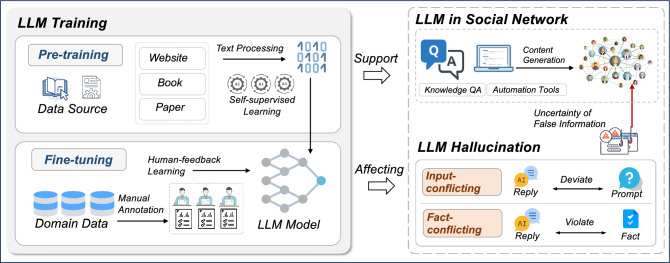
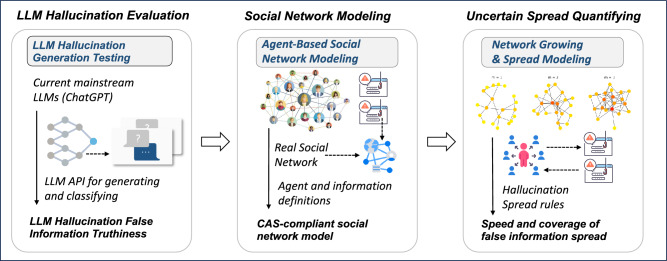
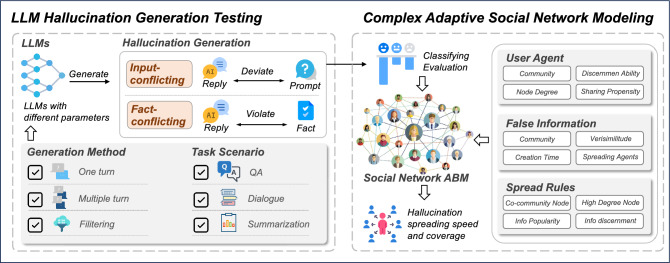
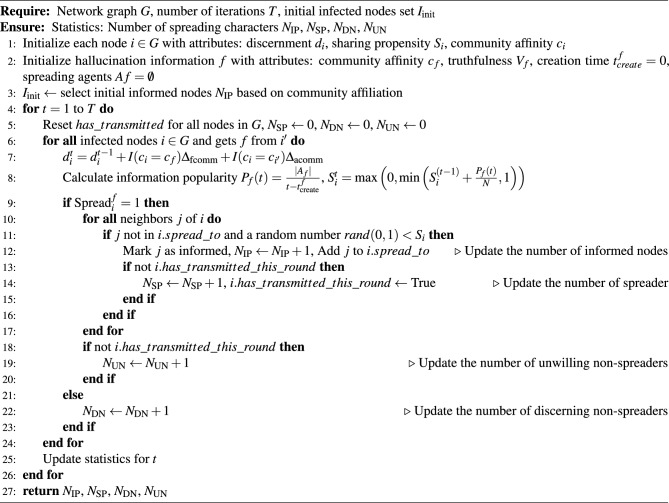
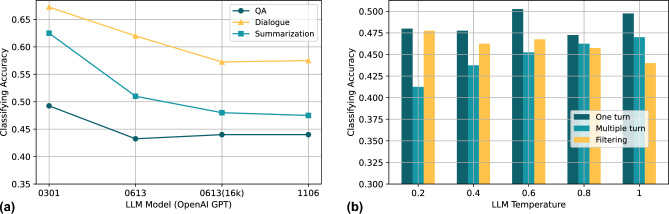
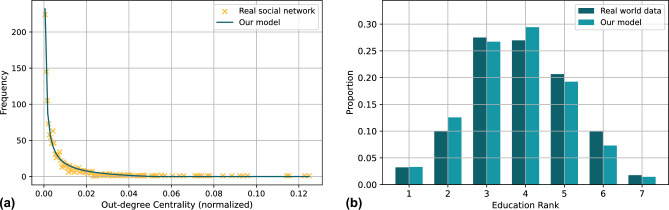
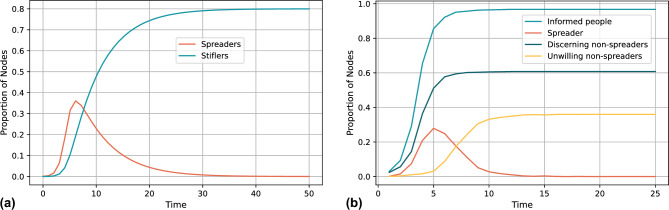
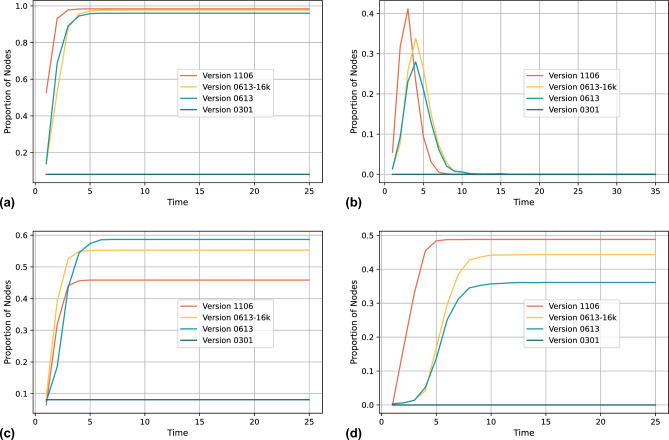
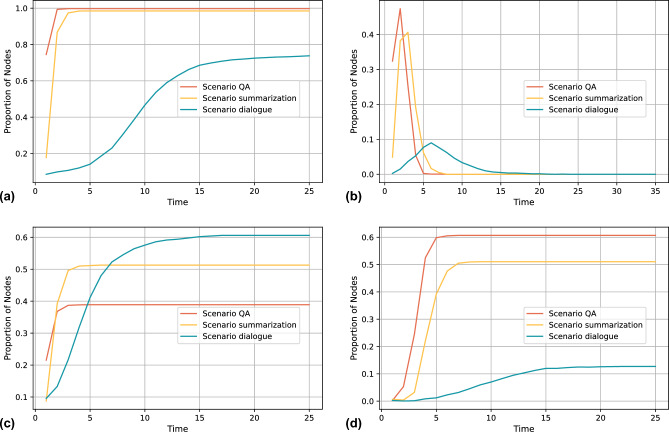
Large language models (LLMs) are becoming a significant source of content generation in social networks, which is a typical complex adaptive system (CAS). However, due to their hallucinatory nature, LLMs produce false information that can spread through social networks, which will impact the stability of the whole society. The uncertainty of LLMs false information spread within social networks is attributable to the diversity of individual behaviors, intricate interconnectivity, and dynamic network structures. Quantifying the uncertainty of false information spread by LLMs in social networks is beneficial for preemptively devising strategies to defend against threats. To address these challenges, we propose an LLMs hallucination-aware dynamic modeling method via agent-based probability distributions, spread popularity and community affiliation, to quantify the uncertain spreading of LLMs hallucination in social networks. We set up the node attributes and behaviors in the model based on real-world data. For evaluation, we consider the spreaders, informed people, discerning and unwilling non-spreaders as indicators, and quantified the spreading under different LLMs task situations, such as QA, dialogue, and summarization, as well as LLMs versions. Furthermore, we conduct experiments using real-world LLM hallucination data combined with social network features to ensure the validity of the proposed quantifying scheme.
Overview
The claims and statistics of this paper haven’t been checked yet.
Free: it reads the open-access text and checks the first 5 claims that cite a source we can check. Create a free account to check every claim.
Integrity signals
Registry
Cites
Statistics
Figures
Verification
Claims the paper makes
The claims and statistics of this paper haven’t been checked yet.
Free: it reads the open-access text and checks the first 5 claims that cite a source we can check. Create a free account to check every claim.
Claims other papers make about this one
Each is checked against this paper’s own text: does it say what the citing paper says it does?
The source backs part of the claim, not all of it — or backs it for a different population, condition or comparison.
In the citing paper
“Hao et al.20 cautioned about the spread of false outputs in social networks, posing risks for both experts and non-experts.”
From Multi-model assurance analysis showing large language models are highly vulnerable to adversarial hallucination attacks during clinical decision support (2025) · cites this paper as [20]
Experimental — accuracy not yet measured
Self-check
Percentages, sums and reported differences re-computed from the paper’s own numbers.
The self-check needs the paper’s full text.
Citations
Cites
LLaMA: Open and Efficient Foundation Language Models
Touvron, H., Lavril, T., Izacard, G., Martinet, X., Lachaux, M.-A., Lacroix, T., Rozière, B., Goyal, N., Hambro, E., Azhar, F., et al. (2023) · arXiv · doi:10.48550/arxiv.2302.13971 · Cited by 4,602
Training language models to follow instructions with human feedback
Ouyang, L., Wu, J., Jiang, X., Almeida, D., Wainwright, C. L., Mishkin, P., Zhang, C., Agarwal, S., Slama, K., Ray, A., et al. (2022) · arXiv · doi:10.48550/arxiv.2203.02155 · Cited by 4,208
Self-citationGet To The Point: Summarization with Pointer-Generator Networks
See, A., Liu, P. J., & Manning, C. D. (2017) · Proceedings of the 55th Annual Meeting of the Association for Computational Linguistics (Volume 1: Long Papers) · doi:10.18653/v1/p17-1099 · Cited by 3,775 · cited 1×
“The data for the summarization comes from the database CNN-Dailymail 26 .”
MethodHotpotQA: A Dataset for Diverse, Explainable Multi-hop Question Answering
Yang, Z., Qi, P., Zhang, S., Bengio, Y., Cohen, W., Salakhutdinov, R., & Manning, C. D. (2018) · Proceedings of the 2018 Conference on Empirical Methods in Natural Language Processing · doi:10.18653/v1/d18-1259 · Cited by 1,804 · cited 2×
“In task QA, LLM will give the user knowledge question answers based on the knowledge from HotpotQA, such as “It is a hygroscopic solid that is highly soluble in water and slightly soluble in alcohol.”
MethodEvaluating Large Language Models Trained on Code
Chen, M., Tworek, J., Jun, H., Yuan, Q., Pinto, H. P. D. O., Kaplan, J., Edwards, H., Burda, Y., Joseph, N., Brockman, G., et al. (2021) · arXiv · doi:10.48550/arxiv.2107.03374 · Cited by 1,436
A Comprehensive Overview of Large Language Models
Naveed, H., Khan, A. U., Qiu, S., Saqib, M., Anwar, S., Usman, M., Akhtar, N., Barnes, N., & Mian, A. (2023) · arXiv · doi:10.48550/arxiv.2307.06435 · Cited by 1,259
Clustering in weighted networks
Opsahl, T., & Panzarasa, P. (2009) · Social Networks · doi:10.1016/j.socnet.2009.02.002 · Cited by 1,037
Structural investigation of supply networks: A social network analysis approach
Kim, Y., Choi, T. Y., Yan, T., & Dooley, K. (2011) · Journal of Operations Management · doi:10.1016/j.jom.2010.11.001 · Cited by 771
Preiser, R., Biggs, R., De Vos, A., & Folke, C. (2018) · Ecology and Society · doi:10.5751/es-10558-230446 · Cited by 575
Siren's Song in the AI Ocean: A Survey on Hallucination in Large Language Models
Zhang, Y., Li, Y., Cui, L., Cai, D., Liu, L., Fu, T., Huang, X., Zhao, E., Zhang, Y., Xu, C., et al. (2023) · arXiv · doi:10.48550/arxiv.2309.01219 · Cited by 544
Cited by
Omar, M., Sorin, V., Collins, J. D., Reich, D., Freeman, R., Gavin, N., Charney, A., Stump, L., Bragazzi, N. L., Nadkarni, G. N., et al. (2025) · Communications Medicine · doi:10.1038/s43856-025-01021-3 · Cited by 204
“Hao et al. 20 cautioned about the spread of false outputs in social networks, posing risks for both experts and non-experts.”
MegaAgent: A Large-Scale Autonomous LLM-based Multi-Agent System Without Predefined SOPs
Wang, Q., Wang, T., Tang, Z., Li, Q., Chen, N., Liang, J., & He, B. (2025) · Findings of the Association for Computational Linguistics: ACL (Findings of ACL) · doi:10.18653/v1/2025.findings-acl.259 · Cited by 112
Challenges of Implementing LLMs in Clinical Practice: Perspectives
Artsi, Y., Sorin, V., Glicksberg, B. S., Korfiatis, P. D., Freeman, R., Nadkarni, G. N., & Klang, E. (2025) · Journal of Clinical Medicine · doi:10.3390/jcm14176169 · Cited by 68
An intelligent guided troubleshooting method for aircraft based on HybirdRAG
Xie, X., Tang, X., Gu, S., & Cui, L. (2025) · Scientific Reports · doi:10.1038/s41598-025-02643-2 · Cited by 26
DefAn: Definitive Answer Dataset for LLM Hallucination Evaluation
Rahman, A., Anwar, S., Usman, M., Ahmad, I., & Mian, A. S. (2025) · Information · doi:10.3390/info16110937 · Cited by 24
Metadata
- Authors
- Hao, G., Wu, J., Pan, Q., & Morello, R.
- Affiliations
- Waseda University (JP)
- University of Reggio Calabria (IT)
- Corresponding author
- Wu, Jun
- Venue
- Scientific Reports
- Published
- 2024-07-16
- Volume
- 14
- Issue
- 1
- Pages
- 16375-16375
- ISSN
- 2045-2322 (ISSN-L)
- PMC
- PMC11252443
- OpenAlex
- W4400688542
- Cited by
- 36
- References
- 20
- Citations by year
- 2026: 19 · 2025: 16 · 2024: 1
- FWCI
- 25.74
- Type
- journal article
- Language
- en
- Open access
- gold
- doi.org
- Licence
- cc-by
- creativecommons.org/licenses/by/4.0 (tdm)
- creativecommons.org/licenses/by/4.0 (vor)
- Locations
- Scientific Reports (publishedVersion, cc-by)
- PubMed Central (publishedVersion, cc-by)
- PubMed (publishedVersion)
- DOAJ (DOAJ: Directory of Open Access Journals) (submittedVersion)
- Funders
- National Natural Science Foundation of China (61972255, U21B2019)
- China Scholarship Council (202308050021)
- Topics
- Social Sciences › Sociology and Political Science › Misinformation and Its Impacts
- Physical Sciences › Physics and Astronomy › Statistical and Nonlinear Physics › Complex Network Analysis Techniques
- Physical Sciences › Computer Science › Information Systems › Spam and Phishing Detection
- Keywords
- LLM hallucination, social networks, complex adaptive systems, uncertainty quantification, agent-based modeling, dynamic network modeling, community affiliation, misinformation
About these checks
Registry, retraction, Cites and statistics results are computed, not judged, with one exception: a printed reference that no index lists is read once by a model before it counts as a citation error. Claims are extracted by a model and kept only when their quote appears verbatim in the text; each cited source is then checked, with a model’s help, for whether it says what the claim relies on. Those verdicts can be wrong — read the claim’s quote and the cited source before relying on one.
Statistics and arithmetic are recomputed, not judged.
Confidence bands are shown only for fields calibrated on our annotated test set. None is calibrated yet, so no band is shown.
What counts as a claim ›How we measure confidence ›How we check this ›
Are you an author, or do you see a problem with this page? Request a review
How to cite
Cite CoChat for the checks on this page, and the paper for its own findings.
- This page
- CoChat. (2026). Citation check: Quantifying the uncertainty of LLM hallucination spreading in complex adaptive social networks. https://app.cochat.ai/papers/10.1038/s41598-024-66708-4
- The paper
- Hao, G., Wu, J., Pan, Q., & Morello, R. (2024). Quantifying the uncertainty of LLM hallucination spreading in complex adaptive social networks. Scientific Reports. https://doi.org/10.1038/s41598-024-66708-4
Data sources
Bibliographic data: Semantic Scholar, OpenAlex, Crossref.
Contains information from the Semantic Scholar Academic Graph Datasets, made available under the ODC Attribution License (ODC-BY 1.0).
Semantic Scholar’s data is described in: Kinney, R., et al. (2023). The Semantic Scholar Open Data Platform. arXiv:2301.10140.
