

A hybrid quantum computing pipeline for real world drug discovery
Open accessThe DOI matches its Crossref record; 94 of the 105 references it cites were found in a registry or an index.
Abstract
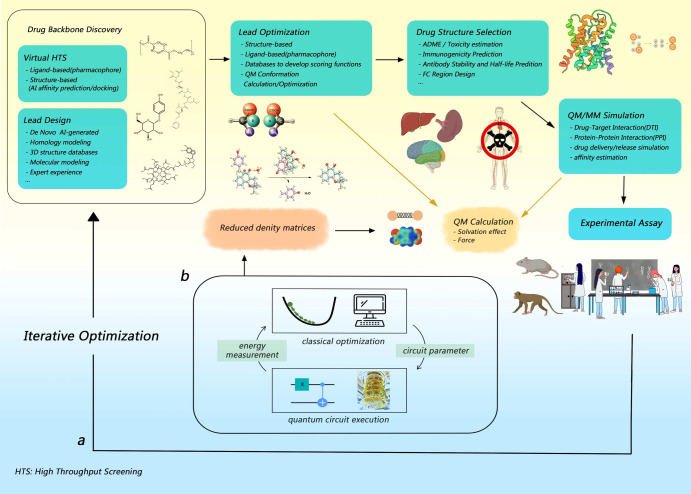
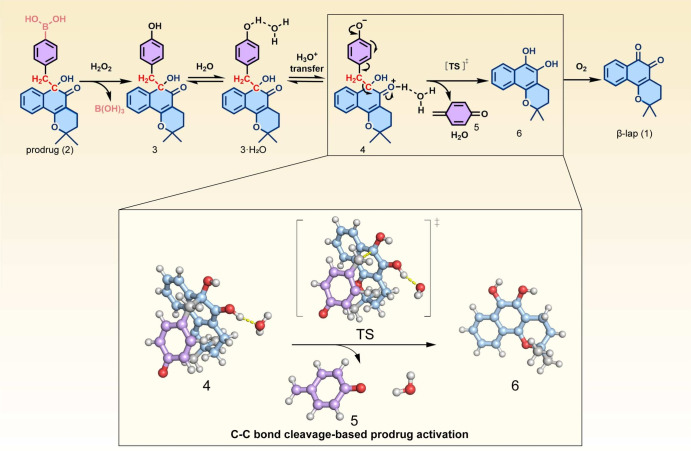
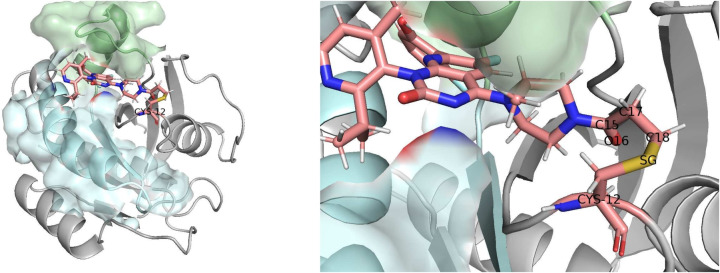
Quantum computing, with its superior computational capabilities compared to classical approaches, holds the potential to revolutionize numerous scientific domains, including pharmaceuticals. However, the application of quantum computing for drug discovery has primarily been limited to proof-of-concept studies, which often fail to capture the intricacies of real-world drug development challenges. In this study, we diverge from conventional investigations by developing a hybrid quantum computing pipeline tailored to address genuine drug design problems. Our approach underscores the application of quantum computation in drug discovery and propels it towards more scalable system. We specifically construct our versatile quantum computing pipeline to address two critical tasks in drug discovery: the precise determination of Gibbs free energy profiles for prodrug activation involving covalent bond cleavage, and the accurate simulation of covalent bond interactions. This work serves as a pioneering effort in benchmarking quantum computing against veritable scenarios encountered in drug design, especially the covalent bonding issue present in both of the case studies, thereby transitioning from theoretical models to tangible applications. Our results demonstrate the potential of a quantum computing pipeline for integration into real world drug design workflows.
Overview
The claims and statistics of this paper haven’t been checked yet.
Free: it reads the open-access text and checks the first 5 claims that cite a source we can check. Create a free account to check every claim.
Integrity signals
Registry
Cites
Statistics
Figures
Verification
Claims the paper makes
The claims and statistics of this paper haven’t been checked yet.
Free: it reads the open-access text and checks the first 5 claims that cite a source we can check. Create a free account to check every claim.
Self-check
Percentages, sums and reported differences re-computed from the paper’s own numbers.
The self-check needs the paper’s full text.
Citations
Cites
Self-Consistent Equations Including Exchange and Correlation Effects
Kohn, W., & Sham, L. J. (1965) · Physical Review · doi:10.1103/physrev.140.a1133 · Cited by 64,135 · cited 6×
“Specifically, we employed the B3LYP functional within DFT, chose the 6-31+G(d) basis set for the molecular orbitals and used Solvation Model Based on Density (SMD) as the solvation model.”
InfluentialSciPy 1.0: fundamental algorithms for scientific computing in Python
Virtanen, P., Gommers, R., Oliphant, T. E., Haberland, M., Reddy, T., Cournapeau, D., Burovski, E., Peterson, P., Weckesser, W., Bright, J., et al. (2020) · Nature Methods · doi:10.1038/s41592-019-0686-2 · Cited by 38,430 · cited 1×
“Throughout the optimization process, we maintained constant connectivity between atoms and applied Grimme’s D3 dispersion correction.”
MethodQuantum Mechanical Continuum Solvation Models
Tomasi, J., Mennucci, B., & Cammi, R. (2005) · Chemical Reviews · doi:10.1021/cr9904009 · Cited by 16,868 · cited 1×
“The solvation effect is an important topic in classical computational chemistry 66 .”
BackgroundSciPy 1.0: fundamental algorithms for scientific computing in Python
Virtanen, P., Gommers, R., Oliphant, T. E., Haberland, M., Reddy, T., Cournapeau, D., Burovski, E., Peterson, P., Weckesser, W., Bright, J., et al. (2019) · Apollo - University of Cambridge Repository · doi:10.17863/cam.64134 · Cited by 10,460
Klamt, A., & Schüürmann, G. (1993) · J. Chem. Soc., Perkin Trans. 2 · doi:10.1039/p29930000799 · Cited by 9,445 · cited 1×
“Due to its efficient architecture, in T EN C IR C HEM it takes only a few lines of code to transfer the calculation workflow from classical emulators to real quantum devices.”
MethodMiertuš, S., Scrocco, E., & Tomasi, J. (1981) · Chemical Physics · doi:10.1016/0301-0104(81)85090-2 · Cited by 8,937 · cited 1×
“The PCM model is one of the most popular methods to treat the solvation effect 67 , and its combination with VQE has been demonstrated based on a classical emulator 68 .”
MethodQuantum supremacy using a programmable superconducting processor
Arute, F., Arya, K., Babbush, R., Bacon, D., Bardin, J. C., Barends, R., Biswas, R., Boixo, S., Brandao, F. G. S. L., Buell, D. A., et al. (2019) · Nature · doi:10.1038/s41586-019-1666-5 · Cited by 7,720
Self-citationQuantum computational advantage using photons
Zhong, H.-S., Wang, H., Deng, Y.-H., Chen, M.-C., Peng, L.-C., Luo, Y.-H., Qin, J., Wu, D., Ding, X., Hu, Y., et al. (2020) · Science · doi:10.1126/science.abe8770 · Cited by 2,405
The Clinical KRAS(G12C) Inhibitor AMG 510 Drives Anti-Tumour Immunity
Canon, J., Rex, K., Saiki, A. Y., Mohr, C., Cooke, K., Bagal, D., Gaida, K., Holt, T., Knutson, C. G., Koppada, N., et al. (2019) · Nature · doi:10.1038/s41586-019-1694-1 · Cited by 2,277 · cited 1×
“Our approach addresses this gap by investigating two pertinent case studies rooted in actual clinical and pre-clinical contexts.”
BackgroundComputational Methods in Drug Discovery
Sliwoski, G., Kothiwale, S., Meiler, J., & Lowe, E. W. (2014) · Pharmacological Reviews · doi:10.1124/pr.112.007336 · Cited by 2,160
Research works printed but not linked: 2
- 13. Levine, I. N., Busch, D. H. & Shull, H. Quantum chemistry Vol. 6 (Pearson Prentice Hall, 2009).
- 16. Robert, A., Barkoutsos, P. K., Woerner, S. & Tavernelli, I. Resource-efficient quantum algorithm for protein folding. npj Quantum Inf. 7, 38 (2021). · DOI · Paper page
Cited by
Rawat, K. S., & Yadav, M. (2025) · Archives of Computational Methods in Engineering · doi:10.1007/s11831-025-10312-w · Cited by 36
“Quantum Machine Learning (QML) techniques such as QSVM, QKNN, and QCNN have demonstrated potential in healthcare diagnostics and biomedical data analysis [172, 186–188].”
Vendrell, R. C., Ajagekar, A., Bergman, M. T., Hall, C. K., & You, F. (2024) · Science Advances · doi:10.1126/sciadv.adq8492 · Cited by 24
“This speedup is crucial for the complex tasks of peptide design ( 37 ) for which the computational complexity can scale as N 20 for a peptide with N amino acids.”
Generative Artificial Intelligence for Advancing Discovery and Design in Biomateriomics
Pugliese, R., Badini, S., Frontoni, E., & Regondi, S. (2025) · Intelligent Computing · doi:10.34133/icomputing.0117 · Cited by 28
Covache-Busuioc, R.-A., Toader, C., Rădoi, M. P., & Șerban, M. (2025) · International Journal of Molecular Sciences · doi:10.3390/ijms26146966 · Cited by 27
“The innovative work illustrates the transformative potential of quantum-driven directions for drug discovery [219].”
Nature meets machine: the AI renaissance in natural product drug discovery
Muthuraj, R., & Chandrasekaran, J. (2026) · Natural Products and Bioprospecting · doi:10.1007/s13659-025-00589-6 · Cited by 32
“In another example, Li et al. applied a variational quantum eigensolver (VQE) to estimate the Gibbs free energy barrier for the bioactive NP β-lapachone, achieving results comparable to density functional theory (DFT) simulations [168].”
Quantum intelligence in drug discovery: Advancing insights with quantum machine learning
Danishuddin, Haque, M. A., Kumar, V., Khan, S. N., & Kim, J.-J. (2025) · Drug Discovery Today · doi:10.1016/j.drudis.2025.104463 · Cited by 28
Quantum-machine-assisted drug discovery
Zhou, Y., Chen, J., Cheng, J., Cao, X., Zhang, Y., Karemore, G., Žitnik, M., Chong, F. T., Liu, J., Fu, T., et al. (2026) · npj Drug Discovery. · doi:10.1038/s44386-025-00033-2 · Cited by 33
“This direct quantum encoding enables precise modeling of electronic structures and molecular interactions crucial for drug-target binding [13, 41].”
Barrett-danes, F., & Ahmad, F. B. (2025) · Discover Applied Sciences · doi:10.1007/s42452-025-07322-5 · Cited by 43
Ibisanmi, T. A., Jiang, X., Willcox, M. D. P., & Kumar, N. (2026) · Frontiers in Bioinformatics · doi:10.3389/fbinf.2026.1749404 · Cited by 21
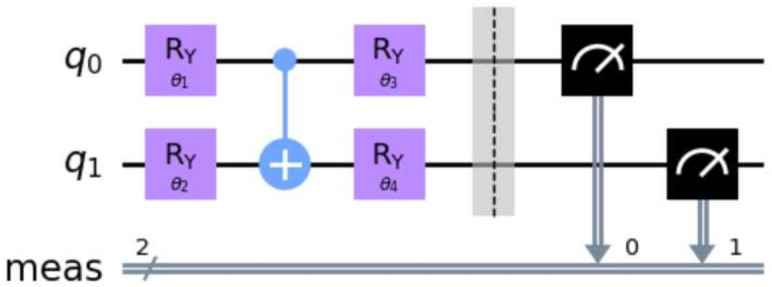
“For instance, a hybrid pipeline has been built where VQE on a two-qubit active space can capture intricate bonding and reaction profiles, which could offer more detailed insights than classical approximations in limited or simplified systems (Li et al., 2024).”
Artificial Intelligence in Cancer Immunotherapy: Navigating Challenges and Unlocking Opportunities
Xiang, W., Yu, L., Chen, X. S., & Herold, M. J. (2024) · Engineering · doi:10.1016/j.eng.2024.12.014 · Cited by 8
Oberg, L. M., Weber, C., Yang, H., Klesse, W. M., Reinke, P., Gallo, S. C., Stacey, A. D., Pakes, C. I., & Doherty, M. W. (2025) · Materials for Quantum Technology · doi:10.1088/2633-4356/ade359 · Cited by 11
Villalba-Díez, J. (2025) · The European Physical Journal D · doi:10.1140/epjd/s10053-025-01024-8 · Cited by 6
“Recent advancements in quantum computing promise to address these complexities [13,14].”
Matrine and Its Derivatives: Multi-Pathway Regulation in Cancer Therapy
Xiong, Z., & Pu, J. (2025) · Cancer Management and Research · doi:10.2147/cmar.s563211 · Cited by 11
“74 The core strategy is to create an adaptive, learning-based clinical trial ecosystem that continuously integrates preclinical and real-world evidence to optimize trial design and patient selection.”
Quantum Oncology: The Applications of Quantum Computing in Cancer Research
Li, J., Li, L., Liu, N., Xu, F., Hu, T., & Yuan, S. (2025) · Journal of Medical Systems · doi:10.1007/s10916-025-02215-x · Cited by 8
“Utilizing quantum mechanics/molecular mechanics simulations further deepens our understanding of drug-target interactions, with applications in researching covalent inhibitors targeting kirsten rats arcomaviral onco-gene homolog (KRAS), a pivotal target in cancer therapy [70].”
Extending quantum computing through subspace, embedding and classical molecular dynamics techniques
Bickley, T. M., Mingare, A., Weaving, T., de la Bastida, M. W., Wan, S., Nibbi, M., Seitz, P., Ralli, A., Love, P. J., Chung, M. T., et al. (2025) · Digital Discovery · doi:10.1039/d5dd00225g · Cited by 23
Quantum computing applications in biology
Ghamsari, M. S. (2025) · Discover Computing · doi:10.1007/s10791-025-09803-y · Cited by 5
“Once optimized, the circuit can be used to measure other physical properties [112].”
InfluentialChallenges and Advances in the Simulation of Targeted Covalent Inhibitors Using Quantum Computing
Chaudhuri, S., Huynh, B. C., Amory, R., Rogers, D. M., Cranney, A., Martínez-Martínez, L. Á., Macrì, T., Jones, G., Sheridan, E., Khedkar, A., et al. (2025) · The Journal of Physical Chemistry Letters · doi:10.1021/acs.jpclett.5c01680 · Cited by 8
Sung, J., Park, S.-M., & Cheong, J. (2026) · Trends in biotechnology · doi:10.1016/j.tibtech.2026.01.008 · Cited by 6
Early quantum computing applications on the path towards precision medicine
Flöther, F. F. (2024) · Elsevier eBooks · doi:10.1016/b978-0-323-98808-7.00001-1 · Cited by 9
Liu, H. (2025) · Highlights in Science Engineering and Technology · doi:10.54097/sa5x8f65 · Cited by 3
“An example is given of how quantum computing helps to find anticancer agents as a result of drug interactions at the molecular level [9].”
The art of medical synthesis: Where Chinese medical wisdom intersects with artificial intelligence
Lim, E., Cheng, N. C. L., & Lim, C. E. D. (2025) · Journal of Traditional Chinese Medical Sciences · doi:10.1016/j.jtcms.2025.08.001 · Cited by 6
Quantum Computing in Drug Discovery Techniques, Challenges, and Emerging Opportunities
Gomase, V. S., Ghatule, A. P., Sharma, R., & Dhamane, S. P. (2025) · Current Drug Discovery Technologies · doi:10.2174/0115701638371707250729040426 · Cited by 7
Ma, S., & Liu, Y. (2024) · PLoS ONE · doi:10.1371/journal.pone.0310960 · Cited by 2
“The antechamber and parmchk2 were used to add the Bond-Charge Correction (bcc) charges and parameters to the ligands [26] and save them as .frcmod parameter files.”
Quantum-inspired computational drug design for phytopharmaceuticals: a herbal holography analysis
Yashwanth, S., Naik, P., Darshan, B., Patil, C., & Prakash Goudanavar, S. O. P. (2025) · Journal of Molecular Modeling · doi:10.1007/s00894-025-06412-w · Cited by 2
Classical and Quantum Computing modalities - A Review
Rajni (2025) · Journal of Condensed Matter · doi:10.61343/jcm.v2i02.72 · Cited by 1
Multiscale astrobiology with the Vera C. Rubin Observatory Legacy Survey of Space and Time
Kovačević, A. B., Mason, N. J., & Ćiprijanović, A. (2025) · Frontiers in Astronomy and Space Sciences · doi:10.3389/fspas.2025.1594485 · Cited by 1
“Despite ongoing debates about quantum advantage (e.g., Renaud et al., 2024), its integration into scientific pipelines for medical research is gaining momentum (Li et al., 2024).”
Artificial Intelligence and Cancer Immunotherapy
Shah, A., Bhat, A. A., Bhat, M. R., Assad, A., & Macha, M. A. (2025) · Springer eBooks · doi:10.1007/978-981-96-8176-1_16 · Cited by 1
Lou, S. (2025) · IEEE International Conference on Frontiers Technology of Information and Computer (ICFTIC) · doi:10.1109/icftic68075.2025.11325062 · Cited by 1
“Furthermore, these approaches are computationally intensive, often requiring specialized hardware and days of computation for a single prediction, making them impractical for large-scale screening applications [10].”
Mapping Bloch-Redfield dynamics into a unitary gate-based quantum algorithm
Aydoğan, K., Abbasi, M., Short, W., Fahrenbruch, M. Z., Krogmeier, T. J., Schlimgen, A. W., & Head-Marsden, K. (2026) · Digital Discovery · doi:10.1039/d5dd00405e · Cited by 1
Implementation Challenges and Future Outlook of Quantum Computing in Healthcare
Kumar, M., Singh, K., Mishra, P. K., & Purwa (2025) · International Conference on Intelligent Computing, Information and Control Systems (ICOIICS) · doi:10.1109/icoiics67115.2025.11390278 · Cited by 1
“With the support of superposition, entanglement, and quantum parallelism, quantum computing (QC) can be used to speed up essential healthcare processes [2].”
InfluentialBadarala, L. (2026) · Scientific Reports · doi:10.1038/s41598-026-44978-4 · Cited by 3
“However, the effective deployment of quantum methods in real-world applications remains constrained by the limitations of current hardware, commonly referred to as the Noisy Intermediate-Scale Quantum (NISQ) era, as well as by the empirical dominance of well-established classical workflows 3 .”
Roosan, D., Samrose, S., Khan, R. I., Nirzhor, S. S. R., & Provencher, B. A. (2025) · bioRxiv (Cold Spring Harbor Laboratory) · doi:10.1101/2025.06.27.661905 · Cited by 1
Alvarado-Valiente, J., Romero-Álvarez, J., Casco-Seco, J., Moguel, E., García-Alonso, J., & Murillo, J. M. (2025) · SoftwareX · doi:10.1016/j.softx.2025.102402 · Cited by 1
Hussain, A., & Hussain, A. (2025) · Current Psychopharmacologye · doi:10.2174/0122115560361749250110074639
High-Performance and Quantum Computing in Cancer Modeling: A Review and Hybrid HPC- Quantum ApproachPreprint
Sinhal, A., Sinhal, A., & Sinhal, A. (2025) · Research Square · doi:10.21203/rs.3.rs-7151271/v1
Quantome: A Quantum Surrogate Model for Biophysical LandscapesPreprint
Malik, A. J., & Ascher, D. B. (2025) · bioRxiv (Cold Spring Harbor Laboratory) · doi:10.1101/2025.08.06.668871
“This principle extends to drug design, where VQE is used in pipelines to insert low-qubit kernels into chemically exact workflows for pro-drug activation and covalent inhibition [7].”
Artificial intelligence in GPCR drug discovery: A paradigm shift in computational pharmacology
Vinter, A., & Grgičević, I. (2025) · Elsevier eBooks · doi:10.1016/b978-0-443-29808-0.00047-9 · Cited by 1
Quantum Machine Learning for Optimal Antenna Placement
Arani, M. S., Shahidi, R., & Zhang, L. (2025) · Digest - IEEE Antennas and Propagation Society. International Symposium · doi:10.1109/ap-s/cnc-usnc-ursi55537.2025.11266785
“Quantum algorithms, especially those leveraging unique quantum properties, are now seen as potential game-changers for large-scale optimization tasks in telecommunications [5] – [7] as well as e.g., in drug discovery and material design [8].”
Encoding molecular structures in quantum machine learning
Boy, C., Altamura, E., Manawadu, D., Tavernelli, I., Mensa, S., & Wales, D. J. (2025) · Machine Learning Science and Technology · doi:10.1088/2632-2153/ae304f · Cited by 6
Amlani, N. R., Deshpande, S. A., Doye, S., & Chandraka, O. (2026) · Studies in big data · doi:10.1007/978-3-032-00586-1_6
Kalpana, P., Veena, C., Deeba, K., Prabhavathi, H., Haldar, A., & Dasegowda, K. R. (2026) · Studies in big data · doi:10.1007/978-3-032-00586-1_7 · Cited by 1
FastTrack ART: Accelerating HIV Treatment via Quantum-AI-Enhanced Molecular Simulations
Singh, S. K., Yadav, P. K., Kumar, P., et al. (2025) · IEEE International Conference on Computing, Communication and Automation (ICCCA) · doi:10.1109/iccca66364.2025.11325489
“Traditional AI-driven molecular docking approaches, despite their effectiveness, face challenges such as high computational complexity and limited adaptability to evolving viral mutations [3].”
Quantum algorithms for ligand design in drug discovery
Vakili, M. G., Nascimento, A. S., & Aspuru‐Guzik, A. (2026) · Expert Opinion on Drug Discovery · doi:10.1080/17460441.2026.2629854
“Quantum computing has the potential to enhance pharmaceutical research by enabling molecular simulations and predictions beyond classical computational capabilities [8].”
Enhancing Drug Design Using Variational Quantum Eigensolver
Rajalakshmi, S., Reshmaa, S. S., Lalith Kannan, R., Sree Harish, S. M., & Naveen Kumar, S. (2025) · IEEE International Conference on Innovations in Engineering and Next-Generation Technologies for Sustainability (ICINVENTS) · doi:10.1109/icinvents64613.2025.11401986
Shintani, S. A. (2026) · bioRxiv (Cold Spring Harbor Laboratory) · doi:10.64898/2026.04.02.716025
“Concrete examples already span biological sequence comparison (Kösoglu-Kind et al. , 2023), quantum gene regulatory networks (Roman-Vicharra and Cai, 2023), hybrid quantum–classical drug-discovery pipelines (Li et al. , 2024), and quantum-enhanced small-molecule design (Ghazi Vakili et al. , 2025).”
Quantum Computing and AI in Medicine
Vargas-Bernal, R., & Vargas-Cisneros, E. (2026) · Advances in computational intelligence and robotics book series · doi:10.4018/406755
The, J. V. G., Santos, V. O., & Gharabaghi, B. (2026) · Journal of Cybersecurity and Privacy · doi:10.3390/jcp6020071
“The massive investments in this sector have enabled significant advancements in multidisciplinary fields, such as finance [8,9], materials science [10,11], chemistry [12], pharmacology and health sciences [13,14], and machine learning [15,16].”
The Q-MONSTAR consortium: advancing fault-tolerant quantum computing for precision oncology
Imai, M., Yamashita, R., Fujisawa, T., Sokuoka, H., Miki, I., Sakamoto, Y., Misumi, T., Zandkarimi, B., Ernst, P. T., Bando, H., et al. (2026) · Nature Medicine · doi:10.1038/s41591-026-04346-1 · Cited by 1
Liu, H., Zhang, Z., Zheng, K., Liang, Z., Chen, C.-S., Carothers, C., & Hahn, J. (2026) · Annals of Biomedical Engineering · doi:10.1007/s10439-026-04204-8 · Cited by 5
Self-citationMegatrends in Biomedical AI for Health Care From Data Foundations to Clinical Deployment
Tamo, J. B., Nnamdi, M. C., Marteau, B. L., Wang, S., Shi, W., Akay, Y. M., Akay, M., & Wang, M. D. (2026) · Computer · doi:10.1109/mc.2026.3683604 · Cited by 2
“18,19 Quantum methods are being explored for tasks that exceed the efficiency or precision limits of classical computation, such as high-resolution simulation of molecular interactions, optimization of protein–ligand binding, and accelerated screening of drug candidates.”
Toward a User-aware Security Taxonomy for Quantum Computing Platforms
Choudhury, N., & Basu, K. (2026) · IEEE VLSI Test Symposium (VTS) · doi:10.1109/vts69484.2026.11563327
Beyond Classical Limits: Quantum Computing Advances in Post-Binary Era
Gupta, D., Gayratovich, E. N., Isaev, F., Ulugbek, U., Gulamov, I., Jurayeva, S., & Ishnazarov, A. (2026) · Advances in computational intelligence and robotics book series · doi:10.4018/979-8-2600-0156-1.ch002
Stefano, G. B. (2026) · Journal of Genetic Medicine and Gene Therapy · doi:10.29328/journal.jgmgt.1001015
Designing Biologics with Quantum AI
Khan, M. Z. I., Sojib, N., Karim, M., & Roosan, D. (2026) · Springer eBooks · doi:10.1007/978-3-032-19536-4_6
A Hybrid Quantum-Classical Machine Learning Framework for Accelerated Drug Discovery
Sainadh, S. S., Saigeetha, S. B., Reddy, J. B., et al. (2026) · Procedia Computer Science · doi:10.1016/j.procs.2026.05.089
Ethical, Regulatory, and Societal Dimensions in Quantum AI
Roosan, H., Hai, F., & Khan, H. H. (2026) · Springer eBooks · doi:10.1007/978-3-032-19536-4_14
Li, Y., Wang, Y., Prabhakaran, P., Ouyang, F., Zhou, W., Guan, H., Chen, Y., Li, D., Sun‐Waterhouse, D., & Li, F. (2026) · Food Research International · doi:10.1016/j.foodres.2026.120000 · Cited by 2
Self-citationQuantum Machine Learning for Enhanced Cardiovascular Disease Risk Prediction
Gаnchеvа, V., & Tsvetkov, V. (2026) · doi:10.3390/engproc2026150039
Shakeri, E., & Far, B. H. (2026) · Intelligence-Based Medicine · doi:10.1016/j.ibmed.2026.100442 · Cited by 3
Thompson, D., Mitchell, S., Adams, R., & Brown, J. (2025) · Pharmacophore · doi:10.51847/d59nkxqobj
Meyer, L., Schmid, A., Braun, S., & Keller, L. (2026) · Pharmacophore · doi:10.51847/ytvqqiwlce
Devadas, R. M., & Sowmya, T. (2026) · Journal of King Saud University - Computer and Information Sciences · doi:10.1007/s44443-026-01063-0
“…2024; Mullin 2020; Robert et al. 2021; Blunt et al. 2022; 2023; Batra et al. 2021; Mensa et al. 2023; Chan-darana et al. 2023; Bhatia et al. 2023; Li et al. 2024; Wang et al. 2023; Wong et al. 2023; Mustafa et al. 2022; Bikku et al. 2025; Avramouli et al. 2022; Gorshkov et al. 2022; Saggi et al.…”
InfluentialQuantum-Assisted Drug Discovery for Lung Cancer
Thopate, K., Naik, N., Patil, A., Pawar, A., & Pokale, T. (2026) · International Conference on Trends in Quantum Computing and Emerging Business Technologies (TQCEBT) · doi:10.1109/tqcebt67648.2026.11681175
Szczęsny, B., & Gryncewicz, W. (2026) · International Conference on Advanced Computer Information Technologies (ACIT) · doi:10.1109/acit69831.2026.11700173
“The clearest positive signal is the emergence of systems that connect quantum components to decision-relevant outputs, including studies that proceed beyond in silico benchmarking to synthesis and experimental testing [21].”
InfluentialZORLU, G., & Çolak, C. (2026) · ODÜ Tıp Dergisi · doi:10.56941/odutip.1963069
Metadata
- Authors
- Li, W., Yin, Z., Li, X., Ma, D., Yi, S., Zhang, Z., Zou, C., Bu, K., Dai, M., Yue, J., Chen, Y., Zhang, X., & Zhang, S.
- Affiliations
- Tencent (China) (CN)
- Ningbo University of Technology (CN)
- China Pharmaceutical University (CN)
- Corresponding author
- Yin, Zhi
- Zhang, Xiaojin
- Zhang, Shengyu
- Venue
- Scientific Reports
- Published
- 2024-07-23
- Volume
- 14
- Issue
- 1
- Pages
- 16942-16942
- ISSN
- 2045-2322 (ISSN-L)
- PMC
- PMC11266395
- OpenAlex
- W4400965811
- Cited by
- 67
- References
- 105
- Citations by year
- 2026: 31 · 2025: 32 · 2024: 4
- FWCI
- 9.89
- Type
- journal article
- Language
- en
- Open access
- gold
- doi.org
- Licence
- cc-by
- creativecommons.org/licenses/by/4.0 (tdm)
- creativecommons.org/licenses/by/4.0 (vor)
- Locations
- Scientific Reports (publishedVersion, cc-by)
- PubMed Central (publishedVersion, cc-by)
- PubMed (publishedVersion)
- arXiv (Cornell University) (submittedVersion, cc-by)
- DOAJ (DOAJ: Directory of Open Access Journals) (submittedVersion, cc-by-sa)
- arXiv (Cornell University) (cc-by)
- Funders
- National Natural Science Foundation of China (82322062)
- Jiangsu Provincial Funds for Distinguished Young Scientists (BK20211527)
- Topics
- Physical Sciences › Computer Science › Artificial Intelligence › Quantum Computing Algorithms and Architecture
- Life Sciences › Pharmacology, Toxicology and Pharmaceutics › Drug Discovery › Computational Drug Discovery Methods
- Physical Sciences › Physics and Astronomy › Atomic and Molecular Physics, and Optics › Advanced Chemical Physics Studies
- Keywords
- hybrid quantum computing, drug discovery, prodrug activation, Gibbs free energy, covalent bond cleavage, quantum chemistry simulation
- MeSH terms
- Prodrugs, Quantum Theory, Thermodynamics, Drug Design, Drug Discovery
About these checks
Registry, retraction, Cites and statistics results are computed, not judged, with one exception: a printed reference that no index lists is read once by a model before it counts as a citation error. Claims are extracted by a model and kept only when their quote appears verbatim in the text; each cited source is then checked, with a model’s help, for whether it says what the claim relies on. Those verdicts can be wrong — read the claim’s quote and the cited source before relying on one.
Statistics and arithmetic are recomputed, not judged.
Confidence bands are shown only for fields calibrated on our annotated test set. None is calibrated yet, so no band is shown.
What counts as a claim ›How we measure confidence ›How we check this ›
Are you an author, or do you see a problem with this page? Request a review
Data sources
Bibliographic data: Semantic Scholar, OpenAlex, Crossref.
Contains information from the Semantic Scholar Academic Graph Datasets, made available under the ODC Attribution License (ODC-BY 1.0).
Semantic Scholar’s data is described in: Kinney, R., et al. (2023). The Semantic Scholar Open Data Platform. arXiv:2301.10140.
