

The DOI matches its Crossref record; 41 of the 41 references it cites were found in a registry or an index.
Motion capture and AR based programming by demonstration for industrial robots using handheld teaching device
Open accessAbstract
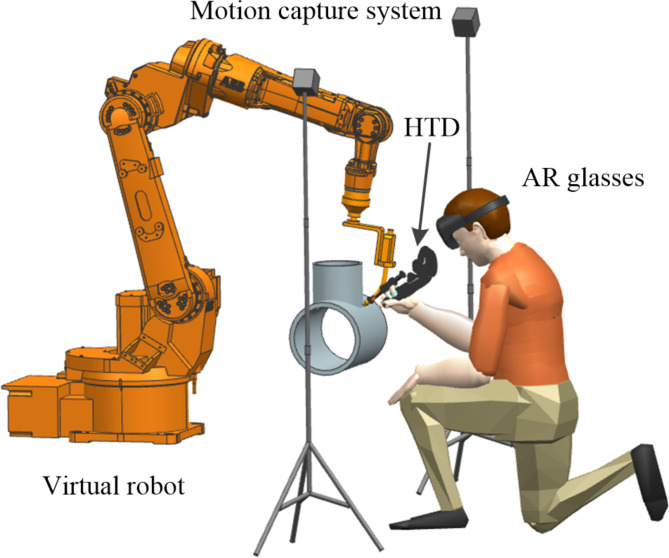
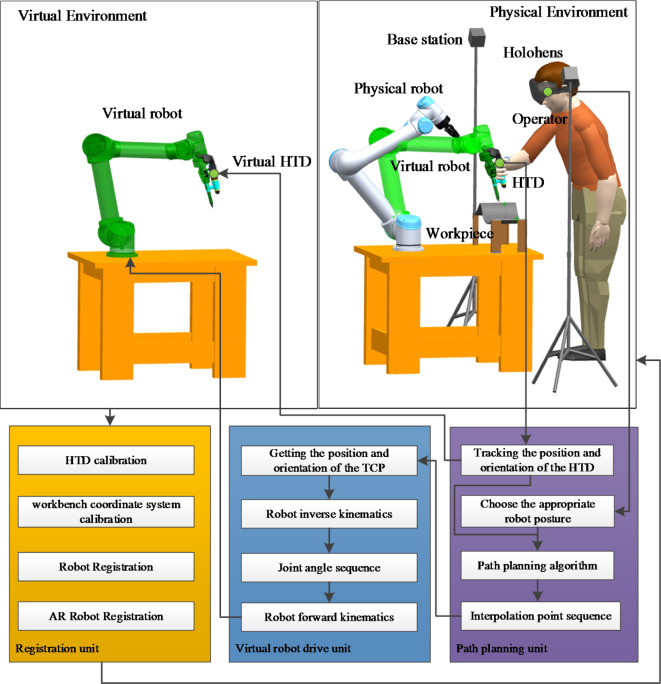
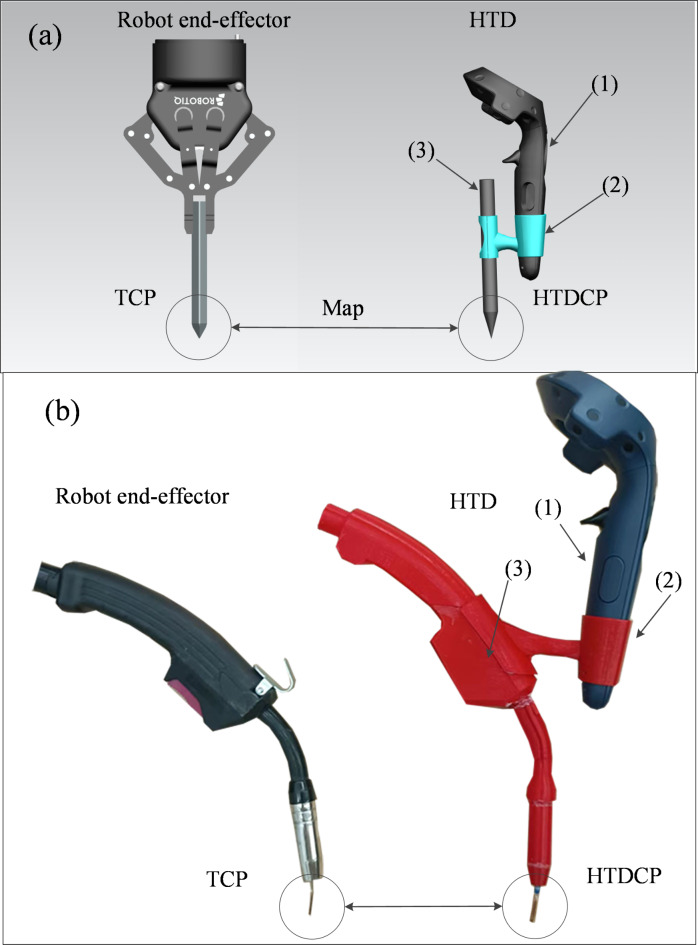
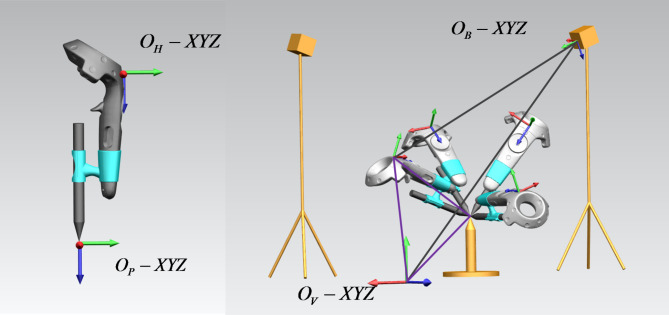
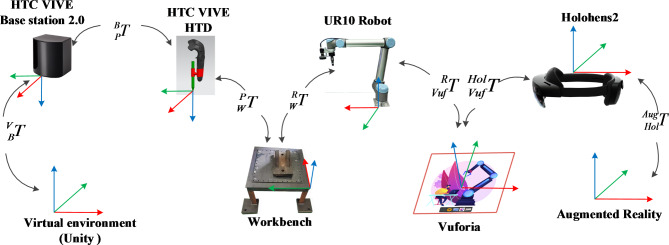
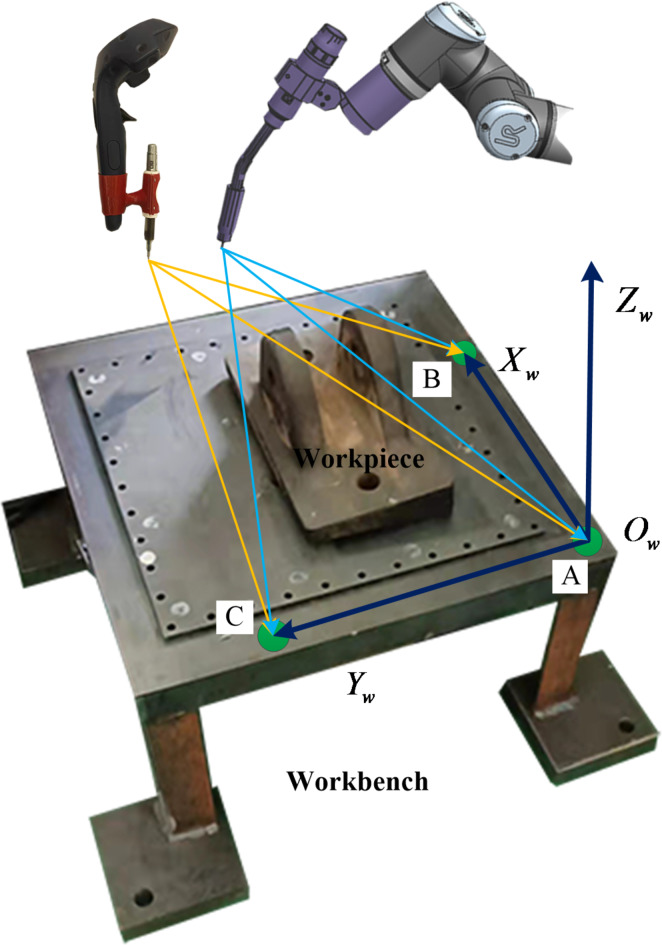
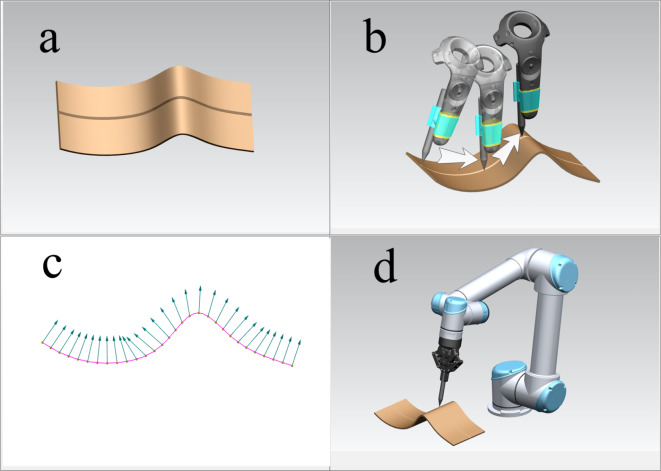
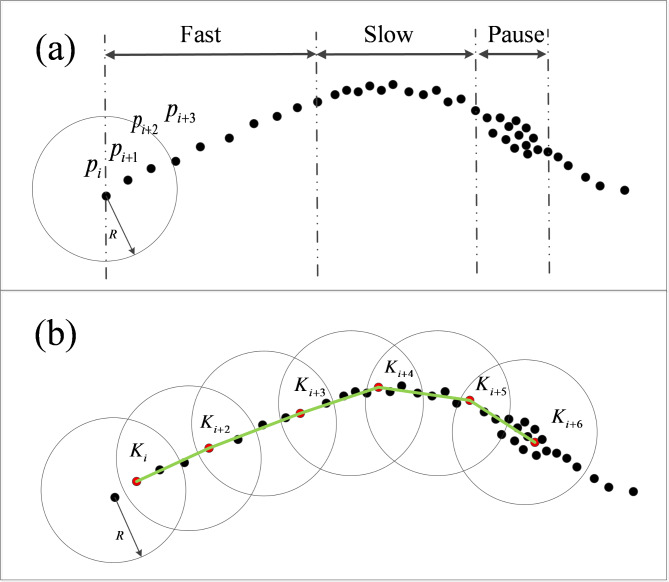
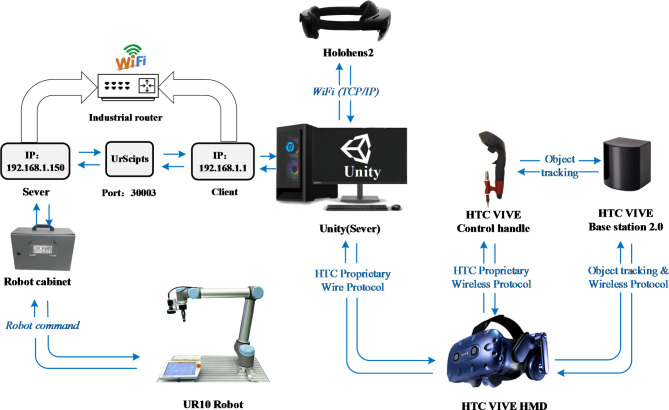
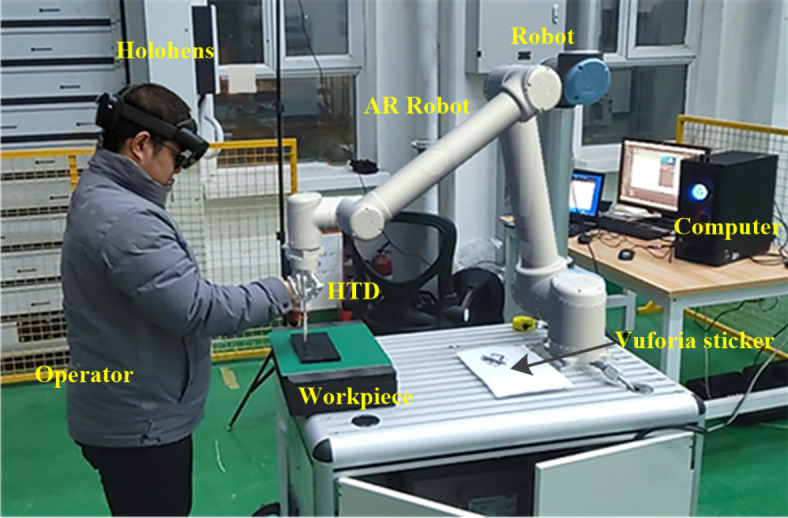
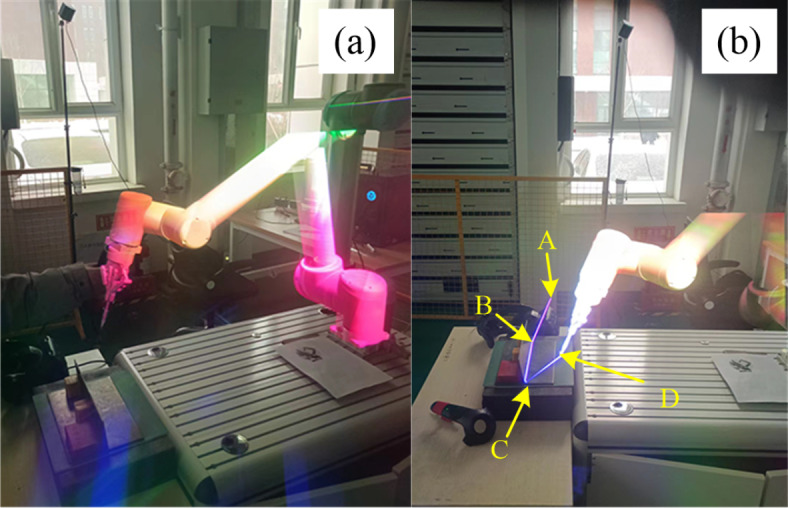
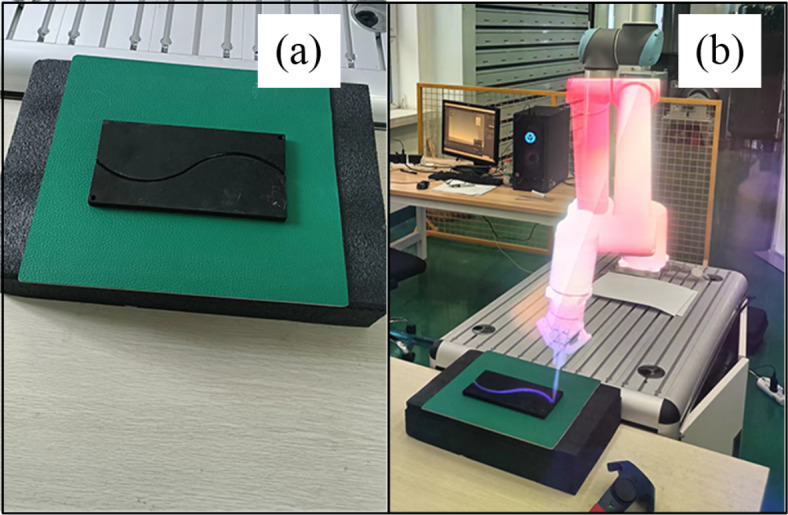
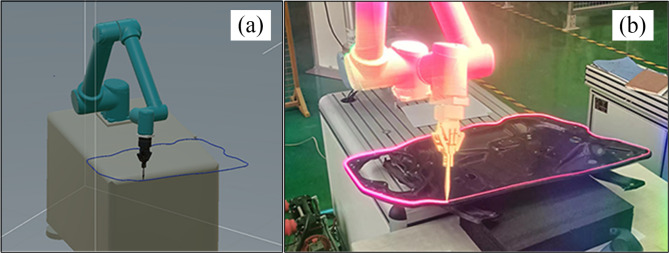
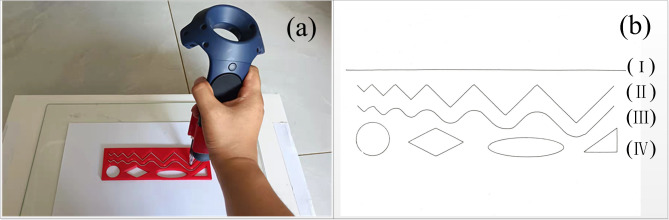
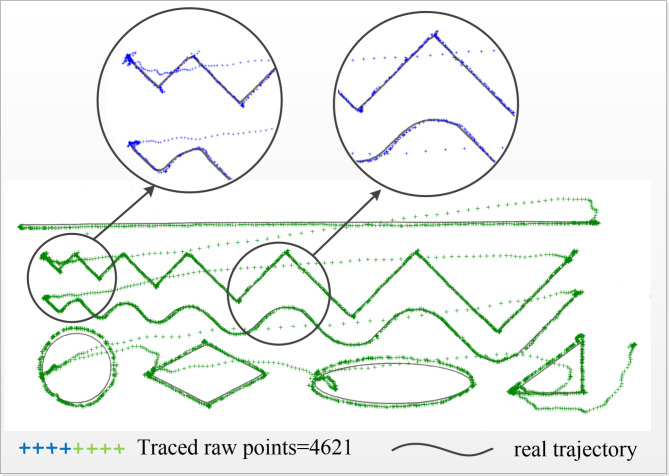
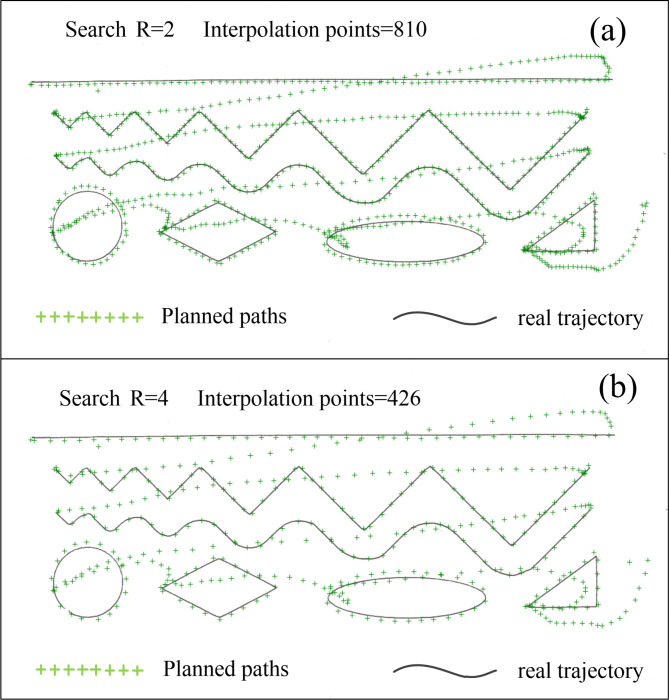
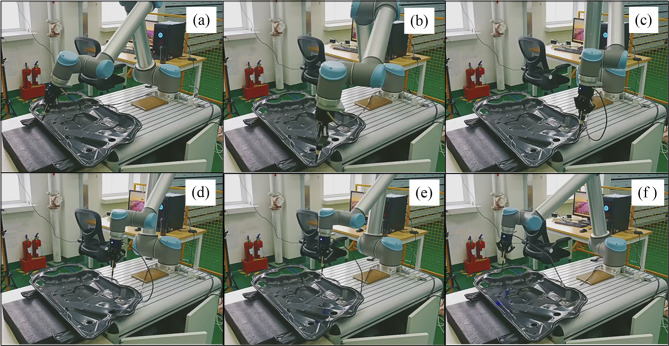
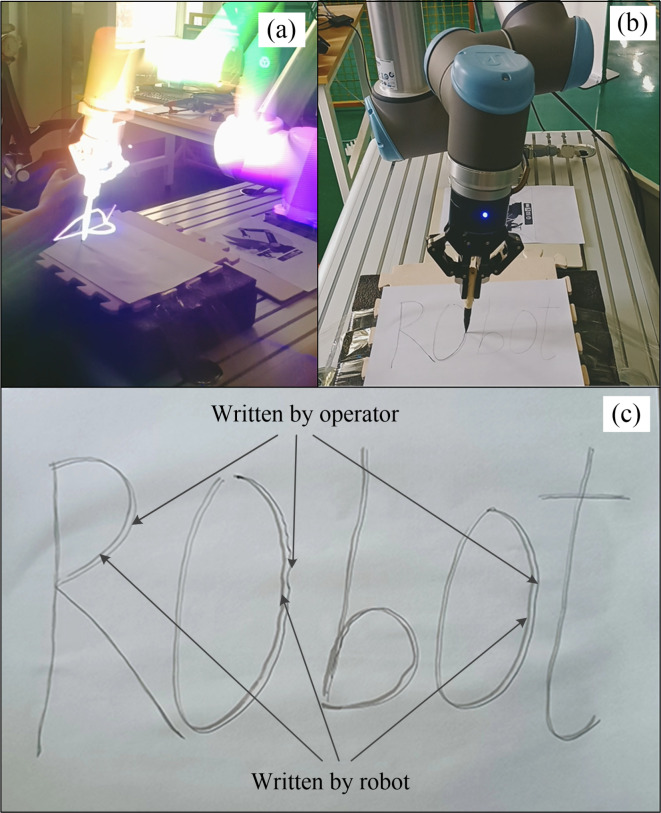
In the industrial robots field, efficient and convenient programming methods have been a hot research topic. In recent years, immersive simulation technology has been developing rapidly in many fields, which provides new horizons for the development of industrial robots. This paper presents a HTC VIVE laser scan motion capture and Holohens augmented reality (AR) based interactive Programming by Demonstration (PbD) system for industrial robot. A portable Handheld Teaching Device (HTD) and its calibration algorithm are designed in the system. The portable HTD which is tracked by a laser motion capture system can be viewed as an AR robot end-effector to teach paths. Meanwhile, the AR robot can be simulated in real time during programing. In addition, the robot reproducing the operator's actions at the same position in space is the focus of programming. So, Multi-system registration methods are proposed to determine the relationship between robot systems, motion capture systems and virtual robot systems. Meanwhile, a path planning algorithm is proposed to convert the captured raw path points into robot-executable code. For unskilled operators, they can easily perform complex programming using the HTD. For skilled senior workers, their skills can be quickly learned by robots using the system.
Overview
The claims and statistics of this paper haven’t been checked yet.
Run the check — free, no account needed. It reads the open-access text and checks the sources it cites.
Integrity signals
Registry
Cites
Statistics
Figures
Verification
Claims the paper makes
The claims and statistics of this paper haven’t been checked yet.
Run the check — free, no account needed. It reads the open-access text and checks the sources it cites.
Claims other papers make about this one
Each is checked against this paper’s own text: does it say what the citing paper says it does?
In the citing paper
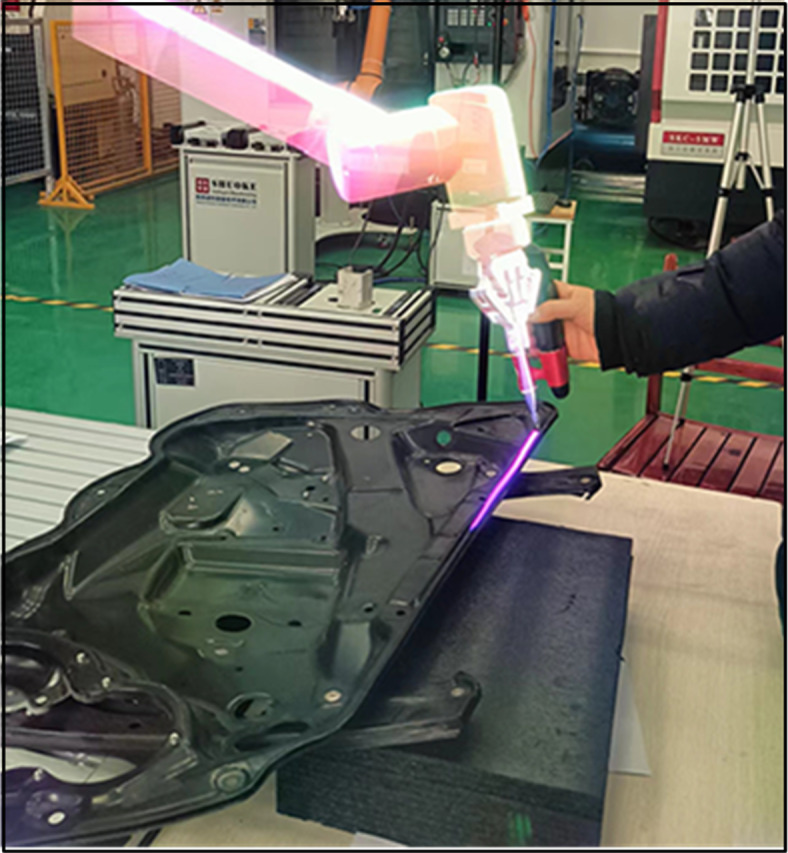
“e Industrial robot using motion capture to assist and learn from the operator's wor, reprinted/adapted with permission from 39 ;”
From Recent advances in intelligent wearable systems: from multiscale biomechanical features towards human motion intent prediction (2026) · cites this paper as [39]
Self-check
Percentages, sums and reported differences re-computed from the paper’s own numbers.
The self-check needs the paper’s full text.
Citations
Cites
A Survey of Augmented, Virtual, and Mixed Reality for Cultural Heritage
Bekele, M. K., Pierdicca, R., Frontoni, E., Malinverni, E. S., & Gain, J. (2018) · Journal on Computing and Cultural Heritage · doi:10.1145/3145534 · Cited by 1,147
Recent Advances in Robot Learning from Demonstration
Ravichandar, H., Polydoros, A. S., Chernova, S., & Billard, A. (2020) · Annu. Rev. Control. Robotics Auton. Syst. · doi:10.1146/annurev-control-100819-063206 · Cited by 947
Industry use of virtual reality in product design and manufacturing: a survey
Berg, L. P., & Vance, J. M. (2016) · Virtual Reality · doi:10.1007/s10055-016-0293-9 · Cited by 807
Recent progress on programming methods for industrial robots
Pan, Z. S., Polden, J., Larkin, N., van Duin, S., & Norrish, J. (2011) · Robotics and Computer-Integrated Manufacturing · doi:10.1016/j.rcim.2011.08.004 · Cited by 550
Virtual reality for assembly methods prototyping: a review
Seth, A., Vance, J. M., & Oliver, J. H. (2010) · Virtual Reality · doi:10.1007/s10055-009-0153-y · Cited by 363
Communicating and Displaying Real-Time Data with WebSocket
Pimentel, V., & Nickerson, B. G. (2012) · IEEE Internet Computing · doi:10.1109/mic.2012.64 · Cited by 263
Current state of virtual reality simulation in robotic surgery training: a review
Bric, J. D., Lumbard, D., Frelich, M. J., & Gould, J. C. (2015) · Surgical Endoscopy · doi:10.1007/s00464-015-4517-y · Cited by 242
Supporting Remote Maintenance in Industry 4.0 through Augmented Reality
Masoni, R., Ferrise, F., Bordegoni, M., Gattullo, M., Uva, A. E., Fiorentino, M., Carrabba, E., & Donato, M. D. (2017) · Procedia Manufacturing · doi:10.1016/j.promfg.2017.07.257 · Cited by 238
Future directions for the development of virtual reality within an automotive manufacturer
Lawson, G., Salanitri, D., & Waterfield, B. C. (2015) · Applied Ergonomics · doi:10.1016/j.apergo.2015.06.024 · Cited by 220
Malik, A. A., Masood, T., & Bilberg, A. (2019) · International Journal of Computer Integrated Manufacturing · doi:10.1080/0951192x.2019.1690685 · Cited by 209
Research works printed but not linked: 1
- Chellali, A., Jourdan, F., & Dumas, C. (2013, December). VR4D: An immersive and collaborative experience toimprove the interior design process. In 5th Joint Virtual Reality Conference of EGVE and EuroVR, JVRC 2013 (pp. 61–65).
Cited by
Sorted by citations
Chen, S., Peng, C., Yang, B., Lin, J., Zhou, L., Jiang, Z., Liu, Z., Liu, Y., & Tang, L. (2026) · npj Artificial Intelligence · doi:10.1038/s44387-026-00083-5 · Cited by 9
WORM: Programming Collaborative Robots Through Manual Actions for Craft-Aligned Digital Fabrication
Bourgault, S., Aponte, A., Ondo, M., Yu, E., & Jacobs, J. (2025) · ACM Symposium on User Interface Software and Technology (UIST) · doi:10.1145/3746059.3747616 · Cited by 6
Heindl, C., Ebenhofer, G., Kutlu, S., Widmoser, F., & Pichler, A. (2025) · Springer proceedings in advanced robotics · doi:10.1007/978-3-031-89471-8_27 · Cited by 3
Chu, C., Lai, C.-Y., & Shih, C.-H. (2026) · Journal of Manufacturing Systems · doi:10.1016/j.jmsy.2026.01.006 · Cited by 2
Hong, L., Chu, Y., Wang, B., Liang, Y., & Huo, P. (2026) · The International Journal of Advanced Manufacturing Technology · doi:10.1007/s00170-025-17261-5 · Cited by 1
Metadata
- Authors
- Liu, G., Sun, W., & Li, P.
- Affiliations
- Xinjiang University (CN)
- Corresponding author
- Sun, Wenlei
- Venue
- Scientific Reports
- Published
- 2024-10-06
- Volume
- 14
- Issue
- 1
- Pages
- 23259-23259
- ISSN
- 2045-2322 (ISSN-L)
- PMC
- PMC11456608
- OpenAlex
- W4403162214
- Cited by
- 17
- References
- 41
- Citations by year
- 2026: 10 · 2025: 7
- FWCI
- 2.66
- Type
- journal article
- Language
- en
- Open access
- gold
- doi.org
- Licence
- Locations
- Scientific Reports (publishedVersion, cc-by-nc-nd)
- PubMed Central (publishedVersion, cc-by-nc-nd)
- PubMed (publishedVersion)
- DOAJ (DOAJ: Directory of Open Access Journals) (submittedVersion)
- Funders
- The Science and Technology Development Program Projects in Region (2022LQ03007)
- The Key Laboratory Open Fund in Autonomous Region (2020520002)
- The Key Research and Development Program in Autonomous Region (202003129)
- Topics
- Physical Sciences › Engineering › Control and Systems Engineering › Robot Manipulation and Learning
- Physical Sciences › Computer Science › Computer Vision and Pattern Recognition › Augmented Reality Applications
- Physical Sciences › Engineering › Mechanical Engineering › Teleoperation and Haptic Systems
- Keywords
- industrial robots, programming by demonstration, augmented reality, motion capture, robot programming, path planning, HTC Vive, Microsoft HoloLens, immersive simulation
About these checks
Registry, retraction, Cites and statistics results are computed, not judged, with one exception: a printed reference that no index lists is read once by a model before it counts as a citation error. Claims are extracted by a model and kept only when their quote appears verbatim in the text; each cited source is then checked, with a model’s help, for whether it says what the claim relies on. Those verdicts can be wrong — read the claim’s quote and the cited source before relying on one.
Statistics and arithmetic are recomputed, not judged.
Confidence bands are shown only for fields calibrated on our annotated test set. None is calibrated yet, so no band is shown.
What counts as a claim ›How we measure confidence ›How we check this ›
Are you an author, or do you see a problem with this page? Request a review
