

Full-length RNA-Seq of the RHOH gene in human B cells reveals new exons and splicing patterns
Open accessPublished version of a preprint
The DOI matches its Crossref record; 50 of the 50 references it cites were found in a registry or an index; none of the 49 sources its claims cite is checked for support yet.
Abstract
The RhoH protein is a member of the Ras superfamily of guanosine triphosphate-binding proteins. RhoH is an atypical Rho family member that is always GTP-bound and thus always activated. It is restrictively expressed in normal hematopoietic cells, where it is a negative regulator of cell growth and survival. We previously analyzed the RHOH gene structure and demonstrated that this gene is composed of 7 exons, one single encoding exon located at the 3' extremity of the gene, preceded by 6 noncoding exons. To further understand the transcription events associated with this gene, we performed full-length RNA-Seq on 12 B-cell lines. We identified new exons, new splice events and new splice sites, leading to the discovery of 38 RHOH mRNA molecules, 27 of which have never been described before. Here, we also describe new fusion transcripts. Moreover, our method allowed quantitative measurements of the different mRNA species relative to each other in relation to B-cell differentiation.
Overview
CoChat Summary
TL;DR
Targeted full-length RNA-Seq of the RHOH gene in 12 human B-cell lines identified 38 RHOH mRNA molecules, including 27 previously undescribed, plus new exons, splice sites, and RHOH–LINC02265 fusion transcripts. The study also quantified transcript changes during B-cell differentiation and predicted potential ORFs/peptides.
Key findings
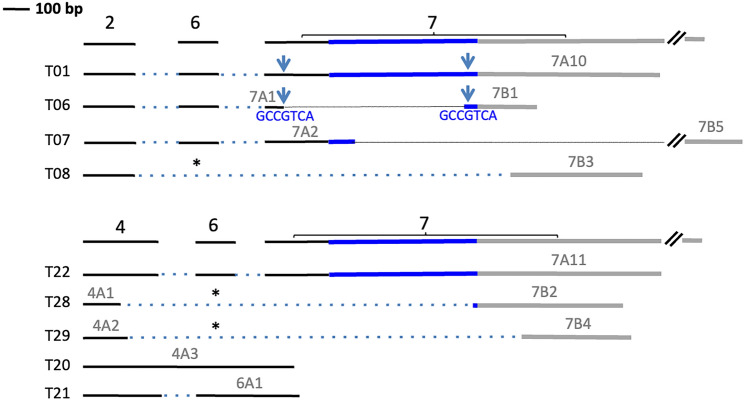
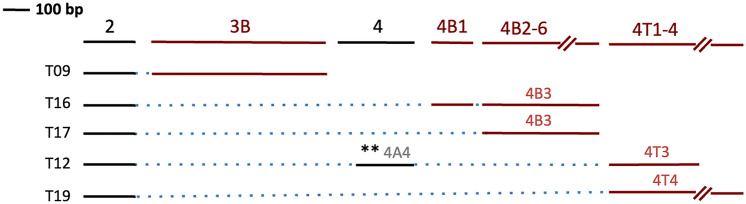
- Full-length RNA-Seq identified 38 RHOH mRNA molecules, 27 never described before. Five new RHOH exons (EX3B, EX4B1, EX4B2–6, EX4B7, EX4T1–4) generated 18 new transcripts that lacked exon 6 and the RhoH-encoding exon 7; seven additional new mRNAs involved known exons 6/7 with exon skipping or splitting (T06–08, T20–21, T28–29).
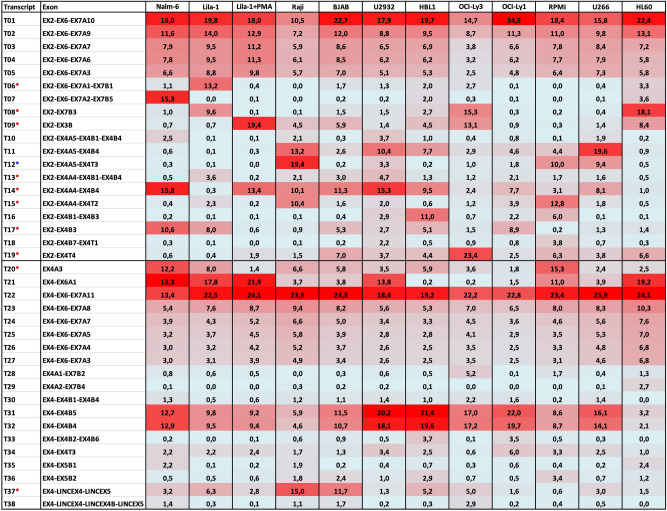
- Two fusion transcripts, T37 and T38, arose by long-distance splicing of RHOH exon 4 to LINC02265 exons 4–5 (T37) or exons 4, 4B, and 5 (T38); T37 was notably expressed in Burkitt lines (15% in Raji, 11.7% in BJAB), and exon 4B was identified as a new exon in LINC02265.
- In Lila-1 cells treated with PMA, 10 RHOH mRNAs varied quantitatively, with fold changes ranging from −96 to +44.7; examples include T08 (−96), T06 (−32), T09 (+27.7), T14 (+44.7), T20 (−5.7), and T37 (−2.25). T12 was higher in plasma cells (9.7) than in pre-B/B mature (0.2) or DLBCL (2) cells.
- ORF prediction indicated the normal 21.3 kDa RhoH protein or N-terminal extensions of 29 or 39 amino acids (24.4 or 25.6 kDa), plus additional ORFs/peptides, some using noncanonical start codons.
Methods
- Twelve human B-cell lines spanning pre-B to plasma differentiation (e.g., Nalm-6, Lila-1, Raji, BJAB, HBL-1, U-2932, OCI-Ly1, OCI-Ly3, RPMI 8226, U266) plus the myeloid HL60 control; Lila-1 cells were treated with 20 ng/mL PMA or vehicle for 24–72 h, and RNA was extracted with RIN 10.
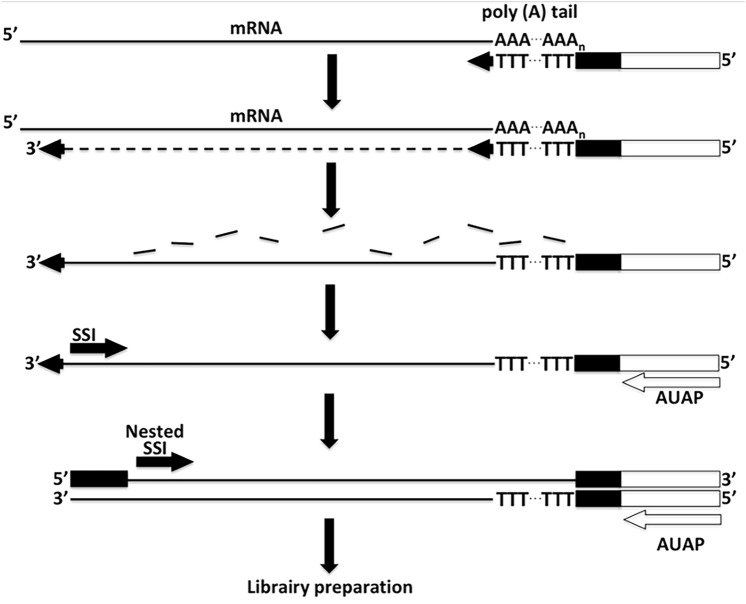
- NanoString nCounter used a custom panel with 18 RHOH probe pairs plus ABL1, GAPDH, and TBP normalization on 300 ng total RNA; then 3′RACE-PCR was performed from exon 2 or exon 4, followed by nested PCR and Oxford Nanopore MinION sequencing.
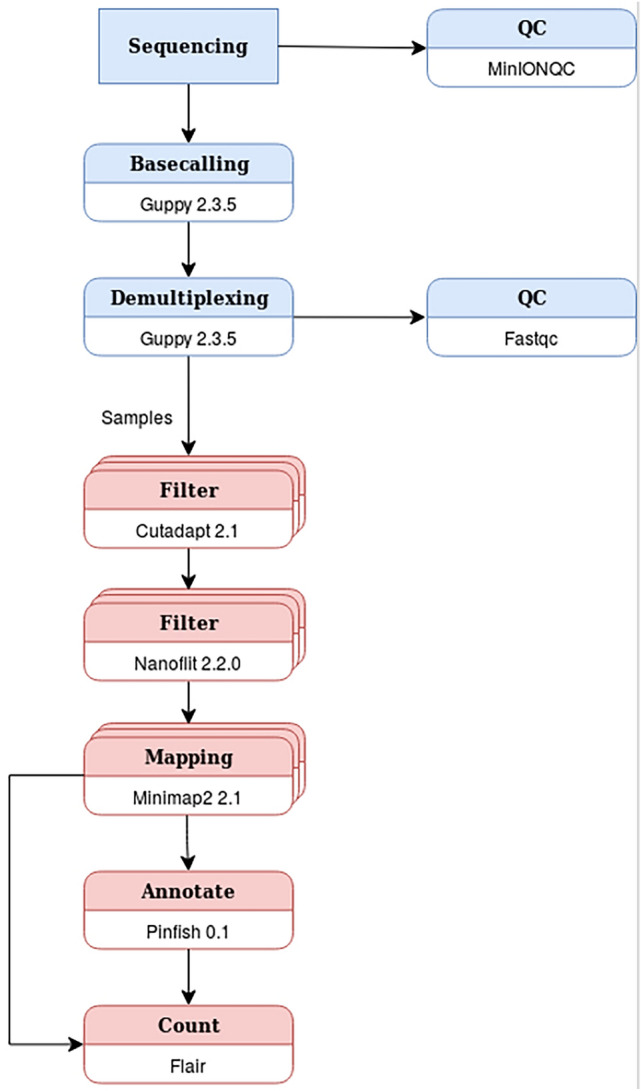
- Bioinformatics included guppy 2.3.5 basecalling/demultiplexing, cutadapt/Nanoflit filtering, minimap2 alignment to hg19, pinfish clustering, flair quantification, a minimum depth threshold of 500, and ORFfinder/Pfam for potential protein prediction.
Limitations
- The paper states that quantitative differentiation results were assumed “according to the use of only one sample per cell line,” and that it is not known whether the noncanonical non-ATG start codons may be “true” start codons; the RHOH–LINC02265 fusion link “needs to be further investigated.”
- Evident from the text: all samples are cell lines derived from hematopoietic disorders rather than primary normal B cells, and the targeted 3′RACE approach initiated from exon 2 or exon 4 may miss transcripts starting from other promoters or exons.
- Evident from the text: ORF/peptide predictions were computational and not experimentally validated, and the minimum depth threshold of 500 may exclude low-abundance transcripts.
Model-written summary. Check it against the paper before relying on it.
Integrity signals
Registry
Cites
Statistics
Figures

Verification
Claims the paper makes
0 Valid · 1 Not valid · 34 Not checked · 126 Own results and interpretations
A result the paper reports from its own data — it cites no other source for it, so there is none to check. The quote shows it is in the paper.
In the paper
“Both were notably expressed, especially T21, in 6 out of the 12 cell lines studied (Fig. 5; Table 1).”
§ Full-length RNA-Seq of the RHOH gene in human B cells reveals new exons and splicing patterns > Results > Full-length mRNA-Seq analysis of the RHOH gene in B cells
plainn = 12- Asserted: passes — The authors put it forward as true.
- Checkable: passes — It can be checked against evidence.
- Load-bearing: unclear — It is unclear whether the paper’s conclusions depend on it.
- Based: passes — The paper gives a reason why it holds.
A result the paper reports from its own data — it cites no other source for it, so there is none to check. The quote shows it is in the paper.
In the paper
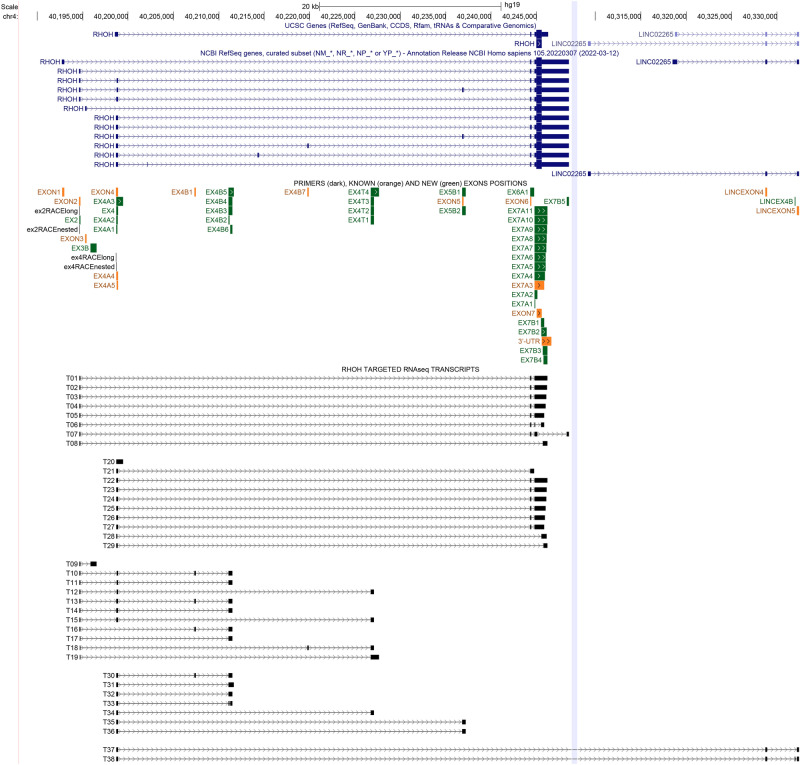
“We observed these sites inside exon 7, leading to its splitting accompanied by the loss of almost the entire RhoH protein coding region (T07).”
§ Full-length RNA-Seq of the RHOH gene in human B cells reveals new exons and splicing patterns > Results > Full-length mRNA-Seq analysis of the RHOH gene in B cells
plainstates a cause- Asserted: passes — The authors put it forward as true.
- Checkable: passes — It can be checked against evidence.
- Load-bearing: passes — The paper’s conclusions depend on it.
- Based: passes — The paper gives a reason why it holds.
A result the paper reports from its own data — it cites no other source for it, so there is none to check. The quote shows it is in the paper.
In the paper
“The T35 and T36 transcripts contained exon 5 which was named EX5B1-2.”
§ Full-length RNA-Seq of the RHOH gene in human B cells reveals new exons and splicing patterns > Results > Full-length mRNA-Seq analysis of the RHOH gene in B cells
plain- Asserted: passes — The authors put it forward as true.
- Checkable: passes — It can be checked against evidence.
- Load-bearing: unclear — It is unclear whether the paper’s conclusions depend on it.
- Based: passes — The paper gives a reason why it holds.
A result the paper reports from its own data — it cites no other source for it, so there is none to check. The quote shows it is in the paper.
In the paper
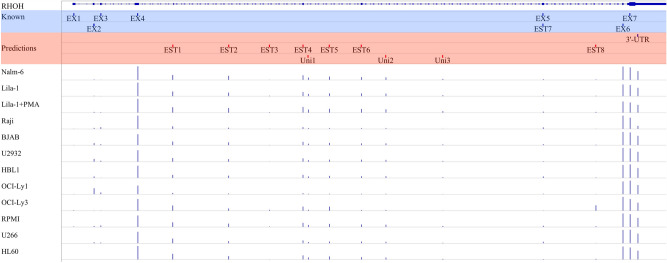
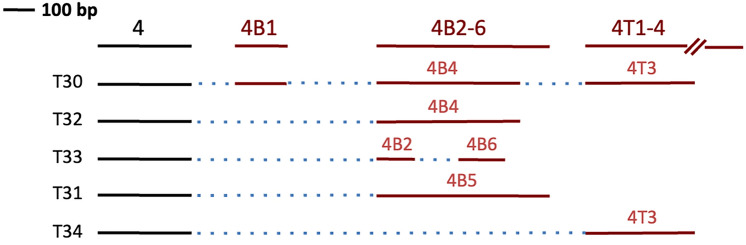
“Figures 4 and 5 present the positions and exon successions of the 38 RHOH mRNA molecules that were identified, numbered from T01 to T38, and their relative percentages in the 12 B-cell lines.”
§ Full-length RNA-Seq of the RHOH gene in human B cells reveals new exons and splicing patterns > Results > Full-length mRNA-Seq analysis of the RHOH gene in B cells
plain- Asserted: passes — The authors put it forward as true.
- Checkable: passes — It can be checked against evidence.
- Load-bearing: passes — The paper’s conclusions depend on it.
- Based: passes — The paper gives a reason why it holds.
A result the paper reports from its own data — it cites no other source for it, so there is none to check. The quote shows it is in the paper.
In the paper
“The 7 following new RHOH mRNA molecules, T30 to T36, started from exon 4 and contained 3 of the new RHOH exons: EX4B1, EX4B2-6, and EX4T1–4”
§ Full-length RNA-Seq of the RHOH gene in human B cells reveals new exons and splicing patterns > Results > Full-length mRNA-Seq analysis of the RHOH gene in B cells
plain- Asserted: passes — The authors put it forward as true.
- Checkable: passes — It can be checked against evidence.
- Load-bearing: passes — The paper’s conclusions depend on it.
- Based: passes — The paper gives a reason why it holds.
64 more claims
Create a free account to see all 161 claims and to verify the 49 references still open.
- Probably not a substantial claim. 40
- It may state two separate claims as one. 64
Self-check
Percentages, sums and reported differences re-computed from the paper’s own numbers.
Each contradiction between two passages listed here was confirmed by an independent check.
Rated minor: it would not touch a result — a value no result rests on, a p-value that stays on the same side of the significance level, or a conflict that is clerical, resolved elsewhere in the paper, or outside its own findings.
In the paper
§ Full-length RNA-Seq of the RHOH gene in human B cells reveals new exons and splicing patterns > Discussion > New insights
“exon 6 skipping (T06–08, T28–29)”
§ Full-length RNA-Seq of the RHOH gene in human B cells reveals new exons and splicing patterns > Results > Full-length mRNA-Seq analysis of the RHOH gene in B cells
“| Known exons in new transcripts | EX7A1-EX7B1 | EX7 | EX7 splitting | T06 | EX2-EX6-EX7A1-EX7B1 | 2.08 | | Known exons in new transcripts | EX7A2-EX7B5 | EX7 | EX7 splitting | T07 | EX2-EX6-EX7A2-EX7B5 | 1.66 |”
Rated minor: it would not touch a result — a value no result rests on, a p-value that stays on the same side of the significance level, or a conflict that is clerical, resolved elsewhere in the paper, or outside its own findings.
In the paper
§ Full-length RNA-Seq of the RHOH gene in human B cells reveals new exons and splicing patterns > Results > Full-length mRNA-Seq analysis of the RHOH gene in B cells
“T21, which contained only exon 6 spliced to exon 2”
§ Full-length RNA-Seq of the RHOH gene in human B cells reveals new exons and splicing patterns > Results > Full-length mRNA-Seq analysis of the RHOH gene in B cells
“| Known exons in new transcripts | EX6A1 | EX6 | EX6 long | T21 | EX4-EX6A1 | 8.74 |”
Citations
Cites
Long non-coding RNAs: insights into functions
Mercer, T. R., Dinger, M. E., & Mattick, J. S. (2009) · Nature Reviews Genetics · doi:10.1038/nrg2521 · Cited by 5,654
Gene regulation by long non-coding RNAs and its biological functions
Statello, L., Guo, C.-J., Chen, L.-L., & Huarte, M. (2021) · Nature Reviews Molecular Cell Biology · doi:10.1038/s41580-020-00315-9 · Cited by 4,991
Genome-Wide Analysis in Vivo of Translation with Nucleotide Resolution Using Ribosome Profiling
Ingolia, N. T., Ghaemmaghami, S., Newman, J. R. S., & Weissman, J. S. (2009) · Science · doi:10.1126/science.1168978 · Cited by 3,853
GeneHancer: genome-wide integration of enhancers and target genes in GeneCards
Fishilevich, S., Nudel, R., Rappaport, N., Hadar, R., Plaschkes, I., Iny Stein, T., Rosen, N., Kohn, A., Twik, M., Safran, M., et al. (2017) · Database · doi:10.1093/database/bax028 · Cited by 1,271
Hypermutation of multiple proto-oncogenes in B-cell diffuse large-cell lymphomas
Pasqualucci, L., Neumeister, P., Goossens, T., Nanjangud, G., Chaganti, R. S. K., Küppers, R., & Dalla-Favera, R. (2001) · Nature · doi:10.1038/35085588 · Cited by 1,032
In vivo genome-wide profiling of RNA secondary structure reveals novel regulatory features
Ding, Y., Tang, Y., Kwok, C. K., Zhang, Y., Bevilacqua, P. C., & Assmann, S. M. (2014) · Nature · doi:10.1038/nature12756 · Cited by 775 · cited 1×
“The RNA structure has critical roles in processes such as the regulation of translation and splicing 42 ; these results could therefore provide insight into this process.”
Regulation of gene expression by cis-acting long non-coding RNAs
Gil, N., & Ulitsky, I. (2020) · Nature Reviews Genetics · doi:10.1038/s41576-019-0184-5 · Cited by 720
Complex roles of cAMP–PKA–CREB signaling in cancer
Zhang, H., Kong, Q., Wang, J., Jiang, Y., & Hua, H. (2020) · Experimental Hematology & Oncology · doi:10.1186/s40164-020-00191-1 · Cited by 466
Non-AUG translation: a new start for protein synthesis in eukaryotes
Kearse, M. G., & Wilusz, J. E. (2017) · Genes & Development · doi:10.1101/gad.305250.117 · Cited by 387
Systematic discovery of cap-independent translation sequences in human and viral genomes
Weingarten-Gabbay, S., Elias-Kirma, S., Nir, R., Gritsenko, A. A., Stern-Ginossar, N., Yakhini, Z., Weinberger, A., & Segal, E. (2016) · Science · doi:10.1126/science.aad4939 · Cited by 334 · cited 1×
“In addition to this first motif, additional analysis led us to highlight in EX4B2-6 S3) that could have a function in mRNA secondary structure modeling, which is needed for posttranscriptional and translational control mechanisms, such as internal translation initiation facilitation 41 .”
Cited by
Elucidating the risk factors and oncogene drivers of acute myeloid leukemia
Sanya, D. R. A., & Onésime, D. (2025) · Human Cell · doi:10.1007/s13577-025-01294-9 · Cited by 1
Metadata
- Authors
- Leprêtre, F., Meneboo, J.-P., Villenet, C., Delestré, L., Quesnel, B., Shelley, C. S., Figeac, M., & Galiègue-Zouitina, S.
- Affiliations
- Centre National de la Recherche Scientifique (FR)
- Inserm (FR)
- Université de Lille (FR)
- Corresponding author
- Leprêtre, Frédéric
- ORCID
- Venue
- Scientific Reports
- Published
- 2024-11-16
- Volume
- 14
- Issue
- 1
- Pages
- 28297-28297
- ISSN
- 2045-2322 (ISSN-L)
- PMC
- PMC11569159
- OpenAlex
- W4404432715
- Semantic Scholar
- 8ce851d2236d9a51dfc21d51029330deeb9c1893
- Cited by
- 1
- References
- 50
- Citations by year
- 2025: 1
- FWCI
- 0.10
- Type
- journal article
- Language
- en
- Update notices
- correction (2025-04-28)
- Open access
- gold
- doi.org
- Licence
- cc-by-nc-nd
- creativecommons.org/licenses/by-nc-nd/4.0 (tdm)
- creativecommons.org/licenses/by-nc-nd/4.0 (vor)
- Locations
- Scientific Reports (publishedVersion, cc-by-nc-nd)
- Research Square (submittedVersion, cc-by)
- PubMed Central (publishedVersion, cc-by-nc-nd)
- PubMed (publishedVersion)
- HAL (submittedVersion, cc-by-nc-nd)
- DOAJ (DOAJ: Directory of Open Access Journals) (submittedVersion)
- LillOA (Université de Lille (University Of Lille)) (submittedVersion)
- LillOA (Université de Lille (University Of Lille)) (submittedVersion, other-oa)
- Funders
- Université de Lille
- Institut National de la Santé et de la Recherche Médicale
- Topics
- Life Sciences › Biochemistry, Genetics and Molecular Biology › Molecular Biology › RNA Research and Splicing
- Life Sciences › Biochemistry, Genetics and Molecular Biology › Molecular Biology › Genomics and Phylogenetic Studies
- Life Sciences › Biochemistry, Genetics and Molecular Biology › Molecular Biology › Genomics and Chromatin Dynamics
- Keywords
- RhoH, B cells, alternative splicing, novel exons, splice sites, fusion transcripts, mRNA isoforms, B cell differentiation, small GTPases, gene structure
- MeSH terms
- RNA-Seq, B-Lymphocytes, Cell Differentiation, Cell Line, Exons, Humans, RNA Splicing, RNA, Messenger, Transcription Factors, Alternative Splicing, rho GTP-Binding Proteins
About these checks
Registry, retraction, Cites and statistics results are computed, not judged, with one exception: a printed reference that no index lists is read once by a model before it counts as a citation error. Claims are extracted by a model and kept only when their quote appears verbatim in the text; each cited source is then checked, with a model’s help, for whether it says what the claim relies on. Those verdicts can be wrong — read the claim’s quote and the cited source before relying on one.
A language model drew the claims from the paper on 2026-11-24, under version 3 of the claim definition (model deepseek-v4.1-flash, prompt extract-v3).
A second model labelled each claim on 2026-11-24 (model jev-1.13-20260917, definition revision gold-guideline-v0.2).
Statistics and arithmetic are recomputed, not judged.
Confidence bands are shown only for fields calibrated on our annotated test set. None is calibrated yet, so no band is shown.
What counts as a claim ›How we measure confidence ›How we check this ›
Are you an author, or do you see a problem with this page? Request a review
Data sources
Bibliographic data: Semantic Scholar, OpenAlex, Crossref.
Contains information from the Semantic Scholar Academic Graph Datasets, made available under the ODC Attribution License (ODC-BY 1.0).
Semantic Scholar’s data is described in: Kinney, R., et al. (2023). The Semantic Scholar Open Data Platform. arXiv:2301.10140.
