

Multimodal data-based human motion intention prediction using adaptive hybrid deep learning network for movement challenged person
Open accessThe DOI matches its Crossref record; 54 of the 54 references it cites were found in a registry or an index.
Abstract
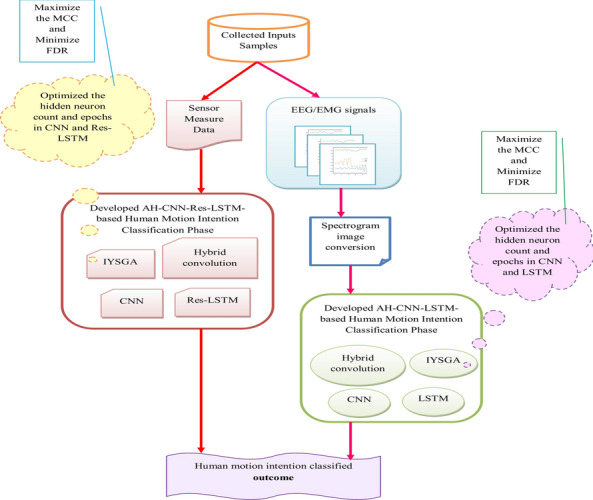
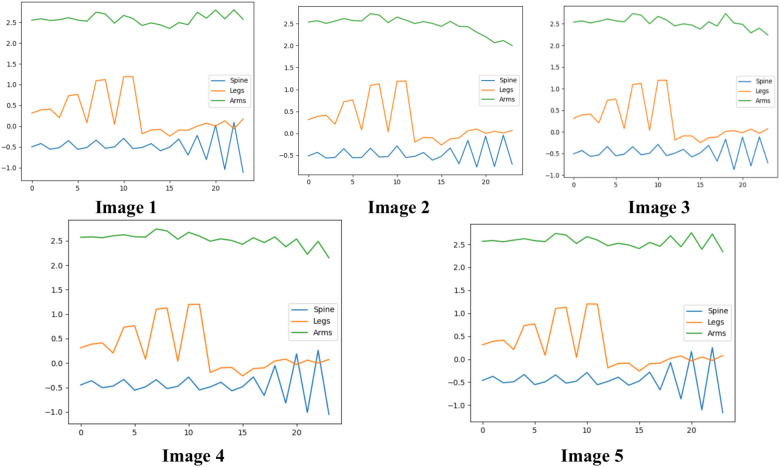
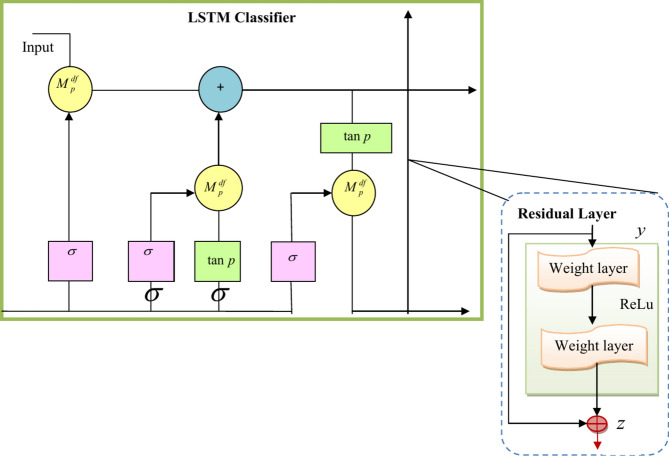
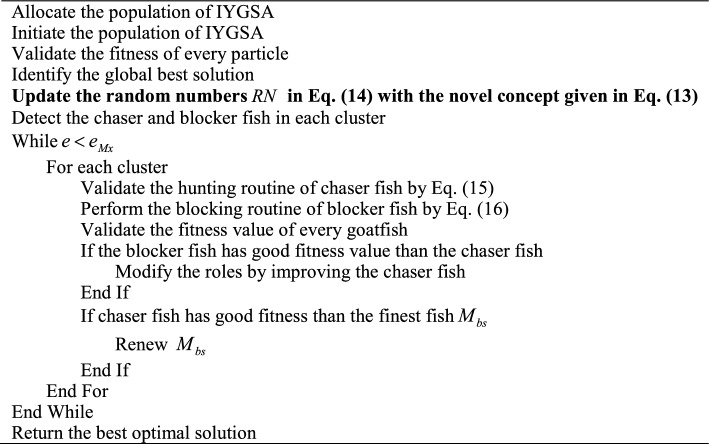
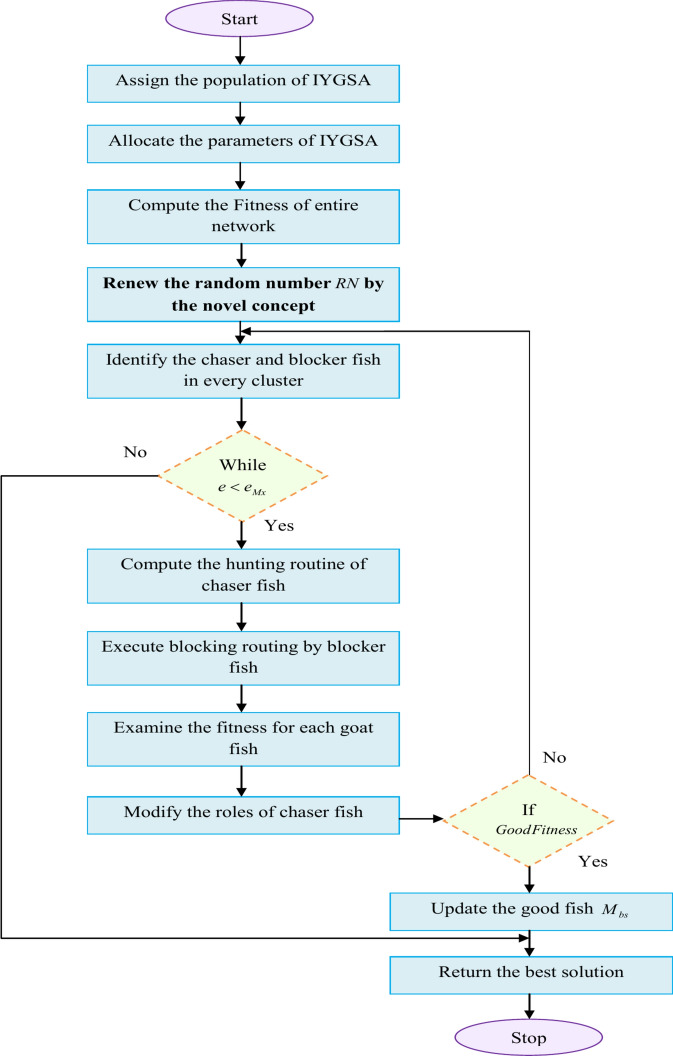
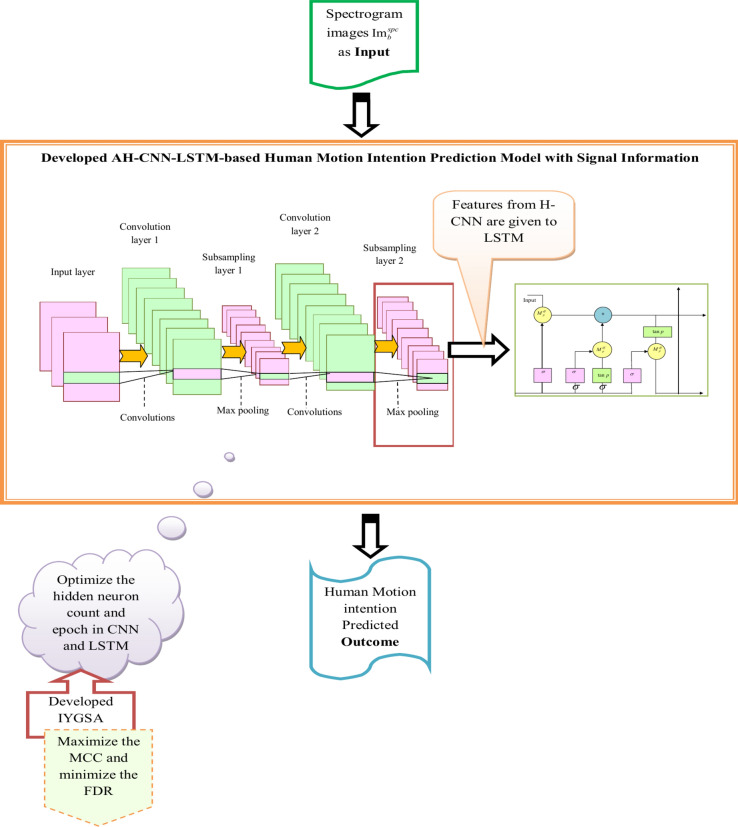
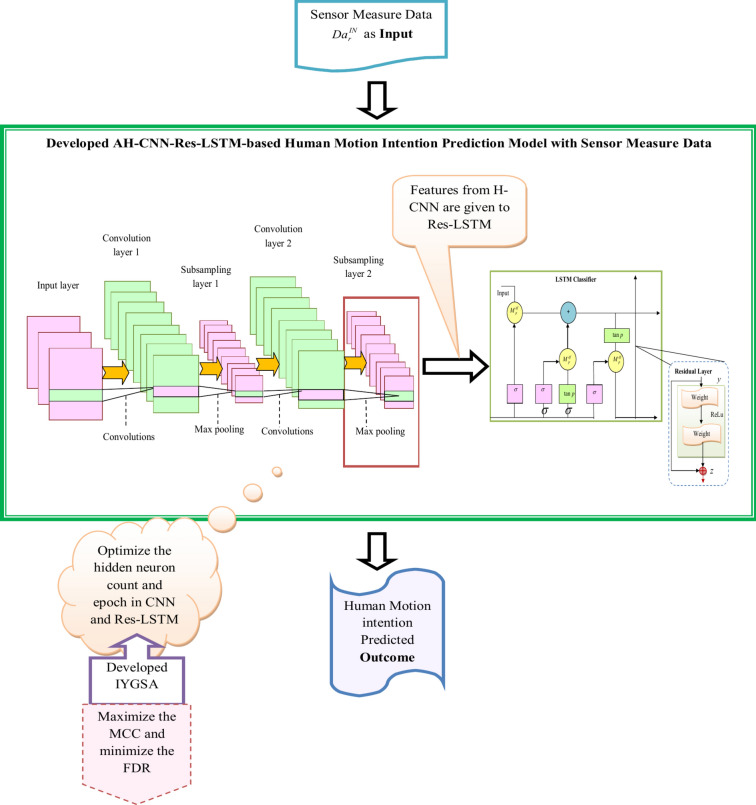
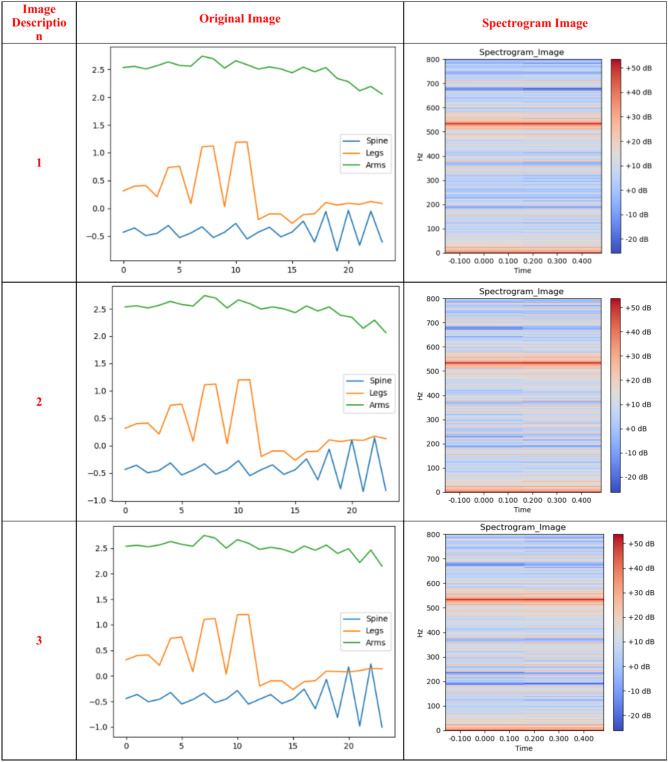
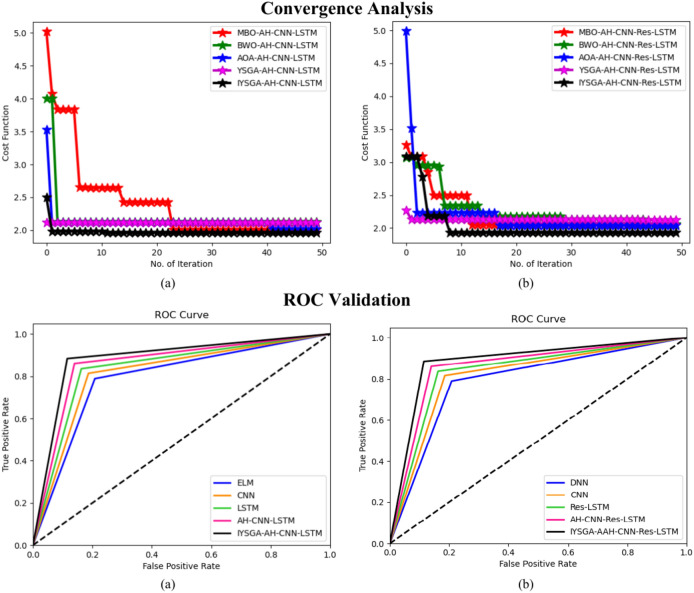
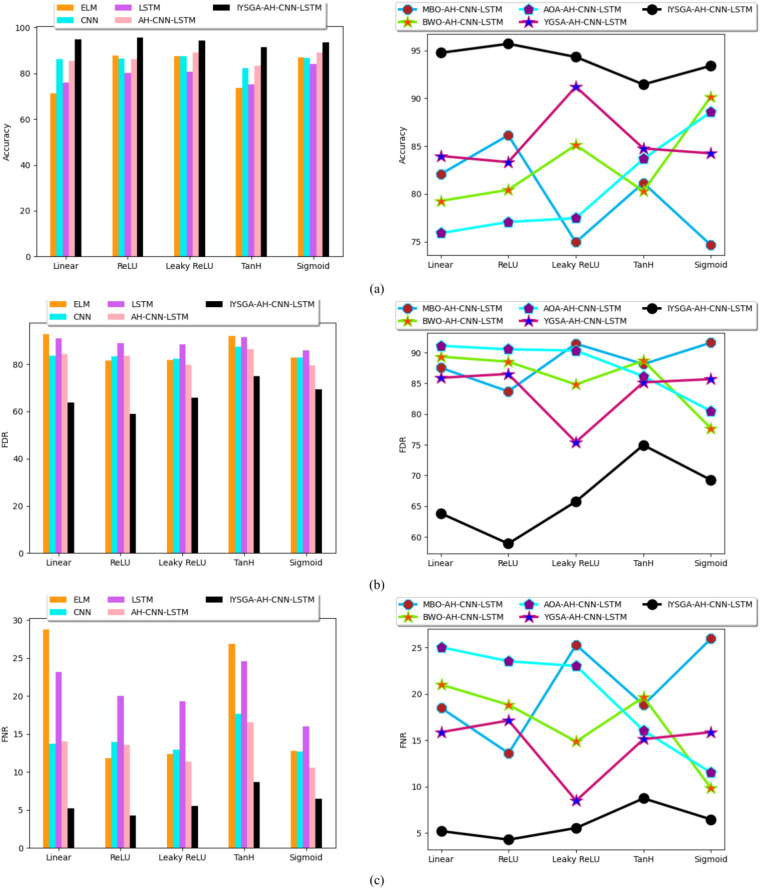
Recently, social demands for a good quality of life have increased among the elderly and disabled people. So, biomedical engineers and robotic researchers aimed to fuse these techniques in a novel rehabilitation system. Moreover, these models utilized the biomedical signals acquired from the human body's particular organ, cells, or tissues. The human motion intention prediction mechanism plays an essential role in various applications, such as assistive and rehabilitation robots, that execute specific tasks among elders and physically impaired individuals. However, more complications are increased in the human-machine-based interaction techniques, creating more scope for personalized assistance for the human motion intention prediction system. Therefore, in this paper, an Adaptive Hybrid Network (AHN) is implemented for effective human motion intention prediction. Initially, multimodal data like electroencephalogram (EEG)/Electromyography (EMG) signals and sensor measures data are collected from the available data resource. The gathered EEG/EMG signals are then converted into spectrogram images and sent to AH-CNN-LSTM, which is the integration of an Adaptive Hybrid Convolution Neural Network (AH-CNN) with a Long Short-Term Memory (LSTM) network. Similarly, the data details of sensor measures are directly subjected to AH-CNN-Res-LSTM, which is the combination of Adaptive Hybrid CNN with Residual Network and LSTM (Res-LSTM) to get the predictive result. Further, to enhance the prediction, the parameters in both the AH-CNN-LSTM and AH-CNN-Res-LSTM techniques are optimized using the Improved Yellow Saddle Goatfish Algorithm (IYSGA). The efficiency of the implemented model is computed by conducting the comparison experiment of the proposed technique with other standard models. The performance outcome of the developed method outperformed the other traditional methods.
Overview
The claims and statistics of this paper haven’t been checked yet.
Free: it reads the open-access text and checks the first 5 claims that cite a source we can check. Create a free account to check every claim.
Integrity signals
Registry
Cites
Statistics
Figures
Verification
Claims the paper makes
The claims and statistics of this paper haven’t been checked yet.
Free: it reads the open-access text and checks the first 5 claims that cite a source we can check. Create a free account to check every claim.
Self-check
Percentages, sums and reported differences re-computed from the paper’s own numbers.
The self-check needs the paper’s full text.
Citations
Cites
1 retracted
Bu, S., Zheng, H., Chen, S., Wu, Y., He, C., Yang, D., Wu, C., & Zhou, Y. (2023) · Computers in Biology and Medicine · doi:10.1016/j.compbiomed.2023.107410 · Cited by 9
RetractedVenkata Rao, R. (2016) · International Journal of Industrial Engineering Computations · doi:10.5267/j.ijiec.2015.8.004 · Cited by 2,071
Pelican Optimization Algorithm: A Novel Nature-Inspired Algorithm for Engineering Applications
Trojovský, P., & Dehghani, M. (2022) · Sensors · doi:10.3390/s22030855 · Cited by 895
Hayyolalam, V., & Pourhaji Kazem, A. A. (2020) · Engineering Applications of Artificial Intelligence · doi:10.1016/j.engappai.2019.103249 · Cited by 813
Deep Learning for EMG-based Human-Machine Interaction: A Review
Xiong, D., Zhang, D., Zhao, X., & Zhao, Y. (2021) · IEEE/CAA Journal of Automatica Sinica · doi:10.1109/jas.2021.1003865 · Cited by 395
Past, Present, and Future of EEG-Based BCI Applications
Värbu, K., Muhammad, N., & Muhammad, Y. (2022) · Sensors · doi:10.3390/s22093331 · Cited by 321
Porciuncula, F., Roto, A. V., Kumar, D., Davis, I., Roy, S., Walsh, C. J., & Awad, L. N. (2018) · PM&R · doi:10.1016/j.pmrj.2018.06.013 · Cited by 300
Jiang, H., Diao, Z., Shi, T., Zhou, Y., Wang, F., Hu, W., Zhu, X., Luo, S., Tong, G., & Yao, Y.-D. (2023) · Computers in Biology and Medicine · doi:10.1016/j.compbiomed.2023.106726 · Cited by 241
A review of the key technologies for sEMG-based human-robot interaction systems
Li, K., Zhang, J., Wang, L., Zhang, M., Li, J., & Bao, S. (2020) · Biomedical Signal Processing and Control · doi:10.1016/j.bspc.2020.102074 · Cited by 233
Fleming, A., Stafford, N., Huang, S., Hu, X., Ferris, D. P., & Huang, H. (. (2021) · Journal of Neural Engineering · doi:10.1088/1741-2552/ac1176 · Cited by 216
Dingo Optimizer: A Nature-Inspired Metaheuristic Approach for Engineering Problems
Bairwa, A. K., Joshi, S., & Singh, D. (2021) · Mathematical Problems in Engineering · doi:10.1155/2021/2571863 · Cited by 212
Multi-task deep learning for medical image computing and analysis: A review
Zhao, Y., Wang, X., Che, T., Bao, G., & Li, S. (2023) · Computers in Biology and Medicine · doi:10.1016/j.compbiomed.2022.106496 · Cited by 203
Huang, J., Huo, W., Xu, W., Mohammed, S., & Amirat, Y. (2015) · IEEE Transactions on Automation Science and Engineering · doi:10.1109/tase.2015.2466634 · Cited by 185
Measurement Methods for Physical Activity and Energy Expenditure: a Review
Ndahimana, D., & Kim, E.-K. (2017) · Clinical Nutrition Research · doi:10.7762/cnr.2017.6.2.68 · Cited by 179
A review of computational approaches for evaluation of rehabilitation exercises
Liao, Y., Vakanski, A., Xian, M., Paul, D. R., & Baker, R. T. (2020) · Computers in Biology and Medicine · doi:10.1016/j.compbiomed.2020.103687 · Cited by 174
Quintero Minguez, R., Parra Alonso, I., Fernandez-Llorca, D., & Sotelo, M. A. (2019) · IEEE Transactions on Intelligent Transportation Systems · doi:10.1109/tits.2018.2836305 · Cited by 169
Sensor-Based Wearable Systems for Monitoring Human Motion and Posture: A Review
Huang, X., Xue, Y., Ren, S., & Wang, F. (2023) · Sensors · doi:10.3390/s23229047 · Cited by 167
Dutta, T., Bhattacharyya, S., Dey, S., & Platoš, J. (2020) · IEEE Access · doi:10.1109/access.2020.2999540 · Cited by 131
Petković, T., Puljiz, D., Marković, I., & Hein, B. (2018) · Robotics and Computer-Integrated Manufacturing · doi:10.1016/j.rcim.2018.11.004 · Cited by 125
Liu, Z., Liu, Q., Xu, W., Liu, Z., Zhou, Z., & Chen, J. (2019) · Procedia CIRP · doi:10.1016/j.procir.2019.04.080 · Cited by 123
Predicting Human Intentions in Human–Robot Hand-Over Tasks Through Multimodal Learning
Wang, W., Li, R., Chen, Y., Sun, Y., & Jia, Y. (2021) · IEEE Transactions on Automation Science and Engineering · doi:10.1109/tase.2021.3074873 · Cited by 114
Rundo, L., Pirrone, R., Vitabile, S., Sala, E., & Gambino, O. (2020) · Journal of Biomedical Informatics · doi:10.1016/j.jbi.2020.103479 · Cited by 113
sEMG-Based Lower Limb Motion Prediction Using CNN-LSTM with Improved PCA Optimization Algorithm
Zhu, M., Guan, X., Li, Z., He, L., Wang, Z., & Cai, K. (2023) · Journal of Bionic Engineering · doi:10.1007/s42235-022-00280-3 · Cited by 102
A novel bio-inspired optimization model based on Yellow Saddle Goatfish behavior
Zaldívar, D., Morales-Castañeda, B., Rodríguez, A., Valdivia, A., Cuevas, E., & Pérez‐Cisneros, M. (2018) · Biosystems · doi:10.1016/j.biosystems.2018.09.007 · Cited by 97
Kok, C. L., Ho, C. K., Tan, F. K., & Koh, Y. Y. (2024) · Applied Sciences · doi:10.3390/app14135784 · Cited by 97
Hazarika, R. A., Abraham, A., Kandar, D., & Maji, A. K. (2021) · IEEE Access · doi:10.1109/access.2021.3131741 · Cited by 88
I-Planner: Intention-aware motion planning using learning-based human motion prediction
Park, J. S., Park, C., & Manocha, D. (2018) · The International Journal of Robotics Research · doi:10.1177/0278364918812981 · Cited by 81
Xu, J., Li, Y., Xu, L., Chen, P., Chen, S., Liu, J., Xu, C., Cheng, G., Xu, H., Liu, Y., et al. (2019) · IEEE Transactions on Neural Systems and Rehabilitation Engineering · doi:10.1109/tnsre.2019.2937000 · Cited by 78
Users' Privacy Concerns in IoT Based Applications
Psychoula, I., Singh, D., Chen, L., Chen, F., Holzinger, A., & Ning, H. (2018) · IEEE SmartWorld, Ubiquitous Intelligence & Computing, Advanced & Trusted Computing, Scalable Computing & Communications, Cloud & Big Data Computing, Internet of People and Smart City Innovation (SmartWorld/SCALCOM/UIC/ATC/CBDCom/IOP/SCI) · doi:10.1109/smartworld.2018.00317 · Cited by 65
Dual-stage attention-based LSTM for simulating performance of brackish water treatment plant
Yoon, N., Kim, J., Lim, J., Abbas, A., Jeong, K., & Cho, K. H. (2021) · Desalination · doi:10.1016/j.desal.2021.115107 · Cited by 64
Artificial intelligence and assistive technology: risks, rewards, challenges, and opportunities
Smith, E., Graham, D. T., Morgan, C., & MacLachlan, M. (2023) · Assistive Technology · doi:10.1080/10400435.2023.2259247 · Cited by 63
Willingham, T. B., Stowell, J. F., Collier, G., & Backus, D. A. (2024) · International Journal of Environmental Research and Public Health · doi:10.3390/ijerph21010079 · Cited by 63
From brain to movement: Wearables-based motion intention prediction across the human nervous system
Tang, C., Xu, Z., Occhipinti, E., Yi, W., Xu, M., Kumar, S., Virk, G. S., Gao, S., & Occhipinti, L. G. (2023) · Nano Energy · doi:10.1016/j.nanoen.2023.108712 · Cited by 61
Human motion intent learning based motion assistance control for a wearable exoskeleton
Long, Y., Du, Z., Wang, W., & Dong, W. (2017) · Robotics and Computer-Integrated Manufacturing · doi:10.1016/j.rcim.2017.08.007 · Cited by 57
Taha, M., & Morren, J. A. (2023) · Muscle & Nerve · doi:10.1002/mus.28023 · Cited by 49
Zhang, X., Fan, J., Peng, T., Zheng, P., Zhang, X., & Tang, R. (2023) · Sensors and Actuators A Physical · doi:10.1016/j.sna.2022.114150 · Cited by 44
Cai, J., Gao, Z., Guo, Y., Wibranek, B., & Li, S. (2024) · Advanced Engineering Informatics · doi:10.1016/j.aei.2024.102411 · Cited by 44
Device‐Measured Physical Activity As a Predictor of Disability in Mobility‐Limited Older Adults
Mankowski, R. T., Anton, S. D., Axtell, R. S., Chen, S., Fielding, R. A., Glynn, N. W., Hsu, F., King, A. C., Layne, A. S., Leeuwenburgh, C., et al. (2017) · Journal of the American Geriatrics Society · doi:10.1111/jgs.15037 · Cited by 41
Methods to Assess Energy Expenditure of Resistance Exercise: A Systematic Scoping Review
Mitchell, L., Wilson, L., Duthie, G. M., Pumpa, K. L., Weakley, J. J. S., Scott, C. B., & Slater, G. (2024) · Sports Medicine · doi:10.1007/s40279-024-02047-8 · Cited by 35
Singh, D., Merdivan, E., Kropf, J., & Holzinger, A. (2024) · Universal Access in the Information Society · doi:10.1007/s10209-024-01123-0 · Cited by 29
Yu, H., Liu, C., Zhang, L., Wu, C., Liang, G., Escorcia‐Gutierrez, J., & Ghoneim, O. A. (2023) · Computers in Biology and Medicine · doi:10.1016/j.compbiomed.2023.107075 · Cited by 28
A Novel Enhanced Arithmetic Optimization Algorithm for Global Optimization
Zhang, J., Zhang, G., Huang, Y., & Kong, M. (2022) · IEEE Access · doi:10.1109/access.2022.3190481 · Cited by 26
Abidi, M. H., Alkhalefah, H., & Aboudaif, M. K. (2024) · Computer Modeling in Engineering & Sciences · doi:10.32604/cmes.2023.044169 · Cited by 26
Self-citationVatsa, A., Hati, A. S., Kumar, P., Margala, M., & Chakrabarti, P. (2024) · Scientific Reports · doi:10.1038/s41598-023-50641-z · Cited by 25
Abidi, M. H., Moiduddin, K., Ayub, R., Mohammed, M. K., Shankar, A., & Shiaeles, S. N. (2024) · IEEE Journal of Biomedical and Health Informatics · doi:10.1109/jbhi.2024.3401389 · Cited by 23
Self-citationDeep Learning-Based Recognition and Visualization of Human Motion Behavior
Cai, G., Zhang, Q., Liu, B., Jin, Z., & Qian, J. (2024) · Academic Journal of Science and Technology · doi:10.54097/bk1cd370 · Cited by 22
Xie, C. P., Lin, C., Zheng, X., Gong, B., & López, A. M. (2025) · IEEE Signal Processing Letters · doi:10.1109/lsp.2025.3567249 · Cited by 20
Kim, J.-Y., & Lee, S.-H. (2024) · IEEE Access · doi:10.1109/access.2024.3447770 · Cited by 19
Brandenbarg, P., Hoekstra, F., Barakou, I., Seves, B. L., Hettinga, F. J., Hoekstra, T., van der Woude, L. H. V., Dekker, R., & Krops, L. A. (2023) · BMC Sports Science Medicine and Rehabilitation · doi:10.1186/s13102-023-00717-0 · Cited by 12
Motion intention recognition of the affected hand based on the sEMG and improved DenseNet network
Niu, Q., Shi, L., Niu, Y., Jia, K., Fan, G., Gui, R., & Wang, L. (2024) · Heliyon · doi:10.1016/j.heliyon.2024.e26763 · Cited by 12
Melingi, S. B., Mojjada, R. K., Tamizhselvan, C., Surender, R., & Yazhinian, S. (2022) · Research on Biomedical Engineering · doi:10.1007/s42600-022-00214-2 · Cited by 8
Neural Network-Based Human Motion Predictor and Smoother
Graßhof, S., Bastholm, M., & Brandt, S. S. (2023) · SN Computer Science · doi:10.1007/s42979-023-02195-0 · Cited by 6
Abidi, M. H., Mohammed, M. K., & Alkhalefah, H. (2024) · Journal of Disability Research · doi:10.57197/jdr-2024-0033 · Cited by 6
Self-citationAbidi, M. H., Alkhalefah, H., & Siddiquee, A. N. (2024) · Journal of Disability Research · doi:10.57197/jdr-2024-0066 · Cited by 2
Self-citation
Cited by
Flexible Sensor‐Based Human–Machine Interfaces with AI Integration for Medical Robotics
Wang, Y., Jiang, Z., Kwon, S. H., Ibrahim, M., Dang, A., & Dong, L. (2025) · Advanced Robotics Research · doi:10.1002/adrr.202500027 · Cited by 41
Liu, H., & Xie, Q. (2025) · SLAS TECHNOLOGY · doi:10.1016/j.slast.2025.100360 · Cited by 26
Chen, S., Peng, C., Yang, B., Lin, J., Zhou, L., Jiang, Z., Liu, Z., Liu, Y., & Tang, L. (2026) · npj Artificial Intelligence · doi:10.1038/s44387-026-00083-5 · Cited by 9
Multimodal deep learning for art behavior analysis and personalized teaching path generation
Li, Y., & Shi, J. (2025) · Discover Artificial Intelligence · doi:10.1007/s44163-025-00480-w · Cited by 9
“Multi-modal data collection and analysis techniques have matured, enabling the acquisition of behavioral data from multiple dimensions during the art learning process [3].”
Fu, Z., Lin, Y., Xu, G., & Zhang, M. (2025) · IEEE Journal of Biomedical and Health Informatics · doi:10.1109/jbhi.2025.3623132 · Cited by 5
Metadata
- Authors
- Abidi, M. H.
- Affiliations
- King Saud University (SA)
- Corresponding author
- Abidi, Mustufa Haider
- Venue
- Scientific Reports
- Published
- 2024-12-24
- Volume
- 14
- Issue
- 1
- Pages
- 30633-30633
- ISSN
- 2045-2322 (ISSN-L)
- PMC
- PMC11668826
- OpenAlex
- W4405731932
- Cited by
- 20
- References
- 54
- Citations by year
- 2026: 10 · 2025: 10
- FWCI
- 4.86
- Type
- journal article
- Language
- en
- Open access
- gold
- doi.org
- Licence
- cc-by-nc-nd
- creativecommons.org/licenses/by-nc-nd/4.0 (tdm)
- creativecommons.org/licenses/by-nc-nd/4.0 (vor)
- Locations
- Scientific Reports (publishedVersion, cc-by-nc-nd)
- PubMed Central (publishedVersion, cc-by-nc-nd)
- PubMed (publishedVersion)
- DOAJ (DOAJ: Directory of Open Access Journals) (submittedVersion, cc-by-sa)
- Funders
- King Salman Center for Disability Research (KSRG-2023-451)
- Topics
- Life Sciences › Neuroscience › Cognitive Neuroscience › EEG and Brain-Computer Interfaces
- Physical Sciences › Engineering › Biomedical Engineering › Muscle activation and electromyography studies
- Physical Sciences › Engineering › Biomedical Engineering › Prosthetics and Rehabilitation Robotics
- Keywords
- multimodal fusion, EEG, electromyography, assistive robots, rehabilitation robots, CNN-LSTM, parameter optimization, motor impairment
- MeSH terms
- Deep Learning, Algorithms, Electroencephalography, Electromyography, Humans, Movement, Neural Networks, Computer, Intention
About these checks
Registry, retraction, Cites and statistics results are computed, not judged, with one exception: a printed reference that no index lists is read once by a model before it counts as a citation error. Claims are extracted by a model and kept only when their quote appears verbatim in the text; each cited source is then checked, with a model’s help, for whether it says what the claim relies on. Those verdicts can be wrong — read the claim’s quote and the cited source before relying on one.
Statistics and arithmetic are recomputed, not judged.
Confidence bands are shown only for fields calibrated on our annotated test set. None is calibrated yet, so no band is shown.
What counts as a claim ›How we measure confidence ›How we check this ›
Are you an author, or do you see a problem with this page? Request a review
Data sources
Bibliographic data: Semantic Scholar, OpenAlex, Crossref.
Contains information from the Semantic Scholar Academic Graph Datasets, made available under the ODC Attribution License (ODC-BY 1.0).
Semantic Scholar’s data is described in: Kinney, R., et al. (2023). The Semantic Scholar Open Data Platform. arXiv:2301.10140.
