

The DOI matches its Crossref record; 60 of the 60 references it cites were found in a registry or an index; none of the 27 sources its claims cite is checked for support yet.
Synergistic and antagonistic contributions of main components to the bioactivity profile of Anethum graveolens extract
Open accessAbstract
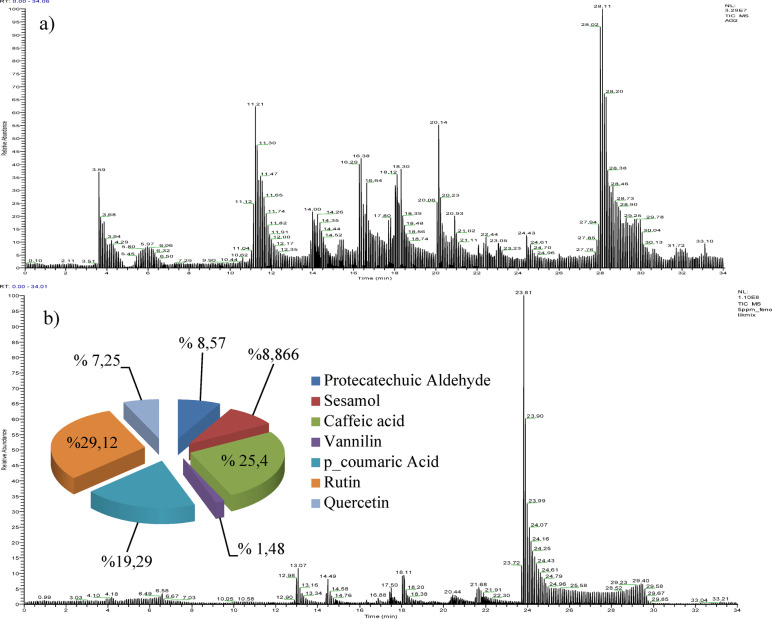
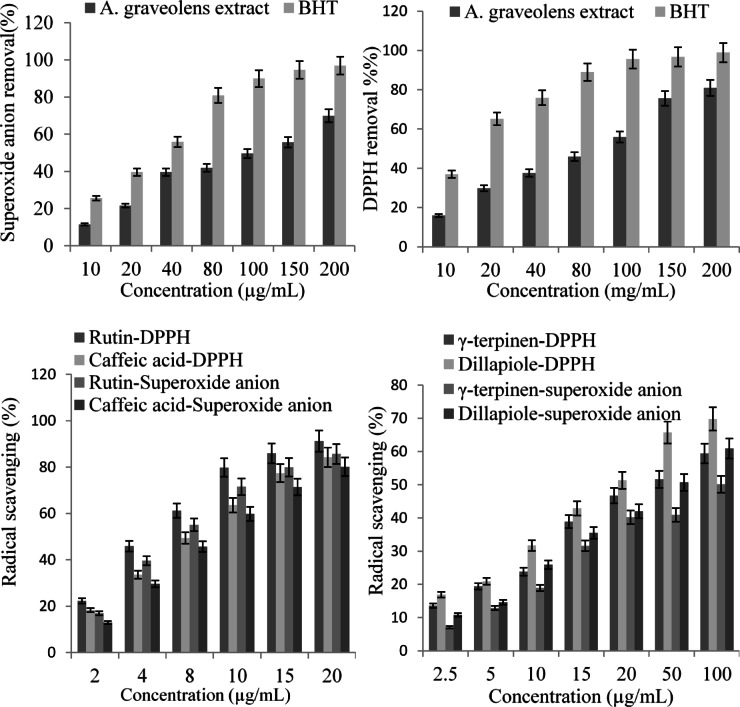
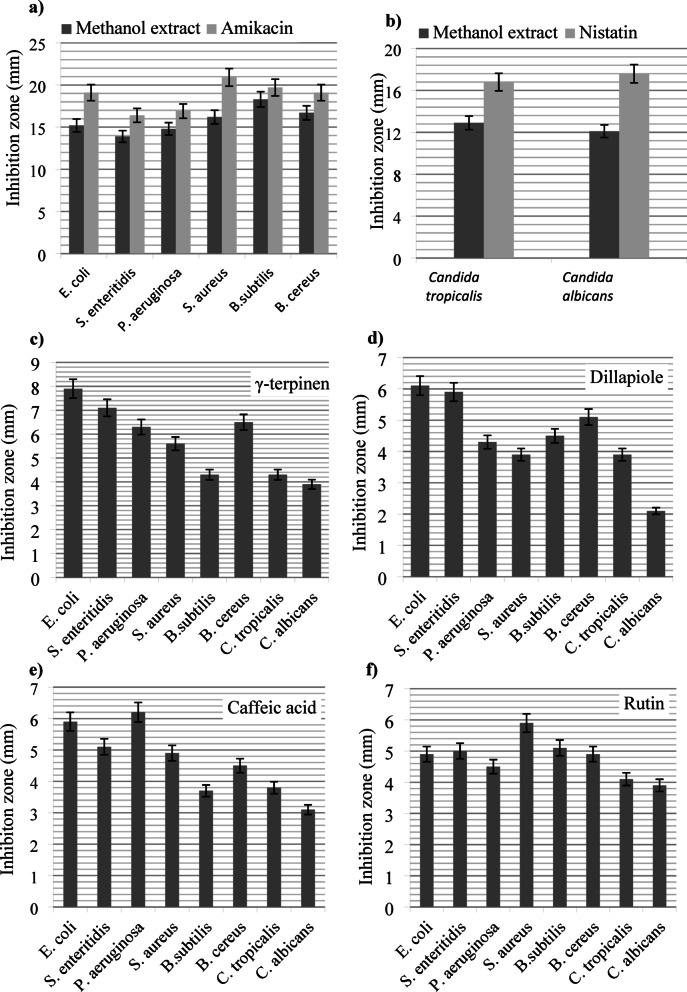
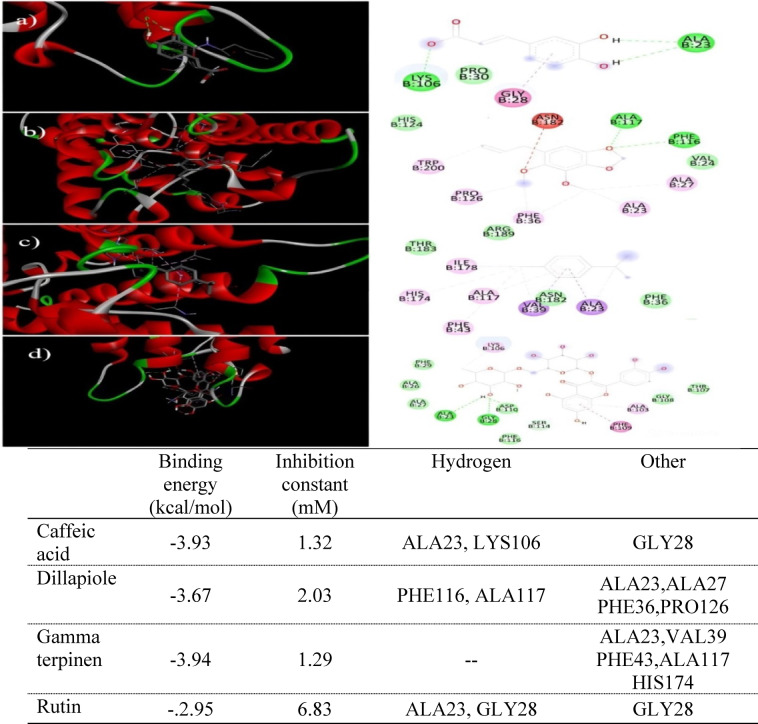
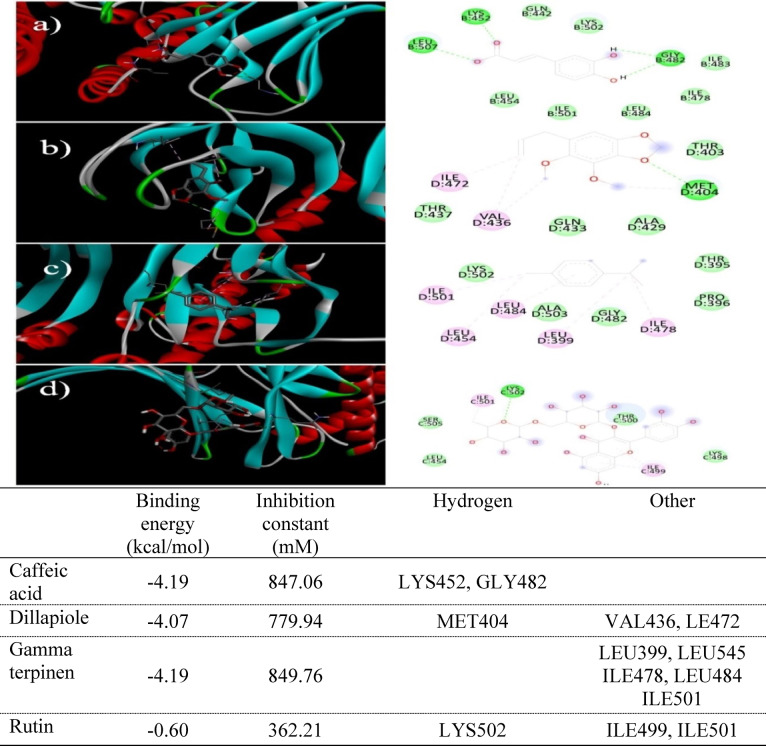
In this study, phytochemical characterization of Anethum graveolens extract, in-vitro, in-vivo and in-silico biological activities and synergistic and antagonistic effects of main components were investigated. Advanced analytical techniques such as LC-MS/MS and GC-MS were integrated with in-vitro, in-vivo and in-silico methodologies to provide valuable information on the therapeutic potential of the plant and its synergistic and antagonistic interactions, which are crucial for developing effective plant-based therapeutic agents. LC-MS/MS analysis revealed the presence of protecatechuic aldehyde, sesamol, caffeic acid, vannilin, p-coumaric acid, rutin and quercetin among the standards tested. Among the essential oils, γ-terpinene, limonene, γ-cadinene, dillapiole were detected in major proportions. The radical scavenging activity of A. graveolens extract was investigated by DPPH and superoxide anion scavenging tests. DPPH scavenging activity was observed in the range of 15.9–80.8% and superoxide anion scavenging activity in the range of 11.5–69.9%. The extract exhibited a broad spectrum activity against all tested microorganism species and the antimicrobial activity ranking among microorganisms was gram-positive > gram-negative > fungus. A. graveolens extract exhibited an inhibition zone of 15.2 ± 0.4 against E. coli and the main components tested individually exhibited a lower activity. And also MIC and MBC values obtained with four main components were higher compared to the extract.This indicates that the extract exhibits a stronger antimicrobial activity due to the cumulative and synergistic effects of the active ingredients in the content. The most prominent synergistic effect was found in anti-genotoxic activity. While the most common fragment rate among the chromosomal aberrations induced by NaN 3 decreased by 73.3% with the 20 mg/L extract application, the fragment ratio decreased by 37.3%, 35.3%, 31.5% and 28.07% with the caffeic acid, rutin, dillapiole and terpinen applications, respectively. These results suggest that the ingredients have a strong synergistic effect. In molecular docking studies the major components of A. graveolens were found to interact with aquaporin and DnaK ligands by hydrogen bonds, pi-aclyl, amide-Pi stacked, and pi-sigma bonds. The interaction of these proteins with the main components may cause disruptions in microbial metabolism and an indirect antimicrobial activity.
Overview
CoChat Summary
TL;DR
This study characterizes *Anethum graveolens* extract by LC-MS/MS and GC-MS and compares its antioxidant, antimicrobial, and anti-genotoxic activities with those of four major components (caffeic acid, rutin, γ-terpinene, dillapiole). The extract showed broad-spectrum antimicrobial and anti-genotoxic activity, with evidence for synergistic effects in antimicrobial/anti-genotoxic assays and antagonistic effects in antioxidant assays.
Key findings
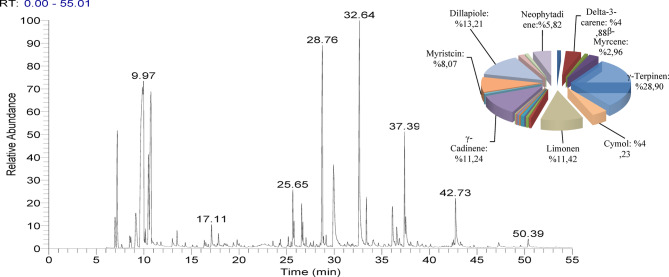
- LC-MS/MS detected seven phenolics: rutin (36.17 mg/kg), caffeic acid (31.55 mg/kg), p-coumaric acid (23.96 mg/kg), sesamol (11.01 mg/kg), protocatechuic aldehyde (10.65 mg/kg), quercetin (9.01 mg/kg), and vanillin (1.84 mg/kg). GC-MS major volatiles were γ-terpinene (28.90%), dillapiole (13.21%), limonene (11.42%), and γ-cadinene (11.24%).
- Antioxidant activity of the extract was dose-dependent: DPPH scavenging 15.9–80.8% (IC50 90 µg/mL) and superoxide anion scavenging 11.5–69.9% (IC50 143 µg/mL). Main components alone were more effective than the extract, indicating an antagonistic effect in antioxidant activity.
- Antimicrobial activity was broad-spectrum and ranked gram-positive > gram-negative > fungus. The extract inhibited *B. subtilis* most strongly (18.3 ± 0.5 mm) and *C. albicans* least (12.1 ± 0.7 mm); against *E. coli* it produced 15.2 ± 0.4 mm. MIC/MBC values for the extract were lower than for individual components, e.g. against *B. subtilis* extract MIC/MBC were 325/375 µg/mL versus caffeic acid 675/750, rutin 650/625, γ-terpinene 600/650, and dillapiole 750/750 µg/mL.
- Anti-genotoxic activity against NaN3-induced abnormalities was stronger for the extract than for individual components. The extract reduced fragment frequency by 24%, 73.3%, and 76.6% at 10, 20, and 40 mg/L, while caffeic acid, rutin, dillapiole, and terpinene reduced fragments by 37.3%, 35.3%, 31.5%, and 28.07%, respectively. Overall extract protection against all abnormalities was 55.3–73.36%.
Methods
- *A. graveolens* was collected from Giresun, Turkey in May 2022; leaves were dried, ground, and extracted with ethanol, methanol, hexane, or chloroform. Ethanol gave the highest extraction efficiency (11.2%), total phenol content was 29.6 ± 3.9 mgGAE/g, and total flavonoid content was 20.3 ± 2.6 mgQE/g.
- Phytochemical profiling used LC-MS/MS for phenolics and GC-MS for essential oils. Antioxidant activity used DPPH and superoxide anion scavenging assays. Antimicrobial activity used disk diffusion and broth microdilution MIC/MBC against *E. coli*, *P. aeruginosa*, *S. enteritidis*, *B. subtilis*, *B. cereus*, *S. aureus*, *C. tropicalis*, and *C. albicans*.
- Molecular docking tested caffeic acid, rutin, γ-terpinene, and dillapiole against aquaporin (PDB 1RC2) and DnaK (PDB 4R5J) using AutoDock Vina. Anti-genotoxic activity used the *Allium* test with 20 mg/L NaN3 as positive mutagen, extract doses of 10, 20, and 40 mg/L, 10 bulbs per group, and chromosomal aberration/micronucleus scoring after 72 h; statistics used SPSS 22 with one-way ANOVA and Duncan test (p < 0.05).
Limitations
- The paper does not include a dedicated limitations section. It states that more studies are needed to investigate biological/pharmacological effects, isolate active molecules, and conduct randomized, placebo-controlled studies for rational clinical use.
- Evident from the text: synergy/antagonism is inferred by comparing the whole extract with individual major components, not by testing defined component combinations; the study also relies on in vitro assays, a plant-based *Allium* genotoxicity model, and in silico docking rather than clinical or mammalian in vivo validation.
- Evident from the text: phytochemical content is from a single collection location/season (Bulancak-Giresun, May 2022), and the authors note that growth environment and extraction method can change phytochemical and essential-oil profiles, limiting direct generalization to other *A. graveolens* sources.
Model-written summary. Check it against the paper before relying on it.
Integrity signals
Registry
Cites
Statistics
Figures
Verification
Claims the paper makes
72 Own result · 37 Own interpretation · 15 Check pending · 7 No full text of the sources · 3 Own method · 1 Not checked yet
A result the paper reports from its own data — it cites no other source for it, so there is none to check. The quote shows it is in the paper.
In the paper
“Rutin, the major components among phenolics, showed the highest cidal activity against S. aureginosa with a zone of 5.9 ± 0.3 mm, while this zone was determined as 16.2 ± 0.7 mm in the extract application.”
§ Synergistic and antagonistic contributions of main components to the bioactivity profile of Anethum graveolens extract > Results and discussion > Antimicrobial activity
plain- Asserted: passes — The authors put it forward as true.
- Checkable: passes — It can be checked against evidence.
- Load-bearing: passes — The paper’s conclusions depend on it.
- Based: passes — The paper gives a reason why it holds.
A result the paper reports from its own data — it cites no other source for it, so there is none to check. The quote shows it is in the paper.
In the paper
“The application of 10 mg/L, 20 mg/L and 40 mg/L extract led to a reduction in the most frequently observed abnormality, fragment, by 24%, 73.3% and 76.6%, respectively.”
§ Synergistic and antagonistic contributions of main components to the bioactivity profile of Anethum graveolens extract > Results and discussion > Anti-genotoxic activity
plainstates a cause- Asserted: passes — The authors put it forward as true.
- Checkable: passes — It can be checked against evidence.
- Load-bearing: passes — The paper’s conclusions depend on it.
- Based: passes — The paper gives a reason why it holds.
A result the paper reports from its own data — it cites no other source for it, so there is none to check. The quote shows it is in the paper.
In the paper
“The protein and ligands interacted with bonds such as hydrogen bond, pi-Aklyl, amide-Pi stacked, and pi-sigma.”
§ Synergistic and antagonistic contributions of main components to the bioactivity profile of Anethum graveolens extract > Results and discussion > In-silico antimicrobial activity
plainstates an association- Asserted: passes — The authors put it forward as true.
- Checkable: passes — It can be checked against evidence.
- Load-bearing: passes — The paper’s conclusions depend on it.
- Based: passes — The paper gives a reason why it holds.
A result the paper reports from its own data — it cites no other source for it, so there is none to check. The quote shows it is in the paper.
In the paper
“Compounds such as α-phellandrene, sabinene, camphor were detected at minor levels and their ratios were in the range of 1%-0.5%.”
§ Synergistic and antagonistic contributions of main components to the bioactivity profile of Anethum graveolens extract > Results and discussion > GC-MS analysis
plain- Asserted: passes — The authors put it forward as true.
- Checkable: passes — It can be checked against evidence.
- Load-bearing: unclear — It is unclear whether the paper’s conclusions depend on it.
- Based: passes — The paper gives a reason why it holds.
A result the paper reports from its own data — it cites no other source for it, so there is none to check. The quote shows it is in the paper.
In the paper
“Myristicin, neophytadiene, neophytadiene, cymol, β-myrcene, delta-3-carene were detected at medium level and the presence of these compounds was between 2.96% and 8.07%.”
§ Synergistic and antagonistic contributions of main components to the bioactivity profile of Anethum graveolens extract > Results and discussion > GC-MS analysis
plain- Asserted: passes — The authors put it forward as true.
- Checkable: passes — It can be checked against evidence.
- Load-bearing: unclear — It is unclear whether the paper’s conclusions depend on it.
- Based: passes — The paper gives a reason why it holds.
83 more claims
Create a free account to see all 135 claims and to verify the 17 references still open.
- It may state two separate claims as one. 38
- Probably not a substantial claim. 14
Self-check
Percentages, sums and reported differences re-computed from the paper’s own numbers.
Each contradiction between two passages listed here was confirmed by an independent check.
Rated minor: it would not touch a result — a value no result rests on, a p-value that stays on the same side of the significance level, or a conflict that is clerical, resolved elsewhere in the paper, or outside its own findings.
In the paper
§ Synergistic and antagonistic contributions of main components to the bioactivity profile of Anethum graveolens extract > Results and discussion > LC-MS/MS analysis
“Quercetin, detected at a level of 9.01 mg/g in A.graveolens”
§ Synergistic and antagonistic contributions of main components to the bioactivity profile of Anethum graveolens extract > Results and discussion > LC-MS/MS analysis
“quercetin (9.01 mg/kg) and vannilin (1.84 mg/kg)”
Rated minor: it would not touch a result — a value no result rests on, a p-value that stays on the same side of the significance level, or a conflict that is clerical, resolved elsewhere in the paper, or outside its own findings.
In the paper
§ Synergistic and antagonistic contributions of main components to the bioactivity profile of Anethum graveolens extract > Results and discussion > Antimicrobial activity
“The lowest MBC and MIC values of the extract were 325 and 375 µg/mL against (B) subtilis, respectively.”
§ Synergistic and antagonistic contributions of main components to the bioactivity profile of Anethum graveolens extract > Results and discussion > Antimicrobial activity
“| B. subtilis | 325 | 375 | 675 | 750 | 650 | 625 | 600 | 650 | 750 | 750 |”
Rated minor: it would not touch a result — a value no result rests on, a p-value that stays on the same side of the significance level, or a conflict that is clerical, resolved elsewhere in the paper, or outside its own findings.
In the paper
§ Synergistic and antagonistic contributions of main components to the bioactivity profile of Anethum graveolens extract > Results and discussion > LC-MS/MS analysis
“The highest concentration of rutin (36.7 mg/kg) was found in A. graveolens extract”
§ Synergistic and antagonistic contributions of main components to the bioactivity profile of Anethum graveolens extract > Results and discussion > LC-MS/MS analysis
“| Sesamol | 11.01 | Rutin | 36.17 |”
Rated minor: it would not touch a result — a value no result rests on, a p-value that stays on the same side of the significance level, or a conflict that is clerical, resolved elsewhere in the paper, or outside its own findings.
In the paper
§ Synergistic and antagonistic contributions of main components to the bioactivity profile of Anethum graveolens extract > Results and discussion > LC-MS/MS analysis
“Vanillin, which shows antioxidant and antimicrobial properties, was found in A. graveolens at a rate of 1.84 mg/g.”
§ Synergistic and antagonistic contributions of main components to the bioactivity profile of Anethum graveolens extract > Results and discussion > LC-MS/MS analysis
“quercetin (9.01 mg/kg) and vannilin (1.84 mg/kg)”
Rated minor: it would not touch a result — a value no result rests on, a p-value that stays on the same side of the significance level, or a conflict that is clerical, resolved elsewhere in the paper, or outside its own findings.
In the paper
§ Synergistic and antagonistic contributions of main components to the bioactivity profile of Anethum graveolens extract > Results and discussion > Antimicrobial activity
“| B. subtilis | 325 | 375 | 675 | 750 | 650 | 625 | 600 | 650 | 750 | 750 | | E. coli | 425 | 425 | 850 | 850 | 675 | 700 | 600 | 650 | 750 | 800 | | B. cereus | 450 | 475 | 925 | 975 | 725 | 700 | 500 | 500 | 800 | 900 |”
§ Synergistic and antagonistic contributions of main components to the bioactivity profile of Anethum graveolens extract > Materials and methods > In-vitro antimicrobial activity
“MIC indicates the lowest concentration required to inhibit bacterial growth, while MBC indicates the lowest concentration required to kill bacteria.”
1 more finding
Create a free account to see every finding of this check.
Citations
Cites
AutoDock4 and AutoDockTools4: Automated docking with selective receptor flexibility
Morris, G. M., Huey, R., Lindstrom, W., Sanner, M. F., Belew, R. K., Goodsell, D. S., & Olson, A. J. (2009) · Journal of Computational Chemistry · doi:10.1002/jcc.21256 · Cited by 26,294
Resistance of Gram-Negative Bacteria to Current Antibacterial Agents and Approaches to Resolve It
Breijyeh, Z., Jubeh, B., & Karaman, R. (2020) · Molecules · doi:10.3390/molecules25061340 · Cited by 1,437
The Pharmacological Potential of Rutin
Ganeshpurkar, A., & Saluja, A. K. (2017) · Saudi Pharmaceutical Journal · doi:10.1016/j.jsps.2016.04.025 · Cited by 1,253
(U.S.), N. L. O. M. (2008) · Journal of Pain & Palliative Care Pharmacotherapy · doi:10.1080/15360280801989377 · Cited by 678
Casa, C. L., Villegas, I., Alarcón‐de‐la‐Lastra, C., Motilva, V., & Calero, M. J. M. (2000) · Journal of Ethnopharmacology · doi:10.1016/s0378-8741(99)00174-9 · Cited by 551
Elgayyar, M., Draughon, F. A., Golden, D. A., & Mount, J. R. (2001) · Journal of Food Protection · doi:10.4315/0362-028x-64.7.1019 · Cited by 399
Architecture and Selectivity in Aquaporins: 2.5 Å X-Ray Structure of Aquaporin Z
Savage, D. F., Egea, P. F., Robles‐Colmenares, Y., O’Connell, J. D., & Stroud, R. M. (2003) · PLoS Biology · doi:10.1371/journal.pbio.0000072 · Cited by 301
Basavegowda, N., & Baek, K.-H. (2021) · Biomolecules · doi:10.3390/biom11091267 · Cited by 288
Spectroscopic studies on the antioxidant activity of p-coumaric acid
Kiliç, I., & Yeşiloğlu, Y. (2013) · Spectrochimica Acta Part A: Molecular and Biomolecular Spectroscopy · doi:10.1016/j.saa.2013.06.110 · Cited by 267
Xu, P.-X., Wang, S.-W., Yu, X.-L., Su, Y.-J., Wang, T., Zhou, W.-W., Zhang, H., Wang, Y.-J., & Liu, R.-T. (2014) · Behavioural Brain Research · doi:10.1016/j.bbr.2014.02.002 · Cited by 232
Research works printed but not linked: 7
- Babri, R. A., Khokhar, I., Mahmood, Z. & Mahmud, S. Chemical composition and insecticidal activity of the essential oil of Anethum graveolens L. Seeds 5 (10), 453–455 (2012).
- Peerakam, N. et al. Chemical profile and biological evaluation of essential oil composition of Anethum graveolens L. (seed) plant grown in Thailand. J. Nat. Sci. Res. 4 (16), 34–41 (2014).
- Pathak, V., Dwivedi, R. & Shukla, P. Pharmacognostical study of Anethum Sowa (dill) seed. Int. J. Rec Biotech. 2 (3), 6–14 (2014).
- Sharopov, F. S., Zhang, H. & Setzer, W. N. Composition of geranium (Pelargonium graveolens) essential oil from Tajikistan. Am. J. Essent. Oil Nat. Prod. 2 (2), 13–16 (2014).
- Chaubey, M. K. Insecticidal activities of Anethum graveolens L. and Illicium verum hook. F. essential oils against Sitophilus zeamais Motschulsky. Rev. Cienc. Agríc. 38 (1), 38–49 (2021).
- National Library of Medicine https://pubchem.ncbi.nlm.nih.gov/ (2024).
- Jadhav, V. K. & Pawar, S. S. Qualitative and quantitative analysis of Anethum graveolens L. leaves in various extracts. Adv. Zool. Bot. 11 (5), 392–398 (2023).
Cited by
Ayhan, B. S., Yalçın, E., & Çavuşoğlu, K. (2025) · Scientific Reports · doi:10.1038/s41598-025-14729-y · Cited by 17
Self-citationKashi, M., Chegini, Z., Khoshbayan, A., Shariati, A., & Farahani, A. S. (2025) · Molecular Biology Reports · doi:10.1007/s11033-025-10844-1 · Cited by 9
Eco-friendly remediation of Triflumuron-induced stress with Capsella bursa-pastoris extract
Kol, G., Kutluer, F., Yalçın, E., & Çavuşoğlu, K. (2025) · Scientific Reports · doi:10.1038/s41598-025-26298-1 · Cited by 7
Self-citationKutluer, F. (2025) · Scientific Reports · doi:10.1038/s41598-025-16937-y · Cited by 7
Güngör, Ö. Y., Yalçın, E., Çavuşoğlu, K., & Özkan, B. (2025) · Scientific Reports · doi:10.1038/s41598-025-24271-6 · Cited by 6
Self-citationBozkurt, A., Yalçın, E., & Çavuşoğlu, K. (2025) · Scientific Reports · doi:10.1038/s41598-025-16685-z · Cited by 6
Self-citationYalçın, E., Çavuşoğlu, K., & Acar, A. (2026) · Scientific Reports · doi:10.1038/s41598-026-45832-3 · Cited by 2
Self-citationŞahin, R. H., Yalçın, E., Çavuşoğlu, K., & Özkan, B. (2026) · Scientific Reports · doi:10.1038/s41598-026-47636-x · Cited by 2
Self-citationLi, Z., Song, J., Ao, C., Wang, L., Zhang, T., Zhao, Y., Guo, C., Zhong, H., & Liu, J. (2026) · Cells · doi:10.3390/cells15131222 · Cited by 1
Goldiș, C., Racoviceanu, R., Negrea-Ghiulai, R., Mioc, A., Prodea, A., Atyim, E., Maksimovic, T., Lukinich-Gruia, A. T., Pricop, M.-A., & Șoica, C. (2026) · Molecules · doi:10.3390/molecules31183337
Metadata
- Authors
- Kesti Usta, S., Yalçın, E., & Çavuşoğlu, K.
- Affiliations
- Giresun University (TR)
- Corresponding author
- Yalçın, Emine
- Venue
- Scientific Reports
- Published
- 2025-07-01
- Volume
- 15
- Issue
- 1
- Pages
- 21465-21465
- ISSN
- 2045-2322 (ISSN-L)
- PMC
- PMC12216520
- OpenAlex
- W4411865400
- Semantic Scholar
- c861fe15a5c7c7a28a4b6e62322da24d884b586e
- Cited by
- 10
- References
- 60
- Citations by year
- 2026: 4 · 2025: 6
- FWCI
- 3.50
- Type
- journal article
- Language
- en
- Open access
- gold
- doi.org
- Licence
- Locations
- Scientific Reports (publishedVersion, cc-by-nc-nd)
- PubMed (publishedVersion)
- PubMed Central (publishedVersion, cc-by-nc-nd)
- DOAJ (DOAJ: Directory of Open Access Journals) (submittedVersion, cc-by-sa)
- Topics
- Life Sciences › Agricultural and Biological Sciences › Food Science › Essential Oils and Antimicrobial Activity
- Life Sciences › Agricultural and Biological Sciences › Plant Science › Plant chemical constituents analysis
- Life Sciences › Agricultural and Biological Sciences › Plant Science › Medicinal Plant Research
- Keywords
- dill, synergistic and antagonistic effects, phytochemical profiling, essential oil composition, γ-terpinene, limonene, dillapiole, caffeic acid, rutin, quercetin, sesamol, free radical scavenging, antimicrobial activity, antifungal activity, genotoxicity, chromosomal abnormalities, aquaporins, DNA repair proteins, molecular docking, bioassay-guided fractionation
- MeSH terms
- Anti-Bacterial Agents, Antioxidants, Drug Synergism, Microbial Sensitivity Tests, Oils, Volatile, Plant Extracts, Free Radical Scavengers, Anethum graveolens, Tandem Mass Spectrometry, Phytochemicals
About these checks
Registry, retraction, Cites and statistics results are computed, not judged, with one exception: a printed reference that no index lists is read once by a model before it counts as a citation error. Claims are extracted by a model and kept only when their quote appears verbatim in the text; each cited source is then checked, with a model’s help, for whether it says what the claim relies on. Those verdicts can be wrong — read the claim’s quote and the cited source before relying on one.
A language model drew the claims from the paper on 2026-11-12, under version 3 of the claim definition (model deepseek-v4.1-flash, prompt extract-v3).
A second model labelled each claim on 2026-11-12 (model jev-1.13-20260917, definition revision gold-guideline-v0.2).
Statistics and arithmetic are recomputed, not judged.
Confidence bands are shown only for fields calibrated on our annotated test set. None is calibrated yet, so no band is shown.
What counts as a claim ›How we measure confidence ›How we check this ›
Are you an author, or do you see a problem with this page? Request a review
Data sources
Bibliographic data: Semantic Scholar, OpenAlex, Crossref.
Contains information from the Semantic Scholar Academic Graph Datasets, made available under the ODC Attribution License (ODC-BY 1.0).
Semantic Scholar’s data is described in: Kinney, R., et al. (2023). The Semantic Scholar Open Data Platform. arXiv:2301.10140.
