

The DOI matches its Crossref record; 1 of the 1 references it cites were found in a registry or an index.
Comparative response of fennel, ajwain, and anise in terms of osmolytes accumulation, ion imbalance, photosynthetic and growth functions under salinity
Overview
The claims and statistics of this paper haven’t been checked yet.
Run the check — free, no account needed. It reads the open-access text and checks the sources it cites.
Integrity signals
Registry
Cites
Statistics
Figures
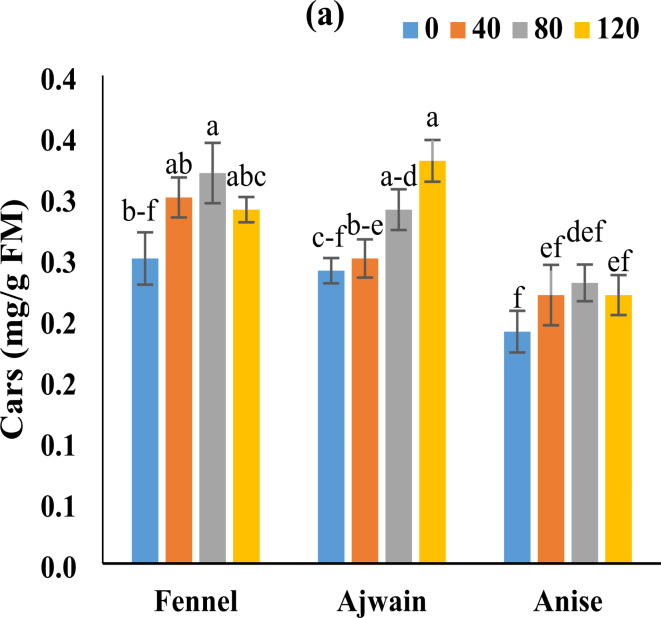
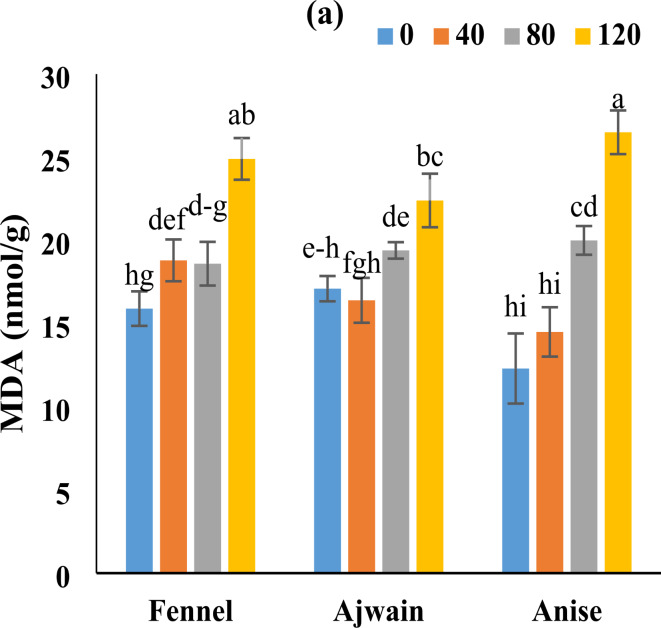
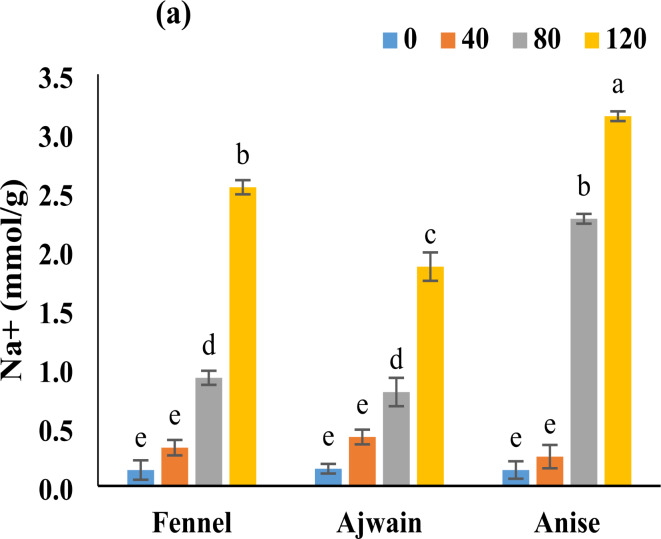
Verification
Claims the paper makes
The claims and statistics of this paper haven’t been checked yet.
Run the check — free, no account needed. It reads the open-access text and checks the sources it cites.
Claims other papers make about this one
Each is checked against this paper’s own text: does it say what the citing paper says it does?
In the citing paper
“These species also accumulate osmolytes like proline and soluble carbohydrates to maintain cellular homeostasis under salt stress (Nouripour-Sisakht et al. 2025).”
From Unlocking the Apiaceae: comprehensive advances in agronomy, biotechnology, phytochemistry, and health applications of major seed spices (2025) · cites this paper as Nouripour-Sisakht et al. 2025
Self-check
Percentages, sums and reported differences re-computed from the paper’s own numbers.
The self-check needs the paper’s full text.
Citations
Cites
de Azevedo Neto, A. D., Prisco, J. T., Enéas-Filho, J., Abreu, C. E. B. D., & Gomes-Filho, E. (2006) · Environmental and Experimental Botany · doi:10.1016/j.envexpbot.2005.01.008 · Cited by 920
Research works printed but not linked: 43
- de Medeiros, R. L. S., de Paula, R. C., de Souza, J. V. O. & Fernandes J.P.P. Abiotic stress on seed germination and plant growth of Zeyheria tuberculosa. J. Res. 34, 1511–1522. https://doi.org/10.1007/s11676-023-01608-3(2023). · DOI
- Nxele, X., Klein, A. & Ndimba, B. K. Drought and salinity stress alters ROS accumulation, water retention, and osmolyte content in sorghum plants. S Afric J. Bot. 108, 261–266. https://doi.org/10.1016/j.sajb.2016.11.003 (2017). · DOI
- Yang, Y. & Guo, Y. Elucidating the molecular mechanisms mediating plant salt-stress responses. New. Phytol. 217, 523–539. https://doi.org/10.1111/nph.14920 (2018). · DOI
- Fan, Z. et al. Breaking the salty spell: Understanding action mechanism of melatonin and beneficial microbes as nature’s solution for mitigating salt stress in soybean. S Afr. J. Bot. 161, 555–567 .https://doi.org/10.1016/j.sajb.2023.08.056(2023). · DOI
- Garcia-Caparros, P., Hasanuzzaman, M. & Lao, M. T. Ion homeostasis and antioxidant defense toward salt tolerance in plants. In: (eds Hasanuzzaman, M., Fujita, M., Oku, H., Nahar, K. & Hawrylak-Nowak, B.) Plant Nutrients and Abiotic Stress Tolerance. Springer, Singapore (2018): 415-436.
- de Sousa, D. P. F. et al. Increased drought tolerance in maize plants induced by H2O2 is closely related to an enhanced enzymatic antioxidant system and higher soluble protein and organic solutes contents. Theor. Exp. Plant. Physiol. 28, 297–306. https://doi.org/10.1007/s40626-016-0069-3 (2016). · DOI
- Sangu, E., Tibazarwa, F. I., Nyomora, A. & Symonds, R. C. Expression of genes for the biosynthesis of compatible solutes during pollen development under heat stress in tomato (Solanum lycopersicum). J. Plant. Physiol. 178, 10–16. https://doi.org/10.1016/j.jplph.2015.02.002(2015). · DOI
- Yaish, M. W. Proline accumulation is a general response to abiotic stress in the date palm tree (Phoenix dactylifera L). Genetic Molec Res. 14, 9943–9950. https://doi.org/10.4238/2015(2015). · DOI
- Kumar, D. et al. Effects of salinity and drought on growth, ionic relations, compatible solutes and activation of antioxidant systems in oleander (Nerium oleander L). PLoS ONE. 129, e0185017. https://doi.org/10.1371/journal.pone.0185017 (2017). · DOI
- Tesfaye, S. G., Ismail, M. R., Ramlan, M. F., Marziah, M. & Kausar, H. Effect of soil drying on rate of stress development, leaf gas exchange and proline accumulation in robusta coffee (Coffea canephora Pierre ex Froehner) clones. Exp. Agric. 50, 458–479. https://doi.org/10.1017/S1049023X15004938( (2014). · DOI
- Ozel, A. Anise (Pimpinella anisum): changes in yields and component composition on harvesting at different stages of plant maturity. Exp. Agric. 45, 117–126. https://doi.org/10.1017/S0014479708006959 (2009). · DOI
- Oktay, M., Gulcin, I. & Kufrevioglu, O. I. Determination of in vitro antioxidant activity of fennel (Foeniculum vulgare) seed extracts. LWT-Food Sci. Technol. 36, 263–271. https://doi.org/10.1016/S0023-6438(02)00226-8 (2003). · DOI
- Akbari-Kharaji, M., Ehsanzadeh, P., Gholami Zali, A., Askari, E. & Rajabi-Dehnavi, A. Ratooned fennel relies on osmoregulation and antioxidants to damp seed yield decline with water limitation. Agron. Sustain. Develop. 40, 9. https://doi.org/10.1007/s13593-020-0614-y (2020). · DOI
- Ashraf, M. & Orooj, A. Salt stress effects on growth, ion accumulation and seed oil concentration in an arid zone traditional medicinal plant ajwain (Trachyspermum ammi [L]. Sprague) J. Arid Environ. 64, 209–220 (2006). · DOI
- Ullah, H. & Honermeier, B. Fruit yield, essential oil concentration and composition of three anise cultivars (Pimpinella anisum L.) in relation to sowing date, sowing rate and locations. Ind. Crop Prod. 42, 489–499 (2013). · DOI
- Croft, H. et al. Leaf chlorophyll content as a proxy for leaf photosynthetic capacity. Glob Change Biol. 23, 3513–3524. https://doi.org/10.1111/gcb.13599 (2017). · DOI
- Guimaraes, G. F., Gorni, P. H., Vitolo, H. F., Carvalho, M. E. A. & Pacheco, A. C. Sweet potato tolerance to drought is associated to leaf concentration of total chlorophylls and polyphenols. Theor. Exp. Plant. Physiol. 33, 385–396. https://doi.org/10.1007/s40626-021-00220-2(2021). · DOI
- Pandey, B. R., Burton, W. A., Salisbury, P. A. & Nicolas, M. E. Comparison of osmotic adjustment, leaf proline concentration, canopy temperature and root depth for yield of juncea canola under terminal drought. J. Agron. Crop Sci. 203, 397–405. https://doi.org/10.1111/jac.12207 (2017). · DOI
- Shinde, S. S., Kachare, D. P., Satbhai, R. D. & Naik, R. M. Water stress induced proline accumulation and antioxidative enzymes in groundnut (Arachis hypogaea L). Legume Res. 41, 67–72. https://doi.org/10.18805/LR-3582 (2018). · DOI
- Sardar, A. et al. Effect of salinity stress on anise (Pimpinella anisum L.) seedling characteristics under hydroponic conditions. J. Environ. Agric. Sci. 14, 39–45 (2018).
- Shah, S. H., Houborg, R. & McCabe, M. F. Response of chlorophyll, carotenoid and SPAD-502 measurement to salinity and nutrient stress in wheat (Triticum aestivum L). Agronomy 7, 61. https://doi.org/10.3390/agronomy7030061 (2017). · DOI
- Abdehpour, Z. & Ehsanzadeh, P. Concurrence of ionic homeostasis alteration and dry mass sustainment in emmer wheats exposed to saline water: implications for tackling irrigation water salinity. Plant. Soil. 440, 427–441. https://doi.org/10.1007/s11104-019-04090-1(2019). · DOI
- Solovchenko, A. & Neverov, K. Carotenogenic response in photosynthetic organisms: a colorful story. Photosyn Res. 133, 31–47 (2017). · DOI
- Zhang, J., Nguyen, H. T. & Blum, A. Genetic analysis of osmotic adjustment in crop plants. J. Exp. Bot. 50, 291–302. https://doi.org/10.1093/jxb/50.332.291(1999). · DOI
- Kavi Kishor, P. B. & Sreenivasulu, N. Is proline accumulation per se correlated with stress tolerance or is proline homeostasis a more critical issue? Plant. Cell. Environ. 37, 300–311. https://doi.org/10.1111/pce.12157 (2014). · DOI
- Abogadallah, G. M. Insights into the significance of antioxidative defense under salt stress. Plant. Signal. Behav. 5, 369–374. https://doi.org/10.4161/psb.5.4.10873 (2010). · DOI
- Hernandez, J. A., Jimenez, A., Mullineaux, P. & Sevilla, F. Tolerance of pea (Pisum sativum L.) to long-term salt stress is associated with induction of antioxidant defences. Plant. Cell. Environ. 23, 853–862. https://doi.org/10.1046/j.1365-3040.2000.00602.x(2000). · DOI
- Niu, X., Bressan, R. A., Hasegawa, P. M. & Pardo, J. M. Lon homeostasis in NaCl stress environments. Plant. Physiol. 109, 735–742. https://doi.org/10.1104/pp.109.3.735 (1995). · DOI
- Tran, D. Q. et al. Ion accumulation and expression of ion homeostasis-related genes associated with halophilism, NaCl-promoted growth in a halophyte Mesembryanthemum crystallinum L. Plant. Prod. Sci. 23, 91–102. https://doi.org/10.1080/1343943X.2019.1647788 (2020). · DOI
- Shafeiee, M. & Ehsanzadeh, P. Physiological and biochemical mechanisms of salinity tolerance in several fennel genotypes: existence of clearly-expressed genotypic variations. Ind. Crop Prod. 132, 311–318. https://doi.org/10.1016/j.indcrop.2019.02.042 (2019). · DOI
- Schleiff, U. Analysis of water supply of plants under saline soil conditions and conclusions for research on crop salt tolerance. J. Agron. Crop Sci. 194, 1–8 (2008). (2008). · DOI
- Hu D.D. et al. Endogenous hormones improve the salt tolerance of maize (Zea mays L.) by inducing root architecture and ion balance optimizations. J. Agron. Crop Sci. 208, 662–674 (2022). (2022). · DOI
- Shannon, M. C. & Grieve, C. M. Tolerance of vegetable crops to salinity. Sci. Hort. 78, 5–38 (1999). · DOI
- Sangwan, N. S., Farooqi, A. H. A., Shabih, F. & Sangwan, R. S. Regulation of essential oil production in plants. Plant. Growth Regul. 34, 3–21. https://doi.org/10.1023/A:1013386921596 (2001). · DOI
- Lichtenthaler, H. K. & Wellburn, W. R. Determination of total carotenoids and chlorophylls a and b of leaf extracts in different solvents. Biochem. Soc. Transac. 11, 591–592 (1994). · DOI
- Bates, L. S., Waldren, R. P. & Teare, I. D. Rapid determination of free proline for water stress studies. Plant. Soil. 39, 205–207 (1973). · DOI · Paper page
- Irigoyen, J. J., Emerich, D. W. & Sanchez-Diaz, M. Water stress induced changes in concentrations of proline and total soluble sugars in nodulated alfalfa (Medicago sativa) plants. Physiol. Plant. 84, 55–60 (1992). · DOI
- Smart, R. E. & Bingham, G. E. Rapid estimates of relative water content. Plant. Physiol. 53, 258–260 (1974). · DOI
- Heath, R. L. & Packer, L. Photoperoxidation in isolated chloroplasts. I. Kinetics and stoichiometry of fatty acid peroxidation. Arch. Biochem. Biophysic. 125, 189–198 (1968). · DOI · Paper page
- Bradford, M. M. A rapid and sensitive method for the quantitation of microgram quantities of protein utilizing the principle of protein dye binding. Anal. Biochem. 72, 248–254 (1976). · DOI · Paper page
- Chance, B. & Maehly, A. C. Assay of catalase and peroxidase. Method Enzym. 2, 764–775 (1955). · DOI
- Nakano, Y. & Asada, K. Hydrogen peroxide is scavenged by ascorbate-specific peroxidase in spinach chloroplasts. Plant. Cell. Physiol. 22, 867–880 (1981).
- Herzog, V. & Fahimi, H. Determination of the activity of peroxidase. Anal. Biochem. 55, 554–562 (1973). · DOI
Cited by
Singh, R., Choudhary, S., Kumari, V., Meena, R. S., Meena, N. K., Y, R., & Verma, A. K. (2025) · Journal of Agriculture and Ecology · doi:10.58628/jae-2521-101
Metadata
- Authors
- Nouripour-Sisakht, J., Ehsanzadeh, P., & Ehtemam, M. H.
- Venue
- Scientific Reports
- Published
- 2025-01-20
- Volume
- 15
- Issue
- 1
- ISSN
- 2045-2322
- PMC
- PMC11747572
- Cited by
- 4
- References
- 1
- Language
- en
- Licence
- Funders
- Isfahan University of Technology
About these checks
Registry, retraction, Cites and statistics results are computed, not judged, with one exception: a printed reference that no index lists is read once by a model before it counts as a citation error. Claims are extracted by a model and kept only when their quote appears verbatim in the text; each cited source is then checked, with a model’s help, for whether it says what the claim relies on. Those verdicts can be wrong — read the claim’s quote and the cited source before relying on one.
Statistics and arithmetic are recomputed, not judged.
Confidence bands are shown only for fields calibrated on our annotated test set. None is calibrated yet, so no band is shown.
What counts as a claim ›How we measure confidence ›How we check this ›
Are you an author, or do you see a problem with this page? Request a review
How to cite
Cite CoChat for the checks on this page, and the paper for its own findings.
- This page
- CoChat. (2026). Citation check: Comparative response of fennel, ajwain, and anise in terms of osmolytes accumulation, ion imbalance, photosynthetic and growth functions under salinity. https://app.cochat.ai/papers/10.1038/s41598-025-86256-9
- The paper
- Nouripour-Sisakht, J., Ehsanzadeh, P., & Ehtemam, M. H. (2025). Comparative response of fennel, ajwain, and anise in terms of osmolytes accumulation, ion imbalance, photosynthetic and growth functions under salinity. Scientific Reports. https://doi.org/10.1038/s41598-025-86256-9
Data sources
Bibliographic data: Semantic Scholar, OpenAlex, Crossref.
Contains information from the Semantic Scholar Academic Graph Datasets, made available under the ODC Attribution License (ODC-BY 1.0).
Semantic Scholar’s data is described in: Kinney, R., et al. (2023). The Semantic Scholar Open Data Platform. arXiv:2301.10140.
