

The DOI matches its Crossref record; 69 of the 69 references it cites were found in a registry or an index.
Secretary bird optimization algorithm based on quantum computing and multiple strategies improvement for KELM diabetes classification
Open accessAbstract
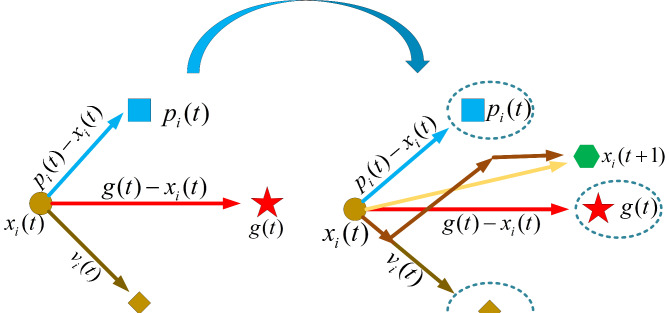
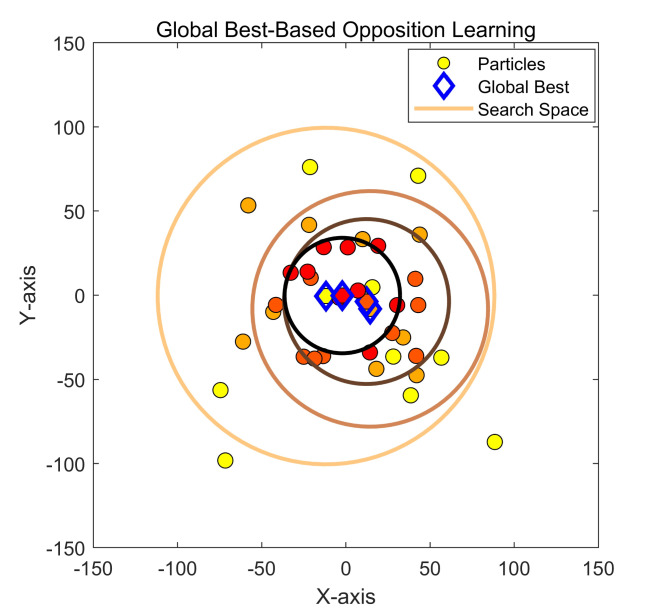
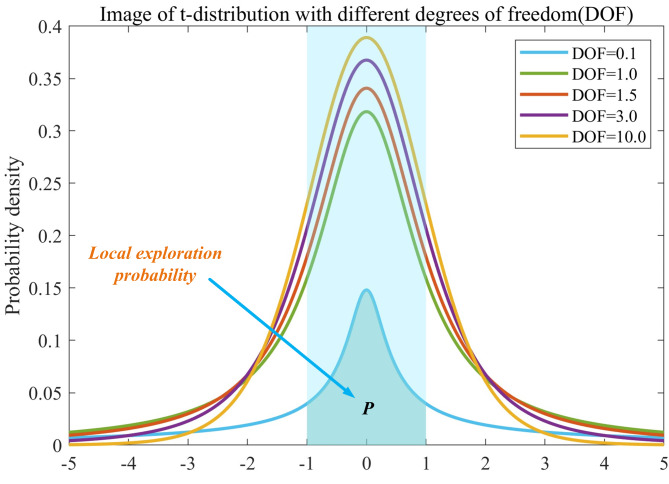
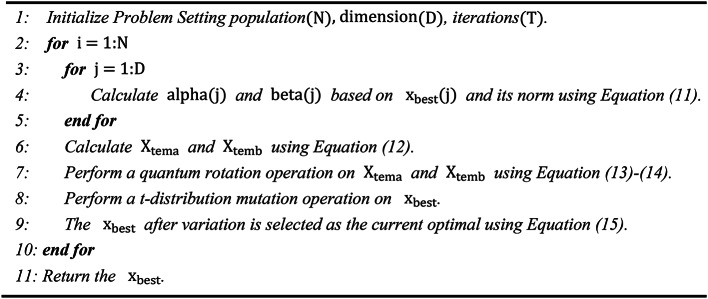
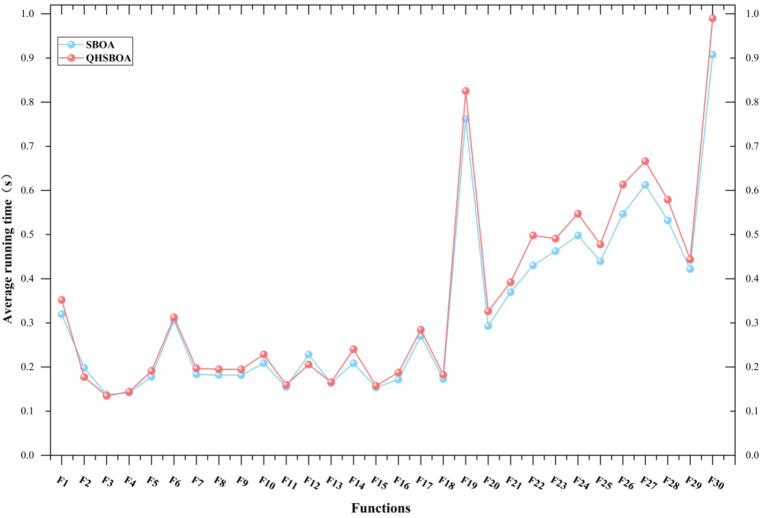
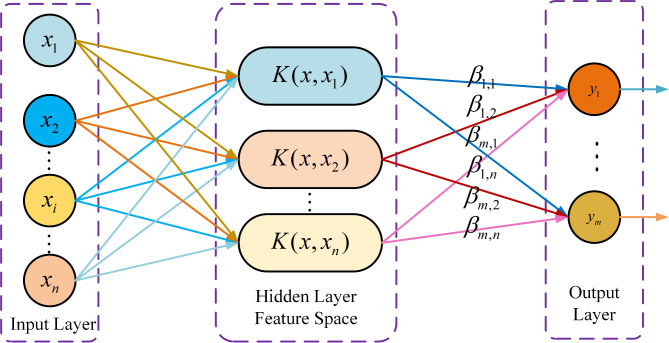
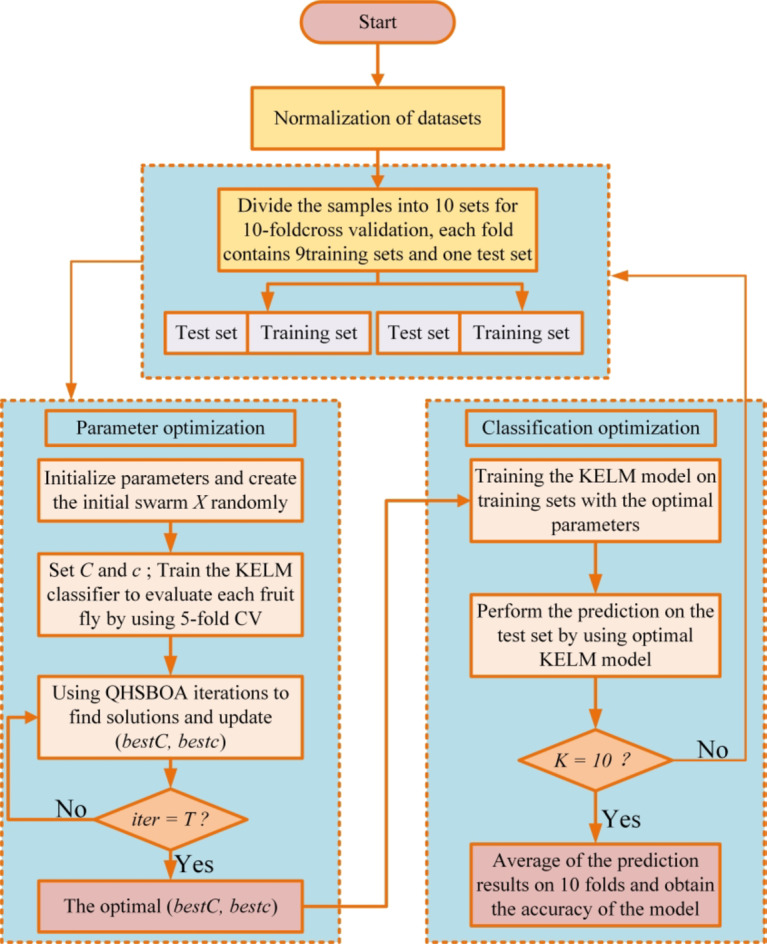
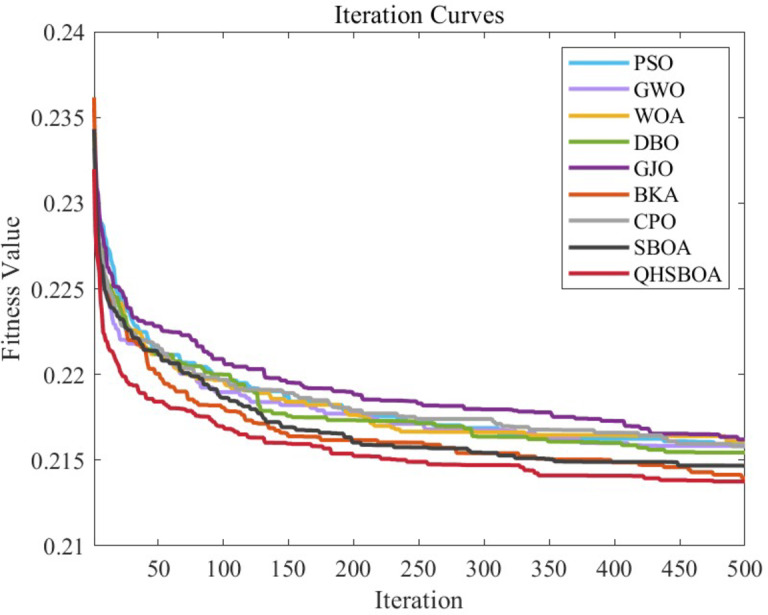
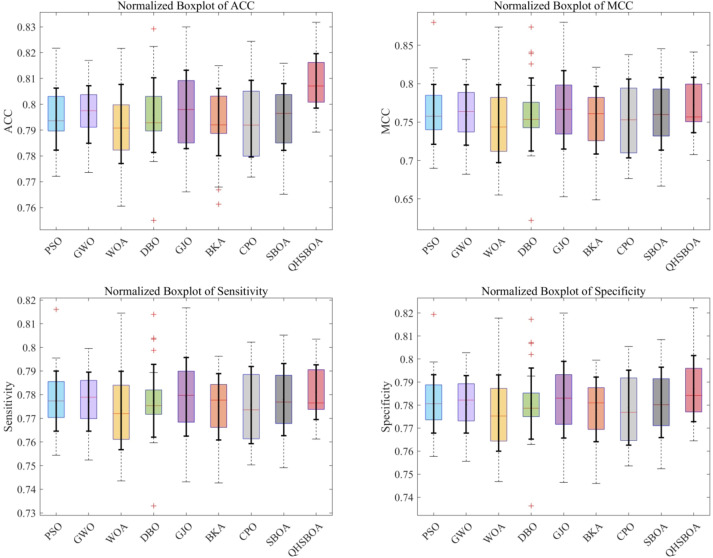
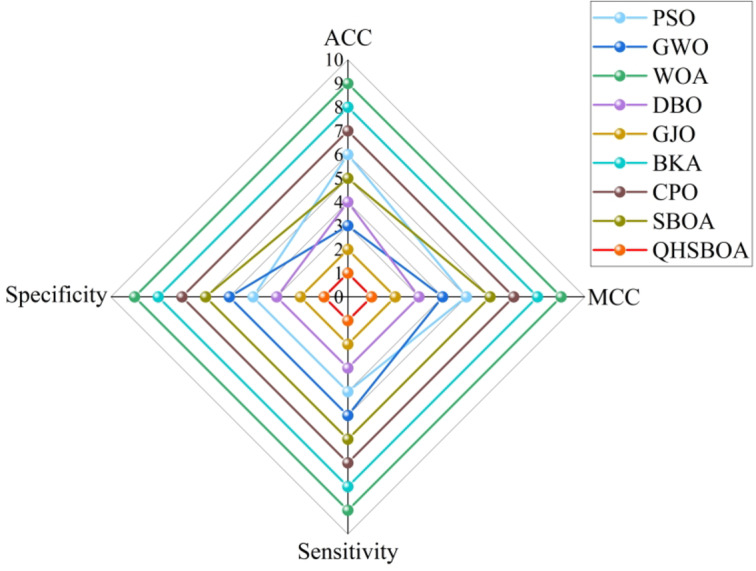
The classification of chronic diseases has long been a prominent research focus in the field of public health, with widespread application of machine learning algorithms. Diabetes is one of the chronic diseases with a high prevalence worldwide and is considered a disease in its own right. Given the widespread nature of this chronic condition, numerous researchers are striving to develop robust machine learning algorithms for accurate classification. This study introduces a revolutionary approach for accurately classifying diabetes, aiming to provide new methodologies. An improved Secretary Bird Optimization Algorithm (QHSBOA) is proposed in combination with Kernel Extreme Learning Machine (KELM) for a diabetes classification prediction model. First, the Secretary Bird Optimization Algorithm (SBOA) is enhanced by integrating a particle swarm optimization search mechanism, dynamic boundary adjustments based on optimal individuals, and quantum computing-based t-distribution variations. The performance of QHSBOA is validated using the CEC2017 benchmark suite. Subsequently, QHSBOA is used to optimize the kernel penalty parameter $$\:C$$ and bandwidth $$\:c$$ of the KELM. Comparative experiments with other classification models are conducted on diabetes datasets. The experimental results indicate that the QHSBOA-KELM classification model outperforms other comparative models in four evaluation metrics: accuracy (ACC), Matthews correlation coefficient (MCC), sensitivity, and specificity. This approach offers an effective method for the early diagnosis and prediction of diabetes.
Overview
The claims and statistics of this paper haven’t been checked yet.
Run the check — free, no account needed. It reads the open-access text and checks the sources it cites.
Integrity signals
Registry
Cites
Statistics
Figures
Verification
Claims the paper makes
The claims and statistics of this paper haven’t been checked yet.
Run the check — free, no account needed. It reads the open-access text and checks the sources it cites.
Self-check
Percentages, sums and reported differences re-computed from the paper’s own numbers.
The self-check needs the paper’s full text.
Citations
Cites
Kennedy, J., & Eberhart, R. (2002) · Proceedings of ICNN'95 - International Conference on Neural Networks · doi:10.1109/icnn.1995.488968 · Cited by 58,192
Mirjalili, S., Mirjalili, S. M., & Lewis, A. (2014) · Advances in Engineering Software · doi:10.1016/j.advengsoft.2013.12.007 · Cited by 19,343
The Whale Optimization Algorithm
Mirjalili, S., & Lewis, A. (2016) · Advances in Engineering Software · doi:10.1016/j.advengsoft.2016.01.008 · Cited by 14,581
No free lunch theorems for optimization
Wolpert, D. H., & Macready, W. G. (1997) · IEEE Transactions on Evolutionary Computation · doi:10.1109/4235.585893 · Cited by 14,237
Marine Predators Algorithm: A nature-inspired metaheuristic
Faramarzi, A., Heidarinejad, M., Mirjalili, S., & Gandomi, A. H. (2020) · Expert Systems with Applications · doi:10.1016/j.eswa.2020.113377 · Cited by 2,412
Butterfly optimization algorithm: a novel approach for global optimization
Arora, S., & Singh, S. (2019) · Soft Computing · doi:10.1007/s00500-018-3102-4 · Cited by 1,719
Dung beetle optimizer: a new meta-heuristic algorithm for global optimization
Xue, J., & Shen, B. (2023) · The Journal of Supercomputing · doi:10.1007/s11227-022-04959-6 · Cited by 1,686
Prediction of Diabetes using Classification Algorithms
Sisodia, D., & Sisodia, D. S. (2018) · Procedia Computer Science · doi:10.1016/j.procs.2018.05.122 · Cited by 900
Golden jackal optimization: A novel nature-inspired optimizer for engineering applications
Chopra, N., & Mohsin Ansari, M. (2022) · Expert Systems with Applications · doi:10.1016/j.eswa.2022.116924 · Cited by 892
Genetic quantum algorithm and its application to combinatorial optimization problem
Han, K.-H., & Kim, J.-H. (2002) · Proceedings of the 2000 Congress on Evolutionary Computation. CEC00 (Cat. No.00TH8512) · doi:10.1109/cec.2000.870809 · Cited by 664
Research works printed but not linked: 8
- [Clinical guidelines for prevention and treatment of. Type 2 diabetes mellitus in the elderly in China (2022 edition)], (in chi). Zhonghua Nei Ke Za Zhi, 61, 1, pp. 12–50, 2022.
- Sahebi, H. R. & Ebrahimi, S. and I. J. A. i. C. S. a. I. J. Ashtian, a fuzzy classifier based on modified particle swarm optimization for diabetes disease diagnosis, 4, 3, pp. 11–17, (2015).
- Azad, C. et al. Prediction model using SMOTE, genetic algorithm and decision tree (PMSGD) for classification of diabetes mellitus, pp. 1–19, (2022).
- Varma, K. V., Rao, A. A., Lakshmi, T. S. M., Rao, P. N. J. C. & Engineering, E. A computational intelligence approach for a better diagnosis of diabetic patients, 40, 5, pp. 1758–1765, (2014). · DOI
- Šter, B. & Dobnikar, A. Neural networks in medical diagnosis: Comparison with other methods, in International conference on engineering applications of neural networks, pp. 427 – 30. (1996).
- Beloufa, F. & Chikh, M. A. Design of fuzzy classifier for diabetes disease using Modified Artificial Bee Colony algorithm, Computer Methods and Programs in Biomedicine, vol. 112, no. 1, pp. 92–103, /10/01/ 2013. (2013). · DOI
- Kibria, B. G. & J., A. H. J. o. S. r. Joarder, A short review of multivariate t-distribution, vol. 40, no. 1, pp. 59–72, (2006).
- Xie, J. et al. An enhanced snow ablation optimizer for UAV swarm path planning and engineering design problems, Heliyon, vol. 10, no. 18, p. e37819, 2024/09/30/ (2024). · DOI
Cited by
Still being checked.
Metadata
- Authors
- Zhu, Y., Zhang, M., Huang, Q., Wu, X., Wan, L., & Huang, J.
- Affiliations
- Chengdu Sport University (CN)
- Chengdu University of Traditional Chinese Medicine (CN)
- Corresponding author
- Huang, Ju
- Venue
- Scientific Reports
- Published
- 2025-01-30
- Volume
- 15
- Issue
- 1
- Pages
- 3774-3774
- ISSN
- 2045-2322 (ISSN-L)
- PMC
- PMC11782485
- OpenAlex
- W4406965392
- Cited by
- 42
- References
- 69
- Citations by year
- 2026: 21 · 2025: 21
- FWCI
- 16.71
- Type
- journal article
- Language
- en
- Open access
- gold
- doi.org
- Licence
- cc-by
- creativecommons.org/licenses/by/4.0 (tdm)
- creativecommons.org/licenses/by/4.0 (vor)
- Locations
- Scientific Reports (publishedVersion, cc-by)
- PubMed Central (publishedVersion, cc-by)
- PubMed (publishedVersion)
- DOAJ (DOAJ: Directory of Open Access Journals) (submittedVersion, cc-by-sa)
- Topics
- Physical Sciences › Computer Science › Artificial Intelligence › Metaheuristic Optimization Algorithms Research
- Health Sciences › Health Professions › Health Information Management › Artificial Intelligence in Healthcare
- Physical Sciences › Computer Science › Artificial Intelligence › Machine Learning and ELM
- Keywords
- secretary bird optimization algorithm, quantum computing, kernel extreme learning machine, diabetes classification, particle swarm optimization, kernel parameter optimization, bandwidth optimization, t-distribution, early detection of diabetes, metaheuristic optimization
- MeSH terms
- Machine Learning, Algorithms, Diabetes Mellitus, Humans
About these checks
Registry, retraction, Cites and statistics results are computed, not judged, with one exception: a printed reference that no index lists is read once by a model before it counts as a citation error. Claims are extracted by a model and kept only when their quote appears verbatim in the text; each cited source is then checked, with a model’s help, for whether it says what the claim relies on. Those verdicts can be wrong — read the claim’s quote and the cited source before relying on one.
Statistics and arithmetic are recomputed, not judged.
Confidence bands are shown only for fields calibrated on our annotated test set. None is calibrated yet, so no band is shown.
What counts as a claim ›How we measure confidence ›How we check this ›
Are you an author, or do you see a problem with this page? Request a review
How to cite
Cite CoChat for the checks on this page, and the paper for its own findings.
- This page
- CoChat. (2026). Citation check: Secretary bird optimization algorithm based on quantum computing and multiple strategies improvement for KELM diabetes classification. https://app.cochat.ai/papers/10.1038/s41598-025-87285-0
- The paper
- Zhu, Y., Zhang, M., Huang, Q., Wu, X., Wan, L., & Huang, J. (2025). Secretary bird optimization algorithm based on quantum computing and multiple strategies improvement for KELM diabetes classification. Scientific Reports. https://doi.org/10.1038/s41598-025-87285-0
Data sources
Bibliographic data: Semantic Scholar, OpenAlex, Crossref.
Contains information from the Semantic Scholar Academic Graph Datasets, made available under the ODC Attribution License (ODC-BY 1.0).
Semantic Scholar’s data is described in: Kinney, R., et al. (2023). The Semantic Scholar Open Data Platform. arXiv:2301.10140.
