

Cognitive performance classification of older patients using machine learning and electronic medical records
Open accessPublished version of a preprint
The DOI matches its Crossref record; 75 of the 75 references it cites were found in a registry or an index.
Abstract
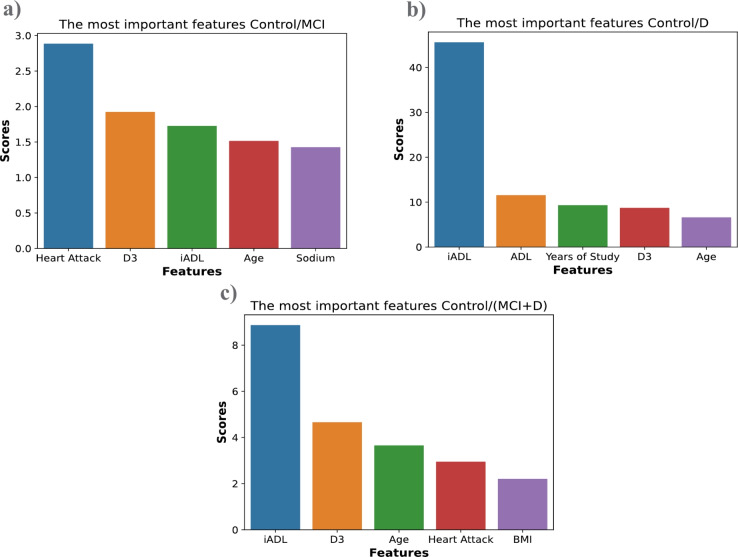
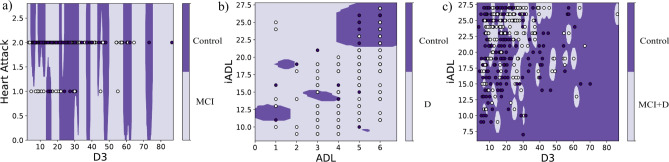
Dementia rates are projected to increase significantly by 2050, posing considerable challenges for healthcare systems worldwide. Developing efficient diagnostic tools is critical, and machine learning (ML) algorithms have shown potential for improving the accuracy of cognitive impairment classification. This study aims to address challenges in current systems by leveraging readily available electronic medical record (EMR) data to simplify and enhance the classification of cognitive impairment. The analysis includes 283 older adults, categorized into three groups: 144 individuals with mild cognitive impairment (MCI), 38 with dementia, and 101 healthy controls. Various ML techniques are evaluated to classify cognitive performance levels based on input features such as sociodemographic variables, lab results, comorbidities, Body Mass Index (BMI), and functional scales. Key predictors for distinguishing healthy controls from individuals with MCI are identified. These are history of myocardial infarction, vitamin D3 levels, the Instrumental Activities of Daily Living (IADL) scale, age, and sodium levels. The nonlinear Support Vector Machine (SVM) with a Radial Basis Function (RBF) kernel achieve the best performance for MCI classification, with an accuracy of 69%, an AUC of 0.75, and a Matthews Correlation Coefficient (MCC) of 0.43. For distinguishing healthy controls from those with dementia, the most influential factors include the IADL scale, the Activities of Daily Living (ADL) scale, education, vitamin D3 levels, and age. Here, the Random Forest algorithm demonstrates superior performance, achieving 84% accuracy, an AUC of 0.96, and an MCC of 0.71. These two models consistently outperform other ML techniques, such as K-Nearest Neighbors, Multi-Layer Perceptron, linear SVM, Naive Bayes, Quadratic Discriminant Analysis, Linear Discriminant Analysis, AdaBoost, and Gaussian Process Classifiers. The findings suggest that EMR data can be an effective resource for the initial classification of cognitive impairments. Integrating these ML-driven approaches into primary care settings may facilitate the early identification of older patients who could benefit from further cognitive assessments.
Overview
The claims and statistics of this paper haven’t been checked yet.
Free: it reads the open-access text and checks the first 5 claims that cite a source we can check. Create a free account to check every claim.
Integrity signals
Registry
Cites
Statistics
Figures
Verification
Claims the paper makes
The claims and statistics of this paper haven’t been checked yet.
Free: it reads the open-access text and checks the first 5 claims that cite a source we can check. Create a free account to check every claim.
Claims other papers make about this one
Each is checked against this paper’s own text: does it say what the citing paper says it does?
The check wasn’t confident either way, so it gives no verdict — never disputed.
In the citing paper
“For example, changes in physical activity and movement patterns, driving behavior, sleep patterns, everyday speech, eye tracking, facial expressions, technology use, writing, texting, and keyboard typing dynamics have all been shown to differentiate those with and without neurodegenerative disease.111–119”
From Review of Artificial Intelligence for Clinical Use in Alzheimer's Disease and Related Dementias (2026) · cites this paper as [112]
Experimental — accuracy not yet measured
Self-check
Percentages, sums and reported differences re-computed from the paper’s own numbers.
The self-check needs the paper’s full text.
Citations
Cites
1 retracted
Dementia prevention, intervention, and care: 2020 report of the Lancet Commission
Livingston, G., Huntley, J., Sommerlad, A., Ames, D., Ballard, C., Banerjee, S., Brayne, C., Burns, A., Cohen-Mansfield, J., Cooper, C., et al. (2020) · The Lancet · doi:10.1016/s0140-6736(20)30367-6 · Cited by 10,430 · cited 2×
“1, 2 and 3.”
RetractedFolstein, M. F., Folstein, S. E., & McHugh, P. R. (1975) · Journal of Psychiatric Research · doi:10.1016/0022-3956(75)90026-6 · Cited by 88,282
Scikit-learn: Machine Learning in Python
Pedregosa, F., Varoquaux, G., Gramfort, A., Michel, V., Thirion, B., Grisel, O., Blondel, M., Müller, A., Nothman, J., Louppe, G., et al. (2012) · arXiv · doi:10.48550/arxiv.1201.0490 · Cited by 71,016
SMOTE synthetic minority over-sampling technique
Chawla, N. V., Bowyer, K. W., Hall, L. O., & Kegelmeyer, W. P. (2002) · Journal of Artificial Intelligence Research · doi:10.1613/jair.953 · Cited by 32,865
The Montreal Cognitive Assessment, MoCA: a brief screening tool for mild cognitive impairment
Nasreddine, Z. S., Phillips, N. A., Bédirian, V., Charbonneau, S., Whitehead, V., Collin, I., Cummings, J. L., & Chertkow, H. (2005) · Journal of the American Geriatrics Society · doi:10.1111/j.1532-5415.2005.53221.x · Cited by 25,553 · cited 1×
“Cognitive assessments, including the Mini-Mental State Examination (MMSE) 66 , Montreal Cognitive Assessment (MoCA) 67 , and the Clock Drawing Test (CDT), were conducted by a psychologist.”
Hirono, N., Mori, E., Ikejiri, Y., Imamura, T., Shimomura, T., Hashimoto, M., Yamashita, H., & Ikeda, M. (1997) · Brain and nerve · Cited by 21,039
Kok, J. S., Berg, I. J., & Scherder, E. J. A. (2013) · Dementia and Geriatric Cognitive Disorders Extra · doi:10.1159/000353441 · Cited by 20,589
Older Adults' Reasons for Using Technology while Aging in Place
Peek, S. T. M., Luijkx, K. G., Rijnaard, M. D., Nieboer, M. E., van der Voort, C. S., Aarts, S., van Hoof, J., Vrijhoef, H. J. M., & Wouters, E. J. M. (2016) · Gerontology · doi:10.1159/000430949 · Cited by 19,690
Sensitivity and False Alarm Rate of a Fall Sensor in Long-Term Fall Detection in the Elderly
Kangas, M., Korpelainen, R., Vikman, I., Nyberg, L., & Jämsä, T. (2015) · Gerontology · doi:10.1159/000362720 · Cited by 18,909
Assessment of Older People: Self-Maintaining and Instrumental Activities of Daily Living
Lawton, M. P., & Brody, E. M. (1969) · The Gerontologist · doi:10.1093/geront/9.3_part_1.179 · Cited by 18,540
A training algorithm for optimal margin classifiers
Boser, B. E., Guyon, I. M., & Vapnik, V. N. (1992) · Proceedings of the fifth annual workshop on Computational learning theory · doi:10.1145/130385.130401 · Cited by 11,992
NIA‐AA Research Framework: Toward a biological definition of Alzheimer's disease
Jack, C. R., Bennett, D. A., Blennow, K., Carrillo, M. C., Dunn, B., Haeberlein, S. B., Holtzman, D. M., Jagust, W., Jessen, F., Karlawish, J., et al. (2018) · Alzheimer's & Dementia · doi:10.1016/j.jalz.2018.02.018 · Cited by 10,537 · cited 4×
“It is possible that alternative factors may be more critical for classifying patients according to the stage of cognitive impairment (MCI vs mild dementia) 4 .”
InfluentialMachine learning: Trends, perspectives, and prospects
Jordan, M. I., & Mitchell, T. M. (2015) · Science · doi:10.1126/science.aaa8415 · Cited by 9,955 · cited 2×
“Such comparative assessments are frequently proposed in ML studies 33,40 .”
Pattern Recognition and Machine Learning
(2006) · doi:10.1007/978-0-387-45528-0 · Cited by 9,824
Dementia prevention, intervention, and care: 2024 report of the Lancet standing Commission
Livingston, G., Huntley, J., Liu, K. Y., Costafreda, S. G., Selbæk, G., Alladi, S., Ames, D., Banerjee, S., Burns, A., Brayne, C., et al. (2024) · The Lancet · doi:10.1016/s0140-6736(24)01296-0 · Cited by 3,860 · cited 4×
“Using findings from studies that have elucidated risk factors for AD 17,43 , can help identify variables to be extracted from EMRs and collected in future studies for a more accurate classification of cognitive performance and dementia prediction.”
InfluentialComprehensive Review on Alzheimer’s Disease: Causes and Treatment
Breijyeh, Z., & Karaman, R. (2020) · Molecules · doi:10.3390/molecules25245789 · Cited by 2,789 · cited 4×
“Future studies should consider a larger number of comorbidities, including estimates of their duration, and incorporate additional environmental variables, such as exposure to heavy metals, pesticides, medical factors like infectious diseases 17 , and polypharmacy 18,61 .”
InfluentialMeasuring balance in the elderly: preliminary development of an instrument
Berg, K. (1989) · Physiotherapy Canada · doi:10.3138/ptc.41.6.304 · Cited by 2,742 · cited 1×
“A nurse completed the functional ADL 63 and IADL scales 64 , while a physiotherapist administered the Berg Balance Scale to assess balance in older individuals 65 .”
Katz, S. (1963) · JAMA · doi:10.1001/jama.1963.03060120024016 · Cited by 2,421
Opportunities and obstacles for deep learning in biology and medicine
Ching, T., Himmelstein, D. S., Beaulieu-Jones, B. K., Kalinin, A. A., Do, B. T., Way, G. P., Ferrero, E., Agapow, P.-M., Zietz, M., Hoffman, M. M., et al. (2018) · Journal of The Royal Society Interface · doi:10.1098/rsif.2017.0387 · Cited by 2,310
Single subject prediction of brain disorders in neuroimaging: Promises and pitfalls
Arbabshirani, M. R., Plis, S., Sui, J., & Calhoun, V. D. (2017) · NeuroImage · doi:10.1016/j.neuroimage.2016.02.079 · Cited by 912 · cited 4×
“Linear SVM was used more frequently 15,30 , probably because it was more appropriate for neuroimaging 11 due to its interpretability, ability to deal with the high dimensionality of the data and lower risk of overfitting.”
InfluentialPetersen, R. C. (2016) · Continuum · doi:10.1212/con.0000000000000313 · Cited by 909
Basaia, S., Agosta, F., Wagner, L., Canu, E., Magnani, G., Santangelo, R., & Filippi, M. (2019) · NeuroImage: Clinical · doi:10.1016/j.nicl.2018.101645 · Cited by 738 · cited 2×
“Some research using ML include only neuroimaging in the input data 28,29 , as its inclusion generally yields better prediction results 10 .”
Alzheimer’s Disease: Epidemiology and Clinical Progression
Tahami Monfared, A. A., Byrnes, M. J., White, L. A., & Zhang, Q. (2022) · Neurology and Therapy · doi:10.1007/s40120-022-00338-8 · Cited by 629
Chicco, D., & Jurman, G. (2023) · BioData Mining · doi:10.1186/s13040-023-00322-4 · Cited by 597
Alcohol use and dementia: a systematic scoping review
Rehm, J., Hasan, O. S. M., Black, S. E., Shield, K. D., & Schwarzinger, M. (2019) · Alzheimer's Research & Therapy · doi:10.1186/s13195-018-0453-0 · Cited by 450
Body mass index and risk of dementia: analysis of individual-level data from 1·3 million individuals
Kivimäki, M., Luukkonen, R., Batty, G. D., Ferrie, J. E., Pentti, J., Nyberg, S. T., Shipley, M. J., Alfredsson, L., Fransson, E. I., Goldberg, M., et al. (2018) · Alzheimer's & Dementia · doi:10.1016/j.jalz.2017.09.016 · Cited by 440 · cited 1×
“Another study found that a higher BMI was associated with a higher risk of dementia when measured more than 20 years before diagnosis, but this association reversed when the BMI was evaluated less than 10 years before diagnosis 49 .”
El-Sappagh, S., Alonso, J. M., Islam, S. M. R., Sultan, A. M., & Kwak, K. S. (2021) · Scientific Reports · doi:10.1038/s41598-021-82098-3 · Cited by 363 · cited 10×
“It is crucial to note the variability in AUC measures and the observed accuracy rates, as similar discrepancies in classifier performance have been reported in other studies 7,19,30 .”
InfluentialMachine learning for comprehensive forecasting of Alzheimer’s Disease progression
Fisher, C. K., Smith, A. M., Walsh, J. R., Diseases, C. A. M., Simon, A. J., Edgar, C., Jack, C. R., Holtzman, D., Russell, D., Hill, D., et al. (2019) · Scientific Reports · doi:10.1038/s41598-019-49656-2 · Cited by 223 · cited 4×
“However, challenges such as data quality issues, missing observations, data entry errors, the potential limitations of these methods, and concerns about the ethics and safety of AI in healthcare must also be addressed 7,11,14,27 .”
InfluentialDe Roeck, E. E., De Deyn, P. P., Dierckx, E., & Engelborghs, S. (2019) · Alzheimer's Research & Therapy · doi:10.1186/s13195-019-0474-3 · Cited by 209 · cited 2×
“While recognizing the limitations of screening tests in detecting cognitive impairment in older patients 37,38 , the proposed models offer an initial ’cognitive screening’ that can be conducted at the primary care level, helping to identify patients for further, more specialized evaluations.”
Generalizable deep learning model for early Alzheimer’s disease detection from structural MRIs
Liu, S., Masurkar, A. V., Rusinek, H., Chen, J., Zhang, B., Zhu, W., Fernandez-Granda, C., & Razavian, N. (2022) · Scientific Reports · doi:10.1038/s41598-022-20674-x · Cited by 195 · cited 1×
“Combined group (MCI + dementia) versus control group (similar combinations have been explored in other studies 39 ).”
Vitamin D deficiency as a risk factor for dementia and Alzheimer’s disease: an updated meta-analysis
Chai, B., Gao, F., Wu, R., Dong, T., Gu, C., Lin, Q., & Zhang, Y. (2019) · BMC Neurology · doi:10.1186/s12883-019-1500-6 · Cited by 189 · cited 1×
“There is a notable link between vitamin D deficiency and the risk of dementia and AD, with severe deficiency ( 10 ng/ml) showing a stronger association with these conditions compared to moderate deficiency (10–20 ng/ml) 50 .”
Abrol, A., Bhattarai, M., Fedorov, A., Du, Y., Plis, S., & Calhoun, V. (2020) · Journal of Neuroscience Methods · doi:10.1016/j.jneumeth.2020.108701 · Cited by 182
Raimo, S., Maggi, G., Ilardi, C. R., Cavallo, N. D., Torchia, V., Pilgrom, M. A., Cropano, M., Roldán-Tapia, L., & Santangelo, G. (2024) · Neurological Sciences · doi:10.1007/s10072-024-07366-2 · Cited by 182 · cited 1×
“Another meta-analysis in individuals with dementia, MCI, and healthy subjects found that IADLs were strongly related to executive function and processing speed, while ADLs (including BADLs and IADLs) were associated with global cognitive functioning and long-term verbal memory 46 .”
An explainable machine learning approach for Alzheimer’s disease classification
Alatrany, A. S., Khan, W., Hussain, A., Kolivand, H., & Al-Jumeily, D. (2024) · Scientific Reports · doi:10.1038/s41598-024-51985-w · Cited by 172
Mohammed, B. A., Senan, E. M., Rassem, T. H., Makbol, N. M., Alanazi, A. A., Al-Mekhlafi, Z. G., Almurayziq, T. S., & Ghaleb, F. A. (2021) · Electronics · doi:10.3390/electronics10222860 · Cited by 164 · cited 1×
“Hybrid models that combine deep learning (DL) and classical ML methods are also employed 23,34 .”
Interpretable machine learning for dementia: a systematic review
Martin, S. A., Townend, F. J., Barkhof, F., & Cole, J. H. (2023) · Alzheimer's & Dementia · doi:10.1002/alz.12948 · Cited by 149 · cited 6×
“Additionally, numerous studies draw data from specialized research repositories like the Alzheimer’s Disease Neuroimaging Initiative (ADNI) 15,35 .”
InfluentialRawle, M. J., Cooper, R., Kuh, D., & Richards, M. (2018) · Journal of the American Geriatrics Society · doi:10.1111/jgs.15317 · Cited by 145 · cited 1×
“Future studies should consider a larger number of comorbidities, including estimates of their duration, and incorporate additional environmental variables, such as exposure to heavy metals, pesticides, medical factors like infectious diseases 17 , and polypharmacy 18,61 .”
Park, J. H., Cho, H. E., Kim, J. H., Wall, M. M., Stern, Y., Lim, H., Yoo, S., Kim, H. S., & Cha, J. (2020) · npj Digital Medicine · doi:10.1038/s41746-020-0256-0 · Cited by 145
Walters, K., Hardoon, S., Petersen, I., Iliffe, S., Omar, R. Z., Nazareth, I., & Rait, G. (2016) · BMC Medicine · doi:10.1186/s12916-016-0549-y · Cited by 144
Artificial intelligence for biomarker discovery in Alzheimer's disease and dementia
Winchester, L. M., Harshfield, E. L., Shi, L., Badhwar, A., Khleifat, A. A., Clarke, N., Dehsarvi, A., Lengyel, I., Lourida, I., Madan, C. R., et al. (2023) · Alzheimer's & Dementia · doi:10.1002/alz.13390 · Cited by 130
Kumar, S., Oh, I., Schindler, S., Lai, A. M., Payne, P. R. O., & Gupta, A. (2021) · JAMIA Open · doi:10.1093/jamiaopen/ooab052 · Cited by 120 · cited 7×
“Most of the research focuses on predicting the progression of AD using publicly available standardized multimodal datasets that combine neuroimaging with non-imaging clinical data 10,15 .”
InfluentialMild Cognitive Impairment that Does Not Progress to Dementia: A Population‐Based Study
Ganguli, M., Jia, Y., Hughes, T. F., Snitz, B. E., Chang, C. H., Berman, S. B., Sullivan, K. J., & Kamboh, M. I. (2019) · Journal of the American Geriatrics Society · doi:10.1111/jgs.15642 · Cited by 105 · cited 1×
“Furthermore, while this study aimed to identify MCI from EMRs, the traditional view of cognitive impairment as a unidirectional and progressive process is increasingly challenged by research indicating that not all patients with MCI will convert to dementia 6,41,62 .”
You, J., Zhang, Y.-R., Wang, H.-F., Yang, M., Feng, J.-F., Yu, J.-T., & Cheng, W. (2022) · eClinicalMedicine · doi:10.1016/j.eclinm.2022.101665 · Cited by 104
Electronic health records and clinician burnout: A story of three eras
Johnson, K. B., Neuss, M. J., & Detmer, D. E. (2021) · Journal of the American Medical Informatics Association · doi:10.1093/jamia/ocaa274 · Cited by 99 · cited 1×
“Although the potential benefits of routinely collected EMRs data are recognized 14 , there are concerns about the additional documentation burden this may impose on already overburdened medical personnel 59 .”
Predicting dementia with routine care EMR data
Ben Miled, Z., Haas, K., Black, C. M., Khandker, R. K., Chandrasekaran, V., Lipton, R., & Boustani, M. A. (2020) · Artificial Intelligence in Medicine · doi:10.1016/j.artmed.2019.101771 · Cited by 87
Tang, A. S., Rankin, K. P., Cerono, G., Miramontes, S., Mills, H., Roger, J., Zeng, B., Nelson, C., Soman, K., Woldemariam, S., et al. (2024) · Nature Aging · doi:10.1038/s43587-024-00573-8 · Cited by 86 · cited 6×
“In future research, data preprocessing will remain a challenge 8 , particularly in studies using EMRs 20 , and initial feature selection will be crucial to develop more precise ML models, as indicated by other studies 9,19,33 .”
InfluentialShao, Y., Zeng, Q. T., Chen, K. K., Shutes-David, A., Thielke, S. M., & Tsuang, D. W. (2019) · BMC Medical Informatics and Decision Making · doi:10.1186/s12911-019-0846-4 · Cited by 84 · cited 3×
“Identifying dementia and conducting the necessary evaluations are essential for effective chronic disease management and planning the capacity of healthcare systems 15,31,32 .”
Late-life obesity is a protective factor for prodromal Alzheimer’s disease: a longitudinal study
Sun, Z., Initiative, A. D. N., Wang, Z.-T., Sun, F.-R., Shen, X.-N., Xu, W., Ma, Y.-H., Dong, Q., Tan, L., & Yu, J.-T. (2020) · Aging · doi:10.18632/aging.102738 · Cited by 83
Schievink, S. H. J., van Boxtel, M. P. J., Deckers, K., van Oostenbrugge, R. J., Verhey, F. R. J., & Köhler, S. (2022) · European Heart Journal · doi:10.1093/eurheartj/ehx365 · Cited by 81 · cited 1×
“Cardiovascular disease (CVD) has been suggested to accelerate cognitive decline and be a risk factor for dementia 17,54 .”
Advancing Alzheimer’s research: a review of big data promises
Zhang, R., Simon, G., & Yu, F. (2017) · International Journal of Medical Informatics · doi:10.1016/j.ijmedinf.2017.07.002 · Cited by 77 · cited 1×
“It should be noted that EMRs are mainly used to document the clinical care of people with AD, not for research, so the use of EMRs in this area requires appropriate data completion 16 .”
New Horizons in the use of routine data for ageing research
Todd, O. M., Burton, J. K., Dodds, R. M., Hollinghurst, J., Lyons, R. A., Quinn, T. J., Schneider, A., Walesby, K. E., Wilkinson, C., Conroy, S., et al. (2020) · Age and Ageing · doi:10.1093/ageing/afaa018 · Cited by 73 · cited 1×
“Furthermore, developing research questions that can be addressed using routine EMRs data in the context of dementia should involve a multidisciplinary team, including data analysts and other healthcare professionals 9,12 .”
Altieri, M., Garramone, F., & Santangelo, G. (2021) · Neurological Sciences · doi:10.1007/s10072-021-05142-0 · Cited by 71 · cited 1×
“45 .”
Applied machine learning in Alzheimer's disease research: omics, imaging, and clinical data
Li, Z., Jiang, X., Wang, Y., & Kim, Y. (2021) · Emerging Topics in Life Sciences · doi:10.1042/etls20210249 · Cited by 65 · cited 6×
“Most of the research focuses on predicting the progression of AD using publicly available standardized multimodal datasets that combine neuroimaging with non-imaging clinical data 10,15 .”
InfluentialThe Role of Vitamin D as a Biomarker in Alzheimer’s Disease
Bivona, G., Sasso, B. L., Gambino, C. M., Giglio, R. V., Scazzone, C., Agnello, L., & Ciaccio, M. (2021) · Brain Sciences · doi:10.3390/brainsci11030334 · Cited by 63 · cited 2×
“Although vitamin D plays a role in brain function and is often low in patients with dementia, inconsistencies in study methodologies, measurement techniques, and cognitive assessment criteria limit the clarity and reliability of their findings 51 .”
Wang, Y., Liu, S., Spiteri, A. G., Huynh, A. L. H., Chu, C., Masters, C. L., Goudey, B., Pan, Y., & Jin, L. (2024) · Alzheimer s Research & Therapy · doi:10.1186/s13195-024-01540-6 · Cited by 61 · cited 10×
“Furthermore, RF’s ensemble approach, based on multiple decision trees, allows it to model variable interactions and adapt to diverse data types, making it suitable for handling heterogeneous medical datasets 11 .”
InfluentialHyponatremia and increased risk of dementia: A population-based retrospective cohort study
Chung, M., Yu, T., Shu, K., Wu, M., Chang, C., Muo, C., & Chung, C. (2017) · PLoS ONE · doi:10.1371/journal.pone.0178977 · Cited by 57 · cited 1×
“In a retrospective cohort study, patients with severe hyponatremia were found to have a higher risk of developing dementia compared to those with non-severe hyponatremia 53 .”
Vichianin, Y., Khummongkol, A., Chiewvit, P., Raksthaput, A., Chaichanettee, S., Aoonkaew, N., & Senanarong, V. (2021) · Frontiers in Neurology · doi:10.3389/fneur.2021.640696 · Cited by 55 · cited 10×
“It should be mentioned that the results of the screening test were used as labels in the output data, but not as input variables, a distinction from the common practices in other ML studies 19,23,26 .”
InfluentialDeep Ensemble learning and quantum machine learning approach for Alzheimer’s disease detection
Belay, A. J., Walle, Y. M., & Haile, M. B. (2024) · Scientific Reports · doi:10.1038/s41598-024-61452-1 · Cited by 55
Wang, C., Li, Y., Tsuboshita, Y., Sakurai, T., Goto, T., Yamaguchi, H., Yamashita, Y., Sekiguchi, A., Tachimori, H., Initiative, F. T. A. D. N., et al. (2022) · npj Digital Medicine · doi:10.1038/s41746-022-00577-x · Cited by 51 · cited 9×
“It should be mentioned that the results of the screening test were used as labels in the output data, but not as input variables, a distinction from the common practices in other ML studies 19,23,26 .”
InfluentialKarlsson, I., Gatz, M., Arpawong, T. E., Aslan, A. K. D., & Reynolds, C. A. (2021) · Scientific Reports · doi:10.1038/s41598-021-86667-4 · Cited by 48 · cited 1×
“The Health and Retirement Study ( n = 23 , 000 ) found a bidirectional relationship between BMI and cognitive ability—a higher BMI is associated with a steeper decline in cognitive ability in middle and late life 47 .”
Chowdhury, M., Cervantes, E. G., Chan, W.-Y., & Seitz, D. P. (2021) · Frontiers in Psychiatry · doi:10.3389/fpsyt.2021.738466 · Cited by 46 · cited 9×
“Furthermore, the literature reveals that while dementia is the most frequently studied condition, MCI has received considerably less attention 7,10 .”
InfluentialComorbidity-based framework for Alzheimer’s disease classification using graph neural networks
Abuhantash, F., Hantash, M. K. A., & Shehhi, A. A. (2024) · Scientific Reports · doi:10.1038/s41598-024-72321-2 · Cited by 46 · cited 3×
“Other studies have also indicated that information on comorbidities plays a key role in accurately classifying different cognitive conditions and predicting the risk of dementia 21,24 .”
Artificial intelligence for dementia research methods optimization
Bucholc, M., James, C., Khleifat, A. A., Badhwar, A., Clarke, N., Dehsarvi, A., Madan, C. R., Marzi, S. J., Shand, C., Schilder, B. M., et al. (2023) · Alzheimer's & Dementia · doi:10.1002/alz.13441 · Cited by 40 · cited 15×
“In future research, data preprocessing will remain a challenge 8 , particularly in studies using EMRs 20 , and initial feature selection will be crucial to develop more precise ML models, as indicated by other studies 9,19,33 .”
InfluentialAcute Myocardial Infarction and Risk of Cognitive Impairment and Dementia: A Review
Thong, E. H., Quek, J. W. E., Loo, J. H., Yun, C.-Y., Teo, Y. N., Teo, Y. H., Leow, A. S., Li, T. Y., Sharma, V. K., Tan, B. Y., et al. (2023) · Biology · doi:10.3390/biology12081154 · Cited by 40 · cited 1×
“The nervous and cardiovascular systems are interconnected through the ”heart-brain axis,” where neuronal activity, neurohormonal responses, and vasculature coordinate multisystem functions and can contribute to disease processes 55 .”
Deep neural network models for identifying incident dementia using claims and EHR datasets
Nori, V. S., Hane, C. A., Sun, Y., Crown, W. H., & Bleicher, P. A. (2020) · PLoS ONE · doi:10.1371/journal.pone.0236400 · Cited by 38 · cited 3×
“Although more complex DL models provide greater generalization capabilities, they often require large datasets to achieve optimal performance 7,10,22 , which limits their applicability in smaller research centers and hospital units.”
Brück, C. C., Wolters, F. J., Ikram, M. A., & de Kok, I. M. C. M. (2022) · European Journal of Epidemiology · doi:10.1007/s10654-022-00878-1 · Cited by 37
Ford, E. M., Sheppard, J., Oliver, S., Rooney, P., Banerjee, S., & Cassell, J. (2021) · BMJ Open · doi:10.1136/bmjopen-2020-039248 · Cited by 34 · cited 13×
“Models such as linear SVM, Naive Bayes, Quadratic Discriminant Analysis (QDA), Linear Discriminant Analysis (LDA), and AdaBoost did not exceed 60% in ACC or 0.60 in AUC.”
InfluentialBednorz, A., Mak, J. K. L., Jylhävä, J., & Religa, D. (2023) · Clinical Interventions in Aging · doi:10.2147/cia.s400887 · Cited by 33 · cited 3×
“The application of artificial intelligence (AI) and ML to EMRs has the potential to improve disease diagnosis and symptom classification 14 .”
Self-citationManual of Screeners for Dementia
Larner, A. J. (2020) · Springer eBooks · doi:10.1007/978-3-030-41636-2 · Cited by 32
Serum sodium, cognition and incident dementia in the general population
van der Burgh, A. C., Pelouto, A., Mooldijk, S. S., Zandbergen, A. A. M., Ikram, M. A., Chaker, L., & Hoorn, E. J. (2023) · Age and Ageing · doi:10.1093/ageing/afad007 · Cited by 25
Yemm, H., Robinson, L. A., Paddick, S., Dotchin, C. L., Goodson, M. L., Narytnyk, A., Poole, M., & Ardle, R. M. (2021) · Journal of Alzheimer s Disease · doi:10.3233/jad-210532 · Cited by 23
Akramifard, H., Balafar, M. A., Razavi, S. N., & Ramli, A. R. (2021) · Journal of Medical Signals & Sensors · doi:10.4103/jmss.jmss_11_20 · Cited by 19 · cited 4×
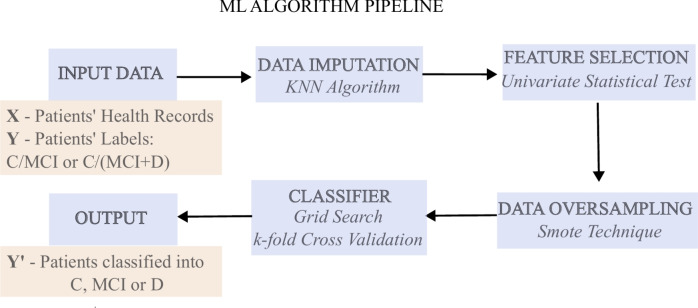
“Considering the demonstrated utility of cognitive screening tests and neuropsychological assessments in classifying dementia patients in previous studies 19,26,36 , this research utilizes the results of cognitive screening tests to generate output labels for the ML models.”
InfluentialDigital Minimalism — An Rx for Clinician Burnout
Singh, N. P., Lawrence, K. S., Sinsky, C. A., & Mann, D. M. (2023) · New England Journal of Medicine · doi:10.1056/nejmp2215297 · Cited by 17 · cited 1×
“Delegating EMR-related tasks to other team members can allow physicians to focus more effectively on diagnosing and treating patients 60 .”
Zhou, J., Liu, W., Zhou, H., Lau, K. K., Wong, G. H. Y., Chan, W. C., Zhang, Q., Knapp, M. R. J., Wong, I. C. K., & Luo, H. (2024) · The Lancet Regional Health - Western Pacific · doi:10.1016/j.lanwpc.2024.101060 · Cited by 15 · cited 3×
“These factors have also been identified as significant features in predictive ML models for dementia 18,21 .”
Imaging Dynamic Heart–Brain Interactions
Chandrashekhar, Y., & Narula, J. (2018) · Journal of the American College of Cardiology · doi:10.1016/j.jacc.2017.11.034 · Cited by 5
Research works printed but not linked: 3
- Prince, M., Albanese, E., Guerchet, M. & Prina, M. World Alzheimer Report 2014. Dementia and Risk Reduction: An analysis of protective and modifiable risk factors. Ph.D. thesis, schoolAlzheimer’s Disease International (2014).
- Gauthier, S., Rosa-Neto, P., Morais, J. A. & Webster, C. World Alzheimer report 2021: Journey through the diagnosis of dementia. Alzheimer’s Dis. Int. 2022, 30 (2021).
- Fernández-Delgado, M., Cernadas, E., Barro, S. & Amorim, D. Do we need hundreds of classifiers to solve real world classification problems?. J. Mach. Learn. Res. 15, 3133–3181 (2014).
Cited by
Gkintoni, E., Vassilopoulos, S. P., Νικολάου, Γ., & Vantarakis, A. (2025) · Brain Sciences · doi:10.3390/brainsci15060582 · Cited by 43
Review of Artificial Intelligence for Clinical Use in Alzheimer's Disease and Related Dementias
Breithaupt, A. G., Tang, A., Paolillo, E. W., Bibars, M., Johnson, E. C. B., Saloner, R., Possin, K. L., Windon, C. C., Hill-Jarrett, T. G., Giorgio, J., et al. (2026) · Seminars in Neurology · doi:10.1055/a-2744-9871 · Cited by 6
Ye, T., & Peng, J. (2026) · Frontiers in Neurology · doi:10.3389/fneur.2026.1718791 · Cited by 4
“Richter-Laskowska et al. used EMR features (demographics, labs, comorbidities) to distinguish MCI patients from healthy controls, achieving AUC ≈ 0.75 (23).”
InfluentialBednorz, A., Trybek, P., Lundberg, C., Richter‐Laskowska, M., Kananen, L., & Religa, D. (2025) · Journal of Neuropsychology · doi:10.1111/jnp.70022 · Cited by 3
Self-citationMMSE-Based Dementia Prediction: Deep vs. Traditional Models
Jung, Y., Park, Y., Jo, J.-H., & Jeong, J.-H. (2025) · Life · doi:10.3390/life15101544 · Cited by 2
“Interestingly, while the deep learning model achieved the highest accuracy, the literature has also reported that traditional machine learning models, such as random forests and SVMs, can also perform well in cognitive impairment classification [10].”
Metadata
- Authors
- Richter-Laskowska, M., Sobotnicka, E., & Bednorz, A.
- Affiliations
- Lukasiewicz Research Network - Krakow Institute of Technology (PL)
- Humanitas University in Sosnowiec (PL)
- Corresponding author
- Richter-Laskowska, Monika
- Bednorz, Adam
- ORCID
- Sobotnicka, Ewelina
- Venue
- Scientific Reports
- Published
- 2025-02-24
- Volume
- 15
- Issue
- 1
- Pages
- 6564-6564
- ISSN
- 2045-2322 (ISSN-L)
- PMC
- PMC11850844
- OpenAlex
- W4407884340
- Cited by
- 16
- References
- 73
- Citations by year
- 2026: 9 · 2025: 7
- FWCI
- 10.77
- Type
- journal article
- Language
- en
- Open access
- gold
- doi.org
- Licence
- cc-by-nc-nd
- creativecommons.org/licenses/by-nc-nd/4.0 (tdm)
- creativecommons.org/licenses/by-nc-nd/4.0 (vor)
- Locations
- Scientific Reports (publishedVersion, cc-by-nc-nd)
- Research Square (acceptedVersion, cc-by)
- PubMed Central (publishedVersion, cc-by-nc-nd)
- PubMed (publishedVersion)
- DOAJ (DOAJ: Directory of Open Access Journals) (submittedVersion)
- Topics
- Health Sciences › Medicine › Psychiatry and Mental health › Dementia and Cognitive Impairment Research
- Health Sciences › Health Professions › Health Information Management › Artificial Intelligence in Healthcare
- Physical Sciences › Computer Science › Artificial Intelligence › Machine Learning in Healthcare
- Keywords
- cognitive impairment classification, mild cognitive impairment, dementia, older adults, electronic health records, support vector machine, random forest, vitamin D3, instrumental activities of daily living, activities of daily living, comorbidities, early diagnosis of dementia, primary care
- MeSH terms
- Machine Learning, Activities of Daily Living, Aged, Aged, 80 and over, Algorithms, Cognition, Dementia, Female, Humans, Male, Case-Control Studies, Electronic Health Records, Support Vector Machine, Cognitive Dysfunction
About these checks
Registry, retraction, Cites and statistics results are computed, not judged, with one exception: a printed reference that no index lists is read once by a model before it counts as a citation error. Claims are extracted by a model and kept only when their quote appears verbatim in the text; each cited source is then checked, with a model’s help, for whether it says what the claim relies on. Those verdicts can be wrong — read the claim’s quote and the cited source before relying on one.
Statistics and arithmetic are recomputed, not judged.
Confidence bands are shown only for fields calibrated on our annotated test set. None is calibrated yet, so no band is shown.
What counts as a claim ›How we measure confidence ›How we check this ›
Are you an author, or do you see a problem with this page? Request a review
Data sources
Bibliographic data: Semantic Scholar, OpenAlex, Crossref.
Contains information from the Semantic Scholar Academic Graph Datasets, made available under the ODC Attribution License (ODC-BY 1.0).
Semantic Scholar’s data is described in: Kinney, R., et al. (2023). The Semantic Scholar Open Data Platform. arXiv:2301.10140.
