

The DOI matches its Crossref record; 138 of the 138 references it cites were found in a registry or an index.
Computational analysis of antimicrobial peptides targeting key receptors in infection-related cardiovascular diseases: molecular docking and dynamics insights
Open accessPublished version of a preprint
Abstract
Infection-related cardiovascular diseases (CVDs) pose a significant health challenge, driving the need for novel therapeutic strategies to target key receptors involved in inflammation and infection. Antimicrobial peptides (AMPs) show the potential to disrupt pathogenic processes and offer a promising approach to CVD treatment. This study investigates the binding potential of selected AMPs with critical receptors implicated in CVDs, aiming to explore their therapeutic potential. A comprehensive computational approach was employed to assess AMP interactions with CVD-related receptors, including ACE2, CRP, MMP9, NLRP3, and TLR4. Molecular docking studies identified AMPs with high binding affinities to these targets, notably Tachystatin, Pleurocidin, and Subtilisin A, which showed strong interactions with ACE2, CRP, and MMP9. Following docking, 100 ns molecular dynamics (MD) simulations confirmed the stability of AMP-receptor complexes, and MM/PBSA calculations provided quantitative insights into binding energies, underscoring the potential of these AMPs to modulate receptor activity in infection and inflammation contexts. The study highlights the therapeutic potential of Tachystatin, Pleurocidin, and Subtilisin A in targeting infection-related pathways in CVDs. These AMPs demonstrate promising receptor binding properties and stability in computational models. Future research should focus on in vitro and in vivo studies to confirm their efficacy and safety, paving the way for potential clinical applications in managing infection-related cardiovascular conditions.
Overview
The claims and statistics of this paper haven’t been checked yet.
Run the check — free, no account needed. It reads the open-access text and checks the sources it cites.
Integrity signals
Registry
Cites
Statistics
Figures
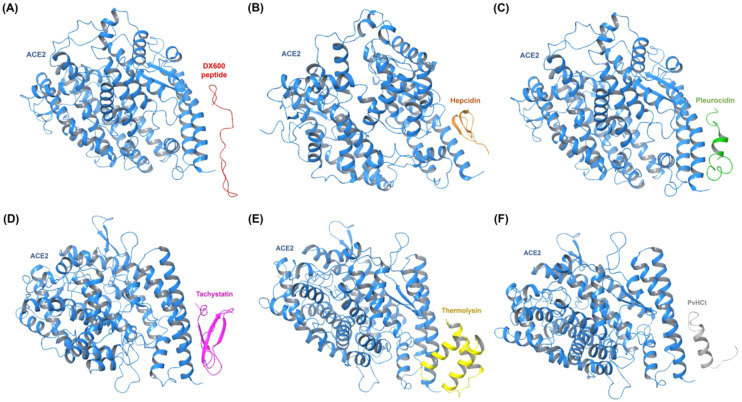
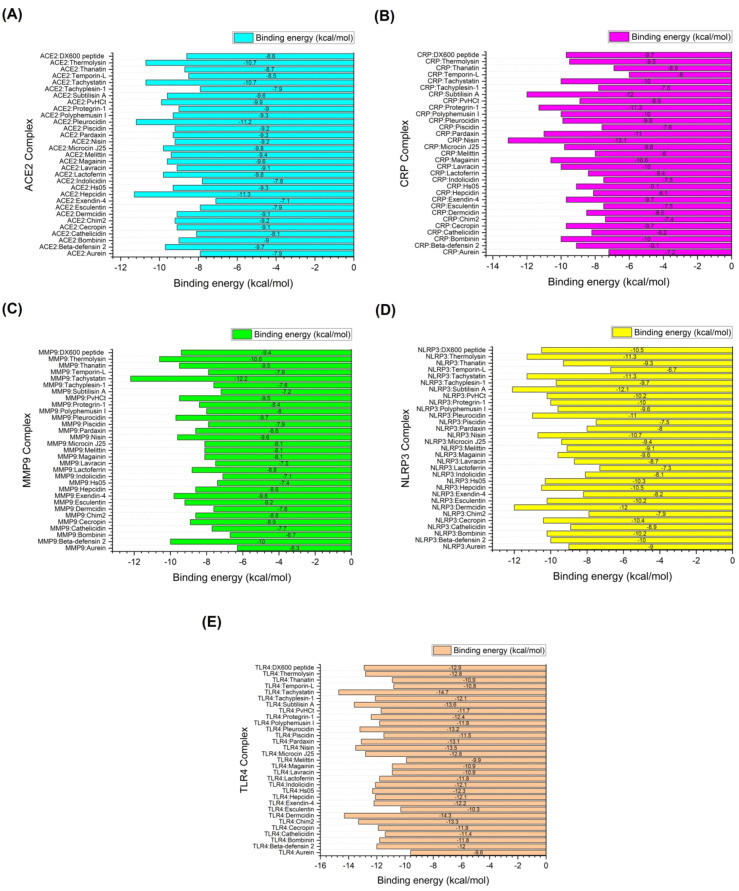
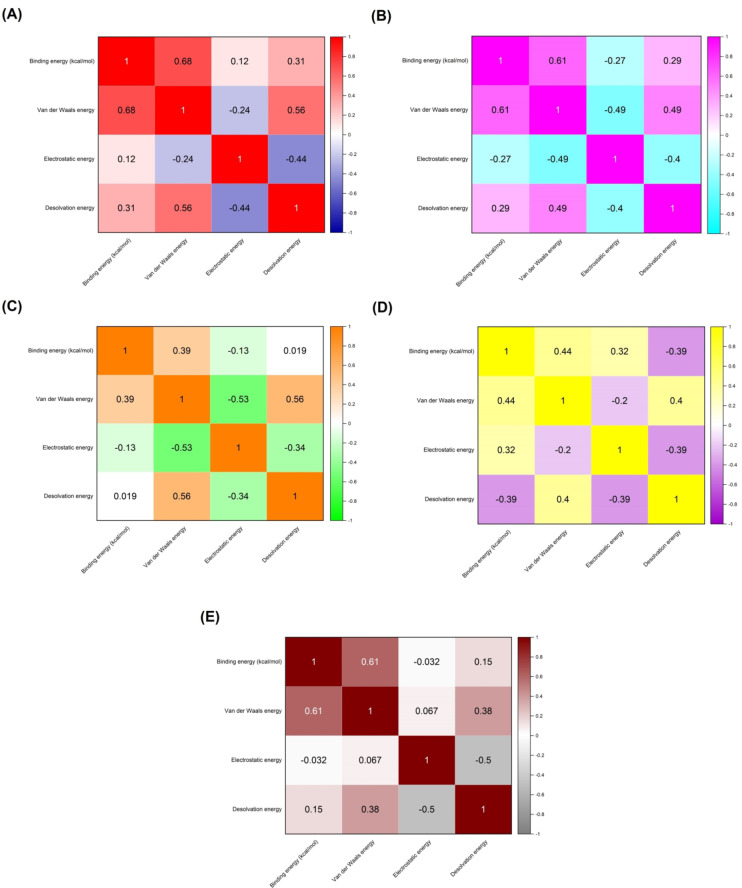
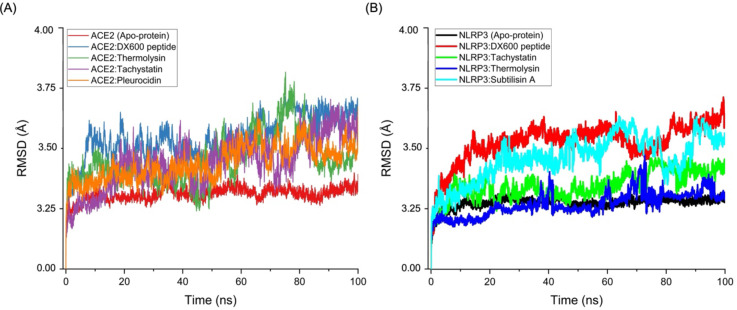
Verification
Claims the paper makes
The claims and statistics of this paper haven’t been checked yet.
Run the check — free, no account needed. It reads the open-access text and checks the sources it cites.
Self-check
Percentages, sums and reported differences re-computed from the paper’s own numbers.
The self-check needs the paper’s full text.
Citations
Cites
UCSF Chimera—A visualization system for exploratory research and analysis
Pettersen, E. F., Goddard, T. D., Huang, C. C., Couch, G. S., Greenblatt, D. M., Meng, E. C., & Ferrin, T. E. (2004) · Journal of Computational Chemistry · doi:10.1002/jcc.20084 · Cited by 45,828
Highly accurate protein structure prediction with AlphaFold
Jumper, J., Evans, R., Pritzel, A., Green, T., Figurnov, M., Ronneberger, O., Tunyasuvunakool, K., Bates, R., Žídek, A., Potapenko, A., et al. (2021) · Nature · doi:10.1038/s41586-021-03819-2 · Cited by 43,764
SWISS‐MODEL and the Swiss‐Pdb Viewer: An environment for comparative protein modeling
Guex, N., & Peitsch, M. C. (1997) · Electrophoresis · doi:10.1002/elps.1150181505 · Cited by 11,312
Protein Identification and Analysis Tools on the ExPASy Server
Gasteiger, E., Hoogland, C., Gattiker, A., Duvaud, S., Wilkins, M. R., Appel, R. D., & Bairoch, A. (2005) · Humana Press eBooks · doi:10.1385/1-59259-890-0:571 · Cited by 10,133
Antimicrobial peptides of multicellular organisms
Zasloff, M. (2002) · Nature · doi:10.1038/415389a · Cited by 8,457
GROMACS 4.5: a high-throughput and highly parallel open source molecular simulation toolkit
Pronk, S., Páll, S., Schulz, R., Larsson, P., Bjelkmar, P., Apostolov, R., Shirts, M. R., Smith, J. C., Kasson, P. M., van der Spoel, D., et al. (2013) · Bioinformatics · doi:10.1093/bioinformatics/btt055 · Cited by 7,567
Structure of the SARS-CoV-2 spike receptor-binding domain bound to the ACE2 receptor
Lan, J., Ge, J., Yu, J., Shan, S., Zhou, H., Fan, S., Zhang, Q., Shi, X., Wang, Q., Zhang, L., et al. (2020) · Nature · doi:10.1038/s41586-020-2180-5 · Cited by 5,983
Inflammatory responses and inflammation-associated diseases in organs
Chen, L., Deng, H., Cui, H., Fang, J. S., Zuo, Z., Deng, J., Li, Y., Wang, X., & Zhao, L. (2017) · Oncotarget · doi:10.18632/oncotarget.23208 · Cited by 5,572
MMPBSA.py : An Efficient Program for End-State Free Energy Calculations
Miller, B. R., McGee, T. D., Swails, J., Homeyer, N., Gohlke, H., & Roitberg, A. E. (2012) · Journal of Chemical Theory and Computation · doi:10.1021/ct300418h · Cited by 4,664
gmx_MMPBSA: A New Tool to Perform End-State Free Energy Calculations with GROMACS
Valdés-Tresanco, M. S., Valdés-Tresanco, M. E., Valiente, P. A., & Moreno, E. (2021) · Journal of Chemical Theory and Computation · doi:10.1021/acs.jctc.1c00645 · Cited by 3,393
Research works printed but not linked: 3
- Dermawan, D., Bahtiar, R. & Sofian, F. F. Implementation of green supply chain management (GSCM) in the pharmaceutical industry in Indonesia: feasibility analysis and case studies. J. Ilm Farm. 15, 23–29 (2019).
- Zhang, Q. Y. et al. Antimicrobial peptides: mechanism of action, activity and clinical potential. Mil Med. Res. 8, 48. https://doi.org/10.1186/s40779-021-00343-2 (2021). · DOI
- Gagat, P., Ostrówka, M., Duda-Madej, A. & Mackiewicz, P. Enhancing antimicrobial peptide activity through modifications of charge, hydrophobicity, and structure. Int. J. Mol. Sci. 25 https://doi.org/10.3390/ijms251910821 (2024). · DOI
Metadata
- Authors
- Dermawan, D., & Alotaiq, N.
- Affiliations
- Warsaw University of Technology (PL)
- Imam Mohammad ibn Saud Islamic University (SA)
- Corresponding author
- Alotaiq, Nasser
- Venue
- Scientific Reports
- Published
- 2025-03-14
- Volume
- 15
- Issue
- 1
- Pages
- 8896-8896
- ISSN
- 2045-2322 (ISSN-L)
- PMC
- PMC11909139
- OpenAlex
- W4408473383
- Cited by
- 19
- References
- 138
- Citations by year
- 2026: 11 · 2025: 8
- FWCI
- 10.41
- Type
- journal article
- Language
- en
- Open access
- gold
- doi.org
- Licence
- Locations
- Scientific Reports (publishedVersion, cc-by-nc-nd)
- Preprints.org (acceptedVersion, cc-by)
- Research Square (acceptedVersion, cc-by)
- Europe PMC (PubMed Central) (publishedVersion, cc-by-nc-nd)
- PubMed Central (publishedVersion, cc-by-nc-nd)
- PubMed (publishedVersion)
- DOAJ (DOAJ: Directory of Open Access Journals) (submittedVersion, cc-by-sa)
- Funders
- Deanship of Scientific Research at Imam Mohammad Ibn Saud Islamic University (IMSIU-DDRSP2501)
- Topics
- Life Sciences › Immunology and Microbiology › Microbiology › Antimicrobial Peptides and Activities
- Life Sciences › Pharmacology, Toxicology and Pharmaceutics › Drug Discovery › Computational Drug Discovery Methods
- Life Sciences › Biochemistry, Genetics and Molecular Biology › Molecular Biology › Protein Structure and Dynamics
- Keywords
- antimicrobial peptides, ACE2, C-reactive protein, MMP-9, NLRP3 inflammasome, TLR4, pleurocidin, subtilisin A, peptide-receptor binding, binding affinity, binding energy, inflammation
- MeSH terms
- Angiotensin-Converting Enzyme 2, Antimicrobial Peptides, Cardiovascular Diseases, Humans, Protein Binding, Molecular Dynamics Simulation, Molecular Docking Simulation
About these checks
Registry, retraction, Cites and statistics results are computed, not judged, with one exception: a printed reference that no index lists is read once by a model before it counts as a citation error. Claims are extracted by a model and kept only when their quote appears verbatim in the text; each cited source is then checked, with a model’s help, for whether it says what the claim relies on. Those verdicts can be wrong — read the claim’s quote and the cited source before relying on one.
Statistics and arithmetic are recomputed, not judged.
Confidence bands are shown only for fields calibrated on our annotated test set. None is calibrated yet, so no band is shown.
What counts as a claim ›How we measure confidence ›How we check this ›
Are you an author, or do you see a problem with this page? Request a review
How to cite
Cite CoChat for the checks on this page, and the paper for its own findings.
- This page
- CoChat. (2026). Citation check: Computational analysis of antimicrobial peptides targeting key receptors in infection-related cardiovascular diseases: molecular docking and dynamics insights. https://app.cochat.ai/papers/10.1038/s41598-025-93683-1
- The paper
- Dermawan, D., & Alotaiq, N. (2025). Computational analysis of antimicrobial peptides targeting key receptors in infection-related cardiovascular diseases: molecular docking and dynamics insights. Scientific Reports. https://doi.org/10.1038/s41598-025-93683-1
Data sources
Bibliographic data: Semantic Scholar, OpenAlex, Crossref.
Contains information from the Semantic Scholar Academic Graph Datasets, made available under the ODC Attribution License (ODC-BY 1.0).
Semantic Scholar’s data is described in: Kinney, R., et al. (2023). The Semantic Scholar Open Data Platform. arXiv:2301.10140.
