

AirGPT: pioneering the convergence of conversational AI with atmospheric science
Open accessThe DOI matches its Crossref record; 41 of the 41 references it cites were found in a registry or an index.
Abstract
Large language models (LLMs) face significant limitations in specialized scientific domains due to their inability to perform data analysis and their tendency to generate inaccurate information. This challenge is particularly critical in air quality management, where precise analysis is essential for addressing climate change and pollution control initiatives. To bridge this gap, we present AirGPT, a computational framework that integrates conversational AI with atmospheric science expertise through a curated corpus of peer-reviewed literature and specialized data analysis capabilities. Through a novel architecture combining natural language processing and domain-specific analytical tools, AirGPT achieved higher accuracy in air quality assessments compared to standard LLMs, including GPT-4o. Experimental results demonstrate superior capabilities in providing accurate regulatory information, performing fundamental data analysis, and generating location-specific management recommendations, as validated through case studies in metropolitan areas such as Beijing.
Overview
The claims and statistics of this paper haven’t been checked yet.
Free: it reads the open-access text and checks the first 5 claims that cite a source we can check. Create a free account to check every claim.
Integrity signals
Registry
Cites
Statistics
Figures
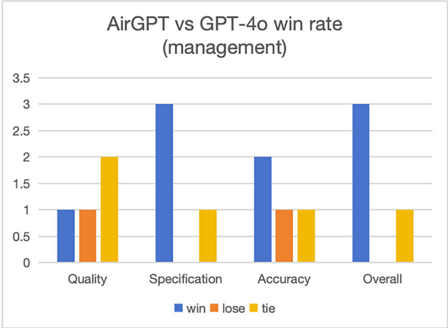
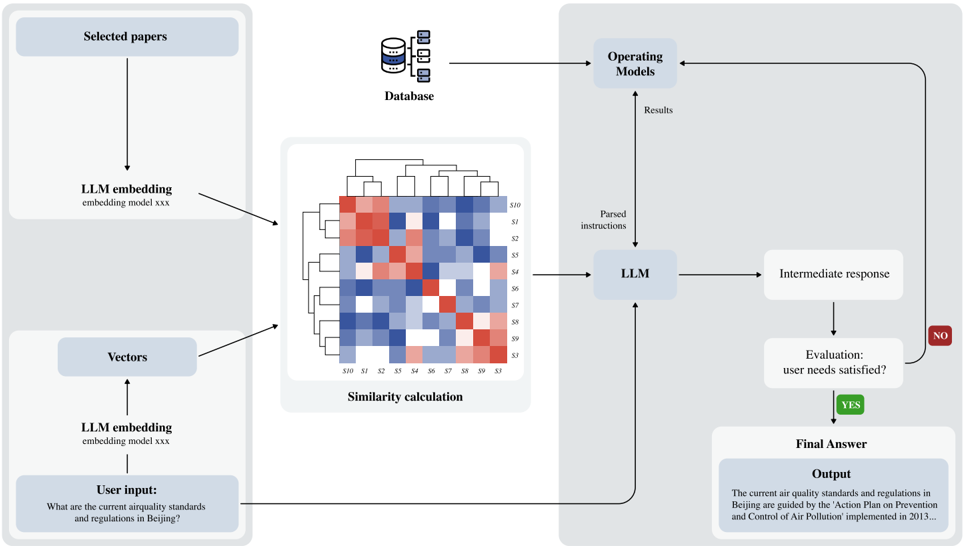
Verification
Claims the paper makes
The claims and statistics of this paper haven’t been checked yet.
Free: it reads the open-access text and checks the first 5 claims that cite a source we can check. Create a free account to check every claim.
Claims other papers make about this one
Each is checked against this paper’s own text: does it say what the citing paper says it does?
The check wasn’t confident either way, so it gives no verdict — never disputed.
In the citing paper
“However, despite these advancements, a critical barrier to the widespread adoption of AI in healthcare is the lack of transparency and interpretability in model decision-making processes [7,8].”
From Explainable AI in Clinical Decision Support Systems: A Meta-Analysis of Methods, Applications, and Usability Challenges (2025) · cites this paper as [8]
Experimental — accuracy not yet measured
Self-check
Percentages, sums and reported differences re-computed from the paper’s own numbers.
The self-check needs the paper’s full text.
Citations
Cites
On the Dangers of Stochastic Parrots: Can Language Models Be Too Big? 🦜
Bender, E. M., Gebru, T., McMillan-Major, A., & Shmitchell, S. (2021) · Proceedings of the 2021 ACM Conference on Fairness, Accountability, and Transparency · doi:10.1145/3442188.3445922 · Cited by 6,988
Survey of Hallucination in Natural Language Generation
Ji, Z., Lee, N., Frieske, R., Yu, T., Su, D., Xu, Y., Ishii, E., Bang, Y. J., Madotto, A., & Fung, P. (2023) · ACM Computing Surveys · doi:10.1145/3571730 · Cited by 5,025
Survey of Hallucination in Natural Language Generation
Ji, Z., Lee, N., Frieske, R., Yu, T., Su, D., Xu, Y., Ishii, E., Bang, Y., Chen, D., Dai, W., et al. (2022) · arXiv · doi:10.48550/arxiv.2202.03629 · Cited by 4,981
Training language models to follow instructions with human feedback
Ouyang, L., Wu, J., Jiang, X., Almeida, D., Wainwright, C. L., Mishkin, P., Zhang, C., Agarwal, S., Slama, K., Ray, A., et al. (2022) · arXiv · doi:10.48550/arxiv.2203.02155 · Cited by 4,208
BAİDOO-ANU, D., & OWUSU ANSAH, L. (2023) · Journal of AI · doi:10.61969/jai.1337500 · Cited by 3,939
Sallam, M. (2023) · Healthcare · doi:10.3390/healthcare11060887 · Cited by 3,126
Baidoo-Anu, D., & Owusu Ansah, L. (2023) · doi:10.2139/ssrn.4337484 · Cited by 3,004
Toward expert-level medical question answering with large language models
Singhal, K., Tu, T., Gottweis, J., Sayres, R., Wulczyn, E., Amin, M., Hou, L., Clark, K., Pfohl, S. R., Cole-Lewis, H., et al. (2025) · Nature Medicine · doi:10.1038/s41591-024-03423-7 · Cited by 1,734 · cited 1×
“In the realm of personalized communication, LLMs have played a pivotal role in customized learning by facilitating adaptive assessments and content recommendations 13 – 16 .”
Exploiting Cloze-Questions for Few-Shot Text Classification and Natural Language Inference
Schick, T., & Schütze, H. (2021) · Proceedings of the 16th Conference of the European Chapter of the Association for Computational Linguistics: Main Volume · doi:10.18653/v1/2021.eacl-main.20 · Cited by 1,305
Art and the science of generative AI
Epstein, Z., Hertzmann, A., the Investigators of Human Creativity, Akten, M., Farid, H., Fjeld, J., Frank, M. R., Groh, M., Herman, L., Leach, N., et al. (2023) · Science · doi:10.1126/science.adh4451 · Cited by 788
Research works printed but not linked: 1
- 2. Devlin, J., Chang, M.-W., Lee, K. & Toutanova, K. Bert: pre-training of deep bidirectional transformers for language understanding. arXiv preprint arXiv:1810.04805 (2019). · arXiv
Cited by
Abbas, Q., Jeong, W., & Lee, S. W. (2025) · Healthcare · doi:10.3390/healthcare13172154 · Cited by 236
“However, despite these advancements, a critical barrier to the widespread adoption of AI in healthcare is the lack of transparency and interpretability in model decision-making processes [7,8].”
AI-Driven Digital Twins in Industrialized Offsite Construction: A Systematic Review
Najafzadeh, M., & Yeganeh, A. J. (2025) · Buildings · doi:10.3390/buildings15172997 · Cited by 54
Gacu, J. G., Monjardin, C. E. F., Mangulabnan, R. G. T., & Mendez, J. C. F. (2025) · Water · doi:10.3390/w17182722 · Cited by 47
Khan, D., Khan, N., & Ullah, S. (2025) · Environment Development and Sustainability · doi:10.1007/s10668-025-06860-7 · Cited by 37
Eyvazian, A., Song, Y., Chibukhchyan, H. S., Savari, A., & Singh, N. S. S. (2025) · Engineering Science and Technology an International Journal · doi:10.1016/j.jestch.2025.102264 · Cited by 21
A review on real-time plant monitoring sensors for smart agriculture
Bai, Y., Liao, Z., Shang, J., Gan, W., Kong, X., & Wei, X. (2025) · Chemical Engineering Journal · doi:10.1016/j.cej.2025.168868 · Cited by 17
Okonkwo, P. C., Nwokolo, S. C., Alsenani, T. R., Meyer, E. L., & Ahia, C. C. (2026) · Energy Reports · doi:10.1016/j.egyr.2025.108982 · Cited by 16
Soft sensing of biological oxygen demand in industrial wastewater using machine learning models
Hassnain, M., Lee, S. M. W., & Azhar, M. R. (2025) · Journal of Water Process Engineering · doi:10.1016/j.jwpe.2025.108699 · Cited by 14
A Hybrid STL-Based Ensemble Model for PM2.5 Forecasting in Pakistani Cities
Qureshi, M., Hashem, A. F., Iftikhar, H., & Rodrigues, P. C. (2025) · Symmetry · doi:10.3390/sym17111827 · Cited by 13
Mondal, I., Alshehri, F., Hossain, S. A., Jose, F., Juliev, M., & Mohammad, L. (2025) · Journal of Water Process Engineering · doi:10.1016/j.jwpe.2025.109186 · Cited by 13
Role of MODIS and Sentinel-5P in monitoring air pollution and its impact on vegetation health
Mohammad, L., Bandyopadhyay, J., Mondal, I., Ouda, M. M., Malakar, R., Juliev, M., & Almaliki, A. H. (2025) · Advances in Space Research · doi:10.1016/j.asr.2025.10.002 · Cited by 8
Reshmy, D. S., Swarnalatha, K., Gautam, S., Mathew, B. S., & Hegde, P. (2025) · Journal of Atmospheric Chemistry · doi:10.1007/s10874-025-09483-4 · Cited by 8
“Similar to other urban centers globally, these particles exhibit diverse sizes, shapes, and chemical composi - tions, depending on their emission sources, which provides critical insights into their origins (Song et al. 2025 ).”
Alabdulkreem, E. A., Allafi, R., Arasi, M. A., Geetha, P., Nafie, F. M., Begum, A., Nallasivan, G., & Vivek, S. (2025) · Sustainable Computing Informatics and Systems · doi:10.1016/j.suscom.2025.101250 · Cited by 7
Mondal, I., Bandyopadhyay, J., Hossain, S. A., Ibrahim, W. M., Maity, D., Jose, F., Juliev, M., & Mohammad, L. (2025) · Environment Development and Sustainability · doi:10.1007/s10668-025-07031-4 · Cited by 7
From Retrieval to Response: Tracing the Impact of Embedding Quality in RAG Systems
Amaral, O., Guo, Y., & Tang, Q. (2025) · IEEE Access · doi:10.1109/access.2025.3644595 · Cited by 8
“Similarly, Song et al. developed AirGPT, a domain-specialized conversational AI framework designed to integrate LLMs with curated atmospheric-science knowledge bases [26].”
Dai, S., Wu, Q., Zhang, H., Wang, Y., & Wang, S. (2025) · Environmental Science & Technology · doi:10.1021/acs.est.5c10297 · Cited by 6
Yousefi, H., Dorfeshan, M., Dorfeshan, M., & Zahedi, R. (2026) · Environmental Monitoring and Assessment · doi:10.1007/s10661-025-14899-2 · Cited by 6
“Song et al.,. (2025) investigated the effects of small-scale air pollution monitoring data on air pollution using the DID model.”
Zhu, C. (2025) · Convergence The International Journal of Research into New Media Technologies · doi:10.1177/13548565251403582 · Cited by 5
How Can Large Language Models Drive Environmental Sustainability? A Systematic Scoping Review
Su, X., Liu, T., Pang, P., Luo, Y. T., & Wong, D. (2026) · Sustainability · doi:10.3390/su18094327 · Cited by 5
Ahmad, I., & Zada, H. (2025) · Communications in Soil Science and Plant Analysis · doi:10.1080/00103624.2025.2577399 · Cited by 5
“Moreover, innovations in smart monitoring systems, such as LiDAR-based SLAM technologies and AI-driven atmospheric modeling, strengthen CSA by enabling real-time environmental assessment and adaptive management (Gong et al. 2024; Song et al., 2025).”
AI-enhanced groundwater management platform: A network-driven approach for simulation
Liu, F., Guo, Z., Chen, M., Ren, F., Li, Z., Lu, X.-M., & Huang, L. (2025) · Environmental Modelling & Software · doi:10.1016/j.envsoft.2025.106791 · Cited by 4
Automating Air Pollution Map Analysis with Multi-Modal AI and Visual Context Engineering
Cogiel, S., Zaręba, M., Danek, T., & Arnaut, F. (2025) · Atmosphere · doi:10.3390/atmos17010002 · Cited by 4
Chen, L., & Liu, Y. (2025) · Journal of Environmental Management · doi:10.1016/j.jenvman.2025.128366 · Cited by 4
A conceptual architecture for AI-assisted Digital Twins in natural resource management
Iglesias, F., Ros, F., Thuy, L. H. V., Gourcy, L. L., Moquet, J., Daële, V., & Dupraz, S. (2026) · Ecological Informatics · doi:10.1016/j.ecoinf.2026.103635 · Cited by 4
Abdelfattah, W., Jhala, R., Thulasiram, R., Mohsen, A., Shankhyan, A., Ojha, M. K., Thatoi, D. N., & Ranjbar, F. (2025) · Scientific Reports · doi:10.1038/s41598-025-19893-9 · Cited by 3
“Their low sulfur content, high biodegradability, reduced greenhouse gas emissions, and improved combustion characteristics position them as viable replacements for conventional diesel 12–16 .”
Liaqat, A., Shah, M., & Ullah, I. (2025) · Advances in Space Research · doi:10.1016/j.asr.2025.09.029 · Cited by 3
Fusiripong, P., & Surbakti, H. (2026) · International Journal of Data Science and Analytics · doi:10.1007/s41060-025-01005-5 · Cited by 3
“Song et al. [48] defined AirGPT, which bridges conversational Artificial Intelligence (AI) and atmospheric science to explore knowledge-guided prediction.”
Mediating the post-human: cultural implications of generative AI in everyday communication
Fan, R., & Li, Y. Y. (2026) · Computational and Mathematical Organization Theory · doi:10.1007/s10588-025-09415-3 · Cited by 3
“Among the key issues of the existing studies, one should mention that they examine only particular areas of AI communication, customer service or social media communication without addressing the mechanism of their relationship and impact upon each other on a larger scale (Song et al. 2025 ).”
Taha, A. T. B., Aldrees, A., Mohamed, A. M., Hayder, G., Babur, M., & Haq, S. (2025) · Frontiers in Environmental Science · doi:10.3389/fenvs.2025.1671320 · Cited by 3
Soomro, S., Wei, H., Boota, M. W., Soomro, N.-E.-H., Soomro, G.-E.-Z., Faisal, M., Hu, C., Wahid, J. A., & Guo, J. (2025) · Journal of Environmental Management · doi:10.1016/j.jenvman.2025.128110 · Cited by 3
Looking back to move forward: a meta-review of climate change research
Waseem, H. B., & Rana, I. A. (2025) · Natural Hazards · doi:10.1007/s11069-025-07619-z · Cited by 2
“Moreover, with the rise of artificial intelligence and large language models (Song et al. 2025), climate change literature and research can be further enhanced.”
Duan, C., Wang, M., Cui, H., & Wang, A. (2025) · Journal of environmental chemical engineering · doi:10.1016/j.jece.2025.119182 · Cited by 2
Molecular Pöschl-Teller oscillator-based modeling of ozone thermal properties
Mathew, B. D. V., Musa, R. D., Salawu, M., & Eyube, E. S. (2025) · Journal of Molecular Modeling · doi:10.1007/s00894-025-06557-8 · Cited by 2
“In industrial settings, ozone is the principal oxidant in flue gas denitration [6].”
Wang, Z., Wan, T., Veniaminovna, K. O., & Huang, J. (2025) · Scientific Reports · doi:10.1038/s41598-025-25251-6 · Cited by 2
“The advancement of large language models can further help in identifying better visualizations and outputs 50,51 .”
Ghojghar, M. A., پیری, ص., Rad, R., & Malekian, A. (2025) · International Journal of Environmental Science and Technology · doi:10.1007/s13762-025-06944-x · Cited by 2
“Experimental results demonstrate superior capabilities in providing accurate monitoring information, performing fundamental data analysis, and providing site-specific management recommendations in the convergence of conversational AI with atmospheric science (Song et al. 2025).”
Rao, G. V., Pachamuthu, S., & Dhairiyasamy, R. (2025) · Desalination and Water Treatment · doi:10.1016/j.dwt.2025.101492 · Cited by 1
Murindangabo, Y. T., Adelodun, B., Frouz, J., Odey, G., Mbasabire, P., Byukusenge, P., Uwihanganye, J., Moshi, H. A., Sulle, E. B., & Soma, T. (2025) · Physics and Chemistry of the Earth Parts A/B/C · doi:10.1016/j.pce.2025.104211 · Cited by 1
Xu, R., Xue, L., Liu, Y., Liu, S., Ma, J., & Zhou, W. (2025) · Journal of Water Process Engineering · doi:10.1016/j.jwpe.2025.109310 · Cited by 1
Rostami, M. H. (2026) · Case Studies in Thermal Engineering · doi:10.1016/j.csite.2026.107646 · Cited by 1
Shafiq, H., Haq, Z. U., & Mariam, A. (2026) · Theoretical and Applied Climatology · doi:10.1007/s00704-026-06035-y · Cited by 1
“Urban climatology has made great progress since 1978 (Song et al. 2025).”
Jing, W., Yang, W., Li, C., & Emam, M. (2026) · Information Sciences · doi:10.1016/j.ins.2026.123298 · Cited by 1
Ma, G., Zhang, Y., Xu, K., Chen, D., Zhang, L., & Chen, Z. (2026) · Water Air & Soil Pollution · doi:10.1007/s11270-026-09250-5 · Cited by 1
Li, W., Feng, Y., Yan, L., Ji, K., Yang, W., Chang, M., Zhang, Q., & Chen, C. J. (2026) · Applied Sciences · doi:10.3390/app16136557 · Cited by 1
Zhang, B., & Liang, Y. (2025) · PLoS ONE · doi:10.1371/journal.pone.0333898
“Research on these pollutants can help reveal the correlation between economic activities and air quality improvement, and provide auxiliary references for achieving the “dual carbon” goals [7–9].”
Agibayeva, A., Muratuly, A., Ibragimova, O. P., Tursun, K., Mukhamediya, A., Zollanvari, A., Almagambetov, A., Yenisoy‐Karakaş, S., Baimatova, N., & Karaca, F. (2025) · Atmospheric Pollution Research · doi:10.1016/j.apr.2025.102839
Dar, L. S., Aamir, M., Bibi, S., & Bilal, M. (2025) · Journal of Radiation Research and Applied Sciences · doi:10.1016/j.jrras.2025.101946
Imran, Ke, L., Liu, D., Li, H., & Li, J. (2025) · Journal of Agronomy and Crop Science · doi:10.1111/jac.70136
Mathur, S. (2025) · International Journal of Advances in Signal and Image Sciences · doi:10.29284/zdfexk19
Explainable AI for Clinical Oncology Decisions
Dey, N., Misra, B., Fong, S., Sherratt, R. S., & Shi, F. (2026) · International Conference on Intelligent Engineering and Next-Gen Healthcare Systems (IEHNS) · doi:10.1109/iehns68708.2026.11606796
“Some sophisticated AI systems, especially those based on deep neural networks, are black-box systems; that is, they produce predictions without an interpretation of any internal reasons that might have driven their results [8].”
PAMI-GPT: knowledge-grounded LLMs for reliable pattern mining workflow generation
PALLA, M., Kiran, R. U., & Pogaku, A. C. (2026) · International Journal of Data Science and Analytics · doi:10.1007/s41060-026-01237-z
“Recent domain-specific assistant systems have combined LLMs with curated corpora and structured evaluation protocols to enhance reliability in specialized fields [25].”
Ran, M., Ma, C., Zhang, Y., Jiang, D., Huang, Y., Gao, M., & Song, J. (2026) · arXiv (Cornell University) · doi:10.48550/arxiv.2608.18726
Self-citationMulti-agent AI for end-to-end air quality analysis and decision support
Ma, C., Ran, M., Song, J., & Gao, M. (2026) · npj Clean Air · doi:10.1038/s44407-026-00102-4
“We apply these criteria through four complementary channels 46,59,60 , organized around two levelsof quality.”
Self-citationZUBAIR YOUNAS, M. N. S., Sarwar, M. N., RAZA, S., & Kulsoom, S. (2025) · TPM Testing, psychometrics, methodology in applied psychology
Discussion of “Data fusion for air pollution exposure modeling”
Wayland, R. A., Hubbell, B., Pavlovic, N., Xing, J., Liu, Y., Chang, H. H., Fu, J. S., & Wierman, S. S. G. (2026) · Journal of the Air & Waste Management Association · doi:10.1080/10962247.2026.2737061
Gill, E. Z., Cardone, D., & Amelio, A. (2026) · Procedia Computer Science · doi:10.1016/j.procs.2026.10.334
Metadata
- Authors
- Song, J., Ma, C., & Ran, M.
- Affiliations
- Hong Kong Baptist University (HK)
- Corresponding author
- Song, Jun
- ORCID
- Song, Jun
- Venue
- npj Climate and Atmospheric Science
- Published
- 2025-05-13
- Volume
- 8
- Issue
- 1
- ISSN
- 2397-3722 (ISSN-L)
- OpenAlex
- W4410340819
- Semantic Scholar
- 4d8e1c266002a8b8fa451fadedd6ce99e2c81df7
- Cited by
- 48
- References
- 35
- Citations by year
- 2026: 14 · 2025: 34
- FWCI
- 19.18
- Type
- journal article
- Language
- en
- Open access
- gold
- doi.org
- Licence
- cc-by-nc-nd
- creativecommons.org/licenses/by-nc-nd/4.0 (tdm)
- creativecommons.org/licenses/by-nc-nd/4.0 (vor)
- Locations
- npj Climate and Atmospheric Science (publishedVersion, cc-by-nc-nd)
- DOAJ (DOAJ: Directory of Open Access Journals) (submittedVersion, cc-by-sa)
- Funders
- Hong Kong Baptist University
- Topics
- Physical Sciences › Computer Science › Artificial Intelligence › Artificial Intelligence Applications
- Physical Sciences › Environmental Science › Environmental Engineering › Air Quality Monitoring and Forecasting
- Physical Sciences › Computer Science › Artificial Intelligence › Topic Modeling
- Keywords
- large language models, conversational AI, atmospheric science, air quality assessment, air quality management, air pollution control, Beijing
About these checks
Registry, retraction, Cites and statistics results are computed, not judged, with one exception: a printed reference that no index lists is read once by a model before it counts as a citation error. Claims are extracted by a model and kept only when their quote appears verbatim in the text; each cited source is then checked, with a model’s help, for whether it says what the claim relies on. Those verdicts can be wrong — read the claim’s quote and the cited source before relying on one.
Statistics and arithmetic are recomputed, not judged.
Confidence bands are shown only for fields calibrated on our annotated test set. None is calibrated yet, so no band is shown.
What counts as a claim ›How we measure confidence ›How we check this ›
Are you an author, or do you see a problem with this page? Request a review
Data sources
Bibliographic data: Semantic Scholar, OpenAlex, Crossref.
Contains information from the Semantic Scholar Academic Graph Datasets, made available under the ODC Attribution License (ODC-BY 1.0).
Semantic Scholar’s data is described in: Kinney, R., et al. (2023). The Semantic Scholar Open Data Platform. arXiv:2301.10140.
