

AirGPT: pioneering the convergence of conversational AI with atmospheric science
Open accessThe DOI matches its Crossref record; 41 of the 41 references it cites were found in a registry or an index.
Abstract
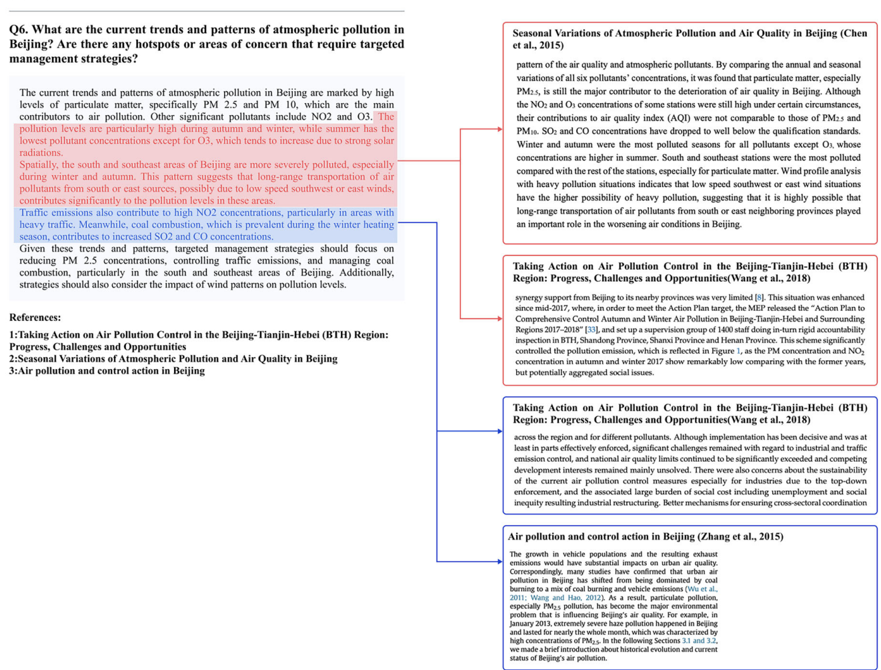
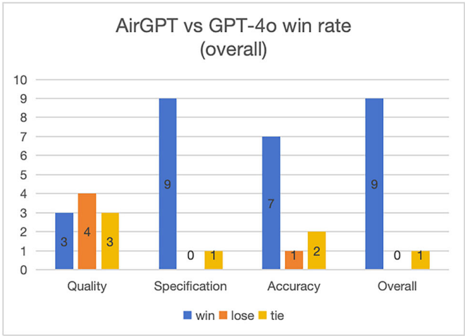
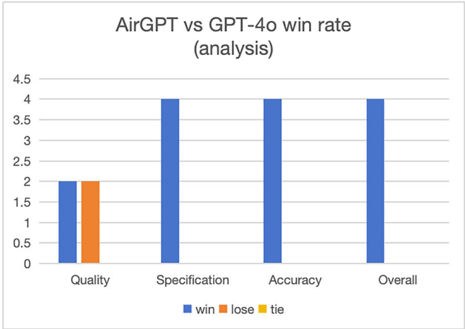
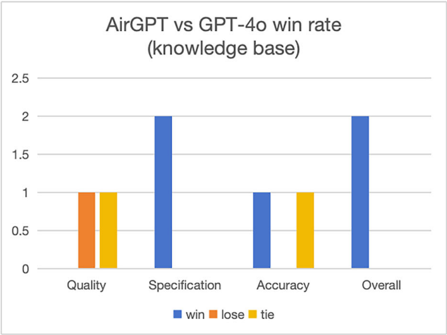
Large language models (LLMs) face significant limitations in specialized scientific domains due to their inability to perform data analysis and their tendency to generate inaccurate information. This challenge is particularly critical in air quality management, where precise analysis is essential for addressing climate change and pollution control initiatives. To bridge this gap, we present AirGPT, a computational framework that integrates conversational AI with atmospheric science expertise through a curated corpus of peer-reviewed literature and specialized data analysis capabilities. Through a novel architecture combining natural language processing and domain-specific analytical tools, AirGPT achieved higher accuracy in air quality assessments compared to standard LLMs, including GPT-4o. Experimental results demonstrate superior capabilities in providing accurate regulatory information, performing fundamental data analysis, and generating location-specific management recommendations, as validated through case studies in metropolitan areas such as Beijing.
Overview
The claims and statistics of this paper haven’t been checked yet.
Free: it reads the open-access text and checks the first 5 claims that cite a source we can check. Create a free account to check every claim.
Integrity signals
Registry
Cites
Statistics
Figures
Verification
Claims the paper makes
The claims and statistics of this paper haven’t been checked yet.
Free: it reads the open-access text and checks the first 5 claims that cite a source we can check. Create a free account to check every claim.
Claims other papers make about this one
Each is checked against this paper’s own text: does it say what the citing paper says it does?
The check wasn’t confident either way, so it gives no verdict — never disputed.
In the citing paper
“However, despite these advancements, a critical barrier to the widespread adoption of AI in healthcare is the lack of transparency and interpretability in model decision-making processes [7,8].”
From Explainable AI in Clinical Decision Support Systems: A Meta-Analysis of Methods, Applications, and Usability Challenges (2025) · cites this paper as [8]
Experimental — accuracy not yet measured
Self-check
Percentages, sums and reported differences re-computed from the paper’s own numbers.
The self-check needs the paper’s full text.
Citations
Cites
On the Dangers of Stochastic Parrots: Can Language Models Be Too Big? 🦜
Bender, E. M., Gebru, T., McMillan-Major, A., & Shmitchell, S. (2021) · Proceedings of the 2021 ACM Conference on Fairness, Accountability, and Transparency · doi:10.1145/3442188.3445922 · Cited by 6,988
Survey of Hallucination in Natural Language Generation
Ji, Z., Lee, N., Frieske, R., Yu, T., Su, D., Xu, Y., Ishii, E., Bang, Y. J., Madotto, A., & Fung, P. (2023) · ACM Computing Surveys · doi:10.1145/3571730 · Cited by 5,025
Survey of Hallucination in Natural Language Generation
Ji, Z., Lee, N., Frieske, R., Yu, T., Su, D., Xu, Y., Ishii, E., Bang, Y., Chen, D., Dai, W., et al. (2022) · arXiv · doi:10.48550/arxiv.2202.03629 · Cited by 4,981
Training language models to follow instructions with human feedback
Ouyang, L., Wu, J., Jiang, X., Almeida, D., Wainwright, C. L., Mishkin, P., Zhang, C., Agarwal, S., Slama, K., Ray, A., et al. (2022) · arXiv · doi:10.48550/arxiv.2203.02155 · Cited by 4,208
BAİDOO-ANU, D., & OWUSU ANSAH, L. (2023) · Journal of AI · doi:10.61969/jai.1337500 · Cited by 3,939
Sallam, M. (2023) · Healthcare · doi:10.3390/healthcare11060887 · Cited by 3,126
Baidoo-Anu, D., & Owusu Ansah, L. (2023) · doi:10.2139/ssrn.4337484 · Cited by 3,004
Toward expert-level medical question answering with large language models
Singhal, K., Tu, T., Gottweis, J., Sayres, R., Wulczyn, E., Amin, M., Hou, L., Clark, K., Pfohl, S. R., Cole-Lewis, H., et al. (2025) · Nature Medicine · doi:10.1038/s41591-024-03423-7 · Cited by 1,734 · cited 1×
“In the realm of personalized communication, LLMs have played a pivotal role in customized learning by facilitating adaptive assessments and content recommendations 13 – 16 .”
Exploiting Cloze-Questions for Few-Shot Text Classification and Natural Language Inference
Schick, T., & Schütze, H. (2021) · Proceedings of the 16th Conference of the European Chapter of the Association for Computational Linguistics: Main Volume · doi:10.18653/v1/2021.eacl-main.20 · Cited by 1,305
Art and the science of generative AI
Epstein, Z., Hertzmann, A., the Investigators of Human Creativity, Akten, M., Farid, H., Fjeld, J., Frank, M. R., Groh, M., Herman, L., Leach, N., et al. (2023) · Science · doi:10.1126/science.adh4451 · Cited by 788
Huang, J., Pan, X., Guo, X., & Li, G. (2018) · The Lancet Planetary Health · doi:10.1016/s2542-5196(18)30141-4 · Cited by 701
Air pollution and control action in Beijing
Zhang, H., Wang, S., Hao, J., Wang, X., Wang, S., Chai, F., & Li, M. (2016) · Journal of Cleaner Production · doi:10.1016/j.jclepro.2015.04.092 · Cited by 410
AI and the transformation of social science research
Grossmann, I., Feinberg, M., Parker, D. C., Christakis, N. A., Tetlock, P. E., & Cunningham, W. A. (2023) · Science · doi:10.1126/science.adi1778 · Cited by 377 · cited 2×
“LLMs have found widespread adoptionin fi eldssuchas fi nanceandsocialscienceanalytics,wheretheyare employedtoextractinformationandinformdecision-makingprocesses 5,9,10 .”
The effect of air pollution on mortality in China: Evidence from the 2008 Beijing Olympic Games
He, G., Fan, M., & Zhou, M. (2016) · Journal of Environmental Economics and Management · doi:10.1016/j.jeem.2016.04.004 · Cited by 373
In bot we trust: A new methodology of chatbot performance measures
Przegalinska, A., Ciechanowski, L., Stroz, A., Gloor, P., & Mazurek, G. (2019) · Business Horizons · doi:10.1016/j.bushor.2019.08.005 · Cited by 344
Towards Expert-Level Medical Question Answering with Large Language Models
Singhal, K., Tu, T., Gottweis, J., Sayres, R., Wulczyn, E., Hou, L., Clark, K., Pfohl, S., Cole-Lewis, H., Neal, D., et al. (2023) · arXiv · doi:10.48550/arxiv.2305.09617 · Cited by 338
Kim, Y.-S. G. (2020) · Journal of Educational Psychology · doi:10.1037/edu0000407 · Cited by 220
Systematic analysis of ChatGPT, Google search and Llama 2 for clinical decision support tasks
Sandmann, S., Riepenhausen, S., Plagwitz, L., & Varghese, J. (2024) · Nature Communications · doi:10.1038/s41467-024-46411-8 · Cited by 212 · cited 1×
“These challenges are primarily due to their lack of the latest specialized knowledge, their limited capacity to process complex data types, and their inclination to produce factually incorrectinformation 6 – 8 .”
A Bibliometric Review of Large Language Models Research from 2017 to 2023
Fan, L., Li, L., Ma, Z., Lee, S., Yu, H., & Hemphill, L. (2024) · ACM Transactions on Intelligent Systems and Technology · doi:10.1145/3664930 · Cited by 196 · cited 1×
“LLMs have found widespread adoptionin fi eldssuchas fi nanceandsocialscienceanalytics,wheretheyare employedtoextractinformationandinformdecision-makingprocesses 5,9,10 .”
XuanYuan 2.0: A Large Chinese Financial Chat Model with Hundreds of Billions Parameters
Zhang, X., Yang, Q., & Xu, D.-L. (2023) · International Conference on Information and Knowledge Management · doi:10.1145/3583780.3615285 · Cited by 181
LLM-based agentic systems in medicine and healthcare
Qiu, J., Lam, K., Li, G., Acharya, A., Wong, T. Y., Darzi, A., Yuan, W., & Topol, E. J. (2024) · Nature Machine Intelligence · doi:10.1038/s42256-024-00944-1 · Cited by 168 · cited 1×
“Moreover, the integration of LLMs with other computational agents has been investigated in diverse areas 1,7,11,12 .”
Wang, L., Zhang, F., Pilot, E., Yu, J., Nie, C., Holdaway, J., Yang, L., Li, Y., Wang, W., Vardoulakis, S., et al. (2018) · International Journal of Environmental Research and Public Health · doi:10.3390/ijerph15020306 · Cited by 161
TrafficGPT: Viewing, processing and interacting with traffic foundation models
Zhang, S., Fu, D., Liang, W., Zhang, Z., Yu, B., Cai, P., & Yao, B. (2024) · Transport Policy · doi:10.1016/j.tranpol.2024.03.006 · Cited by 160
Sun, L., Zhang, T., Liu, S., Wang, K., Rogers, T., Yao, L., & Zhao, P. (2021) · Journal of Cleaner Production · doi:10.1016/j.jclepro.2020.125339 · Cited by 146
ChatClimate: Grounding conversational AI in climate science
Vaghefi, S. A., Stammbach, D., Muccione, V., Bingler, J., Ni, J., Kraus, M., Allen, S., Colesanti-Senni, C., Wekhof, T., Schimanski, T., et al. (2023) · Communications Earth & Environment · doi:10.1038/s43247-023-01084-x · Cited by 135
Estimation of Citywide Air Pollution in Beijing
Wang, J.-F., Hu, M.-G., Xu, C.-D., Christakos, G., & Zhao, Y. (2013) · PLoS ONE · doi:10.1371/journal.pone.0053400 · Cited by 126
OceanGPT: A Large Language Model for Ocean Science TasksPreprint
Bi, Z., Zhang, N.-Y., Xue, Y.-D., Ou, Y., Ji, D., Zheng, G.-Z., & Chen, H.-J. (2023) · Annual Meeting of the Association for Computational Linguistics · doi:10.48550/arxiv.2310.02031 · Cited by 123
Wu, D., Xu, Y., & Zhang, S. (2014) · Journal of Environmental Management · doi:10.1016/j.jenvman.2014.09.032 · Cited by 112
Taloni, A., Borselli, M., Scarsi, V., Rossi, C., Coco, G., Scorcia, V., & Giannaccare, G. (2023) · Scientific Reports · doi:10.1038/s41598-023-45837-2 · Cited by 104
LLM as a System Service on Mobile DevicesPreprint
Yin, W., Xu, M., Li, Y., & Liu, X. (2024) · arXiv (Cornell University) · doi:10.48550/arxiv.2403.11805 · Cited by 101 · cited 1×
“Moreover, the integration of LLMs with other computational agents has been investigated in diverse areas 1,7,11,12 .”
Wang, X., Fu, T., Zhang, L., Cao, H., Zhang, Q., Ma, H., Shen, L., Evans, M. J., Ivatt, P. D., Lu, X. H., et al. (2021) · Environmental Science & Technology · doi:10.1021/acs.est.1c00131 · Cited by 98
Identifying the main contributors of air pollution in Beijing
Li, S., Feng, K., & Li, M. (2015) · Journal of Cleaner Production · doi:10.1016/j.jclepro.2015.10.127 · Cited by 91
LLM-driven multimodal target volume contouring in radiation oncology
Oh, Y., Park, S., Byun, H. K., Cho, Y., Lee, I. J., Kim, J. S., & Ye, J. C. (2024) · Nature Communications · doi:10.1038/s41467-024-53387-y · Cited by 81
Zhong, S., Yu, Z., & Zhu, W. (2019) · International Journal of Environmental Research and Public Health · doi:10.3390/ijerph16061014 · Cited by 71
Seasonal Variations of Atmospheric Pollution and Air Quality in Beijing
Chen, W., Yan, L., & Zhao, H. (2015) · Atmosphere · doi:10.3390/atmos6111753 · Cited by 65
Li, Y., Huang, S., Yin, C., Sun, G., & Chang, G. (2020) · Journal of Cleaner Production · doi:10.1016/j.jclepro.2020.120072 · Cited by 55
Xu, M., Grant‐Muller, S., & Gao, Z. (2017) · Case Studies on Transport Policy · doi:10.1016/j.cstp.2017.09.002 · Cited by 21
MINT: Evaluating LLMs in Multi-turn Interaction with Tools and Language Feedback
Wang, X., Wang, Z., Liu, J., Chen, Y., Yuan, L., Peng, H., & Ji, H. (2023) · arXiv · doi:10.48550/arxiv.2309.10691 · Cited by 18 · cited 2×
“Following the methodology proposed by Wang et al. (2023) 21 , our evaluation framework relies on three key indicators: Thestudycategorizedquestionsinto fi vedif fi cultylevels:low(1),medium(2),andhigh(3).”
Lawson, J. R., Trujillo-Falcón, J. E., Schultz, D. M., Flora, M. L., Goebbert, K. H., Lyman, S. N., Potvin, C. K., & Stepanek, A. J. (2025) · Artificial Intelligence for the Earth Systems · doi:10.1175/aies-d-24-0029.1 · Cited by 12
Zhou, L., & Chen, W. (2019) · Journal of Cleaner Production · doi:10.1016/j.jclepro.2019.01.082 · Cited by 9
Lawson, J. R., Trujillo-Falcón, J. E., Schultz, D. M., et al. (2024) · Artificial Intelligence for the Earth Systems · doi:10.48550/arxiv.2404.15166 · Cited by 7 · cited 1×
“…capacity to interpret meteorological charts and communicate weather hazards through prompt engineering and the incorporation of reliable information, demonstrating the potential of LLMs in weather-chart analysis and the generation of weather hazard reports using natural language communication 18 .”
Research works printed but not linked: 1
- 2. Devlin, J., Chang, M.-W., Lee, K. & Toutanova, K. Bert: pre-training of deep bidirectional transformers for language understanding. arXiv preprint arXiv:1810.04805 (2019). · arXiv
Cited by
Abbas, Q., Jeong, W., & Lee, S. W. (2025) · Healthcare · doi:10.3390/healthcare13172154 · Cited by 236
“However, despite these advancements, a critical barrier to the widespread adoption of AI in healthcare is the lack of transparency and interpretability in model decision-making processes [7,8].”
AI-Driven Digital Twins in Industrialized Offsite Construction: A Systematic Review
Najafzadeh, M., & Yeganeh, A. J. (2025) · Buildings · doi:10.3390/buildings15172997 · Cited by 54
Gacu, J. G., Monjardin, C. E. F., Mangulabnan, R. G. T., & Mendez, J. C. F. (2025) · Water · doi:10.3390/w17182722 · Cited by 47
Khan, D., Khan, N., & Ullah, S. (2025) · Environment Development and Sustainability · doi:10.1007/s10668-025-06860-7 · Cited by 37
Eyvazian, A., Song, Y., Chibukhchyan, H. S., Savari, A., & Singh, N. S. S. (2025) · Engineering Science and Technology an International Journal · doi:10.1016/j.jestch.2025.102264 · Cited by 21
Metadata
- Authors
- Song, J., Ma, C., & Ran, M.
- Affiliations
- Hong Kong Baptist University (HK)
- Corresponding author
- Song, Jun
- ORCID
- Song, Jun
- Venue
- npj Climate and Atmospheric Science
- Published
- 2025-05-13
- Volume
- 8
- Issue
- 1
- ISSN
- 2397-3722 (ISSN-L)
- OpenAlex
- W4410340819
- Semantic Scholar
- 4d8e1c266002a8b8fa451fadedd6ce99e2c81df7
- Cited by
- 48
- References
- 35
- Citations by year
- 2026: 14 · 2025: 34
- FWCI
- 19.18
- Type
- journal article
- Language
- en
- Open access
- gold
- doi.org
- Licence
- cc-by-nc-nd
- creativecommons.org/licenses/by-nc-nd/4.0 (tdm)
- creativecommons.org/licenses/by-nc-nd/4.0 (vor)
- Locations
- npj Climate and Atmospheric Science (publishedVersion, cc-by-nc-nd)
- DOAJ (DOAJ: Directory of Open Access Journals) (submittedVersion, cc-by-sa)
- Funders
- Hong Kong Baptist University
- Topics
- Physical Sciences › Computer Science › Artificial Intelligence › Artificial Intelligence Applications
- Physical Sciences › Environmental Science › Environmental Engineering › Air Quality Monitoring and Forecasting
- Physical Sciences › Computer Science › Artificial Intelligence › Topic Modeling
- Keywords
- large language models, conversational AI, atmospheric science, air quality assessment, air quality management, air pollution control, Beijing
About these checks
Registry, retraction, Cites and statistics results are computed, not judged, with one exception: a printed reference that no index lists is read once by a model before it counts as a citation error. Claims are extracted by a model and kept only when their quote appears verbatim in the text; each cited source is then checked, with a model’s help, for whether it says what the claim relies on. Those verdicts can be wrong — read the claim’s quote and the cited source before relying on one.
Statistics and arithmetic are recomputed, not judged.
Confidence bands are shown only for fields calibrated on our annotated test set. None is calibrated yet, so no band is shown.
What counts as a claim ›How we measure confidence ›How we check this ›
Are you an author, or do you see a problem with this page? Request a review
Data sources
Bibliographic data: Semantic Scholar, OpenAlex, Crossref.
Contains information from the Semantic Scholar Academic Graph Datasets, made available under the ODC Attribution License (ODC-BY 1.0).
Semantic Scholar’s data is described in: Kinney, R., et al. (2023). The Semantic Scholar Open Data Platform. arXiv:2301.10140.
