

Developing and adopting safe and effective digital biomarkers to improve patient outcomes
Open accessThe DOI matches its Crossref record; 22 of the 22 references it cites were found in a registry or an index.
Abstract
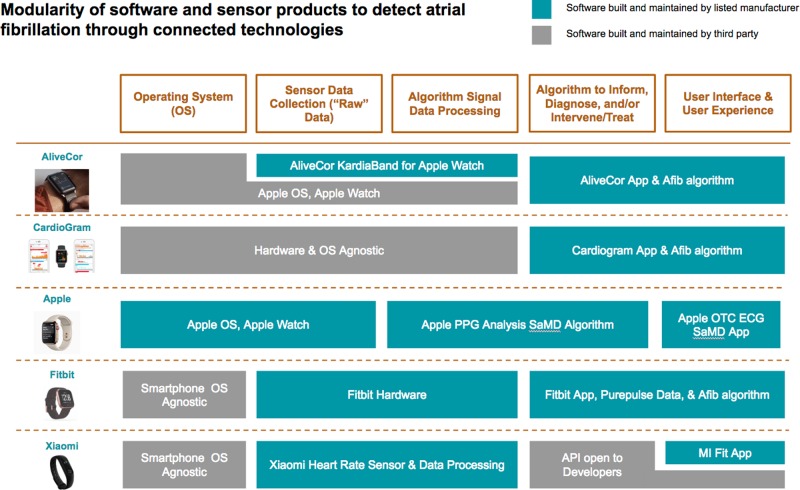
Biomarkers are physiologic, pathologic, or anatomic characteristics that are objectively measured and evaluated as an indicator of normal biologic processes, pathologic processes, or biological responses to therapeutic interventions. Recent advances in the development of mobile digitally connected technologies have led to the emergence of a new class of biomarkers measured across multiple layers of hardware and software. Quantified in ones and zeros, these “digital” biomarkers can support continuous measurements outside the physical confines of the clinical environment. The modular software–hardware combination of these products has created new opportunities for patient care and biomedical research, enabling remote monitoring and decentralized clinical trial designs. However, a systematic approach to assessing the quality and utility of digital biomarkers to ensure an appropriate balance between their safety and effectiveness is needed. This paper outlines key considerations for the development and evaluation of digital biomarkers, examining their role in clinical research and routine patient care.
Overview
The claims and statistics of this paper haven’t been checked yet.
Free: it reads the open-access text and checks the first 5 claims that cite a source we can check. Create a free account to check every claim.
Integrity signals
Registry
Cites
Statistics
Figures
Verification
Claims the paper makes
The claims and statistics of this paper haven’t been checked yet.
Free: it reads the open-access text and checks the first 5 claims that cite a source we can check. Create a free account to check every claim.
Claims other papers make about this one
Each is checked against this paper’s own text: does it say what the citing paper says it does?
In the citing paper
“Digital biomarkers are physiological, psychological and behavioral indicators based on data including human-computer interaction (e.g. swipes, taps, and typing), physical activity (e.g. gait, dexterity) and voice variations, collected by portable, wearable, implantable or even ingestible devices42.”
From Sex and gender differences and biases in artificial intelligence for biomedicine and healthcare (2020) · cites this paper as [42]
In the citing paper
“There are many digital biomarkers that are currently being developed or already approved or cleared by the U.S. Food and Drug Administration (FDA) for use cases such as risk detection, diagnosis, and monitoring of symptoms and endpoints in clinical trials42”
From Sex and gender differences and biases in artificial intelligence for biomedicine and healthcare (2020) · cites this paper as [42]
Self-check
Percentages, sums and reported differences re-computed from the paper’s own numbers.
The self-check needs the paper’s full text.
Citations
Cites
Cardiologist-Level Arrhythmia Detection with Convolutional Neural Networks
Rajpurkar, P., Hannun, A., Haghpanahi, M., Bourn, C., & Ng, A. Y. (2017) · arXiv (Cornell University) · doi:10.48550/arxiv.1707.01836 · Cited by 595 · cited 1×
“[*] Detect arrhythmias using convolutional neural networks and a wearable single-lead heart monitor.(22)”
MethodHalcox, J. P. J., Wareham, K., Cardew, A., Gilmore, M., Barry, J. P., Phillips, C., & Gravenor, M. B. (2017) · Circulation · doi:10.1161/circulationaha.117.030583 · Cited by 580
Zhan, A., Mohan, S., Tarolli, C., Schneider, R. B., Adams, J. L., Sharma, S., Elson, M. J., Spear, K. L., Glidden, A. M., Little, M. A., et al. (2018) · JAMA Neurology · doi:10.1001/jamaneurol.2018.0809 · Cited by 381
EEG Analytics for Early Detection of Autism Spectrum Disorder: A data-driven approach
Bosl, W. J., Tager-Flusberg, H., & Nelson, C. A. (2018) · Scientific Reports · doi:10.1038/s41598-018-24318-x · Cited by 381
Torous, J., Onnela, J.-P., & Keshavan, M. (2017) · Translational Psychiatry · doi:10.1038/tp.2017.25 · Cited by 347 · cited 1×
“New frameworks are emerging around the security,(14) ethics,(13) and informed consent challenges,(15) of digital phenotyping technologies.(16) One approach—a promising one for tracking security vulnerabilities and issues of performance, transparency, and accuracy—would require software manufacturers to provide, in pre…”
BackgroundWearable devices in clinical trials: hype and hypothesis
Izmailova, E. S., Wagner, J. A., & Perakslis, E. D. (2018) · Clinical Pharmacology & Therapeutics · doi:10.1002/cpt.966 · Cited by 265
Data mining for health: staking out the ethical territory of digital phenotyping
Martinez-Martin, N., Insel, T. R., Dagum, P., Greely, H. T., & Cho, M. K. (2018) · npj Digital Medicine · doi:10.1038/s41746-018-0075-8 · Cited by 218 · cited 1×
“While healthcare delivery organizations using digital biomarkers are of course Health Insurance Portability and Accountability Act (HIPAA) covered entities, when citizens engage directly with the technologies or technology companies, HIPAA does not apply.(13) Social media and targeted advertising platforms typically e…”
BackgroundFDA Regulation of Mobile Medical Apps
Shuren, J., Patel, B., & Gottlieb, S. (2018) · JAMA · doi:10.1001/jama.2018.8832 · Cited by 155
Gold, M., Amatniek, J., Carrillo, M. C., Cedarbaum, J. M., Hendrix, J. A., Miller, B. B., Robillard, J. M., Rice, J. J., Soares, H., Tome, M. B., et al. (2018) · Alzheimer's & Dementia: Translational Research & Clinical Interventions · doi:10.1016/j.trci.2018.04.003 · Cited by 143
Ritchie, K., Carrière, I., Su, L., O'Brien, J. T., Lovestone, S., Wells, K., & Ritchie, C. W. (2017) · Alzheimer's & Dementia · doi:10.1016/j.jalz.2017.02.008 · Cited by 105
The 21st Century Cures Act — A View from the NIH
Hudson, K. L., & Collins, F. S. (2017) · New England Journal of Medicine · doi:10.1056/nejmp1615745 · Cited by 104
Dowling, A. V., Favre, J., & Andriacchi, T. P. (2012) · The American Journal of Sports Medicine · doi:10.1177/0363546512437529 · Cited by 80
Byrom, B., Watson, C., Doll, H., Coons, S. J., Eremenco, S., Ballinger, R., Mc Carthy, M., Crescioni, M., O’Donohoe, P., & Howry, C. (2018) · Value in Health · doi:10.1016/j.jval.2017.09.012 · Cited by 79
Effect of a mobile health, sensor-driven asthma management platform on asthma control
Barrett, M., Humblet, O., Marcus, J. E., Henderson, K., Smith, T., Eid, N. S., Sublett, J. W., Renda, A. M., Nesbitt, L., Sickle, D. V., et al. (2017) · Annals of Allergy Asthma & Immunology · doi:10.1016/j.anai.2017.08.002 · Cited by 72 · cited 1×
“[**] Track time and location of short-acting beta-agonist inhaler use using an attached wireless sensor.(26)”
BackgroundMoreau, A., Anderer, P., Ross, M., Cerny, A., Almazan, T. H., & Peterson, B. (2018) · IEEE Journal of Biomedical and Health Informatics · doi:10.1109/jbhi.2017.2710798 · Cited by 53
Clinical Validation of Eye Vergence as an Objective Marker for Diagnosis of ADHD in Children
Varela Casal, P., Lorena Esposito, F., Morata Martínez, I., Capdevila, A., Solé Puig, M., de la Osa, N., Ezpeleta, L., Perera i Lluna, A., Faraone, S. V., Ramos-Quiroga, J. A., et al. (2019) · Journal of Attention Disorders · doi:10.1177/1087054717749931 · Cited by 52
The year of transition from research to clinical practice
Kovatchev, B. (2018) · Nature Reviews Endocrinology · doi:10.1038/nrendo.2017.170 · Cited by 48
Steinhubl, S. R., McGovern, P. E., Dylan, J., & Topol, E. J. (2017) · The Lancet · doi:10.1016/s0140-6736(17)32741-1 · Cited by 28
KACHOYEANOS, M. K. (1996) · MCN The American Journal of Maternal/Child Nursing · doi:10.1097/00005721-199607000-00027 · Cited by 11
[P3–200]: PREDICTING SLEEP/WAKE PATTERNS FROM 3‐AXIS ACCELEROMETRY USING DEEP LEARNING
Wolz, R., Munro, J., Guerrero, R., Hill, D., & Dauvilliers, Y. A. (2017) · Alzheimer s & Dementia · doi:10.1016/j.jalz.2017.06.1412 · Cited by 9
Speaking one's mind: Vocal biomarkers of depression and Parkinson disease
Ghosh, S., Ciccarelli, G. A., Quatieri, T. F., & Klein, A. (2016) · The Journal of the Acoustical Society of America · doi:10.1121/1.4950530 · Cited by 6
Validation of the Omron HEM-9210T by the ANSI/AAMI/ISO 81060-2 with two novel cuffs
Padwal, R. S. (2017) · Blood Pressure Monitoring · doi:10.1097/mbp.0000000000000295 · Cited by 4
Cited by
Precision medicine, AI, and the future of personalized health care
Johnson, K. B., Wei, W., Weeraratne, D., Frisse, M. E., Misulis, K., Rhee, K., Zhao, J., & Snowdon, J. L. (2021) · Clinical and Translational Science · doi:10.1111/cts.12884 · Cited by 1,854
“93 Wearable tools that provide continuous multidimensional measurements of preselected biomarkers would enable the detection of minimum residual disease and monitor disease progression.”
BackgroundSources of bias in artificial intelligence that perpetuate healthcare disparities—A global review
Celi, L. A., Cellini, J., Charpignon, M.-L., Dee, E. C., Dernoncourt, F., Eber, R., Mitchell, W. G., Moukheiber, L., Schirmer, J., Situ, J., et al. (2022) · PLOS Digital Health · doi:10.1371/journal.pdig.0000022 · Cited by 576
Sex and gender differences and biases in artificial intelligence for biomedicine and healthcare
Cirillo, D., Catuara-Solarz, S., Morey, C., Guney, E., Subirats, L., Mellino, S., Gigante, A., Valencia, A., Rementeria, M. J., Chadha, A. S., et al. (2020) · npj Digital Medicine · doi:10.1038/s41746-020-0288-5 · Cited by 553
Sim, I. (2019) · New England Journal of Medicine · doi:10.1056/nejmra1806949 · Cited by 491
Trull, T. J., & Ebner-Priemer, U. W. (2020) · Journal of Abnormal Psychology · doi:10.1037/abn0000473 · Cited by 344
Metadata
- Authors
- Coravos, A., Khozin, S., & Mandl, K. D.
- Affiliations
- Boston Children's Hospital (US)
- United States Food and Drug Administration (US)
- Corresponding author
- Mandl, Kenneth D.
- Venue
- npj Digital Medicine
- Published
- 2019-03-11
- Volume
- 2
- Issue
- 1
- ISSN
- 2398-6352 (ISSN-L)
- PMC
- PMC6411051
- OpenAlex
- W2921623465
- Cited by
- 361
- References
- 20
- Citations by year
- 2026: 68 · 2025: 50 · 2024: 42 · 2023: 44 · 2022: 42 · 2021: 47 · 2020: 56 · 2019: 12
- FWCI
- 53.48
- Type
- journal article
- Language
- en
- Update notices
- correction (2019-05-10)
- Open access
- gold
- doi.org
- Licence
- cc-by
- creativecommons.org/licenses/by/4.0 (tdm)
- creativecommons.org/licenses/by/4.0 (vor)
- Locations
- npj Digital Medicine (publishedVersion, cc-by)
- Europe PMC (PubMed Central) (publishedVersion, other-oa)
- PubMed Central (publishedVersion, cc-by)
- PubMed (publishedVersion)
- DOAJ (DOAJ: Directory of Open Access Journals) (submittedVersion)
- Funders
- U.S. Department of Health & Human Services | National Institutes of Health (R01GM104303)
- Boston Children's Hospital, PrecisionLink Initiative
- Topics
- Health Sciences › Health Professions › General Health Professions › Mobile Health and mHealth Applications
- Health Sciences › Medicine › Surgery › Healthcare Technology and Patient Monitoring
- Social Sciences › Psychology › Applied Psychology › Digital Mental Health Interventions
- Keywords
- digital biomarkers, mobile health technology, remote patient monitoring, decentralized clinical trials, biomarker validation, safety and effectiveness, clinical research, patient care, wearable devices
About these checks
Registry, retraction, Cites and statistics results are computed, not judged, with one exception: a printed reference that no index lists is read once by a model before it counts as a citation error. Claims are extracted by a model and kept only when their quote appears verbatim in the text; each cited source is then checked, with a model’s help, for whether it says what the claim relies on. Those verdicts can be wrong — read the claim’s quote and the cited source before relying on one.
Statistics and arithmetic are recomputed, not judged.
Confidence bands are shown only for fields calibrated on our annotated test set. None is calibrated yet, so no band is shown.
What counts as a claim ›How we measure confidence ›How we check this ›
Are you an author, or do you see a problem with this page? Request a review
Data sources
Bibliographic data: Semantic Scholar, OpenAlex, Crossref.
Contains information from the Semantic Scholar Academic Graph Datasets, made available under the ODC Attribution License (ODC-BY 1.0).
Semantic Scholar’s data is described in: Kinney, R., et al. (2023). The Semantic Scholar Open Data Platform. arXiv:2301.10140.
