

Detecting the impact of subject characteristics on machine learning-based diagnostic applications
Open accessThe DOI matches its Crossref record; 27 of the 27 references it cites were found in a registry or an index.
Abstract
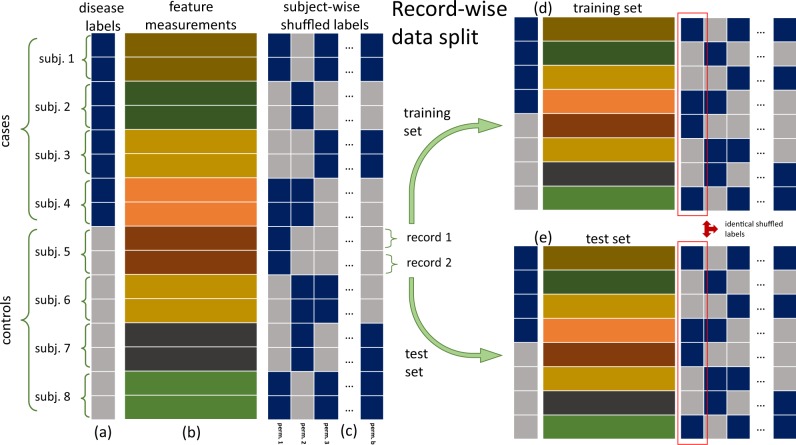
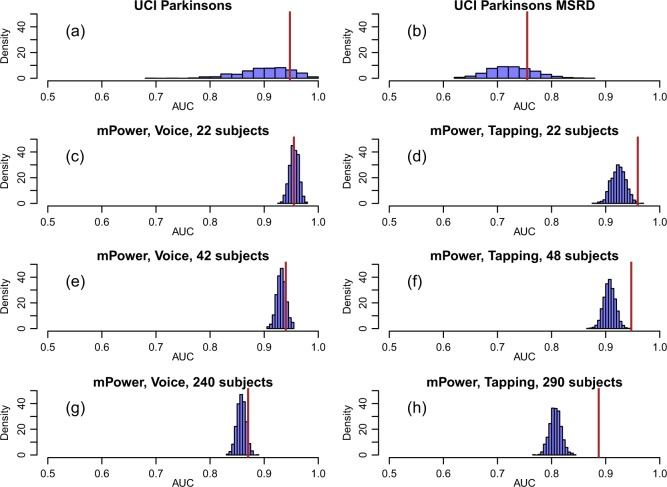
Collection of high-dimensional, longitudinal digital health data has the potential to support a wide-variety of research and clinical applications including diagnostics and longitudinal health tracking. Algorithms that process these data and inform digital diagnostics are typically developed using training and test sets generated from multiple repeated measures collected across a set of individuals. However, the inclusion of repeated measurements is not always appropriately taken into account in the analytical evaluations of predictive performance. The assignment of repeated measurements from each individual to both the training and the test sets ("record-wise" data split) is a common practice and can lead to massive underestimation of the prediction error due to the presence of "identity confounding." In essence, these models learn to identify subjects, in addition to diagnostic signal. Here, we present a method that can be used to effectively calculate the amount of identity confounding learned by classifiers developed using a record-wise data split. By applying this method to several real datasets, we demonstrate that identity confounding is a serious issue in digital health studies and that record-wise data splits for machine learning- based applications need to be avoided.
Overview
The claims and statistics of this paper haven’t been checked yet.
Free: it reads the open-access text and checks the first 5 claims that cite a source we can check. Create a free account to check every claim.
Integrity signals
Registry
Cites
Statistics
Figures
Verification
Claims the paper makes
The claims and statistics of this paper haven’t been checked yet.
Free: it reads the open-access text and checks the first 5 claims that cite a source we can check. Create a free account to check every claim.
Claims other papers make about this one
Each is checked against this paper’s own text: does it say what the citing paper says it does?
The cited source says what the claim attributes to it.
In the citing paper
“Furthermore, data leakage due to identity confounding is not limited to deep neural networks, and has been uncovered using random forests (Saeb et al., 2017; Chaibub Neto et al., 2019; Tougui et al., 2021) and support vector machines (Tougui et al., 2021).”
From Data leakage in deep learning studies of translational EEG (2024) · cites this paper as Chaibub Neto et al., 2019
The cited source says what the claim attributes to it.
In the citing paper
“This conclusion mirrors results from studies examining a variety of other types of data and classifier models (Saeb et al., 2017; Wen et al., 2018, 2020; Chaibub Neto et al., 2019; Tougui et al., 2021; Tampu et al., 2022).”
From Data leakage in deep learning studies of translational EEG (2024) · cites this paper as Chaibub Neto et al., 2019
Self-check
Percentages, sums and reported differences re-computed from the paper’s own numbers.
The self-check needs the paper’s full text.
Citations
Cites
Breiman, L. (2001) · Machine Learning · doi:10.1023/a:1010933404324 · Cited by 133,538
Classification and Regression by randomForest
Liaw, A. I., & Wiener, M. C. (2007) · Cited by 18,594
pROC: an open-source package for R and S+ to analyze and compare ROC curves
Robin, X., Turck, N., Hainard, A., Tiberti, N., Lisacek, F., Sanchez, J.-C., & Müller, M. (2011) · BMC Bioinformatics · doi:10.1186/1471-2105-12-77 · Cited by 13,697
MatchIt : Nonparametric Preprocessing for Parametric Causal Inference
Ho, D. E., Imai, K., King, G., & Stuart, E. A. (2011) · Journal of Statistical Software · doi:10.18637/jss.v042.i08 · Cited by 4,385
Permutation Tests: A Practical Guide to Resampling Methods for Testing Hypotheses
Niknian, M. (1995) · Technometrics · doi:10.1080/00401706.1995.10484341 · Cited by 1,462
Suitability of dysphonia measurements for telemonitoring of Parkinson’s disease
Little, M., McSharry, P., Hunter, E., Spielman, J., & Ramig, L. (2008) · Nature Precedings · doi:10.1038/npre.2008.2298.1 · Cited by 1,188
Collection and Analysis of a Parkinson Speech Dataset With Multiple Types of Sound Recordings
Sakar, B. E., Isenkul, M. E., Sakar, C. O., Sertbas, A., Gurgen, F., Delil, S., Apaydin, H., & Kursun, O. (2013) · IEEE Journal of Biomedical and Health Informatics · doi:10.1109/jbhi.2013.2245674 · Cited by 703
The mPower study, Parkinson disease mobile data collected using ResearchKit
Bot, B. M., Suver, C., Neto, E. C., Kellen, M., Klein, A., Bare, C., Doerr, M., Pratap, A., Wilbanks, J., Dorsey, E. R., et al. (2016) · Scientific Data · doi:10.1038/sdata.2016.11 · Cited by 630
Good, P. (2000) · Springer Series in Statistics · doi:10.1007/978-1-4757-3235-1 · Cited by 573
Digital biomarkers for Alzheimer’s disease: the mobile/wearable devices opportunity
Kourtis, L. C., Regele, O. B., Wright, J. M., & Jones, G. B. (2019) · npj Digital Medicine · doi:10.1038/s41746-019-0084-2 · Cited by 476
Cited by
Remote smartphone monitoring of Parkinson’s disease and individual response to therapy
Omberg, L., Neto, E. C., Perumal, T. M., Pratap, A., Tediarjo, A., Adams, J., Bloem, B. R., Bot, B. M., Elson, M. J., Goldman, S. M., et al. (2021) · Nature Biotechnology · doi:10.1038/s41587-021-00974-9 · Cited by 151
Data leakage in deep learning studies of translational EEG
Brookshire, G., Kasper, J., Blauch, N. M., Wu, Y. C., Glatt, R., Merrill, D. A., Gerrol, S., Yoder, K. J., Quirk, C., & Lucero, C. (2024) · Frontiers in Neuroscience · doi:10.3389/fnins.2024.1373515 · Cited by 103
Alcantara, R. S., Edwards, W. B., Millet, G. Y., & Grabowski, A. M. (2022) · PeerJ · doi:10.7717/peerj.12752 · Cited by 83
An in-depth survey on Deep Learning-based Motor Imagery Electroencephalogram (EEG) classification
Wang, X., Liesaputra, V., Liu, Z., Wáng, Y., & Huang, Z. (2023) · Artificial Intelligence in Medicine · doi:10.1016/j.artmed.2023.102738 · Cited by 120
Machine Learning in the Parkinson’s disease smartwatch (PADS) dataset
Varghese, J., Brenner, A., Fujarski, M., van Alen, C. M., Plagwitz, L., & Warnecke, T. (2024) · npj Parkinson s Disease · doi:10.1038/s41531-023-00625-7 · Cited by 79
“As a result, no sub-time-series of one individual are mixed in training and testing, which could cause identity confounding 44 .”
BackgroundSieberts, S. K., Schaff, J., Duda, M., Pataki, B., Sun, M., Snyder, P., Daneault, J., Parisi, F., Costante, G., Rubin, U., et al. (2021) · npj Digital Medicine · doi:10.1038/s41746-021-00414-7 · Cited by 73
Gupta, A., Siddhad, G., Pandey, V. K., Roy, P. P., & Kim, B. (2021) · Sensors · doi:10.3390/s21206710 · Cited by 76
“However, it also gives rise to the issues of long collaboration sessions and collection of large quantities of data [38,39].”
BackgroundCastaldo, R., Cavaliere, C., Soricelli, A., Salvatore, M., Pecchia, L., & Franzese, M. (2021) · Journal of Medical Internet Research · doi:10.2196/22394 · Cited by 56
“…assessing the model performance; conversely, a lesion-based model could be defined as a model that is developed and assessed in a “record-wise” fashion, where each measurement or record contributes to both XSL • FO RenderX the training and test sets and when assessing the model performance [70].”
BackgroundCreagh, A. P., Simillion, C., Bourke, A. K., Scotland, A., Lipsmeier, F., Bernasconi, C., van Beek, J., Baker, M., Gossens, C., Lindemann, M., et al. (2020) · IEEE Journal of Biomedical and Health Informatics · doi:10.1109/jbhi.2020.2998187 · Cited by 53
“[53], using and real-world mobile data,”
BackgroundNicora, G., Pe, S., Santangelo, G., Billeci, L., Aprile, I. G., Germanotta, M., Bellazzi, R., Parimbelli, E., & Quaglini, S. (2025) · Journal of NeuroEngineering and Rehabilitation · doi:10.1186/s12984-025-01605-z · Cited by 77
Parsa, M. G., Rad, H. Y., Vaezi, H., Hossein‐Zadeh, G., Setarehdan, S. K., Rostami, R., Rostami, H., & Vahabie, A. (2023) · Computer Methods and Programs in Biomedicine · doi:10.1016/j.cmpb.2023.107683 · Cited by 49
Identifying the signature of prospective motor control in children with autism
Cavallo, A., Romeo, L., Ansuini, C., Battaglia, F. M., Nobili, L., Pontil, M., Panzeri, S., & Becchio, C. (2021) · Scientific Reports · doi:10.1038/s41598-021-82374-2 · Cited by 47
Haque, F., Reaz, M. B. I., Chowdhury, M. E. H., Ezeddin, M., Serkan Kiranyaz, B., Alhatou, M. I., Ali, S. H. M., Bakar, A. A. A., & Srivastava, G. (2022) · Sensors · doi:10.3390/s22093507 · Cited by 40
“Neto et al. [49] conducted a study by training different ML models using the various clinical datasets and showed a high degree of identity confounding for classifiers using record-wise data splits (splitting data into train and test set) and suggested the subject-wise data splits (where all records…”
Classification of Alpine Skiing Styles Using GNSS and Inertial Measurement Units
Neuwirth, C., Snyder, C., Kremser, W., Brunauer, R., Holzer, H., & STÖGGL, T. L. (2020) · Sensors · doi:10.3390/s20154232 · Cited by 42
Smartphone-Based Digital Biomarkers for Parkinson’s Disease in a Remotely-Administered Setting
Goñi, M., Eickhoff, S. B., Far, M. S., Patil, K. R., & Dukart, J. (2022) · IEEE Access · doi:10.1109/access.2022.3156659 · Cited by 37
Hurwitz, E. G., Butzin-Dozier, Z., Master, H., O’Neil, S. T., Walden, A., Holko, M., Patel, R. C., & Haendel, M. A. (2024) · JMIR mhealth and uhealth · doi:10.2196/54622 · Cited by 44
Design of a virtual longitudinal observational study in Parkinson’s disease (AT‐HOME PD)
Schneider, R. B., Omberg, L., Macklin, E. A., Daeschler, M., Bataille, L., Anthwal, S., Myers, T. L., Baloga, E., Duquette, S., Snyder, P., et al. (2020) · Annals of Clinical and Translational Neurology · doi:10.1002/acn3.51236 · Cited by 31
“The first version of the application was used by over 19,000 individuals with and without PD; the results of which have been previously published.(34-38) The application includes active tasks of motor function (finger tapping, rest tremor, gait and balance assessed using embedded sensors in the smartphone) and optiona…”
MethodDeng, K., Li, Y., Zhang, H., Wang, J., Albin, R. L., & Guan, Y. (2022) · Communications Biology · doi:10.1038/s42003-022-03002-x · Cited by 36
“Because each individual has multiple records, individual level, instead of record-level cross-validation was carried out in all analyses to prevent overestimation of the performance 23,24 .”
MethodVeetil, I. K., Chowdary, D. E., Chowdary, P. N., Sowmya, V., & Gopalakrishnan, E. A. (2024) · Digital Signal Processing · doi:10.1016/j.dsp.2024.104407 · Cited by 37
Altai, Z., Boukhennoufa, I., Zhai, X., Phillips, A., Moran, J., & Liew, B. X. W. (2023) · Frontiers in Bioengineering and Biotechnology · doi:10.3389/fbioe.2023.1215770 · Cited by 34
“, healthy and diseased subjects) based on voice measurements (Neto et al., 2019) and activity recognition (Saeb et al.”
BackgroundGielis, K., Abeele, M.-E. V., Verbert, K., Tournoy, J., Vos, M. D., & Abeele, V. V. (2021) · Digital Biomarkers · doi:10.1159/000514105 · Cited by 33
“To prevent data leakage due to identity confounding [25], rounds were split subject-wise instead of record-wise (i.e., all rounds of a participant were either all in the test set or the training set).”
Wu, C., Jin, L., Zhao, J., Wan, X., Jiang, T., & Ling, K. (2024) · Geoenergy Science and Engineering · doi:10.1016/j.geoen.2024.213216 · Cited by 29
Tougui, I., Zakroum, M., Karrakchou, O., & Ghogho, M. (2024) · Scientific Reports · doi:10.1038/s41598-024-81824-x · Cited by 34
García-Moreno, F. M., Bermúdez-Edo, M., Rodríguez-García, E., Pérez‐Mármol, J. M., Garrido, J. L. G., & Rodríguez‐Fórtiz, M. J. (2021) · International Journal of Medical Informatics · doi:10.1016/j.ijmedinf.2021.104625 · Cited by 34
Major, V. J., & Aphinyanaphongs, Y. (2020) · BMC Medical Informatics and Decision Making · doi:10.1186/s12911-020-01235-6 · Cited by 25
“Parameter selection was conducted within 5-fold cross validation by sampling patients (not admissions [20]) before retraining one model on the entire training set (eMethods).”
Ueno, T., Ichikawa, D., Shimizu, Y., Narisawa, T., Tsuji, K., Ochi, E., Sakurai, N., Iwata, H., & Matsuoka, Y. (2021) · Japanese Journal of Clinical Oncology · doi:10.1093/jjco/hyab169 · Cited by 26
“For crossvalidation, we used subject-wise data splitting rather than recordwise data splitting because identity confounding has been reported with the latter (25,26).”
MethodMoore, S. R., Kranzinger, C., Fritz, J., STÖGGL, T. L., Kröll, J., & Schwameder, H. (2020) · Sensors · doi:10.3390/s20236737 · Cited by 22
Supporting Acute Advance Care Planning with Precise, Timely Mortality Risk Predictions
Wang, E., Major, V. J., Adler, N., Hauck, K. D., Austrian, J. S., Aphinyanaphongs, Y., & Horwitz, L. I. (2021) · NEJM Catalyst · doi:10.1056/cat.20.0655 · Cited by 22
Doldi, F., Plagwitz, L., Hoffmann, L. P., Rath, B., Frommeyer, G., Reinke, F., Leitz, P. R., Büscher, A., Güner, F., Brix, T. J., et al. (2022) · Journal of Personalized Medicine · doi:10.3390/jpm12071135 · Cited by 19
“To prevent identity confounding [17], we used a grouped version of 5-fold crossvalidation (randomized over 5 replicates): ECGs of the same patient were grouped such that samples of one patient will not occur both in the training and test set.”
MethodComputerised prediction of healing for venous leg ulcers
Ngo, Q. C., Ogrin, R., & Kumar, D. (2022) · Scientific Reports · doi:10.1038/s41598-022-20835-y · Cited by 18
Ferrari, E., Retico, A., & Bacciu, D. (2020) · Artificial Intelligence in Medicine · doi:10.1016/j.artmed.2020.101804 · Cited by 22
“…in the biomedical sector, such as: • demographic characteristics in imaging [4, 5]; • subject identification in longitudinal digital health [36] and in augmented data segmentation problems [37]; • acquisition modalities, for any study based on the analysis of high dimensional data (such as…”
BackgroundUsing machine learning to predict heavy drinking during outpatient alcohol treatment
Roberts, W., Zhao, Y., Verplaetse, T. L., Moore, K. E., Peltier, M. R., Burke, C., Zakiniaeiz, Y., & McKee, S. A. (2022) · Alcoholism Clinical and Experimental Research · doi:10.1111/acer.14802 · Cited by 25
Schultz, B. G., Joukhadar, Z., Nattala, U., Quiroga, M. D. M., Noffs, G., Rojas, S., Reece, H., van der Walt, A., & Vogel, A. P. (2023) · IEEE Transactions on Neural Systems and Rehabilitation Engineering · doi:10.1109/tnsre.2023.3321874 · Cited by 23
“To ensure that results were not driven by profiles of individuals, data were averaged over participants, resulting in one data point per participant for training and test phases (see [29]).”
BackgroundRumala, D. J. (2023) · Lecture notes in computer science · doi:10.1007/978-3-031-45249-9_23 · Cited by 39
“[2], overcoming model under-fitting when applying subject-wise split can be addressed by having more subjects in the dataset.”
BackgroundResultInfluentialPredicting Backchannel Signaling in Child-Caregiver Multimodal Conversations
Liu, J., Nikolaus, M., Bodur, K., & Fourtassi, A. (2022) · INTERNATIONAL CONFERENCE ON MULTIMODAL INTERACTION · doi:10.1145/3536220.3563372 · Cited by 17
“To minimize identify-confounding [29] the features were centered and scaled for each participant.”
MethodSieberts, S. K., Borzymowski, H., Guan, Y., Huang, Y., Matzner, A., Page, A., Bar‐Gad, I., Beaulieu‐Jones, B. K., El-Hanani, Y., Goschenhofer, J., et al. (2023) · PLOS Digital Health · doi:10.1371/journal.pdig.0000208 · Cited by 12
“Given the large amount of heterogeneity in disease symptoms between PD patients [13] and large amounts of data available per study subject, we opted to design the challenge such that personalized models of disease could be used to perhaps better capture the previously observed variation in PD [14] and enable a future…”
BackgroundSepsis Prediction for the General Ward Setting
Yu, S., Gupta, A., Betthauser, K. D., Lyons, P. G., Lai, A. M., Kollef, M. H., Payne, P., & Michelson, A. P. (2022) · Frontiers in Digital Health · doi:10.3389/fdgth.2022.848599 · Cited by 15
“Model Development Patient encounters were split at the patient level to avoid “identity confounding” into the train (75%) and test sets (25%) (17).”
BackgroundA novel machine learning system for identifying sleep–wake states in mice
Fraigne, J. J., Wang, J., Lee, H., Luke, R., Pintwala, S. K., & Peever, J. H. (2023) · SLEEP · doi:10.1093/sleep/zsad101 · Cited by 14
Vasquez, D. L., Kreft, C., Latka, I., Popp, J., Mantke, R., & Schie, I. W. (2024) · International Journal of Molecular Sciences · doi:10.3390/ijms252413306 · Cited by 10
“The outer high pass filter blocked the excitation light and allowed the generated Raman signal from the sample to pass.”
S2 Heart Sound Detects Aortic Valve Calcification Independent of Hemodynamic Changes in Mice
Dargam, V., Ng, H. H., Nasim, S., Chaparro, D., Irion, C. I., Seshadri, S. R., Barreto, A. B., Danziger, Z. C., Shehadeh, L. A., & Hutcheson, J. D. (2022) · Frontiers in Cardiovascular Medicine · doi:10.3389/fcvm.2022.809301 · Cited by 11
“explained, is that as the number of subjects in the training set increase, the classifier is learning more features related to disease that have a better chance of classifying unseen cases (53).”
BackgroundMethodChopra, S., Moroni, M., Sanjak, J. S., MacMillan, L., Hritzo, B. A., Martello, S. E., Bylicky, M. A., May, J. M., Coleman, C. N., & Aryankalayil, M. J. (2021) · Scientific Reports · doi:10.1038/s41598-021-95120-5 · Cited by 8
mhealthtools: A Modular R Package for Extracting Features from Mobile and Wearable Sensor Data
Snyder, P., Tummalacherla, M., Perumal, T. M., & Omberg, L. (2020) · The Journal of Open Source Software · doi:10.21105/joss.02106 · Cited by 9
“The inertial measurement unit (IMU) (e.g., accelerometer and gyroscope) features extracted using this package have been used by Perumal et al. (2018) and the tapping features by Neto et al. (2019), both using data from the mPower study (Bot et al., 2016).”
MethodPredicting Workload in Virtual Flight Simulations Using EEG Spectral and Connectivity Features
Verkennis, B., van Weelden, E., Marogna, F. L., Alimardani, M., Wiltshire, T. J., & Louwerse, M. M. (2025) · IEEE International Conference on Artificial Intelligence and eXtended and Virtual Reality (AIxVR) · doi:10.1109/aixvr63409.2025.00019 · Cited by 10
“Although over many years, the NASA-TLX has consistently proven to be a robust measurement of cognitive workload, especially in aviation research [41], multiple studies have identified potential limitations stemming from its subject-specific variability [30], [39].”
InfluentialGiunta, D. H., Huespe, I. A., Serena, M. A., Luna, D. R., & de Quirós, F. G. B. (2022) · The International Journal of Health Planning and Management · doi:10.1002/hpm.3590 · Cited by 10
Data Science Approaches for Effective Use of Mobile Device–Based Collection of Real‐World Data
Omberg, L., Neto, E. C., & Mangravite, L. M. (2020) · Clinical Pharmacology & Therapeutics · doi:10.1002/cpt.1781 · Cited by 7
“Our own quantification of this effect across three studies showed that identity confounding can be many times larger than the effect of the condition that was being studied.(9) As with the analytical issues described above, proper interpretation of analyses using mobile health studies for classification requires repor…”
BackgroundBest practices for supervised machine learning when examining biomarkers in clinical populations
Schultz, B. G., Joukhadar, Z., Nattala, U., Quiroga, M. D. M., Bolk, F., & Vogel, A. P. (2021) · Elsevier eBooks · doi:10.1016/b978-0-12-822884-5.00013-1 · Cited by 9
Webster, D. E., Haberman, R. H., Perez-Chada, L. M., Tummalacherla, M., Tediarjo, A., Yadav, V., Neto, E. C., MacDuffie, W., DePhillips, M., Sieg, E., et al. (2022) · medRxiv · doi:10.1101/2022.04.13.22273676 · Cited by 6
Meeder, S., & Doerr, M. J. (2025) · Ethics & Human Research · doi:10.1002/eahr.60027 · Cited by 5
Automatic Selection of the Most Characterizing Features for Detecting COPD in Speech
van Bemmel, L., Harmsen, W., Catia Cucchiarini, A., & Strik, H. (2021) · Lecture notes in computer science · doi:10.1007/978-3-030-87802-3_66 · Cited by 13
Avram, R., So, D. Y. F., Iturriaga, E., Byrne, J., Lennon, R. J., Murthy, V., Geller, N. L., Goodman, S. G., Rihal, C. S., Rosenberg, Y., et al. (2022) · JMIR Formative Research · doi:10.2196/34080 · Cited by 5
“Recruiting patients to a study that researches their medical conditions has previously been described as a factor of increased retention in digital studies [11,16].”
BackgroundParsarad, S., Saeedizadeh, N., Soufi, G. J., Shafieyoon, S., Hekmatnia, F., Zarei, A. P., Soleimany, S., Yousefi, A., Nazari, H., Torabi, P., et al. (2023) · Journal of Imaging · doi:10.3390/jimaging9080159 · Cited by 4
The classification of neurodegenerative disease from acoustic speech dataPreprint
Schultz, B. G., Joukhadar, Z., Quiroga, M. D. M., Nattala, U., Noffs, G., Rojas, S., Reece, H., van der Walt, A., & Vogel, A. P. (2021) · Research Square · doi:10.21203/rs.3.rs-1029846/v1 · Cited by 4
Narrowing the gap: expected versus deployment performance
Zhou, A. X., Aczon, M., Laksana, E., Ledbetter, D., & Wetzel, R. C. (2023) · Journal of the American Medical Informatics Association · doi:10.1093/jamia/ocad100 · Cited by 3
Pe, S., Nicora, G., Guerra, B. M. V., Sozzi, S., & Parimbelli, E. (2024) · IEEE International Forum on Research and Technology for Society and Industry (RTSI) · doi:10.1109/rtsi61910.2024.10761630 · Cited by 3
Hurwitz, E. G., Butzin-Dozier, Z., Master, H., O’Neil, S. T., Walden, A., Holko, M., Patel, R. C., & Haendel, M. A. (2023) · medRxiv · doi:10.1101/2023.10.13.23296965 · Cited by 3
Wei, J. W. T., Pheng, H. S., & Ong, K. H. (2024) · International Conference on Artificial Intelligence and Data Sciences (AiDAS) · doi:10.1109/aidas63860.2024.10730307 · Cited by 3
“Neto et al. [20] also highlighted that record-wise data splitting, often used in digital health studies, can greatly underestimate prediction error due to identity confounding, emphasizing a critical problem that needs to be resolved.”
BackgroundArtificial Intelligence, Bioinformatics, and Pathology
Levy, J., Lu, Y., Montivero, M. K. S., Ramwala, O. A., McFadden, J. R., Miles, C., Diamond, A. G., Reddy, R., Reddy, R., Hudson, T. R., et al. (2022) · Advances in Molecular Pathology · doi:10.1016/j.yamp.2023.01.002 · Cited by 3
Hayakawa, T., Akimoto, H., Nagashima, T., Minagawa, K., Takahashi, Y., & Asai, S. (2025) · BMC Pharmacology and Toxicology · doi:10.1186/s40360-025-01055-2 · Cited by 1
Brasiliano, P., Bustos, A. S. O., Belluscio, V., Cereatti, A., Croce, U. D., Trabassi, D., Salis, F., Tramontano, M., Buzzi, M. G., Vannozzi, G., et al. (2026) · Scientific Reports · doi:10.1038/s41598-026-43666-7 · Cited by 1
Pe, S., Dagliati, A., Parimbelli, E., Guerra, B. M. V., Sozzi, S., Bellazzi, R., & Nicora, G. (2026) · International Journal of Medical Informatics · doi:10.1016/j.ijmedinf.2026.106464 · Cited by 2
Disentangling EEG Fingerprinting and Sleep Biomarkers Using Generalized Weighted Ordinal Patterns
Duarte, C. D., Arlenghi, A., Iaconis, F. R., Gasaneo, G., & Delrieux, C. A. (2026) · Brain Sciences · doi:10.3390/brainsci16080793 · Cited by 1
Neto, E. C., Perumal, T. M., Pratap, A., Tediarjo, A., Bot, B. M., Mangravite, L. M., & Omberg, L. (2022) · PLoS ONE · doi:10.1371/journal.pone.0271766 · Cited by 3
“Here, we show how to disentangle personalized treatment and “time-of-the-day” effects in observational mobile health studies (an earlier version of the methodology described in this paper, together with some additional methodology for the assessment of identity confounding in mobile health studies [9], is available on…”
BackgroundGoni, M., Eickhoff, S. B., Far, M. S., Patil, K. R., & Dukart, J. (2021) · doi:10.2196/preprints.27766 · Cited by 1
Gadiparthi, M., & Reddy, E. S. (2022) · Informatica · doi:10.31449/inf.v46i7.4212
Integrated Digital Platforms for Clinical Care
Larsen, M. E., Vo, L. C., Pratap, A., & Peters, D. (2023) · Springer eBooks · doi:10.1007/978-3-030-42825-9_148-1
Gao, Y., DeSouza, G. N., Berardi, M. L., & Dietrich, M. (2023) · IEEE Congress on Evolutionary Computation (CEC) · doi:10.1109/cec53210.2023.10253983
“de 1,2ViGIR Lab, Department of Electrical Engineering and Computer Science University of Missouri, Columbia/MO, USA 3,4Department of Psychiatry and Psychotherapy, University Hospital Bonn, Bonn, Germany 4Department of Speech, Language and Hearing Sciences University of Missouri, Columbia/MO, USA Additionally, as the a…”
BackgroundMethodArtificial intelligence and deep learning in molecular testing
Levy, J., & Vaickus, L. J. (2023) · Elsevier eBooks · doi:10.1016/b978-0-12-822824-1.00002-x
Integrated Digital Platforms for Clinical Care
Larsen, M. E., Vo, L. C., Pratap, A., & Peters, D. (2024) · Springer eBooks · doi:10.1007/978-3-030-51366-5_148 · Cited by 1
PD-VOST: Parkinson’s Disease Voice Spectrogram Transformer
Tougui, I., Zakroum, M., Karrakchou, O., & Ghogho, M. (2025) · IEEE International Conference on Acoustics Speech and Signal Processing · doi:10.1109/icassp49660.2025.10889820
“In contrast, the record-wise mode (Fig 3) showed smoother validation loss but experienced underfitting due to identity confounding [16], reinforcing the importance of subject-wise data splits for accurate model evaluation.”
Machine Learning Prediction of Heart Health Status from Mobile PPG Sensor Data
Álvarez, S. A., Jurgens, C. Y., Lam, Y. K., Cummins, E., Massaro, J. C., Soydara, C., Lee, C. S., & Konstam, M. A. (2025) · Proceedings - IEEE Symposium on Computer-Based Medical Systems · doi:10.1109/cbms65348.2025.00086
Why context matters: Clinical validation of digital measures for use in Parkinson’s diseasePreprint
Scotina, A. D., Lavine, J. S., Haney, S., Bakker, J. P., Wagner, J. A., & Omberg, L. (2025) · medRxiv · doi:10.1101/2025.10.14.25337984
“Furthermore, with individual variation generally being large for digital health data 27 modeling within individual changes can be easier than finding across participant differences.”
Hawari, H. F., Keat, L. C., & Chinda, F. E. (2025) · International Conference on Man-Machine Systems (ICoMMS) · doi:10.1109/icomms66553.2025.11200266
“These features were selected based on the same traditional measurements used for the construction of the Max Little dataset and this dataset was used in many research for PD related studies [20, 21].”
Improving the Performance of ST-GCN on Multi-Site rs-fMRI Data Through Time Repetition Alignment
Calagari, M., & Hakimdavoodi, H. (2025) · doi:10.1109/icee67339.2025.11213905
Liu, H., Liu, Z., Zhang, S., Huang, B., Zhao, J., Duan, C., Zhang, C., & Guo, Z. (2026) · Geoenergy Science and Engineering · doi:10.1016/j.geoen.2026.214537
Concerns regarding test-set independence in the evaluation of LiteFallNet
Wang, Y. (2026) · Digital Health · doi:10.1177/20552076261470650
Cheng, C.-Y., Hsieh, C.-Y., Chou, M.-Y., Su, Y.-E., & Chang, I. (2026) · doi:10.2196/preprints.107578
VoxNeuro: Leakage-Safe Parkinson’s Screening Support via Multi-View Grassmannian Speech AnalysisPreprint
Khan, L., & Waghe, M. (2026) · medRxiv · doi:10.64898/2026.09.27.26364114
Cheng, C.-Y., Hsieh, C.-Y., Chou, M.-Y., Su, Y.-E., & Chang, I. (2026) · JMIR mhealth and uhealth · doi:10.2196/107578
Uçar, G. (2026) · Journal of Imaging Informatics in Medicine · doi:10.1007/s10278-026-02430-z
Metadata
- Authors
- Chaibub Neto, E., Pratap, A., Perumal, T. M., Tummalacherla, M., Snyder, P., Bot, B. M., Trister, A. D., Friend, S. H., Mangravite, L., & Omberg, L.
- Affiliations
- Sage Bionetworks (US)
- Corresponding author
- Omberg, Larsson
- ORCID
- Venue
- npj Digital Medicine
- Published
- 2019-10-11
- Volume
- 2
- Issue
- 1
- Pages
- 99-99
- ISSN
- 2398-6352 (ISSN-L)
- PMC
- PMC6789029
- OpenAlex
- W2980175514
- Cited by
- 83
- References
- 27
- Citations by year
- 2026: 10 · 2025: 9 · 2024: 10 · 2023: 13 · 2022: 19 · 2021: 14 · 2020: 8
- FWCI
- 4.63
- Type
- journal article
- Language
- en
- Open access
- gold
- doi.org
- Licence
- cc-by
- creativecommons.org/licenses/by/4.0 (tdm)
- creativecommons.org/licenses/by/4.0 (vor)
- Locations
- npj Digital Medicine (publishedVersion, cc-by)
- PubMed Central (publishedVersion, cc-by)
- PubMed (publishedVersion)
- DOAJ (DOAJ: Directory of Open Access Journals) (submittedVersion)
- Funders
- Robert Wood Johnson Foundation
- Topics
- Physical Sciences › Computer Science › Artificial Intelligence › Machine Learning in Healthcare
- Health Sciences › Health Professions › Health Information Management › Artificial Intelligence in Healthcare
- Physical Sciences › Mathematics › Statistics and Probability › Statistical Methods in Epidemiology
- Keywords
- repeated measures, longitudinal data, digital health, machine learning diagnostics, prediction error estimation, participant characteristics
About these checks
Registry, retraction, Cites and statistics results are computed, not judged, with one exception: a printed reference that no index lists is read once by a model before it counts as a citation error. Claims are extracted by a model and kept only when their quote appears verbatim in the text; each cited source is then checked, with a model’s help, for whether it says what the claim relies on. Those verdicts can be wrong — read the claim’s quote and the cited source before relying on one.
Statistics and arithmetic are recomputed, not judged.
Confidence bands are shown only for fields calibrated on our annotated test set. None is calibrated yet, so no band is shown.
What counts as a claim ›How we measure confidence ›How we check this ›
Are you an author, or do you see a problem with this page? Request a review
Data sources
Bibliographic data: Semantic Scholar, OpenAlex, Crossref.
Contains information from the Semantic Scholar Academic Graph Datasets, made available under the ODC Attribution License (ODC-BY 1.0).
Semantic Scholar’s data is described in: Kinney, R., et al. (2023). The Semantic Scholar Open Data Platform. arXiv:2301.10140.
