

The DOI matches its Crossref record; 44 of the 44 references it cites were found in a registry or an index.
An adversarial training framework for mitigating algorithmic biases in clinical machine learning
Open accessAbstract
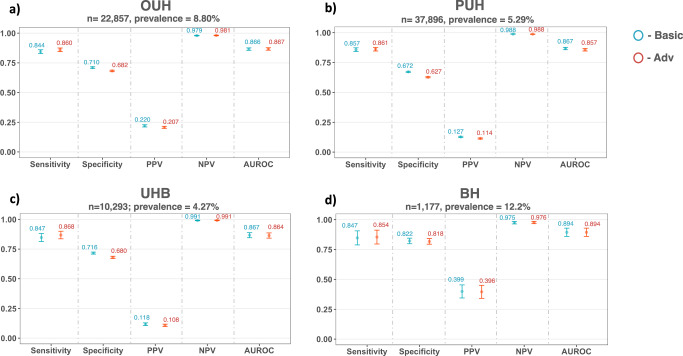
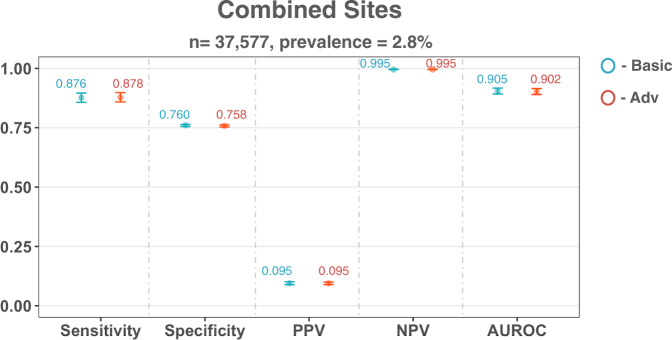
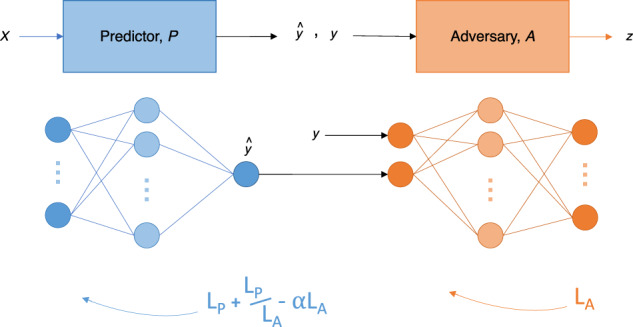
Machine learning is becoming increasingly prominent in healthcare. Although its benefits are clear, growing attention is being given to how these tools may exacerbate existing biases and disparities. In this study, we introduce an adversarial training framework that is capable of mitigating biases that may have been acquired through data collection. We demonstrate this proposed framework on the real-world task of rapidly predicting COVID-19, and focus on mitigating site-specific (hospital) and demographic (ethnicity) biases. Using the statistical definition of equalized odds, we show that adversarial training improves outcome fairness, while still achieving clinically-effective screening performances (negative predictive values >0.98). We compare our method to previous benchmarks, and perform prospective and external validation across four independent hospital cohorts. Our method can be generalized to any outcomes, models, and definitions of fairness.
Overview
The claims and statistics of this paper haven’t been checked yet.
Run the check — free, no account needed. It reads the open-access text and checks the sources it cites.
Integrity signals
Registry
Cites
Statistics
Figures
Verification
Claims the paper makes
The claims and statistics of this paper haven’t been checked yet.
Run the check — free, no account needed. It reads the open-access text and checks the sources it cites.
Claims other papers make about this one
Each is checked against this paper’s own text: does it say what the citing paper says it does?
In the citing paper
“On the other hand, AI systems can also suffer from bias, compounding existing inequities in socioeconomic status, race, ethnicity, religion, gender, disability, or sexual orientation.”
From Bias in AI-based models for medical applications: challenges and mitigation strategies (2023) · cites this paper as [7]
In the citing paper
“Bias particularly impacts disadvantaged populations, which can be subject to algorithmic predictions that are less accurate or underestimate the need for care.”
From Bias in AI-based models for medical applications: challenges and mitigation strategies (2023) · cites this paper as [7]
Self-check
Percentages, sums and reported differences re-computed from the paper’s own numbers.
The self-check needs the paper’s full text.
Citations
Cites
SMOTE synthetic minority over-sampling technique
Chawla, N. V., Bowyer, K. W., Hall, L. O., & Kegelmeyer, W. P. (2002) · Journal of Artificial Intelligence Research · doi:10.1613/jair.953 · Cited by 32,865
The meaning and use of the area under a receiver operating characteristic (ROC) curve.
Hanley, J. A., & McNeil, B. J. (1982) · Radiology · doi:10.1148/radiology.143.1.7063747 · Cited by 21,856
A Survey on Bias and Fairness in Machine Learning
Mehrabi, N., Morstatter, F., Saxena, N., Lerman, K., & Galstyan, A. (2022) · ACM Computing Surveys · doi:10.1145/3457607 · Cited by 5,812
Dwork, C., Hardt, M., Pitassi, T., Reingold, O., & Zemel, R. (2012) · Proceedings of the 3rd Innovations in Theoretical Computer Science Conference · doi:10.1145/2090236.2090255 · Cited by 3,501
Mitigating Unwanted Biases with Adversarial Learning
Zhang, B. H., Lemoine, B., & Mitchell, M. (2018) · Proceedings of the 2018 AAAI/ACM Conference on AI, Ethics, and Society · doi:10.1145/3278721.3278779 · Cited by 1,387
Seyyed-Kalantari, L., Zhang, H., McDermott, M. B. A., Chen, I. Y., & Ghassemi, M. (2021) · Nature Medicine · doi:10.1038/s41591-021-01595-0 · Cited by 928
Federated learning for predicting clinical outcomes in patients with COVID-19
Dayan, I., Roth, H. R., Zhong, A., Harouni, A., Gentili, A., Abidin, A. Z., Liu, A., Costa, A. B., Wood, B. J., Tsai, C.-S., et al. (2021) · Nature Medicine · doi:10.1038/s41591-021-01506-3 · Cited by 842 · cited 1×
“Recently, researchers have shown that federated learning (FL) could effectively predict clinical outcomes of COVID-19, using combined data from multiple sites 20 .”
BackgroundGenetic Misdiagnoses and the Potential for Health Disparities
Manrai, A. K., Funke, B. H., Rehm, H. L., Olesen, M. S., Maron, B. A., Szolovits, P., Margulies, D. M., Loscalzo, J., & Kohane, I. S. (2016) · New England Journal of Medicine · doi:10.1056/nejmsa1507092 · Cited by 808
Three naive Bayes approaches for discrimination-free classification.
Calders, T., & Verwer, S. (2010) · Data Mining and Knowledge Discovery · doi:10.1007/s10618-010-0190-x · Cited by 764
Synthetic data in machine learning for medicine and healthcare
Chen, R. J., Lu, M. Y., Chen, T. Y., Williamson, D. F. K., & Mahmood, F. (2021) · Nature Biomedical Engineering · doi:10.1038/s41551-021-00751-8 · Cited by 728
Research works printed but not linked: 8
- Hardt, M., Price, E. & Srebro, N. Equality of opportunity in supervised learning. Adv. Neural Inf. Process. Syst. 29, 3315–3323 (2016).
- Iosifidis, V. & Ntoutsi, E. Dealing with bias via data augmentation in supervised learning scenarios. Jo Bates Paul D. Clough Robert Jäschke 24, 11 (2018).
- Wang, H., Ustun, B., Calmon, F. P. & Harvard, S. E. A. S. Avoiding disparate impact with counterfactual distributions. In NeurIPS Workshop on Ethical, Social and Governance Issues in AI. (2018).
- Pleiss, G., Raghavan, M., Wu, F., Kleinberg, J. & Weinberger, K. Q. On fairness and calibration. Adv. Neural Inf. Process. Syst. 30, 5680–5689 (2017).
- Menon, A. K. & Williamson, R. C. The cost of fairness in binary classification. In Conference on Fairness, Accountability and Transparency (pp. 107–118) PMLR. (2018).
- Jung, C. et al. An algorithmic framework for fairness elicitation. arXiv. https://arxiv.org/abs/1905.10660 (2019). · arXiv
- Kim, M., Reingold, O. & Rothblum, G. Fairness through computationally-bounded awareness. Adv. Neural Inf. Process. Syst. 31, 4842–4852 (2018).
- Blazer, D. G. & Hernandez, L. M. (Eds.). Genes, behavior, and the social environment: Moving beyond the nature/nurture debate. (2006).
Cited by
Sorted by citations
A review of convolutional neural networks in computer vision
Zhao, X., Wang, L., Zhang, Y., Han, X., Deveci, M., & Parmar, M. D. (2024) · Artificial Intelligence Review · doi:10.1007/s10462-024-10721-6 · Cited by 1,477
Bias in AI-based models for medical applications: challenges and mitigation strategies
Mittermaier, M., Raza, M. M., & Kvedar, J. C. (2023) · npj Digital Medicine · doi:10.1038/s41746-023-00858-z · Cited by 372
“Bias is usually de fi ned as a difference in performance between sub-groups for a predictive task 6,7 .”
Dankwa‐Mullan, I. (2024) · Preventing Chronic Disease · doi:10.5888/pcd21.240245 · Cited by 247
AI Fairness in Data Management and Analytics: A Review on Challenges, Methodologies and Applications
Chen, P., Wu, L., & Wang, L. (2023) · Applied Sciences · doi:10.3390/app131810258 · Cited by 155
Yang, J., Soltan, A. A. S., Eyre, D. W., & Clifton, D. A. (2023) · Nature Machine Intelligence · doi:10.1038/s42256-023-00697-3 · Cited by 160
Self-citation
Metadata
- Authors
- Yang, J., Soltan, A. A. S., Eyre, D. W., Yang, Y., & Clifton, D. A.
- Affiliations
- University of Oxford (GB)
- John Radcliffe Hospital (GB)
- Shanghai Jiao Tong University (CN)
- Corresponding author
- Yang, Jenny
- Venue
- npj Digital Medicine
- Published
- 2023-03-29
- Volume
- 6
- Issue
- 1
- Pages
- 55-55
- ISSN
- 2398-6352 (ISSN-L)
- PMC
- PMC10050816
- OpenAlex
- W4361285150
- Cited by
- 159
- References
- 40
- Citations by year
- 2026: 44 · 2025: 66 · 2024: 38 · 2023: 11
- FWCI
- 39.78
- Type
- journal article
- Language
- en
- Open access
- gold
- doi.org
- Locations
- npj Digital Medicine (publishedVersion, cc-by)
- PubMed Central (publishedVersion, cc-by)
- PubMed (publishedVersion)
- DOAJ (DOAJ: Directory of Open Access Journals) (submittedVersion, cc-by-sa)
- Funders
- Wellcome Trust (0009350)
- Robertson Foundation
- University Hospitals Birmingham NHS Foundation Trust
- National Institute for Health Research Health Protection Research Unit
- National Institute for Health and Care Research (ACF-2020-13-015)
- Royal Academy of Engineering
- University of Oxford
- European Commission (HORIZON2020, 955681)
- Shanghai Jiao Tong University
- Oxford University Hospitals NHS Foundation Trust
- Medical Research Council (MC_PC_19049)
- Topics
- Physical Sciences › Computer Science › Artificial Intelligence › Ethics and Social Impacts of AI
- Physical Sciences › Computer Science › Artificial Intelligence › Machine Learning in Healthcare
- Health Sciences › Medicine › Health Informatics › Artificial Intelligence in Healthcare and Education
- Keywords
- adversarial training, algorithmic bias, machine learning in healthcare, fairness, equalized odds, COVID-19 prediction, ethnic prejudice, health disparities, external validation
About these checks
Registry, retraction, Cites and statistics results are computed, not judged, with one exception: a printed reference that no index lists is read once by a model before it counts as a citation error. Claims are extracted by a model and kept only when their quote appears verbatim in the text; each cited source is then checked, with a model’s help, for whether it says what the claim relies on. Those verdicts can be wrong — read the claim’s quote and the cited source before relying on one.
Statistics and arithmetic are recomputed, not judged.
Confidence bands are shown only for fields calibrated on our annotated test set. None is calibrated yet, so no band is shown.
What counts as a claim ›How we measure confidence ›How we check this ›
Are you an author, or do you see a problem with this page? Request a review
