

Solving the explainable AI conundrum by bridging clinicians’ needs and developers’ goals
Open accessPublished version of a preprint
The DOI matches its Crossref record; 35 of the 35 references it cites were found in a registry or an index.
Abstract
Explainable artificial intelligence (XAI) has emerged as a promising solution for addressing the implementation challenges of AI/ML in healthcare. However, little is known about how developers and clinicians interpret XAI and what conflicting goals and requirements they may have. This paper presents the findings of a longitudinal multi-method study involving 112 developers and clinicians co-designing an XAI solution for a clinical decision support system. Our study identifies three key differences between developer and clinician mental models of XAI, including opposing goals (model interpretability vs. clinical plausibility), different sources of truth (data vs. patient), and the role of exploring new vs. exploiting old knowledge. Based on our findings, we propose design solutions that can help address the XAI conundrum in healthcare, including the use of causal inference models, personalized explanations, and ambidexterity between exploration and exploitation mindsets. Our study highlights the importance of considering the perspectives of both developers and clinicians in the design of XAI systems and provides practical recommendations for improving the effectiveness and usability of XAI in healthcare.
Overview
The claims and statistics of this paper haven’t been checked yet.
Free: it reads the open-access text and checks the first 5 claims that cite a source we can check. Create a free account to check every claim.
Integrity signals
Registry
Cites
Statistics
Figures
Verification
Claims the paper makes
The claims and statistics of this paper haven’t been checked yet.
Free: it reads the open-access text and checks the first 5 claims that cite a source we can check. Create a free account to check every claim.
Claims other papers make about this one
Each is checked against this paper’s own text: does it say what the citing paper says it does?
The source backs part of the claim, not all of it — or backs it for a different population, condition or comparison.
In the citing paper
“Simple, interpretable visualizations, such as bar charts and line graphs, were preferred for understanding predictions at a glance.”
From Explainable AI in hospital clinical decision support systems: A scoping review of healthcare professionals’ perspectives (2026) · cites this paper as [27]
Experimental — accuracy not yet measuredThe source backs part of the claim, not all of it — or backs it for a different population, condition or comparison.
In the citing paper
“Five studies [23,25,27,28,34] specifically described using SHapley Additive exPlanations (SHAP)”
From Explainable AI in hospital clinical decision support systems: A scoping review of healthcare professionals’ perspectives (2026) · cites this paper as [27]
Experimental — accuracy not yet measuredThe cited source says what the claim attributes to it.
In the citing paper
“The XAI orchestrator should be integrated with time-effectiveness in mind since it was found that clinicians sometimes prefer rapid, less detailed information67.”
From Orchestrating explainable artificial intelligence for multimodal and longitudinal data in medical imaging (2024) · cites this paper as [67]
The cited source says what the claim attributes to it.
In the citing paper
“Impact in workflow related to how XAI systems aligned with and influenced work processes, and arose as a theme in 9 papers [23–27,30,31,33,35].”
From Explainable AI in hospital clinical decision support systems: A scoping review of healthcare professionals’ perspectives (2026) · cites this paper as [27]
The cited source says what the claim attributes to it.
In the citing paper
“Considering context and users was also reported, with some health professionals having limited time to interpret model explanations and make a decision [23,25,27,32].”
From Explainable AI in hospital clinical decision support systems: A scoping review of healthcare professionals’ perspectives (2026) · cites this paper as [27]
10 more claims about this paper
Create a free account to see every claim other papers make about this one.
Self-check
Percentages, sums and reported differences re-computed from the paper’s own numbers.
The self-check needs the paper’s full text.
Citations
Cites
User Acceptance of Information Technology: Toward A Unified View1
Venkatesh, V., Morris, M. G., Davis, G. B., & Davis, F. D. (2003) · MIS Quarterly · doi:10.2307/30036540 · Cited by 45,035
The Discovery of Grounded Theory; Strategies for Qualitative Research
Glaser, B. G., Strauss, A. L., & Strutzel, E. (1968) · Nursing Research · doi:10.1097/00006199-196807000-00014 · Cited by 39,449
Seeking Qualitative Rigor in Inductive Research: Notes on the Gioia Methodology
Gioia, D. A., Corley, K. G., & Hamilton, A. L. (2013) · Organizational Research Methods · doi:10.1177/1094428112452151 · Cited by 13,227
Standards for Reporting Qualitative Research: A Synthesis of Recommendations
O’Brien, B. C., Harris, I. B., Beckman, T. J., Reed, D. A., & Cook, D. A. (2014) · Academic Medicine · doi:10.1097/acm.0000000000000388 · Cited by 12,211
High-performance medicine: the convergence of human and artificial intelligence
Topol, E. J. (2019) · Nature Medicine · doi:10.1038/s41591-018-0300-7 · Cited by 10,450
Geurts, P., Ernst, D., & Wehenkel, L. (2006) · Machine Learning · doi:10.1007/s10994-006-6226-1 · Cited by 9,300
Confirmation Bias: A Ubiquitous Phenomenon in Many Guises
Nickerson, R. S. (1998) · Review of General Psychology · doi:10.1037/1089-2680.2.2.175 · Cited by 7,267
Rajpurkar, P., Chen, E., Banerjee, O., & Topol, E. J. (2022) · Nature Medicine · doi:10.1038/s41591-021-01614-0 · Cited by 3,212 · cited 5×
“However, implementation of these systems into clinical practice lags behind due to a lack of trust and system explainability 2,3 .”
InfluentialConfirmation, disconfirmation, and information in hypothesis testing
Klayman, J., & Ha, Y.-W. (1987) · Psychological Review · doi:10.1037/0033-295x.94.2.211 · Cited by 2,094
Causability and explainability of artificial intelligence in medicine
Holzinger, A., Langs, G., Denk, H., Zatloukal, K., & Müller, H. (2019) · WIREs Data Mining and Knowledge Discovery · doi:10.1002/widm.1312 · Cited by 1,885
The false hope of current approaches to explainable artificial intelligence in health care
Ghassemi, M., Oakden-Rayner, L., & Beam, A. L. (2021) · The Lancet Digital Health · doi:10.1016/s2589-7500(21)00208-9 · Cited by 1,724 · cited 2×
“…(XAI) 4,5 is considered the number one requirement for enabling trustful human-AI teaming in medicine 2,3,6 ; yet, current efforts consisting of complex mathematical methodologies (e.g., ante-hoc or posthoc procedures 7 ) are unlikely to increase clinicians ’ trust and practical understanding 8 .”
Exploration and Exploitation Within and Across Organizations
Lavie, D., Stettner, U., & Tushman, M. L. (2010) · Academy of Management Annals · doi:10.1080/19416521003691287 · Cited by 1,650 · cited 1×
“There, the goal is to embrace ambidexterity, i.e., to switch between exploration and exploitation behaviors depending on the situational requirements 26 .”
What Is Design Thinking and Why Is It Important?
Razzouk, R., & Shute, V. (2012) · Review of Educational Research · doi:10.3102/0034654312457429 · Cited by 1,388 · cited 1×
“The results were continuously fed back into the design process improving the system over time 10 .”
Sex and gender differences and biases in artificial intelligence for biomedicine and healthcare
Cirillo, D., Catuara-Solarz, S., Morey, C., Guney, E., Subirats, L., Mellino, S., Gigante, A., Valencia, A., Rementeria, M. J., Chadha, A. S., et al. (2020) · npj Digital Medicine · doi:10.1038/s41746-020-0288-5 · Cited by 553
The think aloud method: a guide to user interface design
JASPERS, M., STEEN, T., BOS, C., & GEENEN, M. (2004) · International Journal of Medical Informatics · doi:10.1016/j.ijmedinf.2004.08.003 · Cited by 544 · cited 1×
“Second, we used the think-aloud method 36 by asking seven clinicians to comment out loud on how they interpreted the various XAI features displayed on the DCIP prototype screen (see Fig.”
Causal inference and counterfactual prediction in machine learning for actionable healthcare
Prosperi, M., Guo, Y., Sperrin, M., Koopman, J. S., Min, J. S., He, X., Rich, S., Wang, M., Buchan, I. E., & Bian, J. (2020) · Nature Machine Intelligence · doi:10.1038/s42256-020-0197-y · Cited by 459 · cited 1×
“…studies on XAI in healthcare should consider the proposed design recommendations regarding the combination of model interpretability and clinical plausibility, increased system interactivity, and the importance of causal ML approaches allowing for hypothetical/counterfactual queries 23,25,32 .”
A short guide for medical professionals in the era of artificial intelligence
Meskó, B., & Görög, M. (2020) · npj Digital Medicine · doi:10.1038/s41746-020-00333-z · Cited by 409
Cutillo, C. M., Sharma, K. R., Foschini, L., Kundu, S., Mackintosh, M., Mandl, K. D., MI in Healthcare Workshop Working Group, Beck, T., Collier, E., Colvis, C., et al. (2020) · npj Digital Medicine · doi:10.1038/s41746-020-0254-2 · Cited by 337
AI in medicine must be explainable
Kundu, S. (2021) · Nature Medicine · doi:10.1038/s41591-021-01461-z · Cited by 318 · cited 1×
“…the explainability conundrum in AI/ML (XAI) 4,5 is considered the number one requirement for enabling trustful human-AI teaming in medicine 2,3,6 ; yet, current efforts consisting of complex mathematical methodologies (e.g., ante-hoc or posthoc procedures 7 ) are unlikely to increase…”
What Clinicians Want: Contextualizing Explainable Machine Learning for Clinical End Use
Tonekaboni, S., Joshi, S., McCradden, M. D., & Goldenberg, A. (2019) · arXiv · doi:10.48550/arxiv.1905.05134 · Cited by 318 · cited 1×
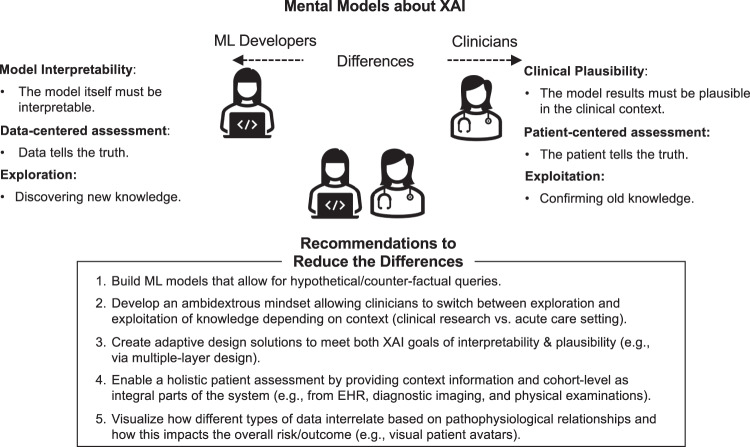
“…we recommend designing XAI systems that meet both goals: the ability to explore new knowledge e.g., for research purposes, and to exploit existing knowledge in high-risk and time-critical contexts where model results must be validated quickly against established clinical standards 4,30,31 .”
Kwon, B. C., Choi, M.-J., Kim, J. T., Choi, E., Kim, Y. B., Kwon, S., Sun, J., & Choo, J. (2019) · IEEE Transactions on Visualization and Computer Graphics · doi:10.1109/tvcg.2018.2865027 · Cited by 294 · cited 3×
“Quantitative data from the survey were analyzed using descriptive statistics and linear regression modeling in IBM SPSS version 23.”
Singh, R. P., Hom, G. L., Abramoff, M. D., Campbell, J. P., Chiang, M. F., & on behalf of the AAO Task Force on Artificial Intelligence (2020) · Translational Vision Science & Technology · doi:10.1167/tvst.9.2.45 · Cited by 259
Amann, J., Vetter, D., Blomberg, S. N., Christensen, H. C., Coffee, M., Gerke, S., Gilbert, T. K., Hagendorff, T., Holm, S., Livne, M., et al. (2022) · PLOS Digital Health · doi:10.1371/journal.pdig.0000016 · Cited by 251
Stable learning establishes some common ground between causal inference and machine learning
Cui, P., & Athey, S. (2022) · Nature Machine Intelligence · doi:10.1038/s42256-022-00445-z · Cited by 241 · cited 2×
“…studies on XAI in healthcare should consider the proposed design recommendations regarding the combination of model interpretability and clinical plausibility, increased system interactivity, and the importance of causal ML approaches allowing for hypothetical/counterfactual queries 23,25,32 .”
Henry, K. E., Kornfield, R., Sridharan, A., Linton, R. C., Groh, C., Wang, T., Wu, A., Mutlu, B., & Saria, S. (2022) · npj Digital Medicine · doi:10.1038/s41746-022-00597-7 · Cited by 207 · cited 2×
“…we recommend designing XAI systems that meet both goals: the ability to explore new knowledge e.g., for research purposes, and to exploit existing knowledge in high-risk and time-critical contexts where model results must be validated quickly against established clinical standards 4,30,31 .”
van de Sande, D., Van Genderen, M. E., Smit, J. M., Huiskens, J., Visser, J. J., Veen, R. E. R., van Unen, E., BA, O. H., Gommers, D., & Bommel, J. V. (2022) · BMJ Health & Care Informatics · doi:10.1136/bmjhci-2021-100495 · Cited by 135
Re-focusing explainability in medicine
Arbelaez Ossa, L., Starke, G., Lorenzini, G., Vogt, J. E., Shaw, D. M., & Elger, B. S. (2022) · DIGITAL HEALTH · doi:10.1177/20552076221074488 · Cited by 87 · cited 3×
“Furthermore, it is still unclear if and how clinicians and system developers interpret XAI (differently), and whether designing such systems in healthcare is achievable or even desirable 4,5,8 .”
Mandl, B. J., & Reis, B. Y. (2022) · npj Digital Medicine · doi:10.1038/s41746-021-00554-w · Cited by 62
VBridge: Connecting the Dots Between Features and Data to Explain Healthcare Models
Cheng, F., Liu, D., Du, F., Lin, Y., Zytek, A., Li, H., Qu, H., & Veeramachaneni, K. (2022) · IEEE Transactions on Visualization and Computer Graphics · doi:10.1109/tvcg.2021.3114836 · Cited by 54 · cited 1×
“Such interactive designs have been proposed before (e.g., via WHAT-IF analyses 23,24 ) and would likely address clinicians ’ need for clinical plausibility.”
Tscholl, D. W., Handschin, L., Neubauer, P., Weiss, M., Seifert, B., Spahn, D. R., & Nöthiger, C. B. (2018) · British Journal of Anaesthesia · doi:10.1016/j.bja.2018.04.024 · Cited by 53 · cited 1×
“…from physical examinations (e.g., via the Glasgow Coma Scale for Neurocritical Care 21 or other clinical norms speci fi c to each domain) as well as to fi nd intuitive ways to visualize the complex pathophysiological interactions between different model contributors (e.g., patient avatars 22 ).”
Dynamic Detection of Delayed Cerebral Ischemia: A Study in 3 Centers
Megjhani, M., Terilli, K., Weiss, M., Savarraj, J. P. J., Chen, L. H., Alkhachroum, A. M., Roh, D. J., Agarwal, S., Connolly, E. S., Velazquez, A. G., et al. (2021) · Stroke · doi:10.1161/strokeaha.120.032546 · Cited by 46 · cited 1×
“For model training, time-dependent patient data were aligned using the initial DCI event as an anchor to capture the dynamics leading to DCI onset (c.f., Megjhani et al., 2020 33 ).”
Boss, J. M., Narula, G., Ssle, C. S., Willms, J. F., Azzati, J., Brodbeck, D., Lüthy, R., Suter, S. K., Buehler, C., Muroi, C., et al. (2022) · Journal of the American Medical Informatics Association · doi:10.1093/jamia/ocac064 · Cited by 31
Self-citationA computational framework for discovering digital biomarkers of glycemic control
Bartolome, A., & Prioleau, T. (2022) · npj Digital Medicine · doi:10.1038/s41746-022-00656-z · Cited by 21 · cited 1×
“Like others before 27 , the developers in our study aimed to design the system to explore new knowledge, hence the need for increased model interpretability.”
Explainable Classification of EEG Data for an Active Touch Task Using Shapley Values
Alsuradi, H., Park, W., & Eid, M. A. (2020) · Lecture notes in computer science · doi:10.1007/978-3-030-60117-1_30 · Cited by 20 · cited 1×
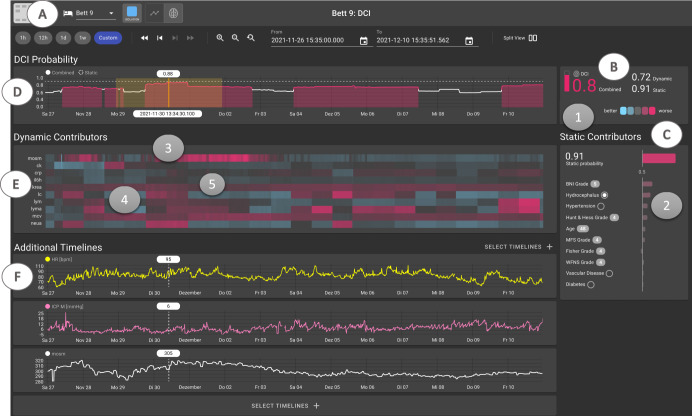
“They tried to achieve this, for example, by introducing Shapley values 16 of static and dynamic risk contributors to help explain the local logic of the model at each point in time (see Fig.”
Addressing racial disparities in surgical care with machine learning
Halamka, J. D., Bydon, M., Cerrato, P. L., & Bhagra, A. (2022) · npj Digital Medicine · doi:10.1038/s41746-022-00695-6 · Cited by 18 · cited 1×
“For developers, increasing model interpretability is important to assess the reliability of the model and to eliminate bias 19,20 .”
Research works printed but not linked: 1
- Tabachnick, B. G., Fidell, L. S. & Ullman, J. B. Using multivariate statistics. (Pearson, 2019).
Cited by
Joshi, G., Jain, A., Araveeti, S. R., Adhikari, S., Garg, H., & Bhandari, M. (2024) · Electronics · doi:10.3390/electronics13030498 · Cited by 294
Abbas, Q., Jeong, W., & Lee, S. W. (2025) · Healthcare · doi:10.3390/healthcare13172154 · Cited by 236
“Clinicians have different needs and cognitive styles, and not all explanations are equally meaningful or useful for every user [31,32].”
Should AI models be explainable to clinicians?
Abgrall, G., Holder, A. L., Chelly Dagdia, Z., Zeitouni, K., & Monnet, X. (2024) · Critical Care · doi:10.1186/s13054-024-05005-y · Cited by 175
“Engineers typically focus on the interpretability of the model’s inner workings, such as for debugging purposes, whereas clinicians emphasise the clinical relevance of its outputs [19].”
BackgroundDigital twins as global learning health and disease models for preventive and personalized medicine
Li, X., Loscalzo, J., Mahmud, A. K. M. F., Aly, D. M., Rzhetsky, A., Žitnik, M., & Benson, M. (2025) · Genome Medicine · doi:10.1186/s13073-025-01435-7 · Cited by 151
Chen, M., Wang, Y., Wang, Q., Shi, J., Wang, H., Ye, Z., Xue, P., & Qiao, Y. (2024) · npj Digital Medicine · doi:10.1038/s41746-024-01328-w · Cited by 146
Metadata
- Authors
- Bienefeld, N., Boss, J. M., Lüthy, R., Brodbeck, D., Azzati, J., Blaser, M., Willms, J., & Keller, E.
- Affiliations
- ETH Zurich (CH)
- University of Zurich (CH)
- FHNW University of Applied Sciences and Arts Northwestern Switzerland (CH)
- Corresponding author
- Bienefeld, Nadine
- Venue
- npj Digital Medicine
- Published
- 2023-05-22
- Volume
- 6
- Issue
- 1
- Pages
- 94-94
- ISSN
- 2398-6352 (ISSN-L)
- PMC
- PMC10202353
- OpenAlex
- W4377289493
- Semantic Scholar
- f72beb4fbab3a55455ad1403891855103bb470e1
- Cited by
- 159
- References
- 32
- Citations by year
- 2026: 68 · 2025: 52 · 2024: 31 · 2023: 8
- FWCI
- 14.99
- Type
- journal article
- Language
- en
- Open access
- gold
- doi.org
- Licence
- cc-by
- creativecommons.org/licenses/by/4.0 (tdm)
- creativecommons.org/licenses/by/4.0 (vor)
- Locations
- npj Digital Medicine (publishedVersion, cc-by)
- PubMed Central (publishedVersion, cc-by)
- PubMed (publishedVersion)
- Zurich Open Repository and Archive (University of Zurich) (acceptedVersion, cc-by-nc-nd)
- Repository for Publications and Research Data (ETH Zurich) (submittedVersion, cc-by)
- DOAJ (DOAJ: Directory of Open Access Journals) (submittedVersion, cc-by-sa)
- Zurich Open Repository and Archive (University of Zurich) (submittedVersion, cc-by)
- ETH Zürich Research Collection
- Zurich Open Repository and Archive (University of Zurich)
- Funders
- Schweizerischer Nationalfonds zur Förderung der Wissenschaftlichen Forschung (187331, 52441_1)
- Topics
- Physical Sciences › Computer Science › Artificial Intelligence › Explainable Artificial Intelligence (XAI)
- Health Sciences › Medicine › Health Informatics › Artificial Intelligence in Healthcare and Education
- Physical Sciences › Computer Science › Artificial Intelligence › Machine Learning in Healthcare
- Keywords
- explainable AI, clinical decision support systems, co-design, model interpretability, exploration and exploitation, ambidexterity, causal inference, personalized explanations, clinical implementation of AI
About these checks
Registry, retraction, Cites and statistics results are computed, not judged, with one exception: a printed reference that no index lists is read once by a model before it counts as a citation error. Claims are extracted by a model and kept only when their quote appears verbatim in the text; each cited source is then checked, with a model’s help, for whether it says what the claim relies on. Those verdicts can be wrong — read the claim’s quote and the cited source before relying on one.
Statistics and arithmetic are recomputed, not judged.
Confidence bands are shown only for fields calibrated on our annotated test set. None is calibrated yet, so no band is shown.
What counts as a claim ›How we measure confidence ›How we check this ›
Are you an author, or do you see a problem with this page? Request a review
Data sources
Bibliographic data: Semantic Scholar, OpenAlex, Crossref.
Contains information from the Semantic Scholar Academic Graph Datasets, made available under the ODC Attribution License (ODC-BY 1.0).
Semantic Scholar’s data is described in: Kinney, R., et al. (2023). The Semantic Scholar Open Data Platform. arXiv:2301.10140.
