

AI-assisted multi-modal information for the screening of depression: a systematic review and meta-analysis
Open accessThe DOI matches its Crossref record; 146 of the 152 references it cites were found in a registry or an index; 5 of the 13 sources its claims cite were checked for support.
Abstract
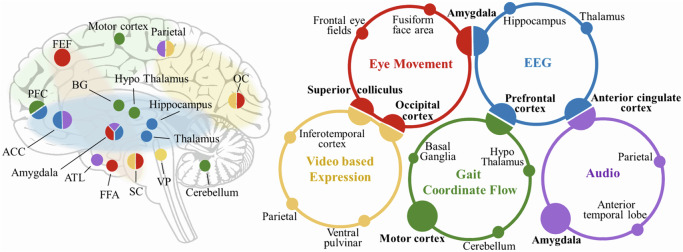
Depression is a prevalent and costly mental disorder across all ages. Artificial intelligence (AI)-assisted physiological and behavioral information-such as electroencephalography (EEG), eye movement, video or audio monitoring, and gait analysis-offers a promising tool for depression screening. We systematically reviewed the classification performance of these AI-assisted measures in depression screening. A comprehensive literature search was conducted in Google Scholar, Web of Science, and IEEE Xplore, with the search date up to June 7, 2025. The reported AUC values are pooled estimates calculated from all results of eligible studies. AI-assisted multi-modal methods achieved a pooled AUC of 0.95 (95% CI: 0.92-0.96), outperforming uni-modal methods (pooled AUC: 0.84-0.92). Subgroup analysis indicated deep learning models showed higher performance, with an AUC of 0.95 (95% CI: 0.93-0.97). These findings highlight the potential of AI-based multi-modal information in depression screening and emphasize the need to establish standardized databases and improve research design.
Overview
CoChat Summary
## TL;DR
This systematic review and meta-analysis found that AI-assisted multi-modal approaches for depression screening performed better than uni-modal approaches, with pooled AUC up to 0.95 and 0.96 for the highest-performing multi-modal results. The authors conclude that multi-modal AI is promising, but larger standardized datasets and stronger study designs are needed.
## Key findings
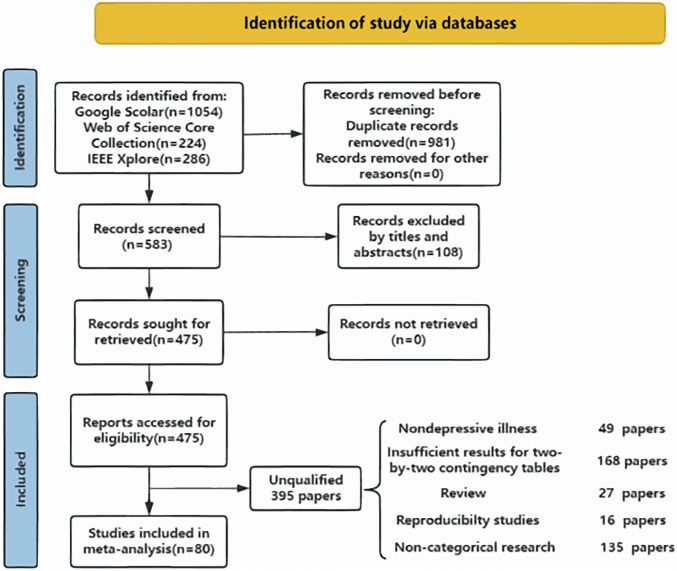
- The search identified 1,564 records; after removing 981 duplicates and excluding 108 by title/abstract and 397 at full text, 80 studies were included in the qualitative synthesis and meta-analysis.
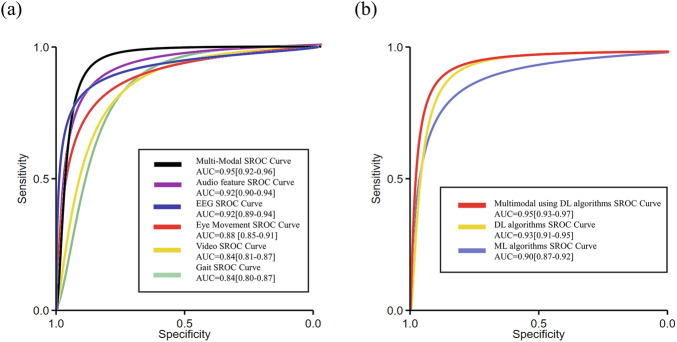
- For all multi-modal depression screening studies, the pooled performance was sensitivity 0.88, specificity 0.90, and AUC 0.95 (95% CI: 0.92–0.96); selecting the highest-performing contingency tables gave sensitivity 0.89, specificity 0.91, and AUC 0.96 (95% CI: 0.94–0.97).
- Uni-modal pooled AUCs were lower: EEG 0.92, eye movement 0.88, video 0.86, audio 0.92, and gait 0.84; the corresponding highest-performing contingency tables ranged up to AUC 0.95 for audio and 0.94 for EEG.
- Deep learning showed higher performance than traditional machine learning in subgroup analysis, with an AUC of 0.95 (95% CI: 0.93–0.97); the abstract states multi-modal methods outperformed uni-modal methods, which had pooled AUCs of 0.84–0.92.
## Methods
- Systematic review and meta-analysis conducted according to PRISMA and registered in PROSPERO (CRD420251049107).
- Searches were run in Google Scholar, Web of Science Core Collection, and IEEE Xplore up to June 7, 2025; only English-language technical studies on AI/ML/DL-based depression classification with extractable classification outcomes were included.
- The authors extracted or derived 2 × 2 contingency tables from reported accuracy/sensitivity/specificity/recall/precision/confusion matrices, then used random-effects meta-analysis, SROC curves, forest plots, and I² heterogeneity statistics.
## Limitations
- The paper states several limitations: only English-language articles were included; many pooled estimates were based on a limited number of studies and small samples; subgroup analyses still had heterogeneity; few studies examined cross-ethnic or cross-age generalizability; studies reporting only continuous metrics or only F1 scores without TP/TN/FP/FN were excluded.
- Evident from the text: all included studies used retrospective data, and nearly half of the studies (n = 38) had high or unclear risk of bias in patient selection, which may limit confidence in the pooled estimates.
- Evident from the text: most public and private datasets had no more than 280 subjects (range 24–275), which likely constrains model robustness and generalizability.
Model-written summary. Check it against the paper before relying on it.
Integrity signals
Registry
Cites
Statistics
Figures
Verification
Claims the paper makes
4 Valid · 1 Not valid · 5 Not checked · 39 Own results and interpretations
A result the paper reports from its own data — it cites no other source for it, so there is none to check. The quote shows it is in the paper.
In the paper
“However, moderate to high heterogeneity was observed across studies based on video, audio, and gait.”
§ AI-assisted multi-modal information for the screening of depression: a systematic review and meta-analysis > Results > Heterogeneity analysis
plain- Asserted: passes — The authors put it forward as true.
- Checkable: passes — It can be checked against evidence.
- Load-bearing: unclear — It is unclear whether the paper’s conclusions depend on it.
- Based: passes — The paper gives a reason why it holds.
A result the paper reports from its own data — it cites no other source for it, so there is none to check. The quote shows it is in the paper.
In the paper
“Notably, AI-assisted multiple modalities can classify patients with and without depression in up to 96% of cases (Table 2).”
§ AI-assisted multi-modal information for the screening of depression: a systematic review and meta-analysis > Discussion
plainstates a cause- Asserted: passes — The authors put it forward as true.
- Checkable: passes — It can be checked against evidence.
- Load-bearing: passes — The paper’s conclusions depend on it.
- Based: passes — The paper gives a reason why it holds.
A result the paper states — it cites no source for it, so there is none to check. The quote shows it is in the paper.
In the paper
“For instance, due to the significant differences in data formats between input modalities, 89% of the multi-modal DL investigations included employ a late fusion strategy (n = 9).”
§ AI-assisted multi-modal information for the screening of depression: a systematic review and meta-analysis > Discussion
plainn = 9- Asserted: passes — The authors put it forward as true.
- Checkable: passes — It can be checked against evidence.
- Load-bearing: unclear — It is unclear whether the paper’s conclusions depend on it.
- Based: passes — The paper gives a reason why it holds.
A result the paper reports from its own data — it cites no other source for it, so there is none to check. The quote shows it is in the paper.
In the paper
“Using EEG technology, low to moderate heterogeneity was observed when distinguishing depression from NC, with an I2 of 32.64% (95% CI: 14.76–50.51) for SE and an I2 of 56.14% (95% CI: 45.67–66.61) for SP.”
§ AI-assisted multi-modal information for the screening of depression: a systematic review and meta-analysis > Results > Heterogeneity analysis
plain- Asserted: passes — The authors put it forward as true.
- Checkable: passes — It can be checked against evidence.
- Load-bearing: unclear — It is unclear whether the paper’s conclusions depend on it.
- Based: passes — The paper gives a reason why it holds.
A result the paper reports from its own data — it cites no other source for it, so there is none to check. The quote shows it is in the paper.
In the paper
“A total of 24 contingency tables from six studies on eye movement depression screening, all utilizing the ML algorithm. The pooled estimates for this group were 0.77 SE (95% CI: 0.72–0.81), 0.86 SP (95% CI: 0.83–0.89), and an AUC of 0.88 (95% CI: 0.85–0.91) (Fig. 3).”
§ AI-assisted multi-modal information for the screening of depression: a systematic review and meta-analysis > Results > Pooled performance of AI algorithms for classifying Depression from NC
plain- Asserted: passes — The authors put it forward as true.
- Checkable: passes — It can be checked against evidence.
- Load-bearing: passes — The paper’s conclusions depend on it.
- Based: passes — The paper gives a reason why it holds.
21 more claims
Create a free account to see all 49 claims and to verify the 2 references still open.
- Probably not a substantial claim. 13
- It may state two separate claims as one. 14
Citations
Cites
Vaswani, A., Shazeer, N., Parmar, N., Uszkoreit, J., Jones, L., Gomez, A. N., Kaiser, L., & Polosukhin, I. (2017) · arXiv · doi:10.48550/arxiv.1706.03762 · Cited by 120,404
The PRISMA 2020 statement: An updated guideline for reporting systematic reviews
Page, M. J., McKenzie, J. E., Bossuyt, P. M., Boutron, I., Hoffmann, T. C., Mulrow, C. D., Shamseer, L., Tetzlaff, J. M., Akl, E. A., Brennan, S. E., et al. (2021) · BMJ · doi:10.1136/bmj.n71 · Cited by 108,283
XGBoost: A Scalable Tree Boosting System
Chen, T., & Guestrin, C. (2016) · Proceedings of the 22nd ACM SIGKDD International Conference on Knowledge Discovery and Data Mining · doi:10.1145/2939672.2939785 · Cited by 54,569
Vos, T., Lim, S. S., Abbafati, C., Abbas, K. M., Abbasi, M., Abbasifard, M., Abbasi-Kangevari, M., Abbastabar, H., Abd-Allah, F., Abdelalim, A., et al. (2020) · The Lancet · doi:10.1016/s0140-6736(20)30925-9 · Cited by 19,358 · cited 1×
“Depression is a leading global mental health disorder and a major contributor to the worldwide burden of disability 1 .”
A survey on deep learning in medical image analysis
Litjens, G., Kooi, T., Bejnordi, B. E., Setio, A. A. A., Ciompi, F., Ghafoorian, M., van der Laak, J. A. W. M., van Ginneken, B., & Sánchez, C. I. (2017) · Medical Image Analysis · doi:10.1016/j.media.2017.07.005 · Cited by 15,332
QUADAS-2: a revised tool for the quality assessment of diagnostic accuracy studies
Whiting, P. F., Rutjes, A. W. S., Westwood, M. E., Mallett, S., Deeks, J. J., Reitsma, J. B., Leeflang, M. M. G., Sterne, J. A. C., Bossuyt, P. M. M., & the QUADAS-2 Group* (2011) · Annals of Internal Medicine · doi:10.7326/0003-4819-155-8-201110180-00009 · Cited by 14,199 · cited 1×
“TheriskofbiasandapplicabilityofallselectedstudieswereassessedbyusingtheQUADAS-2criteria 137 .”
Control of goal-directed and stimulus-driven attention in the brain
Corbetta, M., & Shulman, G. L. (2002) · Nature Reviews Neuroscience · doi:10.1038/nrn755 · Cited by 12,881
LightGBM: A Highly Efficient Gradient Boosting Decision Tree
(2017) · HAL · Cited by 10,512
Multimodal Machine Learning: A Survey and Taxonomy
Baltrusaitis, T., Ahuja, C., & Morency, L.-P. (2019) · IEEE Transactions on Pattern Analysis and Machine Intelligence · doi:10.1109/tpami.2018.2798607 · Cited by 5,018 · cited 1×
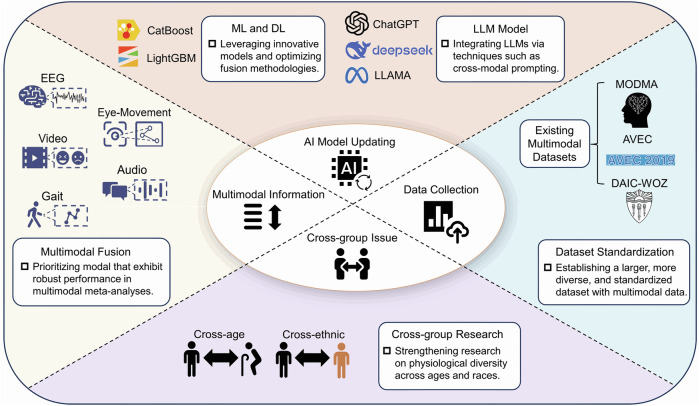
“However, each of these public datasets, as well as the private datasets used in included studies, contains no more than 280 subjects (with sample sizes ranging from 24 to 275), which hampers the ability to identify clinical biomarkers universally and reliably, especially with DL approaches 132,133 .”
Subgenual prefrontal cortex abnormalities in mood disorders
Drevets, W. C., Price, J. L., Simpson, J. R., Todd, R. D., Reich, T., Vannier, M., & Raichle, M. E. (1997) · Nature · doi:10.1038/386824a0 · Cited by 2,693
Research works printed but not linked: 4
- Prokhorenkova, L., Gusev, G., Vorobev, A., Dorogush, A. V. & Gulin, A. CatBoost: unbiased boosting with categorical features. Adv. Neural Inf. Process. Syst.31 (2018).
- Gönen, M. & Alpaydın, E. Multiple kernel learning algorithms. J. Mach. Learn. Res. 12, 2211–2268 (2011).
- Lundberg, S. M. & Lee, S.-I. A unified approach to interpreting model predictions. Adv. Neural Inf. Process. Syst.30 (2017).
- Flores, R., Tlachac, M., Toto, E. & Rundensteiner, E. Audiface: multimodal deep learning for depression screening. In Proceedings Machine Learning for Healthcare Conference 609–630 (2022).
Cited by
Jin, Y., Chen, X., Hong, X., Wang, M., Niu, W., Liu, A., Li, Y., Bu, Y., & Wang, Y. (2025) · Journal of Affective Disorders · doi:10.1016/j.jad.2025.120644 · Cited by 6
Anuj, M. D., & Golden Nancy, R. (2025) · International Conference on Electronics, Communication and Aerospace Technology (ICECA) · doi:10.1109/iceca66444.2025.11383126 · Cited by 3
“These results demonstrate that the system has sub-second response times , which meet the requirements for the operational practicality of real-time telehealth monitoring and sustained mental state evaluation.”
Du, X., Chen, Q., Lü, M., Hu, J., Chen, C., Huang, K., Ji, C., Zhou, Z., Zou, J., & Ruan, H. (2025) · Frontiers in Medicine · doi:10.3389/fmed.2025.1726606 · Cited by 5
A review of multimodal depression detection methods using smartphone usage and audio-visual clues
Prasad, T. R., & Kumar, P. (2026) · Iran Journal of Computer Science · doi:10.1007/s42044-025-00359-0 · Cited by 2
“Observation of these elements provides useful insights into an individual’s mental well-being and contributes to the diagnostic process [17, 221].”
Integrating Artificial Intelligence in Systemic Therapy: Strategies for Effective Clinical Practice
Hertlein, K. M., & Rajaei, A. (2026) · International Journal of Systemic Therapy · doi:10.1080/2692398x.2026.2633648 · Cited by 2
Artificial intelligence robots for mental health applications: a scoping review
Dong, P., Zhang, S., Zheng, X., Yuan, W., Wu, L., & Chen, Y. (2026) · Psychiatry Research · doi:10.1016/j.psychres.2026.117059 · Cited by 4
Self-citationModelling Social Attachment and Mental States from Facebook Activity with Machine Learning
Kridera, S., & Kanavos, A. (2025) · Information · doi:10.3390/info16090772 · Cited by 1
Optimized CNN-based facial analysis for depression detection: Managing mental disorder in education
Wang, M., Wu, Y., Rezaee, K., et al. (2026) · Brain Research Bulletin · doi:10.1016/j.brainresbull.2026.111829 · Cited by 1
Wang, H., Zhu, D., Yan, Z., et al. (2026) · Scientific Reports · doi:10.1038/s41598-026-45015-0 · Cited by 1
“A 2025 systematic review and meta-analysis by Wang et al. 21 demonstrated that AI-assisted multi-modal methods (integrating EEG, eye movement, video, audio, and gait analysis) achieved a pooled AUC of 0.95 (95% CI: 0.92–0.96), significantly outperforming uni-modal approaches (pooled AUC: 0.84–0.92).”
InfluentialViduani, A. C., Ferreira, L. Z., Buchweitz, C., Piccin, J., Fisher, H. L., van Heerden, A. C., Kohrt, B. A., Mondelli, V., Kieling, C., & Araujo, R. M. (2026) · Journal of Affective Disorders · doi:10.1016/j.jad.2026.121956 · Cited by 2
Artificial intelligence and major depression: Toward mechanistic and clinically actionable models
Özsoy, F., Tasci, G., Taşçı, B., Doğan, Ş., & Tuncer, T. (2026) · World Journal of Psychiatry · doi:10.5498/wjp.117452 · Cited by 1
A Multimodal Audiovisual Deep Learning Framework for Early Detection of Parkinson’s Disease
Guo, Y., Huo, H., Pei, Y., Ma, L., Kang, S., Xu, J., & Mei, A. (2026) · Electronics · doi:10.3390/electronics15091904 · Cited by 1
Guo, X., Zheng, Z., Dai, A., Wang, P., Chen, M., Niu, M., Liao, X., Cheng, K., Cao, L., Cheng, Z., et al. (2025) · doi:10.2196/preprints.83931
Raj, A. A. K., & Sharma, A. (2026) · IEEE Access · doi:10.1109/access.2026.3658521
“Furthermore, multimodal adaptive fusion networks based on transformers have shown promise for estimating depression levels by integrating multiple data modalities [30], [33].”
Ohse, J., Hadžić, B., Peperkorn, N., Ploen, M., Fox, J., Neukirch, J., Rätsch, M., & Shiban, Y. (2026) · Computers in Human Behavior Reports · doi:10.1016/j.chbr.2026.100968
Zeng, J. (2026) · IEEE International Conference on Power, Electronics and Green Energy (ICPEGE) · doi:10.1109/icpege67691.2026.11451430
“However, privacy risks emerge during data sharing and deployment: attackers invoke public APIs and use techniques like membership inference or model inversion to steal sensitive data (EEG signals, psychological assessment results) [3].”
Masood, F. (2026) · Journal of Psychosocial Oncology · doi:10.1080/07347332.2026.2649035
Heng, T. C., Deo, Z. X. R., Roberts, O. L., Munro, Y. L., Nguyen, K. T. N., Chua, K. S. G., Tan, B. Y., Sidarta, A., & González, P. C. (2026) · doi:10.2196/preprints.100699
Rethinking the prediction and prevention of dropout in digital mental health
Linardon, J. (2026) · World Psychiatry · doi:10.1002/wps.70043 · Cited by 1
Chen, X., & Huang, M. (2026) · Frontiers in Psychiatry · doi:10.3389/fpsyt.2026.1842005
“In clinical settings, model utility depends not only on discrimination but also on the ability to identify cases in which output should be interpreted cautiously (3, 36 – 38 , 42 –”
Jing, S., Dai, Z., Xin, Y., Liu, X., Yang, X. L., Liu, X., Fan, J., Wang, Y., Lai, L., Ouyang, Z., et al. (2026) · Brain Topography · doi:10.1007/s10548-026-01225-3
“While this is a common approach in the field (Wang et al. 2025), it violates the assumption of statistical independence and may affect the precision of pooled estimates, which should be interpreted with this lim - itation in mind.”
On-premises open-source large language models for privacy-preserving multimodal depression screening
Kwon, S., Kim, Y., Jhon, M., Park, J.-H., Lim, B., Jeon, E., Kim, J.-M., Kim, J.-W., & Lee, H. (2026) · International Journal of Medical Informatics · doi:10.1016/j.ijmedinf.2026.106577 · Cited by 1
MGFN: An Adaptive Modality-Aware Gated Fusion Network for Speech–Text Depression Detection
Lu, Y., Li, M., & Zhou, X. (2026) · Communications in computer and information science · doi:10.1007/978-981-92-3560-5_20
Advancing mental health research with artificial intelligence
Hua, Y., & Torous, J. B. (2026) · Elsevier eBooks · doi:10.1016/b978-0-443-33151-0.00018-6
Hong, Q., Zakaria, L. Q., & Tiun, S. B. (2026) · PeerJ Computer Science · doi:10.7717/peerj-cs.3935
MIDAS: A multimodal interview-based framework for depression assessment from clinical interviews
Sha, Y., Liu, T., Tong, X., Luo, G., Guo, X., Xiao, J., Liu, Z., Chen, W., & Wang, Y. (2026) · Acta Psychologica · doi:10.1016/j.actpsy.2026.107700
Piterman, D., Dery, H., Bar, K., Meinlschmidt, G., Geller, A., Hadar‐Shoval, D., Elyoseph, Z., & Refoua, E. (2026) · Scientific Reports · doi:10.1038/s41598-026-58013-z · Cited by 2
Xiaotian, R., Li, X., Gao, L., Wei, Q., Liu, H., & Yu, X. (2026) · Educational Psychology Review · doi:10.1007/s10648-026-10217-5
“Accordingly, this review examines academic outcomes through external indicators, such as knowledge gain and learning performance, and psychological pro - cesses, including engagement, motivation, and academic self-efficacy (Bai & Wang, 2025).”
InfluentialPalka, A., Kopyciński, W., Krawczyk, N., Wilczkowski, P., Krzysztofek, N., Kamela, M., Boszczyk, K., Grzybowska, M., Baran, A., & Krawczyk, O. (2026) · International Journal of Innovative Technologies in Social Science · doi:10.31435/ijitss.3(51).2026.6517
Metadata
- Authors
- Wang, L., Wang, C., Li, C., Murai, T., Bai, Y., Song, Z., Zhang, S., Zhang, Q., Huang, Y., Bi, X., & Jiang, J.
- Affiliations
- Shanghai University (CN)
- Kyoto University (JP)
- Second Military Medical University (CN)
- Corresponding author
- Jiang, Jiehui
- ORCID
- Venue
- npj Digital Medicine
- Published
- 2025-08-16
- Volume
- 8
- Issue
- 1
- Pages
- 523-523
- ISSN
- 2398-6352 (ISSN-L)
- PMC
- PMC12357865
- OpenAlex
- W4413270591
- Cited by
- 33
- References
- 152
- Citations by year
- 2026: 28 · 2025: 5
- FWCI
- 5.44
- Type
- journal article
- Language
- en
- Open access
- gold
- doi.org
- Licence
- cc-by-nc-nd
- creativecommons.org/licenses/by-nc-nd/4.0 (tdm)
- creativecommons.org/licenses/by-nc-nd/4.0 (vor)
- Locations
- npj Digital Medicine (publishedVersion, cc-by-nc-nd)
- PubMed Central (publishedVersion, cc-by-nc-nd)
- PubMed (publishedVersion)
- DOAJ (DOAJ: Directory of Open Access Journals) (submittedVersion, cc-by-sa)
- Funders
- Shanghai Industrial Collaborative Innovation Project (No. XTCX KJ-2023-37)
- Science and Technology Innovation 2030 - Major Projects (2022ZD021600)
- National Natural Science Foundation of China (No. 62376150)
- Topics
- Physical Sciences › Computer Science › Artificial Intelligence › Emotion and Mood Recognition
- Health Sciences › Health Professions › Health Information Management › Artificial Intelligence in Healthcare
- Life Sciences › Neuroscience › Cognitive Neuroscience › EEG and Brain-Computer Interfaces
- Keywords
- depression screening, artificial intelligence, multimodal data, EEG, eye movement analysis, gait analysis, deep learning, classification performance, AUC
About these checks
Registry, retraction, Cites and statistics results are computed, not judged, with one exception: a printed reference that no index lists is read once by a model before it counts as a citation error. Claims are extracted by a model and kept only when their quote appears verbatim in the text; each cited source is then checked, with a model’s help, for whether it says what the claim relies on. Those verdicts can be wrong — read the claim’s quote and the cited source before relying on one.
The claim verdicts this report counts are experimental: their accuracy is not yet measured.
A language model drew the claims from the paper on 2026-10-10, under version 3 of the claim definition (model deepseek-v4.1-flash, prompt extract-v3).
A second model labelled each claim on 2026-10-10 (model jev-1.13-20260917, definition revision gold-guideline-v0.2).
Statistics and arithmetic are recomputed, not judged.
Confidence bands are shown only for fields calibrated on our annotated test set. None is calibrated yet, so no band is shown.
What counts as a claim ›How we measure confidence ›How we check this ›
Are you an author, or do you see a problem with this page? Request a review
Data sources
Bibliographic data: Semantic Scholar, OpenAlex, Crossref.
Contains information from the Semantic Scholar Academic Graph Datasets, made available under the ODC Attribution License (ODC-BY 1.0).
Semantic Scholar’s data is described in: Kinney, R., et al. (2023). The Semantic Scholar Open Data Platform. arXiv:2301.10140.
