

RNA isoform diversity, splicing variants and switching in single cells of the Alzheimer's disease brain
Open accessPublished version of a preprint
The DOI matches its Crossref record; 76 of the 77 references it cites were found in a registry or an index; 5 of the 89 sources its claims cite were checked for support.
Abstract
Alzheimer's disease (AD) is the most common cause of dementia, yet its molecular causes remain incompletely understood. RNA diversity in part arising from dysregulated splicing may contribute to AD pathogenesis, however the ability to interrogate the resulting full-length isoforms in single brain cells has been technologically limited. Here we report the use of PacBio Kinnex long-read sequencing combined with 10X Genomics single-cell preparations to identify both annotated and unannotated RNA isoforms. Eight AD and seven non-diseased post-mortem human brains yield ~70,000 single nuclei showing diverse, differentially expressed and switched transcripts in multiple genes. Cell-type-specific isoform expression and variants with intra-exonic junctions associated with reverse transcriptase-mediated somatic gene recombination are also detected. Novel isoforms are altered in AD, with examples of CHI3L1 and SEPTIN4. Kinnex detection of RNA isoforms from single nuclei highlights vast isoform diversity amongst brain cell types, representing an under-explored element in AD and other brain disorders.
Overview
CoChat Summary
TL;DR
PacBio Kinnex long-read sequencing combined with 10X Genomics single-nucleus RNA-seq was used to profile full-length RNA isoforms in prefrontal cortex from eight Alzheimer’s disease (AD) and seven non-diseased (ND) post-mortem human brains. The study reports extensive cell-type-specific isoform diversity, novel isoforms altered in AD, and isoform switching that can be masked by gene-level short-read analyses.
Key findings
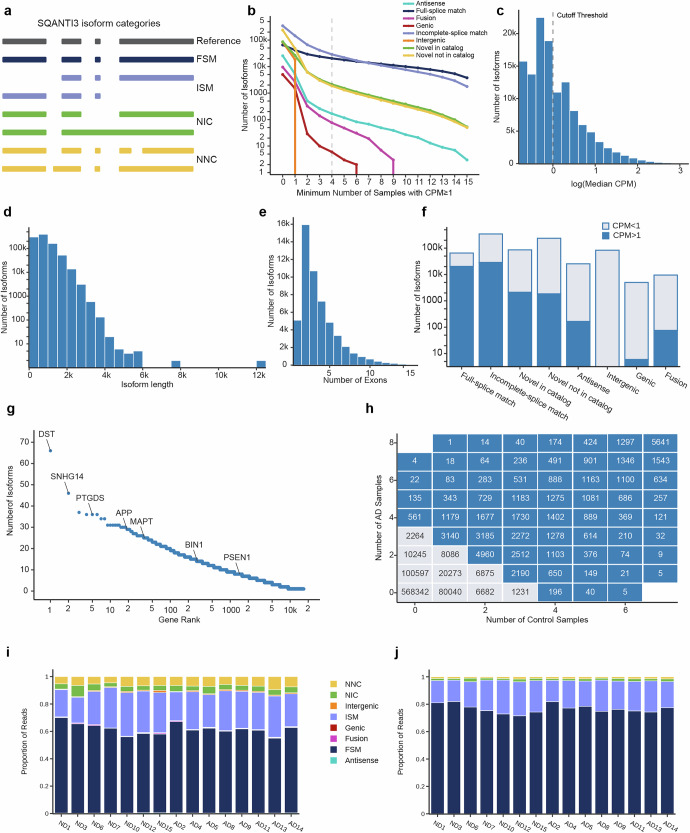
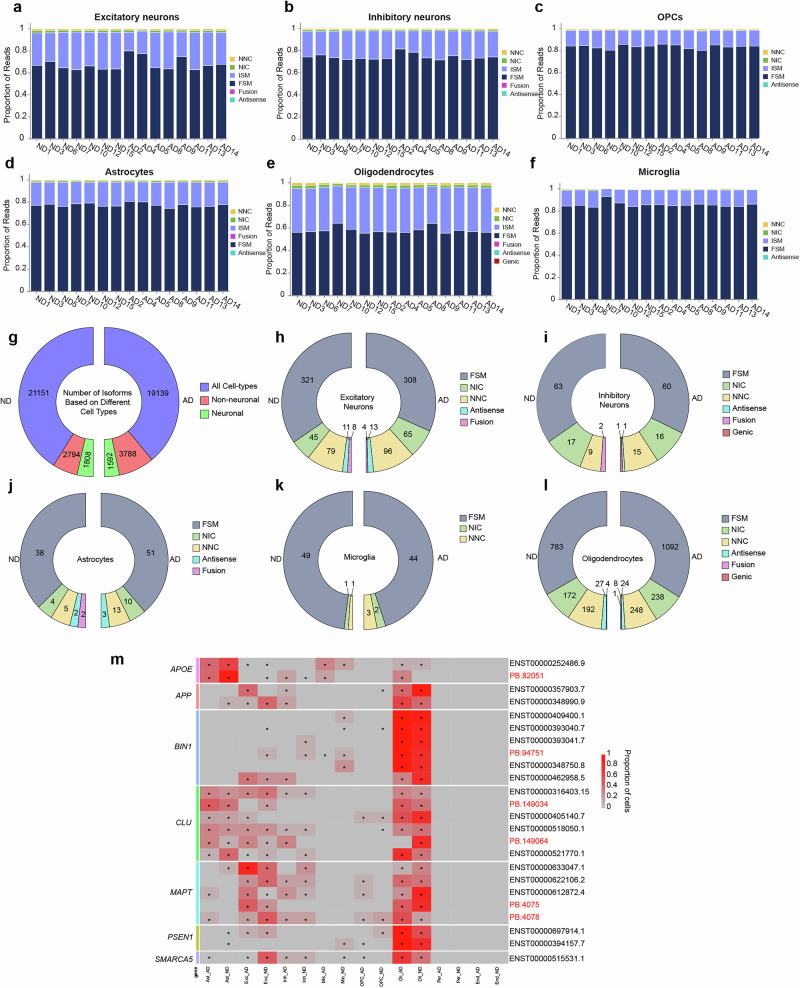
- From >70,000 single nuclei, 858,171 total isoforms were detected; confidence filtering (detected in ≥4 samples with CPM ≥1) yielded 53,536 confident isoforms (~6% of all detected isoforms, supported by ~75% of reads), including 20,386 FSM, 28,906 ISM, 2,133 NIC, and 1,862 NNC isoforms. DST had the most confident isoforms for a gene, with 66.
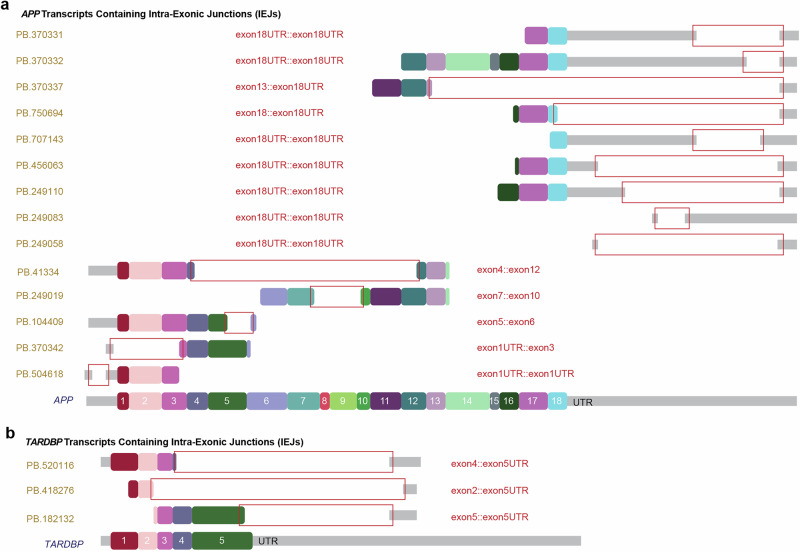
- Isoforms with intra-exonic junctions associated with reverse transcriptase-mediated somatic gene recombination were detected, including APP and TARDBP isoforms, though these were not in the confident set; IEJ-containing isoforms were identified for 13,618 gene/putative gene sequences.
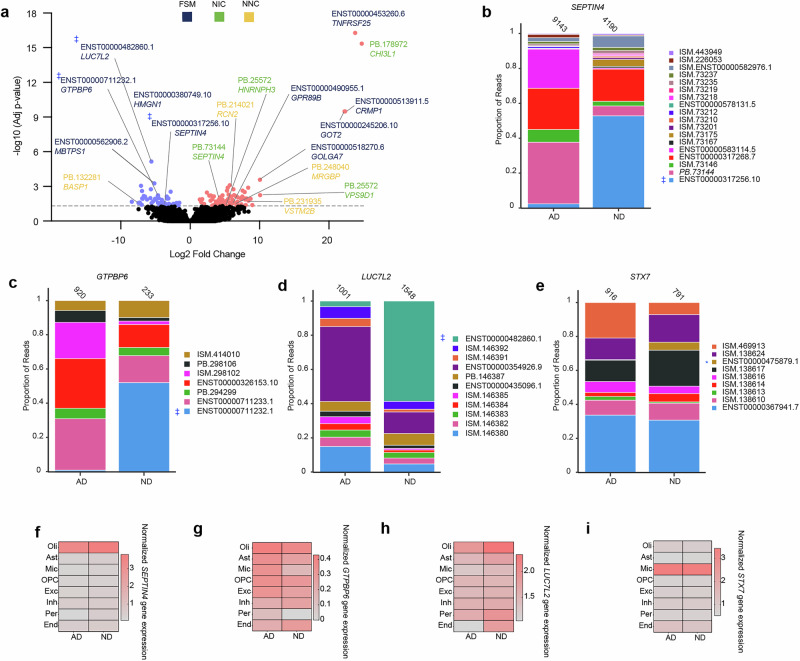
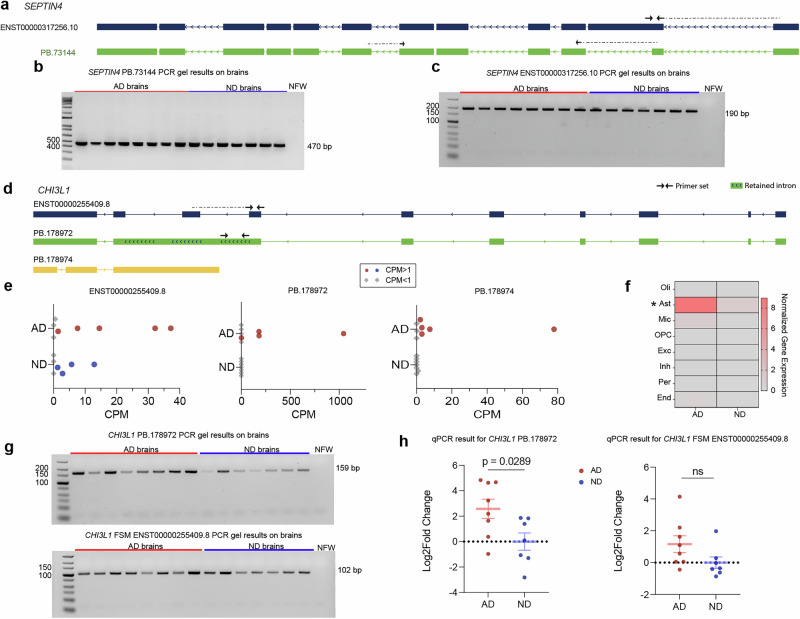
- Differential transcript expression and switching analyses identified four significantly switched isoforms for GTPBP6, LUC7L2, STX7, and SEPTIN4; three of these were also down-regulated DETs. CHI3L1 NIC isoform PB.178972 was significantly upregulated in AD while the FSM transcript was not, and RT-qPCR validated CHI3L1 NIC upregulation (p = 0.0289) with no significant FSM change (ns = 0.0721).
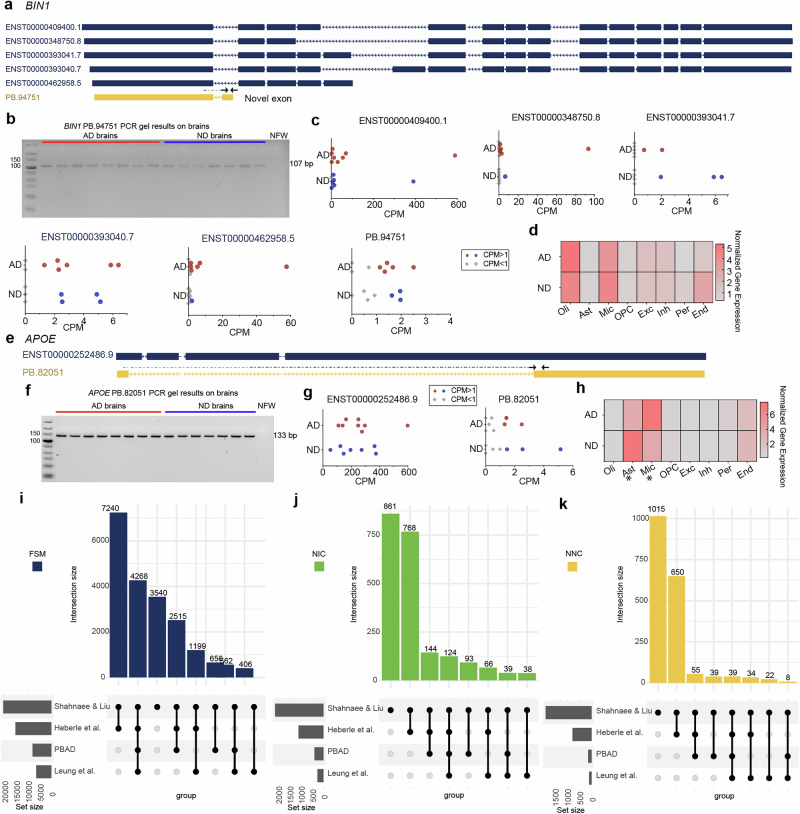
- Cross-dataset comparison found 16,846/20,386 FSM isoforms (82.6%), 1,272 NIC isoforms (59.6%), and 847 NNC isoforms (45.5%) from the confident set in at least one other dataset; 3,540 FSM, 861 NIC, and 1,015 NNC isoforms were unique to this confident set.
Methods
- Single-nucleus short-read and Kinnex long-read RNA-seq were performed on prefrontal cerebral cortex from seven ND and eight AD post-mortem brains matched for age, sex, and RNA integrity number (Mann-Whitney U test, P > 0.05). Nuclei were isolated, sorted, and processed with the 10X Genomics Single Cell 3′ v3.1 kit; barcoded cDNA was split 25% for Illumina NovaSeq 6000 short-read sequencing and 75% for PacBio Sequel II Kinnex long-read sequencing.
- Long-read data were processed with ccs, skera, lima, isoseq, pbmm2, cDNA_Cupcake, and a modified SQANTI3 using GENCODE v44; isoforms were organized in isoSeQL (v1.0.1). Pseudobulk differential transcript expression used DESeq2 (version 3.21) and isoform switching used DEXseq (version 1.32). Cell-type assignment matched long-read barcodes to short-read Seurat (v4.3) annotations, with an isoform considered expressed in a cell type if that cell type made up ≥5% of cells in which it was detected.
- Novel and differential isoforms were validated by RT-PCR and RT-qPCR, and comparisons were made to publicly available long-read brain datasets (Heberle et al., Leung et al., and a PacBio Alzheimer’s Iso-Seq dataset) processed similarly.
Limitations
- Stated by the paper: sample size for disease vs. non-disease comparisons, 10X library preparation limits cDNA length, overall cost, focus on prefrontal cortex which may not represent other AD-affected brain regions, difficulty obtaining long intact RNA from frozen and FFPE postmortem tissues, use of nuclei rather than whole cells, concerns about premature mRNA isoforms, and confidence filtering that may exclude somatic mosaicism/RT-SGR isoforms.
- Stated by the paper: low-abundance isoforms may arise biologically from cell-type-specific alternative splicing or RT-SGR, but technical factors such as template switching may also contribute; isoforms removed by filtering require future analyses.
- Evident from the text: the median confident transcript length was 671 nucleotides, reflecting 10X Genomics library construction limitations, and the confidence cutoff removed many detected isoforms (e.g., an additional 83,927 NIC and 235,157 NNC isoforms supported by very low reads per sample), so the confident set is a filtered view of isoform diversity.
Model-written summary. Check it against the paper before relying on it.
Integrity signals
Registry
Cites
Statistics
Figures
Verification
Claims the paper makes
4 Valid · 0 Not valid · 35 Not checked · 91 Own results and interpretations
The sources with a verdict support this claim; the rest weren’t checked yet, have no full text we could read, or their verdicts aren’t rated yet.
In the paper
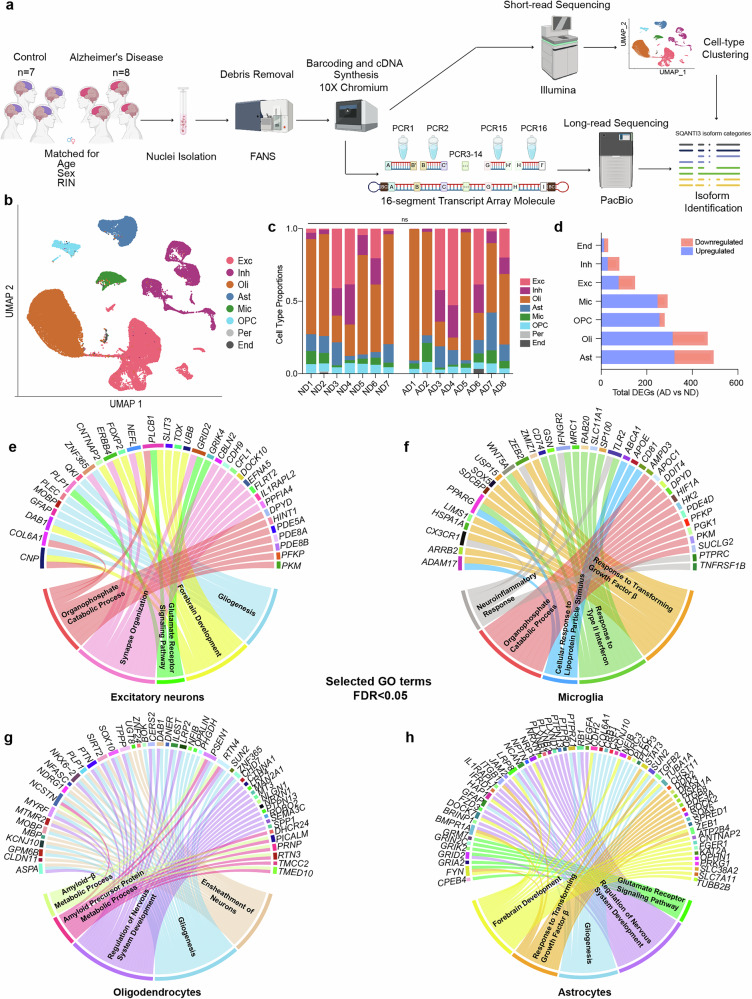
“Gene ontology (GO) analysis45 revealed cell-type-specific alterations in numerous biological processes in AD brains, which, importantly, were consistent with previous snRNA-seq studies12,46(Fig. 1e-h, Supplementary Fig. 1d,e).”
§ RNA isoform diversity, splicing variants and switching in single cells of the Alzheimer’s disease brain > Results > Cell-type-specific gene expression in the Alzheimer’s disease (AD) brain
What the sources say
- Not checked yetcites [45] Elizarraras, J. M. et al. WebGestalt 2024: faster gene set analysis and new support for metabolomics and multi-omics. Nucleic Acids Res. 52, W415–w421 (2024). 38808672 PMC11223849 source
Checked before — its earlier verdict is held back until a new check runs.
- Supportedcites [12] Mathys, H. et al. Single-cell atlas reveals correlates of high cognitive function, dementia, and resilience to Alzheimer’s disease pathology. Cell 186, 4365–4385.e4327 (2023). 37774677 PMC10601493 source
The Methods ('Overlap of DEGs across the expression level spectrum') state that 'Gene Ontology enrichment analyses were performed using metascape... we used the complete proteome as the default background in Metascape and report multi-test corrected q-values,' so GO analysis is this paper's. The results report cell-type-specific process enrichments in AD: 'Coordinated increase of cohesin complex expression and DNA damage response in AD' (Figures 5B, 5C, S5B-S5F) lists synapse organization, chromatin organization and DNA damage response across multiple cell types, cell activation only in microglia, cholesterol metabolism in oligodendrocytes, autophagy and lipid metabolism in astrocytes, neurons, oligodendrocytes and OPCs. 'AD-pathology-associated changes conserved across excitatory neuron subtypes' adds the cell-type-restricted DEG analysis, and 'Systematic differential analysis of gene expression' documents DEGs in nearly all of the 54 cell types. The claim's framing as 'in AD brains' matches the paper's AD-pathology- and disease-stage-associated changes. (LLM, conf=0.85)
- Supportedcites [46] Lau, S. F., Cao, H., Fu, A. K. Y. & Ip, N. Y. Single-nucleus transcriptome analysis reveals dysregulation of angiogenic endothelial cells and neuroprotective glia in Alzheimer’s disease. Proc. Natl. Acad. Sci. USA 117, 25800–25809 (2020). 32989152 PMC7568283 source
The Results section 'Cell Type-Specific Transcriptomic Changes Reveal Dysregulated Molecular Pathways in AD Brains.' (p. Results) reports that pathway analysis of the 2,190 DEGs showed cell type-specific associations — synaptic organization/adhesion in excitatory and inhibitory neurons, synaptic signaling and glutamate secretion in astrocytes, immune response in microglia, angiogenesis in endothelial cells, and myelination in oligodendrocytes — and the Fig. 2 legend states the heatmap lists 'Specific GO terms at Right', i.e. the annotation was Gene Ontology. Methods > Data Visualization confirms 'DEGs were functionally annotated according to Gene Ontology (GO) analysis'. The claim's added comparison with other snRNA-seq studies is the citing authors' own point (the source's own cross-study validation vs. Mathys et al.), not part of what is attributed here. (LLM, conf=0.85)
plainstates an association- Asserted: passes — The authors put it forward as true.
- Checkable: passes — It can be checked against evidence.
- Load-bearing: passes — The paper’s conclusions depend on it.
- Based: passes — The paper gives a reason why it holds.
- Not checked yet
The sources with a verdict support this claim; the rest weren’t checked yet, have no full text we could read, or their verdicts aren’t rated yet.
In the paper
“providing evidence that oligodendrocytes contribute to amyloid-beta production48,49.”
§ RNA isoform diversity, splicing variants and switching in single cells of the Alzheimer’s disease brain > Results > Cell-type-specific gene expression in the Alzheimer’s disease (AD) brain
What the sources say
- Not checked yetcites [48] Ishii, A. et al. Contribution of amyloid deposition from oligodendrocytes in a mouse model of Alzheimer’s disease. Mol. Neurodegener. 19, 83 (2024). 39548583 PMC11568619 source
- Supportedcites [49] Sasmita, A. O. et al. Oligodendrocytes produce amyloid-β and contribute to plaque formation alongside neurons in Alzheimer’s disease model mice. Nat. Neurosci. 27, 1668–1674 (2024). 39103558 PMC11374705 source
The Abstract and Main (Introduction) state that APP/BACE1 transcripts are equally abundant in oligodendrocytes and that, by cell-type-specific deletion of Bace1 in the humanized APPNL-G-F model, 'OLs and neurons contribute to Aβ plaque burden.' The Results/Main confirm reduced plaque load (~30%) and altered soluble and insoluble Aβ in OL-Bace1cKO;AD mice (Fig. 2b–f; Fig. 3 Aβ immunoassays of steady-state Aβ production), and that double OL/ExN deletion nearly abolishes cerebral Aβ42, 'highlighting that OLs are a main source of Aβ production.' The in vivo model (mouse AD knock-in) is the only qualifier the citing sentence omits, but the attributed point is directly stated. (LLM, conf=0.93)
plainstates a cause- Asserted: passes — The authors put it forward as true.
- Checkable: passes — It can be checked against evidence.
- Load-bearing: passes — The paper’s conclusions depend on it.
- Based: passes — The paper gives a reason why it holds.
The cited sources support only part of this claim — read each source’s verdict below.
In the paper
“Early efforts to integrate long-read sequencing technologies with single-cell profiling29,39,40 were limited by insufficient read depth.”
§ RNA isoform diversity, splicing variants and switching in single cells of the Alzheimer’s disease brain > Introduction
What the sources say
- Partly supportedcites [29] Palmer, C. R., Liu, C. S., Romanow, W. J., Lee, M. H. & Chun, J. Altered cell and RNA isoform diversity in aging Down syndrome brains. Proc. Natl. Acad. Sci. USA118, (2021). PMC8617492 34795060 sourceExperimental — accuracy not yet measured
Our copy of Palmer et al. (2021) is itself an early integration of long-read SMRT sequencing with single-nucleus profiling, and it does tie a depth constraint to that integration: the Discussion states that identifying cell types using only long reads 'can be achieved with reasonable accuracy, but would require greater sequencing depth for optimal identification,' and the Results (Transcriptomic Diversity Discovered Through Long-Read Sequencing of Single-Nucleus cDNA Libraries) report that only 40.42% of isoform reads could be matched back to a cell type. However, the same Results passage counters the claim's blanket wording by noting 'long-read coverage was enough to identify most cell types,' and the paper nowhere characterizes prior/early efforts in the field as limited by insufficient read depth — so the general historical statement is broader than what this source says. The part not supported is the claim's assertion about 'early efforts' collectively being limited by insufficient depth; the source supports only a depth caveat for long-read-only cell-type assignment in its own dataset. (LLM, conf=0.68)
- Not checked yetcites [39] Liu, C. S. et al. RNA isoform diversity in human neurodegenerative diseases. eNeuro11, ENEURO.0296-24.2024 (2024). PMC11693435 39658200 source
Checked before — its earlier verdict is held back until a new check runs.
- Not checked yetcites [40] Mikheenko, A., Prjibelski, A. D., Joglekar, A. & Tilgner, H. U. Sequencing of individual barcoded cDNAs using Pacific Biosciences and Oxford Nanopore Technologies reveals platform-specific error patterns. Genome Res. 32, 726–737 (2022). 35301264 PMC8997348 source
Checked before — its earlier verdict is held back until a new check runs.
plainstates a cause- Asserted: passes — The authors put it forward as true.
- Checkable: passes — It can be checked against evidence.
- Load-bearing: passes — The paper’s conclusions depend on it.
- Based: passes — The paper gives a reason why it holds.
- Rests on an assumption not shown here.
- Partly supported
The cited sources support only part of this claim — read each source’s verdict below.
In the paper
“For example, gene set enrichment in excitatory neurons included terms associated with “synapse organization”12 and “glutamate signaling” (Fig. 1e)”
§ RNA isoform diversity, splicing variants and switching in single cells of the Alzheimer’s disease brain > Results > Cell-type-specific gene expression in the Alzheimer’s disease (AD) brain
What the sources say
- Partly supportedcites [12] Mathys, H. et al. Single-cell atlas reveals correlates of high cognitive function, dementia, and resilience to Alzheimer’s disease pathology. Cell 186, 4365–4385.e4327 (2023). 37774677 PMC10601493 sourceExperimental — accuracy not yet measured
Our copy does perform gene-set enrichment on excitatory-neuron gene signatures ('AD-pathology-associated changes conserved across excitatory neuron subtypes', p. ~Figure 3A) and reports the consensus signature positively associated with global AD pathology was 'enriched for genes involved in neuron projection morphogenesis, mRNA metabolic processes, chromatin organization, and synaptic signaling', with further SynGO pre-/postsynaptic analysis (Figures S3A-S3E; Methods 'Consensus signatures and SynGO analyses'). So the enrichment-in-excitatatory-neurons part and a synaptic-gene/projection-morphogenesis theme are supported, but the specific terms attributed here — 'synapse organization' and 'glutamate signaling' — do not appear anywhere in our copy (searched: 'synapse organization', glutamate/glutamatergic signaling, GO term enrichment in excitatory neurons). The citation therefore backs the synaptic-category enrichment but not the two quoted GO term labels. (LLM, conf=0.65)
plainstates an association- Asserted: passes — The authors put it forward as true.
- Checkable: passes — It can be checked against evidence.
- Load-bearing: unclear — It is unclear whether the paper’s conclusions depend on it.
- Based: passes — The paper gives a reason why it holds.
- Partly supported
In the paper
“Traditional statistical analysis showed no significant differences in the proportions of the specific brain cell types between AD and ND samples using the conventional threshold (two-sided t-test, p > 0.05; Fig.1c).”
- Also stated in: § Cell-type-specific gene expression in the Alzheimer’s disease (AD) brain · plain
“We additionally analyzed the cell-type proportions using propeller44 and detected no significant shifts in cellular populations between AD and ND.”
§ RNA isoform diversity, splicing variants and switching in single cells of the Alzheimer’s disease brain > Results > Cell-type-specific gene expression in the Alzheimer’s disease (AD) brain
What the sources say
- Not checked yetcites [44] Phipson, B. et al. propeller: testing for differences in cell type proportions in single cell data. Bioinformatics 38, 4720–4726 (2022). 36005887 PMC9563678 source
plain- Asserted: passes — The authors put it forward as true.
- Checkable: passes — It can be checked against evidence.
- Load-bearing: unclear — It is unclear whether the paper’s conclusions depend on it.
- Based: passes — The paper gives a reason why it holds.
- Also stated in: § Cell-type-specific gene expression in the Alzheimer’s disease (AD) brain · plain
44 more claims
Create a free account to see all 130 claims and to verify the 84 references still open.
- It may state two separate claims as one. 54
- Probably not a substantial claim. 49
Self-check
Percentages, sums and reported differences re-computed from the paper’s own numbers.
Each contradiction between two passages listed here was confirmed by an independent check.
Rated minor: it would not touch a result — a value no result rests on, a p-value that stays on the same side of the significance level, or a conflict that is clerical, resolved elsewhere in the paper, or outside its own findings.
In the paper
“Fifteen prefrontal cortices were selected from various brain bank sources (eight female and seven male donors. The sources are: Emory University (n = 9), UK Imperial (n = 3), Southwest Neurodegenerative Diseases Brain Bank (n = 2), Pittsburgh Neurodegenerative Diseases Brain Bank (n = 1), and Sepulveda Neurodegenerative Diseases Brain Bank (n = 1).”
§ RNA isoform diversity, splicing variants and switching in single cells of the Alzheimer’s disease brain > METHODS > Tissue selection and preparation
Reported 15 · recomputed 16
Rated minor: it would not touch a result — a value no result rests on, a p-value that stays on the same side of the significance level, or a conflict that is clerical, resolved elsewhere in the paper, or outside its own findings.
In the paper
§ RNA isoform diversity, splicing variants and switching in single cells of the Alzheimer’s disease brain > Results > Distinct transcript expression patterns across cell types
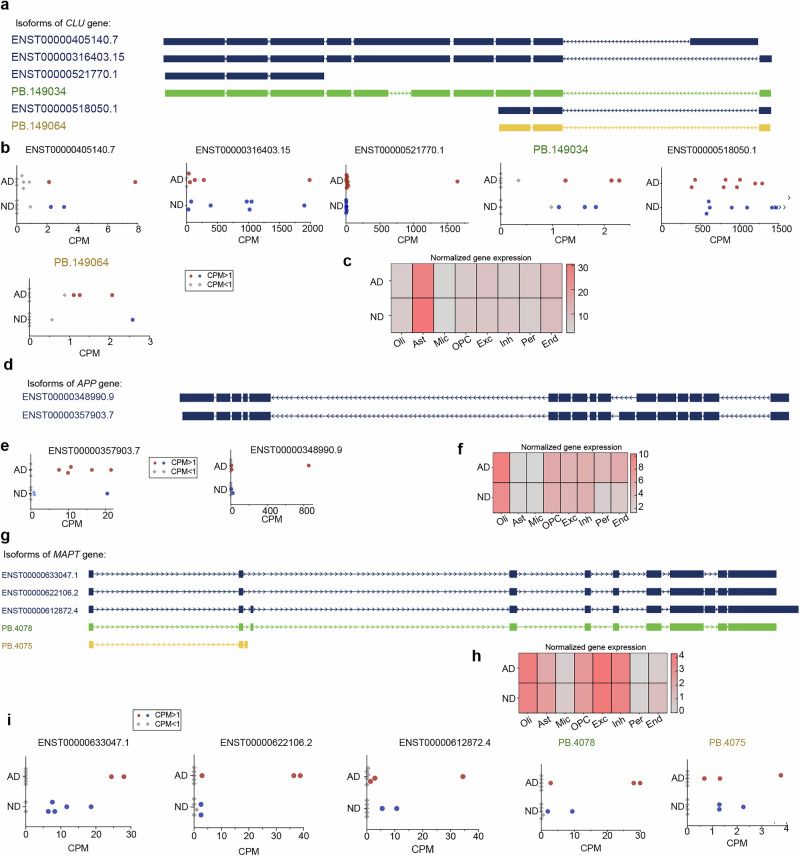
“Two novel isoforms of MAPT (PB.4075 and PB.4078, Fig. 8g-i) were both detected in excitatory neurons”
§ RNA isoform diversity, splicing variants and switching in single cells of the Alzheimer’s disease brain > Results > Distinct transcript expression patterns across cell types
“g Confident FSM MAPT transcripts (navy blue), PB.4087 NIC isoform (green), and PB.4075 NNC isoform (yellow).”
Citations
Cites
Apolipoprotein E and Alzheimer disease: risk, mechanisms and therapy
Liu, C.-C., Kanekiyo, T., Xu, H., & Bu, G. (2013) · Nature Reviews Neurology · doi:10.1038/nrneurol.2012.263 · Cited by 3,459
Neuropathological alterations in Alzheimer disease
Serrano-Pozo, A., Frosch, M. P., Masliah, E., & Hyman, B. T. (2011) · Cold Spring Harbor Perspectives in Medicine · doi:10.1101/cshperspect.a006189 · Cited by 3,345
Synapse loss in frontal cortex biopsies in Alzheimer's disease: Correlation with cognitive severity
DeKosky, S. T., & Scheff, S. W. (1990) · Annals of Neurology · doi:10.1002/ana.410270502 · Cited by 2,376
Hallmarks of neurodegenerative diseases
Wilson, D. M., Cookson, M. R., Van Den Bosch, L., Zetterberg, H., Holtzman, D. M., & Dewachter, I. (2023) · Cell · doi:10.1016/j.cell.2022.12.032 · Cited by 1,789
Zhang, J., Zhang, Y., Wang, J., Xia, Y., Zhang, J., & Chen, L. (2024) · Signal Transduction and Targeted Therapy · doi:10.1038/s41392-024-01911-3 · Cited by 1,138
Integrative single-cell analysis of transcriptional and epigenetic states in the human adult brain
Lake, B. B., Chen, S., Sos, B. C., Fan, J., Kaeser, G. E., Yung, Y. C., Duong, T. E., Gao, D., Chun, J., Kharchenko, P. V., et al. (2018) · Nature Biotechnology · doi:10.1038/nbt.4038 · Cited by 983
Neuronal subtypes and diversity revealed by single-nucleus RNA sequencing of the human brain
Lake, B. B., Ai, R., Kaeser, G. E., Salathia, N. S., Yung, Y. C., Liu, R., Wildberg, A., Gao, D., Fung, H.-L., Chen, S., et al. (2016) · Science · doi:10.1126/science.aaf1204 · Cited by 957 · cited 7×
“Previouslong-readRNA-seqpublicationspro fi lingthehumanbrainin AD and healthy controls enabled a comparison to our data 36,37,59 .”
InfluentialGlobal estimates on the number of persons across the Alzheimer's disease continuum
Gustavsson, A., Norton, N., Fast, T., Frölich, L., Georges, J., Holzapfel, D., Kirabali, T., Krolak‐Salmon, P., Rossini, P. M., Ferretti, M. T., et al. (2023) · Alzheimer's & Dementia · doi:10.1002/alz.12694 · Cited by 895
PROCESSED PSEUDOGENES: CHARACTERISTICS AND EVOLUTION
Vanin, E. F. (1985) · Annual Review of Genetics · doi:10.1146/annurev.ge.19.120185.001345 · Cited by 654
Lanoiselée, H.-M., Nicolas, G., Wallon, D., Rovelet-Lecrux, A., Lacour, M., Rousseau, S., Richard, A.-C., Pasquier, F., Rollin-Sillaire, A., Martinaud, O., et al. (2017) · PLOS Medicine · doi:10.1371/journal.pmed.1002270 · Cited by 616 · cited 1×
“Single-nucleotidemutationsin PSEN1 , PSEN2 , and APP cause familial forms of AD ( APP triplication in Down syndrome also causes AD) 53,54 , with somatic mutations also occurring in sporadic AD for APP 25 .”
Research works printed but not linked: 2
- Aguzzoli Heberle, B. et al. Mapping medically relevant RNA isoform diversity in the aged human frontal cortex with deep long-read RNA-seq. Synapse. https://www.synapse.org/#!Synapse:syn52047893 (2025). PMC11863200 38778214
- Leung, S. K. et al. Full-length transcript sequencing of human and mouse cerebral cortex identifies widespread isoform diversity and altnerative splicing. SRA. https://www.ncbi.nlm.nih.gov/bioproject/PRJNA664117 (2021). PMC8609283 34788620
Cited by
Deciphering transcriptome complexity via long‐read sequencing
Xu, C., Li, J., Yin, C., Li, K., Wang, T., Gao, S., Yu, Y., Chang, C., Wang, Y., Tong, G., et al. (2026) · iMeta · doi:10.1002/imt2.70171
Traxler, L., Borgogno, O., Champion, K., Herdy, J. R., Dzieciątkowska, M., Reisz, J. A., Petrosyan, A., Siler, C., Anderson, C. C., Gorostieta-Salas, E., et al. (2026) · bioRxiv (Cold Spring Harbor Laboratory) · doi:10.64898/2026.09.26.754222
Metadata
- Authors
- Shahnaee, A., Liu, C. S., Ngo, T., Palmer, C. R., Ziomek, D., Park, C., Tan, V. P., Jimenez, N. L., & Chun, J.
- Venue
- Communications Biology
- Published
- 2026-03-03
- Volume
- 9
- Issue
- 1
- Pages
- 506
- ISSN
- 2399-3642 (ISSN-L)
- PMC
- PMC13065774
- OpenAlex
- W7133344806
- Cited by
- 2
- References
- 77
- Citations by year
- 2026: 2
- FWCI
- 2.19
- Type
- journal article
- Language
- en
- Open access
- gold
- doi.org
- Licence
- cc-by-nc-nd
- creativecommons.org/licenses/by-nc-nd/4.0 (tdm)
- creativecommons.org/licenses/by-nc-nd/4.0 (vor, 37 d)
- Locations
- Communications Biology (publishedVersion, cc-by-nc-nd)
- Research Square (submittedVersion, cc-by)
- PubMed Central (publishedVersion, cc-by-nc-nd)
- PubMed Central (publishedVersion, cc-by)
- PubMed (publishedVersion)
- Europe PMC (PubMed Central) (submittedVersion, cc-by)
- PubMed (submittedVersion)
- DOAJ (DOAJ: Directory of Open Access Journals) (submittedVersion)
- Funders
- U.S. Department of Health & Human Services | NIH | National Institute on Aging (R01 AG065541, R01 AG071465)
- U.S. Department of Defense (W81XWH-21-1-0642)
- Larry L. Hillblom Foundation
- The Bruce Ford & Anne Smith Bundy Foundation
- Topics
- Life Sciences › Biochemistry, Genetics and Molecular Biology › Molecular Biology › RNA Research and Splicing
- Life Sciences › Biochemistry, Genetics and Molecular Biology › Molecular Biology › Single-cell and spatial transcriptomics
- Life Sciences › Neuroscience › Cellular and Molecular Neuroscience › Alzheimer's disease research and treatments
- Keywords
- Alzheimer's disease, RNA isoforms, alternative splicing, splice variants, isoform switching, single-nucleus transcriptomics, long-read RNA sequencing, YKL-40, postmortem brain, unannotated transcripts
- MeSH terms
- Alzheimer Disease, Brain, Female, Humans, RNA Splicing, Alternative Splicing, Single-Cell Analysis, RNA Isoforms
About these checks
Registry, retraction, Cites and statistics results are computed, not judged, with one exception: a printed reference that no index lists is read once by a model before it counts as a citation error. Claims are extracted by a model and kept only when their quote appears verbatim in the text; each cited source is then checked, with a model’s help, for whether it says what the claim relies on. Those verdicts can be wrong — read the claim’s quote and the cited source before relying on one.
The claim verdicts this report counts are experimental: their accuracy is not yet measured.
A language model drew the claims from the paper on 2026-11-24, under version 3 of the claim definition (model deepseek-v4.1-flash, prompt extract-v3).
A second model labelled each claim on 2026-11-24 (model jev-1.13-20260917, definition revision gold-guideline-v0.2).
Cited sources are checked with a language model’s help (qwen3.8-omni-flash).
Statistics and arithmetic are recomputed, not judged.
Confidence bands are shown only for fields calibrated on our annotated test set. None is calibrated yet, so no band is shown.
What counts as a claim ›How we measure confidence ›How we check this ›
Are you an author, or do you see a problem with this page? Request a review
Data sources
Bibliographic data: Semantic Scholar, OpenAlex, Crossref.
Contains information from the Semantic Scholar Academic Graph Datasets, made available under the ODC Attribution License (ODC-BY 1.0).
Semantic Scholar’s data is described in: Kinney, R., et al. (2023). The Semantic Scholar Open Data Platform. arXiv:2301.10140.
