

CSF tau phosphorylation occupancies at T217 and T205 represent improved biomarkers of amyloid and tau pathology in Alzheimer’s disease
Open accessThe DOI matches its Crossref record; 54 of the 54 references it cites were found in a registry or an index.
Abstract
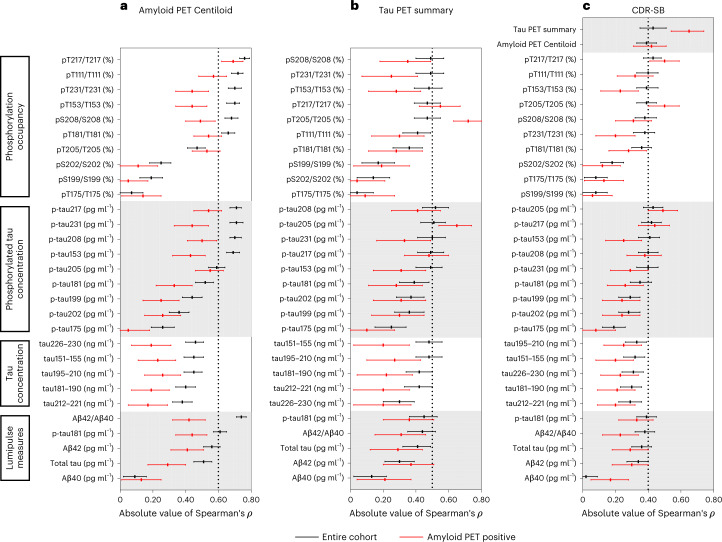
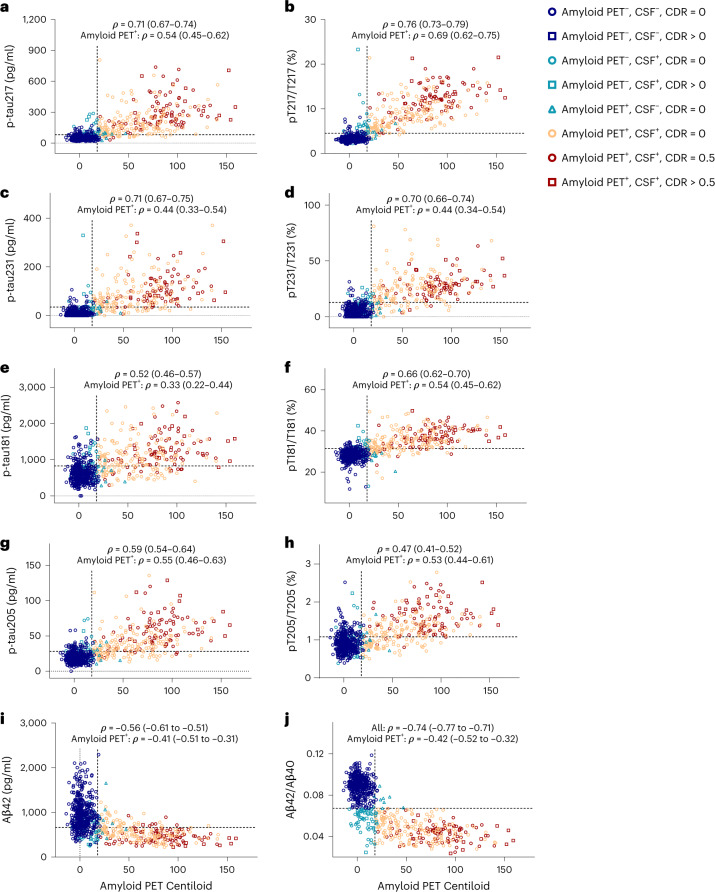
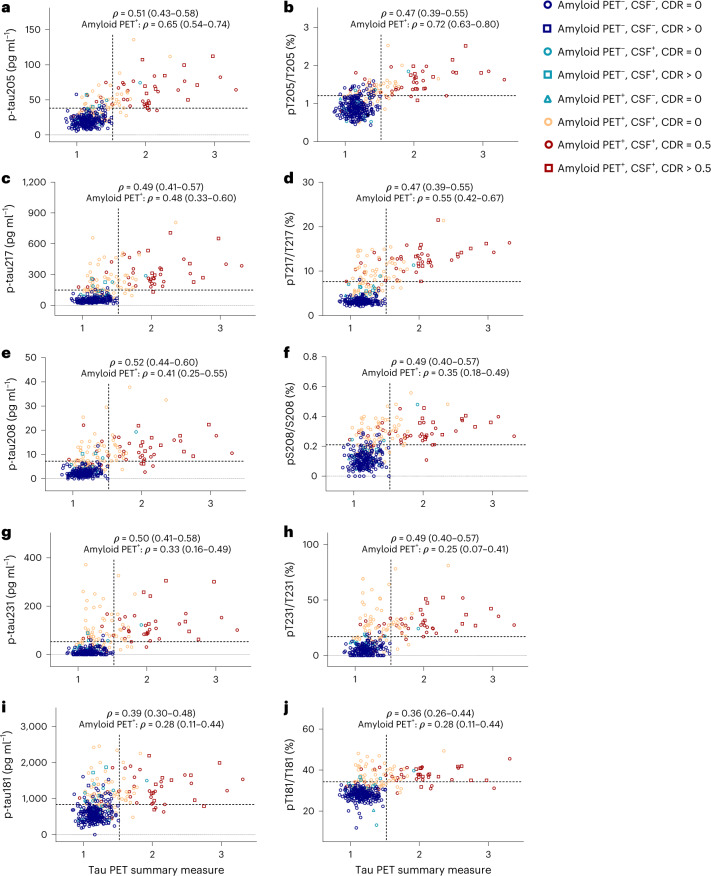
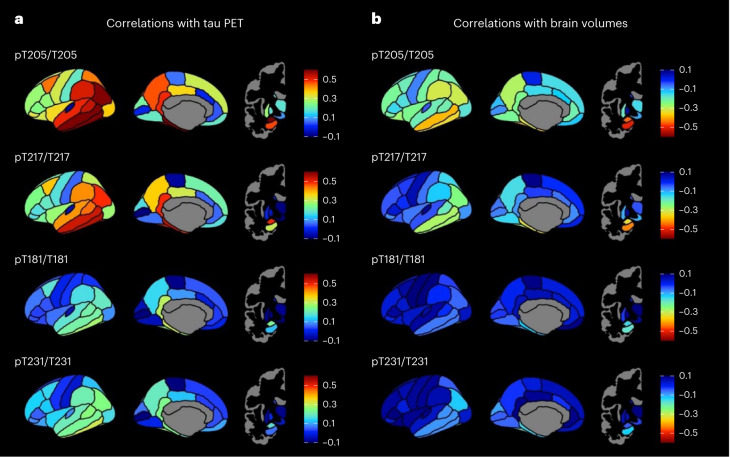
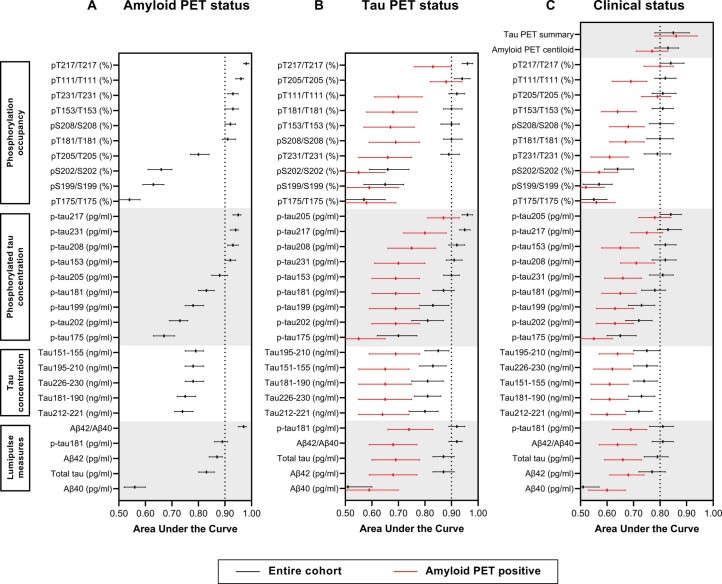
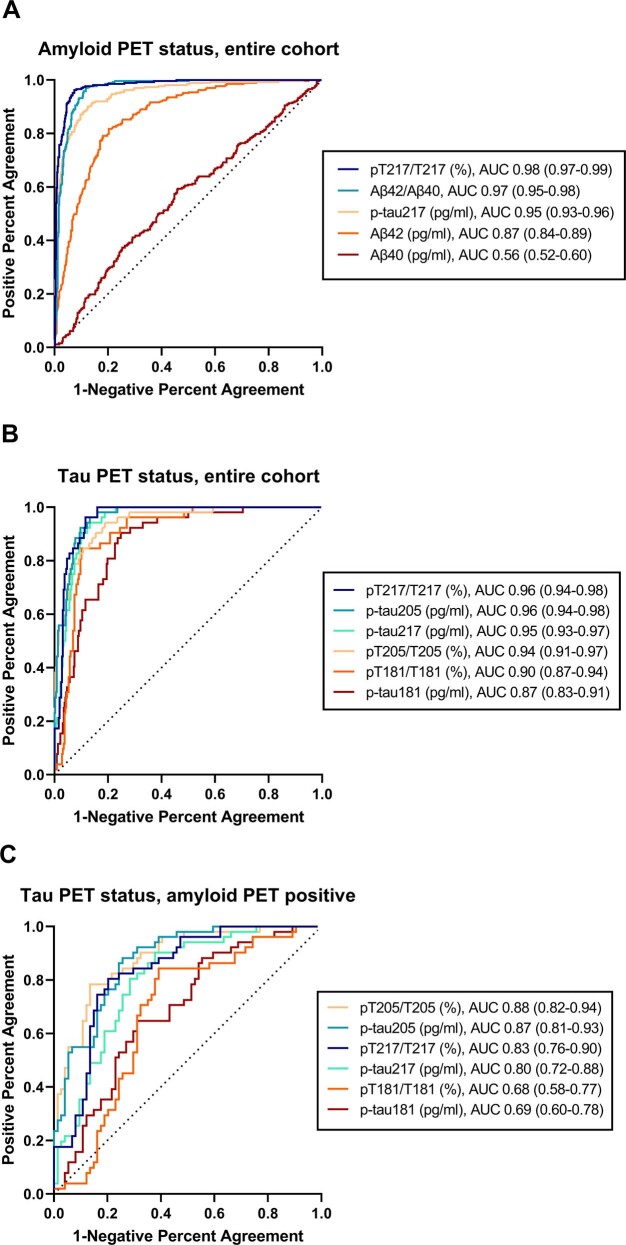
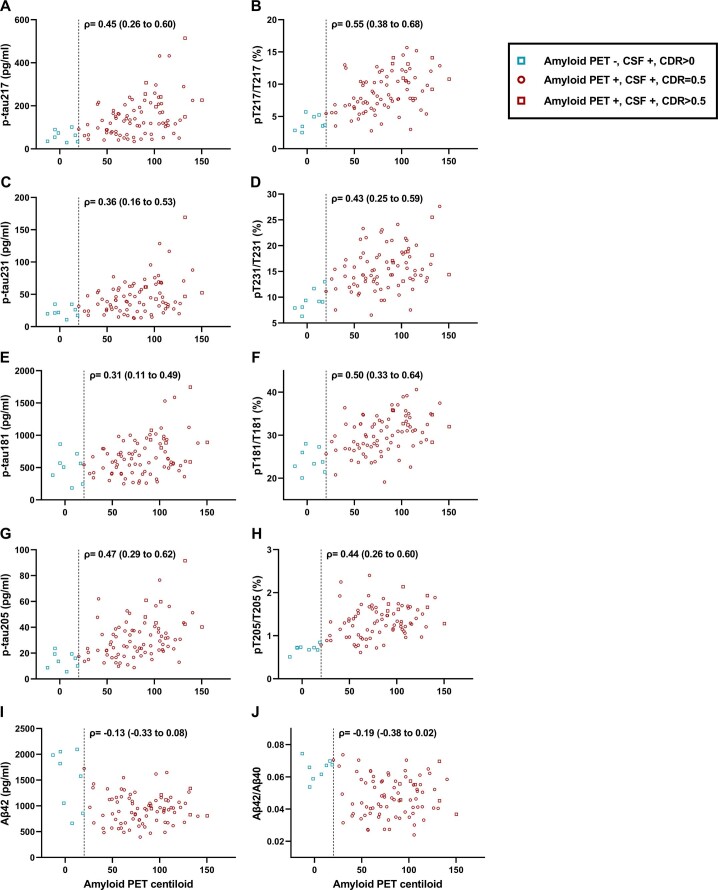
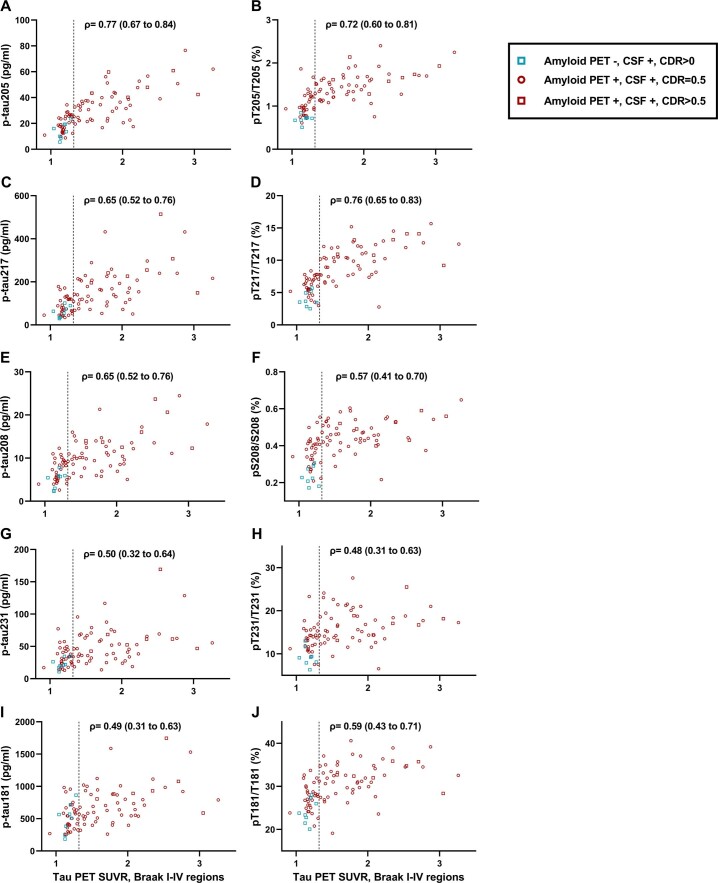
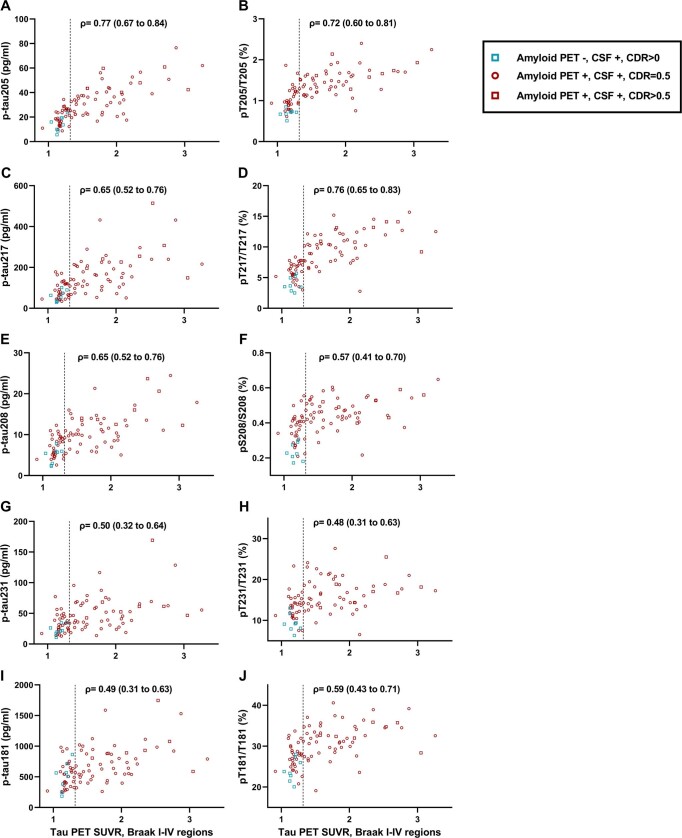
Cerebrospinal fluid (CSF) amyloid-β peptide (Aβ)42/Aβ40 and the concentration of tau phosphorylated at site 181 (p-tau181) are well-established biomarkers of Alzheimer’s disease (AD). The present study used mass spectrometry to measure concentrations of nine phosphorylated and five nonphosphorylated tau species and phosphorylation occupancies (percentage phosphorylated/nonphosphorylated) at ten sites. In the present study we show that, in 750 individuals with a median age of 71.2 years, CSF pT217/T217 predicted the presence of brain amyloid by positron emission tomography (PET) slightly better than Aβ42/Aβ40 ( P = 0.02). Furthermore, for individuals with positive brain amyloid by PET ( n = 263), CSF pT217/T217 was more strongly correlated with the amount of amyloid (Spearman’s ρ = 0.69) than Aβ42/Aβ40 ( ρ = −0.42, P < 0.0001). In two independent cohorts of participants with symptoms of AD dementia ( n = 55 and n = 90), CSF pT217/T217 and pT205/T205 were better correlated with tau PET measures than CSF p-tau181 concentration. These findings suggest that CSF pT217/T217 and pT205/T205 represent improved CSF biomarkers of amyloid and tau pathology in AD.
Overview
The claims and statistics of this paper haven’t been checked yet.
Free: it reads the open-access text and checks the first 5 claims that cite a source we can check. Create a free account to check every claim.
Integrity signals
Registry
Cites
Statistics
Figures
Verification
Claims the paper makes
The claims and statistics of this paper haven’t been checked yet.
Free: it reads the open-access text and checks the first 5 claims that cite a source we can check. Create a free account to check every claim.
Claims other papers make about this one
Each is checked against this paper’s own text: does it say what the citing paper says it does?
The source backs part of the claim, not all of it — or backs it for a different population, condition or comparison.
In the citing paper
“CSF samples were collected and handled according to current international recommendations44,62.”
From Highly accurate blood test for Alzheimer's disease is similar or superior to clinical cerebrospinal fluid tests (2024) · cites this paper as [44]
Experimental — accuracy not yet measuredThe cited source says what the claim attributes to it.
In the citing paper
“but in one large study the test classified Aβ PET status with an AUC of 0.97 (ref. 44).”
From Highly accurate blood test for Alzheimer's disease is similar or superior to clinical cerebrospinal fluid tests (2024) · cites this paper as [44]
Self-check
Percentages, sums and reported differences re-computed from the paper’s own numbers.
The self-check needs the paper’s full text.
Citations
Cites
Controlling the False Discovery Rate: A Practical and Powerful Approach to Multiple Testing
Benjamini, Y., & Hochberg, Y. (1995) · Journal of the Royal Statistical Society Series B: Statistical Methodology · doi:10.1111/j.2517-6161.1995.tb02031.x · Cited by 109,482
DeLong, E. R., DeLong, D. M., & Clarke-Pearson, D. L. (1988) · Biometrics · doi:10.2307/2531595 · Cited by 22,649
NIA‐AA Research Framework: Toward a biological definition of Alzheimer's disease
Jack, C. R., Bennett, D. A., Blennow, K., Carrillo, M. C., Dunn, B., Haeberlein, S. B., Holtzman, D. M., Jagust, W., Jessen, F., Karlawish, J., et al. (2018) · Alzheimer's & Dementia · doi:10.1016/j.jalz.2018.02.018 · Cited by 10,537
The Clinical Dementia Rating (CDR): Current version and scoring rules
Morris, J. C. (1993) · Neurology · doi:10.1212/wnl.43.11.2412-a · Cited by 9,882
Self-citationPalmqvist, S., Janelidze, S., Quiroz, Y. T., Zetterberg, H., Lopera, F., Stomrud, E., Su, Y., Chen, Y., Serrano, G. E., Leuzy, A., et al. (2020) · JAMA · doi:10.1001/jama.2020.12134 · Cited by 1,603
Self-citationInverse relation between in vivo amyloid imaging load and cerebrospinal fluid Aβ 42 in humans
Fagan, A. M., Mintun, M. A., Mach, R. H., Lee, S., Dence, C. S., Shah, A. R., LaRossa, G. N., Spinner, M. L., Klunk, W. E., Mathis, C. A., et al. (2006) · Annals of Neurology · doi:10.1002/ana.20730 · Cited by 1,246
Self-citationMorris, J. C., Weintraub, S., Chui, H. C., Cummings, J., DeCarli, C., Ferris, S., Foster, N. L., Galasko, D., Graff-Radford, N., Peskind, E. R., et al. (2006) · Alzheimer Disease & Associated Disorders · doi:10.1097/01.wad.0000213865.09806.92 · Cited by 950
Self-citationHigh-precision plasma β-amyloid 42/40 predicts current and future brain amyloidosis
Schindler, S. E., Bollinger, J. G., Ovod, V., Mawuenyega, K. G., Li, Y., Gordon, B. A., Holtzman, D. M., Morris, J. C., Benzinger, T. L. S., Xiong, C., et al. (2019) · Neurology · doi:10.1212/wnl.0000000000008081 · Cited by 885
Self-citationHansson, O., Seibyl, J., Stomrud, E., Zetterberg, H., Trojanowski, J. Q., Bittner, T., Lifke, V., Corradini, V., Eichenlaub, U., Batrla, R., et al. (2018) · Alzheimer's & Dementia · doi:10.1016/j.jalz.2018.01.010 · Cited by 808
Self-citationPlasma p-tau231: a new biomarker for incipient Alzheimer’s disease pathology.
Ashton, N. J., Pascoal, T. A., Karikari, T. K., Benedet, A. L., Lantero-Rodriguez, J., Brinkmalm, G., Snellman, A., Schöll, M., Troakes, C., Hye, A., et al. (2021) · Acta Neuropathologica · doi:10.1007/s00401-021-02275-6 · Cited by 719
Cited by
Items 101–154 of 154
Early syndecan-4 upregulation predicts cognitive and pathological trajectories in Alzheimer disease
Tarawneh, R. M., Moulder, K. L., Topouza, D. G., Kar, A., Qian, H., Pankratz, V. S., Timsina, J., Franklin, E. E., Schindler, S. E., Perrin, R. J., et al. (2026) · Alzheimer s Research & Therapy · doi:10.1186/s13195-026-02043-2 · Cited by 5
“CSF samples (20–30 ml) were collected from all participants and analyzed for total tau, tau phosphorylated at threonine 181 (p-tau181), amyloid-β peptide 1–42 (Aβ42), and amyloid-β peptide 1–40 (Aβ40) levels (Lumi-pulse G1200, Fujirebio) [31].”
Self-citationPlasma eMTBR-tau243 and %p-tau217 for Biological Staging of Alzheimer Disease
Salvadó, G., Horie, K., Barthélemy, N. R., Schindler, S. E., Janelidze, S., Dolado, A. O., Bali, D., Perrin, R. J., Morris, J. C., Benzinger, T. L. S., et al. (2026) · JAMA Neurology · doi:10.1001/jamaneurol.2026.1405 · Cited by 12
Self-citationAschenbrenner, A. J., Hassenstab, J. J., Schindler, S. E., Janelidze, S., Hansson, O., Morris, J. C., & Grober, E. H. (2024) · The Journal of Prevention of Alzheimer s Disease · doi:10.14283/jpad.2024.130 · Cited by 4
“Plasma p-tau217 reflects both amyloid and tau pathology (30, 42, 43), and tau pathology is more strongly associated with cognitive impairment than amyloid pathology alone (44,45).”
Self-citationXiong, C., Lu, R., Bui, Q. V. P., Popp, B., Schindler, S. E., Shriver, L. P., Cruchaga, C., Hassenstab, J. J., Benzinger, T. L. S., Agboola, F., et al. (2025) · Journal of Alzheimer s Disease · doi:10.1177/13872877251362667 · Cited by 5
Self-citationWisch, J. K., Kianfar, J., Carr, D. B., Dickerson, A. D., Vivoda, J. M., Harmon, A. C., Trani, J., Johnson, A. M., Doherty, J. M., Murphy, S. A., et al. (2023) · Transportation Research Part F Traffic Psychology and Behaviour · doi:10.1016/j.trf.2023.08.010 · Cited by 5
Self-citationParsimonious EBM: Generalising the event-based model of disease progression for simultaneous events
Parker, C. S., Oxtoby, N. P., Young, A. L., Initiative, A. D. N., Alexander, D. C., & Zhang, H. G. (2025) · NeuroImage · doi:10.1016/j.neuroimage.2025.121162 · Cited by 8
Bateman, R. J., Li, Y., McDade, E., Guerra, J. J. L., Clifford, D. B., Atri, A., Mills, S. L., Santacruz, A. M., Wang, G., Supnet, C. B., et al. (2024) · SSRN Electronic Journal · doi:10.2139/ssrn.4906344 · Cited by 5
Self-citationAthanasaki, A., Tsantzali, I., Theodorou, A., Michalopoulou, A., Constantinides, V. C., Boufidou, F., Tzartos, J. S., Tsalouchidou, P., Zompola, C., Paraskevas, S. G., et al. (2025) · International Journal of Molecular Sciences · doi:10.3390/ijms26199531 · Cited by 4
Huang, L., Xie, F., Huang, C., Huang, Q., Guan, Y., Guo, Q.-H., & Pan, F. (2026) · The Lancet Regional Health - Western Pacific · doi:10.1016/j.lanwpc.2026.101817 · Cited by 3
“Furthermore, while some studies have suggested that plasma P-tau levels are more closely associated with amyloid rather than tau pathology, 27,28 other reports indicating that P-tau217 informs on tau tangle aggregation.”
Clinical Validation of Plasma p‐217tau in Neurological Diseases
Kawarabayashi, T., Nakamura, T., Takahashi, R., Ueda, T., Kinoshita, S., Uchida, C., Sugawara, T., Hashimoto, K., Ishizawa, K., Amari, M., et al. (2026) · Annals of Clinical and Translational Neurology · doi:10.1002/acn3.70359 · Cited by 3
“are closely associated with Aß amyloid deposits [7–10].”
Shoff, T. A., Derbez-Morin, M., Cai, P., & Julian, R. R. (2026) · PNAS Nexus · doi:10.1093/pnasnexus/pgag034 · Cited by 5
Andreozzi, E. M., Yagi, T., Wildsmith, K. R., Rawal, S., Horie, K., Boyd, P., Takahashi, E., Barthélemy, N. R., Aluri, J., Charil, A., et al. (2026) · Alzheimer s Research & Therapy · doi:10.1186/s13195-026-02047-y · Cited by 7
“Measurement of CSF MTBR-tau243, phosphorylated tau (ptau) and nonphosphorylated tau (nptau) species were performed at Washington University using the previously reported methods with IP–MS [21, 30, 31].”
Self-citationFluid biomarkers unveil signatures of pathological aging
Hansen, N., & Wiltfang, J. (2024) · Seizure · doi:10.1016/j.seizure.2024.05.019 · Cited by 3
Remote memory engrams are controlled by encoding-specific tau phosphorylationPreprint
Stefanoska, K., Prikas, E., Lin, Y., Kosonen, R., & Ittner, A. (2023) · bioRxiv (Cold Spring Harbor Laboratory) · doi:10.1101/2023.12.01.569663 · Cited by 5
Sindi, G., Ismael, S., Uddin, R., Slepchenko, K. G., Colvin, R. A., & Lee, D. (2024) · bioRxiv (Cold Spring Harbor Laboratory) · doi:10.1101/2024.06.02.597022 · Cited by 4
Hartz, S. M., Schindler, S. E., Streitz, M. L., Moulder, K. L., Mozersky, J. T., Wang, G., Xiong, C., & Morris, J. C. (2024) · medRxiv · doi:10.1101/2024.07.16.24310511 · Cited by 3
Self-citationA novel pThr217 tau monoclonal antibody reveals neuropathological heterogeneity in tauopathies
Paterno, G., Bell, B. M., Gorion, K.-M. M., Quintin, S. S., Prokop, S., & Giasson, B. I. (2025) · Scientific Reports · doi:10.1038/s41598-025-04291-y · Cited by 2
Early cerebrospinal fluid elevations of pTau-217 in severe traumatic brain injury subjects
Yadikar, H., Kobeissy, F. H., Robertson, C. S., Tsetsou, S., Williamson, J. B., Lamb, D. G., Wagner, A. K., Kibaugh, T., Kao, S.-H., Kou, Z., et al. (2025) · Frontiers in Neurology · doi:10.3389/fneur.2025.1632679 · Cited by 3
Mattsson, N., Karlsson, L., Tang, W., Blennow, K., Zetterberg, H., Bateman, R. J., Schindler, S. E., Barthélemy, N. R., Palmqvist, S., Stomrud, E., et al. (2025) · EMBO Molecular Medicine · doi:10.1038/s44321-025-00348-7 · Cited by 4
“When studies have strati fi ed individuals by A β -status, correlations have been weak or absent within the A β -negative range, and attenuated (Janelidze et al, 2020; Wisch et al, 2023) or even absent (Mundada et al, 2023) within the A β -positive range (Barthélemy et al, 2023).”
Self-citationTau-PET and CSF MTBR-tau243 comparisons validate increased tau aggregation in females
Robinson, C. G., Binette, A., Horie, K., Sato, C., Schindler, S., Bateman, R., Benzinger, T., Janelidze, S., Singleton, E., Stomrud, E., et al. (2026) · European Journal of Nuclear Medicine and Molecular Imaging · doi:10.1007/s00259-026-07934-y · Cited by 2
“In the Knight-ADRC, Aβ-positive participants were selected based on a pre-established cutoff of 0.0673 [34 , 44 – 47 ].”
InfluentialSelf-citationWalia, A., Shew, M. A., Durakovic, N., Herzog, J. A., Cirrito, J. R., Yuede, C. M., Wick, C. C., Manis, M., Holtzman, D. M., Buchman, C. A., et al. (2024) · Otolaryngology · doi:10.1002/ohn.942 · Cited by 2
“46 51 While biomarkers of AD have recently been validated in blood serum and CSF, 23 ‐ 25 and serum tests have now been commercialized, the investigation of perilymph for AD biomarkers is a novel and innovative approach to understanding the sensory impact of AD.”
Developing non-invasive molecular markers for early risk assessment of Alzheimer's disease
Sur, T. K., Mondal, T., Noreen, Z., Johnson, J., Nunlee‐Bland, G., Loffredo, C. A., Korba, B. E., Chandra, V., Jana, S. S., Kwabi‐Addo, B., et al. (2025) · Biomarkers in Neuropsychiatry · doi:10.1016/j.bionps.2025.100120 · Cited by 4
Novel Conformation-Dependent Tau Antibodies Are Modulated by Adjacent Phosphorylation Sites
Paterno, G., Torrellas, J., Bell, B. M., Gorion, K.-M. M., Quintin, S. S., Hery, G. P., Prokop, S., & Giasson, B. I. (2023) · International Journal of Molecular Sciences · doi:10.3390/ijms241813676 · Cited by 2
Dementia and Cognitive Impairment
Chong, Y. F. V., & Tang, S. (2024) · Elsevier eBooks · doi:10.1016/b978-0-323-99967-0.00134-4 · Cited by 2
Welhaf, M. S., Balota, D. A., Schindler, S. E., Morris, J. C., Hassenstab, J. J., & Aschenbrenner, A. J. (2025) · Journal of Clinical and Experimental Neuropsychology · doi:10.1080/13803395.2025.2498025 · Cited by 2
“We categorized the participants as amyloid positive (Aß+) or amyloid negative (Aß–) using the CSF ratio Aß42/40 (cutoff <0.0673; Barthélemy et al., 2023).”
InfluentialSelf-citationHuang, X., Xu, Z., Fu, F., Song, J., Zeng, J., Huang, S., & Yue, F. (2025) · Computers in Biology and Medicine · doi:10.1016/j.compbiomed.2025.110849 · Cited by 1
Neuropathology and Biomarker Correlates of Late Onset Alzheimer’s Disease in Aged Old World Monkeys
Zeiss, C. J., Duque, A., & Huttner, A. J. (2025) · Toxicologic Pathology · doi:10.1177/01926233251388069 · Cited by 2
Plasma biomarkers in neuropsychiatric syndromes: A narrative review
Ismail, Z., Guan, D. X., Babulal, G. M., Bateman, J. R., Cantillon, M., Creese, B., D’Antonio, F., Fischer, C. E., Gatchel, J. R., Ghahremani, M., et al. (2025) · Journal of Alzheimer s Disease · doi:10.1177/13872877251392185 · Cited by 4
“2,18,21 Biomarkers of dementia progression may provide a way to assess the risk for emergent NPS, since most NPS seem to correlate with a more severe disease course.”
Self-citationRani, N., Moghekar, A., Callow, D. D., Alm, K. H., Pettigrew, C. A., Soldan, A., Miller, M. H., Wang, J., Lodge, M. A., Albert, M., et al. (2026) · Neurology · doi:10.1212/wnl.0000000000214620 · Cited by 1
Chen, Y., Wang, Z., Chen, H., Cui, H., Li, S., & Initiative, A. D. N. (2026) · Journal of Neurology · doi:10.1007/s00415-026-13726-z · Cited by 1
Tau T205 phosphorylation modulates engram cell recruitment and remote memory in mice
Kosonen, R., Stefanoska, K., Lin, Y., Edwards, S., Prikas, E., Bertz, J., Poljak, A., Ittner, L. M., & Ittner, A. (2026) · Nature Communications · doi:10.1038/s41467-026-73207-9 · Cited by 1
“AD pathology presents with a high load of phosphorylated tau, including at T205 88,94 , potentially interfering with physiologic, memory-associated tau modi fi cations.”
Chen, J. K., Liang, Y., Xu, P., Kong, C., Zhang, Y. Y., 周如洋, Wu, O., Jiang, Z., Zhao, H., Song, M., et al. (2026) · Analytica Chimica Acta · doi:10.1016/j.aca.2026.345893 · Cited by 1
Mu, R., Hofmann, A., Gong, K., Liu, M., Roussak, A., Lowery, J., Chen, Y., Paczynski, M., Posey, Z. J., Cheng, Y., et al. (2026) · The Lancet Neurology · doi:10.1016/s1474-4422(26)00284-x · Cited by 1
Self-citationNeuroimaging Biomarkers in Alzheimer’s Disease and Related Disorders
Masdeu, J. C., & Pascual, B. (2023) · Springer eBooks · doi:10.1007/978-3-031-43356-6_11 · Cited by 1
Janošová, M., Katina, S., & Hanes, J. (2024) · Pharmacology Research & Perspectives · doi:10.1002/prp2.70048 · Cited by 3
The Alzheimer disease continuum : findings from monogenic Alzheimer disease
Johansson, C. (2025) · doi:10.69622/28639856 · Cited by 4
Xiong, C., Lu, R., Bui, Q. V. P., Popp, B., Schindler, S. E., Shriver, L. P., Cruchaga, C., Hassenstab, J. J., Benzinger, T. L. S., Agboola, F., et al. (2024) · Research Square · doi:10.21203/rs.3.rs-5118913/v1
Self-citationFluid and Imaging Markers of Amyloid Pathology
West, T., Meyer, M. R., Kirmess, K. M., Yarasheski, K. E., Braunstein, J. B., & Verghese, P. B. (2025) · Springer eBooks · doi:10.1007/978-3-031-80849-4_1
P-TAU205 IS A BIOMARKER LINKED TO TAU-PET ABNORMALITY: A CROSS-SECTIONAL AND LONGITUDINAL STUDYPreprint
Lantero‐Rodriguez, J., Janelidze, S., Palmqvist, S., Braun-Wohlfahrt, L. S., Vávra, J., Bali, D., Dolado, A. O., Mattsson, N., Stomrud, E., Zetterberg, H., et al. (2025) · medRxiv · doi:10.1101/2025.10.21.25338437
Self-citationTherriault, J., Woo, M. S., Salvadó, G., Gobom, J., Karikari, T. K., Janelidze, S., Servaes, S., Rahmouni, N., Tissot, C., Ashton, N. J., et al. (2024) · Figshare · doi:10.6084/m9.figshare.26664625
Self-citationTherriault, J., Woo, M. S., Salvadó, G., Gobom, J., Karikari, T. K., Janelidze, S., Servaes, S., Rahmouni, N., Tissot, C., Ashton, N. J., et al. (2024) · Figshare · doi:10.6084/m9.figshare.26664619
Self-citationMelendez, J., Mozaffar, L., Jiao, Z., Roberts, K. F., Cruchaga, C., Orr, M. E., Yoo, A. S. J., Schindler, S. E., Budde, J., Timsina, J., et al. (2026) · Research Square · doi:10.21203/rs.3.rs-8791371/v1
Self-citationConnecting the Dots: Neurobiological Interplay Between Type 2 Diabetes and Alzheimer’s Disease
Foncea-Bitrán, A., Barros-Osorio, C., Arriaza, F., Ramírez-López, C., Ruíz, L. M., Barreto, M., Ortíz, F. C., Cornejo, F., & Gómez, G. I. (2026) · International Journal of Molecular Sciences · doi:10.3390/ijms27073225 · Cited by 1
“Additionally, increases in t-tau and p-tau181 in CSF tend to correlate with A β burden rather than with NFT load [147], suggesting that they may reflect early pathophysiological changes rather than late-stage neuronal loss [54].”
Van, K. T. (2025) · theses.fr (ABES) · doi:10.70675/32a1a6cez5dd3z42c0za2eaz2e57807081a6
Zafari, R., Kamroo, A., Taherkhani, T., Heidari‐Foroozan, M., Nabizdeh, F., & Aarabi, M. H. (2026) · Research Square · doi:10.21203/rs.3.rs-9382890/v1
“Beyond their central role in AD pathophysiology, Aβ and p-tau are measurable hallmarks of disease pathology [6, 7].”
CSF p-tau205: a biomarker of Alzheimer’s disease progression and biological staging
Lantero‐Rodriguez, J., Janelidze, S., Palmqvist, S., Braun-Wohlfahrt, L. S., Vávra, J., Bali, D., Dolado, A. O., Mattsson, N., Stomrud, E., Zetterberg, H., et al. (2026) · Molecular Psychiatry · doi:10.1038/s41380-026-03838-3
Self-citationDoes CSF testing add value after an indeterminate plasma p-tau217 result?Preprint
Bernardi, E., Arranz, J., Rubio‐Guerra, S., Castro, J. G., Maure‐Blesa, L., Rodríguez‐Baz, Í., Peris‐Subiza, J., Selma‐González, J., Vera-Campuzano, E., Vaqué‐Alcázar, L., et al. (2026) · Research Square · doi:10.21203/rs.3.rs-10754560/v1
Johnson, A. K., Hulle, C. A. V., Zylstra, H., Cronin, K. A., Johnson, K., Rivera‐Rivera, L. A., Chappell, R., Wilson, R., Kac, P. R., Gleason, C. E., et al. (2026) · Neurobiology of Disease · doi:10.1016/j.nbd.2026.107605
Luo, Y. R., Zheng, L., & Shin, S. (2026) · Advances in clinical chemistry · doi:10.1016/bs.acc.2026.09.001
Mukherjee, S., Barthélemy, N. R., Atri, T. E., Wang, Q., Yen, D. P., He, Y., Coyle, R. A., Ovod, V., Franklin, E. E., Xiong, C., et al. (2026) · medRxiv · doi:10.64898/2026.09.22.26363432
Self-citationZhang, X., Shi, Y., Guo, M., Huang, Y., Wang, Y., Huang, L., Azevedo, H. S., Hu, H., & Dong, X. W. (2026) · Interdisciplinary medicine · doi:10.1002/inmd.70178
Zhang, S., Wang, S., 左显维, Li, M., Zhang, R., Ye, T., Cao, H., Hao, L., Wu, X., Yuan, M., et al. (2026) · Electrochimica Acta · doi:10.1016/j.electacta.2026.150212
Diagnostic Accuracies of Plasma P-Tau205, P-Tau212, and P-Tau217 Immunoassays in Alzheimer Disease
Sehrawat, A., Zeng, X., Monto, A. R., Saeed, A., Cohen, A. D., López, O. L., Reís, S. E., & Karikari, T. K. (2026) · Neurology Open Access · doi:10.1212/wn9.0000000000000175
Hathi, U. P. S., Kumar, A., Jyotsna, A., & Kateriya, S. (2026) · Research Square · doi:10.21203/rs.3.rs-11257702/v1
Metadata
- Authors
- Barthélemy, N. R., Saef, B., Li, Y., Gordon, B. A., He, Y., Horie, K., Stomrud, E., Salvadó, G., Janelidze, S., Sato, C., Ovod, V., Henson, R. L., Fagan, A. M., Benzinger, T. L. S., Xiong, C., Morris, J. C., Hansson, O., Bateman, R. J., & Schindler, S. E.
- Affiliations
- Washington University in St. Louis (US)
- Lund University (SE)
- Corresponding author
- Barthélemy, Nicolas R.
- Schindler, Suzanne E.
- ORCID
- Venue
- Nature Aging
- Published
- 2023-03-13
- Volume
- 3
- Issue
- 4
- Pages
- 391-401
- ISSN
- 2662-8465 (ISSN-L)
- PMC
- PMC10154225
- OpenAlex
- W4324032790
- Semantic Scholar
- dd741fe518da20d78bf48077a7222e495f7db0e6
- Cited by
- 153
- References
- 51
- Citations by year
- 2026: 29 · 2025: 56 · 2024: 58 · 2023: 10
- FWCI
- 27.17
- Type
- journal article
- Language
- en
- Open access
- hybrid
- doi.org
- Licence
- cc-by
- creativecommons.org/licenses/by/4.0 (tdm)
- creativecommons.org/licenses/by/4.0 (vor)
- Locations
- Nature Aging (publishedVersion, cc-by)
- PubMed Central (publishedVersion, cc-by)
- PubMed (publishedVersion)
- Lund University Publications (Lund University) (submittedVersion)
- Funders
- Knight ADRC Developmental Award
- Eisai industry award
- U.S. Department of Health & Human Services | NIH | National Institute on Aging (P30AG066444, P01AG003991, P01AG026276, U19AG032438, U19AG024904, RF1AG061900, R56AG061900, R01AG070941)
- Vetenskapsrådet (2016-00906)
- Topics
- Life Sciences › Neuroscience › Cellular and Molecular Neuroscience › Alzheimer's disease research and treatments
- Health Sciences › Medicine › Psychiatry and Mental health › Dementia and Cognitive Impairment Research
- Health Sciences › Medicine › Clinical Neurology › Cerebrospinal fluid and hydrocephalus
- Keywords
- Alzheimer's disease, cerebrospinal fluid biomarkers, tau phosphorylation, amyloid PET, amyloid-beta 42/40 ratio, tau PET, tau pathology
- MeSH terms
- Aged, Alzheimer Disease, Amyloid, Humans, Peptide Fragments, Phosphorylation, Biomarkers, tau Proteins
About these checks
Registry, retraction, Cites and statistics results are computed, not judged, with one exception: a printed reference that no index lists is read once by a model before it counts as a citation error. Claims are extracted by a model and kept only when their quote appears verbatim in the text; each cited source is then checked, with a model’s help, for whether it says what the claim relies on. Those verdicts can be wrong — read the claim’s quote and the cited source before relying on one.
Statistics and arithmetic are recomputed, not judged.
Confidence bands are shown only for fields calibrated on our annotated test set. None is calibrated yet, so no band is shown.
What counts as a claim ›How we measure confidence ›How we check this ›
Are you an author, or do you see a problem with this page? Request a review
Data sources
Bibliographic data: Semantic Scholar, OpenAlex, Crossref.
Contains information from the Semantic Scholar Academic Graph Datasets, made available under the ODC Attribution License (ODC-BY 1.0).
Semantic Scholar’s data is described in: Kinney, R., et al. (2023). The Semantic Scholar Open Data Platform. arXiv:2301.10140.
