

CSF tau phosphorylation occupancies at T217 and T205 represent improved biomarkers of amyloid and tau pathology in Alzheimer’s disease
Open accessThe DOI matches its Crossref record; 54 of the 54 references it cites were found in a registry or an index.
Abstract
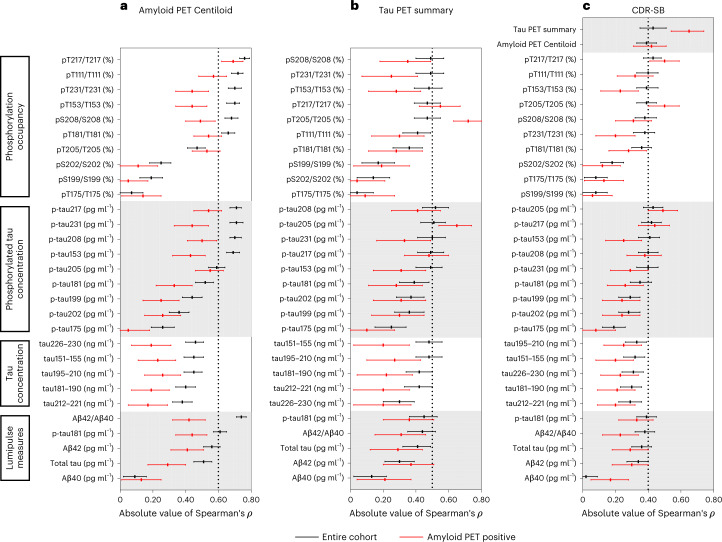
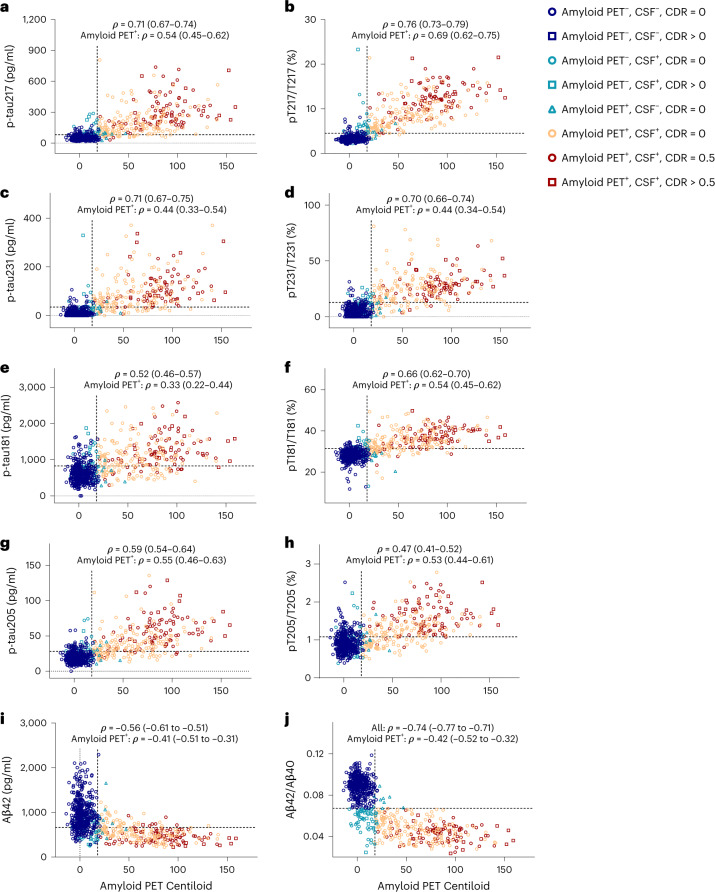
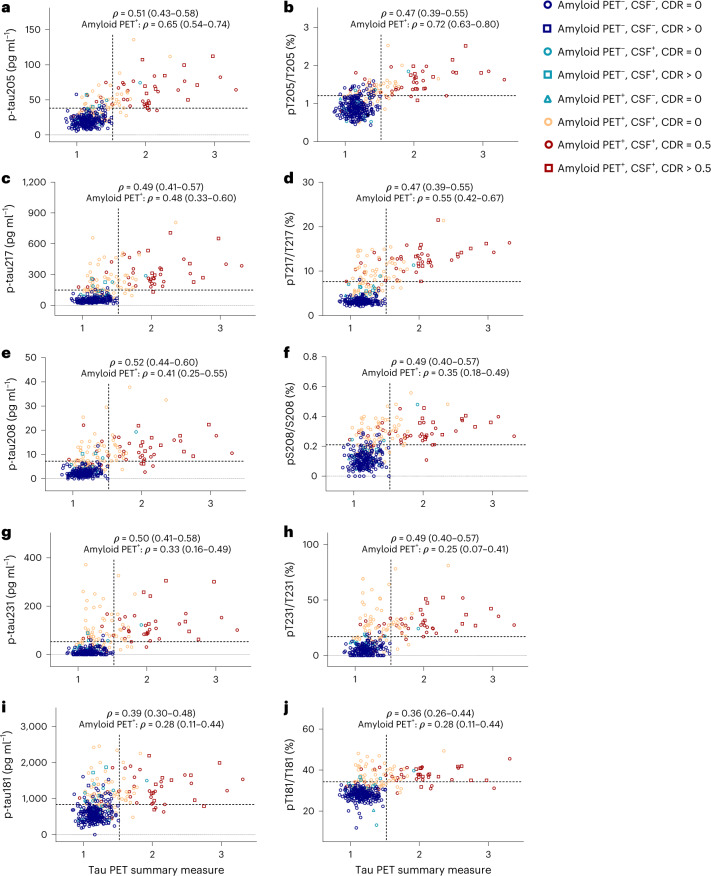
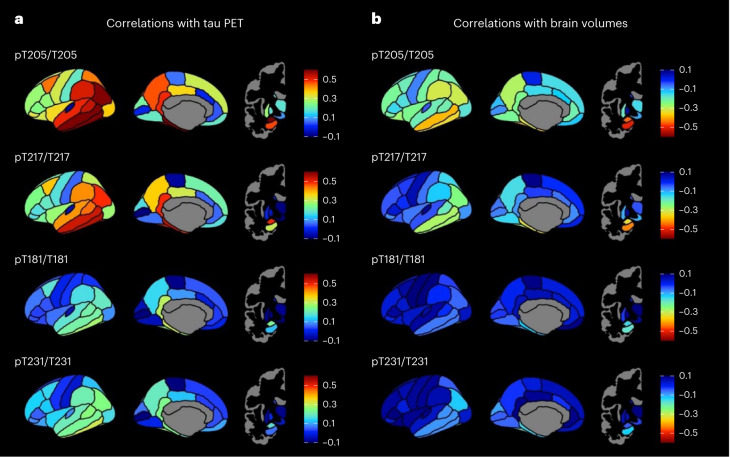
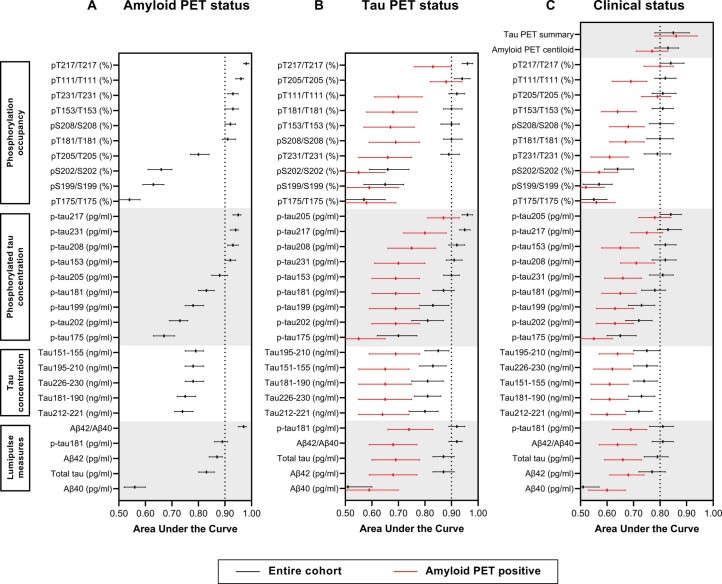
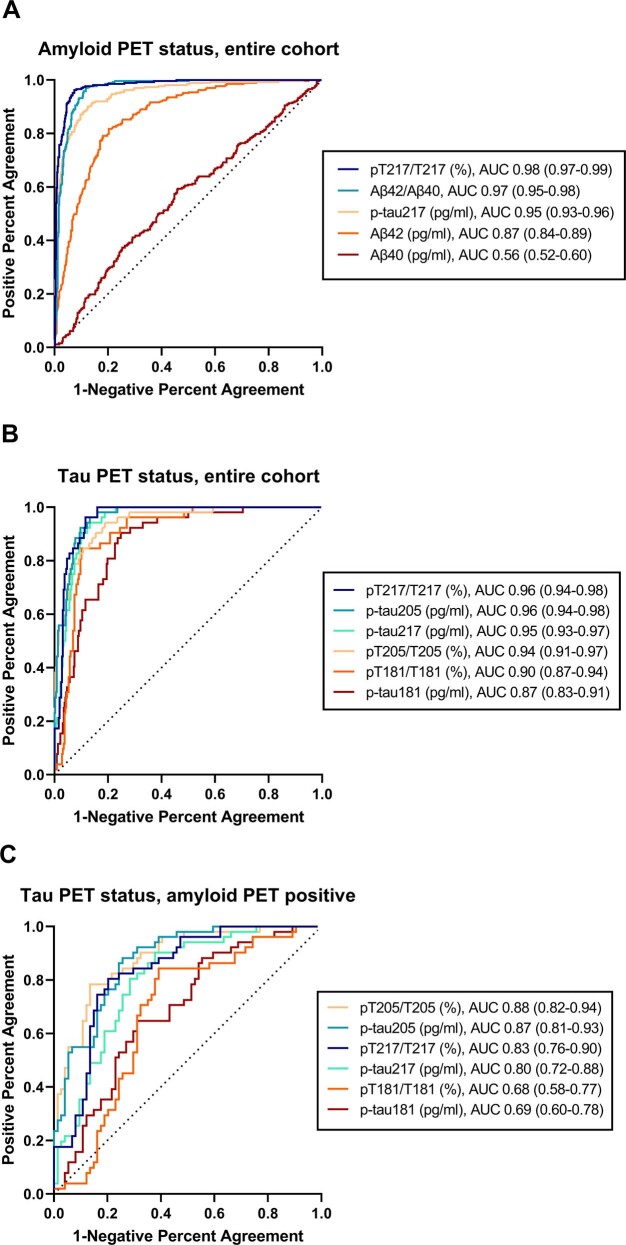
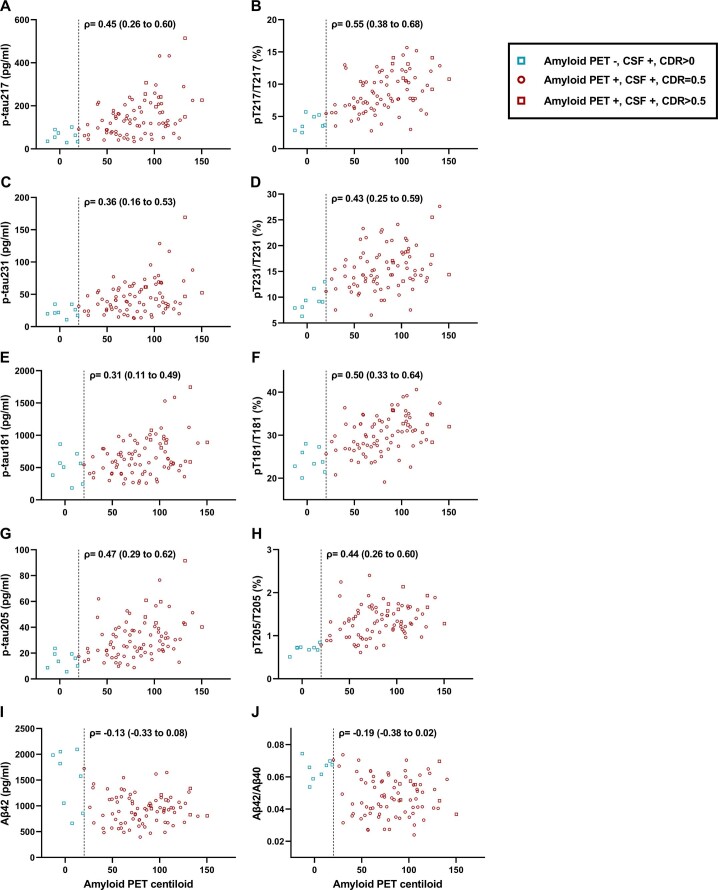
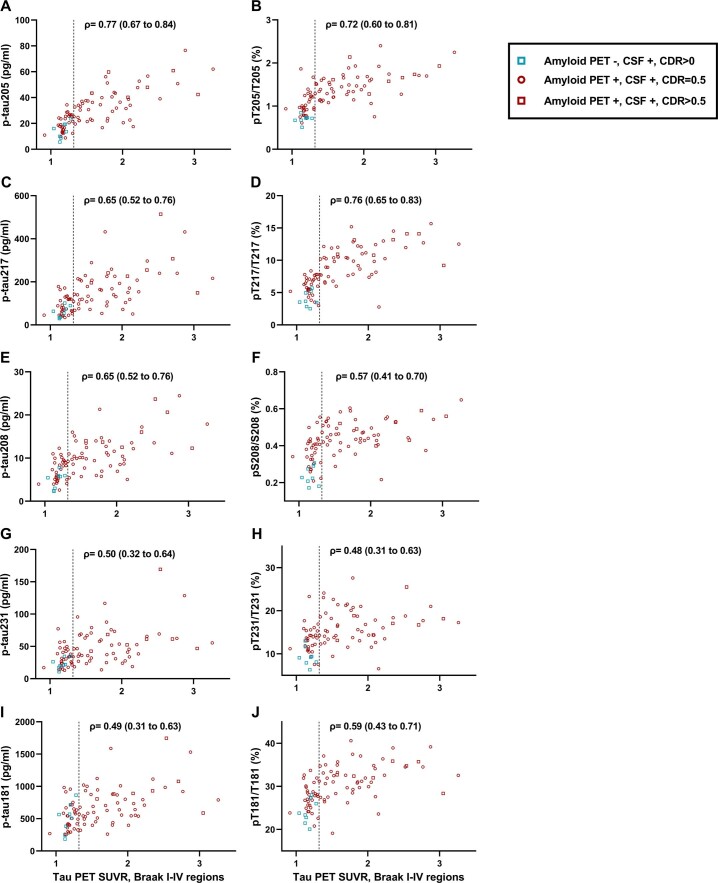
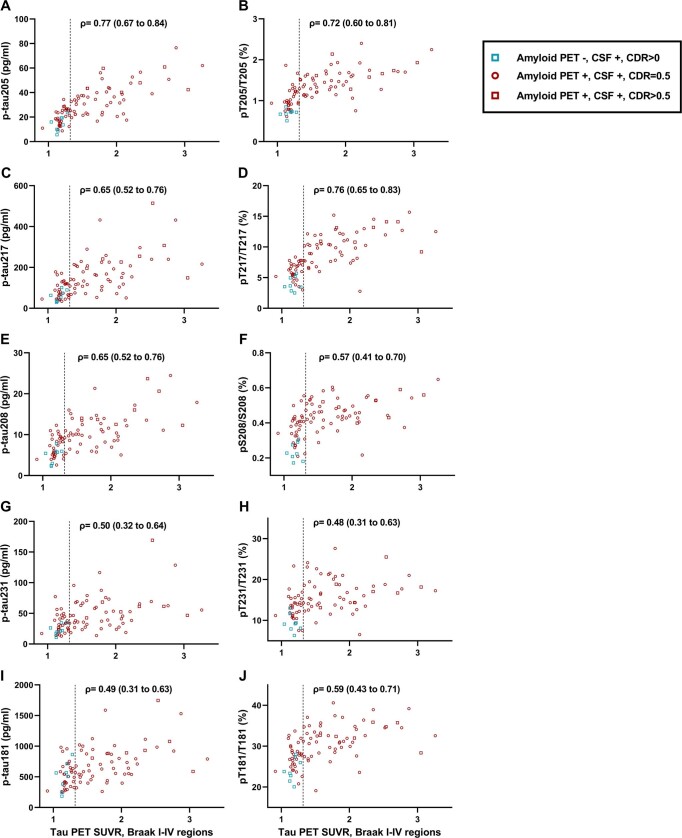
Cerebrospinal fluid (CSF) amyloid-β peptide (Aβ)42/Aβ40 and the concentration of tau phosphorylated at site 181 (p-tau181) are well-established biomarkers of Alzheimer’s disease (AD). The present study used mass spectrometry to measure concentrations of nine phosphorylated and five nonphosphorylated tau species and phosphorylation occupancies (percentage phosphorylated/nonphosphorylated) at ten sites. In the present study we show that, in 750 individuals with a median age of 71.2 years, CSF pT217/T217 predicted the presence of brain amyloid by positron emission tomography (PET) slightly better than Aβ42/Aβ40 ( P = 0.02). Furthermore, for individuals with positive brain amyloid by PET ( n = 263), CSF pT217/T217 was more strongly correlated with the amount of amyloid (Spearman’s ρ = 0.69) than Aβ42/Aβ40 ( ρ = −0.42, P < 0.0001). In two independent cohorts of participants with symptoms of AD dementia ( n = 55 and n = 90), CSF pT217/T217 and pT205/T205 were better correlated with tau PET measures than CSF p-tau181 concentration. These findings suggest that CSF pT217/T217 and pT205/T205 represent improved CSF biomarkers of amyloid and tau pathology in AD.
Overview
The claims and statistics of this paper haven’t been checked yet.
Free: it reads the open-access text and checks the first 5 claims that cite a source we can check. Create a free account to check every claim.
Integrity signals
Registry
Cites
Statistics
Figures
Verification
Claims the paper makes
The claims and statistics of this paper haven’t been checked yet.
Free: it reads the open-access text and checks the first 5 claims that cite a source we can check. Create a free account to check every claim.
Claims other papers make about this one
Each is checked against this paper’s own text: does it say what the citing paper says it does?
The source backs part of the claim, not all of it — or backs it for a different population, condition or comparison.
In the citing paper
“CSF samples were collected and handled according to current international recommendations44,62.”
From Highly accurate blood test for Alzheimer's disease is similar or superior to clinical cerebrospinal fluid tests (2024) · cites this paper as [44]
Experimental — accuracy not yet measuredThe cited source says what the claim attributes to it.
In the citing paper
“but in one large study the test classified Aβ PET status with an AUC of 0.97 (ref. 44).”
From Highly accurate blood test for Alzheimer's disease is similar or superior to clinical cerebrospinal fluid tests (2024) · cites this paper as [44]
Self-check
Percentages, sums and reported differences re-computed from the paper’s own numbers.
The self-check needs the paper’s full text.
Citations
Cites
Controlling the False Discovery Rate: A Practical and Powerful Approach to Multiple Testing
Benjamini, Y., & Hochberg, Y. (1995) · Journal of the Royal Statistical Society Series B: Statistical Methodology · doi:10.1111/j.2517-6161.1995.tb02031.x · Cited by 109,482
DeLong, E. R., DeLong, D. M., & Clarke-Pearson, D. L. (1988) · Biometrics · doi:10.2307/2531595 · Cited by 22,649
NIA‐AA Research Framework: Toward a biological definition of Alzheimer's disease
Jack, C. R., Bennett, D. A., Blennow, K., Carrillo, M. C., Dunn, B., Haeberlein, S. B., Holtzman, D. M., Jagust, W., Jessen, F., Karlawish, J., et al. (2018) · Alzheimer's & Dementia · doi:10.1016/j.jalz.2018.02.018 · Cited by 10,537
The Clinical Dementia Rating (CDR): Current version and scoring rules
Morris, J. C. (1993) · Neurology · doi:10.1212/wnl.43.11.2412-a · Cited by 9,882
Self-citationPalmqvist, S., Janelidze, S., Quiroz, Y. T., Zetterberg, H., Lopera, F., Stomrud, E., Su, Y., Chen, Y., Serrano, G. E., Leuzy, A., et al. (2020) · JAMA · doi:10.1001/jama.2020.12134 · Cited by 1,603
Self-citationInverse relation between in vivo amyloid imaging load and cerebrospinal fluid Aβ 42 in humans
Fagan, A. M., Mintun, M. A., Mach, R. H., Lee, S., Dence, C. S., Shah, A. R., LaRossa, G. N., Spinner, M. L., Klunk, W. E., Mathis, C. A., et al. (2006) · Annals of Neurology · doi:10.1002/ana.20730 · Cited by 1,246
Self-citationMorris, J. C., Weintraub, S., Chui, H. C., Cummings, J., DeCarli, C., Ferris, S., Foster, N. L., Galasko, D., Graff-Radford, N., Peskind, E. R., et al. (2006) · Alzheimer Disease & Associated Disorders · doi:10.1097/01.wad.0000213865.09806.92 · Cited by 950
Self-citationHigh-precision plasma β-amyloid 42/40 predicts current and future brain amyloidosis
Schindler, S. E., Bollinger, J. G., Ovod, V., Mawuenyega, K. G., Li, Y., Gordon, B. A., Holtzman, D. M., Morris, J. C., Benzinger, T. L. S., Xiong, C., et al. (2019) · Neurology · doi:10.1212/wnl.0000000000008081 · Cited by 885
Self-citationHansson, O., Seibyl, J., Stomrud, E., Zetterberg, H., Trojanowski, J. Q., Bittner, T., Lifke, V., Corradini, V., Eichenlaub, U., Batrla, R., et al. (2018) · Alzheimer's & Dementia · doi:10.1016/j.jalz.2018.01.010 · Cited by 808
Self-citationPlasma p-tau231: a new biomarker for incipient Alzheimer’s disease pathology.
Ashton, N. J., Pascoal, T. A., Karikari, T. K., Benedet, A. L., Lantero-Rodriguez, J., Brinkmalm, G., Snellman, A., Schöll, M., Troakes, C., Hye, A., et al. (2021) · Acta Neuropathologica · doi:10.1007/s00401-021-02275-6 · Cited by 719
Cited by
Revised criteria for diagnosis and staging of Alzheimer's disease: Alzheimer's Association Workgroup
Jack, C. R., Andrews, J. S., Beach, T. G., Buracchio, T., Dunn, B., Graf, A., Hansson, O., Ho, C., Jagust, W., McDade, E., et al. (2024) · Alzheimer's & Dementia · doi:10.1002/alz.13859 · Cited by 2,803
Self-citationDiagnostic Accuracy of a Plasma Phosphorylated Tau 217 Immunoassay for Alzheimer Disease Pathology
Ashton, N. J., Brum, W. S., Di Molfetta, G., Benedet, A. L., Arslan, B., Jonaitis, E., Langhough, R. E., Cody, K., Wilson, R., Carlsson, C. M., et al. (2024) · JAMA Neurology · doi:10.1001/jamaneurol.2023.5319 · Cited by 884
Barthélemy, N. R., Salvadó, G., Schindler, S. E., He, Y., Janelidze, S., Collij, L. E., Saef, B., Henson, R. L., Chen, C. D., Gordon, B. A., et al. (2024) · Nature Medicine · doi:10.1038/s41591-024-02869-z · Cited by 448
“44).”
MethodInfluentialSelf-citationSchindler, S. E., Galasko, D., Pereira, A. C., Rabinovici, G. D., Salloway, S., Suárez-Calvet, M., Khachaturian, A. S., Mielke, M. M., Udeh-Momoh, C., Weiss, J., et al. (2024) · Nature Reviews Neurology · doi:10.1038/s41582-024-00977-5 · Cited by 290
“…tau in the clinic, and, although CSF levels of phosphorylated tau were used as a measure of pathological tau in the original ATN research framework, subsequent work has demonstrated that CSF levels of p-tau181 are more closely associated with amyloid pathology than with tau pathology 33,34 .”
Self-citationCSF MTBR-tau243 is a specific biomarker of tau tangle pathology in Alzheimer’s disease
Horie, K., Salvadó, G., Barthélemy, N. R., Janelidze, S., Li, Y., He, Y., Saef, B., Chen, C. D., Jiang, H., Strandberg, O., et al. (2023) · Nature Medicine · doi:10.1038/s41591-023-02443-z · Cited by 249
Self-citationBiomarker-based staging of Alzheimer disease: rationale and clinical applications
Therriault, J., Schindler, S. E., Salvadó, G., Pascoal, T. A., Benedet, A. L., Ashton, N. J., Karikari, T. K., Apostolova, L., Murray, M. E., Verberk, I., et al. (2024) · Nature Reviews Neurology · doi:10.1038/s41582-024-00942-2 · Cited by 197
“CSF 86,96,111,113 and plasma 86 p-tau205 levels are altered in the later stages of AD and are more strongly associated with tau PET measures than are p-tau231 or p-tau217.”
Self-citationHead‐to‐head comparison of leading blood tests for Alzheimer's disease pathology
(2024) · doi:10.1002/alz.14315 · Cited by 199
Self-citationNew landscape of the diagnosis of Alzheimer’s disease
Frisoni, G. B., Hansson, O., Nichols, E., Garibotto, V., Schindler, S. E., van der Flier, W. M., Jessen, F., Villain, N., Arenaza-Urquijo, E. M., Crivelli, L., et al. (2025) · The Lancet · doi:10.1016/s0140-6736(25)01294-2 · Cited by 143
Self-citationA comprehensive head-to-head comparison of key plasma phosphorylated tau 217 biomarker tests
Warmenhoven, N., Salvadó, G., Janelidze, S., Mattsson, N., Bali, D., Dolado, A. O., Kolb, H. C., Triana‐Baltzer, G., Barthélemy, N. R., Schindler, S. E., et al. (2024) · Brain · doi:10.1093/brain/awae346 · Cited by 166
“21 The mean cortical SUVR was calculated based on the averaged signal of neocortical ROIs using cerebellar grey matter as the reference regions.”
Self-citationJanelidze, S., Barthélemy, N. R., Salvadó, G., Schindler, S. E., Palmqvist, S., Mattsson, N., Braunstein, J. B., Ovod, V., Bollinger, J. G., He, Y., et al. (2024) · JAMA Neurology · doi:10.1001/jamaneurol.2024.2619 · Cited by 146
Self-citationPlasma MTBR-tau243 biomarker identifies tau tangle pathology in Alzheimer’s disease
Horie, K., Salvadó, G., Koppisetti, R. K., Janelidze, S., Barthélemy, N. R., He, Y., Sato, C., Gordon, B. A., Jiang, H., Benzinger, T. L. S., et al. (2025) · Nature Medicine · doi:10.1038/s41591-025-03617-7 · Cited by 182
“Therefore, we recently developed mass spectrometry (MS)-based assays that quantify the levels of p-tau205 and the tau microtubule-binding region containing residue 243 (MTBR-tau243) in CSF 19,20 .”
InfluentialSelf-citationPichet Binette, A., Gaiteri, C., Wennström, M., Kumar, A., Hristovska, I., Spotorno, N., Salvadó, G., Strandberg, O., Mathys, H., Tsai, L.-H., et al. (2024) · Nature Neuroscience · doi:10.1038/s41593-024-01737-w · Cited by 122
“…among the proteins that emerged as being already elevated in A + T − versus A − T − , foreshadowing the fibrillar tau deposition that ensued in A + T + , in line with the different soluble tau variants that reach abnormal levels in CSF or plasma as Aβ plaques become present in the brain 31,32 .”
Self-citationMeyer, M. R., Kirmess, K. M., Eastwood, S., Wente‐Roth, T. L., Irvin, F., Holubasch, M. S., Venkatesh, V., Fogelman, I., Monane, M., Hanna, L., et al. (2024) · Alzheimer's & Dementia · doi:10.1002/alz.13764 · Cited by 121
Self-citationDisease staging of Alzheimer’s disease using a CSF-based biomarker model
Salvadó, G., Horie, K., Barthélemy, N. R., Vogel, J. W., Pichet Binette, A., Chen, C. D., Aschenbrenner, A. J., Gordon, B. A., Benzinger, T. L. S., Holtzman, D. M., et al. (2024) · Nature Aging · doi:10.1038/s43587-024-00599-y · Cited by 113
“28,29,32), early cognitive impairment (CSF stage 4: MTBR-tau243) (ref.”
BackgroundMethodInfluentialSelf-citationClinical criteria for limbic‐predominant age‐related TDP‐43 encephalopathy
Wolk, D. A., Nelson, P. T., Apostolova, L. G., Arfanakis, K., Boyle, P. A., Carlsson, C. M., Corriveau‐Lecavalier, N., Dacks, P. A., Dickerson, B. C., Domoto‐Reilly, K., et al. (2025) · Alzheimer s & Dementia · doi:10.1002/alz.14202 · Cited by 111
“18,53 Further research is needed to determine how well this FDGPET pattern suggestive of LATE-NC can be differentiated from the anterior temporal and frontoinsular hypometabolic pattern present in temporal lobe predominant forms of frontotemporal lobar degeneration (FTLD)-TDP-43.”
Considerations in the clinical use of amyloid PET and CSF biomarkers for Alzheimer's disease
Leuzy, A., Bollack, A., Pellegrino, D., Teunissen, C. E., Joie, R. L., Rabinovici, G. D., Franzmeier, N., Johnson, K. A., Barkhof, F., Shaw, L. M. J., et al. (2025) · Alzheimer s & Dementia · doi:10.1002/alz.14528 · Cited by 125
Self-citationTiming of Biomarker Changes in Sporadic Alzheimer's Disease in Estimated Years from Symptom Onset
Li, Y., Yen, D., Hendrix, R. D., Gordon, B. A., Dlamini, S., Barthélemy, N. R., Aschenbrenner, A. J., Henson, R. L., Herries, E. M., Volluz, K., et al. (2024) · Annals of Neurology · doi:10.1002/ana.26891 · Cited by 87
“11,12 12 – 14 Plasma and CSF pT217/T217 have particularly high associations with amyloid PET and early stage tau tangle pathology as measured by tau PET.”
BackgroundInfluentialSelf-citationComparison of two plasma p-tau217 assays to detect and monitor Alzheimer’s pathology
Therriault, J., Ashton, N. J., Pola, I., Triana-Baltzer, G., Brum, W. S., Di Molfetta, G., Arslan, B., Rahmouni, N., Tissot, C., Servaes, S., et al. (2024) · eBioMedicine · doi:10.1016/j.ebiom.2024.105046 · Cited by 84
“Future studies are required to evaluate whether additional p-tau biomarkers, which have different associations with key pathological features of AD, 11,14,30,31 provide additional diagnostic or prognostic information in clinical settings.”
BackgroundZhang, D., Zhang, W., Chen, M., Gao, X., Yuan, H., Lin, X., Mao, X., Wang, C., Guo, X., Du, Y., et al. (2024) · Neuron · doi:10.1016/j.neuron.2024.02.017 · Cited by 84
Khalafi, M., Dartora, W. J., McIntire, L. B., Butler, T., Wartchow, K. M., Hojjati, S. H., Razlighi, Q. R., Shirbandi, K., Zhou, L., Chen, K., et al. (2024) · Alzheimer s & Dementia · doi:10.1002/alz.14458 · Cited by 99
Self-citationCSF p-tau205: a biomarker of tau pathology in Alzheimer’s disease
Lantero‐Rodriguez, J., Montoliu‐Gaya, L., Benedet, A. L., Vrillon, A., Dumurgier, J., Cognat, E., Brum, W. S., Rahmouni, N., Stevenson, J., Servaes, S., et al. (2024) · Acta Neuropathologica · doi:10.1007/s00401-023-02659-w · Cited by 81
Guo, Y. X., Chen, S.-D., You, J., Huang, S.-Y., Chen, Y., Zhang, Y., Wang, L., He, X., Deng, Y., Zhang, Y.-R., et al. (2024) · Nature Human Behaviour · doi:10.1038/s41562-024-01924-6 · Cited by 78
“42,43) were not assessed in ADNI and the tau PET 44 was not contemporarily measured with CSF proteomics at baseline, we failed to further stage the participants with different pathological burdens.”
Alzheimer’s disease biomarkers and their current use in clinical research and practice
Hunter, T., Santos, L. E., Tovar-Moll, F. F., & Felice, F. G. D. (2024) · Molecular Psychiatry · doi:10.1038/s41380-024-02709-z · Cited by 89
“The ratio of p-tau205/tau205 in the CSF, determined by IP-MS, more strongly correlates with tau PET than CSF p-tau181 [71].”
Bateman, R. J., Li, Y., McDade, E., Llibre‐Guerra, J. J., Clifford, D. B., Atri, A., Mills, S. L., Santacruz, A. M., Wang, G., Supnet, C. B., et al. (2024) · The Lancet Neurology · doi:10.1016/s1474-4422(25)00024-9 · Cited by 85
Self-citationAshton, N. J., Brum, W. S., Molfetta, G. D., Benedet, A. L., Arslan, B., Jonaitis, E. M., Langhough, R. E., Cody, K. A., Wilson, R. H., Carlsson, C. M., et al. (2023) · medRxiv · doi:10.1101/2023.07.11.23292493 · Cited by 50
The night’s watch: Exploring how sleep protects against neurodegeneration
Parhizkar, S., & Holtzman, D. M. (2025) · Neuron · doi:10.1016/j.neuron.2025.02.004 · Cited by 57
Plasma tau biomarkers for biological staging of Alzheimer’s disease
Montoliu‐Gaya, L., Salvadó, G., Therriault, J., Nilsson, J., Janelidze, S., Weiner, S., Ashton, N. J., Benedet, A. L., Rahmouni, N., Lantero‐Rodriguez, J., et al. (2025) · Nature Aging · doi:10.1038/s43587-025-00951-w · Cited by 58
“Moreover, while primarily observed in CSF 14,15,38 and to a lesser extent in plasma studies 30,31 , p-tau205 has been more strongly associated with tau-PET imaging and cognitive decline.”
Self-citationAlzheimer's disease neuropathology and its estimation with fluid and imaging biomarkers
Thal, D. R., Poesen, K., Vandenberghe, R. R., & Meyer, S. D. (2025) · Molecular Neurodegeneration · doi:10.1186/s13024-025-00819-y · Cited by 57
“In CSF and/or plasma, p-τ 111 , p-τ 153 , p-τ 208 , and p-τ 231 appear to be more strongly associated with amyloid, while other τ phosphorylation sites are more strongly associated with p-τ pathology, e.g., p-τ 205 or with both to a comparable extent, e.g. p-τ 181 , and p-τ 217 [192, 283].”
Woo, M. S., Tissot, C., Lantero‐Rodriguez, J., Snellman, A., Therriault, J., Rahmouni, N., Macedo, A. C., Servaes, S., Wang, Y., Arias, J. F., et al. (2023) · Alzheimer s & Dementia · doi:10.1002/alz.13528 · Cited by 38
“At the group level,pTau-217isalreadyelevatedintheCSF 28 andbloodincognitively unimpaired individuals who have A β pathology.”
BackgroundIbáñez, L., Liu, M., Beric, A., Timsina, J., Kohlfeld, P., Bergmann, K., Lowery, J., Sykora, N., Montejo, B. S., Brock, W., et al. (2024) · Alzheimer s & Dementia · doi:10.1002/alz.14413 · Cited by 47
Self-citationWojdała, A. L., Bellomo, G., Gaetani, L., Teunissen, C. E., Parnetti, L., & Chiasserini, D. (2025) · Nature Communications · doi:10.1038/s41467-024-54878-8 · Cited by 34
Garbarino, V. R., Palavicini, J. P., Melendez, J., Barthelemy, N. R., He, Y., Kautz, T. F., Lopez-Cruzan, M., Mathews, J. J., Xu, P., Zhang, B., et al. (2025) · Neurotherapeutics · doi:10.1016/j.neurot.2025.e00591 · Cited by 26
Self-citationDatta, D., Perone, I., Wijegunawardana, D., Liang, F., Morozov, Y. M., Arellano, J. I., Duque, A., Xie, Z., van Dyck, C. H., Joyce, M. K. P., et al. (2024) · Alzheimer s & Dementia · doi:10.1002/alz.13737 · Cited by 31
“60,76 Although it is widely considered that A β drives tau phosphorylation, the current data suggest that the converse may also be true and that the extensive aggregation of pT217-tau on microtubules may help to explain the correlation with this particular phosphorylated tau species.”
BackgroundComparison of cerebrospinal fluid, plasma and neuroimaging biomarker utility in Alzheimer’s disease
Meeker, K. L., Luckett, P. H., Barthélemy, N. R., Hobbs, D. A., Chen, C. D., Bollinger, J., Ovod, V., Flores, S. E., Keefe, S., Henson, R. L., et al. (2024) · Brain Communications · doi:10.1093/braincomms/fcae081 · Cited by 35
“1,10,14,56 Similar results have been seen with other older adult cohorts 11,12 as well as autosomal dominant Alzheimer’s disease.”
MethodResultSelf-citationHSV-1 infection induces phosphorylated tau propagation among neurons via extracellular vesicles
Protto, V., Miteva, M. T., Iannuzzi, F., Marcocci, M. E., Puma, D. D. L., Piacentini, R., Belli, M., Sansone, L., Pietrantoni, A., Grassi, C., et al. (2024) · mBio · doi:10.1128/mbio.01522-24 · Cited by 28
Clinical value of novel blood‐based tau biomarkers in Creutzfeldt–Jakob disease
Bentivenga, G. M., González‐Ortiz, F., Baiardi, S., Kirsebom, B., Mastrangelo, A., Mammana, A., Capellari, S., Fladby, T., Zetterberg, H., Blennow, K., et al. (2024) · Alzheimer s & Dementia · doi:10.1002/alz.14422 · Cited by 31
“4 The present findings underline the conceptual limitation of considering p-tau181 and p-tau 217 and related “occupancy ratios” such as the %p-tau217 as markers indicating “ β -amyloidosis,” 32–34 given that they can also increase secondary to other proteinopathies.”
Temporal Dynamics and Biological Variability of Alzheimer Biomarkers
Yun, J., Shin, D., Lee, E. H., Kim, J. P., Ham, H., Gu, Y., Chun, M. Y., Kang, S. H., Kim, Y. J., Na, D. L., et al. (2025) · JAMA Neurology · doi:10.1001/jamaneurol.2024.5263 · Cited by 34
Self-citationBaseline levels and longitudinal changes in plasma Aβ42/40 among Black and white individuals
Xiong, C., Luo, J. R., Wolk, D. A., Shaw, L. M. J., Roberson, E. D., Murchison, C., Henson, R. L., Benzinger, T. L. S., Bui, Q. V. P., Agboola, F., et al. (2024) · Nature Communications · doi:10.1038/s41467-024-49859-w · Cited by 42
“An automated immunoassay (LUMIPULSE G1200, Fujirebio, Mal-verne, PA) was used to measure CSF concentrations of A β 40, A β 42, total tau (t-tau), and tau phosphorylated at position 181 (p-tau181) 56,57 .”
InfluentialSelf-citationDifferential roles of Alzheimer's disease plasma biomarkers in stepwise biomarker‐guided diagnostics
Jang, H., Shin, D., Yoo, H., Zetterberg, H., Blennow, K., González‐Ortiz, F., Ashton, N. J., Day, T. A., Lee, E. H., Yun, J., et al. (2025) · Alzheimer s & Dementia · doi:10.1002/alz.14526 · Cited by 29
Phosphorylation-Induced Self-Coacervation versus RNA-Assisted Complex Coacervation of Tau Proteins
Allahyartorkaman, M., Chan, T.-H., Chen, E. H.-L., Ng, S.-T., Chen, Y., Wen, J., Ho, M., Yen, H., Kuan, Y., Kuo, M., et al. (2025) · Journal of the American Chemical Society · doi:10.1021/jacs.4c14728 · Cited by 27
Alzheimer's Disease Diagnosis in the Preclinical Stage: Normal Aging or Dementia
Marvi, F., Chen, Y.-H., & Sawan, M. (2024) · IEEE Reviews in Biomedical Engineering · doi:10.1109/rbme.2024.3376835 · Cited by 30
Therriault, J., Woo, M. S., Salvadó, G., Gobom, J., Karikari, T. K., Janelidze, S., Servaes, S., Rahmouni, N., Tissot, C., Ashton, N. J., et al. (2024) · Molecular Neurodegeneration · doi:10.1186/s13024-023-00689-2 · Cited by 29
“The temporal ordering of p-tau abnormality [12, 15–17], as well as their preferential association with amyloid-β plaques and tau neurofibrillary tangles [18, 19], suggests that assessing multiple p-tau species may be useful for tracking disease severity in AD [20, 21].”
BackgroundSelf-citationGohel, D., Zhang, P., Gupta, A. K., Li, Y., Chiang, C., Li, L., Hou, Y., Pieper, A. A., Cummings, J. L., & Cheng, F. (2024) · Journal of Alzheimer s Disease · doi:10.3233/jad-231391 · Cited by 26
Self-citationMartínez‐Dubarbie, F., Guerra-Ruiz, A. R., López‐García, S., Lage, C., Fernández‐Matarrubia, M., Nevado-Cáceres, Á., Rivera‐Sánchez, M., Barrero, A. V., Pozueta‐Cantudo, A., García‐Martínez, M., et al. (2025) · Alzheimer s Research & Therapy · doi:10.1186/s13195-025-01719-5 · Cited by 37
“…[37, 64], and place p-tau217 as the most accurate single marker for detecting brain amyloid pathology as it has consistently shown better results than the other plasma biomarkers [11, 36], and comparable results than those of CSF biomarkers for detecting tau and amyloid PET positivity [15, 65].”
Hoglund, Z. T., Ruiz‐Uribe, N. E., del Sastre, E., Woost, B., Bader, E., Bailey, J. J., Hyman, B. T., Zwang, T. J., & Bennett, R. E. (2024) · Acta Neuropathologica · doi:10.1007/s00401-024-02751-9 · Cited by 25
Molina‐Henry, D. P., Langford, O., Donohue, M., Raman, R., Aisen, P. S. S., Johnson, K. A., Rissman, R. A., & Sperling, R. A. (2024) · The Journal of Prevention of Alzheimer s Disease · doi:10.14283/jpad.2024.124 · Cited by 22
“Here we report consistency in findings with P-tau217, a superior marker of plasma amyloid due to its strong association with amyloid burden by PET in early accumulating brain regions and its association with longitudinal increase (14, 27, 28).”
ResultFluid biomarkers for neurodegenerative diseases: a comprehensive update
Valletta, M., Briel, N., Yuksekel, I., Barboure, M. C., Coward, A. R., Houwer, J. F. H. D., Fawad, A., González-Mayoral, A., Iaccarino, G., Martínez‐Dubarbie, F., et al. (2025) · Alzheimer s Research & Therapy · doi:10.1186/s13195-025-01919-z · Cited by 26
“In AD research, mass spectrometry has been used to quantify plasma biomarkers such as p-tau, Aβ peptides, and NfL [37, 45, 48, 49, 146, 147].”
Mohaupt, P., Kindermans, J., Vialaret, J., Anderl‐Straub, S., Werner, L., Lehmann, S., Hirtz, C., Otto, M., & Oeckl, P. (2024) · Alzheimer s Research & Therapy · doi:10.1186/s13195-024-01647-w · Cited by 18
Dong, J., & Zhong, H. (2025) · Neurology International · doi:10.3390/neurolint17120197 · Cited by 21
Coulton, J. B., He, Y., Barthélemy, N. R., Jiang, H., Holtzman, D. M., & Bateman, R. J. (2024) · Brain Communications · doi:10.1093/braincomms/fcae247 · Cited by 15
Self-citationHorie, K., Li, Y., Barthélemy, N. R., Gordon, B. A., Hassenstab, J. J., Benzinger, T. L. S., Fagan, A. M., Morris, J. C., Karch, C. M. M., Xiong, C., et al. (2023) · Annals of Neurology · doi:10.1002/ana.26620 · Cited by 18
Self-citationHartz, S. M., Schindler, S. E., Streitz, M. L., Moulder, K. L., Mozersky, J. T., Wang, G., Xiong, C., & Morris, J. C. (2025) · Alzheimer s & Dementia Translational Research & Clinical Interventions · doi:10.1002/trc2.70033 · Cited by 33
Self-citationYun, J., Lee, J., Shin, D., Lee, E. H., Kim, J. P., Ham, H., Gu, Y., Chun, M. Y., Kang, S. H., Kim, H. J., et al. (2026) · JAMA Neurology · doi:10.1001/jamaneurol.2025.5530 · Cited by 13
Huhe, H., Shapley, S. M., Duong, D. M., Wu, F., Ha, S.-K., Choi, S., Kofler, J., Mou, Y., Guimarães, T. R., Thathiah, A., et al. (2024) · Alzheimer s & Dementia · doi:10.1002/alz.14366 · Cited by 13
Biofluid-based staging of Alzheimer’s disease
Lantero‐Rodriguez, J., Montoliu‐Gaya, L., Ashton, N. J., Pola, I., Therriault, J., Rahmouni, N., Brum, W. S., Servaes, S., Stevenson, J., Molfetta, G. D., et al. (2025) · Acta Neuropathologica · doi:10.1007/s00401-025-02863-w · Cited by 17
Translating Alzheimer’s Disease Mechanisms into Therapeutic Opportunities
Li, J., Wang, L., Zhang, X., Shi, J., Zhu, Y. Z., Wang, H., Zhu, X., Zhu, Q., & Luo, J. (2025) · Biomolecules · doi:10.3390/biom15091290 · Cited by 16
Melendez, J., Sung, Y. J., Orr, M. E., Yoo, A. S. J., Schindler, S. E., Cruchaga, C., & Bateman, R. J. (2024) · Aging Cell · doi:10.1111/acel.14230 · Cited by 11
“To remove bias from age related disease states, such as AD and other forms of dementia, we narrowed our cohort down to 437 cognitively normal participants with CDR = 0, and A β 42/40 ratios more than 0.0673 as the cutoff for amyloid positivity (Barthélemy et al., 2023).”
InfluentialSelf-citationAnton, P. E., Maphis, N. M., Linsenbardt, D. N., & Coleman, L. G. (2025) · Advances in experimental medicine and biology · doi:10.1007/978-3-031-81908-7_10 · Cited by 13
Tauopathy after long‐term cervical lymphadenectomy
Wu, C., Yuan, J., Tian, Y., Wang, Y., He, X., Zhao, K., Huang, J., & Jiang, R. (2025) · Alzheimer s & Dementia · doi:10.1002/alz.70136 · Cited by 16
Ubiquitin–proteasome system in the different stages of dominantly inherited Alzheimer's disease
McDade, E., Liu, H., Bui, Q., Hassenstab, J., Gordon, B. A., Benzinger, T. L. S., Shen, Y., Timsina, J., Wang, L., Sung, Y. J., et al. (2025) · Alzheimer s & Dementia · doi:10.1002/alz.70243 · Cited by 22
Self-citationBathla, S., Datta, D., Liang, F., Barthélemy, N. R., Wiseman, R., Slusher, B. S., Asher, J. L., Zeiss, C. J., Ekanayake‐Alper, D., Holden, D., et al. (2023) · Alzheimer s & Dementia Translational Research & Clinical Interventions · doi:10.1002/trc2.12431 · Cited by 15
“The Barthelemy/Bateman group utilized MS to assay pTau species in cerebral spinal fluid (CSF) 23 ; assays were performed blind to drug treatment.”
MethodSelf-citationDatta, D., & Arnsten, A. F. T. (2025) · Alzheimer s & Dementia · doi:10.1002/alz.14477 · Cited by 11
“33,123 In fact, plasma p-tau217 levels correlate highly with amyloid pathology in humans, 30,31 suggesting that early-stage soluble p-tau217 can herald future development of AD.”
Collij, L. E., Salvadó, G., Horie, K., Barthélemy, N. R., Betthauser, T. J., Strandberg, O. T., Smith, R. A., Palmqvist, S., Schindler, S. E., Ossenkoppele, R., et al. (2026) · Nature Communications · doi:10.1038/s41467-026-71732-1 · Cited by 13
“In the current work, we used mass spectrometry-based p-tau occupancy measures, which are generally preferred due to their high speci fi city 11 .”
InfluentialSelf-citationLumipulse-Measured Cerebrospinal Fluid Biomarkers for the Early Detection of Alzheimer Disease
Safransky, M., Groh, J. R., Blennow, K., Zetterberg, H., Tripodis, Y., Martin, B. M., Weller, J. L., Asken, B. M., Rabinovici, G. D., Qiu, W. W. Q., et al. (2024) · Neurology · doi:10.1212/wnl.0000000000209866 · Cited by 10
Self-citationPost-Translationally Modified Proteoforms as Biomarkers: From Discovery to Clinical Use
Luo, Y. R., Yeung, P. S.-W., Mann, M. W., Zhang, L., Yang, Y. K., & Hoofnagle, A. N. (2025) · Clinical Chemistry · doi:10.1093/clinchem/hvaf094 · Cited by 15
Wennström, M., Schultz, N., Gallardo, P. M., Bank, T. N. B., Serrano, G. E., Beach, T. G., Bose, S., & Hansson, O. (2024) · Cells · doi:10.3390/cells13040331 · Cited by 11
“P-tau205 P-tau205 is further strongly associated with tau pathology detected with both positron emission tomography (PET) [19] and immunoassays [20], but less with A β -PET status [19].”
BackgroundSelf-citationXiong, C., Schindler, S. E., Luo, J. R., Morris, J. C., Bateman, R. J., Holtzman, D. M., Cruchaga, C., Babulal, G. M., Henson, R. L., Benzinger, T. L. S., et al. (2024) · Research Square · doi:10.21203/rs.3.rs-3783571/v1 · Cited by 10
Self-citationAlzheimer's Disease and Vascular Dementia, Connecting and Differentiating Features
Hurła, M., Banaszek, N., Kozubski, W. P., & Dorszewska, J. (2024) · Current Alzheimer Research · doi:10.2174/0115672050319219240711103459 · Cited by 10
Sharmin, T., Chatterjee, P., Doecke, J. D., Ashton, N. J., Huynh, K., Pedrini, S., Sohrabi, H. R., Heng, B., Eslick, S., Zetterberg, H., et al. (2024) · Journal of Neurochemistry · doi:10.1111/jnc.16244 · Cited by 10
Yang, Y., Lorincz‐Comi, N. J., Li, M., & Zhu, X. (2025) · Briefings in Bioinformatics · doi:10.1093/bib/bbaf250 · Cited by 12
Kammula, S. V., Tripathi, S., Wang, N., Dawson, V. L., Dawson, T. M., & Mao, X. (2023) · Ageing and Neurodegenerative Diseases · doi:10.20517/and.2023.20 · Cited by 16
Studart‐Neto, A., Barbosa, B. J. A. P., Coutinho, A. M., de Souza, L. C., Schilling, L. P., da Silva, M. N. M., Castilhos, R. M., Bertolucci, P. H. F., Borelli, W. V., Gomes, H. R., et al. (2024) · Dementia & Neuropsychologia · doi:10.1590/1980-5764-dn-2024-c001 · Cited by 18
Denus, M., Filaquier, A., Fargues, W., Néel, É., Stewart, S. E., Colladant, M., Curel, T., Mezghrani, A., Marin, P., Claeysen, S., et al. (2025) · Traffic · doi:10.1111/tra.70009 · Cited by 8
Lu, R., Shah, K., Toedebusch, C. D., Hess, A., Richardson, R., Mignot, E. J.-M., Schindler, S. E., Benzinger, T. L. S., Flores, S. E., Hassenstab, J. J., et al. (2025) · Annals of Clinical and Translational Neurology · doi:10.1002/acn3.70009 · Cited by 8
“CSF Aβ40 and Aβ42, p-tau181, and t-tau were measured using an automated electrochemiluminescence immunoassay (Lumipulse G1200, Fujirebio) [51].”
InfluentialSelf-citationSleep Alterations and Cognitive Decline
Lucey, B. P. (2025) · Seminars in Neurology · doi:10.1055/a-2557-8422 · Cited by 10
“108,109 These fi ndings support sleep loss as a potential mechanism to increase tau pathology by elevating tau phosphorylation and promoting the formation of neuro fi brillary tau tangles and eventually neuronal loss, although further research is needed to establish this causality.”
The interactome of tau phosphorylated at T217 in Alzheimer’s disease human brain tissue
Kavanagh, T., Thierry, M., Balcomb, K., Ponce, J., Kanshin, E., Tapia-Sealey, A., Halliday, G. M., Ueberheide, B. M., Wısnıewskı, T., & Drummond, E. (2025) · Acta Neuropathologica · doi:10.1007/s00401-025-02881-8 · Cited by 13
P-tau217 as a Biomarker in Alzheimer’s Disease: Applications in Latin American Populations
Varela-Vidales, C. A., Martínez-Hernández, A., Hernández-Castellanos, E., & Delgado-Lara, D. L. C. (2025) · International Journal of Molecular Sciences · doi:10.3390/ijms26146633 · Cited by 10
Montoliu‐Gaya, L., Valeriano-Lorenzo, E., Ashton, N. J., López‐González, F. J., Lantero‐Rodriguez, J., Ruiz-González, A., Pastor, A. B., Frades, B., Zea‐Sevilla, M. A., Valentí, M., et al. (2025) · Alzheimer s & Dementia · doi:10.1002/alz.70562 · Cited by 11
“However,studies using the same method as in this work have shown that plasma p-tau205outperformsothertauspeciesinidentifyingtaupathology, 14,15 which is in line with earlier findings from CSF studies using both MS 38,39 and immunoassay techniques.”
Collij, L. E., Mattsson, N., Janelidze, S., Ossenkoppele, R., & Hansson, O. (2025) · Alzheimer s & Dementia · doi:10.1002/alz.70763 · Cited by 10
Self-citationLabra, S. R., Compher, J., Prabhavalkar, A., Almaraz, M., Kwong, C. C., Baal, C., Talantova, M. V., Dolatabadi, N., Piña‐Sanz, J., Wang, Y., et al. (2026) · Advanced Science · doi:10.1002/advs.202514783 · Cited by 15
Recent advances in Alzheimer’s disease: From molecular mechanisms to therapeutic strategies
Rudman, M. D., Ulrich, J. D., & Holtzman, D. M. (2026) · Cell · doi:10.1016/j.cell.2026.06.006 · Cited by 19
Predicting continuous amyloid PET values with CSF tau phosphorylation occupancies
Wisch, J. K., Gordon, B. A., Barthélemy, N. R., Horie, K., Henson, R. L., He, Y., Flores, S. E., Benzinger, T. L. S., Morris, J. C., Bateman, R. J., et al. (2024) · Alzheimer s & Dementia · doi:10.1002/alz.14132 · Cited by 11
Self-citationFluid Biomarkers in Dementia Diagnosis
Quinn, J. F., & Gray, N. E. (2024) · CONTINUUM Lifelong Learning in Neurology · doi:10.1212/con.0000000000001497 · Cited by 8
Schwinne, M., Alonso, Á., Roberts, B. R., Hickle, S. D., Verberk, I. M. W., Epenge, E., Gikelekele, G., Tshengele, N., Kavugho, I., Mampunza, S. M. M., et al. (2024) · Journal of Alzheimer s Disease · doi:10.3233/jad-230976 · Cited by 10
Orr, M. E., Garbarino, V. R., Palavicini, J., Melendez, J., Barthélemy, N. R., He, Y., Kautz, T. F., Lopez‐Cruzan, M., Mathews, J. J., Xu, P., et al. (2024) · Research Square · doi:10.21203/rs.3.rs-3994894/v1 · Cited by 10
Self-citationCheng, Y., Chen, S., Zhang, Y.-R., Guo, Y., Wu, K., Huang, Y., Aerqin, Q., Kuo, K., Li, H., Chen, S., et al. (2024) · CNS Neuroscience & Therapeutics · doi:10.1111/cns.14857 · Cited by 6
Sleep and Neurodegeneration: Examining Potential Physiological Mechanisms
McConnell, B. V., Deng, Y., & Lucey, B. P. (2025) · Current Sleep Medicine Reports · doi:10.1007/s40675-024-00316-6 · Cited by 12
The Common Alzheimer's Disease Research Ontology (CADRO) for biomarker categorization
Osse, A. M. L., Kinney, J. W., & Cummings, J. L. (2025) · Alzheimer s & Dementia Translational Research & Clinical Interventions · doi:10.1002/trc2.70050 · Cited by 11
“…DYRK1A [27] Microtubulebindingregion MTBR [28] N-terminalcontainingtau fragments NTA-tau [29] Phosphorylatedtau-181 p-tau181 [30,31,32] Phosphorylatedtau-205 p-tau205 [33] Phosphorylatedtau-217 p-tau217 [34,35] Phosphorylatedtau-231 p-tau231 [34] Standardizeduptakevalue ratio SUVR [36,37,38]”
McDade, E., Barthélemy, N. R., Wang, G., Li, Y., Cao, Y., Gordon, B. A., Benzinger, T. L. S., Clifford, D. B., Goate, A., Renton, A. E., et al. (2025) · Alzheimer s & Dementia · doi:10.1002/alz.70689 · Cited by 8
Self-citationRuling in, ruling out: the clinical utility of plasma biomarkers in diagnosis of Alzheimer’s disease
Wisch, J. K., & Ances, B. M. (2025) · Journal of Clinical Investigation · doi:10.1172/jci198725 · Cited by 10
“As amyloid accumulates, it triggers downstream processes, including the hyperphosphorylation of tau proteins at more than 40 known amino acid sites (8) — events that have been quantified in both CSF (9, 10) and, more recently, in plasma (11).”
Devanarayan, V., Horie, K., Wildsmith, K. R., Doherty, T., Andreozzi, E. M., Charil, A., Sachdev, P., Kramer, L. D., Dhadda, S., & Irizarry, M. C. (2025) · Alzheimer s & Dementia · doi:10.1002/alz.70881 · Cited by 10
Self-citationDistribution of Big Tau Isoforms in the Human Central and Peripheral Nervous System
Koppisetti, R. K., Barthélemy, N. R., Horie, K., Ly, C. V., Roberts, K. F., Koutarapu, S., Perrin, R. J., Franklin, E. E., Pedicone, C., Orrick, J., et al. (2026) · Annals of Neurology · doi:10.1002/ana.78300 · Cited by 11
“…( ρ = 0.51, p < 0.0001 with pT217/ T217; see Supplementary Fig S10), a biomarker that is highly correlated with amyloidosis in preclinical AD, 70,71 and correlated strongly with CSF MTBR-tau243 ( ρ = 0.87, p < 0.0001; see Supplementary Fig S10), a truncated tau species in CSF that exists at…”
InfluentialSelf-citationFrank, B. E., Walsh, M., Hurley, L., Groh, J. R., Blennow, K., Zetterberg, H., Tripodis, Y., Budson, A. E., O’Connor, M. K., Martin, B. M., et al. (2024) · Journal of Alzheimer s Disease · doi:10.3233/jad-240125 · Cited by 8
Self-citationKim, T. H., Head, E., Stark, C. E. L., Sordo, L., Kirby, K. A., Corona, M. G., McDonnell, M., Grill, J. D., & Sultzer, D. L. (2025) · Alzheimer s & Dementia · doi:10.1002/alz.70619 · Cited by 10
Ubiquitin-Proteasome System in the Different Stages of Dominantly Inherited Alzheimer’s DiseasePreprint
McDade, E., Liu, H., Bui, Q. V. P., Hassenstab, J. J., Gordon, B. A., Benzinger, T. L. S., Shen, Y., Timsina, J., Wang, L., Sung, Y. J., et al. (2024) · Research Square · doi:10.21203/rs.3.rs-4202125/v1 · Cited by 6
“…were measured using the Lumipulse platform (Fujirebio, Tokyo, Japan) through immunoassay techniques 40 ; Phosphorylated to unphosphorylated ratio of tau at threonine 181, 205, and 217, serine 202 (pT181/T181, pT205/T205, pT217/T217 and pS202/S202) in CSF were measured by mass spectrometry 41,42 .”
MethodSelf-citationZeiss, C. J., Huttner, A. J., Nairn, A. C., Arnsten, A. F. T., Datta, D., Strittmatter, S. M., Wyk, B. V., & Duque, A. (2025) · Journal of Alzheimer s Disease · doi:10.1177/13872877251323787 · Cited by 5
Bathla, S., Datta, D., Bolat, D., Woo, E., Duque, A., Arellano, J. I., Arnsten, A. F. T., & Nairn, A. C. (2025) · Frontiers in Aging Neuroscience · doi:10.3389/fnagi.2025.1549770 · Cited by 5
Mukherjee, S., Coyle, R. A., Dubois, C., Perez, K. A., McLean, C., Masters, C. L., & Roberts, B. R. (2025) · Acta Neuropathologica · doi:10.1007/s00401-025-02914-2 · Cited by 9
Advances and emerging challenges in detecting Tau proteoforms for Alzheimer's disease diagnosis
Cai, Q., Miao, M., & Li, Z. (2026) · TrAC Trends in Analytical Chemistry · doi:10.1016/j.trac.2026.118897 · Cited by 3
Xiong, C., Lu, R., Wolk, D. A., Shaw, L. M. J., Gleason, C. E., Johnson, S. C., Agboola, F., Schindler, S. E., Morris, J. C., & Luo, J. R. (2025) · Statistics in Medicine · doi:10.1002/sim.70200 · Cited by 5
Self-citation
Metadata
- Authors
- Barthélemy, N. R., Saef, B., Li, Y., Gordon, B. A., He, Y., Horie, K., Stomrud, E., Salvadó, G., Janelidze, S., Sato, C., Ovod, V., Henson, R. L., Fagan, A. M., Benzinger, T. L. S., Xiong, C., Morris, J. C., Hansson, O., Bateman, R. J., & Schindler, S. E.
- Affiliations
- Washington University in St. Louis (US)
- Lund University (SE)
- Corresponding author
- Barthélemy, Nicolas R.
- Schindler, Suzanne E.
- ORCID
- Venue
- Nature Aging
- Published
- 2023-03-13
- Volume
- 3
- Issue
- 4
- Pages
- 391-401
- ISSN
- 2662-8465 (ISSN-L)
- PMC
- PMC10154225
- OpenAlex
- W4324032790
- Cited by
- 153
- References
- 51
- Citations by year
- 2026: 29 · 2025: 56 · 2024: 58 · 2023: 10
- FWCI
- 27.17
- Type
- journal article
- Language
- en
- Open access
- hybrid
- doi.org
- Licence
- cc-by
- creativecommons.org/licenses/by/4.0 (tdm)
- creativecommons.org/licenses/by/4.0 (vor)
- Locations
- Nature Aging (publishedVersion, cc-by)
- PubMed Central (publishedVersion, cc-by)
- PubMed (publishedVersion)
- Lund University Publications (Lund University) (submittedVersion)
- Funders
- Knight ADRC Developmental Award
- Eisai industry award
- U.S. Department of Health & Human Services | NIH | National Institute on Aging (P30AG066444, P01AG003991, P01AG026276, U19AG032438, U19AG024904, RF1AG061900, R56AG061900, R01AG070941)
- Vetenskapsrådet (2016-00906)
- Topics
- Life Sciences › Neuroscience › Cellular and Molecular Neuroscience › Alzheimer's disease research and treatments
- Health Sciences › Medicine › Psychiatry and Mental health › Dementia and Cognitive Impairment Research
- Health Sciences › Medicine › Clinical Neurology › Cerebrospinal fluid and hydrocephalus
- Keywords
- Alzheimer's disease, cerebrospinal fluid biomarkers, tau phosphorylation, amyloid PET, amyloid-beta 42/40 ratio, tau PET, tau pathology
- MeSH terms
- Aged, Alzheimer Disease, Amyloid, Humans, Peptide Fragments, Phosphorylation, Biomarkers, tau Proteins
About these checks
Registry, retraction, Cites and statistics results are computed, not judged, with one exception: a printed reference that no index lists is read once by a model before it counts as a citation error. Claims are extracted by a model and kept only when their quote appears verbatim in the text; each cited source is then checked, with a model’s help, for whether it says what the claim relies on. Those verdicts can be wrong — read the claim’s quote and the cited source before relying on one.
Statistics and arithmetic are recomputed, not judged.
Confidence bands are shown only for fields calibrated on our annotated test set. None is calibrated yet, so no band is shown.
What counts as a claim ›How we measure confidence ›How we check this ›
Are you an author, or do you see a problem with this page? Request a review
Data sources
Bibliographic data: Semantic Scholar, OpenAlex, Crossref.
Contains information from the Semantic Scholar Academic Graph Datasets, made available under the ODC Attribution License (ODC-BY 1.0).
Semantic Scholar’s data is described in: Kinney, R., et al. (2023). The Semantic Scholar Open Data Platform. arXiv:2301.10140.
