

Mass spectrometric simultaneous quantification of tau species in plasma shows differential associations with amyloid and tau pathologies.
Open accessThe DOI matches its Crossref record; 42 of the 42 references it cites were found in a registry or an index.
Abstract
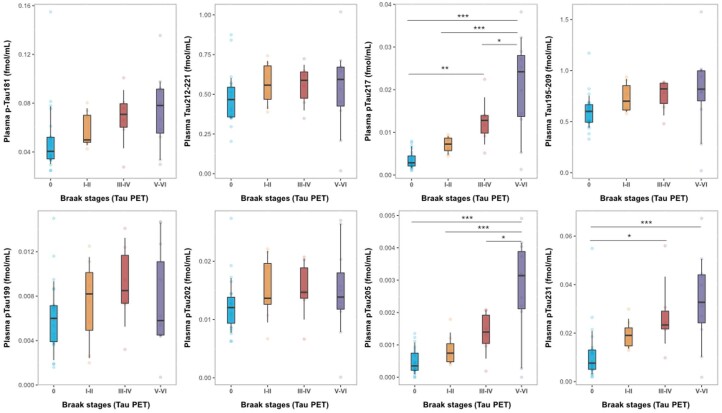
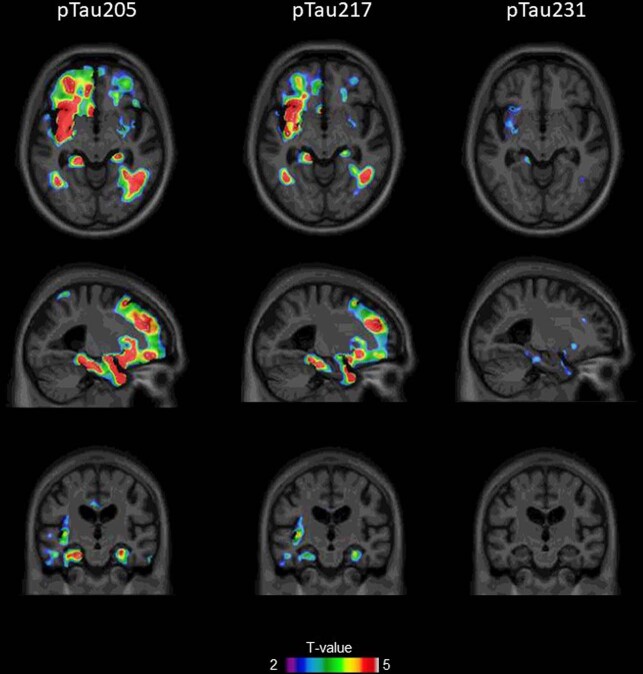
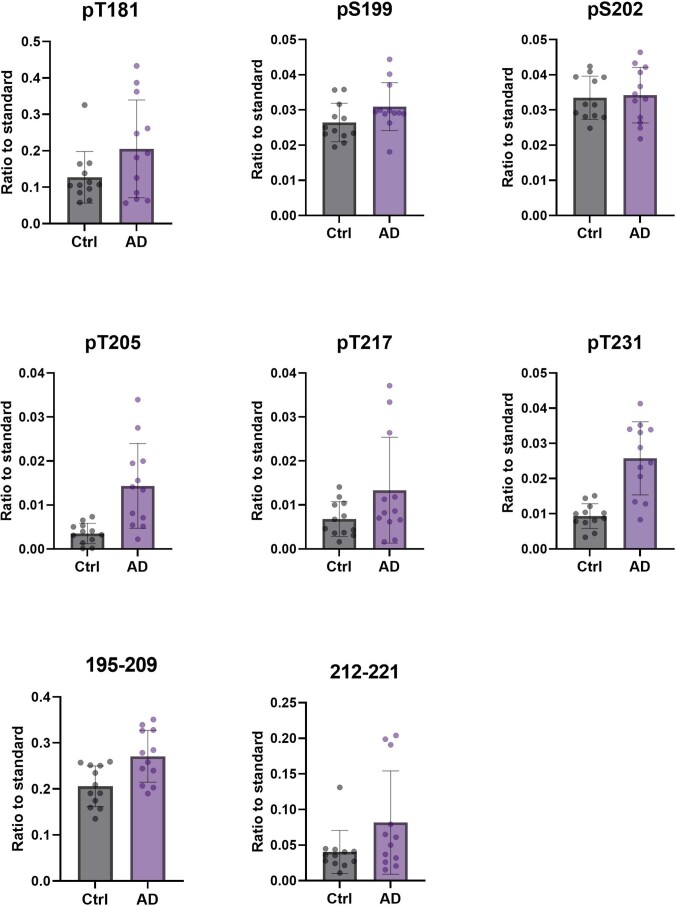
Blood phosphorylated tau (p-tau) biomarkers, at differing sites, demonstrate high accuracy to detect Alzheimerʼs disease (AD). However, knowledge on the optimal marker for disease identification across the AD continuum and the link to pathology is limited. This is partly due to heterogeneity in analytical methods. In this study, we employed an immunoprecipitation mass spectrometry method to simultaneously quantify six phosphorylated (p-tau181, p-tau199, p-tau202, p-tau205, p-tau217 and p-tau231) and two non-phosphorylated plasma tau peptides in a total of 214 participants from the Paris Lariboisière and Translational Biomarkers of Aging and Dementia cohorts. Our results indicate that p-tau217, p-tau231 and p-tau205 are the plasma tau forms that best reflect AD-related brain changes, although with distinct emergences along the disease course and correlations with AD features—amyloid and tau. These findings support the differential association of blood p-tau variants with AD pathology, and our method offers a potential tool for disease staging in clinical trials.
Overview
The claims and statistics of this paper haven’t been checked yet.
Free: it reads the open-access text and checks the first 5 claims that cite a source we can check. Create a free account to check every claim.
Integrity signals
Registry
Cites
Statistics
Figures
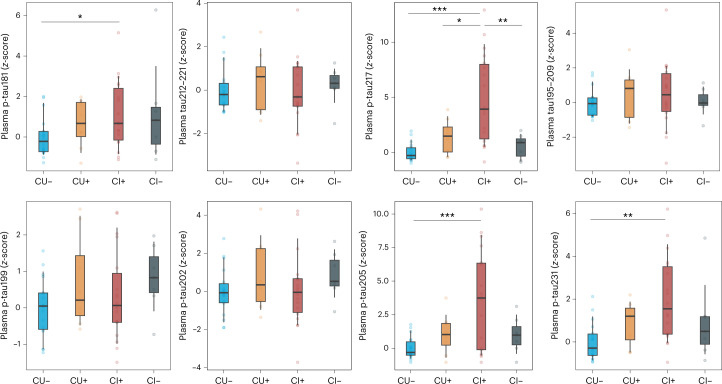
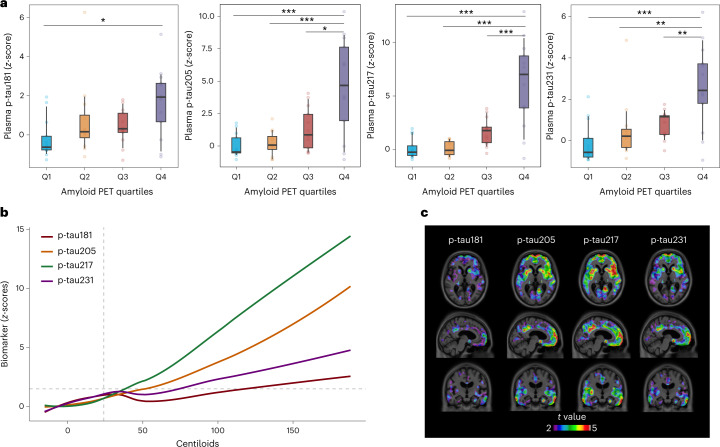
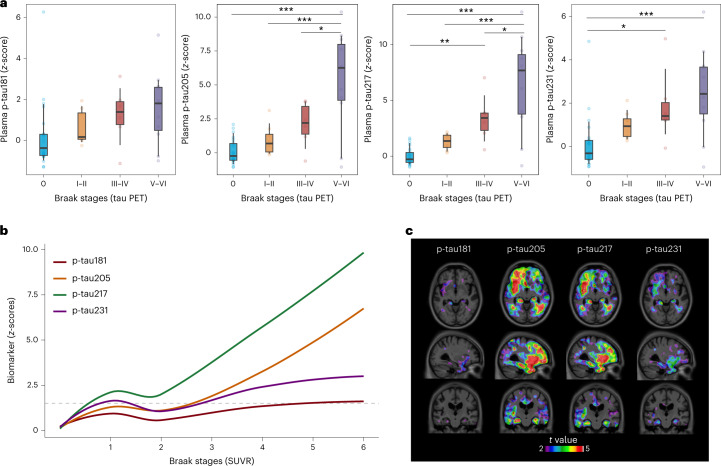
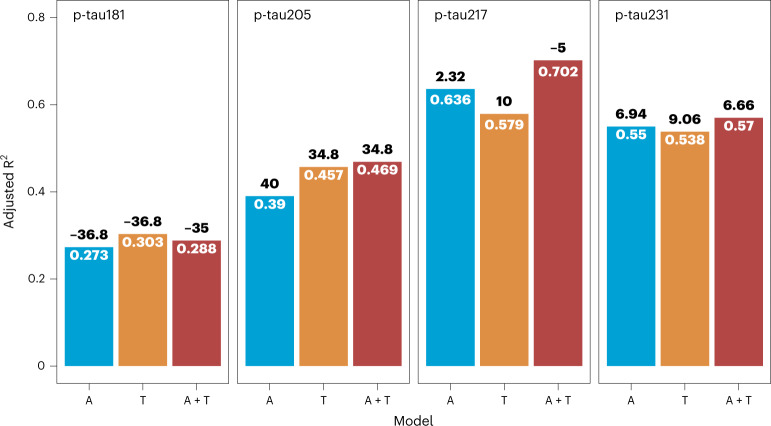
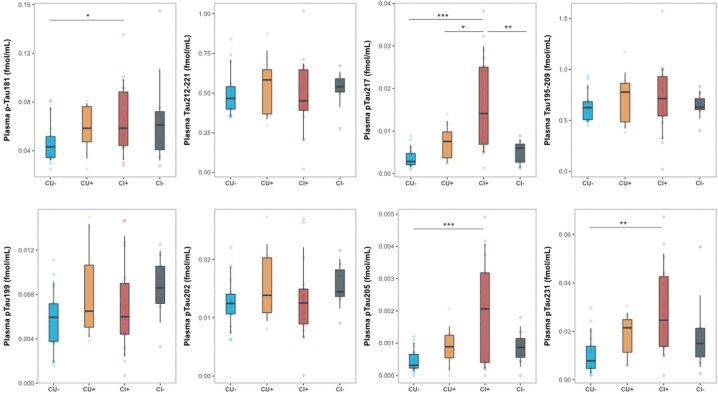
![Extended Data Fig. 4 Plasma tau species across Amyloid PET quartiles in Cohort 2. Box plots of plasma p-tau181, tau212-221, p-tau217, p-tau199, p-tau202, tau195-209 and p-tau231 levels in relation to amyloid PET (n=51). Participants were grouped in quartiles according to their levels of amyloid PET uptake (Q1=(-Inf,1.29]; Q2=(1.29,1.7]; Q3=(1.7,2.45]; Q4=(2.45, Inf]). The boxplots depict the median (horizontal bar), 25th to 75th percentiles (hinges) and whiskers indicate 10th and 90th percentiles. Statistical analysis across groups was performed using ANOVA (two-sided) and Tukey Contrasts were used to account for multiple comparisons (*P<0.05, **P<0.01, ***P<0.001). Exact significant p-values: P-tau181 PQ1 vs Q4 =0.0118; P-tau205 PQ1 vs Q4 <0.001, PQ2 vs Q4 <0.001, PQ3 vs Q4 = 0.0015; P-tau217 PQ1 vs Q4 <0.001, PQ2 vs Q4 <0.001, PQ3 vs Q4 <0.001; P-tau231 PQ1 vs Q4 <0.001, PQ2 vs Q4 = 0.0029, PQ3 vs Q4 = 0.0095.](https://figures.cochat.ai/paper-figures/55426e45a8b94b56a36b8643d2602c5b/mass-spectrometric-simultaneous-quantification-of-tau-species-in-plasma-shows-figure-8.jpg)
Verification
Claims the paper makes
The claims and statistics of this paper haven’t been checked yet.
Free: it reads the open-access text and checks the first 5 claims that cite a source we can check. Create a free account to check every claim.
Claims other papers make about this one
Each is checked against this paper’s own text: does it say what the citing paper says it does?
The cited source says what the claim attributes to it.
In the citing paper
“Among proposed blood tau biomarkers,18,19,20,21 phosphorylated tau at threonine 217 (p-tau217) has consistently shown high performance in differentiating AD from other neurodegenerative disorders10,22 and in detecting AD pathology in patients with mild cognitive impairment (MCI).22”
From Diagnostic Accuracy of a Plasma Phosphorylated Tau 217 Immunoassay for Alzheimer Disease Pathology (2024) · cites this paper as [21]
Self-check
Percentages, sums and reported differences re-computed from the paper’s own numbers.
The self-check needs the paper’s full text.
Citations
Cites
McKhann, G. M., Knopman, D. S., Chertkow, H., Hyman, B. T., Jack, C. R., Kawas, C. H., Klunk, W. E., Koroshetz, W. J., Manly, J. J., Mayeux, R., et al. (2011) · Alzheimer's & Dementia · doi:10.1016/j.jalz.2011.03.005 · Cited by 18,657
NIA‐AA Research Framework: Toward a biological definition of Alzheimer's disease
Jack, C. R., Bennett, D. A., Blennow, K., Carrillo, M. C., Dunn, B., Haeberlein, S. B., Holtzman, D. M., Jagust, W., Jessen, F., Karlawish, J., et al. (2018) · Alzheimer's & Dementia · doi:10.1016/j.jalz.2018.02.018 · Cited by 10,537
Self-citationClinical and biomarker changes in dominantly inherited Alzheimer's disease
Bateman, R. J., Xiong, C., Benzinger, T. L. S., Fagan, A. M., Goate, A., Fox, N. C., Marcus, D. S., Cairns, N. J., Xie, X., Blazey, T. M., et al. (2012) · New England Journal of Medicine · doi:10.1056/nejmoa1202753 · Cited by 3,814
Braak, H., Alafuzoff, I., Arzberger, T., Kretzschmar, H., & Del Tredici, K. (2006) · Acta Neuropathologica · doi:10.1007/s00401-006-0127-z · Cited by 3,172
Palmqvist, S., Janelidze, S., Quiroz, Y. T., Zetterberg, H., Lopera, F., Stomrud, E., Su, Y., Chen, Y., Serrano, G. E., Leuzy, A., et al. (2020) · JAMA · doi:10.1001/jama.2020.12134 · Cited by 1,603
Self-citationKarikari, T. K., Pascoal, T. A., Ashton, N. J., Janelidze, S., Benedet, A. L., Rodriguez, J. L., Chamoun, M., Savard, M., Kang, M. S., Therriault, J., et al. (2020) · The Lancet Neurology · doi:10.1016/s1474-4422(20)30071-5 · Cited by 1,316
Self-citationPlasma p-tau231: a new biomarker for incipient Alzheimer’s disease pathology.
Ashton, N. J., Pascoal, T. A., Karikari, T. K., Benedet, A. L., Lantero-Rodriguez, J., Brinkmalm, G., Snellman, A., Schöll, M., Troakes, C., Hye, A., et al. (2021) · Acta Neuropathologica · doi:10.1007/s00401-021-02275-6 · Cited by 719
Self-citationthe Dominantly Inherited Alzheimer Network, Barthélemy, N. R., Li, Y., Joseph-Mathurin, N., Gordon, B. A., Hassenstab, J., Benzinger, T. L. S., Buckles, V., Fagan, A. M., Perrin, R. J., et al. (2020) · Nature Medicine · doi:10.1038/s41591-020-0781-z · Cited by 651
Hansson, O., Edelmayer, R. M., Boxer, A. L., Carrillo, M. C., Mielke, M. M., Rabinovici, G. D., Salloway, S., Sperling, R., Zetterberg, H., & Teunissen, C. E. (2022) · Alzheimer's & Dementia · doi:10.1002/alz.12756 · Cited by 607
Self-citationHead-to-head comparison of 10 plasma phospho-tau assays in prodromal Alzheimer’s disease
Janelidze, S., Bali, D., Ashton, N. J., Barthélemy, N. R., Vanbrabant, J., Stoops, E., Vanmechelen, E., He, Y., Dolado, A. O., Triana-Baltzer, G., et al. (2023) · Brain · doi:10.1093/brain/awac333 · Cited by 522
Self-citation
Cited by
Items 101–138 of 138
Jung, D. H., Son, G., Wang, S. M., Yoo, S., Jahanshahi, A., Lim, H. K., & Moon, C. (2025) · Scientific Reports · doi:10.1038/s41598-025-15230-2 · Cited by 1
“To investigate the association between nasal Aβ42 levels and cognitive function, we stratified nasal Aβ42 level into quartile (Q) groups 38,39 .”
Tau proteoforms as plasma biomarkers in Alzheimer’s disease: mechanisms, measurement, and medicine
Kim, E., Lee, J. H., & Han, D. (2026) · Expert Review of Proteomics · doi:10.1080/14789450.2025.2611853 · Cited by 1
“However, this technique is difficult to apply in large cohorts due to several limitations, including its dependence on antibodies, high cost, and the time-and labor-intensive nature of sample preparation [25].”
InfluentialMotor, not cognitive, performance relates to amyloid status in normal older adults
Maher, A. C., Rose, S. G., DuBois, K. N., Kanaan, N. M., Koeppe, R. A., Bross, J. R., Flynn, E., Murphey, Y. L., Persad, C. C., & Giordani, B. (2026) · Alzheimer s & Dementia Diagnosis Assessment & Disease Monitoring · doi:10.1002/dad2.70237 · Cited by 1
Xie, Y., Cai, W., Zhao, X., & Li, R. (2026) · Organ medicine. · doi:10.1002/orm2.70032 · Cited by 1
Gaetani, L., Nardi, G., & Parnetti, L. (2026) · Expert Review of Neurotherapeutics · doi:10.1080/14737175.2026.2700246 · Cited by 1
“Plasma phosphorylated tau at threonine 205 (p-tau205) is another biomarker that has demonstrated a stronger association with tau-PET compared to amyloid-PET, reflecting more advanced pathology with regards to other p-tau isoforms [118].”
Li, C., Cheng, T., & Lin, C. Y. (2026) · npj Parkinson's Disease · doi:10.1038/s41531-026-01469-7 · Cited by 1
Prognostic value of plasma %p‐tau217 in cognitively unimpaired older adults
Silva‐Rodríguez, J., Zhang, L., Kleineidam, L., López‐González, F. J., Wagner, S., Martinez-Castillo, M., Sogorb‐Esteve, A., Guamán‐Chulunchana, M. E., Pastor, A. B., Moreno, N., et al. (2026) · Alzheimer s & Dementia · doi:10.1002/alz.71599 · Cited by 1
Jacquemin, C., Villain, N., Azevedo, R., Boluda, S., Thévenot, E., Fenaille, F., Lamari, F., & Bécher, F. (2024) · European Journal of Mass Spectrometry · doi:10.1177/14690667231218912 · Cited by 1
Age-associated proteins explain the role of medial temporal lobe networks in Alzheimer’s disease
Turnbull, A. G., Kim, Y., Zhang, K., Jiang, X., He, Z., Henderson, V. W., & Lin, F. V. (2024) · GeroScience · doi:10.1007/s11357-024-01291-0 · Cited by 1
“…measures in ADNI increases our confidence in the importance of some of these proteins in AD, future studies including measures of amyloid pathology, more AD-specific markers of tau (e.g., p-tau181[19], and markers of vascular/inflammatory changes are needed to further validate these findings.”
Adeola, H. A., & Robinson, R. A. S. (2025) · ACS Bio & Med Chem Au · doi:10.1021/acsbiomedchemau.5c00074 · Cited by 1
Shekari, M., Escalante, A. G., Milà‐Alomà, M., Falcón, C., López‐Martos, D., Sánchez‐Benavides, G., Brugulat‐Serrat, A., Niñerola‐Baizán, A., Ashton, N. J., Karikari, T. K., et al. (2024) · Alzheimer s & Dementia · doi:10.1002/alz.093976
Self-citationFluid and Imaging Markers of Amyloid Pathology
West, T., Meyer, M. R., Kirmess, K. M., Yarasheski, K. E., Braunstein, J. B., & Verghese, P. B. (2025) · Springer eBooks · doi:10.1007/978-3-031-80849-4_1
Shekari, M., Escalante, A. G., Milà‐Alomà, M., Falcón, C., López‐Martos, D., Sánchez‐Benavides, G., Brugulat‐Serrat, A., Niñerola‐Baizán, A., Ashton, N. J., Karikari, T. K., et al. (2025) · medRxiv · doi:10.1101/2025.07.09.25331011
Self-citationP-TAU205 IS A BIOMARKER LINKED TO TAU-PET ABNORMALITY: A CROSS-SECTIONAL AND LONGITUDINAL STUDYPreprint
Lantero‐Rodriguez, J., Janelidze, S., Palmqvist, S., Braun-Wohlfahrt, L. S., Vávra, J., Bali, D., Dolado, A. O., Mattsson, N., Stomrud, E., Zetterberg, H., et al. (2025) · medRxiv · doi:10.1101/2025.10.21.25338437
“However, while phosphorylations at both residues can be measured in biofluids, only p-tau205 has been shown to display a good performance as an AD biomarker [13, 16, 23-25].”
InfluentialSelf-citationArastoo, M., Penny, L. K., Lofthouse, R. A., Hitchcock, A., Moelders, A., Szalma, S., Porter, A. J., Palliyil, S., Harrington, C. R., & Wischik, C. M. (2025) · Scientific Reports · doi:10.1038/s41598-025-25864-x
“Most tau fragments identified in CSF and plasma contain epitopes within this region 19 that may or may not be phosphorylated.”
Eldewany, N. H., Nassar, S. Z., Salama, A., El-Banna, S. G., & Okab, A. B. (2025) · Research Square · doi:10.21203/rs.3.rs-7957867/v1
Analytical Methods for Donanemab: A Therapeutic Antibody for Alzheimer's Disease
Nikitha, R., Aleem, U. R., Bora, S., Palakurthi, M., & Sudharani, K. (2026) · International Journal of Science and Research Archive · doi:10.30574/ijsra.2026.18.2.0308
Van, K. T. (2025) · theses.fr (ABES) · doi:10.70675/32a1a6cez5dd3z42c0za2eaz2e57807081a6
Understanding aggregation of proteins in aqueous solutions and methods to study them
Rashid, M. I., Ansari, N. K., Naeem, A., & Rizvi, A. (2026) · Journal of Molecular Liquids · doi:10.1016/j.molliq.2026.129625
The potential of key Alzheimer’s plasma biomarkers to mimic tau PET MUBADA-based disease staging
Verberk, I. M. W., de Koning, L. A., Coomans, E. M., Trieu, C., Leeuwis, A. E., Hunter, J., Honigberg, L. A., van der Flier, W. M., Vijverberg, E. G. B., Ossenkoppele, R., et al. (2026) · Alzheimer s Research & Therapy · doi:10.1186/s13195-026-02085-6
“…may be P-tau205 or non-phosphorylated brain-derived tau forms, which were also suggested to better track with tau-PET burden and cognitive trajectories [61] than P-tau217 and the other markers investigated here, which all seem to associate more closely with amyloid burden than with tau burden.”
Akinci, M., Aziz, F., Guzman, D., Cheung, L., Kong, J., Silver, S. A., Eimicke, J. P., Simoes, S., Teresi, J. A., Brickman, A. M., et al. (2026) · medRxiv · doi:10.64898/2026.07.29.26359150
Concordance between plasma biomarkers of phosphorylated tau and tau-PET: A narrative review
van Houwelingen, A., Vernooij, M. W., Vermeiren, M. R., Ossenkoppele, R., van de Giessen, E., Seelaar, H., & Neitzel, J. (2026) · Journal of Alzheimer s Disease · doi:10.1177/13872877261468708
Du, X., Zhang, T., Wan, Z., Zhang, W., Yan, B., Zhang, T., Su, Y., Wang, G., Zhang, L., & Luo, H. (2026) · ACS Sensors · doi:10.1021/acssensors.6c02990
Xie, B., Zhang, W., Zhang, Y., Liu, L., You, J., & Li, Q. (2026) · Frontiers in Aging Neuroscience · doi:10.3389/fnagi.2026.1852137
“Plasma p-tau231 appears to capture earlier amyloid-associated changes, although its incremental clinical value requires further validation (Ashton et al., 2022; Montoliu-Gaya et al., 2023).”
Lenkiewicz, O., Lenkiewicz, J., Chmielewska, Z., Trzciński, M., Kotłowska, A., Napiórkowska, W., Masłowska, A. I., Gwóźdź-Broczkowska, A., & Luba, G. (2026) · International Journal of Innovative Technologies in Social Science · doi:10.31435/ijitss.3(51).2026.6492
Berto, M., Urbina, P. A. M., Paradisi, A., Sensi, M., Iacovino, N., Carbone, C., Bedin, R., Pinti, M., Biscarini, F., Zamboni, G., et al. (2026) · Advanced Healthcare Materials · doi:10.1002/adhm.71634
CSF p-tau205: a biomarker of Alzheimer’s disease progression and biological staging
Lantero‐Rodriguez, J., Janelidze, S., Palmqvist, S., Braun-Wohlfahrt, L. S., Vávra, J., Bali, D., Dolado, A. O., Mattsson, N., Stomrud, E., Zetterberg, H., et al. (2026) · Molecular Psychiatry · doi:10.1038/s41380-026-03838-3
Self-citationDNA- and aptamer-based biosensors for Alzheimer's disease biomarkers toward clinical translation
Pahlavan, Y., Nozari-Asbemarz, M., Amani, M., Hasani, E., Aliakbari, M., Khaleghinejad, S. H., Pahlavan, F., Emami, A., & Imanzadeh, H. (2026) · Talanta · doi:10.1016/j.talanta.2026.130583
Luo, Y. R., Zheng, L., & Shin, S. (2026) · Advances in clinical chemistry · doi:10.1016/bs.acc.2026.09.001
이예진, Seo, M., Pyo, S., Kim, Y., Choi, H. K., Shin, M., & Yoon, J. (2026) · Biosensors · doi:10.3390/bios16100541
Zhang, S., Roemer, S. N., Chong, J. R., Fang, T., Li, Y., Wang, Z., Zeng, T., Li, X., Deco, G., Venketasubramanian, N., et al. (2026) · Alzheimer s & Dementia · doi:10.1002/alz.71891
“72,86 Nevertheless, the direction of the association was consistent with the ADNI finding that greater biomarker abnormality was associated with higher estimated E/I ratio.”
Diagnostic Accuracies of Plasma P-Tau205, P-Tau212, and P-Tau217 Immunoassays in Alzheimer Disease
Sehrawat, A., Zeng, X., Monto, A. R., Saeed, A., Cohen, A. D., López, O. L., Reís, S. E., & Karikari, T. K. (2026) · Neurology Open Access · doi:10.1212/wn9.0000000000000175
González‐Ortiz, F., Kirsebom, B., Santos, C., Arslan, B., Gundersen, J. K., Kvartsberg, H., Sävman, K., Turton, M., Harrison, P., Gleerup, H. S., et al. (2026) · Brain Communications · doi:10.1093/braincomms/fcag413
Self-citationLabonte, J., Miner, A. E., Groh, J. R., Montoliu‐Gaya, L., Tripodis, Y., Aparicio, H. J., Turk, K. W., Budson, A. E., Farrer, L. A., Goldstein, L. E., et al. (2026) · Journal of Neurology · doi:10.1007/s00415-026-14232-y
Self-citationFluid biomarkers of synaptic dysfunction in Alzheimer's disease and related dementias
González, A. C. (2026) · Tesis Doctorals en Xarxa (Consorci de Serveis Universitaris de Catalunya)
Oyovwi, M. O., Rume, R. A., & Ben‐Azu, B. (2026) · Journal of Molecular Pathology · doi:10.3390/jmp7040040
Metadata
- Authors
- Montoliu-Gaya, L., Benedet, A. L., Tissot, C., Vrillon, A., Ashton, N. J., Brum, W. S., Lantero-Rodriguez, J., Stevenson, J., Nilsson, J., Sauer, M., Rahmouni, N., Brinkmalm, G., Lussier, F. Z., Pascoal, T. A., Skoog, I., Kern, S., Zetterberg, H., Paquet, C., Gobom, J., Rosa-Neto, P., & Blennow, K.
- Affiliations
- University of Gothenburg (SE)
- Centre intégré universitaire de santé et de services sociaux de l'Ouest-de-l’Île-de-Montréal (CA)
- Inserm (FR)
- King's College London (GB)
- Universidade Federal do Rio Grande do Sul (BR)
- University of Pittsburgh (US)
- Sahlgrenska University Hospital (SE)
- University of Wisconsin–Madison (US)
- Corresponding author
- Blennow, Kaj
- ORCID
- Montoliu-Gaya, Laia
- Benedet, Andréa L.
- Tissot, Cécile
- Vrillon, Agathe
- Ashton, Nicholas J.
- Brum, Wagner S.
- Lantero-Rodriguez, Juan
- Stevenson, Jenna
- Nilsson, Johanna
- Rahmouni, Nesrine
- Brinkmalm, Gunnar
- Lussier, Firoza Z.
- Pascoal, Tharick A.
- Skoog, Ingmar
- Kern, Silke
- Zetterberg, Henrik
- Paquet, Claire
- Gobom, Johan
- Rosa-Neto, Pedro
- Blennow, Kaj
- Venue
- Nature Aging
- Published
- 2023-04-27
- Volume
- 3
- Issue
- 6
- Pages
- 661-669
- ISSN
- 2662-8465 (ISSN-L)
- PMC
- PMC10275761
- OpenAlex
- W4367321693
- Semantic Scholar
- 645931603748c81f5c0fe53232118164184041f3
- Cited by
- 122
- References
- 41
- Citations by year
- 2026: 26 · 2025: 51 · 2024: 37 · 2023: 8
- FWCI
- 21.56
- Type
- journal article
- Language
- en
- Open access
- hybrid
- doi.org
- Licence
- cc-by
- creativecommons.org/licenses/by/4.0 (tdm)
- creativecommons.org/licenses/by/4.0 (vor)
- Locations
- Nature Aging (publishedVersion, cc-by)
- PubMed Central (publishedVersion, cc-by)
- PubMed (publishedVersion)
- UCL Discovery (University College London) (submittedVersion, cc-by)
- Funders
- BrightFocus Foundation (A2022015F)
- Familjen Erling-Perssons Stiftelse (FO2022-0270, ALFGBG-71320, ADSF-21-831377-C, #ADSF-21-831381-C, 860197, 101053962, #201809-2016862, ADSF-21-831376-C)
- Gun och Bertil Stohnes Stiftelse
- Stiftelsen för Gamla Tjänarinnor (2020-00959, FO2022‐0270, 860197)
- Fondation Vaincre Alzheimer
- European Commission (-71320, ADSF-21-831377-C, FO2022-0270, ADSF-21-831381-C, 201809-2016862, 101,053,962, HORIZON2020, ALFGBG-71320, 860197, ADSF-21-831376-C)
- Hjärnfonden (#FO2022-0270, 860197)
- Vetenskapsrådet (FO2022-0270, ADSF-21-831377-C, #101053962, 860197, ADSF-21-831376-C, ALFGBG‐71320, 201809-2016862, 02532, 2018-, #ADSF-21-831381-C, 2018-02532)
- Göteborgs Universitet
- Alzheimerfonden (AF‐968621)
- Demensfonden
- Olav Thon Stiftelsen
- HORIZON EUROPE Framework Programme (101053962, 860197)
- National Institute on Aging (R01AG068398)
- Topics
- Life Sciences › Neuroscience › Cellular and Molecular Neuroscience › Alzheimer's disease research and treatments
- Health Sciences › Medicine › Psychiatry and Mental health › Dementia and Cognitive Impairment Research
- Physical Sciences › Chemistry › Spectroscopy › Advanced Proteomics Techniques and Applications
- Keywords
- phosphorylated tau, plasma tau, Alzheimer's disease, blood biomarkers, tau phosphorylation sites, p-tau217, p-tau231, amyloid, tau pathology, immunoprecipitation mass spectrometry, disease staging
- MeSH terms
- Alzheimer Disease, Brain, Humans, Biomarkers, Amyloid beta-Peptides, tau Proteins, Amyloidogenic Proteins
About these checks
Registry, retraction, Cites and statistics results are computed, not judged, with one exception: a printed reference that no index lists is read once by a model before it counts as a citation error. Claims are extracted by a model and kept only when their quote appears verbatim in the text; each cited source is then checked, with a model’s help, for whether it says what the claim relies on. Those verdicts can be wrong — read the claim’s quote and the cited source before relying on one.
Statistics and arithmetic are recomputed, not judged.
Confidence bands are shown only for fields calibrated on our annotated test set. None is calibrated yet, so no band is shown.
What counts as a claim ›How we measure confidence ›How we check this ›
Are you an author, or do you see a problem with this page? Request a review
Data sources
Bibliographic data: Semantic Scholar, OpenAlex, Crossref.
Contains information from the Semantic Scholar Academic Graph Datasets, made available under the ODC Attribution License (ODC-BY 1.0).
Semantic Scholar’s data is described in: Kinney, R., et al. (2023). The Semantic Scholar Open Data Platform. arXiv:2301.10140.
