

Current applications and challenges in large language models for patient care: a systematic review
Open accessPublished version of a preprint
The DOI matches its Crossref record; 157 of the 163 references it cites were found in a registry or an index, and 1 are not checked yet; 12 of the 40 sources its claims cite were checked for support.
Abstract
Background: The introduction of large language models (LLMs) into clinical practice promises to improve patient education and empowerment, thereby personalizing medical care and broadening access to medical knowledge. Despite the popularity of LLMs, there is a significant gap in systematized information on their use in patient care. Therefore, this systematic review aims to synthesize current applications and limitations of LLMs in patient care. Methods: We systematically searched 5 databases for qualitative, quantitative, and mixed methods articles on LLMs in patient care published between 2022 and 2023. From 4349 initial records, 89 studies across 29 medical specialties were included. Quality assessment was performed using the Mixed Methods Appraisal Tool 2018. A data-driven convergent synthesis approach was applied for thematic syntheses of LLM applications and limitations using free line-by-line coding in Dedoose. Results: We show that most studies investigate Generative Pre-trained Transformers (GPT)-3.5 (53.2%, n = 66 of 124 different LLMs examined) and GPT-4 (26.6%, n = 33/124) in answering medical questions, followed by patient information generation, including medical text summarization or translation, and clinical documentation. Our analysis delineates two primary domains of LLM limitations: design and output. Design limitations include 6 second-order and 12 third-order codes, such as lack of medical domain optimization, data transparency, and accessibility issues, while output limitations include 9 second-order and 32 third-order codes, for example, non-reproducibility, non-comprehensiveness, incorrectness, unsafety, and bias. Conclusions: This review systematically maps LLM applications and limitations in patient care, providing a foundational framework and taxonomy for their implementation and evaluation in healthcare settings.
Verified 2026-10-05 · 1 reference not checked yet
Overview
CoChat Summary
TL;DR
This systematic review synthesized 89 studies across 29 medical specialties on large language models (LLMs) in patient care published 2022–2023, finding most examined GPT-3.5/GPT-4 for medical question answering and patient information tasks. It maps limitations into design and output domains, with non-comprehensiveness and incorrectness each reported in 87.6% of studies.
Key findings
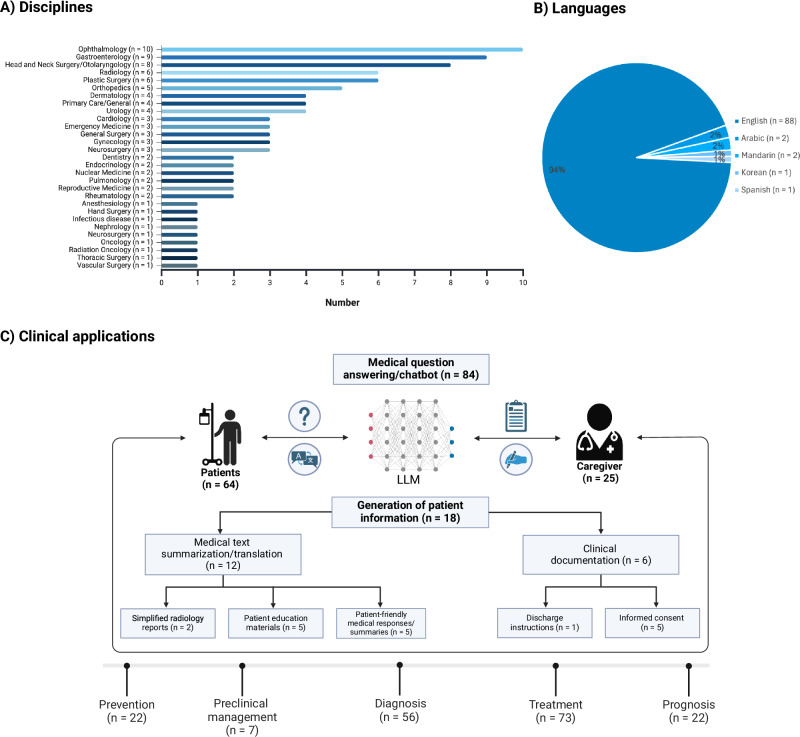
- Most studies investigated GPT-3.5 (53.2%, n = 66/124 LLMs examined) and GPT-4 (26.6%, n = 33/124); 94.4% (n = 84/89) examined LLMs as medical chatbots, and 20.2% (n = 18/89) focused on patient information generation.
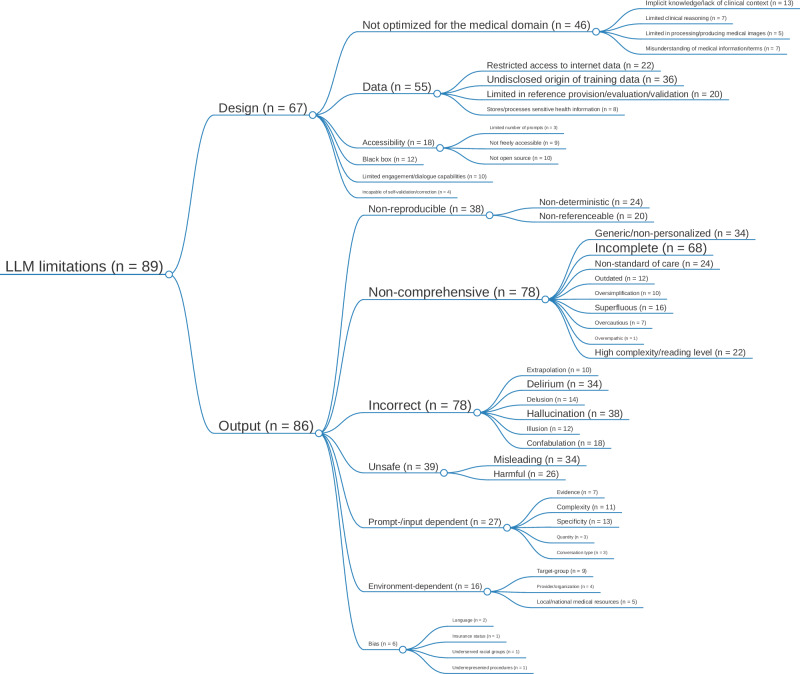
- Thematic synthesis identified design limitations (6 second-order and 12 third-order codes) and output limitations (9 second-order and 32 third-order codes).
- Common output limitations included non-comprehensiveness (87.6%, n = 78/89), incorrectness (87.6%, n = 78/89), unsafeness (43.8%, n = 39/89), non-reproducibility (42.7%, n = 38/89), and bias (6.7%, n = 6/89).
- Incorrectness was classified as hallucination (42.7%, n = 38/89), delirium (38.2%, n = 34/89), confabulation (20.2%, n = 18/89), delusion (15.7%, n = 14/89), illusion (13.5%, n = 12/89), and extrapolation (12.4%, n = 11/89).
Methods
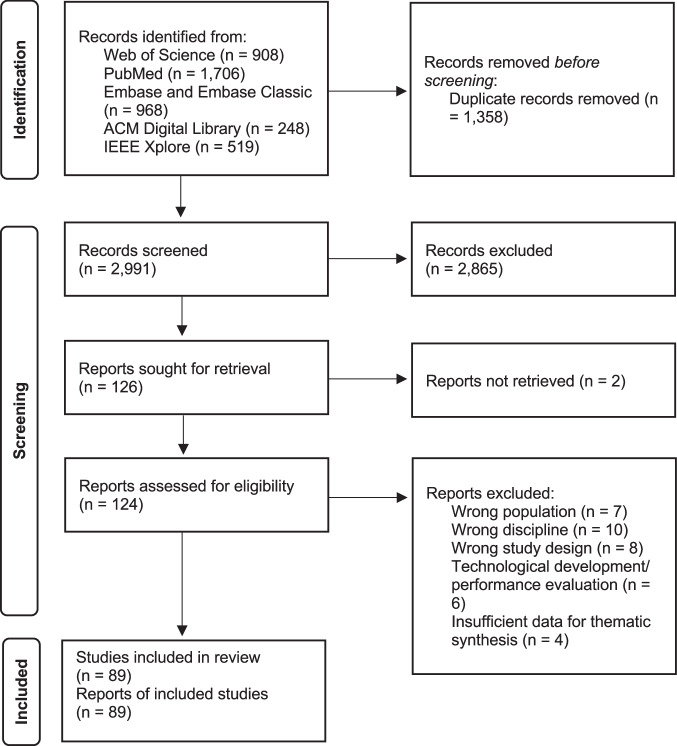
- Systematic review pre-registered in PROSPERO (CRD42024504542) and conducted per PRISMA; searched Web of Science, PubMed, Embase/Embase Classic, ACM Digital Library, and IEEE Xplore as of January 25, 2024, for qualitative, quantitative, and mixed methods articles published January 1, 2022–December 31, 2023. From 4349 records, 89 studies across 29 medical specialties were included.
- Quality assessment used the Mixed Methods Appraisal Tool 2018; a data-driven convergent synthesis approach was applied with free line-by-line coding in Dedoose. No meta-analysis was conducted due to diversity of outcomes and study designs.
- Most included studies were quantitative non-randomized (94.4%, n = 84/89), 4 were qualitative (4.5%), 1 was quantitative randomized (1.1%), and zero mixed methods studies were included.
Limitations
- Stated: the review focused on patient care and excluded research directed at clinicians only; no meta-analysis of LLM performance was possible; eligible studies may have been missed if not in the 5 databases or not available in English; the January 2022 cut-off risks missing predecessor LLMs such as GPT-3; rapid LLM development may make the review and taxonomy outdated.
- Stated: patient acceptance was not assessed in any of the included studies, and whether ongoing human oversight and validation is feasible remains subject to further research.
- Evident from the text: most studies were quantitative non-randomized (94.4%) and zero mixed methods studies were included due to classification; conflicts of interest/funding were not explicitly stated in 25.8% (n = 23/89) of studies; IRB approval was not reported in 61.8% (n = 55/89) and deemed unnecessary in 31.5% (n = 28/89).
Model-written summary. Check it against the paper before relying on it.
Integrity signals
Registry
Cites
Statistics
Figures
Verification
Claims the paper makes
11 Valid · 1 Not valid · 20 Not checked · 106 Own results and interpretations
The cited sources support only part of this claim — read each source’s verdict below.
In the paper
“One major issue is the inherent stochasticity in the models’ architecture, particularly in transformer-based models, which utilize probabilistic techniques during inference (e.g., beam search or temperature sampling)125.”
§ Current applications and challenges in large language models for patient care: a systematic review > Discussion
What the sources say
- Partly supportedcites [125] Ouyang, S., Zhang, J. M., Harman, M. & Wang, M. LLM is Like a Box of Chocolates: the Non-determinism of ChatGPT in Code Generation. arXiv preprint arXiv:2308.02828 (2023). sourceExperimental — accuracy not yet measured
The Introduction (p. 1) supports the core: LLMs are 'nondeterministic by nature' because they predict token probabilities, with randomness 'typically coming from the sampling methods used during text generation, such as top-k sampling or nucleus sampling', and non-determinism 'affects the reliability and reproducibility of empirical software engineering' (p. 1); temperature/greedy sampling is also treated in RQ2 (p. 13). However, our copy never locates the stochasticity in the model architecture and never mentions transformer-based models — the architectural hypothesis it records is GPT-4's 'sparse MoE architecture', alongside floating-point and GPU causes for residual non-determinism at temperature 0 (p. 13). The parenthetical examples are also only partly matched: beam search is not named anywhere as a probabilistic inference technique in this paper. (LLM, conf=0.72)
plainstates a cause- Asserted: passes — The authors put it forward as true.
- Checkable: passes — It can be checked against evidence.
- Load-bearing: passes — The paper’s conclusions depend on it.
- Based: passes — The paper gives a reason why it holds.
- Partly supported
The cited sources support only part of this claim — read each source’s verdict below.
In the paper
“suggesting that this limitation is also prevalent and overlooked in other domains of LLM use125.”
§ Current applications and challenges in large language models for patient care: a systematic review > Discussion
What the sources say
- Partly supportedcites [125] Ouyang, S., Zhang, J. M., Harman, M. & Wang, M. LLM is Like a Box of Chocolates: the Non-determinism of ChatGPT in Code Generation. arXiv preprint arXiv:2308.02828 (2023). sourceExperimental — accuracy not yet measured
The Introduction (p. 1) says LLMs are nondeterministic by nature. It also reports that only 21.1% of surveyed LLM-based code-generation papers considered non-determinism (p. 2). That supports the concern for code generation, but the paper does not establish that non-determinism is overlooked in other domains of LLM use. (LLM, conf=0.86)
hedged- Asserted: passes — The authors put it forward as true.
- Checkable: passes — It can be checked against evidence.
- Load-bearing: unclear — It is unclear whether the paper’s conclusions depend on it.
- Based: passes — The paper gives a reason why it holds.
- Partly supported
Every source the paper cites for this claim was checked and supports it.
In the paper
“As a result, open-source models such as BioMistral may offer a viable solution6.”
§ Current applications and challenges in large language models for patient care: a systematic review > Discussion
What the sources say
- Supportedcites [6] Labrak, Y. et al. BioMistral: A Collection of Open-Source Pretrained Large Language Models for Medical Domains. arXiv preprint arXiv:2402.10373 (2024). source
The Introduction (Sec. 1) frames the gap as the lack of lightweight open-source medical models allowing commercial use with performance comparable to larger or proprietary models, and presents BioMistral 7B as the specialized open-source model built to fill it; the Abstract reports BioMistral's superiority over existing open-source medical models and its 'competitive edge against proprietary counterparts,' and Sec. 2 Related Work casts proprietary models (GPT-4 MedPrompt, Med-PaLM 2) as targets for domain-specific open-source development. This supports the hedged claim that open-source models such as BioMistral may offer a viable solution. The only qualification our copy adds is the Ethics Statement, which restricts BioMistral 7B to research use and advises against production/clinical deployment — a scope caveat rather than a denial of viability. (LLM, conf=0.85)
hedgedstates a possible cause- Asserted: passes — The authors put it forward as true.
- Checkable: passes — It can be checked against evidence.
- Load-bearing: unclear — It is unclear whether the paper’s conclusions depend on it.
- Based: passes — The paper gives a reason why it holds.
- Supported
The cited sources that could be checked couldn’t confirm or dispute this claim.
In the paper
“It should also be noted that passing these exams does not equate to the practical competence required of a healthcare provider, which was also a limitation identified in our review (third-order codes: implicit knowledge/lack of clinical context; limited clinical reasoning; misunderstanding of medical information/terms; limited in processing/producing medical images)123.”
§ Current applications and challenges in large language models for patient care: a systematic review > Discussion
What the sources say
- Could not verifycites [123] Kung, T. H. et al. Performance of ChatGPT on USMLE: Potential for AI-assisted medical education using large language models. PLOS Digital Health 2, e0000198 (2023). 36812645 PMC9931230 sourceExperimental — accuracy not yet measured
The Results and Discussion report ChatGPT’s USMLE performance, but do not assess whether passing the exams demonstrates practical competence as a healthcare provider. The Discussion calls for real-world studies of its utility in medical education; it does not make the claimed comparison between exam results and clinical practice. (LLM, conf=0.72)
plain- Asserted: passes — The authors put it forward as true.
- Checkable: passes — It can be checked against evidence.
- Load-bearing: passes — The paper’s conclusions depend on it.
- Based: passes — The paper gives a reason why it holds.
- Could not verify
The sources with a verdict support this claim; the rest weren’t checked yet, have no full text we could read, or their verdicts aren’t rated yet.
In the paper
“Despite the use of various mitigation techniques, such as debiasing algorithms, curating balanced datasets, or incorporating fairness-focused training objectives, eliminating bias entirely is a persistent challenge141–143.”
§ Current applications and challenges in large language models for patient care: a systematic review > Discussion
What the sources say
- Not checked yetcites [141] Yang, Y., Liu, Y. & Naghizadeh, P. Adaptive data debiasing through bounded exploration. Advances in Neural Information Processing Systems 35, 1516–1528 (2022).
- Supportedcites [142] Gallegos, I. O. et al. Bias and Fairness in Large Language Models: A Survey. Computational Linguistics, 1-83. 10.1162/coli_a_00524 (2024) source
The survey's contribution list (p. 3) states it draws attention to 'ways that bias may persist at each mitigation stage,' and its mitigation taxonomy covers exactly the three technique types the claim names: projection-based/modular debiasing methods and decoding modifications (§5.1.5, §5.3, pp. 40, 53), data filtering/reweighting/augmentation for curating datasets (§5.1.1–5.1.3, p. 37), and in-training equalizing objectives/fairness regularizers (§5.2.2, p. 42). The discussion of limitations documents their insufficiency — modified prompting 'unsuccessful for bias removal' and projection-based methods 'ill-suited to target downstream biases' (§5.1.6, p. 41), toxicity-reducing decoding amplifying bias (§5.3.4, p. 53), and bias mitigated in the embedding space re-emerging downstream with efficacy 'an open problem' (§6.4, p. 59). Together these support the paraphrase that, despite such mitigation techniques, fully eliminating bias remains a persistent challenge; the source phrases it as persistence/'open problem' rather than an explicit impossibility claim. (LLM, conf=0.85)
- Not checked yetcites [143] Grari, V., Laugel, T., Hashimoto, T., Lamprier, S. & Detyniecki, M. On the Fairness ROAD: Robust Optimization for Adversarial Debiasing. arXiv preprint arXiv:2310.18413 (2023).
plain- Asserted: passes — The authors put it forward as true.
- Checkable: passes — It can be checked against evidence.
- Load-bearing: unclear — It is unclear whether the paper’s conclusions depend on it.
- Based: passes — The paper gives a reason why it holds.
67 more claims · 4 with their cited sources checked
Create a free account to see all 138 claims and to verify the 28 references still open.
- Probably not a substantial claim. 40
- It may state two separate claims as one. 38
- The quote only partly states this claim. 1
Claims other papers make about this one
Each is checked against this paper’s own text: does it say what the citing paper says it does?
The source backs part of the claim, not all of it — or backs it for a different population, condition or comparison.
In the citing paper
“Secondly, the veracity of professional information dispensed by AI chatbots in nursing education is yet to be ascertained (51).”
From Digital affordances of AI chatbots in nursing education: a systematic review of learning gains and gaps in the evidence (2026) · cites this paper as [51]
Experimental — accuracy not yet measuredThe source backs part of the claim, not all of it — or backs it for a different population, condition or comparison.
In the citing paper
“However, previous reviews of LLM use within patient care have often overlooked pharmacyspecific applications.”
From Large Language Models in Pharmacist-Led Direct Patient Care: A Rapid Review of Published Evaluations (2026) · cites this paper as [16]
Experimental — accuracy not yet measuredThe source backs part of the claim, not all of it — or backs it for a different population, condition or comparison.
In the citing paper
“Despite LLMs' potential to support pharmacist-led direct patient care tasks, notable challenges include hallucination risk, response sensitivity to prompting method, cost, and data privacy.16,53,92”
From Large Language Models in Pharmacist-Led Direct Patient Care: A Rapid Review of Published Evaluations (2026) · cites this paper as [16]
Experimental — accuracy not yet measured
Self-check
Percentages, sums and reported differences re-computed from the paper’s own numbers.
Each contradiction between two passages listed here was confirmed by an independent check.
Rated minor: it would not touch a result — a value no result rests on, a p-value that stays on the same side of the significance level, or a conflict that is clerical, resolved elsewhere in the paper, or outside its own findings.
In the paper
§ Current applications and challenges in large language models for patient care: a systematic review > Results > Characteristics of included studies
“84 (n = 84/89, 94.4%) in 202313,25–107”
§ Current applications and challenges in large language models for patient care: a systematic review > References
“33. Patnaik, S. S. & Hoffmann, U. Quantitative evaluation of ChatGPT versus Bard responses to anaesthesia-related queries. Br J Anaesth 132, 169–171 (2024).”
Rated minor: it would not touch a result — a value no result rests on, a p-value that stays on the same side of the significance level, or a conflict that is clerical, resolved elsewhere in the paper, or outside its own findings.
In the paper
“or both patients and caregivers (n = 25/89, 27%)”
§ Current applications and challenges in large language models for patient care: a systematic review > Results > Characteristics of included studies
Reported 27 · recomputed 28.089888
Rated minor: it would not touch a result — a value no result rests on, a p-value that stays on the same side of the significance level, or a conflict that is clerical, resolved elsewhere in the paper, or outside its own findings.
In the paper
“Arabic (n = 2/84, 2.3%)”
§ Current applications and challenges in large language models for patient care: a systematic review > Results > Applications of large language models
Reported 2.3 · recomputed 2.380952
Rated minor: it would not touch a result — a value no result rests on, a p-value that stays on the same side of the significance level, or a conflict that is clerical, resolved elsewhere in the paper, or outside its own findings.
In the paper
§ Current applications and challenges in large language models for patient care: a systematic review > Abstract > Results
“output limitations include 9 second-order and 32 third-order codes”
§ Current applications and challenges in large language models for patient care: a systematic review > Results > Limitations of large language models
“The evaluation of limitations in output data yielded 7 second-order codes”
Citations
Cites
1 retracted
Singer, M. B., Fu, J. J., Chow, J., & Teng, C. C. (2024) · Journal of Surgical Education · doi:10.1016/j.jsurg.2023.11.019 · Cited by 34
RetractedThe PRISMA 2020 statement: An updated guideline for reporting systematic reviews
Page, M. J., McKenzie, J. E., Bossuyt, P. M., Boutron, I., Hoffmann, T. C., Mulrow, C. D., Shamseer, L., Tetzlaff, J. M., Akl, E. A., Brennan, S. E., et al. (2021) · BMJ · doi:10.1136/bmj.n71 · Cited by 108,283
Rayyan-a web and mobile app for systematic reviews.
Ouzzani, M., Hammady, H., Fedorowicz, Z., & Elmagarmid, A. (2016) · Systematic Reviews · doi:10.1186/s13643-016-0384-4 · Cited by 26,092
Advances in neural information processing systems 7
Cios, K., & Shields, M. (1997) · Neurocomputing · doi:10.1016/s0925-2312(97)90018-7 · Cited by 22,059
Advances in Neural Information Processing Systems 19
(2007) · The MIT Press eBooks · doi:10.52202/085713 · Cited by 15,539
High-performance medicine: the convergence of human and artificial intelligence
Topol, E. J. (2019) · Nature Medicine · doi:10.1038/s41591-018-0300-7 · Cited by 10,450
Methods for the thematic synthesis of qualitative research in systematic reviews
Thomas, J., & Harden, A. (2008) · BMC Medical Research Methodology · doi:10.1186/1471-2288-8-45 · Cited by 9,312
The PRISMA 2020 statement: an updated guideline for reporting systematic reviews
Page, M. J., McKenzie, J., Bossuyt, P., Boutron, I., Hoffmann, T., mulrow, C., Shamseer, L., Tetzlaff, J., Akl, E., Brennan, S. E., et al. (2020) · doi:10.31222/osf.io/v7gm2_v1 · Cited by 8,090
The PRISMA 2020 statement: an updated guideline for reporting systematic reviews
Page, M. J., McKenzie, J., Bossuyt, P., Boutron, I., Hoffmann, T., mulrow, C., Shamseer, L., Tetzlaff, J., Akl, E., Brennan, S. E., et al. (2020) · doi:10.31222/osf.io/v7gm2 · Cited by 5,177
The Mixed Methods Appraisal Tool (MMAT) version 2018 for information professionals and researchers
Hong, Q. N., Fàbregues, S., Bartlett, G., Boardman, F., Cargo, M., Dagenais, P., Gagnon, M.-P., Griffiths, F., Nicolau, B., O’Cathain, A., et al. (2018) · Education for Information · doi:10.3233/efi-180221 · Cited by 4,737 · cited 1×
“Quality assessment was also performed independently for each article within this data extraction form, usingtheMixedMethodsAppraisalTool(MMAT)2018 18 .”
Cited by
Items 401–500 of 529
When Silence Speaks: Understanding Open-Ended Responses via LLMs in Therapeutic Voice Interaction
Busch, M., Jose, A., & Siegert, I. (2025) · Lecture notes in computer science · doi:10.1007/978-3-032-02548-7_31
Evaluating ChatGPT’s Effectiveness for Arabic Dry Mouth Patient Education
Alsoghier, A. M. (2026) · Healthcare · doi:10.3390/healthcare14172681
Artificial intelligence: Physicians and patients’ communication
Meo, S. A. (2026) · Elsevier eBooks · doi:10.1016/b978-0-443-45973-3.00016-6
Evaluation of Large Language Models for Emergency Triage in Urology: A Multi-Model Study
Cai, Q., Bi, K., Zhang, X., 叶洲杰, Chen, G., Wang, Z., An, Z., & Fu, W. (2026) · Diagnostics · doi:10.3390/diagnostics16213510
Harsono, A. A. H., Oslock, W. M., Brock, B., Hodges, S. C., Wood, L. N., Hernandez-Marquez, G. C., Abbas, A., Chu, D. I., & Rubyan, M. A. (2026) · Journal of Surgical Research · doi:10.1016/j.jss.2026.04.021
A Structured Debate-Mixture-of-Agents Framework for Complex Clinical Diagnostic Decision SupportPreprint
Xia, C., Ouyang, L., Wang, H., Zhao, Y., & Li, K. (2026) · arXiv (Cornell University) · doi:10.48550/arxiv.2609.05069
da Silva, L. M., Albuquerque, D. W., Souza, D. Y., Filho, E. D., & Ramos, F. (2026) · doi:10.5753/semish.2026.23117
Liu, L., Du, X., Yang, G., Xiang, S., Guo, H., Huang, L., Li, Y., & Yu, H. (2026) · Frontiers in Public Health · doi:10.3389/fpubh.2026.1862627
Xu, J., Xing, W., Jia, L., Li, X., Zhang, Q., & Yang, W. (2026) · Frontiers in Nutrition · doi:10.3389/fnut.2026.1957211
Fundamentals of Machine Learning in Neurology
Alam, M. R., & Abid, A. A. (2025) · Springer eBooks · doi:10.1007/978-3-032-04315-3_2
Beyond readability: Toward empathetic patient-friendly radiology reports
Rattanapitoon, S. K., Thitimahatthanakusol, P., Choenklang, C., & Rattanapitoon, N. K. (2025) · Clinical Imaging · doi:10.1016/j.clinimag.2025.110652
DonnaRosa Project: Exploring Informal Communication Practices Among Breast Cancer Specialists
Ferro, A., Atzori, F., Angiolini, C., Bortolin, M., Cortesi, L., Fabi, A., Fiorio, E., Garrone, O., Gianni, L., Giordano, M., et al. (2025) · Current Oncology · doi:10.3390/curroncol32120704
Kırca, Ö., Çakır, M. O., Kaya, M. S., Kurt, B., Yilmaz, B., Bilge, U., & Ozdogan, M. (2026) · Biomedicines · doi:10.20944/preprints202609.0010.v1
Bilgiç, B., & Turan, S. (2026) · Clinical Child Psychology and Psychiatry · doi:10.1177/13591045261499579
Performant and Small: Can We Have Both? SLMs on Mobile Devices for Healthcare Chatbots
Farahmand, A., Montagna, S., Bogliolo, A., Ferretti, S., & Magnini, M. (2026) · IEEE International Conference on Pervasive Computing and Communications Workshops (PerCom Workshops) · doi:10.1109/percomworkshops68308.2026.11585382
Moghadam, S. T., & Jabin, M. S. R. (2026) · Research Square · doi:10.21203/rs.3.rs-11197970/v1
Introducing Adjunct Medical Products and Artificial Intelligence Governance Gaps
Duffourc, M., Gilbert, S., & Nadeau, C. (2026) · Mayo Clinic Proceedings Digital Health · doi:10.1016/j.mcpdig.2026.100373
Shirbhate, R., Wankhede, A., Paithankar, P., & Labade, S. (2026) · International Journal For Multidisciplinary Research · doi:10.36948/ijfmr.2026.v08i02.75282
Altın, Y. F., Korkmaz, M., Demir, B., Yüksel, T., Akgül, T., & Korkmaz, M. D. (2026) · Digital Health · doi:10.1177/20552076261499680
Dulal, S. S., Jain, D. K., Sherman, Z., Zhang, M., Kim, R., Subramanian, S. V., & Kim, J. (2026) · The Professional Geographer · doi:10.1080/00330124.2026.2667385
Mao, T., Bian, F., Liu, W., Zhou, X., & Zhang, G. (2026) · Frontiers in Musculoskeletal Disorders · doi:10.3389/fmscd.2026.1935149
A Comparative Study of the Advantages and Disadvantages of DeepSeek and SPSS in Statistical Analysis
庞, 沙. (2025) · Statistics and Applications · doi:10.12677/sa.2025.146157
Patient and physician perspectives on large language model generated responses about brain aneurysm
Choi, J. H., Ruppert-Gomez, M., Shanahan, L. M., Staffa, S. J., Orbach, D. B., Smith, E. R., Oushy, S. H., Lehman, L., Larson, A. M., Rangwala, S. D., et al. (2026) · Child s Nervous System · doi:10.1007/s00381-026-07392-9
Next-Generation Smart Health: Harnessing the Power of LLMs and RAGs for Enhanced Healthcare
KORAICHE, F., & Dehbi, R. (2026) · Lecture notes in networks and systems · doi:10.1007/978-3-032-28100-5_32
Mahmud, J. S., Ratri, K. A., Hosen, M. H., Morol, M. K., Hui, L. T., Nandi, D., Jubair, A. A., & Rahman, M. (2026) · Frontiers in Digital Health · doi:10.3389/fdgth.2026.1856734
Xu, H., Guo, L., Shen, L., Zhu, T., Huang, X., & Ding, L. (2026) · Health Science Reports · doi:10.1002/hsr2.73381
Sungur, U., Arıkan, Y., Türkay, A. T., & Polat, H. (2025) · Yeni Üroloji Dergisi · doi:10.33719/nju1645041
Sungur, U., Arıkan, Y., Türkay, A. T., & Polat, H. (2025) · Yeni Üroloji Dergisi
Liu, D., Wang, Y., Iu, H. C., Zhang, L., Shi, C., Lu, Y., & Ma, X. (2026) · ACM Symposium on User Interface Software and Technology (UIST) · doi:10.1145/3830398.3830658
Current Status and Future Perspectives of Large Language Model Research in Dentistry
Okazaki, S., Mine, Y., Takeda, S., & MURAYAMA, T. (2025) · Hiroshima Daigaku shigaku zasshi
Zhang, L., Liang, L., Peng, X., Liu, S., Zhong, L., & Li, Z. (2026) · Frontiers in Medicine · doi:10.3389/fmed.2026.1971190
Uncertainty Reasoning with Large Language Models for Explainable Disease DiagnosisPreprint
Fan, X., Cai, Y., Hou, Z., & Dong, J. S. (2026) · arXiv (Cornell University) · doi:10.48550/arxiv.2605.25566
Saweris, R. G. E. (2026) · Research Square · doi:10.21203/rs.3.rs-11460520/v1
Markus, B., Baldus, S., Frey, N., Schulze, P. C., Marx, N., Kelm, M., Dürschmied, D., & Schieffer, B. (2026) · Die Kardiologie · doi:10.1007/s12181-026-00812-9
Privacy-Preserving Retrieval for Auditable Clinical Language Modeling on Real-World Radiology DataPreprint
Purswani, N., Schlegel, V., & Bharath, A. A. (2026) · Research Square · doi:10.21203/rs.3.rs-8745792/v1
Karfa, Y. E., & Ziani, A. (2026) · International Journal of Education Culture and Society · doi:10.58578/ijecs.v4i3.12372
Foundation models in clinical trials: The advances and nuances
John, C., & Sahoo, J. (2025) · International Conference on Biomedical Engineering and Sustainable Healthcare (ICBMESH) · doi:10.1109/icbmesh66209.2025.11182222
An, D. (2026) · Information Research · doi:10.47989/ir31260845
Integrated Evaluation Metrics for Large Language Models (MAILLM)
de Souza, A. F., Verri, F. A. N., & Balestrassi, P. P. (2025) · Lecture notes in networks and systems · doi:10.1007/978-981-96-6883-0_15
USE CASES FOR LARGE LANGUAGE MODEL AI IN HEALTHCARE DATA ANALYTICS
Ротар, О. (2026) · Наука і техніка сьогодні · doi:10.52058/2786-6025-2026-4(58)-2593-2604
Soni, S., & Demner‐Fushman, D. (2026) · npj Digital Medicine · doi:10.1038/s41746-026-02727-x
Rahdari, B., Shaikh, S., Chen, J. H., Gerstenberg, T., & Raj, S. (2026) · arXiv (Cornell University) · doi:10.48550/arxiv.2601.22338
A taxonomy of bullshit: classifying AI truth-indifference in policing contexts
May, B., Nunan, J., Marshall, J., & Palace, M. (2026) · Policing A Journal of Policy and Practice · doi:10.1093/police/paag052
Assisted Robot Arm with Voice Recognition for Digital Healthcare
Zhang, T., Phan, O., & Lu, J. (2026) · International Journal of Advanced Computer Science and Applications · doi:10.14569/ijacsa.2026.0170902
Neves, E. R. Z., Correa, A. V., Campioni, C. C., Guglielmi, G. P., & Morelli, B. (2026) · arXiv (Cornell University) · doi:10.48550/arxiv.2603.26324
Odewole, O. O., & Başaran, S. (2026) · Sustainability · doi:10.3390/su182111245
Uncertainty in Semantic Language Modeling with PIXELS
Radu, S., Zullich, M., & Valdenegro-Toro, M. (2025) · Workshop on Uncertainty-Aware NLP (UncertaiNLP) · doi:10.18653/v1/2025.uncertainlp-main.11
Uncertainty in Semantic Language Modeling with PIXELSPreprint
Radu, S., Zullich, M., & Valdenegro-Toro, M. (2025) · arXiv (Cornell University) · doi:10.48550/arxiv.2509.19563
Learning from private data:Algorithms for decentralized and differentially private machine learning
Romijnders, R. (2026) · UvA-DARE (University of Amsterdam)
Somayajula, S. A. (2025) · eScholarship (California Digital Library)
Oliveira, T. D. J. (2025) · Repositório do ISCTE-IUL
Assessment of Non-Institutional AI Tool Usage Among CliniciansPreprint
Pungitore, S. A., & Mosier, J. M. (2026) · arXiv (Cornell University) · doi:10.48550/arxiv.2609.11990
Vedova, C. B. D., Randall, D., Tan, K. L., Barnes, T. J., & Davey, S. (2026) · Learning Letters · doi:10.20851/ll.v6.43
Wang, D., Chen, B., Wang, J., Chen, Y., Deng, X., Huang, X., & Chen, Q. (2026) · Research Square · doi:10.21203/rs.3.rs-10521656/v1
Li, Z., Yuan, X., Chen, Y., Jin, R., Wei, Y., Liu, X., Weng, L., Su, H., & Chen, K. (2026) · Global Translational Medicine · doi:10.36922/gtm026200020
Chu, X., Ye, W., Zhang, Y., Li, W., Liu, W., Li, Z., Niu, J., Wang, S., Li, W., Zhang, M., et al. (2026) · Research Square · doi:10.21203/rs.3.rs-11390227/v1
Zang, Q., You, D., Huang, H., Chen, K., Song, J., & 陈华琴 (2026) · Research Square · doi:10.21203/rs.3.rs-10805692/v1
Suan: Rectifying Direct Preference Safety Alignment in Large Language ModelsPreprint
Cherednichenko, O., & Klypa, R. (2026) · arXiv (Cornell University) · doi:10.48550/arxiv.2609.08634
Rosenblum, S., Lazebnik, T., & Ben‐Zion, Z. (2026) · arXiv (Cornell University) · doi:10.48550/arxiv.2610.35326
Pan, K., Lin, X., Huang, S., & Huang, C. (2026) · Risk Management and Healthcare Policy · doi:10.2147/rmhp.s624615
The era of continuous data is now: wearables and artificial intelligence
Pompa, A. G., Dang, N. L., & Avari, J. N. (2026) · Canadian Journal of Physiology and Pharmacology · doi:10.1139/cjpp-2026-0011
McCoy, L. G., Haredasht, F. N., Chopra, K., Wu, D. W. –., Wu, D., Conteh, A. M., Khemani, S., Maharaj, S. K., Ravi, V., Pahwa, A., et al. (2025) · arXiv (Cornell University) · doi:10.48550/arxiv.2508.01159
Polysemy-Aware Probabilistic Measure for Interpreting Semantic Consistency in Domain-Specific LLMs
Chakraborty, D., Rudrapal, D., & Bhattacharya, B. B. (2025) · OITS International Conference on Information Technology (OCIT) · doi:10.1109/ocit66168.2025.11400352
The epistemic limits of large language models: trust, testimony, and group understanding
DuVall, P., Rice, C., Kasser, J., & Krishnaswamy, N. (2026) · doi:10.25675/3.027149
Filak, Y. F., Mykhalko, Y. O., & Сабадош, М. В. (2026) · medRxiv · doi:10.64898/2026.09.21.26363368
Generatiivisen tekoälyn hyödyntäminen potilastiedon käsittelyssä: mahdollisuudet ja haasteet
Bordi, M. (2025) · Tampere University Institutional Repository (Tampere University)
Qian, X., Miao, L., Wu, Q., Wang, W., Gong, Z., & Cao, X. (2026) · Research Square · doi:10.21203/rs.3.rs-11391079/v1
Revolutionizing Radiology Workflow with Factual and Efficient CXR Report GenerationPreprint
Sukjai, P., & Boonmee, A. (2025) · arXiv (Cornell University) · doi:10.48550/arxiv.2506.01118
Balaban, K., Ertan, M. B., & Kalem, M. (2026) · Journal of orthopaedic surgery · doi:10.1177/10225536261504909
Attività medico-sanitaria e intelligenza artificiale nella prospettiva della responsabilità
Tuccari, F. (2025) · AIRUS
Li, Q., Cheng, Z., Cao, F., Wang, X., & Bachani, A. M. (2026) · Digital Health · doi:10.1177/20552076261490808
Pang, J., Luo, M., Lin, H., & See, P. D. F. (2026) · SSRN Electronic Journal · doi:10.2139/ssrn.7427438
Launardo, V., Köseoğlu, M., Susanto, L., Kase, M. T., Colebeck, A. C., Huber, H. M., Krzesinski, M., Wijaya, D., Ruslin, M., Wee, A. G., et al. (2026) · PubMed Central · doi:10.1016/j.jds.2025.07.3504
Pereira, M. D., Reginaldo, L. A. S., & Pereira, M. D. (2026) · doi:10.1590/scielopreprints.16445
Liu, J., Zhang, Y., Lai, H., Han, M., Ma, N., Du, S., Zhao, W., Xia, D., Tong, B., Liu, Y., et al. (2026) · npj Digital Medicine · doi:10.1038/s41746-026-03228-7
Möller, M. (2026) · arXiv (Cornell University) · doi:10.48550/arxiv.2608.03500
Recent Advancements on Artificial Intelligence for Public Health Threats
Consoli, S., Lorenzo, B. A., Indaco, B., Mario, C., Valentin, C., Markov, P. V., Orfei, L., Ronco, M., Lea, S., Stefanovitch, N., et al. (2026) · Joint Research Centre (European Commission) · doi:10.2760/6953152
Zelinschi, D. O., Onicescu, O.-M., Ursache, A., Mihoci, E. C., Anton, S., Anton, E., & Nemescu, D. (2026) · Diagnostics · doi:10.3390/diagnostics16223742
Pillai, A. S. (2026) · International Research Journal of Modernization in Engineering Technology and Science · doi:10.56726/irjmets83871
Masuda, K., Yatsushiro, K., Iwamoto, H., Hirano, H., & Hanaya, R. (2026) · arXiv (Cornell University) · doi:10.48550/arxiv.2609.16739
LunaAI: A Polite and Fair Healthcare Guidance ChatbotPreprint
Ganesan, Y., Harlen, S., Rahman, A. R. B. F., Singh, A., Fathanah, Z., & Yusof, R. J. R. (2026) · arXiv (Cornell University) · doi:10.48550/arxiv.2602.18444
Imani, M. H., Hasannejad, M., Imani, A. H., Mohaqeq, H., Mokhtari, M., Ostovar, T., & Gharaei, F. R. (2026) · Research Square · doi:10.21203/rs.3.rs-9850491/v1
Agentic AI for Consumer Health: Conceptual Framework, Applications, and Challenges
Musamih, A., Salah, K., Simsekler, M. C. E., Omar, M., Jayaraman, R., & Yaqoob, I. (2026) · IEEE Consumer Electronics Magazine · doi:10.1109/mce.2026.3714084
Lee, M. J., Baek, J., Kwon, J. Y., Lee, J. M., Kim, D. H., Kim, S., Son, H., & Choi, B. K. (2026) · Research Square · doi:10.21203/rs.3.rs-9648661/v1
Prasad, A. (2026) · Minds at UW (University of Wisconsin)
Aligning Language Model Benchmarks with Pairwise PreferencesPreprint
Gutierrez, M., Leng, X., Cyberey, H., Schwarz, J. R., Alaa, A. M., & Hartvigsen, T. (2026) · arXiv (Cornell University) · doi:10.48550/arxiv.2602.02898
Heß, M., van Veenendaal, G., Wakkie, J., Soo, Y., Lawson, M. H., Maclay, J. D., Nair, A., & Navani, N. (2026) · arXiv (Cornell University) · doi:10.48550/arxiv.2609.07185
Okafor, C. E. (2026) · International Journal of Intelligent Data and Machine Learning · doi:10.55640/ijidml-v03i09-03
Ribeiro, A. L., Herrera, S., Vescovo, S. D., Wagenaar, W., & Tovar-Bastidas, D. B. (2026) · The Journal of Rheumatology · doi:10.3899/jrheum.2026-0373
Xu, Y., Peng, X., Wen, J., Wang, X., Xia, Y., Xu, T., Yang, T., & Hu, K. (2026) · Research Square · doi:10.21203/rs.3.rs-7677489/v1
Tambone, V., Campanozzi, L. L., Palma, G. D., Giacomobono, F., Refolo, P., Oliva, A., & Micco, F. D. (2026) · Healthcare · doi:10.3390/healthcare14213650
構造化・非構造化臨床データを活用した診断支援AI手法の開発と評価
韓, 豊. (2026) · Institutional Repositories DataBase (IRDB) · doi:10.14943/doctoral.k16893
Artificial intelligence in peer review: beyond the distinction between assistance and substitution
Rikers, R. M. J. P. (2026) · Academic Medicine · doi:10.1093/acamed/wvag176
Performance of large language models in answering frequently‐asked questions on celiac disease
Peled, N., Shouval, D. S., Gillett, P. M., Szajewska, H., Valitutti, F., Shamir, R., & Guz‐Mark, A. (2026) · Journal of Pediatric Gastroenterology and Nutrition · doi:10.1002/jpn3.70375
Dai, J., Zhang, C., Jia, Y., Wang, Y., He, R., 罗昌勇, & Liu, Z. (2026) · arXiv (Cornell University) · doi:10.48550/arxiv.2610.04215
Weilnhammer, V., Dolan, R., Luettgau, L., Corno, V., Wilkinson, E., Sounderajah, V., Richardson, H. B., Kelly, C. J., & Nour, M. M. (2026) · arXiv (Cornell University) · doi:10.48550/arxiv.2611.09647
Chen, Y., Bhunyanaphakul, V., Kosago, P., Finkelman, M., & Lee, D. J. (2026) · medRxiv · doi:10.64898/2026.10.19.26365937
Olivier, T. J., Patel, A. A., Shi, W., Ma, Z., & Annaswamy, T. M. (2025) · Interventional Pain Medicine · doi:10.1016/j.inpm.2025.100621
Kirwan, L. (2026) · Arrow - TU Dublin (Technological University Dublin) · doi:10.21427/dhrf-3r25
When Technology Ideas Retain Legitimacy Despite Failure: Insights from Danish General Practice
Andersen, M. R. F., Nielsen, J. A., & Sørensen, N. L. (2026) · VBN Forskningsportal (Aalborg Universitet)
Metadata
- Authors
- Busch, F., Hoffmann, L., Rueger, C., van Dijk, E. H., Kader, R., Ortiz-Prado, E., Makowski, M. R., Saba, L., Hadamitzky, M., Kather, J. N., Truhn, D., Cuocolo, R., Adams, L. C., & Bressem, K. K.
- Affiliations
- TUM Klinikum (DE)
- Humboldt-Universität zu Berlin (DE)
- Leiden University Medical Center (NL)
- University College London (GB)
- Azienda Ospedaliero-Universitaria Cagliari (IT)
- Deutsches Herzzentrum München (DE)
- Heidelberg University (DE)
- Universitätsklinikum Aachen (DE)
- University of Salerno (IT)
- Corresponding author
- Busch, Felix
- ORCID
- Venue
- Communications Medicine
- Published
- 2025-01-21
- Volume
- 5
- Issue
- 1
- Pages
- 26-26
- ISSN
- 2730-664X (ISSN-L)
- PMC
- PMC11751060
- OpenAlex
- W4406658975
- Cited by
- 358
- References
- 142
- Citations by year
- 2026: 226 · 2025: 123
- FWCI
- 20.62
- Type
- journal article
- Language
- en
- Open access
- gold
- doi.org
- Licence
- cc-by
- creativecommons.org/licenses/by/4.0 (tdm)
- creativecommons.org/licenses/by/4.0 (vor)
- Locations
- Communications Medicine (publishedVersion, cc-by)
- medRxiv (acceptedVersion, cc-by)
- PubMed Central (publishedVersion, cc-by)
- PubMed (publishedVersion)
- Leiden Repository (Leiden University) (submittedVersion, cc-by)
- DOAJ (DOAJ: Directory of Open Access Journals) (submittedVersion, cc-by-sa)
- UNICA IRIS Institutional Research Information System (University of Cagliari) (submittedVersion, other-oa)
- mediaTUM (Technical University of Munich) (submittedVersion)
- RWTH Publications (RWTH Aachen) (submittedVersion, other-oa)
- Funders
- European Commission (101079894)
- Topics
- Health Sciences › Medicine › Health Informatics › Artificial Intelligence in Healthcare and Education
- Physical Sciences › Computer Science › Artificial Intelligence › Machine Learning in Healthcare
- Health Sciences › Health Professions › Health Information Management › Artificial Intelligence in Healthcare
- Keywords
- large language models, patient care, GPT-3.5, GPT-4, patient education, medical question answering, medical text summarization, medical translation, clinical documentation, LLM limitations, algorithmic bias, reproducibility, data transparency, patient empowerment
About these checks
Registry, retraction, Cites and statistics results are computed, not judged, with one exception: a printed reference that no index lists is read once by a model before it counts as a citation error. Claims are extracted by a model and kept only when their quote appears verbatim in the text; each cited source is then checked, with a model’s help, for whether it says what the claim relies on. Those verdicts can be wrong — read the claim’s quote and the cited source before relying on one.
The claim verdicts this report counts are experimental: their accuracy is not yet measured.
A language model drew the claims from the paper on 2026-10-05, under version 3 of the claim definition (model deepseek-v4.1-flash, prompt extract-v3).
A second model labelled each claim on 2026-10-05 (model jev-1.13-20260917, definition revision gold-guideline-v0.2).
Cited sources are checked with a language model’s help (qwen3.8-omni-flash and gpt-6-sol).
Statistics and arithmetic are recomputed, not judged.
Confidence bands are shown only for fields calibrated on our annotated test set. None is calibrated yet, so no band is shown.
What counts as a claim ›How we measure confidence ›How we check this ›
Are you an author, or do you see a problem with this page? Request a review
Data sources
Bibliographic data: Semantic Scholar, OpenAlex, Crossref.
Contains information from the Semantic Scholar Academic Graph Datasets, made available under the ODC Attribution License (ODC-BY 1.0).
Semantic Scholar’s data is described in: Kinney, R., et al. (2023). The Semantic Scholar Open Data Platform. arXiv:2301.10140.
