

TUT1-catalyzed U6 snRNA 3′-end maturation is essential for RNA splicing and stem cell survival
Open accessThe DOI matches its Crossref record; 58 of the 58 references it cites were found in a registry or an index; none of the 30 sources its claims cite is checked for support yet.
Abstract
Post-transcriptional maturation of the U6 snRNA 3′-end, important for spliceosome assembly, is catalyzed by sequential actions of TUT1 and USB1. It is believed that the TUT1-catalyzed oligo(U) tail at the U6 snRNA 3′-end serves merely as a substrate for USB1 to generate a final 2′,3′-cyclic phosphate group to mature the U6 snRNA. However, biallelic inactivation of TUT1 or USB1 is linked to distinct human developmental disorders, suggesting that they have different physiological functions. Here, using genetically engineered mouse models, we show that Tut1 is required to maintain stem cell pools during embryogenesis, whereas unexpectedly Usb1 is dispensable for this. Loss of Tut1 weakens the interaction of the U6 snRNA with the Lsm2-8 protein complex, causes defective RNA splicing, and triggers massive DNA damage and subsequent cell death. Splicing defects and cell death can be mitigated by recombinant U6 snRNA containing an oligo(U) tail. We propose that the TUT1-catalyzed oligo(U) tail is essential for splicing and cell proliferation. Further modification of this oligo(U) tail by USB1 is ubiquitous but only functionally required in specific cell types.
Overview
CoChat Summary
TL;DR
Using engineered mouse models, this study shows that the TUT1-catalyzed oligo(U) tail at the U6 snRNA 3′-end is required for RNA splicing and stem cell survival, whereas USB1-mediated 2′,3′-cyclic phosphate maturation is dispensable in most embryonic cell types. Tut1 loss causes splicing defects, DNA damage, and Trp53-dependent neural stem cell death, rescuable by Trp53 deletion or recombinant U6 snRNA carrying a 6U tail.
Key findings
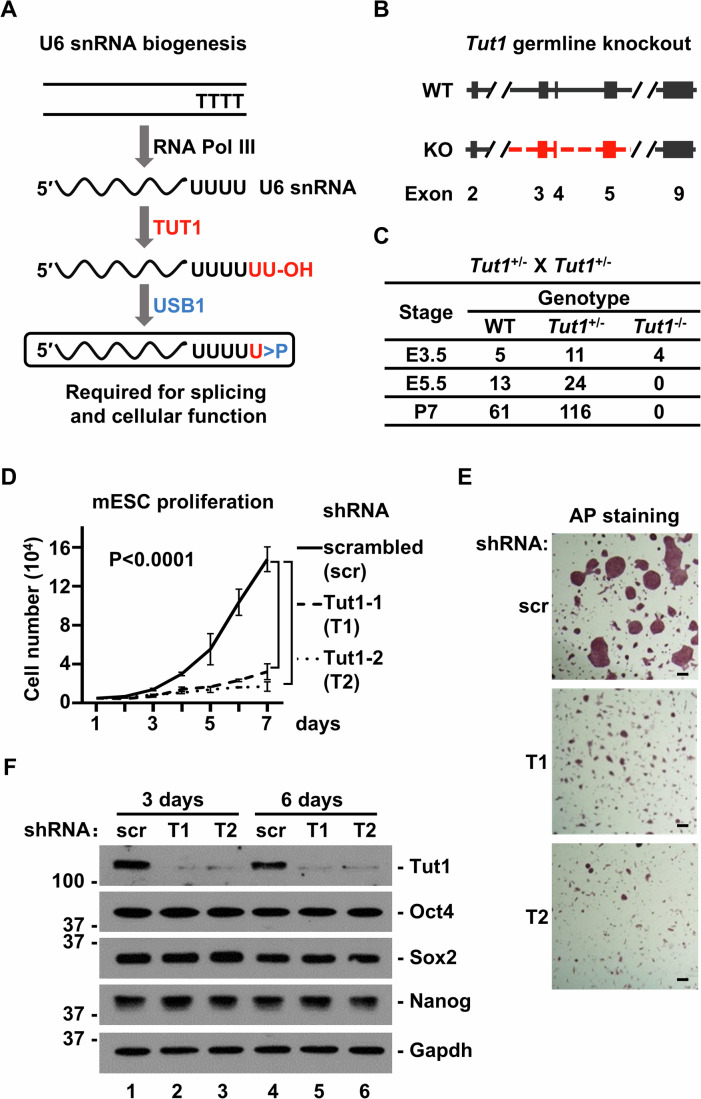
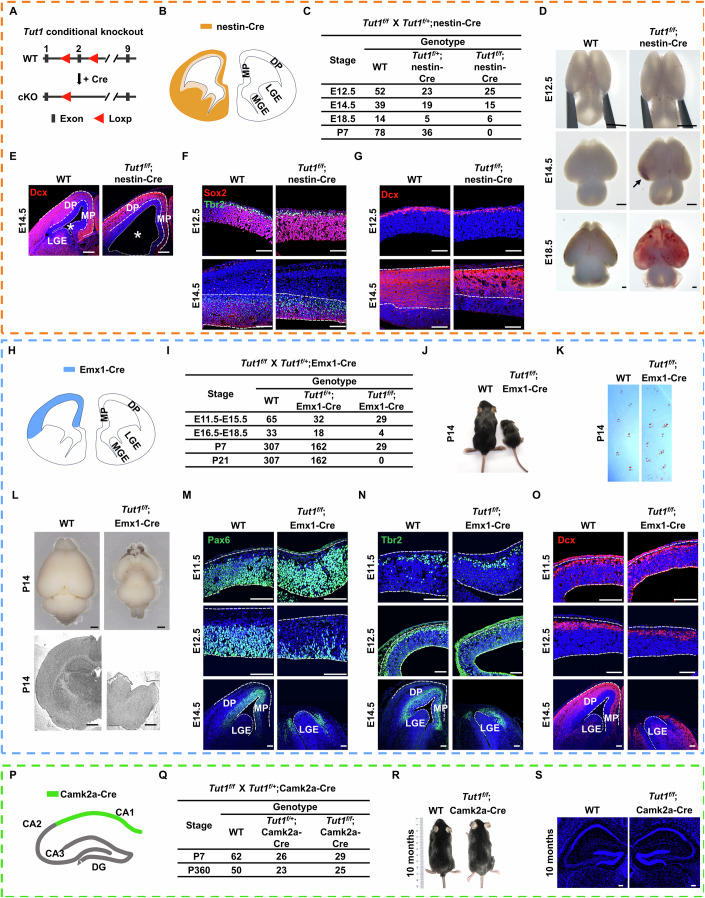
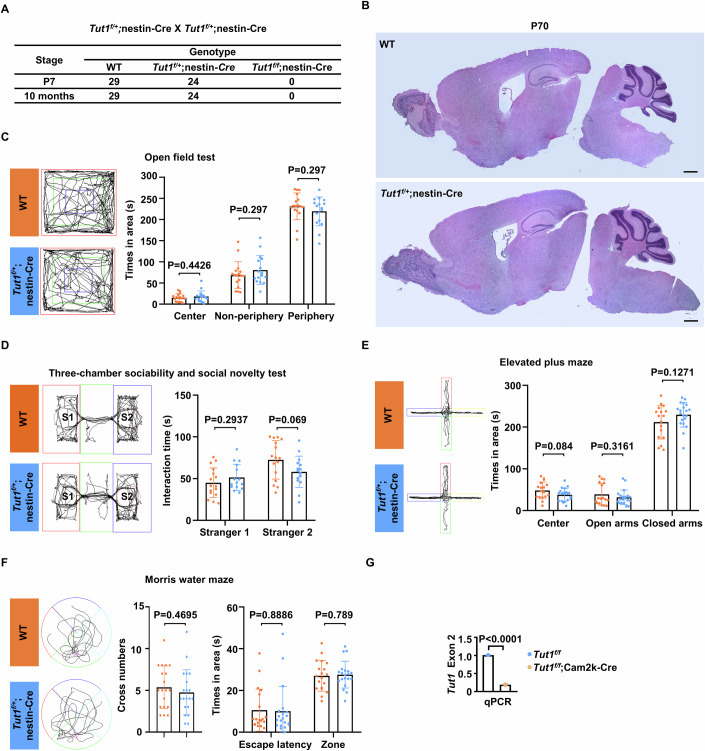
- Tut1 is essential for early embryogenesis and stem cell maintenance: no viable Tut1−/− offspring were obtained (n = 177, P7), no homozygous Tut1-null conceptuses beyond E5.5, and no Tut1-null mESC clones could be obtained (n = 157). Conditional Tut1 deletion in the CNS caused embryonic lethality, loss of Sox2+/Tbr2+ neural stem/progenitor cells by E14.5, and complete loss of dorsal/medial neocortex with Emx1-Cre; Camk2a-Cre deletion in mature hippocampal neurons was compatible with normal histology at 10 months despite ~90% Tut1 deletion.
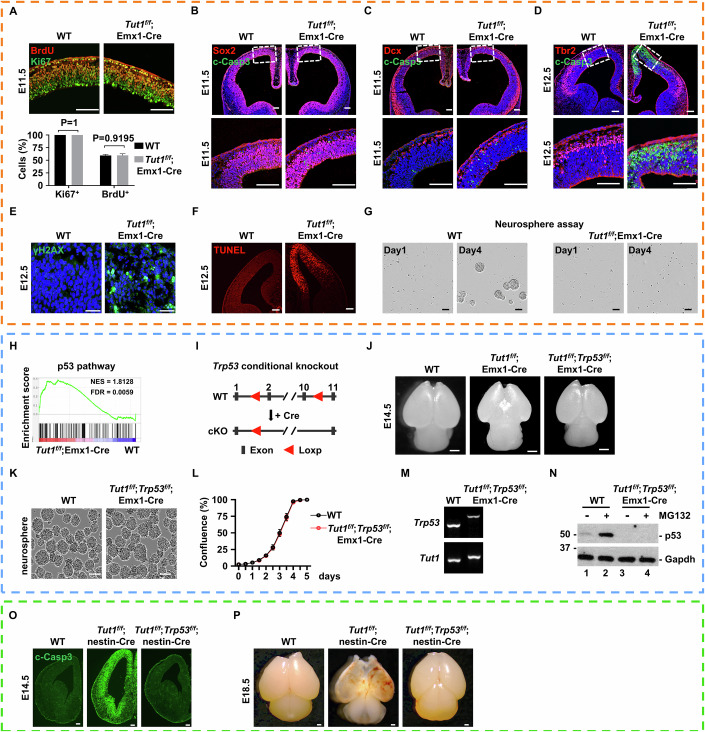
- Tut1 loss triggers DNA damage and Trp53-dependent cell death in neural stem cells: at E11.5 proliferation was comparable, but c-Casp3 increased in Sox2+ cells, not Dcx+ cells; by E12.5 c-Casp3, γH2AX, and TUNEL were widespread. Tut1f/f;Emx1-Cre neural stem cells were lost within 4 days in neurosphere assays, and simultaneous Trp53 deletion fully restored neocortex structure and neural stem cell proliferation.
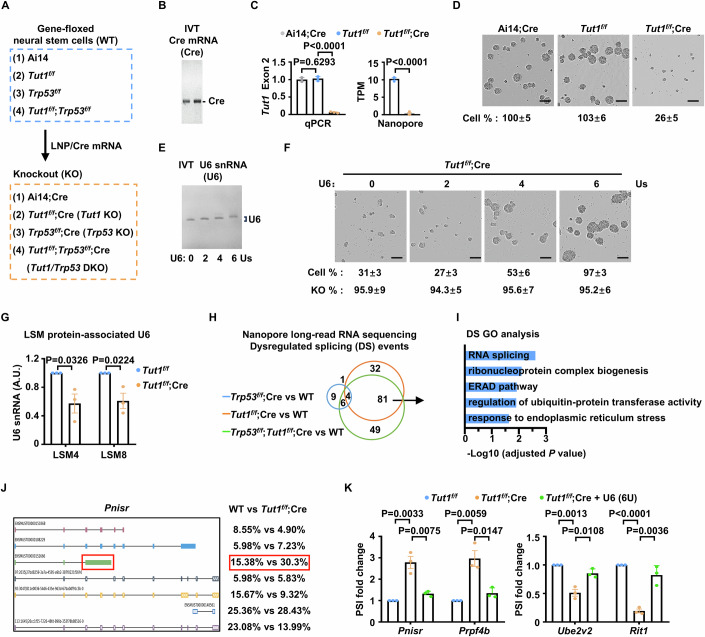
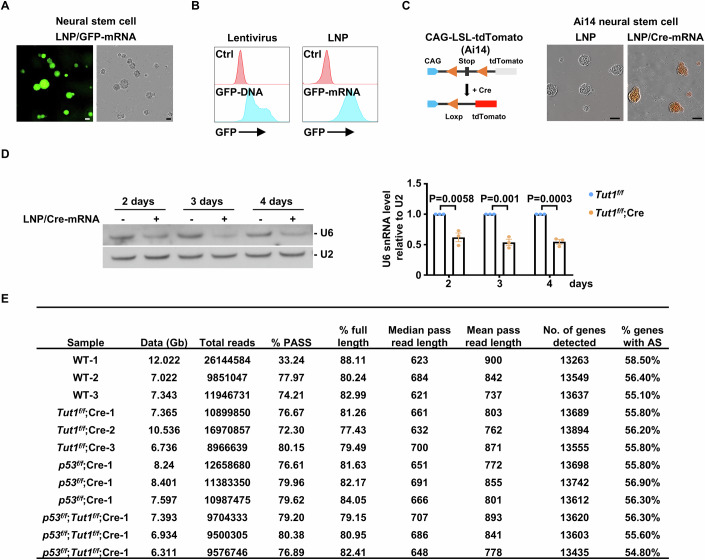
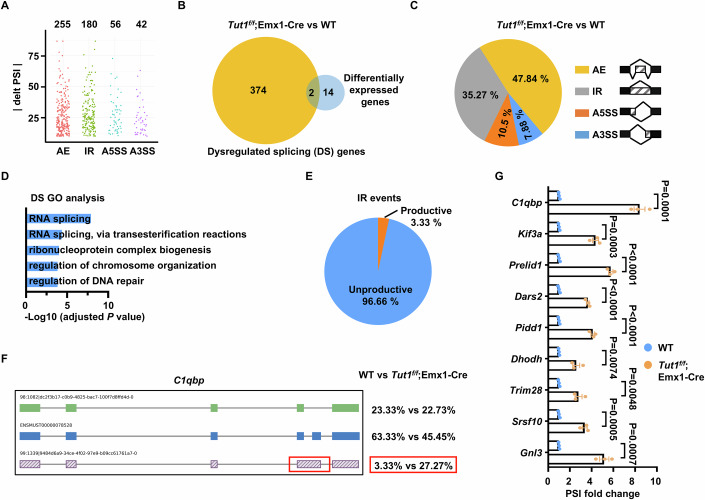
- The TUT1-catalyzed oligo(U) tail is required for splicing and survival: LNP/Cre-mRNA achieved ~95% Tut1 deletion in Tut1f/f neural stem cells, and most cells died within 5 days; recombinant U6 snRNA with 6 Us largely prevented death, 4 Us partially prevented it, and 0 or 2 Us had little effect. U6 snRNA association with Lsm4/Lsm8 decreased after Tut1 loss. Nanopore long-read sequencing found 119 dysregulated splicing events in 107 genes in Tut1f/f;Cre cells, with 81 events in 66 genes shared by Tut1f/f;Trp53f/f;Cre cells; in vivo E11.5 Tut1f/f;Emx1-Cre pallium showed 533 dysregulated splicing events in 376 genes, including 35.27% increased intron retention, and 174/180 intron retention events were predicted to be unproductive.
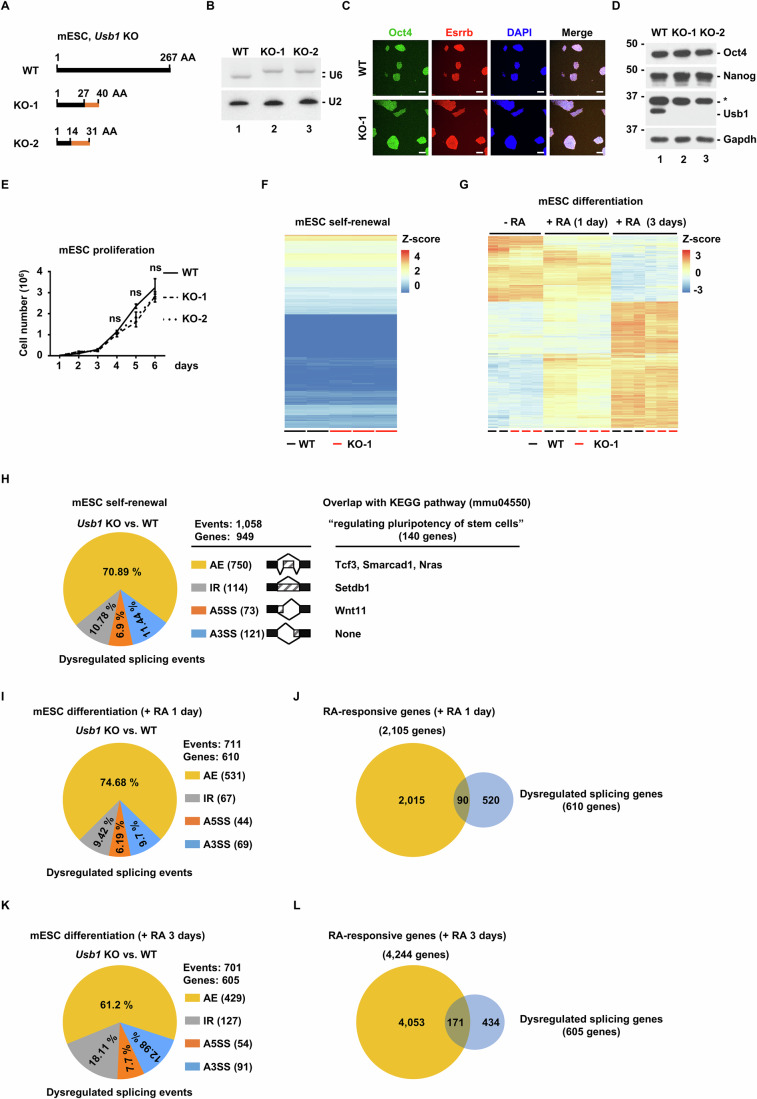
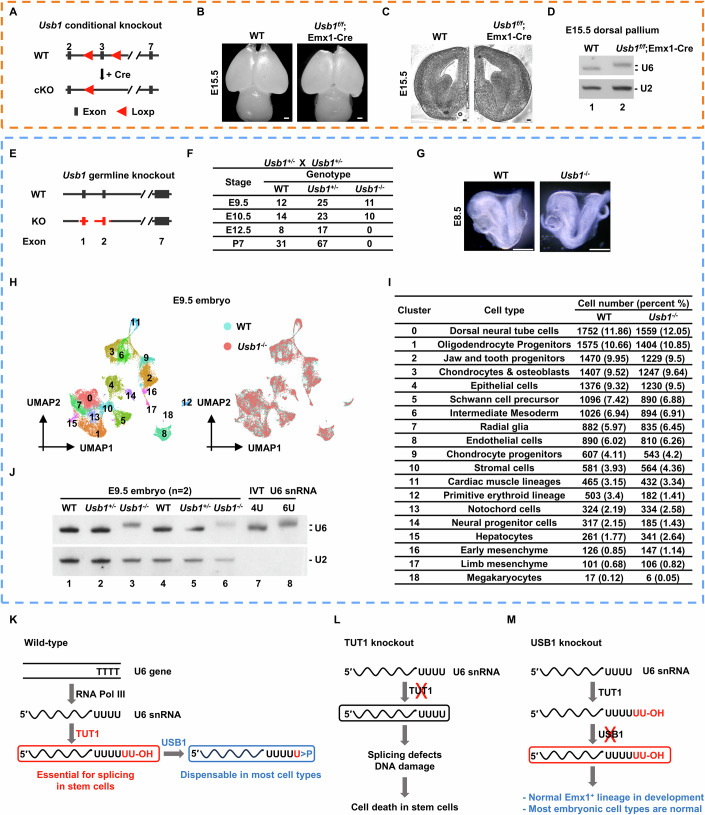
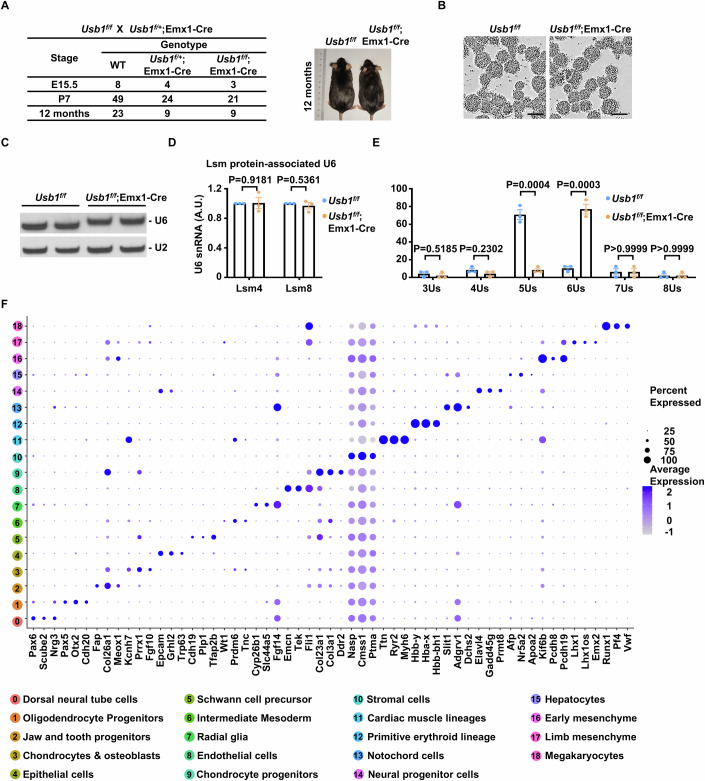
- Usb1 is dispensable for most embryonic cell types: Usb1-null mESCs were readily generated, showed U6 snRNA extended by two Us, and had normal self-renewal, pluripotency factor expression, proliferation, and transcriptome; RA-induced differentiation was also largely similar. Usb1f/f;Emx1-Cre brains showed no discernible neocortex defects and normal lifespan, and Usb1−/− embryos died between E10.5–E12.5, later than Tut1−/− embryos; E9.5 single-cell RNA-seq identified 19 clusters in both genotypes (14,776 WT and 13,034 Usb1-null cells) with highly similar composition.
Methods
- Mouse genetics: CRISPR/Cas9-generated germline and conditional/floxed alleles for Tut1, Usb1, and Trp53, crossed with nestin-Cre, Emx1-Cre, or Camk2a-Cre; embryos and pups were genotyped, and brains analyzed by histology, immunofluorescence, BrdU/Ki67, TUNEL, γH2AX, and c-Casp3 staining, plus behavioral tests.
- Stem cell and RNA assays: mESCs and primary neural stem cells were used; LNP/Cre-mRNA delivery generated conditional knockouts in vitro; recombinant U6 snRNA with 0, 2, 4, or 6 Us was tested; proliferation was monitored by Incucyte, neurosphere assays, RNA immunoprecipitation for Lsm4/Lsm8, northern blot, and 3′ RACE.
- Sequencing and bioinformatics: Nanopore long-read RNA-seq (FLAIR) for alternative splicing, bulk RNA-seq, single-cell RNA-seq (10X Chromium, CellRanger, Seurat, Harmony), rMATS, GSEA, and GO enrichment.
Limitations
- Stated: the authors cannot rule out that Usb1 may be required in certain intra-embryonic lineages; Usb1-null lethality may be caused by extra-embryonic defects, but this is based on preliminary analyses and warrants further investigation. They also note unresolved debates about TUT1 poly(A) polymerase activity and whether USB1 acts on miRNAs, and state that USB1 function was assessed mainly under homeostatic conditions.
- Evident from the text: the study is based on mouse models and cultured stem cells, so human disease causality is inferred rather than directly tested; Cre- and LNP-mediated deletions were often efficient but not always complete (~90–95%); and the mechanism of Usb1−/− embryonic lethality remains unresolved.
Model-written summary. Check it against the paper before relying on it.
Integrity signals
Registry
Cites
Statistics
Figures

Verification
Claims the paper makes
0 Valid · 0 Not valid · 17 Not checked · 129 Own results and interpretations
A result the paper reports from its own data — it cites no other source for it, so there is none to check. The quote shows it is in the paper.
In the paper
“The efficiency of Tut1 deletion was around 95% as determined by qPCR or Nanopore long-read sequencing analyses (Fig. 4C).”
- Also stated in: § The Tut1-catalyzed oligo(U) tail at the 3′-end of U6 snRNA is required for RNA splicing and the survival of neural stem cells · plain
“The efficiency of Tut1 deletion was around 95% as determined by qPCR (Fig. 4F).”
§ TUT1-catalyzed U6 snRNA 3′-end maturation is essential for RNA splicing and stem cell survival > Results > The Tut1-catalyzed oligo(U) tail at the 3′-end of U6 snRNA is required for RNA splicing and the survival of neural stem cells
plainstates a cause- Asserted: passes — The authors put it forward as true.
- Checkable: passes — It can be checked against evidence.
- Load-bearing: passes — The paper’s conclusions depend on it.
- Based: passes — The paper gives a reason why it holds.
- Also stated in: § The Tut1-catalyzed oligo(U) tail at the 3′-end of U6 snRNA is required for RNA splicing and the survival of neural stem cells · plain
A result the paper reports from its own data — it cites no other source for it, so there is none to check. The quote shows it is in the paper.
In the paper
“Unexpectedly, we found that Usb1-null embryonic stem cells could be easily generated using CRISPR/Cas9 genome editing technology (Fig. 6A).”
§ TUT1-catalyzed U6 snRNA 3′-end maturation is essential for RNA splicing and stem cell survival > Results > Usb1 is dispensable for self-renewal and pluripotency of embryonic stem cells in vitro
plain- Asserted: passes — The authors put it forward as true.
- Checkable: passes — It can be checked against evidence.
- Load-bearing: passes — The paper’s conclusions depend on it.
- Based: passes — The paper gives a reason why it holds.
A result the paper reports from its own data — it cites no other source for it, so there is none to check. The quote shows it is in the paper.
In the paper
“Concomitant deletion of Trp53 (encoding p53 protein) or the restoration of the oligo(U) tail at the U6 snRNA 3′-end can prevent Tut1 loss-induced cell death.”
§ TUT1-catalyzed U6 snRNA 3′-end maturation is essential for RNA splicing and stem cell survival > Introduction
plainstates a cause- Asserted: passes — The authors put it forward as true.
- Checkable: passes — It can be checked against evidence.
- Load-bearing: passes — The paper’s conclusions depend on it.
- Based: passes — The paper gives a reason why it holds.
A result the paper reports from its own data — it cites no other source for it, so there is none to check. The quote shows it is in the paper.
In the paper
“Two independent shRNA constructs, targeting different regions of Tut1, markedly reduced the number of embryonic stem cells (Fig. 1D).”
§ TUT1-catalyzed U6 snRNA 3′-end maturation is essential for RNA splicing and stem cell survival > Results > Tut1 is required for epiblast and embryonic stem cell maintenance
plainstates a cause- Asserted: passes — The authors put it forward as true.
- Checkable: passes — It can be checked against evidence.
- Load-bearing: passes — The paper’s conclusions depend on it.
- Based: passes — The paper gives a reason why it holds.
A result the paper reports from its own data — it cites no other source for it, so there is none to check. The quote shows it is in the paper.
In the paper
“Importantly, RNA blot analysis revealed that U6 snRNA was extended by two Us in Usb1f/f;Emx1-Cre dorsal pallium (Fig. 7D), similar to Usb1-null embryonic stem cells (Fig. 6B).”
§ TUT1-catalyzed U6 snRNA 3′-end maturation is essential for RNA splicing and stem cell survival > Results > Usb1 is dispensable for the development of most cell lineages during embryogenesis
plainstates a cause- Asserted: passes — The authors put it forward as true.
- Checkable: passes — It can be checked against evidence.
- Load-bearing: passes — The paper’s conclusions depend on it.
- Based: passes — The paper gives a reason why it holds.
87 more claims
Create a free account to see all 146 claims and to verify the 29 references still open.
- It may state two separate claims as one. 46
- Probably not a substantial claim. 8
Self-check
Percentages, sums and reported differences re-computed from the paper’s own numbers.
Each contradiction between two passages listed here was confirmed by an independent check.
Rated minor: it would not touch a result — a value no result rests on, a p-value that stays on the same side of the significance level, or a conflict that is clerical, resolved elsewhere in the paper, or outside its own findings.
In the paper
“Out of 533 dysregulated splicing events induced by Tut1 loss, 35.27% was increased intron retention (IR) events”
§ TUT1-catalyzed U6 snRNA 3′-end maturation is essential for RNA splicing and stem cell survival > Results > Tut1 ablation causes defective RNA splicing in vivo
Reported 35.27 · recomputed 33.771107
Rated minor: it would not touch a result — a value no result rests on, a p-value that stays on the same side of the significance level, or a conflict that is clerical, resolved elsewhere in the paper, or outside its own findings.
In the paper
§ TUT1-catalyzed U6 snRNA 3′-end maturation is essential for RNA splicing and stem cell survival > Results > The Tut1-catalyzed oligo(U) tail at the 3′-end of U6 snRNA is required for RNA splicing and the survival of neural stem cells
“Among them, 81 dysregulated splicing events in 66 genes were shared by LNP/Cre-mRNA treated Tut1f/f;Trp53f/f cells”
§ TUT1-catalyzed U6 snRNA 3′-end maturation is essential for RNA splicing and stem cell survival > Results > The Tut1-catalyzed oligo(U) tail at the 3′-end of U6 snRNA is required for RNA splicing and the survival of neural stem cells
“(I) GO enrichment analysis of 81 alternatively spliced (AS) genes caused by Tut1 ablation.”
Citations
Cites
Minimap2: Pairwise alignment for nucleotide sequences
Li, H. (2018) · Bioinformatics · doi:10.1093/bioinformatics/bty191 · Cited by 14,807
The Molecular Signatures Database Hallmark Gene Set Collection
Liberzon, A., Birger, C., Thorvaldsdóttir, H., Ghandi, M., Mesirov, J. P., & Tamayo, P. (2015) · Cell Systems · doi:10.1016/j.cels.2015.12.004 · Cited by 13,807
clusterProfiler 4.0: A universal enrichment tool for interpreting omics data
(2021) · doi:10.1016/j.xinn.2021.100141 · Cited by 12,455
A robust and high-throughput Cre reporting and characterization system for the whole mouse brain
Madisen, L., Zwingman, T. A., Sunkin, S. M., Oh, S. W., Zariwala, H. A., Gu, H., Ng, L. L., Palmiter, R. D., Hawrylycz, M. J., Jones, A. R., et al. (2010) · Nature Neuroscience · doi:10.1038/nn.2467 · Cited by 6,907 · cited 1×
“These cells will show robust RFP expression after Cre-mediated recombination (Madisen et al, 2010).”
Morris water maze: procedures for assessing spatial and related forms of learning and memory
Vorhees, C. V., & Williams, M. T. (2006) · Nature Protocols · doi:10.1038/nprot.2006.116 · Cited by 4,629
The single-cell transcriptional landscape of mammalian organogenesis
Cao, J., Spielmann, M., Qiu, X., Huang, X., Ibrahim, D. M., Hill, A. J., Zhang, F., Mundlos, S., Christiansen, L., Steemers, F. J., et al. (2019) · Nature · doi:10.1038/s41586-019-0969-x · Cited by 4,490
The use of the elevated plus maze as an assay of anxiety-related behavior in rodents
Walf, A. A., & Frye, C. A. (2007) · Nature Protocols · doi:10.1038/nprot.2007.44 · Cited by 3,035
Naive and Primed Pluripotent States
Nichols, J., & Smith, A. (2009) · Cell Stem Cell · doi:10.1016/j.stem.2009.05.015 · Cited by 1,859
Disruption of the glucocorticoid receptor gene in the nervous system results in reduced anxiety
Tronche, F., Kellendonk, C., Kretz, O., Gass, P., Anlag, K., Orban, P. C., Bock, R., Klein, R., & Schütz, G. (1999) · Nature Genetics · doi:10.1038/12703 · Cited by 1,838
Gorski, J. A., Talley, T., Qiu, M., Puelles, L., Rubenstein, J. L. R., & Jones, K. R. (2002) · The Journal of Neuroscience · doi:10.1523/jneurosci.22-15-06309.2002 · Cited by 1,416
Subregion- and Cell Type–Restricted Gene Knockout in Mouse Brain
Tsien, J. Z., Chen, D. F., Gerber, D., Tom, C., Mercer, E. H., Anderson, D. J., Mayford, M., Kandel, E. R., & Tonegawa, S. (1996) · Cell · doi:10.1016/s0092-8674(00)81826-7 · Cited by 1,280
Nonsense-mediated mRNA decay: an intricate machinery that shapes transcriptomes
Lykke-Andersen, S., & Jensen, T. H. (2015) · Nature Reviews Molecular Cell Biology · doi:10.1038/nrm4063 · Cited by 855
RNA Splicing by the Spliceosome
Wilkinson, M. E., Charenton, C., & Nagai, K. (2020) · Annual Review of Biochemistry · doi:10.1146/annurev-biochem-091719-064225 · Cited by 718
Gene function in mouse embryogenesis: get set for gastrulation
Tam, P. P. L., & Loebel, D. A. F. (2007) · Nature Reviews Genetics · doi:10.1038/nrg2084 · Cited by 602
RNA splicing dysregulation and the hallmarks of cancer
Bradley, R. K., & Anczuków, O. (2023) · Nature Reviews Cancer · doi:10.1038/s41568-022-00541-7 · Cited by 579 · cited 1×
“Dysregulated RNA splicing has been implicated in the pathogenesis of human diseases such as cancer (Bradley and Anczukow, 2023), cardiomyopathy (Gotthardt et al, 2023), and neurodegenerative diseases (Nikom and Zheng, 2023).”
Tang, A. D., Soulette, C. M., van Baren, M. J., Hart, K., Hrabeta-Robinson, E., Wu, C. J., & Brooks, A. N. (2020) · Nature Communications · doi:10.1038/s41467-020-15171-6 · Cited by 509
The physiology of alternative splicing
Marasco, L. E., & Kornblihtt, A. R. (2023) · Nature Reviews Molecular Cell Biology · doi:10.1038/s41580-022-00545-z · Cited by 505
The present and future of the Cancer Dependency Map
Arafeh, R., Shibue, T., Dempster, J. M., Hahn, W. C., & Vazquez, F. (2025) · Nature Reviews Cancer · doi:10.1038/s41568-024-00763-x · Cited by 454
Achsel, T. (1999) · The EMBO Journal · doi:10.1093/emboj/18.20.5789 · Cited by 337
Karaca, E., Harel, T., Pehlivan, D., Jhangiani, S. N., Gambin, T., Coban Akdemir, Z., Gonzaga-Jauregui, C., Erdin, S., Bayram, Y., Campbell, I. M., et al. (2015) · Neuron · doi:10.1016/j.neuron.2015.09.048 · Cited by 315
Wang, Y., Xie, Z., Kutschera, E., Adams, J. I., Kadash-Edmondson, K. E., & Xing, Y. (2024) · Nature Protocols · doi:10.1038/s41596-023-00944-2 · Cited by 268
Self-citationRegulation of pre-mRNA splicing: roles in physiology and disease, and therapeutic prospects
Rogalska, M. E., Vivori, C., & Valcárcel, J. (2023) · Nature Reviews Genetics · doi:10.1038/s41576-022-00556-8 · Cited by 265
A PtdIns4,5P2-regulated nuclear poly(A) polymerase controls expression of select mRNAs
Mellman, D. L., Gonzales, M. L., Song, C., Barlow, C. A., Wang, P., Kendziorski, C., & Anderson, R. A. (2008) · Nature · doi:10.1038/nature06666 · Cited by 248
U6 small nuclear RNA is transcribed by RNA polymerase III.
Kunkel, G. R., Maser, R. L., Calvet, J. P., & Pederson, T. (1986) · Proceedings of the National Academy of Sciences · doi:10.1073/pnas.83.22.8575 · Cited by 245
Gagliardi, M., & Matarazzo, M. R. (2016) · Methods in Molecular Biology · doi:10.1007/978-1-4939-6380-5_7 · Cited by 245
A standardized social preference protocol for measuring social deficits in mouse models of autism
Rein, B., Ma, K., & Yan, Z. (2020) · Nature Protocols · doi:10.1038/s41596-020-0382-9 · Cited by 232
Alternative splicing in neurodegenerative disease and the promise of RNA therapies
Nikom, D., & Zheng, S. (2023) · Nature Reviews Neuroscience · doi:10.1038/s41583-023-00717-6 · Cited by 190
The capped U6 small nuclear RNA is transcribed by RNA polymerase III.
Reddy, R., Henning, D., Das, G., Harless, M., & Wright, D. (1987) · Journal of Biological Chemistry · doi:10.1016/s0021-9258(19)75890-6 · Cited by 176
How Is Precursor Messenger RNA Spliced by the Spliceosome?
Wan, R., Bai, R., Zhan, X., & Shi, Y. (2020) · Annual Review of Biochemistry · doi:10.1146/annurev-biochem-013118-111024 · Cited by 168
Lund, E., & Dahlberg, J. E. (1992) · Science · doi:10.1126/science.1549778 · Cited by 149
Trippe, R., Guschina, E., Hossbach, M., Urlaub, H., Lührmann, R., & Benecke, B.-J. (2006) · RNA · doi:10.1261/rna.87706 · Cited by 142
Association of the lupus antigen La with a subset of U6 snRNA molecules
Rinke, J., & STEITZ, J. A. (1985) · Nucleic Acids Research · doi:10.1093/nar/13.7.2617 · Cited by 131
The life of U6 small nuclear RNA, from cradle to grave
Didychuk, A. L., Butcher, S. E., & Brow, D. A. (2018) · RNA · doi:10.1261/rna.065136.117 · Cited by 123
Liang, H., Hippenmeyer, S., & Ghashghaei, H. T. (2012) · Biology Open · doi:10.1242/bio.20122287 · Cited by 116
Escalona-Rayo, O., Zeng, Y., Knol, R. A., Kock, T. J. F., Aschmann, D., Slütter, B., & Kros, A. (2023) · Biomedicine & Pharmacotherapy · doi:10.1016/j.biopha.2023.115065 · Cited by 100
The RNase PARN Controls the Levels of Specific miRNAs that Contribute to p53 Regulation
Shukla, S., Bjerke, G. A., Muhlrad, D., Yi, R., & Parker, R. (2019) · Molecular Cell · doi:10.1016/j.molcel.2019.01.010 · Cited by 94
Mroczek, S., Krwawicz, J., Kutner, J., Lazniewski, M., Kuciński, I., Ginalski, K., & Dziembowski, A. (2012) · Genes & Development · doi:10.1101/gad.193169.112 · Cited by 87
Shchepachev, V., Wischnewski, H., Missiaglia, E., Soneson, C., & Azzalin, C. M. (2012) · Cell Reports · doi:10.1016/j.celrep.2012.08.031 · Cited by 86
Bai, Y., Wang, W., Li, S., Zhan, J., Li, H., Zhao, M., Zhou, X. A., Li, S., Li, X., Huo, Y., et al. (2019) · Molecular Cell · doi:10.1016/j.molcel.2019.06.023 · Cited by 85
Terns, M. P., Lund, E., & Dahlberg, J. E. (1992) · Molecular and Cellular Biology · doi:10.1128/mcb.12.7.3032-3040.1992 · Cited by 76
Aberrant 3′ oligoadenylation of spliceosomal U6 small nuclear RNA in poikiloderma with neutropenia
Hilcenko, C., Simpson, P. J., Finch, A. J., Bowler, F. R., Churcher, M. J., Jin, L., Packman, L. C., Shlien, A., Campbell, P., Kirwan, M., et al. (2013) · Blood · doi:10.1182/blood-2012-10-461491 · Cited by 72
U6 RNA biogenesis and disease association
Mroczek, S., & Dziembowski, A. (2013) · WIREs RNA · doi:10.1002/wrna.1181 · Cited by 54
Biochemical characterization of a U6 small nuclear RNA‐specific terminal uridylyltransferase
Trippe, R., Richly, H., & Benecke, B. (2003) · European Journal of Biochemistry · doi:10.1046/j.1432-1033.2003.03466.x · Cited by 53
Licht, K., Medenbach, J., Lührmann, R., Kambach, C., & Bindereif, A. (2008) · RNA · doi:10.1261/rna.1129608 · Cited by 53
Isolation and Generation of Neurosphere Cultures from Embryonic and Adult Mouse Brain
Ahlenius, H., & Kokaia, Z. (2010) · Methods in molecular biology · doi:10.1007/978-1-59745-019-5_18 · Cited by 52
Cardiac splicing as a diagnostic and therapeutic target
Gotthardt, M., Badillo-Lisakowski, V., Parikh, V. N., Ashley, E., Furtado, M., Carmo-Fonseca, M., Schudy, S., Meder, B., Grosch, M., Steinmetz, L., et al. (2023) · Nature Reviews Cardiology · doi:10.1038/s41569-022-00828-0 · Cited by 46 · cited 1×
“Dysregulated RNA splicing has been implicated in the pathogenesis of human diseases such as cancer (Bradley and Anczukow, 2023), cardiomyopathy (Gotthardt et al, 2023), and neurodegenerative diseases (Nikom and Zheng, 2023).”
Molecular basis for the distinct cellular functions of the Lsm1–7 and Lsm2–8 complexes
Montemayor, E. J., Virta, J. M., Hayes, S. M., Nomura, Y., Brow, D. A., & Butcher, S. E. (2020) · RNA · doi:10.1261/rna.075879.120 · Cited by 45
Crystal structures of U6 snRNA-specific terminal uridylyltransferase
Yamashita, S., Takagi, Y., Nagaike, T., & Tomita, K. (2017) · Nature Communications · doi:10.1038/ncomms15788 · Cited by 43
USB1 is a miRNA deadenylase that regulates hematopoietic development
Jeong, H., Shukla, S., Fok, W. C., Huynh, T. N., Batista, L. F. Z., & Parker, R. (2023) · Science · doi:10.1126/science.abj8379 · Cited by 42
Usb1 controls U6 snRNP assembly through evolutionarily divergent cyclic phosphodiesterase activities
Didychuk, A. L., Montemayor, E. J., Carrocci, T. J., DeLaitsch, A. T., Lucarelli, S. E., Westler, W. M., Brow, D. A., Hoskins, A. A., & Butcher, S. E. (2017) · Nature Communications · doi:10.1038/s41467-017-00484-w · Cited by 32
Architecture of the U6 snRNP reveals specific recognition of 3′-end processed U6 snRNA
Montemayor, E. J., Didychuk, A. L., Yake, A. D., Sidhu, G. K., Brow, D. A., & Butcher, S. E. (2018) · Nature Communications · doi:10.1038/s41467-018-04145-4 · Cited by 26
Human Mpn1 promotes post‐transcriptional processing and stability of U6atac
Shchepachev, V., Wischnewski, H., Soneson, C., Arnold, A. W., & Azzalin, C. M. (2015) · FEBS Letters · doi:10.1016/j.febslet.2015.06.046 · Cited by 24
Mechanism of U6 snRNA oligouridylation by human TUT1
Yamashita, S., & Tomita, K. (2023) · Nature Communications · doi:10.1038/s41467-023-40420-9 · Cited by 17
Fang, Y., Wang, Y., Spector, B. M., Xiao, X. H., Yang, C., Li, P., Yuan, Y., Ding, P., Xiao, Z. J., Zhang, P., et al. (2022) · iScience · doi:10.1016/j.isci.2022.104844 · Cited by 10
Self-citationParajuli, P., Craig, D. B., Gadgeel, M., Bagla, S., Wright, R. E., Chu, R., Shanti, C. M., Thirunagari, R., Grover, S. K., & Ravindranath, Y. (2024) · British Journal of Haematology · doi:10.1111/bjh.19128 · Cited by 10
Li, Q., Yang, C., Tian, H., Jiang, J., Li, P., Zhu, X., Lei, T., Yin, R., Ding, P., Bai, P., et al. (2022) · Cytotherapy · doi:10.1016/j.jcyt.2022.10.013 · Cited by 7
Self-citationCryo-EM structure of human TUT1:U6 snRNA complex
Yamashita, S., & Tomita, K. (2025) · Nucleic Acids Research · doi:10.1093/nar/gkae1314 · Cited by 5
Macrophage manufacturing and engineering with 5′-Cap1 and N1-methylpseudouridine-modified mRNA
Zhang, P., Wang, Y., Jiang, J., Yang, C., Liu, X., Lei, T., Meng, X., Yang, J., Ding, P. X., Chen, J., et al. (2024) · Molecular Therapy — Methods & Clinical Development · doi:10.1016/j.omtm.2024.101307 · Cited by 4
Self-citation
Cited by
Still being checked.
Metadata
- Authors
- Fang, Y., Qiu, T., Luo, H., Wang, Y., Yang, C., Wang, M., Dai, Q., Zheng, W., Yin, R., Xiao, X., & Li, Q.
- Affiliations
- Sichuan University (CN)
- Corresponding author
- Li, Qintong
- Venue
- EMBO Reports
- Published
- 2026-04-09
- Volume
- 27
- Issue
- 10
- Pages
- 2703-2730
- ISSN
- 1469-221X (ISSN-L)
- 1469-3178
- PMC
- PMC13219678
- OpenAlex
- W7152441377
- Semantic Scholar
- 768bde97e0828b9c9af1b17e603fbeaee5a60fa4
- Cited by
- 0
- References
- 58
- FWCI
- 0.00
- Type
- journal article
- Language
- en
- Open access
- gold
- doi.org
- Licence
- cc-by
- creativecommons.org/licenses/by/4.0 (tdm)
- creativecommons.org/licenses/by/4.0 (vor)
- Locations
- EMBO Reports (publishedVersion, cc-by)
- PubMed Central (publishedVersion, cc-by)
- PubMed (publishedVersion)
- DOAJ (DOAJ: Directory of Open Access Journals) (submittedVersion, cc-by-sa)
- Funders
- MOST | National Natural Science Foundation of China (32271348, 82473224)
- Science and Technology Department of Sichuan Province (2024NSFSC0731)
- west women and children medical research development center (XBFY-YJXM2025004)
- Topics
- Life Sciences › Biochemistry, Genetics and Molecular Biology › Molecular Biology › RNA Research and Splicing
- Life Sciences › Biochemistry, Genetics and Molecular Biology › Molecular Biology › RNA regulation and disease
- Life Sciences › Biochemistry, Genetics and Molecular Biology › Molecular Biology › RNA and protein synthesis mechanisms
- Keywords
- U6 snRNA, RNA splicing, stem cell maintenance, embryonic development, DNA damage, cell death, spliceosome assembly, developmental disorders
- MeSH terms
- Animals, Cell Survival, DNA Damage, DNA-Binding Proteins, Humans, RNA Splicing, RNA, Small Nuclear, Stem Cells, RNA-Binding Proteins, Cell Proliferation, Mice
About these checks
Registry, retraction, Cites and statistics results are computed, not judged, with one exception: a printed reference that no index lists is read once by a model before it counts as a citation error. Claims are extracted by a model and kept only when their quote appears verbatim in the text; each cited source is then checked, with a model’s help, for whether it says what the claim relies on. Those verdicts can be wrong — read the claim’s quote and the cited source before relying on one.
A language model drew the claims from the paper on 2026-11-22, under version 3 of the claim definition (model deepseek-v4.1-flash, prompt extract-v3).
A second model labelled each claim on 2026-11-22 (model jev-1.13-20260917, definition revision gold-guideline-v0.2).
Statistics and arithmetic are recomputed, not judged.
Confidence bands are shown only for fields calibrated on our annotated test set. None is calibrated yet, so no band is shown.
What counts as a claim ›How we measure confidence ›How we check this ›
Are you an author, or do you see a problem with this page? Request a review
Data sources
Bibliographic data: Semantic Scholar, OpenAlex, Crossref.
Contains information from the Semantic Scholar Academic Graph Datasets, made available under the ODC Attribution License (ODC-BY 1.0).
Semantic Scholar’s data is described in: Kinney, R., et al. (2023). The Semantic Scholar Open Data Platform. arXiv:2301.10140.
