

The DOI matches its Crossref record; 41 of the 41 references it cites were found in a registry or an index.
Using Mobile Phone Data to Predict the Spatial Spread of Cholera
Open accessAbstract
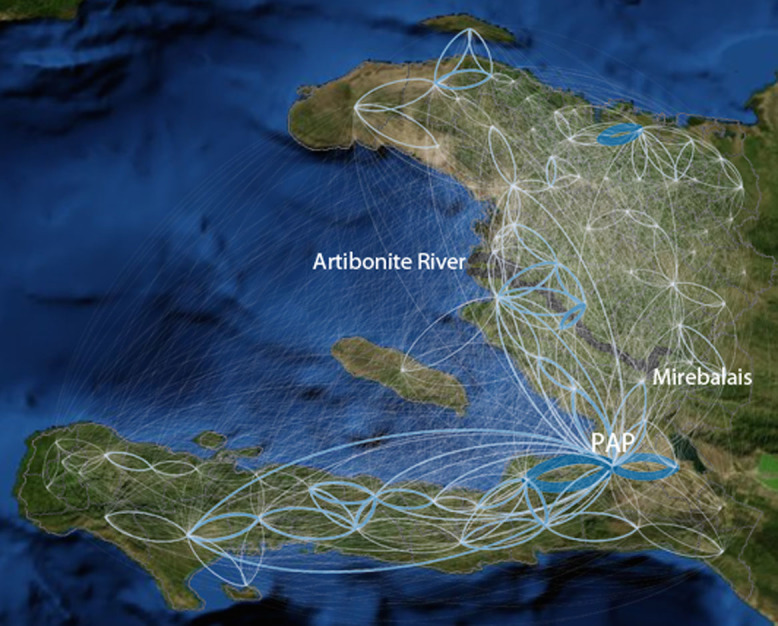
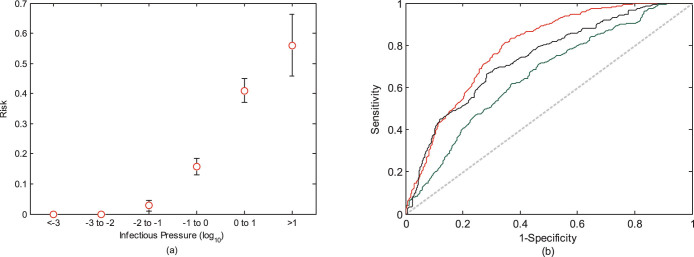
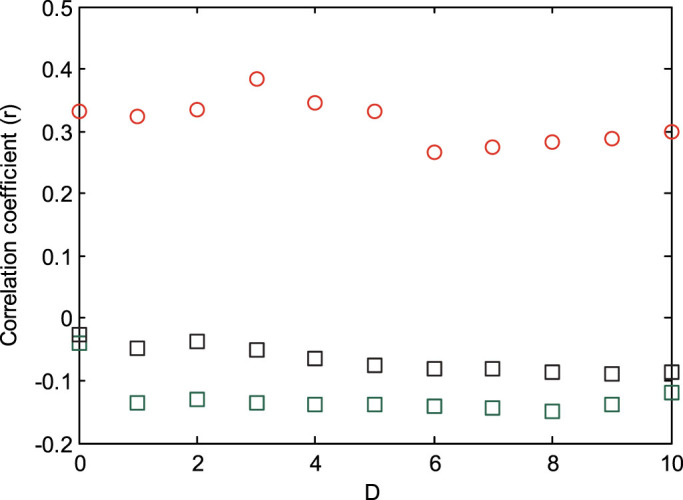
Effective response to infectious disease epidemics requires focused control measures in areas predicted to be at high risk of new outbreaks. We aimed to test whether mobile operator data could predict the early spatial evolution of the 2010 Haiti cholera epidemic. Daily case data were analysed for 78 study areas from October 16 to December 16, 2010. Movements of 2.9 million anonymous mobile phone SIM cards were used to create a national mobility network. Two gravity models of population mobility were implemented for comparison. Both were optimized based on the complete retrospective epidemic data, available only after the end of the epidemic spread. Risk of an area experiencing an outbreak within seven days showed strong dose-response relationship with the mobile phone-based infectious pressure estimates. The mobile phone-based model performed better (AUC 0.79) than the retrospectively optimized gravity models (AUC 0.66 and 0.74, respectively). Infectious pressure at outbreak onset was significantly correlated with reported cholera cases during the first ten days of the epidemic (p < 0.05). Mobile operator data is a highly promising data source for improving preparedness and response efforts during cholera outbreaks. Findings may be particularly important for containment efforts of emerging infectious diseases, including high-mortality influenza strains.
Overview
The claims and statistics of this paper haven’t been checked yet.
Run the check — free, no account needed. It reads the open-access text and checks the sources it cites.
Integrity signals
Registry
Cites
Statistics
Figures
Verification
Claims the paper makes
The claims and statistics of this paper haven’t been checked yet.
Run the check — free, no account needed. It reads the open-access text and checks the sources it cites.
Claims other papers make about this one
Each is checked against this paper’s own text: does it say what the citing paper says it does?
In the citing paper
“In the realm of infectious diseases, ML and AI have been applied to predict disease outbreaks and identify high-risk areas [19, 20].”
From Integrating machine learning and artificial intelligence in life-course epidemiology: pathways to innovative public health solutions (2024) · cites this paper as [20]
In the citing paper
“Bengtsson et al. (2015) utilized mobile phone data and machine learning techniques to predict the spatial spread of cholera in Haiti following the 2010 earthquake [20].”
From Integrating machine learning and artificial intelligence in life-course epidemiology: pathways to innovative public health solutions (2024) · cites this paper as [20]
Self-check
Percentages, sums and reported differences re-computed from the paper’s own numbers.
The self-check needs the paper’s full text.
Citations
Cites
Murray, C. J. L., Vos, T., Lozano, R., Naghavi, M., Flaxman, A. D., Michaud, C., Ezzati, M., Shibuya, K., Salomon, J. A., Abdalla, S., et al. (2012) · The Lancet · doi:10.1016/s0140-6736(12)61689-4 · Cited by 8,888
Infectious Diseases of Humans: Dynamics and Control
(1992) · Annals of Internal Medicine · doi:10.7326/0003-4819-117-2-174_4 · Cited by 7,819
The use of the area under the ROC curve in the evaluation of machine learning algorithms
Bradley, A. P. (1997) · Pattern Recognition · doi:10.1016/s0031-3203(96)00142-2 · Cited by 7,217
Understanding individual human mobility patterns
González, M. C., Hidalgo, C. A., & Barabási, A.-Ĺ. (2008) · Nature · doi:10.1038/nature06958 · Cited by 6,186
Infectious Diseases of Humans: Dynamics and Control
Anderson, R. M., & May, R. M. (1991) · doi:10.1093/oso/9780198545996.001.0001 · Cited by 6,179
Global, regional, and national causes of child mortality in 2008: a systematic analysis
Black, R. E., Cousens, S. N., Johnson, H. L., Lawn, J. E., Rudan, I., Bassani, D. G., Jha, P., Campbell, H. J., Walker, C. L. F., Cibulskis, R. E., et al. (2010) · The Lancet · doi:10.1016/s0140-6736(10)60549-1 · Cited by 3,062
Strategies for containing an emerging influenza pandemic in Southeast Asia
Ferguson, N. M., Cummings, D. A. T., Cauchemez, S., Fraser, C., Riley, S., Meeyai, A. C., Iamsirithaworn, S., & Burke, D. S. (2005) · Nature · doi:10.1038/nature04017 · Cited by 1,820
Pochet, P. (2006) · Griffith Research Online · Cited by 1,550
Multiscale mobility networks and the spatial spreading of infectious diseases
Balcan, D., Vittoria Colizza, A., Gonçalves, B., Hu, H., Ramasco, J. J., & Vespignani, A. (2009) · Proceedings of the National Academy of Sciences · doi:10.1073/pnas.0906910106 · Cited by 1,347
Containing Pandemic Influenza at the Source
Longini, I. M., Nizam, A., Xu, S., Ungchusak, K., Hanshaoworakul, W., Cummings, D. A. T., & Halloran, M. E. (2005) · Science · doi:10.1126/science.1115717 · Cited by 1,177
Research works printed but not linked: 2
Cited by
Sorted by citations
Population flow drives spatio-temporal distribution of COVID-19 in China
Jia, J. S., Lu, X., Yuan, Y., Xu, G., Jia, J., & Christakis, N. A. (2020) · Nature · doi:10.1038/s41586-020-2284-y · Cited by 835
Self-citationMobile phone data for informing public health actions across the COVID-19 pandemic life cycle
Oliver, N., Lepri, B., Sterly, H., Lambiotte, R., Deletaille, S., De Nadai, M., Letouzé, E., Salah, A. A., Benjamins, R., Cattuto, C., et al. (2020) · Science Advances · doi:10.1126/sciadv.abc0764 · Cited by 631
On the responsible use of digital data to tackle the COVID-19 pandemic
Ienca, M., & Vayena, E. (2020) · Nature Medicine · doi:10.1038/s41591-020-0832-5 · Cited by 491
Preliminary prediction of the basic reproduction number of the Wuhan novel coronavirus 2019‐nCoV
Zhou, T., Liu, Q.-H., Yang, Z., Liao, J., Yang, K., Bai, W., Lu, X. B., & Zhang, W. (2020) · Journal of Evidence-Based Medicine · doi:10.1111/jebm.12376 · Cited by 361
“In order to have a better estimation of the basic reproduction number and effective reproduction number, as well as predicting the trend of epidemic transmission, we not only need to know precise epidemiological determinants, but also need to improve the model itself by further considering the diversity in susceptibil…”
BackgroundSelf-citationTwitter reveals human mobility dynamics during the COVID-19 pandemic
Huang, X., Li, Z., Jiang, Y., Li, X., & Porter, D. (2020) · PLOS ONE · doi:10.1371/journal.pone.0241957 · Cited by 242
Metadata
- Authors
- Bengtsson, L., Gaudart, J., Lu, X., Moore, S., Wetter, E., Sallah, K., Rebaudet, S., & Piarroux, R.
- Affiliations
- Karolinska Institutet (SE)
- Inserm (FR)
- National University of Defense Technology (CN)
- Aix-Marseille Université (FR)
- Stockholm School of Economics (SE)
- Corresponding author
- Bengtsson, Linus
- ORCID
- Venue
- Scientific Reports
- Published
- 2015-03-09
- Volume
- 5
- Issue
- 1
- Pages
- 8923-8923
- ISSN
- 2045-2322 (ISSN-L)
- PMC
- PMC4352843
- OpenAlex
- W1993035486
- Cited by
- 281
- References
- 41
- Citations by year
- 2026: 6 · 2025: 15 · 2024: 18 · 2023: 20 · 2022: 25 · 2021: 46 · 2020: 66 · 2019: 17 · 2018: 20 · 2017: 20 · 2016: 27 · 2015: 1
- FWCI
- 18.06
- Type
- journal article
- Language
- en
- Open access
- gold
- doi.org
- Locations
- Scientific Reports (publishedVersion, cc-by)
- Europe PMC (PubMed Central) (publishedVersion, cc-by)
- PubMed Central (publishedVersion, cc-by)
- PubMed (publishedVersion)
- HAL (submittedVersion, other-oa)
- Funders
- National Natural Science Foundation of China (71301165, 71101013)
- Vetenskapsrådet
- Topics
- Health Sciences › Medicine › Epidemiology › Data-Driven Disease Surveillance
- Social Sciences › Transportation › Human Mobility and Location-Based Analysis
- Life Sciences › Immunology and Microbiology › Microbiology › Vibrio bacteria research studies
- Keywords
- cholera, mobile phone data, human mobility, gravity model, outbreak risk prediction, epidemic preparedness and response, emerging infectious diseases
- MeSH terms
- Cholera, Disease Outbreaks, Haiti, Humans, Population Surveillance, Sensitivity and Specificity, Reproducibility of Results, Geographic Information Systems, Cell Phone, Spatio-Temporal Analysis, Geographic Mapping
About these checks
Registry, retraction, Cites and statistics results are computed, not judged, with one exception: a printed reference that no index lists is read once by a model before it counts as a citation error. Claims are extracted by a model and kept only when their quote appears verbatim in the text; each cited source is then checked, with a model’s help, for whether it says what the claim relies on. Those verdicts can be wrong — read the claim’s quote and the cited source before relying on one.
Statistics and arithmetic are recomputed, not judged.
Confidence bands are shown only for fields calibrated on our annotated test set. None is calibrated yet, so no band is shown.
What counts as a claim ›How we measure confidence ›How we check this ›
Are you an author, or do you see a problem with this page? Request a review
