

The Missing Memristor has Not been Found
Open accessThe DOI matches its Crossref record; 20 of the 20 references it cites were found in a registry or an index; 5 of the 12 sources its claims cite were checked for support.
Abstract
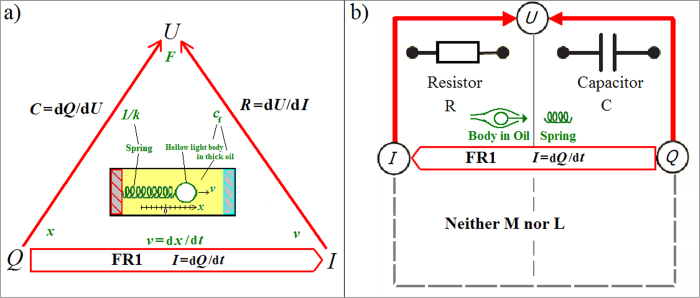
In 1971, not only the theoretical and by definition already existing 'ideal memristor' concept was introduced, but a real memristor device was suggested on grounds of the already known real inductors. The latter is a scientifically significant hypothesis grounded in fundamental symmetries of basic physics, here electro-magnetism. 2008 claimed the discovery of the "missing memristor." Controversy arose: The devices were not new, and the hypothesized device needs magnetism but has no material memory, while the available devices constitute analogue memory that would work in a world without magnetism. Nevertheless, even the originator of the prediction accepted the discovery. Defenders of the 2008 claim emphasize that the devices are not merely 'memristive systems,' which is however a distinction defined in 1976, not 1971. We clarify widely confused concepts and maintain that the originally hypothesized real memristor device is missing and likely impossible. The argument is illustrated also by finding an ideal mechanical memristor element and purely mechanical memristive systems, and hypothesizing a real mechanical memristor device that requires inert mass just like the 1971 implied device requires magnetic induction.
Overview
CoChat Summary
## TL;DR
The paper argues that the 2008 “missing memristor” announcement did not discover the originally hypothesized 1971 real memristor device. It distinguishes ideal memristors and memristive systems from the proposed real device and concludes the original device is likely impossible, while analogous mechanical constructions are only analogs, not the missing device.
## Key findings
- The authors state that the 2008 claim was not the discovery of the “missing memristor,” because the devices involved were already known and were only later labeled differently; they note that similar devices were already discovered in 1995 and memristive behavior in thin films was known before 1971.
- They argue that the 1971 proposal implied a fourth real device only because a third real device, the inductor, was already known; in their view, the 2008 devices were merely “memristive systems” or “perfect memristors,” not the originally proposed real memristor device.
- They extend the argument by constructing a mechanical ideal memristor and a corresponding hypothesized real mechanical memristor device, but conclude these analogues are also not the missing device.
- The paper says the original real memristor device is likely impossible, and adds that if discovered it would deserve attention, with a possible place of search suggested in electro-optics.
## Methods
- Conceptual/theoretical analysis of circuit theory, comparing ideal two-terminal elements (R, C, L, M) and distinguishing ideal memristors, memristive systems, and the hypothesized real memristor device.
- Uses symmetry arguments from electromagnetism/Maxwell’s equations and an analog mechanical body-spring-oil (BSO) system to map circuit elements onto physical devices.
- Supports the argument by comparing the 1971 memristor proposal to known historical predictions and by analyzing why the 2008 devices match “perfect memristor”/memristive-system behavior rather than the original hypothesis.
## Limitations
- The paper explicitly says the issue is partly a matter of conceptual confusion and terminology, especially around “memristor,” “ideal/real/perfect memristor,” and “memristive system,” which limits direct comparison across claims.
- It states that its mechanical construction is analogical, and that the real memristor device may still be discovered; this is an evident limitation of the argument, since it is not an empirical disproof.
- The text makes evident that the paper is not based on a new experimental dataset; instead, it is a theoretical and interpretive critique grounded in existing literature and circuit theory.
Model-written summary. Check it against the paper before relying on it.
Integrity signals
Registry
Cites
Statistics
Figures


Verification
Claims the paper makes
3 Valid · 1 Not valid · 6 Not checked · 12 Own results and interpretations
At least one cited source doesn’t support this claim or points to a different paper, and none confirmed it — see the verdicts below.
In the paper
“Such refers to the ideal memristor and other “memristors” in circuit theory, but not to the 1971 implied fourth device”
§ The Missing Memristor has Not been Found > Refusing the Discovery of the Originally Proposed Memristor Device > With magnetism, real inductors, and the likely impossible real memristor
What the sources say
- Disputedcites [15] Di Ventra, M., Pershin, Y. V. & Chua, L. O. Circuit elements with memory: memristors, memcapacitors and meminductors. Proceedings of the IEEE 97, 1717 (2009). sourceExperimental — accuracy not yet measured
The Introduction (p. 1) explicitly connects the memristor discussed in this paper to the circuit element Chua postulated in 1971, then describes memristive systems as a generalization of it. Section II (p. 2) also discusses the ideal memristor. The paper therefore does not exclude the 1971 device from its discussion as the claim says. (LLM, conf=0.85)
Checked by a reasoning model — may be wrong.
- Disputedcites [16] Chua, L. O. Resistance switching memories are memristors. Appl. Phys. A 102, 765–783 (2011). sourceExperimental — accuracy not yet measured
Section 1, “Pinched hysteresis loops” (page unavailable), defines the memristor through its charge–flux relation and cites the original work as [1]. The concluding remarks (page unavailable) explicitly place the memristor among the four basic circuit elements. The paper therefore does not exclude the originally proposed fourth element from what it calls a memristor. (LLM, conf=0.83)
Checked by a reasoning model — may be wrong.
plain- Asserted: passes — The authors put it forward as true.
- Checkable: passes — It can be checked against evidence.
- Load-bearing: passes — The paper’s conclusions depend on it.
- Based: passes — The paper gives a reason why it holds.
- Disputed
The cited sources support only part of this claim — read each source’s verdict below.
In the paper
““memristors” understood merely as nonlinear resistors with memory have been described by Kubo theory in the 1950s14.”
§ The Missing Memristor has Not been Found > Abstract
What the sources say
- Partly supportedcites [14] Di Ventra, M. & Pershin, Y. V. On the physical properties of memristive, memcapacitive and meminductive systems. Nanotechnology 24, 255201 (2013). sourceExperimental — accuracy not yet measured
Section 2 (page unavailable) derives memristive behavior, including nonlinear conductance, using Kubo response theory and says that theory dates to the 1950s. But the paper presents the memristive derivation as its own; it does not say Kubo described memristors in the 1950s. (LLM, conf=0.88)
plain- Asserted: passes — The authors put it forward as true.
- Checkable: passes — It can be checked against evidence.
- Load-bearing: passes — The paper’s conclusions depend on it.
- Based: passes — The paper gives a reason why it holds.
- Partly supported
Every source the paper cites for this claim was checked and supports it.
In the paper
“The 2008 claim showed that the films of TiO2 between metals, well known since the 1960s, can be described as resistors with memory13”
§ The Missing Memristor has Not been Found > Abstract
What the sources say
- Supportedcites [13] Pershin, Y. V. & Di Ventra, M. Memory effects in complex materials and nanoscale systems. Adv. in Phys. 60, 145–227 (2011). source
The “Bipolar resistance switching” section describes a TiO₂ thin film between metal electrodes, says its resistive behavior has been known since 1968, and reports that its switching was explained using a memristive model in 2008. The passage does not supply a page number. (LLM, conf=0.93)
plain- Asserted: passes — The authors put it forward as true.
- Checkable: passes — It can be checked against evidence.
- Load-bearing: passes — The paper’s conclusions depend on it.
- Based: passes — The paper gives a reason why it holds.
- Supported
Every source the paper cites for this claim was checked and supports it.
In the paper
“Similar devices were already discovered in 19958, but those early discoverers do still not think that their devices are real memristors.”
§ The Missing Memristor has Not been Found > Abstract
What the sources say
- Supportedcites [8] Upadhyaya, H. M. & Chandra, S. Polarity dependent memory switching behavior in Ti/Cd Pb S/Ag system. Semiconductor Science and Technology 10, 332–338 (1995). sourceExperimental — accuracy not yet measured
The cited 1995 paper’s title describes memory-switching devices, but its full text is unavailable through the paper-scoped search, so it cannot directly establish the comparison with 2008 devices. A passage in “The Missing Memristor: Novel Nanotechnology or rather new Case Study for the Philosophy and Sociology of Science?” explicitly says the later devices were similar to ones discovered in 1995 and cites Upadhyaya (1995) for that point (score 0.774). This is secondary corroboration that credits the cited work, not evidence of misattribution. (LLM, conf=0.82)
plain- Asserted: passes — The authors put it forward as true.
- Checkable: passes — It can be checked against evidence.
- Load-bearing: passes — The paper’s conclusions depend on it.
- Based: passes — The paper gives a reason why it holds.
- Supported
A conclusion the paper draws from its own results — it cites no other source for it, so there is none to check. The quote shows it is in the paper.
In the paper
“The 1971 prediction already confused deceptively similar looking symmetries that are fundamentally different, but we clarified the issue”
§ The Missing Memristor has Not been Found > Conclusion
plainstates a cause- Asserted: passes — The authors put it forward as true.
- Checkable: unclear — It is unclear whether it could be checked against evidence.
- Load-bearing: passes — The paper’s conclusions depend on it.
- Based: passes — The paper gives a reason why it holds.
5 more claims
Create a free account to see all 22 claims and every source verdict.
- Probably not a substantial claim. 6
- It may state two separate claims as one. 8
Citations
Cites
Strukov, D. B., Snider, G. S., Stewart, D. R., & Williams, R. S. (2008) · Nature · doi:10.1038/nature06932 · Cited by 11,828
Memristor—The Missing Circuit Element
Chua, L. (1971) · IEEE Transactions on Circuit Theory · doi:10.1109/tct.1971.1083337 · Cited by 10,268
Nanoionics-based resistive switching memories
Waser, R., & Aono, M. (2007) · Nature Materials · doi:10.1038/nmat2023 · Cited by 4,923
Memristive switching mechanism for metal/oxide/metal nanodevices
Yang, J. J., Pickett, M. D., Li, X., Ohlberg, D. A. A., Stewart, D. R., & Williams, R. S. (2008) · Nature Nanotechnology · doi:10.1038/nnano.2008.160 · Cited by 2,987 · cited 1×
“(5) is now a non-linear dp/dx having the units of drag [cf] = kg/s.”
BackgroundMemristive devices and systems
Chua, L. O., & Kang, S. M. (1976) · Proceedings of the IEEE · doi:10.1109/proc.1976.10092 · Cited by 2,604 · cited 1×
“(2) can be written B j c d t E d free 2 μ ∇ × → = → + → / − .”
Resistance switching memories are memristors
Chua, L. (2011) · Applied Physics A · doi:10.1007/s00339-011-6264-9 · Cited by 1,434
Circuit Elements With Memory: Memristors, Memcapacitors, and Meminductors
Di Ventra, M., Pershin, Y. V., & Chua, L. O. (2009) · Proceedings of the IEEE · doi:10.1109/jproc.2009.2021077 · Cited by 1,212
Memory effects in complex materials and nanoscale systems
Pershin, Y. V., & Di Ventra, M. (2011) · Advances In Physics · doi:10.1080/00018732.2010.544961 · Cited by 823
The Feynman Lectures on Physics; Vol. I
Feynman, R. P., Leighton, R. B., Sands, M., & Hafner, E. M. (1965) · American Journal of Physics · doi:10.1119/1.1972241 · Cited by 607
Tour, J. M., & He, T. (2008) · Nature · doi:10.1038/453042a · Cited by 504
Research works printed but not linked: 2
- van Spronsen, J. W. in The Periodic System of Chemical Elements (Elsevier, 1969).
- Bartusiak, M. in Einstein’s unfinished symphony. (Joseph Henry Press, 2000).
Cited by
Samadi, M., Sarikhani, N., Zirak, M., Zhang, H., Zhang, H.-L., & Moshfegh, A. Z. (2018) · Nanoscale Horizons · doi:10.1039/c7nh00137a · Cited by 408
A Mini Review of Neuromorphic Architectures and Implementations
Nawrocki, R. A., Voyles, R. M., & Shaheen, S. E. (2016) · IEEE Transactions on Electron Devices · doi:10.1109/ted.2016.2598413 · Cited by 219
Perspective: A review on memristive hardware for neuromorphic computation
Sung, C., Hwang, H., & Yoo, I. K. (2018) · Journal of Applied Physics · doi:10.1063/1.5037835 · Cited by 217
Nanoionic memristive phenomena in metal oxides: the valence change mechanism
Dittmann, R., Menzel, S., & Waser, R. (2021) · Advances in Physics · doi:10.1080/00018732.2022.2084006 · Cited by 194
Device and materials requirements for neuromorphic computing
Islam, R., Li, H., Chen, P.-Y., Wan, W., Chen, H.-Y., Gao, B., Wu, H., Yu, S., Saraswat, K., & Philip Wong, H.-S. (2019) · Journal of Physics D: Applied Physics · doi:10.1088/1361-6463/aaf784 · Cited by 158
Memristor devices for neural networks
Jeong, H., & Shi, L. (2018) · Journal of Physics D Applied Physics · doi:10.1088/1361-6463/aae223 · Cited by 164
A Novel Window Function for Memristor Model With Application in Programming Analog Circuits
Zha, J., Huang, H., & Liu, Y. (2015) · IEEE Transactions on Circuits & Systems II Express Briefs · doi:10.1109/tcsii.2015.2505959 · Cited by 124
Smart Fluid Systems: The Advent of Autonomous Liquid Robotics
Chiolerio, A., & Quadrelli, M. B. (2017) · Advanced Science · doi:10.1002/advs.201700036 · Cited by 110
Zinc Oxide Thin Films for Memristive Devices: A Review
Laurenti, M., Porro, S., Pirri, C. F., Ricciardi, C., & Chiolerio, A. (2016) · Critical reviews in solid state and materials sciences/CRC critical reviews in solid state and materials sciences · doi:10.1080/10408436.2016.1192988 · Cited by 119
The case for rejecting the memristor as a fundamental circuit element
Abraham, I. (2018) · Scientific Reports · doi:10.1038/s41598-018-29394-7 · Cited by 95
Self-adaptive STDP-based learning of a spiking neuron with nanocomposite memristive weights
Emelyanov, A. V., Nikiruy, K. E., Serenko, A., Ситников, А. В., Presnyakov, M. Y., Борисович, Р. Р., Sboev, A. G., Rylkov, V. V., Kashkarov, P. K., Kovalchuk, M. V., et al. (2019) · Nanotechnology · doi:10.1088/1361-6528/ab4a6d · Cited by 84
Yttria-stabilized zirconia cross-point memristive devices for neuromorphic applications
Emelyanov, A. V., Nikiruy, K. E., Demin, V. A., Rylkov, V. V., Belov, A. I., Korolev, D. S., Gryaznov, E. G., Павлов, Д. А., Gorshkov, O. N., Mikhaylov, A. N., et al. (2019) · Microelectronic Engineering · doi:10.1016/j.mee.2019.110988 · Cited by 75
Khot, A. C., Desai, N. D., Khot, K. V., Salunkhe, M. M., Chougule, M. A., Bhave, T. M., Kamat, R. K., Musselman, K. P., & Dongale, T. D. (2018) · Materials & Design · doi:10.1016/j.matdes.2018.04.046 · Cited by 71
Memristors for the Curious Outsiders
Carbajal, J. P., & Caravelli, F. (2018) · Technologies · doi:10.3390/technologies6040118 · Cited by 82
An Experimental Proof that Resistance‐Switching Memory Cells are not Memristors
Kim, J., Pershin, Y. V., Yin, M., Datta, T., & Ventra, M. D. (2020) · Advanced Electronic Materials · doi:10.1002/aelm.202000010 · Cited by 66
Brown, T. D., Kumar, S., & Williams, R. S. (2022) · Applied Physics Reviews · doi:10.1063/5.0070558 · Cited by 68
Resistorless Memristor Emulator Using CFTA and Its Experimental Verification
Prasad, S. S., Kumar, P., & Ranjan, R. K. (2021) · IEEE Access · doi:10.1109/access.2021.3075341 · Cited by 65
Fouda, M. E., Elwakil, A. S., & Radwan, A. G. (2015) · Microelectronics Journal · doi:10.1016/j.mejo.2015.06.019 · Cited by 62
Microtubules as Sub-Cellular Memristors
Tuszyński, J. A., Friesen, D. E., Freedman, H., Sbitnev, V. I., Kim, H., Santelices, I. B., Kalra, A. P., Patel, S., Shankar, K., & Chua, L. O. (2020) · Scientific Reports · doi:10.1038/s41598-020-58820-y · Cited by 67
A simple test for ideal memristors
Pershin, Y. V., & Di Ventra, M. (2019) · Journal of Physics D: Applied Physics · doi:10.1088/1361-6463/aae680 · Cited by 54
Data-Centric Computing Frontiers: A Survey On Processing-In-Memory
Siegl, P., Buchty, R., & Berekovic, M. (2016) · Proceedings of the Second International Symposium on Memory Systems · doi:10.1145/2989081.2989087 · Cited by 55
Coupling Resistive Switching Devices with Neurons: State of the Art and Perspectives
Chiolerio, A., Chiappalone, M., Ariano, P., & Bocchini, S. (2017) · Frontiers in Neuroscience · doi:10.3389/fnins.2017.00070 · Cited by 54
Isah, A., & Bilbault, J. (2022) · Journal of Low Power Electronics and Applications · doi:10.3390/jlpea12030044 · Cited by 60
The Birth of a New Field: Memristive Sensors. A Review
Carrara, S. (2020) · IEEE Sensors Journal · doi:10.1109/jsen.2020.3043305 · Cited by 49
Khot, A. C., Dongale, T. D., Nirmal, K. A., Jayan, K. D., Sutar, S. S., & Kim, T. G. (2023) · Journal of Material Science and Technology · doi:10.1016/j.jmst.2023.01.003 · Cited by 49
Electronic Conduction in Ti/Poly-TiO2/Ti Structures
Hossein-Babaei, F., & Alaei-Sheini, N. (2016) · Scientific Reports · doi:10.1038/srep29624 · Cited by 47
Toward Reflective Spiking Neural Networks Exploiting Memristive Devices
Makarov, V. A., Lobov, S. A., Shchanikov, S., Mikhaylov, A. N., & Kazantsev, V. (2022) · Frontiers in Computational Neuroscience · doi:10.3389/fncom.2022.859874 · Cited by 51
Φ memristor: Real memristor found
Wang, F. Z., Li, L., Shi, L., Wu, H., & Chua, L. O. (2019) · Journal of Applied Physics · doi:10.1063/1.5042281 · Cited by 43
RetractedTarsoly, G., Lee, J., Shan, F., & Kim, S. (2022) · Applied Surface Science · doi:10.1016/j.apsusc.2022.154281 · Cited by 44
Memristive Stateful Logic for Edge Boolean Computers
Kim, Y. S., Son, M. W., & Kim, K. M. (2021) · Advanced Intelligent Systems · doi:10.1002/aisy.202000278 · Cited by 43
Memristor and selector devices fabricated from HfO2−xNx
Murdoch, B. J., McCulloch, D. G., Ganesan, R., McKenzie, D. R., Bilek, M., & Partridge, J. G. (2016) · Applied Physics Letters · doi:10.1063/1.4945727 · Cited by 40
Spike-timing-dependent plasticity of polyaniline-based memristive element
Lapkin, D. A., Emelyanov, A. V., Demin, V. A., Berzina, T. S., & Erokhin, V. V. (2017) · Microelectronic Engineering · doi:10.1016/j.mee.2017.10.017 · Cited by 38
Shen, J., Shang, D., Chai, Y., Wang, Y., Cong, J., Shen, S., Yan, L., Wang, W., & Sun, Y. (2016) · Physical Review Applied · doi:10.1103/physrevapplied.6.064028 · Cited by 38
Memcapacitor emulator based on the Miller effect
Romero, F. J., Morales, D. P., Godoy, A., Ruiz, F. G., Tienda-Luna, I. M., Ohata, A., & Rodríguez, N. (2019) · International Journal of Circuit Theory and Applications · doi:10.1002/cta.2604 · Cited by 38
Ionic liquid-enhanced soft resistive switching devices
Rajan, K., Chiappone, A., Perrone, D., Bocchini, S., Roppolo, I., Bejtka, K., Castellino, M., Pirri, C. F., Ricciardi, C., & Chiolerio, A. (2016) · RSC Advances · doi:10.1039/c6ra18668h · Cited by 38
Vahl, A., Carstens, N., Strunskus, T., Faupel, F., & Hassanien, A. (2019) · Scientific Reports · doi:10.1038/s41598-019-53720-2 · Cited by 39
Halogen-containing semiconductors: From artificial photosynthesis to unconventional computing
Klejna, S., Mazur, T., Wlaźlak, E., Zawal, P., Soo, H. S., & Szacilowski, K. T. (2020) · Coordination Chemistry Reviews · doi:10.1016/j.ccr.2020.213316 · Cited by 34
Zhao, Y. L., Yu, D., Liu, Z., Li, S., & He, Z. (2020) · IEEE Access · doi:10.1109/access.2020.3000589 · Cited by 34
Low-temperature atomic layer deposition of TiO2 thin layers for the processing of memristive devices
Porro, S., Jasmin, A. C., Bejtka, K., Conti, D., Perrone, D., Guastella, S., Pirri, C. F., Chiolerio, A., & Ricciardi, C. (2015) · Journal of Vacuum Science & Technology A Vacuum Surfaces and Films · doi:10.1116/1.4938465 · Cited by 31
Messerschmitt, F., Jansen, M., & Rupp, J. L. M. (2018) · Advanced Electronic Materials · doi:10.1002/aelm.201800282 · Cited by 29
An overview of memristive cryptography
James, A. P. (2019) · The European Physical Journal Special Topics · doi:10.1140/epjst/e2019-900044-x · Cited by 28
Dynamical attractors of memristors and their networks
Pershin, Y. V., & Slipko, V. A. (2019) · Europhysics Letters (EPL) · doi:10.1209/0295-5075/125/20002 · Cited by 31
Realization of a flux-driven memtranstor at room temperature
Shen, S., Shang, D., Chai, Y., & Sun, Y. (2016) · Chinese Physics B · doi:10.1088/1674-1056/25/2/027703 · Cited by 29
Tominov, R. V., Игоревич, А. В., Vakulov, Z., Khakhulin, D. A., Ageev, O. A., Valov, I., & Smirnov, V. A. (2022) · Advanced Electronic Materials · doi:10.1002/aelm.202200215 · Cited by 26
Neuromorphic Computing Based on CMOS-Integrated Memristive Arrays: Current State and Perspectives
Mikhaylov, A. N., Gryaznov, E. G., Koryazhkina, M. N., Bordanov, I., Shchanikov, S., Telminov, O. A., & Kazantsev, V. (2023) · Supercomputing Frontiers and Innovations · doi:10.14529/jsfi230206 · Cited by 36
Memristors: a Short Review on Fundamentals, Structures, Materials and Applications
Domaradzki, J., Wojcieszak, D., Kotwica, T., & Mańkowska, E. (2020) · International Journal of Electronics and Telecommunications · doi:10.24425/ijet.2020.131888 · Cited by 27
Bifurcation analysis of a TaO memristor model
Pershin, Y. V., & Slipko, V. A. (2019) · Journal of Physics D Applied Physics · doi:10.1088/1361-6463/ab4537 · Cited by 50
Hard and soft excitation of oscillations in memristor-based oscillators with a line of equilibria
Александрович, К. И., Вадивасова, Т. Е., & Семенов, В. В. (2017) · Nonlinear Dynamics · doi:10.1007/s11071-017-3628-5 · Cited by 25
Graphene Oxide: Graphene Quantum Dot Nanocomposite for Better Memristic Switching Behaviors
Li, L. (2020) · Nanomaterials · doi:10.3390/nano10081448 · Cited by 21
Organic Memristor Based Elements for Bio-inspired Computing
Battistoni, S., Dimonte, A., & Erokhin, V. V. (2016) · Emergence, complexity and computation · doi:10.1007/978-3-319-33921-4_18 · Cited by 21
Li, Y., Holloway, G. W., Benjamin, S. C., Briggs, G. A. D., Baugh, J., & Mol, J. A. (2017) · Physical review. B./Physical review. B · doi:10.1103/physrevb.96.075446 · Cited by 21
Advancing Neural Networks: Innovations and Impacts on Energy Consumption
Fedorova, A., Jovišić, N., Vallverdú, J., Battistoni, S., Jovičić, M., Medojević, M., Toschev, A. S., Alshanskaia, E., Talanov, M. O., & Erokhin, V. V. (2024) · Advanced Electronic Materials · doi:10.1002/aelm.202400258 · Cited by 24
Revisiting the memristor concept within basic circuit theory
Tellini, B., Bologna, M., Chandía, K. J., & Macucci, M. (2021) · International Journal of Circuit Theory and Applications · doi:10.1002/cta.3111 · Cited by 19
Advances in 2D Materials for Electronic Devices
Nichols, B. M., Mazzoni, A., Chin, M. L., et al. (2016) · Semiconductors and semimetals · doi:10.1016/bs.semsem.2016.03.001 · Cited by 19
Hysteresis in Perovskite Devices: Understanding the Abrupt Resistive Switching Mechanism
Alvarez, A. O., de Boer, J. J., Sonneveld, L., et al. (2025) · ACS Energy Letters · doi:10.1021/acsenergylett.5c01556 · Cited by 19
Maundy, B., Elwakil, A. S., & Psychalinos, C. (2019) · IEEE Transactions on Circuits and Systems I Regular Papers · doi:10.1109/tcsi.2019.2900944 · Cited by 17
Photo-Electrosensitive Memristor Using Oxygen Doping in HgTe Nanocrystal Films
Cryer, M. E., Fiedler, H., & Halpert, J. E. (2018) · ACS Applied Materials & Interfaces · doi:10.1021/acsami.8b05429 · Cited by 17
The Missing Applications Found: Robust Design Techniques and Novel Uses of Memristors
Ottavi, M. L., Gupta, V., Khandelwal, S., Kvatinsky, S., Mathew, J., Martinelli, E., & Jabir, A. M. (2019) · IEEE International On-Line Testing Symposium (IOLTS) · doi:10.1109/iolts.2019.8854427 · Cited by 17
The critical role of materials and device geometry on performance of RRAM and memristor: Review
Shaikh, M. T. A. S., Prasad, C. V., Kim, K. J., & Rim, Y. S. (2025) · Materials Today Physics · doi:10.1016/j.mtphys.2025.101715 · Cited by 20
Electrical and structural properties of VO2 in an electric field
Hwang, I., Jin, Z., Park, C.-I., et al. (2021) · Current Applied Physics · doi:10.1016/j.cap.2021.05.010 · Cited by 16
The fourth fundamental circuit element: principle and applications
Sun, Y. (2022) · Journal of Physics D Applied Physics · doi:10.1088/1361-6463/ac4a98 · Cited by 18
Physical evidence of meminductance in a passive, two-terminal circuit element
Dinavahi, A., Yamamoto, A. Y., & Harris, H. R. (2023) · Scientific Reports · doi:10.1038/s41598-022-24914-y · Cited by 15
The Ubiquitous Memristive Response in Solids
Silva, R. S. W., Hartmann, F., & Lopez‐Richard, V. (2022) · IEEE Transactions on Electron Devices · doi:10.1109/ted.2022.3188958 · Cited by 14
Solution-based manufacturing of 2D materials for memristive device applications
Nam, K., Kim, G. Y., Rhee, D., Park, H., Jariwala, D., & Kang, J. (2025) · International Journal of Extreme Manufacturing · doi:10.1088/2631-7990/add634 · Cited by 22
Memristive Devices for Quantum Metrology
Milano, G., Lupi, F. F., Fretto, M., Ricciardi, C., Leo, N. D., & Boarino, L. (2020) · Advanced Quantum Technologies · doi:10.1002/qute.202000009 · Cited by 12
MUTLU, R., & KARAKULAK, E. (2018) · International Symposium on Multidisciplinary Studies and Innovative Technologies (ISMSIT) · doi:10.1109/ismsit.2018.8567280 · Cited by 11
Carstens, N., Vahl, A., Gronenberg, O., Strunskus, T., Kienle, L., Faupel, F., & Hassanien, A. (2021) · Nanomaterials · doi:10.3390/nano11020265 · Cited by 15
Comment on 'If it's pinched it's a memristor'
Pershin, Y. V., & Ventra, M. D. (2019) · Semiconductor Science and Technology · doi:10.1088/1361-6641/ab3584 · Cited by 10
“At the same time, the “ideal memristor” (in the sense of its original definition [3]) still remains an elusive/idealized concept, leading many researchers to raise serious concerns about its actual existence as a physically-realizable device [4, 5, 6, 7, 8].”
BackgroundMemristors: A Journey from Material Engineering to Beyond Von-Neumann Computing
Dias, C. D. S., & Butzen, P. F. (2021) · Journal of Integrated Circuits and Systems · doi:10.29292/jics.v16i1.479 · Cited by 10
Three-species drift-diffusion models for memristors
Jourdana, C., Jüngel, A., & Zamponi, N. (2023) · Mathematical Models and Methods in Applied Sciences · doi:10.1142/s0218202523500501 · Cited by 10
Sławek, A., Alluhaibi, L., Kowalewska, E., Abdi, G., Mazur, T., Podborska, A., Mech, K., Marciszko‐Wiąckowska, M., Maximenko, A., & Szacilowski, K. T. (2024) · Advanced Electronic Materials · doi:10.1002/aelm.202300818 · Cited by 10
Miller, K., Hartmann, F., Leikert, B., et al. (2021) · Applied Physics Letters · doi:10.1063/5.0037416 · Cited by 9
Shining light on devices: New perspectives in non-volatile memory device and material investigation
Jan, A., Kelly, D. M., & Martino, G. D. (2025) · APL Electronic Devices · doi:10.1063/5.0255061 · Cited by 11
Design of a Current-Mode OTA-Based Memristor Emulator for Neuromorphic Medical Application
Neifar, A., Barraj, I., Mestiri, H., & Masmoudi, M. (2025) · Micromachines · doi:10.3390/mi16080848 · Cited by 8
Hwang, I., Park, Y., Choi, J.-M., et al. (2022) · Current Applied Physics · doi:10.1016/j.cap.2021.12.016 · Cited by 8
Recent progress in transparent memristors
Shi, Y., Zhang, Y., & Li, G. (2023) · Journal of Physics D Applied Physics · doi:10.1088/1361-6463/acca8d · Cited by 9
MUTLU, R., & Kumru, T. D. (2023) · Radioengineering · doi:10.13164/re.2023.0312 · Cited by 10
Ideal memcapacitors and meminductors are overunity devices
Jeltsema, D., & van der Schaft, A. J. (2020) · Scientific Reports · doi:10.1038/s41598-020-73833-3 · Cited by 8
Introduction to non-volatile memory
Tappertzhofen, S. (2022) · Elsevier eBooks · doi:10.1016/b978-0-12-814629-3.00001-5 · Cited by 9
Memristive properties of transparent oxide semiconducting (Ti,Cu)O x -gradient thin film
Domaradzki, J., Kotwica, T., Mazur, M., Kaczmarek, D., & Wojcieszak, D. (2017) · Semiconductor Science and Technology · doi:10.1088/1361-6641/aa98ce · Cited by 8
An experimental demonstration of the memristor test
Pershin, Y. V., Kim, J., Datta, T., & Ventra, M. D. (2022) · Physica E Low-dimensional Systems and Nanostructures · doi:10.1016/j.physe.2022.115290 · Cited by 8
Bio-Inspired Information Pathways: From Neuroscience to Neurotronics
Ziegler, M., Mussenbrock, T., & Kohlstedt, H. (2023) · Springer series on bio- and neurosystems · doi:10.1007/978-3-031-36705-2 · Cited by 10
Wu, X., Gao, S., Iu, H. H., Chen, J. C., Zhang, Y., Cao, Y., & Mou, J. (2026) · Science China Technological Sciences · doi:10.1007/s11431-025-3273-y · Cited by 12
Adapting Nanotech Research as Nano-Micro Hybrids Approach Biological Complexity, A Review
Vongehr, S., Tang, S., & Meng, X. (2016) · Journal of Material Science and Technology · doi:10.1016/j.jmst.2016.01.003 · Cited by 6
Self-citationA Microcontroller-Controlled Optocoupler-Based Memristor Emulator and Its Usage in a Low-Pass Filter
ARAPİ, M., KARAKULAK, E., & MUTLU, R. (2024) · Iranian Journal of Science and Technology Transactions of Electrical Engineering · doi:10.1007/s40998-023-00694-7 · Cited by 5
Dias, C. D. S., Marranghello, F., Brum, R., & Butzen, P. (2022) · IEEE Journal on Emerging and Selected Topics in Circuits and Systems · doi:10.1109/jetcas.2022.3221053 · Cited by 2
CMOS Realization of All-Positive Pinched Hysteresis Loops
(2017) · doi:10.1155/2017/7863095 · Cited by 5
How can ferroelectricity improve the performance of thin-layer memristors?
Szaciłowski, K. (2022) · International Semiconductor Conference · doi:10.1109/cas56377.2022.9934691 · Cited by 2
Lee, J., Tarsoly, G., & Kim, S. (2024) · ACS Applied Materials & Interfaces · doi:10.1021/acsami.4c12457 · Cited by 4
Entanglement and coherence dynamics in photonic quantum memristors
Ferrara, A., & Franco, R. L. (2025) · Physical Review A · doi:10.1103/physreva.111.012421 · Cited by 6
Memristor-based series voltage regulators
Yavuz, K. K., KARAKULAK, E., & MUTLU, R. (2019) · Journal of Electrical Engineering · doi:10.2478/jee-2019-0079 · Cited by 2
Existence of Capacitive Effects in a Tungsten-based SDC Memristive System
karakulak, E. (2023) · Informacije MIDEM - Journal of Microelectronics Electronic Components and Materials · doi:10.33180/infmidem2023.301 · Cited by 2
Brainmorphic Computing Hardware and Human-centric Edge AI
Horio, Y. (2018) · The Brain & Neural Networks · doi:10.3902/jnns.25.140 · Cited by 3
Layer-by-layer technique for the fabrication of organic memristors and neuromorphic systems
Erokhina, S. (2015) · doi:10.1109/memrisys.2015.7378396 · Cited by 2
Comparison of memristor models for microwave circuit simulations in time and frequency domain
Marković, I., Potrebić, M. M., Tošić, D. V., et al. (2019) · Facta universitatis - series Electronics and Energetics · doi:10.2298/fuee1901065m · Cited by 1
Adaptive Sampling For Fast Sparsity Pattern Recovery
Lamarca, M., Matas, D., & Jávega, F. R. (2011) · INFM-OAR (INFN Catania) · doi:10.5281/zenodo.42424 · Cited by 1
MemFlash—Floating Gate Transistors as Memristors
Winterfeld, H., Kohlstedt, H., & Ziegler, M. (2023) · Springer series on bio- and neurosystems · doi:10.1007/978-3-031-36705-2_4 · Cited by 1
Memristive Devices and Circuits
Erokhin, V. V. (2021) · Springer eBooks · doi:10.1007/978-3-030-79492-7_1 · Cited by 1
Composite Behavior of Nanopore Array Large Memristors
Reistroffer, I., Tolbert, J., Osterberg, J. A., & Wang, P. (2025) · Micromachines · doi:10.3390/mi16080882 · Cited by 1
Metadata
- Authors
- Vongehr, S., & Meng, X.
- Affiliations
- National Laboratory of Solid State Microstructures (CN)
- Corresponding author
- Vongehr, Sascha
- Meng, Xiangkang
- Venue
- Scientific Reports
- Published
- 2015-06-25
- Volume
- 5
- Issue
- 1
- Pages
- 11657-11657
- ISSN
- 2045-2322 (ISSN-L)
- PMC
- PMC4479989
- OpenAlex
- W2254837747
- Cited by
- 131
- References
- 19
- Citations by year
- 2026: 4 · 2025: 9 · 2024: 7 · 2023: 14 · 2022: 12 · 2021: 12 · 2020: 14 · 2019: 18 · 2018: 15 · 2017: 9 · 2016: 13 · 2015: 4
- FWCI
- 6.58
- Type
- journal article
- Language
- en
- Open access
- gold
- doi.org
- Licence
- cc-by
- creativecommons.org/licenses/by/4.0 (tdm)
- creativecommons.org/licenses/by/4.0 (vor)
- Locations
- Scientific Reports (publishedVersion, cc-by)
- Europe PMC (PubMed Central) (publishedVersion, cc-by)
- PubMed Central (publishedVersion, cc-by)
- PubMed (publishedVersion)
- Funders
- Wuhan University
- Wuhan University of Technology
- Topics
- Physical Sciences › Engineering › Electrical and Electronic Engineering › Advanced Memory and Neural Computing
- Physical Sciences › Engineering › Electrical and Electronic Engineering › Engineering and Technology Innovations
- Physical Sciences › Engineering › Electrical and Electronic Engineering › Electrical and Thermal Properties of Materials
- Keywords
- memristors, inductors, magnetic induction, electromagnetism
About these checks
Registry, retraction, Cites and statistics results are computed, not judged, with one exception: a printed reference that no index lists is read once by a model before it counts as a citation error. Claims are extracted by a model and kept only when their quote appears verbatim in the text; each cited source is then checked, with a model’s help, for whether it says what the claim relies on. Those verdicts can be wrong — read the claim’s quote and the cited source before relying on one.
The claim verdicts this report counts are experimental: their accuracy is not yet measured.
A language model drew the claims from the paper on 2026-09-29, under version 3 of the claim definition (model deepseek-v4.1-flash, prompt extract-v3).
A second model labelled each claim on 2026-09-29 (model jev-1.13-20260917, definition revision gold-guideline-v0.2).
Cited sources are checked with a language model’s help (gpt-6-sol).
Statistics and arithmetic are recomputed, not judged.
Confidence bands are shown only for fields calibrated on our annotated test set. None is calibrated yet, so no band is shown.
What counts as a claim ›How we measure confidence ›How we check this ›
Are you an author, or do you see a problem with this page? Request a review
Data sources
Bibliographic data: Semantic Scholar, OpenAlex, Crossref.
Contains information from the Semantic Scholar Academic Graph Datasets, made available under the ODC Attribution License (ODC-BY 1.0).
Semantic Scholar’s data is described in: Kinney, R., et al. (2023). The Semantic Scholar Open Data Platform. arXiv:2301.10140.
