

The Missing Memristor has Not been Found
Open accessThe DOI matches its Crossref record; 20 of the 20 references it cites were found in a registry or an index; 5 of the 12 sources its claims cite were checked for support.
Abstract
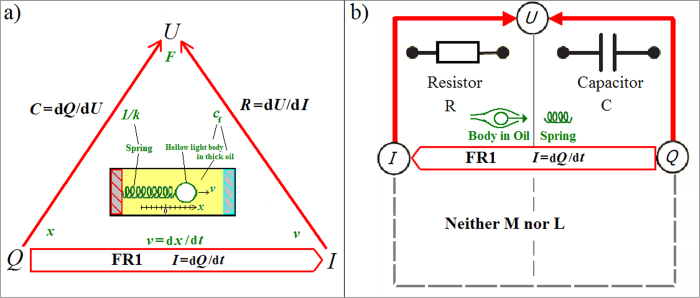
In 1971, not only the theoretical and by definition already existing 'ideal memristor' concept was introduced, but a real memristor device was suggested on grounds of the already known real inductors. The latter is a scientifically significant hypothesis grounded in fundamental symmetries of basic physics, here electro-magnetism. 2008 claimed the discovery of the "missing memristor." Controversy arose: The devices were not new, and the hypothesized device needs magnetism but has no material memory, while the available devices constitute analogue memory that would work in a world without magnetism. Nevertheless, even the originator of the prediction accepted the discovery. Defenders of the 2008 claim emphasize that the devices are not merely 'memristive systems,' which is however a distinction defined in 1976, not 1971. We clarify widely confused concepts and maintain that the originally hypothesized real memristor device is missing and likely impossible. The argument is illustrated also by finding an ideal mechanical memristor element and purely mechanical memristive systems, and hypothesizing a real mechanical memristor device that requires inert mass just like the 1971 implied device requires magnetic induction.
Overview
CoChat Summary
## TL;DR
The paper argues that the 2008 “missing memristor” announcement did not discover the originally hypothesized 1971 real memristor device. It distinguishes ideal memristors and memristive systems from the proposed real device and concludes the original device is likely impossible, while analogous mechanical constructions are only analogs, not the missing device.
## Key findings
- The authors state that the 2008 claim was not the discovery of the “missing memristor,” because the devices involved were already known and were only later labeled differently; they note that similar devices were already discovered in 1995 and memristive behavior in thin films was known before 1971.
- They argue that the 1971 proposal implied a fourth real device only because a third real device, the inductor, was already known; in their view, the 2008 devices were merely “memristive systems” or “perfect memristors,” not the originally proposed real memristor device.
- They extend the argument by constructing a mechanical ideal memristor and a corresponding hypothesized real mechanical memristor device, but conclude these analogues are also not the missing device.
- The paper says the original real memristor device is likely impossible, and adds that if discovered it would deserve attention, with a possible place of search suggested in electro-optics.
## Methods
- Conceptual/theoretical analysis of circuit theory, comparing ideal two-terminal elements (R, C, L, M) and distinguishing ideal memristors, memristive systems, and the hypothesized real memristor device.
- Uses symmetry arguments from electromagnetism/Maxwell’s equations and an analog mechanical body-spring-oil (BSO) system to map circuit elements onto physical devices.
- Supports the argument by comparing the 1971 memristor proposal to known historical predictions and by analyzing why the 2008 devices match “perfect memristor”/memristive-system behavior rather than the original hypothesis.
## Limitations
- The paper explicitly says the issue is partly a matter of conceptual confusion and terminology, especially around “memristor,” “ideal/real/perfect memristor,” and “memristive system,” which limits direct comparison across claims.
- It states that its mechanical construction is analogical, and that the real memristor device may still be discovered; this is an evident limitation of the argument, since it is not an empirical disproof.
- The text makes evident that the paper is not based on a new experimental dataset; instead, it is a theoretical and interpretive critique grounded in existing literature and circuit theory.
Model-written summary. Check it against the paper before relying on it.
Integrity signals
Registry
Cites
Statistics
Figures


Verification
Claims the paper makes
3 Valid · 1 Not valid · 6 Not checked · 12 Own results and interpretations
At least one cited source doesn’t support this claim or points to a different paper, and none confirmed it — see the verdicts below.
In the paper
“Such refers to the ideal memristor and other “memristors” in circuit theory, but not to the 1971 implied fourth device”
§ The Missing Memristor has Not been Found > Refusing the Discovery of the Originally Proposed Memristor Device > With magnetism, real inductors, and the likely impossible real memristor
What the sources say
- Disputedcites [15] Di Ventra, M., Pershin, Y. V. & Chua, L. O. Circuit elements with memory: memristors, memcapacitors and meminductors. Proceedings of the IEEE 97, 1717 (2009). sourceExperimental — accuracy not yet measured
The Introduction (p. 1) explicitly connects the memristor discussed in this paper to the circuit element Chua postulated in 1971, then describes memristive systems as a generalization of it. Section II (p. 2) also discusses the ideal memristor. The paper therefore does not exclude the 1971 device from its discussion as the claim says. (LLM, conf=0.85)
Checked by a reasoning model — may be wrong.
- Disputedcites [16] Chua, L. O. Resistance switching memories are memristors. Appl. Phys. A 102, 765–783 (2011). sourceExperimental — accuracy not yet measured
Section 1, “Pinched hysteresis loops” (page unavailable), defines the memristor through its charge–flux relation and cites the original work as [1]. The concluding remarks (page unavailable) explicitly place the memristor among the four basic circuit elements. The paper therefore does not exclude the originally proposed fourth element from what it calls a memristor. (LLM, conf=0.83)
Checked by a reasoning model — may be wrong.
plain- Asserted: passes — The authors put it forward as true.
- Checkable: passes — It can be checked against evidence.
- Load-bearing: passes — The paper’s conclusions depend on it.
- Based: passes — The paper gives a reason why it holds.
- Disputed
The cited sources support only part of this claim — read each source’s verdict below.
In the paper
““memristors” understood merely as nonlinear resistors with memory have been described by Kubo theory in the 1950s14.”
§ The Missing Memristor has Not been Found > Abstract
What the sources say
- Partly supportedcites [14] Di Ventra, M. & Pershin, Y. V. On the physical properties of memristive, memcapacitive and meminductive systems. Nanotechnology 24, 255201 (2013). sourceExperimental — accuracy not yet measured
Section 2 (page unavailable) derives memristive behavior, including nonlinear conductance, using Kubo response theory and says that theory dates to the 1950s. But the paper presents the memristive derivation as its own; it does not say Kubo described memristors in the 1950s. (LLM, conf=0.88)
plain- Asserted: passes — The authors put it forward as true.
- Checkable: passes — It can be checked against evidence.
- Load-bearing: passes — The paper’s conclusions depend on it.
- Based: passes — The paper gives a reason why it holds.
- Partly supported
Every source the paper cites for this claim was checked and supports it.
In the paper
“The 2008 claim showed that the films of TiO2 between metals, well known since the 1960s, can be described as resistors with memory13”
§ The Missing Memristor has Not been Found > Abstract
What the sources say
- Supportedcites [13] Pershin, Y. V. & Di Ventra, M. Memory effects in complex materials and nanoscale systems. Adv. in Phys. 60, 145–227 (2011). source
The “Bipolar resistance switching” section describes a TiO₂ thin film between metal electrodes, says its resistive behavior has been known since 1968, and reports that its switching was explained using a memristive model in 2008. The passage does not supply a page number. (LLM, conf=0.93)
plain- Asserted: passes — The authors put it forward as true.
- Checkable: passes — It can be checked against evidence.
- Load-bearing: passes — The paper’s conclusions depend on it.
- Based: passes — The paper gives a reason why it holds.
- Supported
Every source the paper cites for this claim was checked and supports it.
In the paper
“Similar devices were already discovered in 19958, but those early discoverers do still not think that their devices are real memristors.”
§ The Missing Memristor has Not been Found > Abstract
What the sources say
- Supportedcites [8] Upadhyaya, H. M. & Chandra, S. Polarity dependent memory switching behavior in Ti/Cd Pb S/Ag system. Semiconductor Science and Technology 10, 332–338 (1995). sourceExperimental — accuracy not yet measured
The cited 1995 paper’s title describes memory-switching devices, but its full text is unavailable through the paper-scoped search, so it cannot directly establish the comparison with 2008 devices. A passage in “The Missing Memristor: Novel Nanotechnology or rather new Case Study for the Philosophy and Sociology of Science?” explicitly says the later devices were similar to ones discovered in 1995 and cites Upadhyaya (1995) for that point (score 0.774). This is secondary corroboration that credits the cited work, not evidence of misattribution. (LLM, conf=0.82)
plain- Asserted: passes — The authors put it forward as true.
- Checkable: passes — It can be checked against evidence.
- Load-bearing: passes — The paper’s conclusions depend on it.
- Based: passes — The paper gives a reason why it holds.
- Supported
A conclusion the paper draws from its own results — it cites no other source for it, so there is none to check. The quote shows it is in the paper.
In the paper
“The 1971 prediction already confused deceptively similar looking symmetries that are fundamentally different, but we clarified the issue”
§ The Missing Memristor has Not been Found > Conclusion
plainstates a cause- Asserted: passes — The authors put it forward as true.
- Checkable: unclear — It is unclear whether it could be checked against evidence.
- Load-bearing: passes — The paper’s conclusions depend on it.
- Based: passes — The paper gives a reason why it holds.
5 more claims
Create a free account to see all 22 claims and every source verdict.
- Probably not a substantial claim. 6
- It may state two separate claims as one. 8
Citations
Cites
Strukov, D. B., Snider, G. S., Stewart, D. R., & Williams, R. S. (2008) · Nature · doi:10.1038/nature06932 · Cited by 11,828
Memristor—The Missing Circuit Element
Chua, L. (1971) · IEEE Transactions on Circuit Theory · doi:10.1109/tct.1971.1083337 · Cited by 10,268
Nanoionics-based resistive switching memories
Waser, R., & Aono, M. (2007) · Nature Materials · doi:10.1038/nmat2023 · Cited by 4,923
Memristive switching mechanism for metal/oxide/metal nanodevices
Yang, J. J., Pickett, M. D., Li, X., Ohlberg, D. A. A., Stewart, D. R., & Williams, R. S. (2008) · Nature Nanotechnology · doi:10.1038/nnano.2008.160 · Cited by 2,987 · cited 1×
“(5) is now a non-linear dp/dx having the units of drag [cf] = kg/s.”
BackgroundMemristive devices and systems
Chua, L. O., & Kang, S. M. (1976) · Proceedings of the IEEE · doi:10.1109/proc.1976.10092 · Cited by 2,604 · cited 1×
“(2) can be written B j c d t E d free 2 μ ∇ × → = → + → / − .”
Resistance switching memories are memristors
Chua, L. (2011) · Applied Physics A · doi:10.1007/s00339-011-6264-9 · Cited by 1,434
Circuit Elements With Memory: Memristors, Memcapacitors, and Meminductors
Di Ventra, M., Pershin, Y. V., & Chua, L. O. (2009) · Proceedings of the IEEE · doi:10.1109/jproc.2009.2021077 · Cited by 1,212
Memory effects in complex materials and nanoscale systems
Pershin, Y. V., & Di Ventra, M. (2011) · Advances In Physics · doi:10.1080/00018732.2010.544961 · Cited by 823
The Feynman Lectures on Physics; Vol. I
Feynman, R. P., Leighton, R. B., Sands, M., & Hafner, E. M. (1965) · American Journal of Physics · doi:10.1119/1.1972241 · Cited by 607
Tour, J. M., & He, T. (2008) · Nature · doi:10.1038/453042a · Cited by 504
Research works printed but not linked: 2
- van Spronsen, J. W. in The Periodic System of Chemical Elements (Elsevier, 1969).
- Bartusiak, M. in Einstein’s unfinished symphony. (Joseph Henry Press, 2000).
Cited by
Items 101–133 of 133
Ernoult, M. (2020) · theses.fr (ABES) · doi:10.70675/1ec5c554z9a7fz4244zaf72z8a780cac9faa · Cited by 2
Examination of Resistive Switching Energy of Some Nonlinear Dopant Drift Memristor Models
TAN, R. K., Mert, O., & MUTLU, R. (2024) · Informacije MIDEM - Journal of Microelectronics Electronic Components and Materials · doi:10.33180/infmidem2024.103 · Cited by 2
Chemical vapor deposition of hexagonal boron nitride and its use in electronic devices
Hui, F. (2018) · LA Referencia (Red Federada de Repositorios Institucionales de Publicaciones Científicas) · doi:10.48550/arxiv.1905.06938 · Cited by 1
A Liénard Oscillator Circuit with a Memristive Bridge Rectifier
Üstün, A. K., Üstün, M. A., & MUTLU, R. (2024) · European Journal of Engineering and Applied Sciences · doi:10.55581/ejeas.1602019 · Cited by 1
Device Applications of Solution Processed MIR Semiconductor Nanocrystal Thin Films
Cryer, M. (2019) · Open Access Victoria University of Wellington | Te Herenga Waka (Figshare) · doi:10.26686/wgtn.17138687
Wang, F. Z. (2021) · arXiv (Cornell University)
Memrystor : brakujący element elektroniczny
Domaradzki, J., Kaczmarek, D., Wojcieszak, D., Mazur, M., Poniedziałek, A., & Kotwica, T. (2016) · Elektronika : konstrukcje, technologie, zastosowania · doi:10.15199/13.2016.7.3
Bayesian neuromorphic computing based on resistive memory
Dalgaty, T. (2020) · theses.fr (ABES) · doi:10.70675/e5b4f3e2z44a5z4c41zbac6z4c933e86b101 · Cited by 1
Racetrack memory based logic design for in-memory computing
Luo, T. (2018) · DR-NTU (Nanyang Technological University) · doi:10.32657/10356/73359
Memristor based multifunction oscillator
Abraham, I., & Ren, S. (2019) · IEEE International Midwest Symposium on Circuits and Systems (MWSCAS) · doi:10.1109/mwscas.2019.8885077
Shirinzadeh, S., & Drechsler, R. (2023) · Springer eBooks · doi:10.1007/978-3-031-22879-7_2
E. Cartan’s and A. Connnes’ Supersymmetry and Differences of Understanding Physical Phenomena
Furui, S. (2018) · Journal of Mathematics and System Science · doi:10.17265/2159-5291/2018.01.002
E. Cartan’s Supersymmetry, Noncommutative Geometry and Propagation of Time in S7 × R4 Spacetime
Furui, S. (2018) · Journal of Mathematics and System Science · doi:10.17265/2159-5291/2018.01.001
Élucidation des mécanismes électroniques dans des memristors organiques
Tomasso, C. J. (2023) · theses.fr (ABES) · doi:10.70675/374fe14az5147z4799zac4aze1c9393b34d5
Erokhin, V. V. (2023) · Elsevier eBooks · doi:10.1016/b978-0-323-96027-4.00004-8
He, Y., Zeng, M., Zhang, X., et al. (2026) · SSRN Electronic Journal · doi:10.2139/ssrn.6595449
Can We Still Find an Ideal Memristor?
Wang, F. Z. (2024) · Magnetism · doi:10.3390/magnetism4030014
Isah, A. (2026) · International Journal of Circuit Theory and Applications · doi:10.1002/cta.70333
Comment on "If it's pinched it's a memristor" by L. Chua [Semicond. Sci. Technol. 29, 104001 (2014)]Preprint
Pershin, Y. V., & Ventra, M. D. (2019) · arXiv (Cornell University) · doi:10.48550/arxiv.1905.02254
Shirinzadeh, S., & Drechsler, R. (2019) · Springer eBooks · doi:10.1007/978-3-030-18026-3_2
Memristors in Nonlinear Network : Application to Information (Signal and Image) Processing
Isah, A. (2021) · theses.fr (ABES) · doi:10.70675/d071f6d0zda25z433az8436z64ac8b3979c6
Memristors for neuromorphic computing systems: basic parameters and methods of their optimization
Ilin, A. S., Matsukatova, A. N., Николаевич, М. М., Emelyanov, A. V., Rylkov, V. V., Demin, V. A., Форш, П. А., Kashkarov, P. K., & Kovalchuk, M. V. (2025) · Uspekhi Fizicheskih Nauk · doi:10.3367/ufnr.2025.09.040037
Post-Binary Robotics: Using Memristors With Ternary States for Robotics Control
Bos, S., Nilsen, J. B., & Gundersen, H. (2020) · Electronic System-Integration Technology Conference (ESTC) · doi:10.1109/estc48849.2020.9229820
Analysis of nonlinear passive pinched hysteresis generator circuits
Kiyama-Armendariz, R., & Abraham, I. (2019) · Midwest Symposium on Circuits and Systems · doi:10.1109/mwscas.2019.8885055
Xu, L., Xu, X., Banerjee, S., El‐Latif, A. A. A., Mou, J., & El-Rahiem, B. A. (2026) · Chinese Journal of Physics · doi:10.1016/j.cjph.2026.08.013 · Cited by 1
Digital Implementation of Neuromorphic systems using Emerging Memory devices
Hirtzlin, T. (2020) · theses.fr (ABES) · doi:10.70675/7c42d7b9z4001z4424z8a0az6c7cb2079ec8 · Cited by 7
Introductory Chapter: Challenges in Neuro-Memristive Circuit Design
James, A. P. (2020) · Contact-less Assessment of In-vivo Body Signals Using Microwave Doppler Radar (InTech) · doi:10.5772/intechopen.91969
Highly efficient analog emulator circuit of memristive behavior as substitute for real memristor
Kumar, R. R., Kumar, A., & Kumar, A. (2025) · Analog Integrated Circuits and Signal Processing · doi:10.1007/s10470-025-02513-x
Dalmiş, C., KARAKULAK, E., & MUTLU, R. (2023) · Düzce Üniversitesi Bilim ve Teknoloji Dergisi · doi:10.29130/dubited.1084460
An internally-controlled memristor-based amplitude shift keying modulator
Maxwell, C. L., Yu, D., & Leng, Y. (2021) · Circuit World · doi:10.1108/cw-06-2020-0104
The Sociology of the Field and Lesson to Be Learned
Ventra, M. D., & Pershin, Y. V. (2023) · SpringerBriefs in physics · doi:10.1007/978-3-031-25625-7_5
Metadata
- Authors
- Vongehr, S., & Meng, X.
- Affiliations
- National Laboratory of Solid State Microstructures (CN)
- Corresponding author
- Vongehr, Sascha
- Meng, Xiangkang
- Venue
- Scientific Reports
- Published
- 2015-06-25
- Volume
- 5
- Issue
- 1
- Pages
- 11657-11657
- ISSN
- 2045-2322 (ISSN-L)
- PMC
- PMC4479989
- OpenAlex
- W2254837747
- Cited by
- 131
- References
- 19
- Citations by year
- 2026: 4 · 2025: 9 · 2024: 7 · 2023: 14 · 2022: 12 · 2021: 12 · 2020: 14 · 2019: 18 · 2018: 15 · 2017: 9 · 2016: 13 · 2015: 4
- FWCI
- 6.58
- Type
- journal article
- Language
- en
- Open access
- gold
- doi.org
- Licence
- cc-by
- creativecommons.org/licenses/by/4.0 (tdm)
- creativecommons.org/licenses/by/4.0 (vor)
- Locations
- Scientific Reports (publishedVersion, cc-by)
- Europe PMC (PubMed Central) (publishedVersion, cc-by)
- PubMed Central (publishedVersion, cc-by)
- PubMed (publishedVersion)
- Funders
- Wuhan University
- Wuhan University of Technology
- Topics
- Physical Sciences › Engineering › Electrical and Electronic Engineering › Advanced Memory and Neural Computing
- Physical Sciences › Engineering › Electrical and Electronic Engineering › Engineering and Technology Innovations
- Physical Sciences › Engineering › Electrical and Electronic Engineering › Electrical and Thermal Properties of Materials
- Keywords
- memristors, inductors, magnetic induction, electromagnetism
About these checks
Registry, retraction, Cites and statistics results are computed, not judged, with one exception: a printed reference that no index lists is read once by a model before it counts as a citation error. Claims are extracted by a model and kept only when their quote appears verbatim in the text; each cited source is then checked, with a model’s help, for whether it says what the claim relies on. Those verdicts can be wrong — read the claim’s quote and the cited source before relying on one.
The claim verdicts this report counts are experimental: their accuracy is not yet measured.
A language model drew the claims from the paper on 2026-09-29, under version 3 of the claim definition (model deepseek-v4.1-flash, prompt extract-v3).
A second model labelled each claim on 2026-09-29 (model jev-1.13-20260917, definition revision gold-guideline-v0.2).
Cited sources are checked with a language model’s help (gpt-6-sol).
Statistics and arithmetic are recomputed, not judged.
Confidence bands are shown only for fields calibrated on our annotated test set. None is calibrated yet, so no band is shown.
What counts as a claim ›How we measure confidence ›How we check this ›
Are you an author, or do you see a problem with this page? Request a review
Data sources
Bibliographic data: Semantic Scholar, OpenAlex, Crossref.
Contains information from the Semantic Scholar Academic Graph Datasets, made available under the ODC Attribution License (ODC-BY 1.0).
Semantic Scholar’s data is described in: Kinney, R., et al. (2023). The Semantic Scholar Open Data Platform. arXiv:2301.10140.
