

The DOI matches its Crossref record; the references it cites are not checked yet.
A Rewritable, Random-Access DNA-Based Storage System
Open accessAbstract
We describe the first DNA-based storage architecture that enables random access to data blocks and rewriting of information stored at arbitrary locations within the blocks. The newly developed architecture overcomes drawbacks of existing read-only methods that require decoding the whole file in order to read one data fragment. Our system is based on new constrained coding techniques and accompanying DNA editing methods that ensure data reliability, specificity and sensitivity of access and at the same time provide exceptionally high data storage capacity. As a proof of concept, we encoded parts of the Wikipedia pages of six universities in the USA and selected and edited parts of the text written in DNA corresponding to three of these schools. The results suggest that DNA is a versatile media suitable for both ultrahigh density archival and rewritable storage applications.
Overview
The claims and statistics of this paper haven’t been checked yet.
Free: it reads the open-access text and checks the first 5 claims that cite a source we can check. Create a free account to check every claim.
Integrity signals
Registry
Cites
Statistics
Figures
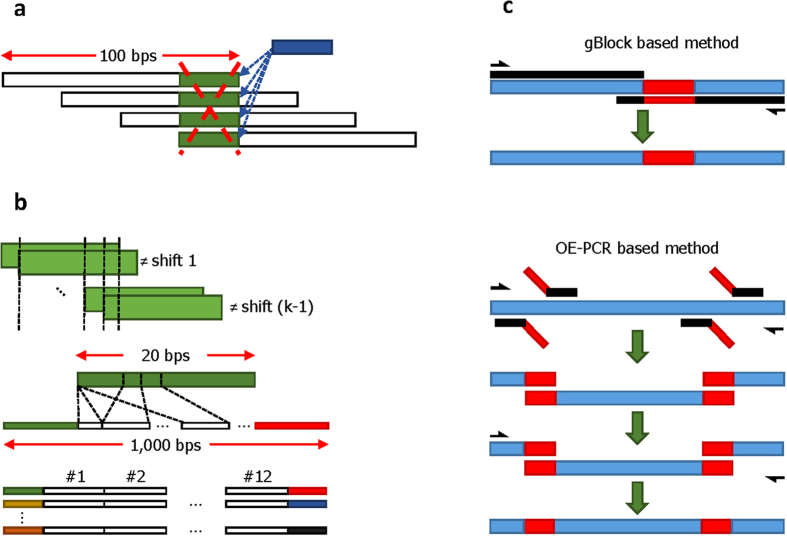
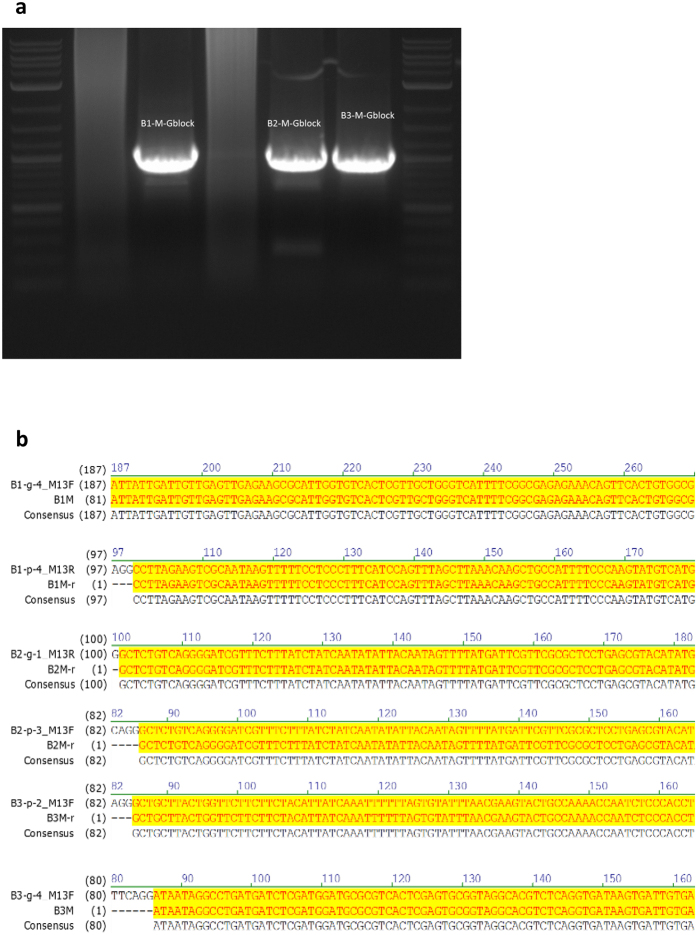
Verification
Claims the paper makes
The claims and statistics of this paper haven’t been checked yet.
Free: it reads the open-access text and checks the first 5 claims that cite a source we can check. Create a free account to check every claim.
Claims other papers make about this one
Each is checked against this paper’s own text: does it say what the citing paper says it does?
The source backs part of the claim, not all of it — or backs it for a different population, condition or comparison.
In the citing paper
“However, the sequencing coverage (number of read counts of a unique sequence) of an oligonucleotide (henceforth referred to simply as “oligo”) was found to be very uneven, requiring modern error correction codes capable of handling sequence dropout7–12.”
From Quantifying Molecular Bias in DNA Data Storage (2019) · cites this paper as [9]
Experimental — accuracy not yet measuredThe source backs part of the claim, not all of it — or backs it for a different population, condition or comparison.
In the citing paper
“This process, usually performed via Gibson assembly or overlap extension PCR,70,81,86 reintroduces several difficult-to-automatize steps into the sequencing workflow, which calls the approach’s claims of improved portability and ease of automation over SBS into question.”
From Emerging Approaches to DNA Data Storage: Challenges and Prospects (2022) · cites this paper as [81]
Experimental — accuracy not yet measuredThe source backs part of the claim, not all of it — or backs it for a different population, condition or comparison.
In the citing paper
“To date, molecular random access has largely relied on conventional polymerase chain reaction (PCR)8,10,12,13, which uses up to ~20–30 heating and cooling cycles with DNA polymerase to selectively amplify specific DNA sequences from a DNA data pool using primers.”
From Random access DNA memory using Boolean search in an archival file storage system (2021) · cites this paper as [8]
Experimental — accuracy not yet measuredThe cited source says what the claim attributes to it.
In the citing paper
“Also in 2015, Yazdi et al. (2015) established a DNA-based storage architecture that enables random access of data blocks for the first time.”
From Large-Scale de Novo Oligonucleotide Synthesis for Whole-Genome Synthesis and Data Storage: Challenges and Opportunities (2021) · cites this paper as Yazdi et al., 2015
The cited source says what the claim attributes to it.
In the citing paper
“Demonstrations of its viability as a general information storage medium include the storage and retrieval of books, images, computer programs, audio clips, works of art, and Shakespeare’s sonnets using a variety of encoding schemes6–12, with data size limited primarily by the cost of DNA synthesis.”
From Random access DNA memory using Boolean search in an archival file storage system (2021) · cites this paper as [8]
2 more claims about this paper
Create a free account to see every claim other papers make about this one.
Self-check
Percentages, sums and reported differences re-computed from the paper’s own numbers.
The self-check needs the paper’s full text.
Citations
The citation lists are queued
They are fetched later and appear here then.
References 22 · Cited by 401
Research works printed but not linked: 1
- Blackburn, S. R. Non-overlapping codes. arXiv preprint arXiv:1303.1026 (2013). · arXiv
Metadata
- Authors
- Tabatabaei Yazdi, S. M. H., Yuan, Y., Ma, J., Zhao, H., & Milenkovic, O.
- Affiliations
- University of Illinois Urbana-Champaign (US)
- Venue
- Scientific Reports
- Published
- 2015-09-18
- Volume
- 5
- Issue
- 1
- Pages
- 14138-14138
- ISSN
- 2045-2322 (ISSN-L)
- PMC
- PMC4585656
- OpenAlex
- W1946587648
- Cited by
- 401
- References
- 22
- Citations by year
- 2026: 21 · 2025: 48 · 2024: 42 · 2023: 42 · 2022: 50 · 2021: 47 · 2020: 44 · 2019: 40 · 2018: 23 · 2017: 24 · 2016: 17 · 2015: 3
- FWCI
- 9.69
- Type
- journal article
- Language
- en
- Open access
- gold
- doi.org
- Licence
- cc-by
- creativecommons.org/licenses/by/4.0 (tdm)
- creativecommons.org/licenses/by/4.0 (vor)
- Locations
- Scientific Reports (publishedVersion, cc-by)
- PubMed Central (publishedVersion, cc-by)
- PubMed (publishedVersion)
- Funders
- National Science Foundation
- Purdue University
- University of Illinois at Urbana-Champaign
- Topics
- Physical Sciences › Mathematics › Theoretical Computer Science › DNA and Biological Computing
- Physical Sciences › Mathematics › Theoretical Computer Science › Algorithms and Data Compression
- Physical Sciences › Computer Science › Computer Networks and Communications › Advanced Data Storage Technologies
- Keywords
- DNA data storage, random access, constrained coding, DNA editing, data reliability, storage capacity, archival storage
- MeSH terms
- Algorithms, DNA, Information Science, Models, Theoretical, Technology, Information Storage and Retrieval
About these checks
Registry, retraction, Cites and statistics results are computed, not judged, with one exception: a printed reference that no index lists is read once by a model before it counts as a citation error. Claims are extracted by a model and kept only when their quote appears verbatim in the text; each cited source is then checked, with a model’s help, for whether it says what the claim relies on. Those verdicts can be wrong — read the claim’s quote and the cited source before relying on one.
Statistics and arithmetic are recomputed, not judged.
Confidence bands are shown only for fields calibrated on our annotated test set. None is calibrated yet, so no band is shown.
What counts as a claim ›How we measure confidence ›How we check this ›
Are you an author, or do you see a problem with this page? Request a review
How to cite
Cite CoChat for the checks on this page, and the paper for its own findings.
- This page
- CoChat. (2026). Citation check: A Rewritable, Random-Access DNA-Based Storage System. https://app.cochat.ai/papers/10.1038/srep14138
- The paper
- Tabatabaei Yazdi, S. M. H., Yuan, Y., Ma, J., Zhao, H., & Milenkovic, O. (2015). A Rewritable, Random-Access DNA-Based Storage System. Scientific Reports. https://doi.org/10.1038/srep14138
Data sources
Bibliographic data: Semantic Scholar, OpenAlex, Crossref.
Contains information from the Semantic Scholar Academic Graph Datasets, made available under the ODC Attribution License (ODC-BY 1.0).
Semantic Scholar’s data is described in: Kinney, R., et al. (2023). The Semantic Scholar Open Data Platform. arXiv:2301.10140.
