

Machine learning for the structure–energy–property landscapes of molecular crystals
Open accessThe DOI matches its Crossref record; 80 of the 81 references it cites were found in a registry or an index.
Abstract
Polymorphism is common in molecular crystals, whose energy landscapes usually contain many structures with similar stability, but very different physical–chemical properties. Machine-learning techniques can accelerate the evaluation of energy and properties by side-stepping accurate but demanding electronic-structure calculations, and provide a data-driven classification of the most important molecular packing motifs.
Overview
The claims and statistics of this paper haven’t been checked yet.
Free: it reads the open-access text and checks the first 5 claims that cite a source we can check. Create a free account to check every claim.
Integrity signals
Registry
Cites
Statistics
Figures
Verification
Claims the paper makes
The claims and statistics of this paper haven’t been checked yet.
Free: it reads the open-access text and checks the first 5 claims that cite a source we can check. Create a free account to check every claim.
Claims other papers make about this one
Each is checked against this paper’s own text: does it say what the citing paper says it does?
The source backs part of the claim, not all of it — or backs it for a different population, condition or comparison.
In the citing paper
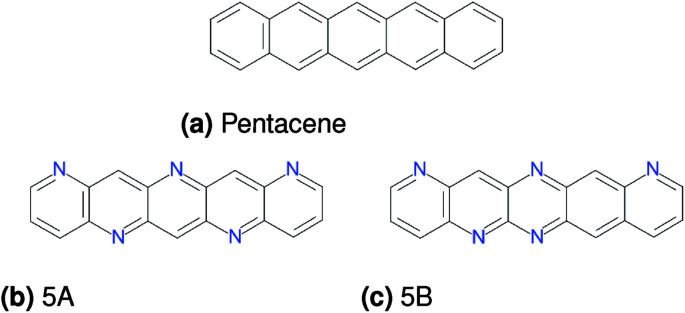
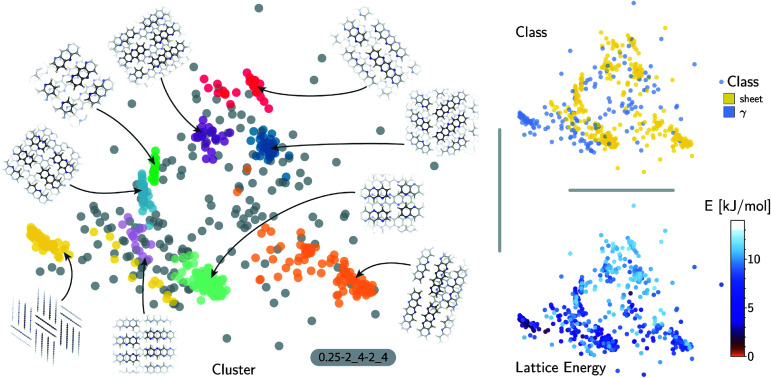
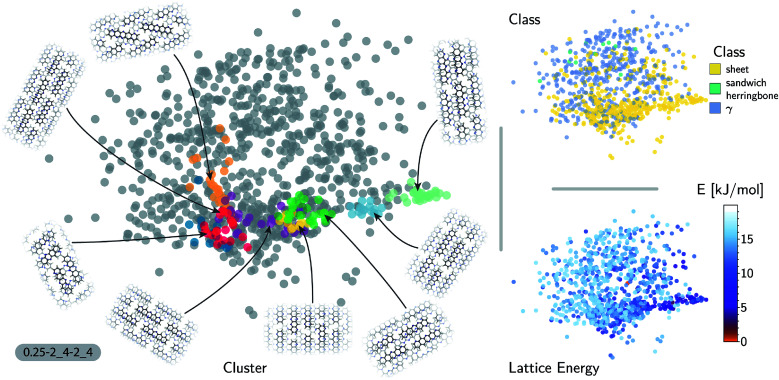
“When considering the nitrogen-substituted analogues of pentacene, however, we found that the most clear-cut clustering was associated with in-plane H-bonding rather than with the stacking.”
From Unsupervised machine learning in atomistic simulations, between predictions and understanding (2019) · cites this paper as [84]
Experimental — accuracy not yet measuredIn the citing paper
“'Materials cartography', as it has been referred to 57 , strives to obtain a low-dimensional (typically 2D) representation of a set of materials, or of different phases of the same material, that reflects the 'structureenergy-property' landscape 84,85 of that system.”
From Unsupervised machine learning in atomistic simulations, between predictions and understanding (2019) · cites this paper as [84]
Self-check
Percentages, sums and reported differences re-computed from the paper’s own numbers.
The self-check needs the paper’s full text.
Citations
Cites
Generalized Gradient Approximation Made Simple
Perdew, J. P., Burke, K., & Ernzerhof, M. (1996) · Physical Review Letters · doi:10.1103/physrevlett.77.3865 · Cited by 215,824
Semiempirical GGA‐type density functional constructed with a long‐range dispersion correction
Grimme, S. (2006) · Journal of Computational Chemistry · doi:10.1002/jcc.20495 · Cited by 31,038
QUANTUM ESPRESSO: a modular and open-source software project for quantum simulations of materials
Giannozzi, P., Baroni, S., Bonini, N., Calandra, M., Car, R., Cavazzoni, C., Ceresoli, D., Chiarotti, G. L., Cococcioni, M., Dabo, I., et al. (2009) · Journal of Physics: Condensed Matter · doi:10.1088/0953-8984/21/39/395502 · Cited by 29,281
Commentary: The Materials Project: A materials genome approach to accelerating materials innovation
Jain, A., Ong, S. P., Hautier, G., Chen, W., Richards, W. D., Dacek, S., Cholia, S., Gunter, D., Skinner, D., Ceder, G., et al. (2013) · APL Materials · doi:10.1063/1.4812323 · Cited by 13,094
Advances in Neural Information Processing Systems 25
Zhang, Y., Sutton, C. A., Storkey, A., & Zoubin Ghahramani, A. (2012) · Cited by 12,653
Proceedings of the 25th international conference on Machine learning
Cohen, W. W., McCallum, A., & Roweis, S. T. (2008) · Cited by 5,691
The path to ubiquitous and low-cost organic electronic appliances on plastic
Forrest, S. R. (2004) · Nature · doi:10.1038/nature02498 · Cited by 5,165
Generalized Neural-Network Representation of High-Dimensional Potential-Energy Surfaces
Behler, J., & Parrinello, M. (2007) · Physical Review Letters · doi:10.1103/physrevlett.98.146401 · Cited by 5,010
Gaussian Approximation Potentials: The Accuracy of Quantum Mechanics, without the Electrons
Bartók, A. P., Payne, M. C., Kondor, R., & Csányi, G. (2010) · Physical Review Letters · doi:10.1103/physrevlett.104.136403 · Cited by 3,242
On representing chemical environments
Bartók, A. P., Kondor, R., & Csányi, G. (2013) · Physical Review B · doi:10.1103/physrevb.87.184115 · Cited by 2,572
Research works printed but not linked: 5
- Carrete J. Li W. Mingo N. Wang S. Curtarolo S. Phys. Rev. X 2014 4 011019
- Rasmussen C. E. and Williams C. K. I., Gaussian processes for machine learning, World Scientific Publishing Company, 2006, vol. 14, pp. 69–106
- Ceriotti M. Tribello G. A. Parrinello M. Proc. Natl. Acad. Sci. U. S. A. 2011 108 13023 13028 10.1073/pnas.1108486108 21730167 PMC3156203 · DOI · Paper page
- Campello R. J. G. B., Moulavi D., Zimek A. and Sander J., ACM Transactions on Knowledge Discovery from Data, 2015, vol. 10, pp. 1–51
- Ramakrishnan R. Dral P. O. Rupp M. von Lilienfeld O. A. J. Chem. Theory Comput. 2015 11 2087 2096 10.1021/acs.jctc.5b00099 26574412 · DOI · Paper page
Cited by
Gaussian Process Regression for Materials and Molecules
Deringer, V. L., Bartók, A. P., Bernstein, N., Wilkins, D. M., Ceriotti, M., & Csányi, G. (2021) · Chemical Reviews · doi:10.1021/acs.chemrev.1c00022 · Cited by 1,221
Self-citationStructure prediction drives materials discovery
Oganov, A. R., Pickard, C. J., Zhu, Q., & Needs, R. J. (2019) · Nature Reviews Materials · doi:10.1038/s41578-019-0101-8 · Cited by 717
Physics-Inspired Structural Representations for Molecules and Materials
Musil, F., Grisafi, A., Bartók, A. P., Ortner, C., Csányi, G., & Ceriotti, M. (2021) · Chemical Reviews · doi:10.1021/acs.chemrev.1c00021 · Cited by 523
Self-citationHydrogen-Bonded Organic Frameworks: A Rising Class of Porous Molecular Materials
Li, P., Ryder, M. R., & Stoddart, J. F. (2020) · Accounts of Materials Research · doi:10.1021/accountsmr.0c00019 · Cited by 455
Physics-Inspired Structural Representations for Molecules and Materials
Musil, F., Grisafi, A., Bartók, A., Ortner, C., Cśanyi, G., Ceriotti, M., et al. (2021) · Cambridge University Engineering Department Publications Database · Cited by 440
Self-citation
Metadata
- Authors
- Musil, F., De, S., Yang, J., Campbell, J. E., Day, G. M., & Ceriotti, M.
- Affiliations
- École Polytechnique Fédérale de Lausanne (CH)
- University of Southampton (GB)
- School of Chemistry, University of Southampton, Highfield, Southampton, UK
- Corresponding author
- Musil, Félix
- De, Sandip
- Venue
- Chemical Science
- Publisher
- Royal Society of Chemistry (RSC)
- Published
- 2018
- Volume
- 9
- Issue
- 5
- Pages
- 1289-1300
- ISSN
- 2041-6520 (ISSN-L)
- 2041-6539
- PMC
- PMC5887104
- OpenAlex
- W2771888471
- Cited by
- 216
- References
- 81
- Citations by year
- 2026: 14 · 2025: 19 · 2024: 19 · 2023: 29 · 2022: 19 · 2021: 29 · 2020: 41 · 2019: 27 · 2018: 19
- FWCI
- 10.05
- Type
- journal article
- Language
- en
- Open access
- diamond
- doi.org
- Licence
- Locations
- Chemical Science (publishedVersion, cc-by-nc)
- Europe PMC (PubMed Central) (publishedVersion, cc-by-nc)
- PubMed Central (publishedVersion, cc-by-nc)
- PubMed (publishedVersion)
- ePrints Soton (University of Southampton) (acceptedVersion)
- Infoscience (Ecole Polytechnique Fédérale de Lausanne) (submittedVersion, cc-by-nc-nd)
- UNSWorks (University of New South Wales, Sydney, Australia) (submittedVersion, cc-by-nc-nd)
- Funders
- H2020 European Research Council (677013-HBMAP)
- Seventh Framework Programme (307358, ERC-stG-2012-ANGLE)
- Swiss National Science Foundation (National Center of Competence in Research (NCCR) Materials Revolution: Computational Design and Discovery of Novel Materials (MARVEL))
- Topics
- Physical Sciences › Materials Science › Materials Chemistry › Machine Learning in Materials Science
- Physical Sciences › Physics and Astronomy › Atomic and Molecular Physics, and Optics › Advanced Chemical Physics Studies
- Physical Sciences › Chemistry › Physical and Theoretical Chemistry › Crystallography and molecular interactions
- Keywords
- molecular crystals, machine learning interatomic potentials, polymorphism, crystal structure prediction, carrier mobility, molecular packing, hydrogen bonding, π-π stacking, molecular self-assembly, structure-property relationships, crystal engineering
About these checks
Registry, retraction, Cites and statistics results are computed, not judged, with one exception: a printed reference that no index lists is read once by a model before it counts as a citation error. Claims are extracted by a model and kept only when their quote appears verbatim in the text; each cited source is then checked, with a model’s help, for whether it says what the claim relies on. Those verdicts can be wrong — read the claim’s quote and the cited source before relying on one.
Statistics and arithmetic are recomputed, not judged.
Confidence bands are shown only for fields calibrated on our annotated test set. None is calibrated yet, so no band is shown.
What counts as a claim ›How we measure confidence ›How we check this ›
Are you an author, or do you see a problem with this page? Request a review
How to cite
Cite CoChat for the checks on this page, and the paper for its own findings.
- This page
- CoChat. (2026). Citation check: Machine learning for the structure–energy–property landscapes of molecular crystals. https://app.cochat.ai/papers/10.1039/c7sc04665k
- The paper
- Musil, F., De, S., Yang, J., Campbell, J. E., Day, G. M., & Ceriotti, M. (2018). Machine learning for the structure–energy–property landscapes of molecular crystals. Chemical Science. https://doi.org/10.1039/c7sc04665k
Data sources
Bibliographic data: Semantic Scholar, OpenAlex, Crossref.
Contains information from the Semantic Scholar Academic Graph Datasets, made available under the ODC Attribution License (ODC-BY 1.0).
Semantic Scholar’s data is described in: Kinney, R., et al. (2023). The Semantic Scholar Open Data Platform. arXiv:2301.10140.
