

The DOI matches its Crossref record; 1 of the 1 references it cites were found in a registry or an index.
Recent developments of a co-immobilized laccase–mediator system: a review
Abstract
The laccase–mediator is a promising biocatalyst with many possible applications, including bioremediation, chemical synthesis, biobleaching of paper pulp, biosensing, textile finishing and wine stabilization.
Overview
The claims and statistics of this paper haven’t been checked yet.
Run the check — free, no account needed. It reads the open-access text and checks the sources it cites.
Integrity signals
Registry
Cites
Statistics
Figures
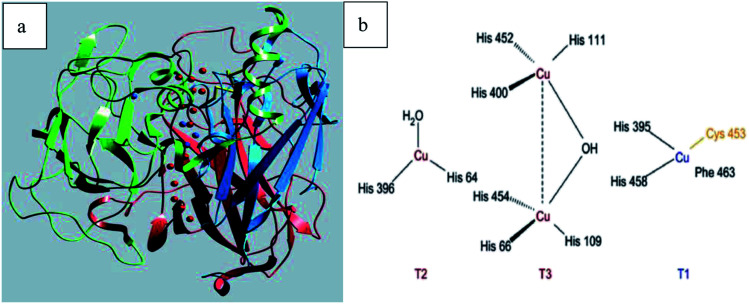
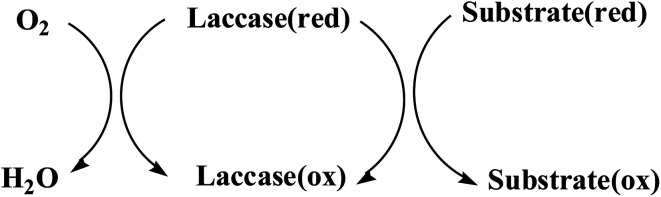
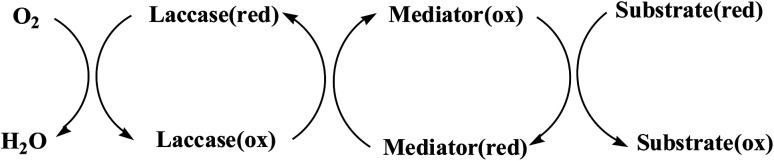
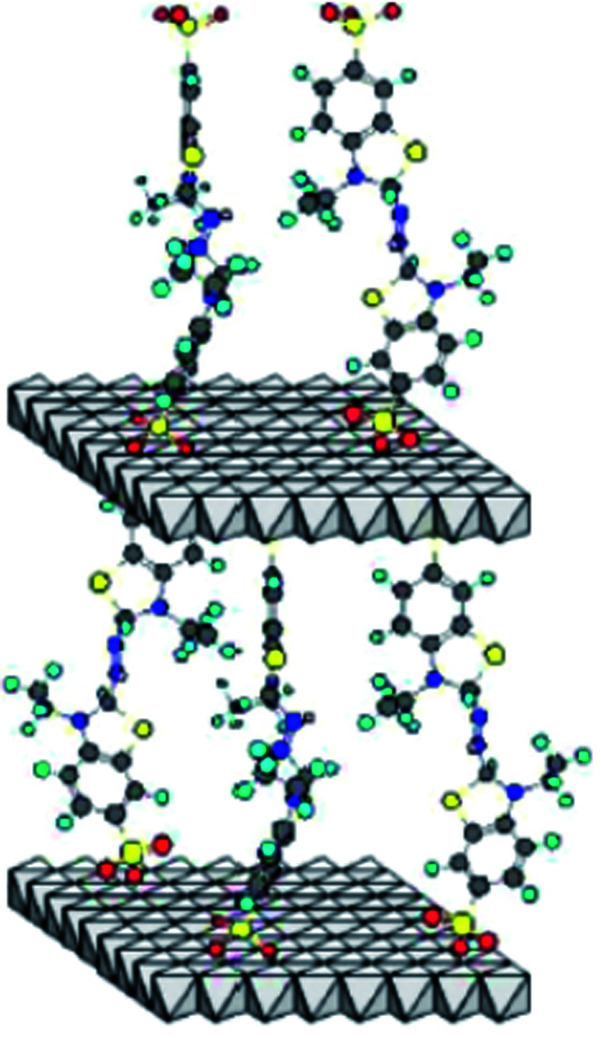
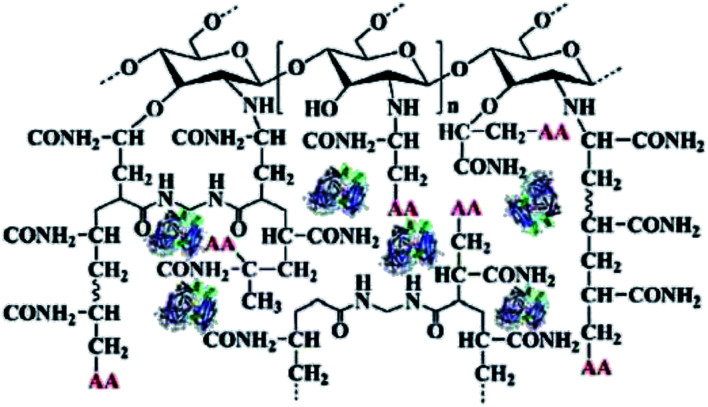
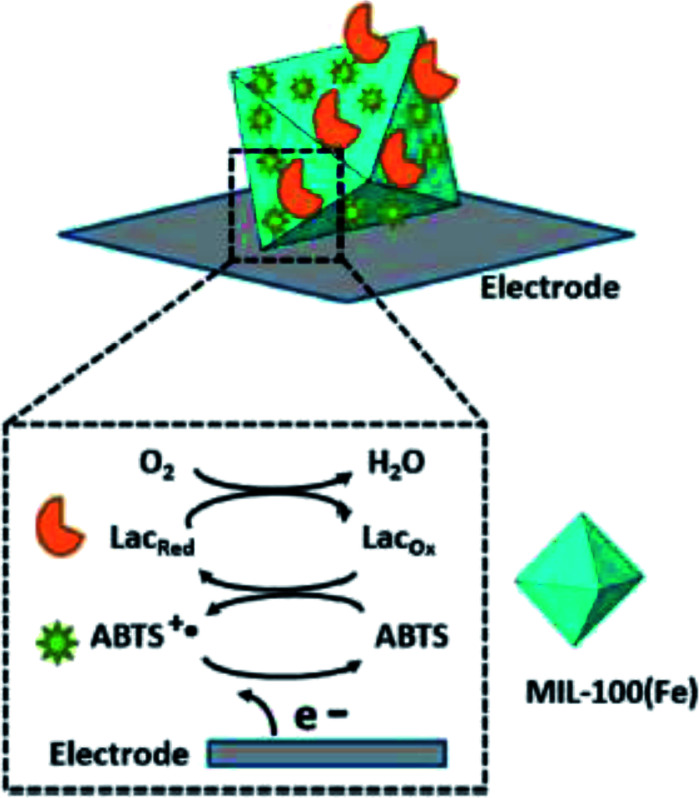
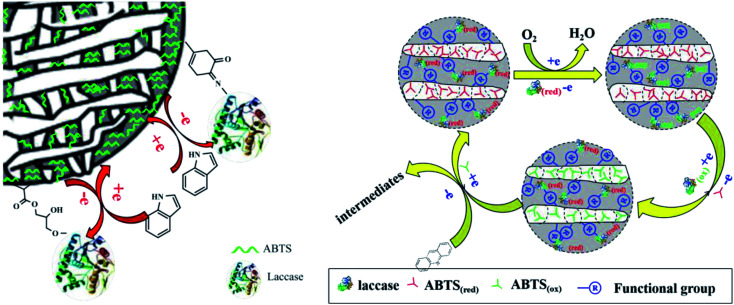
Verification
Claims the paper makes
The claims and statistics of this paper haven’t been checked yet.
Run the check — free, no account needed. It reads the open-access text and checks the sources it cites.
Claims other papers make about this one
Each is checked against this paper’s own text: does it say what the citing paper says it does?
The source backs part of the claim, not all of it — or backs it for a different population, condition or comparison.
In the citing paper
“Laccases catalyze the oxidation of various substrates via a single-electron transfer, involving a chemical mediator.”
From Toward the development of a molecular toolkit for the microbial remediation of per-and polyfluoroalkyl substances (2024) · cites this paper as [145]
Experimental — accuracy not yet measuredThe cited source says what the claim attributes to it.
In the citing paper
“Specifically, they oxidize suitable redox mediators through a single-electron transfer mediated by the copper site, forming a free radical cation.”
From Toward the development of a molecular toolkit for the microbial remediation of per-and polyfluoroalkyl substances (2024) · cites this paper as [145]
In the citing paper
“Examples of such mediators include 2,2′-azino-bis(3-ethylbenzothiazoline-6-sulfonic acid) and 1-hydroxybenzotriazole (HBT) (144, 145).”
From Toward the development of a molecular toolkit for the microbial remediation of per-and polyfluoroalkyl substances (2024) · cites this paper as [145]
In the citing paper
“This radical cation formed by mediator oxidation diffuses from the enzyme-active site and non-specifically oxidizes reduced compounds in the local environment.”
From Toward the development of a molecular toolkit for the microbial remediation of per-and polyfluoroalkyl substances (2024) · cites this paper as [145]
In the citing paper
“Subsequently, an internal electron is transferred from the reduced T1 to the T2 and T3 copper sites, where the bound O2 molecule undergoes activation and reduction to water in the T2/T3 trinuclear domain (145, 146).”
From Toward the development of a molecular toolkit for the microbial remediation of per-and polyfluoroalkyl substances (2024) · cites this paper as [145]
Self-check
Percentages, sums and reported differences re-computed from the paper’s own numbers.
The self-check needs the paper’s full text.
Citations
Cites
Piontek, K., Antorini, M., & Choinowski, T. (2002) · Journal of Biological Chemistry · doi:10.1074/jbc.m204571200 · Cited by 909
Research works printed but not linked: 47
- Yoshida, 1883, J. Chem. Soc., Trans., 43, 472, 10.1039/CT8834300472 · DOI
- Riva, 2006, Trends Biotechnol., 24, 219, 10.1016/j.tibtech.2006.03.006 · DOI
- Solomon, 2008, Dalton Trans., 3921, 10.1039/b800799c · DOI
- Mayer, 2002, Phytochemistry, 60, 551, 10.1016/S0031-9422(02)00171-1 · DOI
- Christenson, 2004, Electroanalysis, 16, 1074, 10.1002/elan.200403004 · DOI
- Yaropolov, 1996, Bioelectrochem. Bioenerg., 40, 49, 10.1016/0302-4598(96)01919-8 · DOI
- Xu, 2000, Appl. Environ. Microbiol., 66, 2052, 10.1128/AEM.66.5.2052-2056.2000 · DOI
- Munk, 2015, Biotechnol. Adv., 33, 13, 10.1016/j.biotechadv.2014.12.008 · DOI · Paper page
- Patel, 2018, Biochem. Eng. J., 132, 1, 10.1016/j.bej.2017.12.013 · DOI
- Morozova, 2007, Prikl. Biokhim. Mikrobiol., 43, 583
- Bourbonnais, 1990, FEBS Lett., 267, 99, 10.1016/0014-5793(90)80298-W · DOI
- Li, 1998, Biotechnol. Appl. Biochem., 27, 239, 10.1111/j.1470-8744.1998.tb00500.x · DOI
- Valls, 2010, Biochem. Eng. J., 49, 401, 10.1016/j.bej.2010.02.002 · DOI
- Johannes, 2000, Appl. Environ. Microbiol., 66, 524, 10.1128/AEM.66.2.524-528.2000 · DOI
- Khlifi-Slama, 2012, J. Microbiol., 50, 226, 10.1007/s12275-012-1421-1 · DOI
- Zhang, 2012, Colloids Surf., B, 97, 7, 10.1016/j.colsurfb.2012.04.001 · DOI
- Luo, 2009, Chem. Ind. For. Prod., 29, 53
- Luo, 2015, Chin. J. Appl. Environ. Biol, 21, 987
- Camarero, 2005, Appl. Environ. Microbiol., 7, 1775, 10.1128/AEM.71.4.1775-1784.2005 · DOI
- Camarero, 2007, Enzyme Microb. Technol., 40, 1264, 10.1016/j.enzmictec.2006.09.016 · DOI
- Yang, 2015, Environ. Sci. Pollut. Res., 22, 10882, 10.1007/s11356-015-4312-2 · DOI
- Fillat, 2010, Bioresour. Technol., 101, 4104, 10.1016/j.biortech.2010.01.057 · DOI
- Mai, 2000, Appl. Microbiol. Biotechnol., 54, 510, 10.1007/s002530000452 · DOI
- Sheldon, 2013, Chem. Soc. Rev., 42, 6223, 10.1039/C3CS60075K · DOI · Paper page
- Roger, 2007, Adv. Synth. Catal., 349, 1289, 10.1002/adsc.200700082 · DOI
- Jesionowski, 2014, Adsorption, 20, 801, 10.1007/s10450-014-9623-y · DOI
- Cristóvão, 2011, J. Mol. Catal. B: Enzym., 72, 6, 10.1016/j.molcatb.2011.04.014 · DOI
- Jian, 2021, Chem. Eng. J., 418, 129473, 10.1016/j.cej.2021.129473 · DOI
- Sun, 2021, Crit. Rev. Biotechnol., 21
- Zhang, 2018, J. Biosci. Bioeng., 126, 69, 10.1016/j.jbiosc.2018.01.021 · DOI
- Kashefi, 2019, J. Mol. Liq., 276, 153, 10.1016/j.molliq.2018.11.156 · DOI
- Skoronski, 2017, Int. J. Biol. Macromol., 99, 121, 10.1016/j.ijbiomac.2017.02.076 · DOI
- Lassouane, 2019, Bioresour. Technol., 271, 360, 10.1016/j.biortech.2018.09.129 · DOI · Paper page
- Chen, 2013, Adv. J. Food Sci. Technol., 5, 932, 10.19026/ajfst.5.3185 · DOI
- Zheng, 2016, Int. Biodeterior. Biodegrad., 110, 69, 10.1016/j.ibiod.2016.03.004 · DOI
- Chhabra, 2015, Biochem. Eng. J., 93, 17, 10.1016/j.bej.2014.09.007 · DOI
- Chhabra, 2009, J. Biotechnol., 143, 69, 10.1016/j.jbiotec.2009.06.011 · DOI
- Yang, 2009, J. Hazard. Mater., 169, 113, 10.1016/j.jhazmat.2009.03.067 · DOI
- Therias, 1996, Langmuir, 12, 4914, 10.1021/la9601014 · DOI
- Zebda, 2011, Electrochim. Acta, 56, 10378, 10.1016/j.electacta.2011.01.101 · DOI
- Jahangiri, 2014, Molecules, 19, 11860, 10.3390/molecules190811860 · DOI
- Sun, 2016, J. Colloid Interface Sci., 471, 20, 10.1016/j.jcis.2016.03.009 · DOI
- Patra, 2016, ACS Appl. Mater. Interfaces, 8, 20012, 10.1021/acsami.6b05289 · DOI
- Liu, 2017, Molecules, 22, 920, 10.3390/molecules22060920 · DOI
- Gao, 2018, Bioresour. Bioprocess., 5, 1, 10.1186/s40643-018-0215-7 · DOI
- Gu, 2019, J. Hazard. Mater., 365, 118, 10.1016/j.jhazmat.2018.10.076 · DOI
- Xue, 2020, Colloids Surf., B, 196, 111348, 10.1016/j.colsurfb.2020.111348 · DOI
Cited by
Sorted by citations
Hu, M., & Scott, C. (2024) · Applied and Environmental Microbiology · doi:10.1128/aem.00157-24 · Cited by 63
Metadata
- Authors
- Gu, Y., Yuan, L., Jia, L., Xue, P., & Yao, H.
- Affiliations
- Key Laboratory of Environmental Factors and Chronic Disease Control, School of Public Health and Management, Ningxia Medical University, Yinchuan 750004, China
- College of Chemistry & Chemical Engineering, Ningxia University, Yinchuan 750021, China
- School of Basic Medical Sciences, Ningxia Medical University, Yinchuan 750004, China
- ORCID
- Gu, Yaohua
- Venue
- RSC Advances
- Publisher
- Royal Society of Chemistry (RSC)
- Published
- 2021
- Volume
- 11
- Issue
- 47
- Pages
- 29498-29506
- ISSN
- 2046-2069
- PMC
- PMC9040808
- Cited by
- 80
- References
- 1
- Language
- en
- Update notices
- correction (2022-05-27)
- Funders
- National Natural Science Foundation of China (21663020)
- Ningxia Medical University (XT2020017)
About these checks
Registry, retraction, Cites and statistics results are computed, not judged, with one exception: a printed reference that no index lists is read once by a model before it counts as a citation error. Claims are extracted by a model and kept only when their quote appears verbatim in the text; each cited source is then checked, with a model’s help, for whether it says what the claim relies on. Those verdicts can be wrong — read the claim’s quote and the cited source before relying on one.
Statistics and arithmetic are recomputed, not judged.
Confidence bands are shown only for fields calibrated on our annotated test set. None is calibrated yet, so no band is shown.
What counts as a claim ›How we measure confidence ›How we check this ›
Are you an author, or do you see a problem with this page? Request a review
