

The DOI matches its Crossref record; 50 of the 50 references it cites were found in a registry or an index.
C-terminal low-complexity sequence repeats of Mycobacterium smegmatis Ku modulate DNA binding
Abstract
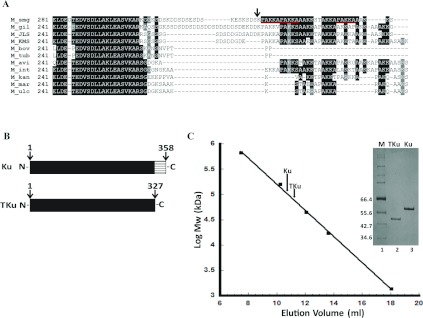
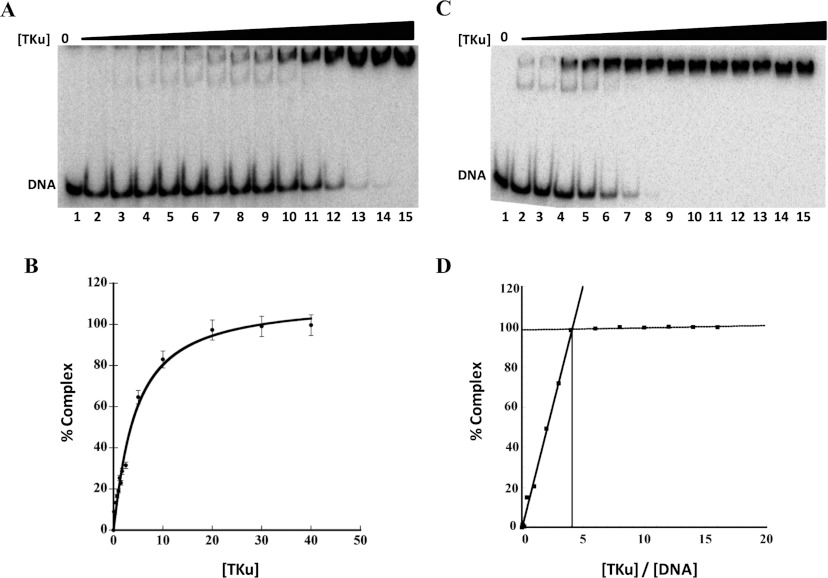
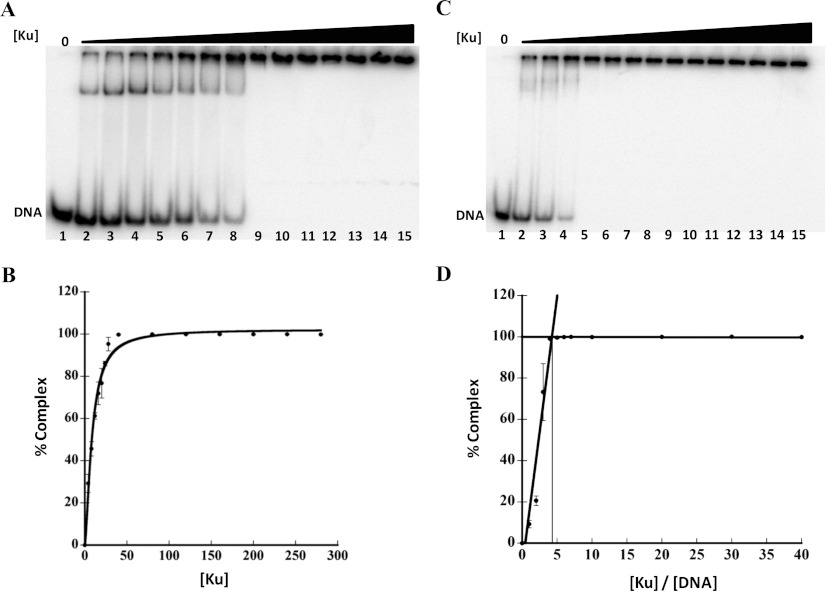
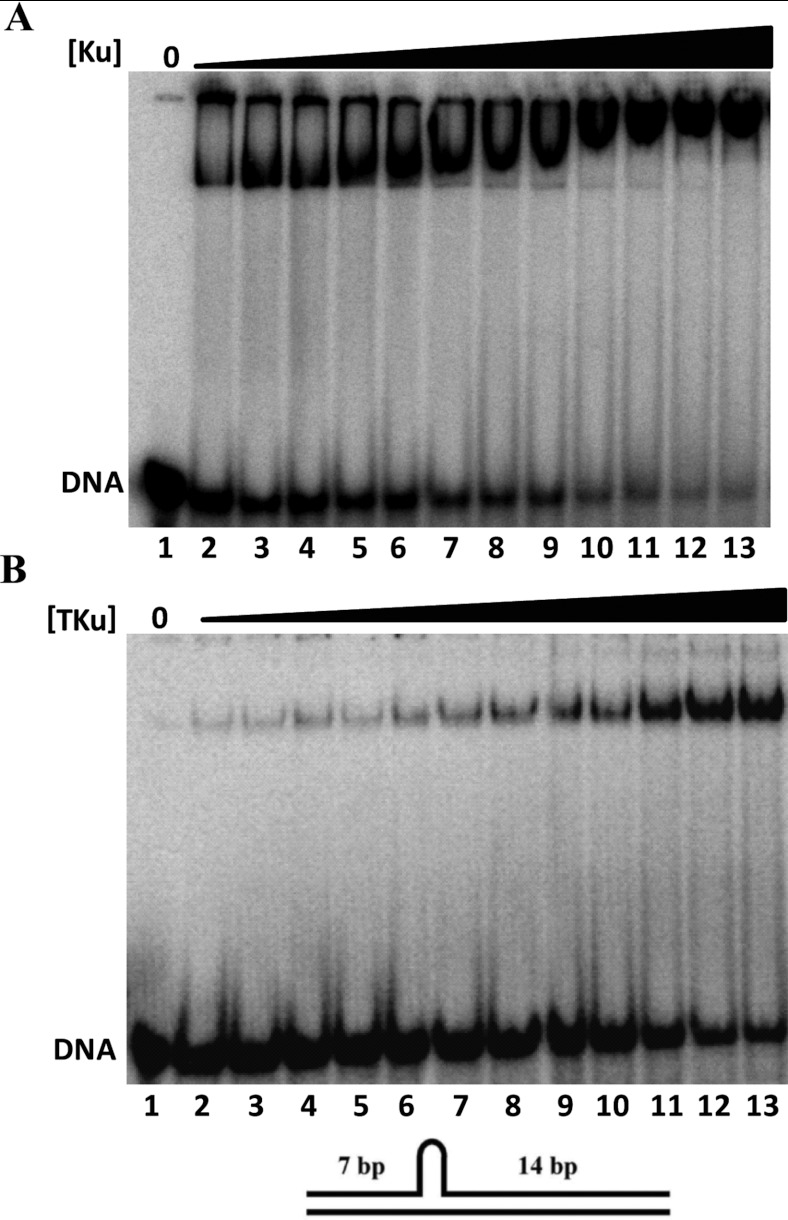
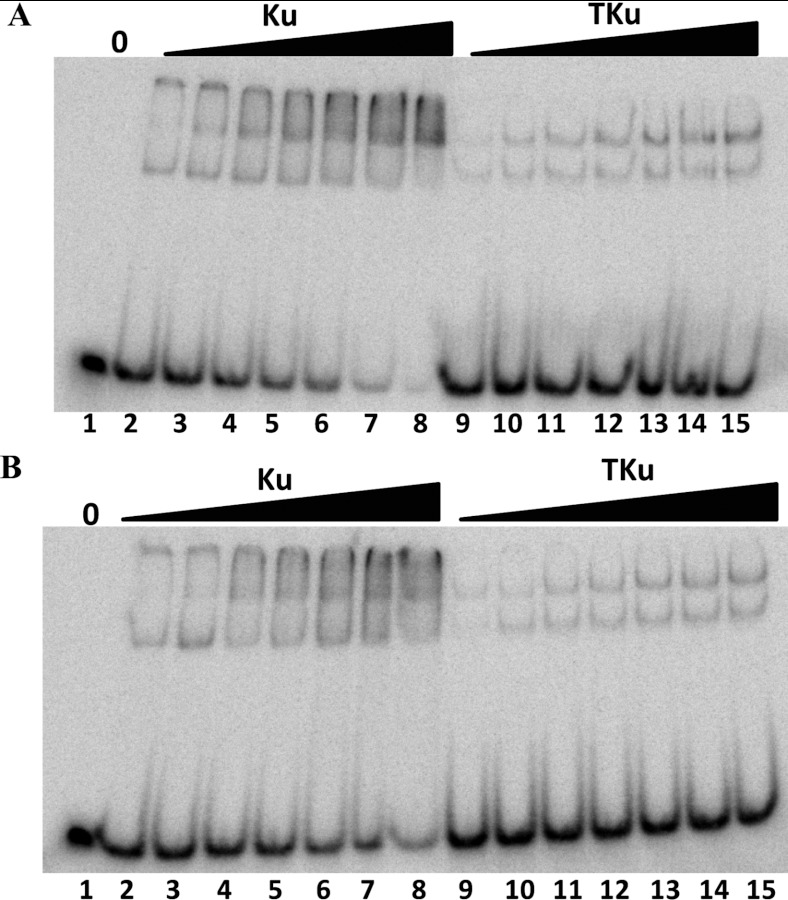
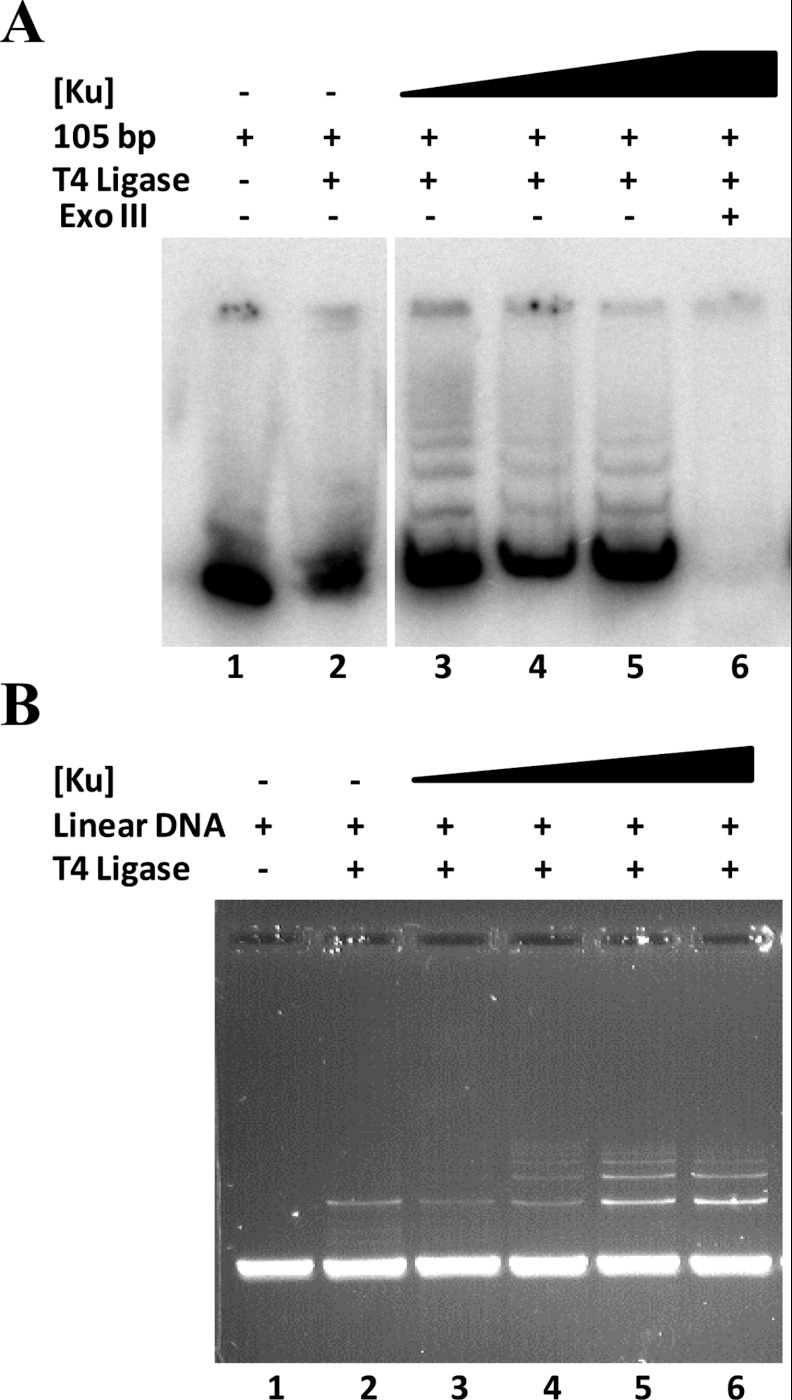
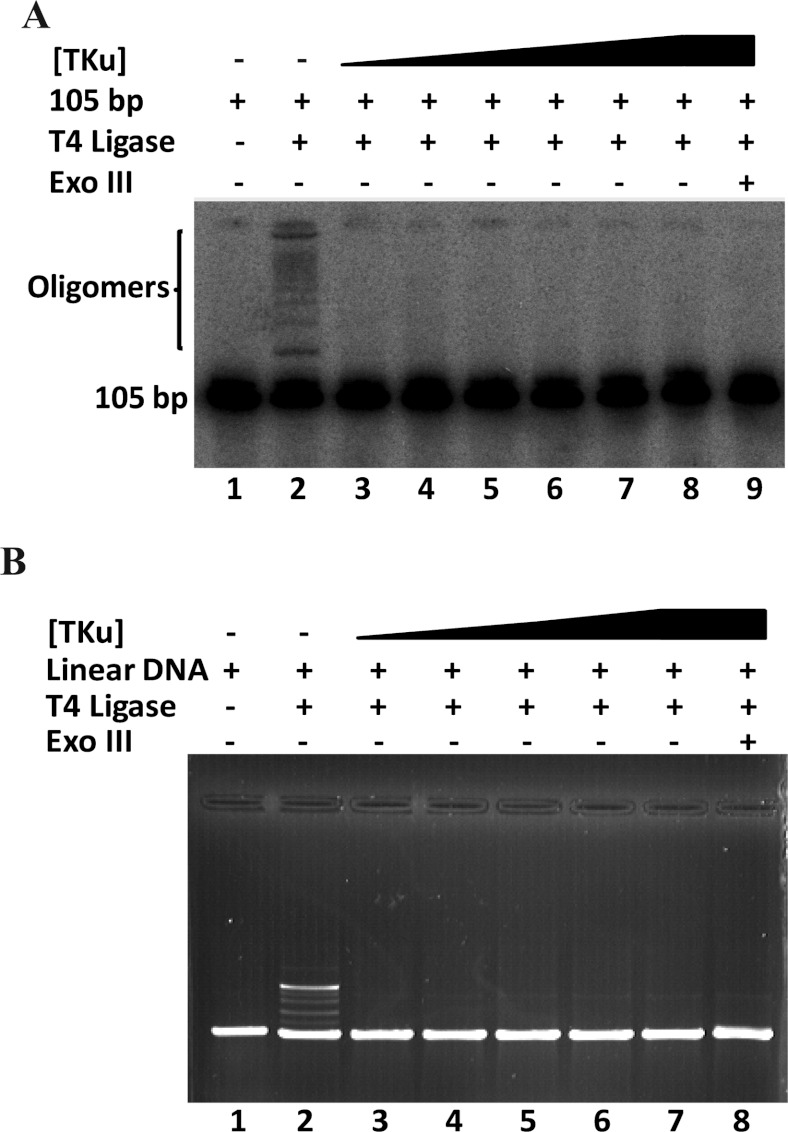
Ku protein is an integral component of the NHEJ (non-homologous end-joining) pathway of DSB (double-strand break) repair. Both eukaryotic and prokaryotic Ku homologues have been characterized and shown to bind DNA ends. A unique feature of Mycobacterium smegmatis Ku is its basic C-terminal tail that contains several lysine-rich low-complexity PAKKA repeats that are absent from homologues encoded by obligate parasitic mycobacteria. Such PAKKA repeats are also characteristic of mycobacterial Hlp (histone-like protein) for which they have been shown to confer the ability to appose DNA ends. Unexpectedly, removal of the lysine-rich extension enhances DNA-binding affinity, but an interaction between DNA and the PAKKA repeats is indicated by the observation that only full-length Ku forms multiple complexes with a short stem-loop-containing DNA previously designed to accommodate only one Ku dimer. The C-terminal extension promotes DNA end-joining by T4 DNA ligase, suggesting that the PAKKA repeats also contribute to efficient end-joining. We suggest that low-complexity lysine-rich sequences have evolved repeatedly to modulate the function of unrelated DNA-binding proteins.
Overview
The claims and statistics of this paper haven’t been checked yet.
Run the check — free, no account needed. It reads the open-access text and checks the sources it cites.
Integrity signals
Registry
Cites
Statistics
Figures
Verification
Claims the paper makes
The claims and statistics of this paper haven’t been checked yet.
Run the check — free, no account needed. It reads the open-access text and checks the sources it cites.
Claims other papers make about this one
Each is checked against this paper’s own text: does it say what the citing paper says it does?
In the citing paper
“With their highly mutable nature, the presence of variable TRs in coding sequences may directly lead to an increase in protein variation and modification, which is particularly relevant for functional and evolutionary studies (25,26).”
From Tandem repeats lead to sequence assembly errors and impose multi-level challenges for genome and protein databases (2019) · cites this paper as [25]
Self-check
Percentages, sums and reported differences re-computed from the paper’s own numbers.
The self-check needs the paper’s full text.
Citations
Cites
MolProbity : all-atom structure validation for macromolecular crystallography
Chen, V. B., Arendall, W. B., Headd, J. J., Keedy, D. A., Immormino, R. M., Kapral, G. J., Murray, L. W., Richardson, J. S., & Richardson, D. C. (2010) · Acta Crystallographica Section D Biological Crystallography · doi:10.1107/s0907444909042073 · Cited by 14,115
Structure of the Ku heterodimer bound to DNA and its implications for double-strand break repair
Walker, J. R., Corpina, R. A., & Goldberg, J. D. (2001) · Nature · doi:10.1038/35088000 · Cited by 1,294
Histone H1 and its isoforms: Contribution to chromatin structure and function
Happel, N., & Doenecke, D. (2008) · Gene · doi:10.1016/j.gene.2008.11.003 · Cited by 424
A means to a DNA end: the many roles of Ku
Downs, J. A., & Jackson, S. P. (2004) · Nature Reviews Molecular Cell Biology · doi:10.1038/nrm1367 · Cited by 395
Studies on the Metabolism of Adipose Tissue
Flatt, J. P., & Ball, E. G. (1964) · Journal of Biological Chemistry · doi:10.1016/s0021-9258(18)51640-9 · Cited by 390
Identification of a DNA Nonhomologous End-Joining Complex in Bacteria
Weller, G. R., Kysela, B., Roy, R., Tonkin, L. M., Scanlan, E., Della, M., Devine, S. K., Day, J. P., Wilkinson, A., di Fagagna, F. D., et al. (2002) · Science · doi:10.1126/science.1074584 · Cited by 342
Blier, P. R., Griffith, A. J., Craft, J., & Hardin, J. A. (1993) · Journal of Biological Chemistry · doi:10.1016/s0021-9258(18)53216-6 · Cited by 327
Yaneva, M. (1997) · The EMBO Journal · doi:10.1093/emboj/16.16.5098 · Cited by 324
Ramsden, D. A., & Gellert, M. (1998) · The EMBO Journal · doi:10.1093/emboj/17.2.609 · Cited by 296
Aravind, L., & Koonin, E. V. (2001) · Genome Research · doi:10.1101/gr.181001 · Cited by 290
The Pentose Cycle, Triose Phosphate Isomerization, and Lipogenesis in Rat Adipose Tissue
Katz, J., Landau, B. R., & Bartsch, G. E. (1966) · Journal of Biological Chemistry · doi:10.1016/s0021-9258(18)96899-7 · Cited by 280
GABA production by glutamic acid decarboxylase is regulated by a dynamic catalytic loop
Fenalti, G., Law, R. H. P., Buckle, A. M., Langendorf, C. G., Tuck, K. L., Rosado, C. J., Faux, N. G., Mahmood, K., Hampe, C. S., Banga, J. P., et al. (2007) · Nature Structural & Molecular Biology · doi:10.1038/nsmb1228 · Cited by 264
Falzon, M., Fewell, J. W., & Kuff, E. L. (1993) · Journal of Biological Chemistry · doi:10.1016/s0021-9258(18)82233-5 · Cited by 242
Mycobacterial Ku and Ligase Proteins Constitute a Two-Component NHEJ Repair Machine
Della, M., Palmbos, P. L., Tseng, H.-M., Tonkin, L. M., Daley, J. M., Topper, L. M., Pitcher, R. S., Tomkinson, A. E., Wilson, T. E., & Doherty, A. J. (2004) · Science · doi:10.1126/science.1099824 · Cited by 233
Human DNA helicase II: a novel DNA unwinding enzyme identified as the Ku autoantigen.
Tuteja, N., Tuteja, R., Ochem, A. E., Taneja, P., Huang, N., Simoncsits, A., Susic, S., Rahman, K., Marusic, L., & Chen, J. (1994) · The EMBO Journal · doi:10.1002/j.1460-2075.1994.tb06826.x · Cited by 223
Low-complexity regions within protein sequences have position-dependent roles
Coletta, A., Pinney, J. W., Solís, D. W., Marsh, J., Pettifer, S. R., & Attwood, T. K. (2010) · BMC Systems Biology · doi:10.1186/1752-0509-4-43 · Cited by 219
Gong, C., Bongiorno, P., Martins, A., Stephanou, N. C., Zhu, H., Shuman, S., & Glickman, M. S. (2005) · Nature Structural & Molecular Biology · doi:10.1038/nsmb915 · Cited by 215
Moss, G. P. (1988) · European Journal of Biochemistry · doi:10.1111/j.1432-1033.1988.tb14453.x · Cited by 183
Productive and Nonproductive Complexes of Ku and DNA-Dependent Protein Kinase at DNA Termini
West, R. B., Yaneva, M., & Lieber, M. R. (1998) · Molecular and Cellular Biology · doi:10.1128/mcb.18.10.5908 · Cited by 181
Alpha‐helix in the carboxy‐terminal domains of histones H1 and H5.
Clark, D. J., Hill, C. S., Martin, S. R., & Thomas, J. O. (1988) · The EMBO Journal · doi:10.1002/j.1460-2075.1988.tb02784.x · Cited by 157
SAGGERSON, E. D., & Greenbaum, A. L. (1970) · Biochemical Journal · doi:10.1042/bj1190193 · Cited by 146
The pathways and outcomes of mycobacterial NHEJ depend on the structure of the broken DNA endsPreprint
Aniukwu, J., Glickman, M. S., & Shuman, S. (2008) · Genes & Development · doi:10.1101/gad.1631908 · Cited by 132
SAGGERSON, E. D., & Greenbaum, A. L. (1970) · Biochemical Journal · doi:10.1042/bj1190221 · Cited by 124
Functional Evolution of Bacterial Histone-Like HU Proteins
Grove, A. (2011) · Current Issues in Molecular Biology · doi:10.21775/cimb.013.001 · Cited by 113
Self-citationSimple sequences are rare in the Protein Data Bank
Huntley, M. A., & Golding, G. B. (2002) · Proteins Structure Function and Bioinformatics · doi:10.1002/prot.10150 · Cited by 99
NHEJ protects mycobacteria in stationary phase against the harmful effects of desiccation
Pitcher, R. S., Green, A., Brzostek, A. M., Korycka‐Machała, M., Dziadek, J., & Doherty, A. J. (2007) · DNA repair · doi:10.1016/j.dnarep.2007.02.009 · Cited by 88
Studies on the Metabolism of Adipose Tissue
Flatt, J. P., & Ball, E. G. (1966) · Journal of Biological Chemistry · doi:10.1016/s0021-9258(18)96543-9 · Cited by 85
Morgado, L., Bruix, M., Orshonsky, V., Londer, Y. Y., Duke, N. E. C., Yang, X., Pokkuluri, P. R., Schiffer, M., & Salgueiro, C. A. (2008) · Biochimica et Biophysica Acta (BBA) - Bioenergetics · doi:10.1016/j.bbabio.2008.04.043 · Cited by 81
SAGGERSON, E. D. (1972) · Biochemical Journal · doi:10.1042/bj1281057 · Cited by 76
Non-homologous end-joining: bacteria join the chromosome breakdance
Wilson, T. E., Topper, L. M., & Palmbos, P. L. (2003) · Trends in Biochemical Sciences · doi:10.1016/s0968-0004(03)00005-7 · Cited by 74
Low-complexity sequences and single amino acid repeats: not just “junk” peptide sequences
Haerty, W., & Golding, G. B. (2010) · Genome · doi:10.1139/g10-063 · Cited by 69
KATHER, H., Rivera, M., & Brand, K. (1972) · Biochemical Journal · doi:10.1042/bj1281089 · Cited by 68
Domain Structure of a NHEJ DNA Repair Ligase from Mycobacterium tuberculosis
Pitcher, R. S., Tonkin, L. M., Green, A., & Doherty, A. J. (2005) · Journal of Molecular Biology · doi:10.1016/j.jmb.2005.06.038 · Cited by 67
Some aspects of fatty acid oxidation in isolated fat-cell mitochondria from rat
Harper, R. D., & SAGGERSON, E. D. (1975) · Biochemical Journal · doi:10.1042/bj1520485 · Cited by 66
Lipogenesis in rat and guinea-pig isolated epididymal fat-cells
SAGGERSON, E. D. (1974) · Biochemical Journal · doi:10.1042/bj1400211 · Cited by 66
Salerno, P., Larsson, J., Bucca, G., Laing, E., Smith, C. P. S., & Flärdh, K. (2009) · Journal of Bacteriology · doi:10.1128/jb.00709-09 · Cited by 64
Factors affecting fatty acid oxidation in fat cells isolated from rat white adipose tissue
Harper, R. D., & SAGGERSON, E. D. (1976) · Journal of Lipid Research · doi:10.1016/s0022-2275(20)41750-x · Cited by 55
Studies on the Mode of Ku Interaction with DNA
Arosio, D., Cui, S., Ortega, C., Chovanec, M., Marco, S. D., Baldini, G., Falaschi, A., & Vindigni, A. (2002) · Journal of Biological Chemistry · doi:10.1074/jbc.m111916200 · Cited by 50
Andrews, B. J., Lehman, J. A., & Turchi, J. J. (2006) · Journal of Biological Chemistry · doi:10.1074/jbc.m512787200 · Cited by 49
Zhu, H., & Shuman, S. (2009) · Journal of Biological Chemistry · doi:10.1074/jbc.m109.073874 · Cited by 48
Shires, K., & Steyn, L. M. (2001) · Molecular Microbiology · doi:10.1046/j.1365-2958.2001.02291.x · Cited by 48
Histone-like Protein HU from Deinococcus radiodurans Binds Preferentially to Four-way DNA Junctions
Ghosh, S., & Grove, A. (2004) · Journal of Molecular Biology · doi:10.1016/j.jmb.2004.02.010 · Cited by 43
Self-citationBharath, M. M. S., Chandra, N. R., & Rao, M. R. S. (2002) · Proteins Structure Function and Bioinformatics · doi:10.1002/prot.10204 · Cited by 41
Mukherjee, A., Bhattacharyya, G., & Grove, A. (2008) · Biochemistry · doi:10.1021/bi800010s · Cited by 37
Self-citationKobayashi, H., Simmons, L. A., Yuan, D., Broughton, W. J., & Walker, G. C. (2007) · Molecular Microbiology · doi:10.1111/j.1365-2958.2007.06036.x · Cited by 30
Linker Histone Interaction Shows Divalent Character with both Supercoiled and Linear DNA
Ellen, T. P., & Holde, K. E. V. (2004) · Biochemistry · doi:10.1021/bi0497704 · Cited by 30
The Deinococcus radiodurans-Encoded HU Protein Has Two DNA-Binding Domains
Ghosh, S., & Grove, A. (2006) · Biochemistry · doi:10.1021/bi0514010 · Cited by 26
Self-citationRay, S., & Grove, A. (2009) · Nucleic Acids Research · doi:10.1093/nar/gkp695 · Cited by 26
Self-citationElectron microscopy visualization of DNA–protein complexes formed by Ku and DNA ligase IV
Grob, P., Zhang, T. T., Hannah, R., Yang, H. M., Hefferin, M. L., Tomkinson, A. E., & Nogales, E. (2011) · DNA repair · doi:10.1016/j.dnarep.2011.10.023 · Cited by 24
Wright, D., DeBeaux, A., Shi, R., Doherty, A. J., & Harrison, L. (2010) · Mutagenesis · doi:10.1093/mutage/geq029 · Cited by 16
Cited by
Tørresen, O. K., Star, B., Mier, P., Andrade-Navarro, M. A., Bateman, A., Jarnot, P., Gruca, A., Grynberg, M., Kajava, A. V., Promponas, V. J., et al. (2019) · Nucleic Acids Research · doi:10.1093/nar/gkz841 · Cited by 347
Metadata
- Authors
- Kushwaha, A. K., & Grove, A.
- Affiliations
- Department of Biological Sciences, Louisiana State University, Baton Rouge, LA 70803, U.S.A.
- Venue
- Bioscience Reports
- Publisher
- Portland Press Ltd.
- Published
- 2013-01-24
- Volume
- 33
- Issue
- 1
- ISSN
- 0144-8463
- 1573-4935
- PMC
- PMC3553676
- Cited by
- 30
- References
- 50
- Language
- en
About these checks
Registry, retraction, Cites and statistics results are computed, not judged, with one exception: a printed reference that no index lists is read once by a model before it counts as a citation error. Claims are extracted by a model and kept only when their quote appears verbatim in the text; each cited source is then checked, with a model’s help, for whether it says what the claim relies on. Those verdicts can be wrong — read the claim’s quote and the cited source before relying on one.
Statistics and arithmetic are recomputed, not judged.
Confidence bands are shown only for fields calibrated on our annotated test set. None is calibrated yet, so no band is shown.
What counts as a claim ›How we measure confidence ›How we check this ›
Are you an author, or do you see a problem with this page? Request a review
Data sources
Bibliographic data: Semantic Scholar, OpenAlex, Crossref.
Contains information from the Semantic Scholar Academic Graph Datasets, made available under the ODC Attribution License (ODC-BY 1.0).
Semantic Scholar’s data is described in: Kinney, R., et al. (2023). The Semantic Scholar Open Data Platform. arXiv:2301.10140.
