

The DOI matches its Crossref record; 8 of the 8 references it cites were found in a registry or an index; none of the 29 sources its claims cite is checked for support yet.
Characterization of Commercial Bulgarian Dill ( Anethum graveolens L.) Fruit Essential Oil
Open accessAbstract
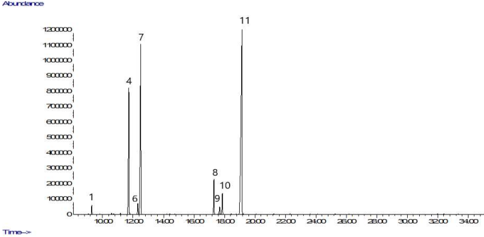
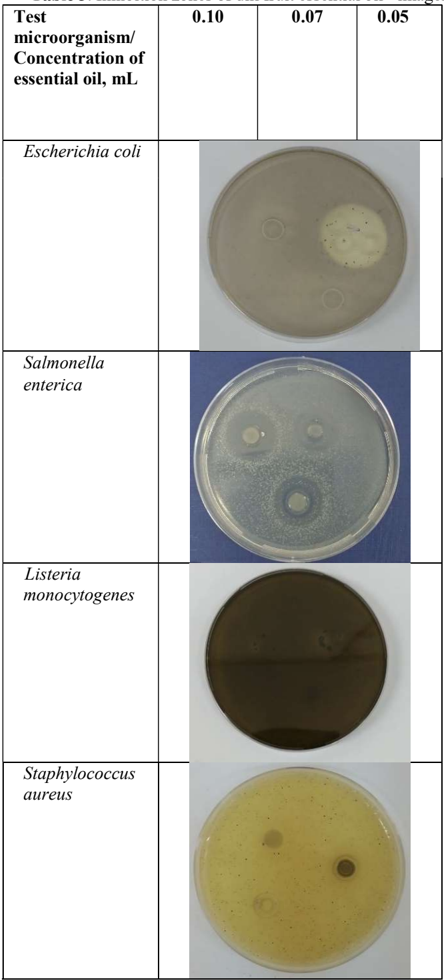
Dill ( Anethum graveolens L.) fruit is an important raw material in the food industry due to its aromatic properties and its role as a source of essential oil. The present study examines the composition and biological properties of a commercially available dill fruit essential oil produced in Bulgaria, with emphasis on its potential application in food systems. Gas chromatography–mass spectrometry analysis identified eleven constituents representing 99.93% of the total oil content. The profile was dominated by carvone (45.91%), followed by limonene (26.56%), α-phellandrene (16.64%), and dill ether (4.38%). The antimicrobial potential of the oil was evaluated against selected Gram-positive and Gram-negative bacteria. A concentration-dependent inhibitory effect was observed for Escherichia coli and Salmonella enterica , with maximum inhibition zones of 35 mm and 23 mm, respectively, at the highest tested concentration (0.10 mL). In contrast, no activity was detected against Listeria monocytogenes and Staphylococcus aureus . Antioxidant capacity was assessed using DPPH and FRAP assays, yielding values of 485 ± 0.04 µM TE/mL and 787.24 ± 0.05 µM TE/mL, respectively. These results indicate strong reducing ability and radical scavenging potential. Overall, the investigated dill essential oil demonstrates a well-defined chemical profile and notable biological activity, suggesting its suitability as a natural ingredient for enhancing food quality, stability, and safety.
Overview
CoChat Summary
TL;DR
This study characterizes a commercial Bulgarian dill fruit essential oil, finding a carvone/limonene-rich profile with selective antibacterial activity against *Escherichia coli* and *Salmonella enterica* and measurable antioxidant capacity. The authors suggest it may be useful as a natural food ingredient for oxidative stability and microbial control.
Key findings
- GC-MS identified 11 constituents representing 99.93% of the oil; major compounds were carvone (45.91%), limonene (26.56%), α-phellandrene (16.64%), and dill ether (4.38%).
- Antimicrobial testing showed concentration-dependent inhibition of *E. coli* and *S. enterica*, with maximum inhibition zones of 35 mm and 23 mm, respectively, at 0.10 mL; no activity was detected against *Listeria monocytogenes* or *Staphylococcus aureus*.
- Antioxidant capacity was 485 ± 0.04 µM TE/mL by DPPH and 787.24 ± 0.05 µM TE/mL by FRAP, with the FRAP value significantly higher (p < 0.05).
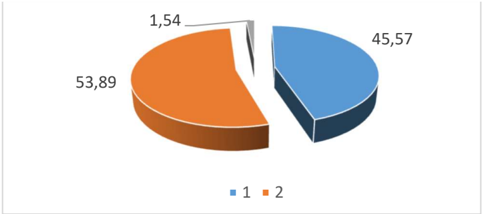
- Major chemical groups were oxygenated monoterpenes (53.89%) and monoterpene hydrocarbons (45.57%).
Methods
- A commercially available Bulgarian dill fruit essential oil from fruits harvested in 2024 was analyzed without further modification.
- Chemical composition was determined by GC-MS (Agilent system, HP-5ms column, helium carrier gas), with compounds identified by retention indices using n-alkane standards and quantified by normalized peak areas.
- Antimicrobial activity was assessed by agar diffusion against Gram-positive and Gram-negative bacteria; antioxidant activity used DPPH and FRAP assays. All analyses were performed in triplicate, with results expressed as mean ± SD and evaluated by one-way ANOVA with Tukey’s test (p < 0.05) in SPSS v.19.0.
Limitations
- The paper does not include an explicit limitations section.
- Evident from the text: the study examines only one commercial oil sample from a single harvest year, so cultivar, harvest timing, and environmental variability are not experimentally addressed.
- Evident from the text: antimicrobial testing covers only four bacterial strains and reports inhibition zones rather than MIC values; no positive controls or food-matrix application trials are described.
Model-written summary. Check it against the paper before relying on it.
Integrity signals
Registry
Cites
Statistics
Figures
Verification
Claims the paper makes
16 Own interpretation · 13 Own result · 6 Not checked yet · 4 Sources not found · 1 Check pending · 1 No full text of the sources · 1 Own method
A result the paper reports from its own data — it cites no other source for it, so there is none to check. The quote shows it is in the paper.
In the paper
“In contrast, no activity was detected against Listeria monocytogenes and Staphylococcus aureus.”
- Also stated in: § 3. Results and Discussion · plain
“No inhibitory effect was detected against L. monocytogenes or S. aureus at any tested concentration”
§ Characterization of Commercial Bulgarian Dill (Anethum graveolens L.) Fruit Essential Oil > Abstract
plain- Asserted: passes — The authors put it forward as true.
- Checkable: passes — It can be checked against evidence.
- Load-bearing: passes — The paper’s conclusions depend on it.
- Based: passes — The paper gives a reason why it holds.
- Also stated in: § 3. Results and Discussion · plain
A result the paper reports from its own data — it cites no other source for it, so there is none to check. The quote shows it is in the paper.
In the paper
“The profile was dominated by carvone (45.91%), followed by limonene (26.56%), α-phellandrene (16.64%), and dill ether (4.38%).”
- Also stated in: § 3. Results and Discussion · plain
“The major constituents were: carvone (45.91%), limonene (26.56%), α-phellandrene (16.64%), and dill ether (4.38%).”
§ Characterization of Commercial Bulgarian Dill (Anethum graveolens L.) Fruit Essential Oil > Abstract
plain- Asserted: passes — The authors put it forward as true.
- Checkable: passes — It can be checked against evidence.
- Load-bearing: passes — The paper’s conclusions depend on it.
- Based: passes — The paper gives a reason why it holds.
- Also stated in: § 3. Results and Discussion · plain
A result the paper reports from its own data — it cites no other source for it, so there is none to check. The quote shows it is in the paper.
In the paper
“Gas chromatography-mass spectrometry analysis identified eleven constituents representing 99.93% of the total oil content.”
- Also stated in: § 3. Results and Discussion · plain
“The data show that 11 components were identified, accounting for 99.93% of the total composition.”
§ Characterization of Commercial Bulgarian Dill (Anethum graveolens L.) Fruit Essential Oil > Abstract
plain- Asserted: passes — The authors put it forward as true.
- Checkable: passes — It can be checked against evidence.
- Load-bearing: passes — The paper’s conclusions depend on it.
- Based: passes — The paper gives a reason why it holds.
- Also stated in: § 3. Results and Discussion · plain
A result the paper reports from its own data — it cites no other source for it, so there is none to check. The quote shows it is in the paper.
In the paper
“Ethers are the next most abundant class of oxygenated compounds in the analyzed oil.”
§ Characterization of Commercial Bulgarian Dill (Anethum graveolens L.) Fruit Essential Oil > 3. Results and Discussion
plain- Asserted: passes — The authors put it forward as true.
- Checkable: passes — It can be checked against evidence.
- Load-bearing: unclear — It is unclear whether the paper’s conclusions depend on it.
- Based: passes — The paper gives a reason why it holds.
A result the paper states — it cites no source for it, so there is none to check. The quote shows it is in the paper.
In the paper
“However, minor differences were observed in the relative proportions of individual constituents.”
§ Characterization of Commercial Bulgarian Dill (Anethum graveolens L.) Fruit Essential Oil > 3. Results and Discussion
plain- Asserted: passes — The authors put it forward as true.
- Checkable: passes — It can be checked against evidence.
- Load-bearing: unclear — It is unclear whether the paper’s conclusions depend on it.
- Based: passes — The paper gives a reason why it holds.
11 more claims
Create a free account to see all 42 claims and to verify the 11 references still open.
- It may state two separate claims as one. 20
- Probably not a substantial claim. 13
Citations
Cites
The Ferric Reducing Ability of Plasma (FRAP) as a Measure of “Antioxidant Power”: The FRAP Assay
Benzie, I. F. F., & Strain, J. (1996) · Analytical Biochemistry · doi:10.1006/abio.1996.0292 · Cited by 23,027
Griffin, S. G., Wyllie, S. G., Markham, J. L., & Leach, D. N. (1999) · Flavour and Fragrance Journal · doi:10.1002/(sici)1099-1026(199909/10)14:5 · Cited by 517
Handbook of Essential Oils: Science, Technology, and Applications
(2009) · doi:10.1201/9781420063165 · Cited by 273
Common Fragrance and Flavor Materials: Preparation, Properties and Uses
Bauer, K., Garbe, D., & Surburg, H. (2001) · doi:10.1002/3527600205 · Cited by 229
Jirovetz, L., Buchbauer, G., Stoyanova, A. S., Georgiev, E. V., & Damianova, S. T. (2003) · Journal of Agricultural and Food Chemistry · doi:10.1021/jf030004y · Cited by 94
Misharina, T. A. (2016) · Applied Biochemistry and Microbiology · doi:10.1134/s0003683816010087 · Cited by 19
Saleh-e-In, M. M., Sultana, A., Husain, M., & Roy, S. K. (2010) · Bangladesh Journal of Scientific and Industrial Research · doi:10.3329/bjsir.v45i2.5721 · Cited by 10
HPLC ANALYSIS OF HUMAN URINE FOR OXALATE CONTENT
Suryavanshi, M. V., Jadhav, S. D., Gune, R. P., Bhatia, M. S., & Shouche, Y. S. (2016) · International Journal of Pharmacy and Pharmaceutical Sciences · doi:10.22159/ijpps.2016v8i12.13168 · Cited by 7
Research works printed but not linked: 14
- Baeva, 2013, J. Food Packag. Sci. Technol. Technol., 2, 129
- Radulescu, 2010, Farmacia, 58, 594
- Dimov, 2019, Bulg. Chem. Commun., 51, 214
- Vokk, 2011, Agron. Res., 9, 515
- Babri, 2012, Sci. Int. (Lahore), 24, 453
- Altameme, 2017, Int. J. Pharm. Qual. Assur., 8, 88
- Mahmoodi, 2012, Glob. Veterinaria, 9, 73
- Chahal, 2017, J. Pharmacogn. Phytochem., 6, 295
- Leahu, 2013, Food Environ. Safety, 12, 347
- Rathore, 2013, Int. J. Seed Spices, 3, 12
- Ayoughi, 2009, J. Med. Plants, 8, 71
- Ortan, 2009, Rom. Biotechnol. Lett., 14, 4342
- Kostova, 2014, Ukr. Food J., 3, 516
- Kostova, 2017, Sci. Works Univ. Rousse, 56, 111
Cited by
Characterization of Commercial Bulgarian Dill (
Fidan, H., DERVISH, D., Dincheva, I. N., & Kolev, T. (2026) · Springer Link (Chiba Institute of Technology) · doi:10.1051/bioconf/202623601012/pdf
Self-citation
Metadata
- Authors
- Fidan, H., Dervish, D., Dincheva, I., & Kolev, T.
- Affiliations
- University of Food Technologies (BG)
- Agrobioinstitute (BG)
- Trakia University (BG)
- Venue
- BIO Web of Conferences
- Publisher
- EDP Sciences
- Published
- 2026
- Volume
- 236
- Pages
- 01012
- ISSN
- 2117-4458 (ISSN-L)
- OpenAlex
- W7162296434
- Cited by
- 1
- References
- 8
- Citations by year
- 2026: 1
- FWCI
- 18.10
- Type
- conference paper
- Language
- en
- Open access
- diamond
- doi.org
- Locations
- BIO Web of Conferences (publishedVersion, cc-by)
- DOAJ (DOAJ: Directory of Open Access Journals) (submittedVersion, cc-by-sa)
- Topics
- Life Sciences › Agricultural and Biological Sciences › Food Science › Essential Oils and Antimicrobial Activity
- Life Sciences › Agricultural and Biological Sciences › Plant Science › Insect Pest Control Strategies
- Physical Sciences › Chemistry › Organic Chemistry › Edible Oils Quality and Analysis
- Keywords
- dill, essential oil composition, carvone, limonene, α-phellandrene, antimicrobial activity, Escherichia coli, Salmonella enterica, antioxidant capacity, natural food preservatives
About these checks
Registry, retraction, Cites and statistics results are computed, not judged, with one exception: a printed reference that no index lists is read once by a model before it counts as a citation error. Claims are extracted by a model and kept only when their quote appears verbatim in the text; each cited source is then checked, with a model’s help, for whether it says what the claim relies on. Those verdicts can be wrong — read the claim’s quote and the cited source before relying on one.
A language model drew the claims from the paper on 2026-11-12, under version 3 of the claim definition (model deepseek-v4.1-flash, prompt extract-v3).
A second model labelled each claim on 2026-11-12 (model jev-1.13-20260917, definition revision gold-guideline-v0.2).
Statistics and arithmetic are recomputed, not judged.
Confidence bands are shown only for fields calibrated on our annotated test set. None is calibrated yet, so no band is shown.
What counts as a claim ›How we measure confidence ›How we check this ›
Are you an author, or do you see a problem with this page? Request a review
Data sources
Bibliographic data: Semantic Scholar, OpenAlex, Crossref.
Contains information from the Semantic Scholar Academic Graph Datasets, made available under the ODC Attribution License (ODC-BY 1.0).
Semantic Scholar’s data is described in: Kinney, R., et al. (2023). The Semantic Scholar Open Data Platform. arXiv:2301.10140.
